
Reviewed · MUSEUMS
Rome: Gladiator Show and Museum Tickets
History gets noisy after dark. Just 3.5 kilometers from the Colosseum, this 90-minute evening show combines gladiator combat, ancient dance, Vestal rites, pantomime, a small Roman museum, and audience participation in an arena run by Gruppo Storico Romano.
I like the variety: this is not simply a sword fight, but a staged Roman evening with music, lights, costumes, rituals, and comedy. I also like the friendly cast, who welcome questions, allow photos, and have helped arrange taxis after the show. The main drawback is the location. It is easy enough to reach by bus or taxi, but public transport may be scarce when the performance ends.
At $29 per person, the experience offers a good deal for families and anyone who wants an entertaining night beyond the usual ancient sights. You should arrive expecting historical theater rather than a formal museum or a serious archaeological lecture. The weapons and armor are real, but the fights are performed by trained historical reenactors.
In This Review
- Quick points before you book
- What happens before the first sword is drawn
- The arena show mixes combat, dance, and theater
- Why the Roman details make the evening work
- Reaching the venue from central Rome
- Is $29 good value?
- Who will enjoy this most?
- Timing, season, and booking flexibility
- My take on the overall experience
- Should you book it?
- FAQ
- How much does the Rome gladiator show cost?
- How long does the experience last?
- When does the show begin and end?
- What does the ticket include?
- Where does the show take place?
- Is this a real gladiator fight?
- What else happens besides gladiator combat?
- Does the experience run all year?
- Is the activity wheelchair accessible?
Quick points before you book
- The show begins around 8:45 p.m. and ends near 10 p.m., making it a useful evening activity after daytime sightseeing.
- The arena is about 3.5 kilometers from the Colosseum, but the setting feels separate from central Rome and has few nearby services.
- The program includes more than combat, with Roman dances, Vestal ceremonies, pantomime, comedy, training, and audience involvement.
- The historical museum comes first, followed by time in the Armory of the Legion and a cocktail or simple Roman-style refreshments.
- Real weapons and armor are used, although the combat itself is a carefully performed reenactment, not an actual fight.
- The experience runs from May through September, including the listed 2026 dates, and is wheelchair accessible.
What happens before the first sword is drawn
The evening starts at the headquarters of the Rome Gladiator School, operated by Gruppo Storico Romano. Look for the Rome Gladiator School sign and the group’s name at the meeting point.
The published entrance time is 8:45 p.m. The opening portion gives you time to look around the Museo storico-didattico del legionario romano, a small historical and educational museum devoted to Roman soldiers and gladiators. Do not picture a large national museum with vast galleries. This is a compact, hands-on introduction that works best as preparation for the performance.
You may see weapons, armor, and objects connected with Roman military life. One especially appealing feature is the chance to try on some armor or handle the setting more directly, depending on the evening’s arrangements. That physical contact helps younger children understand the weight and purpose of Roman equipment better than a glass case would.
The museum visit also gives the guide a chance to explain gladiator training and daily life. One account singled out the guide’s strong storytelling voice, while another praised Dafydd by name for making the evening special. Guide assignments can change, but the general format is clearly lively and participatory rather than formal and distant.
There is also a cocktail in the Armory of the Legion. The refreshments have been described as simple Roman-style nibbles, wine, and wine with honey. This is an enjoyable extra, but you should not arrive expecting dinner. If you need a full meal, eat beforehand or plan carefully for afterward because there are no useful restaurant options right beside the venue.
More Museum Tours in Rome
- Vatican: Museums & Sistine Chapel Entrance Ticket
★ 4.5 · 144,003 reviews - Vatican Museums & Sistine Chapel Tour with Optional Basilica
★ 4.3 · 67,413 reviews - Vatican Museums, Sistine Chapel & St Peter’s Basilica Guided Tour
★ 4.5 · 39,149 reviews
The arena show mixes combat, dance, and theater
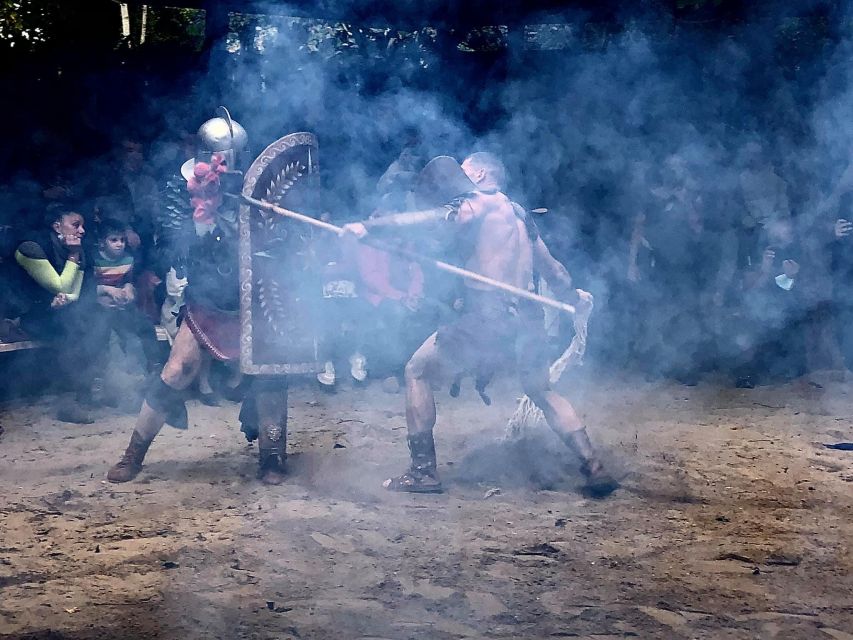
The main performance lasts roughly an hour, with the complete event running about an hour and a half. Music, colored lights, and visual effects help turn the arena into a theatrical version of ancient Rome.
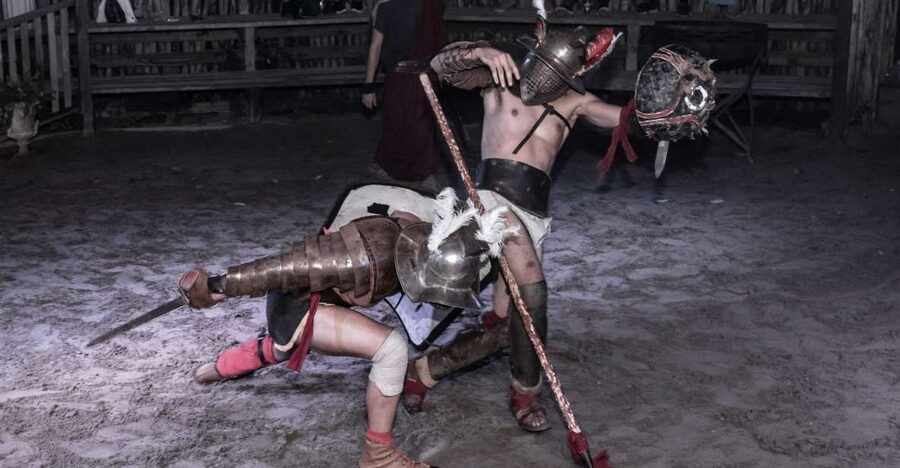
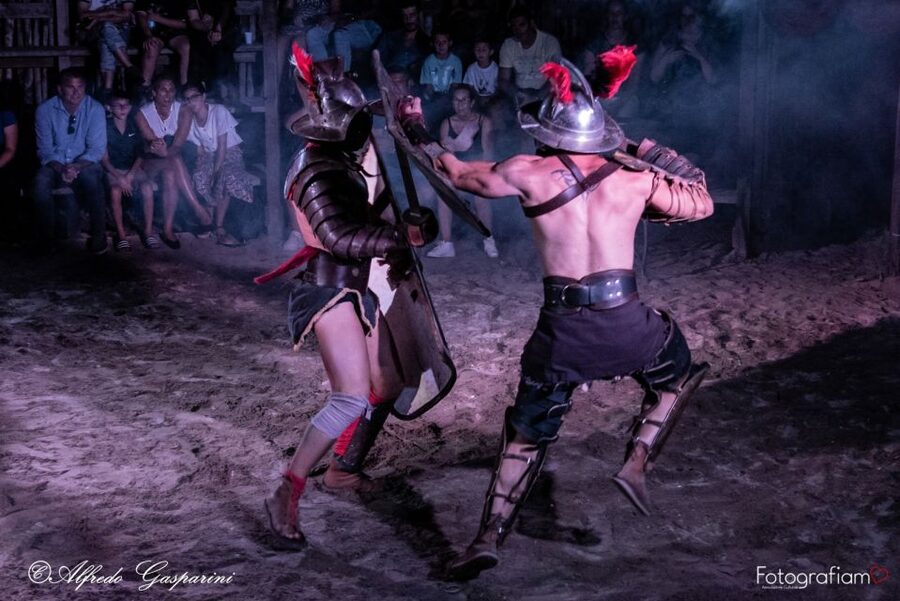
The gladiator battles are the main draw. The performers use real weapons and armor, which gives the action more weight and sound than a soft stage prop would. Fast swordplay, falls in the dirt, and dramatic reactions make the combat exciting, especially for children and anyone who enjoys live action.
It is important to keep expectations in the right place. This is historical reenactment, not a real fight and not a scholarly reconstruction of every Colosseum custom. Some scenes are intentionally theatrical, and the performance can be cheesy in the best sense of the word. You are buying an energetic show, not a documentary.
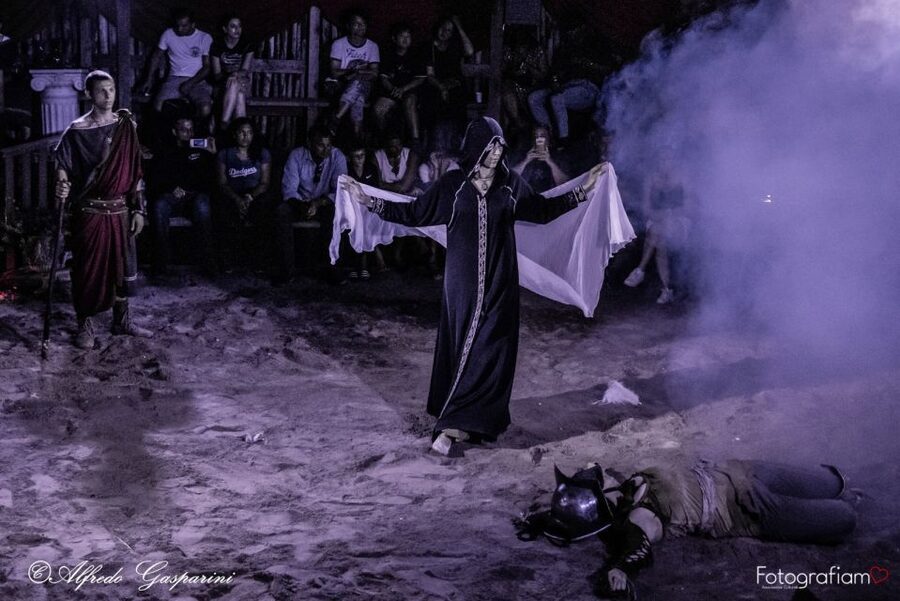
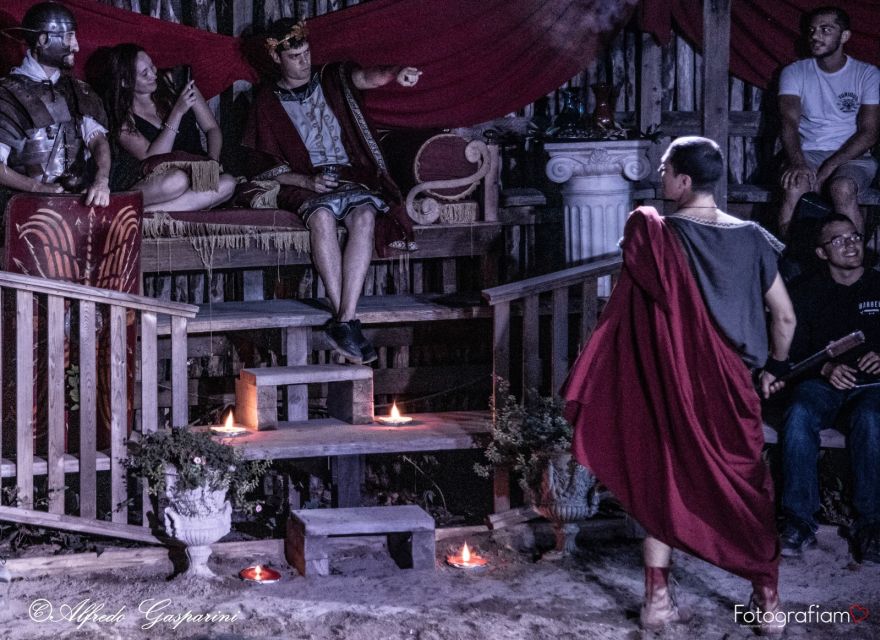
The combat is only one part of the program. Ancient dances, Vestal rites, pantomime, and a comedy warm-up act add changes of pace. That variety matters because an hour of staged sword fighting would quickly become repetitive. The dances and ritual scenes also give you a broader sense of how the organizers picture Roman public entertainment.
Audience participation is another major feature. The presenter may involve people in the action, demonstrations, or comic moments. You can enjoy the show quietly from your seat, but the evening works better if you are willing to respond and play along. Children often get more from the event when they can see that the audience is part of the performance rather than merely watching from the side.
The cast’s enthusiasm is central to the experience. The performers welcome photos and conversation, and the evening has a relaxed social tone. If you want a polished theater production with a strict barrier between actors and audience, this may feel informal. If you like meeting performers, joining in, and taking pictures, that informality is a strength.
Why the Roman details make the evening work
The show’s best quality is its attempt to create a complete Roman setting. Incense, Roman music, military equipment, costumes, wine, and ritual scenes work together before the fighting begins. None of these elements alone would teach you much, but together they help you picture how an evening of Roman entertainment might have felt.
The museum is useful because it puts names and purpose behind the objects. The arena is useful because it shows how those objects could be used in performance. The combination is more satisfying than attending only a fight show, particularly if you are visiting Rome with children who need something active after a day of churches and ruins.
The wine with honey is a nice touch because it connects the refreshments to the period theme. Again, this is a small detail, not a meal or a formal tasting. Its value is in the atmosphere.
The historical content is presented through action and storytelling rather than a long lecture. That makes the experience accessible if English is not your first language, since gestures, costumes, movement, and facial expressions carry much of the meaning. The supplied information does not specify the full range of performance languages, so you should not book it based on a particular language presentation.
Reaching the venue from central Rome
The distance from the Colosseum is short by Roman standards, but the route does not feel like a stroll through the historic center. The arena is outside the main tourist core, and the surrounding area has few services within walking distance.
Bus routes 118 and 218 have been used to reach the venue, with a walk of about five minutes from the stop. That can work well earlier in the evening. You should check the return schedule before setting out, though, because the show ends around 10 p.m. and buses may no longer be running when you leave.
A taxi or rideshare is the simpler choice for many people, especially families, anyone with limited mobility, or anyone unfamiliar with Rome after dark. The organizers have helped arrange taxis for departing customers, and that assistance has been especially useful for small groups. Ask about a return taxi before the show begins rather than waiting until the final applause.
Do not plan on wandering around the area for dinner afterward. One practical account describes taking a bus to the venue and needing a taxi back because public transport had stopped. Another points out that the route can include stretches without sidewalks. For this reason, I would treat transport home as part of the booking decision, not as an afterthought.
Still Rome, but a slower afternoon:
- Colosseum, Roman Forum & Palatine Guided Tour
★ 4.7 · 63,148 reviews - Rome: Colosseum, Palatine Hill and Roman Forum Guided Tour
★ 4.8 · 32,814 reviews - Rome: Guided Tour of Colosseum, Roman Forum & Palatine Hill
★ 4.7 · 27,897 reviews - Rome: Colosseum & Forum with Audio Guide App -Optional Arena
★ 4.2 · 24,770 reviews
Is $29 good value?
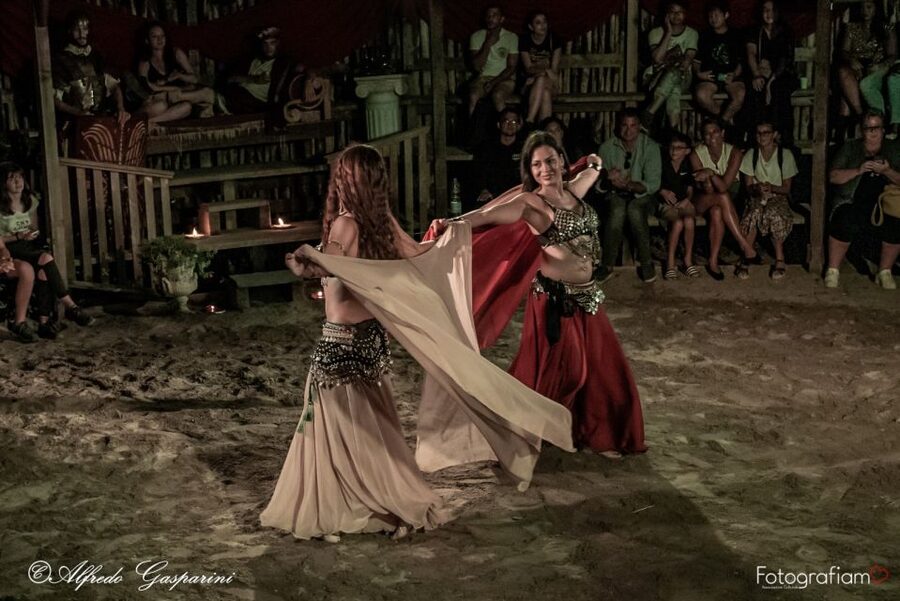
At $29, this is priced below many major Rome attractions and gives you 90 minutes of organized entertainment. You receive the museum visit and show, with a cocktail or simple refreshments included as part of the evening atmosphere.
The value is strongest for families, first-time visitors, and anyone who wants a light historical activity with plenty of action. A 10-year-old is likely to find the combat, costumes, and audience participation far more memorable than another display case. Adults can enjoy the performance too, particularly if they appreciate live theater that does not take itself too seriously.
The value is less clear if your main goal is detailed Roman scholarship. The museum is small, the show is theatrical, and the presentation aims to entertain. You will not get the same archaeological depth as a specialist tour of the Colosseum or Roman Forum.
Still, the price covers a full evening segment rather than a brief photo stop. The combination of museum, refreshments, stories, dances, rituals, and combat gives you several different experiences for one fee. The organizers’ willingness to answer questions and help with taxis adds practical value that is easy to appreciate late at night.
Who will enjoy this most?
I would recommend the show to families with children, couples looking for a playful evening, solo visitors who enjoy meeting performers, and history fans who want to see Roman equipment in action. It also suits anyone who has already spent a day among ruins and wants something more animated after sunset.
The event is welcoming to different ages. Audience participation is encouraged, but you do not have to be the loudest person in the arena. You can watch the scenes, enjoy the costumes and music, and join in only when invited.
The experience may not suit you if you dislike staged violence, loud performance, or comedy mixed with history. The swordplay is meant to look intense, and some people may find the action surprisingly convincing. The tone is playful, but the use of real armor and weapons gives the combat a physical edge.
It is also not ideal for anyone seeking a central Rome venue. The journey is manageable, but you need to think about the return trip. Wheelchair access is listed, although the supplied information does not describe the exact route, seating arrangement, or restroom setup, so you may want to confirm those details before booking.
Timing, season, and booking flexibility
Shows take place from May through September, including the listed 2026 dates. That seasonal schedule makes sense for an evening outdoor or arena-style program, but it also means you cannot count on the experience during the rest of the year.
The entrance time is 8:45 p.m., with the main show generally running from about 9 p.m. to 10 p.m. The entire visit lasts around 90 minutes. This timing leaves room for an earlier dinner, but not necessarily for a late meal after the performance.
You can cancel up to 24 hours in advance for a full refund. The reserve-now, pay-later option is useful if your Rome plans are still moving around. I would still check the exact date and starting time when booking, since availability can vary.
My take on the overall experience
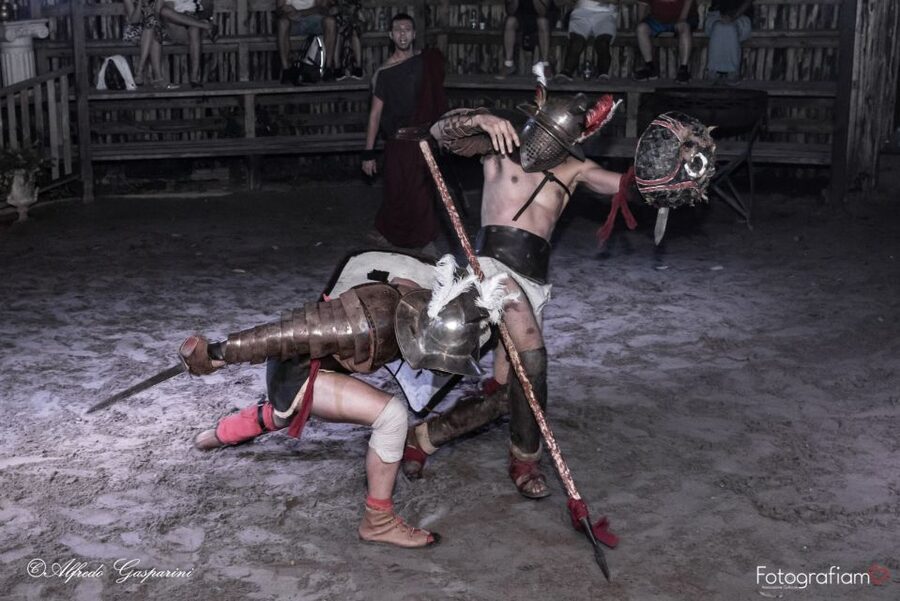
I like this show because it gives you something Rome’s ancient sites cannot: movement. Stones and inscriptions tell you where gladiators fought, but performers in armor, ritual music, staged combat, and audience reactions help you picture the emotional side of public entertainment.
The event does not pretend to be a substitute for the Colosseum. It is a lively companion to it. Visit the real monument for scale and archaeology, then use this evening show for costume, action, and atmosphere.
The strongest parts are the cast’s enthusiasm, the range of performances, and the chance to get close to Roman-style weapons and armor. The weakest parts are the out-of-the-way setting, limited late transport, and small museum. Those are manageable flaws if you plan your ride home and eat before or after at a location with better services.
Should you book it?
Book this Rome gladiator show if you want an affordable, family-friendly evening with action, Roman rituals, refreshments, and plenty of audience involvement. It is especially good when you want to break up a packed schedule of museums and ruins.
Skip it if you want a quiet, academic tour or a full meal included. For everyone else, $29 is a fair price for a fun 90-minute performance, provided you arrange transportation back to central Rome in advance.
FAQ
How much does the Rome gladiator show cost?
The listed price is $29 per person.
How long does the experience last?
The full event lasts about 1.5 hours.
When does the show begin and end?
Entrance is at 8:45 p.m., and the event ends around 10 p.m. The main show generally runs from about 9 p.m. to 10 p.m.
What does the ticket include?
The ticket includes the museum visit and the gladiator show. A cocktail and simple refreshments are also part of the evening setting.
Where does the show take place?
It takes place at the headquarters of the Rome Gladiator School, operated by Gruppo Storico Romano, about 3.5 kilometers from the Colosseum.
Is this a real gladiator fight?
No. Historical reenactors perform the combat, using real weapons and armor as part of a staged show.
What else happens besides gladiator combat?
The program includes ancient dances, Vestal rites, pantomime, comedy, music, lights, visual effects, and audience participation.
Does the experience run all year?
No. Shows take place from May through September, including the listed 2026 dates.
Is the activity wheelchair accessible?
Yes, the activity is listed as wheelchair accessible. The supplied details do not specify the exact seating or route arrangements.
More Show in Rome
- Rome: Welcome To Rome Immersive Multimedia Show
★ 4.6 · 3,161 reviews - Glass Blowing Show Visit Murano Glass Factory & Showroom OMG
★ 4.2 · 679 reviews
Recently added around Rome
- Palatine Hill and Roman Forum Tour with Fast-Track Entrance★ 4.2 · 417 reviews
- Tivoli: Villa D’Este & Villa Adriana Pass & App Audioguide★ 4.4 · 364 reviews
- From Rome: Villa D’Este & Villa Adriana Day Trip with Lunch★ 4.4 · 289 reviews
- Vatican Museums & Sistine Chapel Skip-the-Line Guided Tour★ 4.6 · 254 reviews
- Rome: The Three Tenors at St. Paul’s Church Concert Ticket★ 4.7 · 699 reviews
- Tivoli: Villa D’Este Entry Ticket and App Audio Guide★ 4.3 · 191 reviews
- Rome: Capitoline Museums and Centrale Montemartini Tickets★ 4.4 · 328 reviews
- Rome: St. Peter’s Basilica and Papal Tombs Guided Tour★ 4.6 · 477 reviews
Museums, compared.
Vatican Museums & Sistine Chapel Tour with Optional Basilica
Read our review →
Vatican Museums, Sistine Chapel & St Peter’s Basilica Guided Tour
Read our review →
Skip-The-Line Uffizi Gallery Timed Entry Ticket
Read our review →
Vatican Museums, Sistine Chapel & Basilica Tour
Read our review →
Vatican Museums & Sistine Chapel Skip-the-Line Entry Ticket
Read our review →Vatican Museums, Sistine Chapel & Basilica Tour
Read our review →
Vatican Museums & Sistine Chapel Guided Tour
Read our review →Browse the lists this tour appears in