
Reviewed · DESSERT TOURS
Rome: Trevi Fountain District Underground Tour and Ice Cream
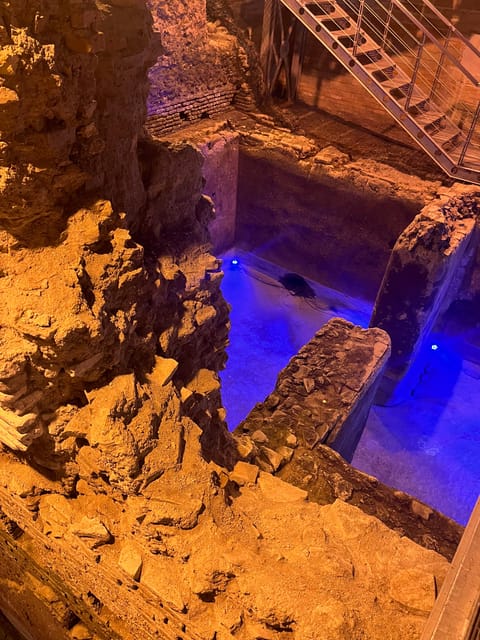
Rome has a second city below street level. This one-hour tour pairs the famous Trevi Fountain with Vicus Caprarius, a compact archaeological site where ancient walls, water channels, coins, and amphorae reveal how Roman life continued beneath today’s streets. I especially like the clear link between the Virgo aqueduct and the fountain, plus the chance to see Roman remains without giving up half a day.
I also like the human touch: guides such as Carla, Erika, Noemi, Alessia, Naomi, and Viola have been praised for lively explanations, humor, and patience with children. The main thing to keep in mind is scale. The underground site is small, and the Trevi portion may mean viewing the fountain from the crowded plaza rather than getting a special close-up position.
In This Review
- Key points at a glance
- What this short Rome tour is really about
- Meeting the guide beside Trevi Fountain
- Entering Vicus Caprarius beneath the Trevi District
- The Domus residence and Roman water engineering
- Why the guide matters in such a small space
- The gelato stop: a simple but welcome finish
- How crowded is the Trevi portion?
- Who should book this one-hour experience?
- Timing, value, and practical planning
- My verdict on the Trevi Underground Tour
- FAQ
- Where does the tour begin?
- How early should I arrive?
- How long does the tour last?
- How much time is spent at Vicus Caprarius?
- Is the Trevi Fountain included?
- Do I get special close access to the fountain?
- What can I see underground?
- Is gelato included?
- What language is the tour in?
- Is the tour suitable for wheelchair users?
Key points at a glance
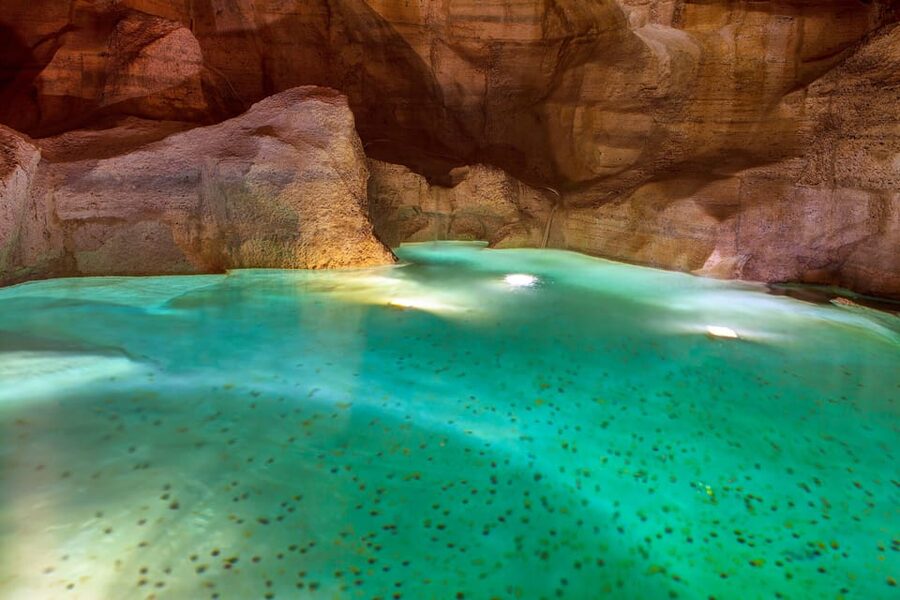
- Roman water still shapes the site: See how water connected with the Virgo aqueduct passes through ancient masonry beneath the Trevi District.
- A small site with excellent details: The archaeological rooms include polychrome marble, around 800 coins, and the head of Alessandro Helios.
- An archaeologist-led history lesson: The guide explains the ruins, Roman building layers, and the Domus residence in plain English.
- A cool break from Rome’s heat: The underground area offers welcome relief during hot weather.
- Gelato comes at the end: You receive Italian gelato, generally through a voucher for a nearby historic shop.
- Allow for crowds at the fountain: The underground entry is reserved, but the open plaza can be packed.
What this short Rome tour is really about
This is not mainly a Trevi Fountain photo tour. It is an archaeology outing with the fountain as its starting point and historical frame.
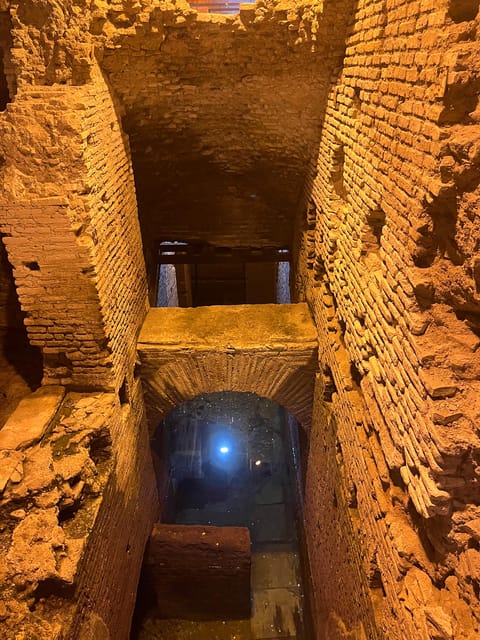
You begin at Vicolo del Puttarello, 25, a short walk from the fountain. After a quick orientation, the guide takes you below the modern city into Vicus Caprarius, sometimes called the City of Water. The name reflects the network of channels, pipes, and water-related structures found beneath this part of Rome.
I like this approach because the fountain makes more sense once you see the older water system beneath it. Rome’s famous monuments are not isolated decorations. They sit on top of earlier homes, streets, cisterns, and aqueduct routes. The tour gives you a literal look at those layers.
At $52 per person, the price is reasonable if you want a focused history lesson with reserved archaeological entry and gelato. It is less compelling if you want a long walking tour, a full Trevi Fountain presentation, or several major monuments in one booking. The experience lasts about an hour, so you are paying for a compact specialist visit rather than a full morning of sightseeing.
A few more Rome bookings to compare
- Rome: Pasta Making Class with Wine, Limoncello, and Dessert
★ 4.9 · 3,177 reviews - Rome: City Tour by Vespa with Pictures and Sweets Tastings
★ 5.0 · 180 reviews - Florence: Handmade Pasta & Dessert Class with Unlimited Wine
★ 4.8 · 788 reviews
Meeting the guide beside Trevi Fountain
Arrive at least 15 minutes early at Vicolo del Puttarello, 25. This matters because the Trevi area can be confusing and crowded, and one participant reported being delayed by the sheer number of people around the fountain. The operator still allowed that group to join, but arriving late is an avoidable risk.
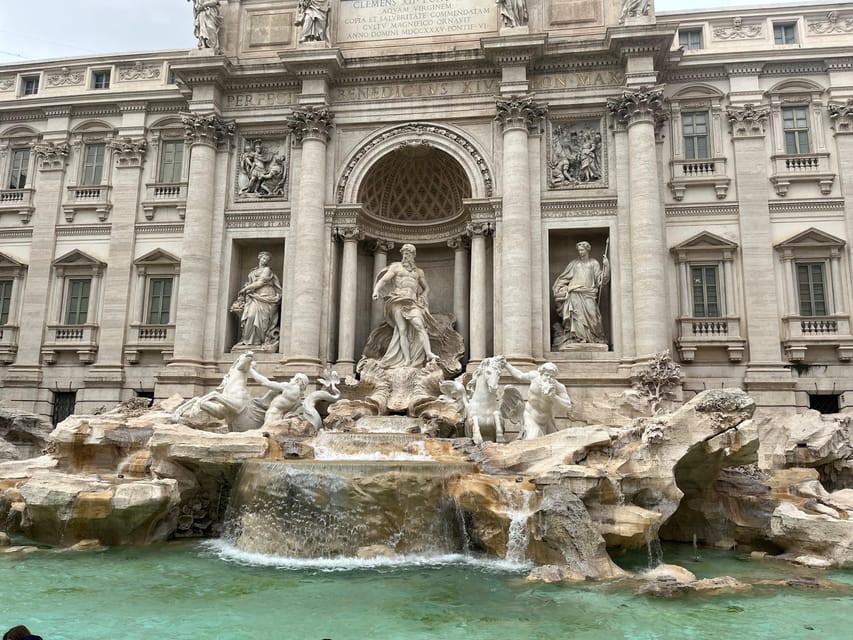
The tour begins with the Trevi Fountain, the city’s largest Baroque fountain. You may make the familiar wish before heading underground, though the fountain itself receives only a short guided explanation of about five minutes.
Do not expect an exclusive viewing platform. One important practical detail is that the guide may explain the fountain from the middle or outer side of the plaza, among the crowds. You can still see and discuss the monument, but this is not the right tour if your main goal is quiet photography or a front-row look.
The guide may also offer useful photo advice and explain parts of the fountain’s design. Guides such as Erika and Noemi have been praised for answering questions and offering nearby suggestions, which can make this short opening more useful than the timetable suggests.
Entering Vicus Caprarius beneath the Trevi District

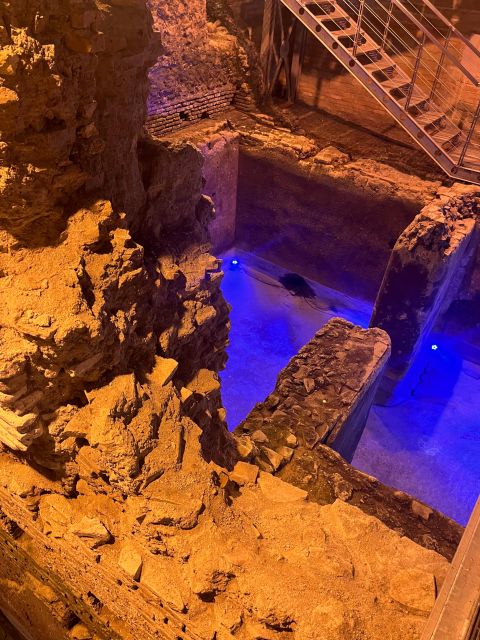
The main part of the visit lasts around 40 minutes at Vicus Caprarius. The entrance leads you into a much smaller world than the grand ruins at the Colosseum or Roman Forum, but that is part of the appeal. You are close to the masonry, water channels, and domestic remains rather than looking across a vast open field.
The guide explains how excavations exposed several layers of Roman life. This is where the idea of Rome as an underground lasagna becomes easy to understand. Modern streets occupy the upper level, while earlier Roman structures sit below, often altered, buried, or built over across centuries.
The three sections of the antiquarium contain objects found during excavation. You can see ancient coins and amphorae, including a special African vessel known as the Spatheia, used to transport oil. The collection is not huge, but each object helps explain ordinary systems of trade, storage, and daily life.
The 800-coin find is especially memorable. A large group of coins gives you a direct sense of money moving through the ancient city, while the amphora shows how goods arrived from outside Rome. These are small objects, yet they connect the site to a much wider Roman world.
The Domus residence and Roman water engineering
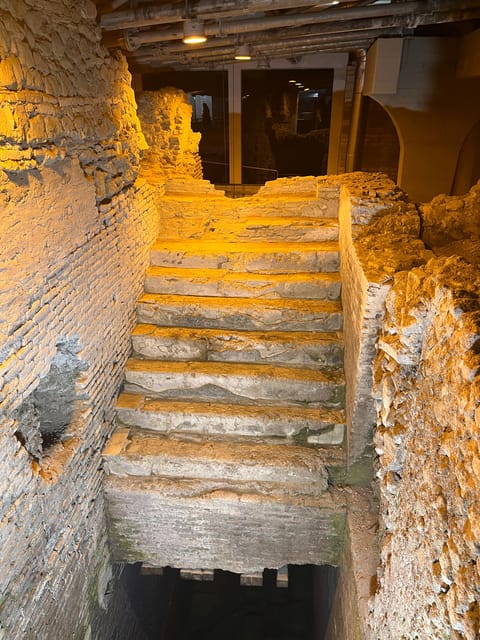
One of the most useful parts of the tour is the explanation of the luxurious Domus residence. This was not simply a ruin with attractive stonework. Its water supply, pools, pipes, and rooms show how Roman homes could use sophisticated engineering for comfort and display.
The Virgo aqueduct is central to the story. Water associated with the aqueduct continues to filter through the ancient masonry in the archaeological area, feeding pipes and pools connected with the Domus. You can see why the Trevi District earned its City of Water nickname.
I appreciate tours that connect engineering with everyday life. Aqueducts are often presented as grand lines of arches outside Rome, but here the focus shifts to the final stage: how water reached buildings and was put to use. The guide can help you picture Roman residents managing water inside a home, not just admire the infrastructure from a distance.
The finds also include precious polychrome marble coverings and the famous head of Alessandro Helios. These details point to wealth and taste, while the water system shows practical planning. Together, they make the residence feel more like a lived-in Roman home than a collection of disconnected walls.
Still Rome, but a slower afternoon:
- Vatican: Museums & Sistine Chapel Entrance Ticket
★ 4.5 · 144,003 reviews - Vatican Museums & Sistine Chapel Tour with Optional Basilica
★ 4.3 · 67,413 reviews - Colosseum, Roman Forum & Palatine Guided Tour
★ 4.7 · 63,148 reviews - Vatican Museums, Sistine Chapel & St Peter’s Basilica Guided Tour
★ 4.5 · 39,149 reviews
Why the guide matters in such a small space
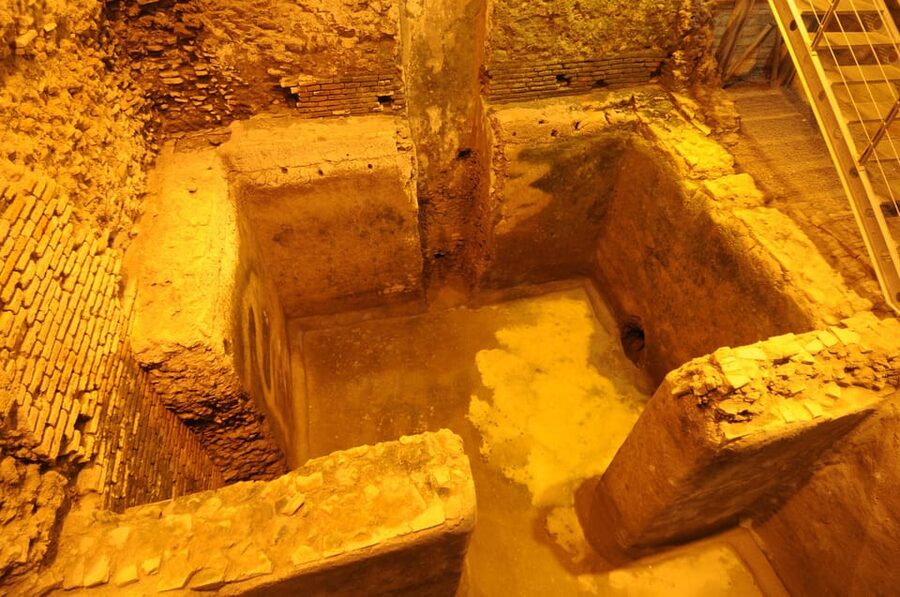
The underground rooms are compact, so the guide has an important job. Without context, you could walk through quickly and see only low walls, stone surfaces, and display cases. A good explanation turns those fragments into a story about building levels, water supply, trade, decoration, and Roman domestic life.
The strongest praise has gone to guides who combine facts with personality. Carla has been described as welcoming and clear. Erika is repeatedly praised for warmth, historical detail, and answering questions. Noemi is known for humor and a broad grasp of the site. Alessia has been praised for explaining difficult material simply, while Michelle impressed families with her patience with children.
You may also use a headset, depending on the group and guide. This is helpful in a confined space because the guide does not need to raise her voice. One particularly useful feature is the relaxed pace. You should have time to listen, look closely, and take photographs instead of being pushed from room to room.
The tour is offered in English with a live guide. Since the site is small, the quality of the explanation matters more than the number of objects on display. I would choose this experience for the guide-led interpretation, not because it offers a large museum collection.
The gelato stop: a simple but welcome finish
After the archaeological visit and fountain explanation, the tour includes Italian gelato from a historic shop near Trevi Fountain. This is a practical ending. You finish the serious history lesson with something cold and easy, rather than another round of dates and architectural terms.
The arrangement may be slightly different from what you expect. You generally receive a voucher and then collect the gelato at one of the nearby shops, rather than walking into the shop as a group with the guide. The voucher may also be usable later, so you have some flexibility instead of needing to eat it immediately after the tour.
That flexibility is useful if the fountain area is too crowded or you want to continue exploring. The gelato itself has received strong praise, with several people calling it a highlight and one person describing it as the best they had during a weekend in Rome.
I would treat the gelato as a pleasant extra, not the reason to book. At $52, the value comes from the reserved archaeological visit and live interpretation. The dessert adds a local ritual and makes the experience feel less formal, but you could buy gelato elsewhere for less.
How crowded is the Trevi portion?
The fountain area is one of Rome’s busiest spots. Even a well-organized tour cannot control the crowd outside, and the open plaza may feel much more hectic than the quiet archaeological rooms below.
The short five-minute fountain explanation is enough to give you context, but it may not satisfy anyone hoping for a full history of the fountain’s construction, sculptural program, and water source. In practice, the underground site is the main event.
If you want photographs, listen to the guide’s suggestions and plan to remain in the area after the formal tour. One guide stayed an extra 20 minutes with a group to help with fountain photographs and nearby ideas, but that kind of extra time should be seen as a bonus, not a promise.
A good plan is to arrive early, make your wish, join the underground visit, and then decide how long you want to remain around the fountain after receiving the gelato voucher. This gives you more control over the crowded final section.
Who should book this one-hour experience?
I would recommend it to you if you enjoy:
- Roman archaeology and ancient engineering
- Smaller sites that reveal how Rome developed beneath modern streets
- Water systems, aqueducts, and domestic architecture
- Guided explanations rather than reading display panels alone
- Short activities that fit between major Rome attractions
- A cool indoor stop during hot weather
- Family outings where a lively guide can keep children involved
It suits first-time visitors because it adds useful context to the Trevi Fountain. It also works for repeat visitors. Several people who had already visited Rome many times found the underground site a fresh surprise.
You should think twice if you have limited mobility. The experience is not suitable for wheelchair users or people with mobility impairments. Comfortable shoes are recommended, and the route through an archaeological area may not be ideal if stairs, uneven surfaces, or confined spaces are difficult for you.
It may also disappoint you if you expect a large archaeological museum. Vicus Caprarius is small. The guide makes the visit worthwhile, but the physical site will not compare in size with the Roman Forum, Colosseum, or Baths of Caracalla.
Timing, value, and practical planning
The advertised duration is one hour, with roughly 40 minutes underground and about five minutes at the fountain, followed by the gelato stop. That makes this easy to place on a busy Rome day. You could schedule it before lunch, between nearby sightseeing stops, or during the hottest part of the afternoon.
The underground rooms can feel pleasantly cool in summer. That is more than a comfort detail. After walking Rome’s exposed streets, a short indoor visit can help you keep your energy for the rest of the day.
The $52 cost includes assistance, reserved entry to Vicus Caprarius, the guided visit, the Trevi Fountain portion, and Italian gelato. The value is strongest when you want someone to explain what you are seeing. If you are happy to read a little and explore on your own, the price may seem high for an hour and a small site.
Free cancellation up to 24 hours before the start and reserve-now, pay-later booking make it easier to fit into an uncertain schedule. There is no hotel pickup or drop-off, so you need to reach the meeting point yourself.
My verdict on the Trevi Underground Tour
Book this tour if you want Rome to make more sense below the postcard view. The key rewards are the water system, the Domus residence, the 800 coins, the African oil amphora, and a guide who can turn modest ruins into a clear story.
I would not book it as a dedicated fountain access experience. The plaza can be crowded, the fountain section is brief, and a special close-up view is not guaranteed. Instead, think of the fountain as the introduction and the underground archaeology as the main course, with gelato for dessert.
For history-minded visitors, repeat visitors, families, and anyone seeking a cool one-hour break, this is a smart addition to a Rome itinerary. For visitors who want grand ruins, extensive walking, or a long architectural tour, spend the $52 elsewhere.
FAQ
Where does the tour begin?
The meeting point is at Vicolo del Puttarello, 25, near the Trevi Fountain District.
How early should I arrive?
You should arrive at least 15 minutes before your selected start time.
How long does the tour last?
The experience lasts one hour.
How much time is spent at Vicus Caprarius?
The guided visit at Vicus Caprarius lasts about 40 minutes.
Is the Trevi Fountain included?
Yes. The experience includes a guided Trevi Fountain visit, listed as lasting about five minutes.
Do I get special close access to the fountain?
A close-up position is not guaranteed. The fountain may be viewed from the crowded plaza, often from the middle or outer side.
What can I see underground?
You can see ancient masonry, water features, Roman building remains, coins, amphorae, polychrome marble coverings, the head of Alessandro Helios, and the Spatheia African oil amphora.
Is gelato included?
Yes. Italian gelato is included, generally provided through a voucher for a nearby historic gelato shop.
What language is the tour in?
The live guided tour is in English.
Is the tour suitable for wheelchair users?
No. The experience is not suitable for wheelchair users or people with mobility impairments. Comfortable shoes are recommended.
Recently added around Rome
- Palatine Hill and Roman Forum Tour with Fast-Track Entrance★ 4.2 · 417 reviews
- Tivoli: Villa D’Este & Villa Adriana Pass & App Audioguide★ 4.4 · 364 reviews
- From Rome: Villa D’Este & Villa Adriana Day Trip with Lunch★ 4.4 · 289 reviews
- Vatican Museums & Sistine Chapel Skip-the-Line Guided Tour★ 4.6 · 254 reviews
- Rome: The Three Tenors at St. Paul’s Church Concert Ticket★ 4.7 · 699 reviews
- Tivoli: Villa D’Este Entry Ticket and App Audio Guide★ 4.3 · 191 reviews
- Rome: Capitoline Museums and Centrale Montemartini Tickets★ 4.4 · 328 reviews
- Rome: St. Peter’s Basilica and Papal Tombs Guided Tour★ 4.6 · 477 reviews
Dessert Tours, compared.

Pasta Making Class with Wine, Limoncello, and Dessert
Read our review →
Handmade Pasta & Dessert Class with Unlimited Wine
Read our review →

City Tour by Vespa with Pictures and Sweets Tastings
Read our review →Browse the lists this tour appears in