
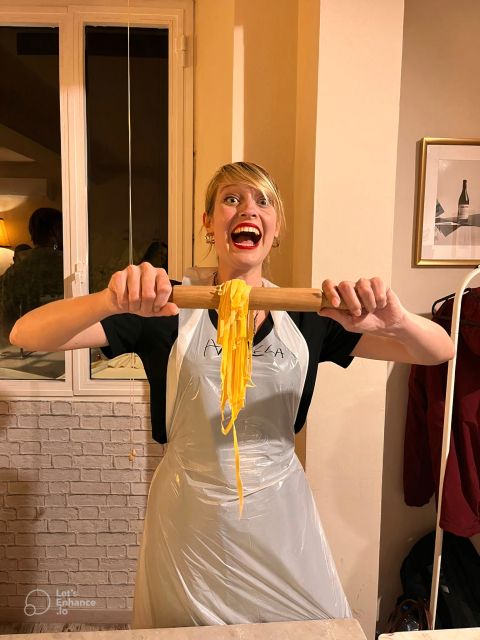
Reviewed · WORKSHOPS
Florence: Pasta Class with Wine, Limoncello and Dessert
Fresh pasta tastes better when you make it yourself. This three-hour class near Ponte Vecchio brings you into a historic Florence palace, where you mix flour and eggs, shape three pasta styles, and sit down to eat the results. I like the hands-on teaching and the warm, social meal that follows. The main catch is that the class is not suitable for vegans, people with gluten or lactose intolerance, or anyone with a nut allergy.
You arrive five minutes early at the cooking school on Lungarno Guicciardini, 17r. From there, an English-speaking instructor leads the group through the class, from a short introduction to the final plate of pasta, dessert, Tuscan wine, and limoncello. I also like that every person makes their own pasta rather than simply watching a chef work. Just keep in mind that some sauces, fillings, and dessert elements are prepared ahead for timing, so this is a practical pasta workshop, not a full restaurant kitchen apprenticeship.
In This Review
- Five things that make this Florence class worth considering
- Arriving at the palace near Ponte Vecchio
- A short introduction before the flour hits the table
- Mixing eggs and flour from scratch
- Three shapes, three useful techniques
- Ravioli
- Tortelli
- Fettuccine
- Cooking the pasta and watching the sauces come together
- The shared table is half the experience
- Tuscan wine, dessert, and limoncello
- What the instructors do especially well
- Who should book, and who should skip it
- Value, flexibility, and practical planning
- Should you book this Florence pasta class?
- FAQ
- How long does the Florence pasta class last?
- Where does the class meet?
- What language is the class taught in?
- Do I need previous cooking experience?
- Which types of pasta do I make?
- Is wine included?
- Are dessert and limoncello included?
- Can vegans attend?
- Can I attend with a gluten or lactose intolerance?
- How early should I arrive?
Five things that make this Florence class worth considering
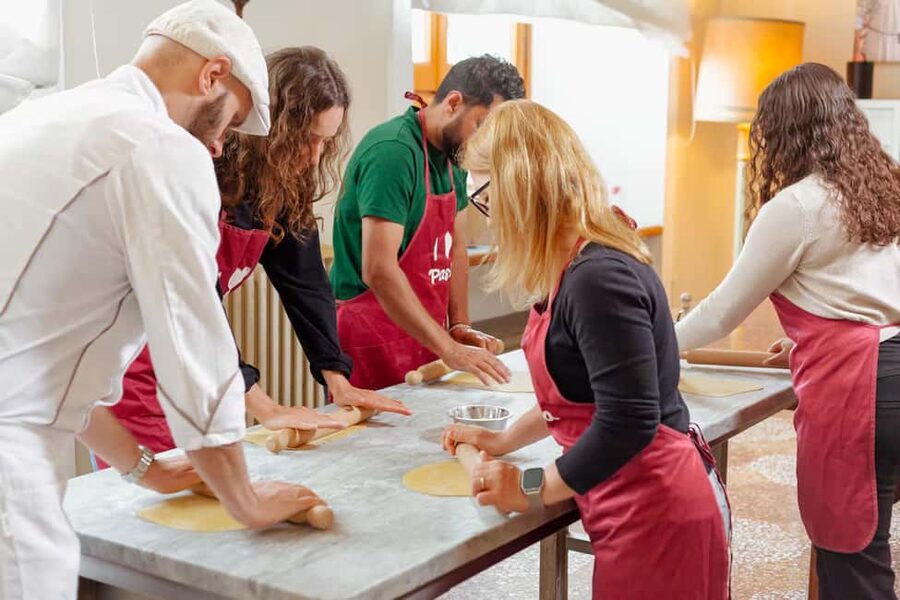
- You make three pasta shapes: Ravioli, tortelli, and fettuccine give you a useful range of techniques in one sitting.
- The class takes place near Ponte Vecchio: You can pair it with a walk through central Florence without arranging transport.
- You eat what you prepare: The pasta is cooked for the group and served at a shared table with wine.
- The teaching feels personal: Instructors such as Camilla, Giacomo, Francesca, Sarno, and Lucrezia are repeatedly praised for humor, patience, and one-on-one help.
- The ending is distinctly Italian: Organic Tuscan wine, a traditional dessert, and a limoncello shot turn the meal into a social finale.
- Dietary limits matter: Vegetarian diets can be supported, but vegan, gluten-free, lactose-free, and nut-free needs are listed as unsuitable.
Arriving at the palace near Ponte Vecchio
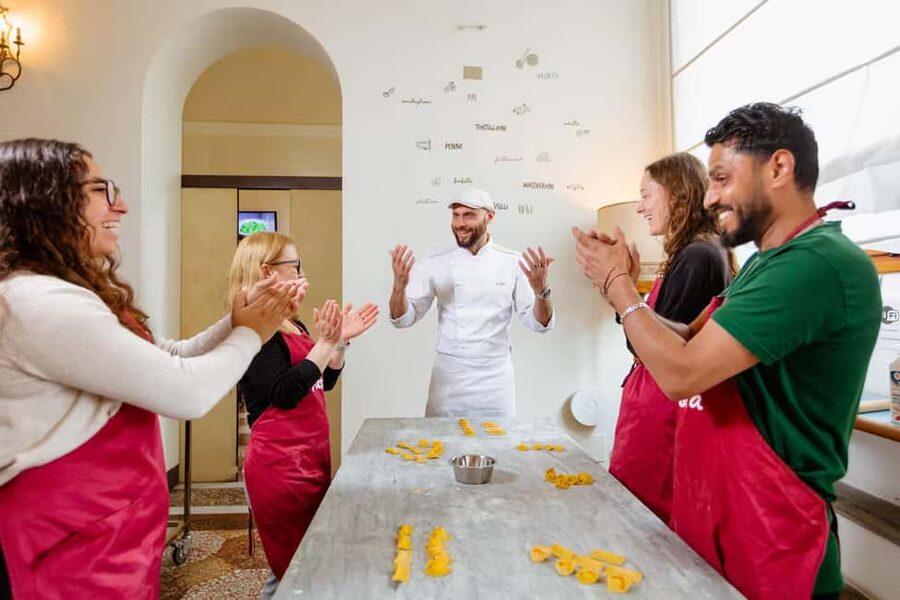
The meeting point is the cooking school at Lungarno Guicciardini, 17r, in central Florence. It is only steps from Ponte Vecchio, so the setting gives the class a real sense of place before you even touch the dough.
You should arrive five minutes early for check-in. That small cushion matters because the class begins as a group, and late arrivals can miss the opening explanation or early instructions. Wear clothes you can cook in. You will be handling flour, eggs, filling, sauces, and a rolling pin, so this is not the moment for your finest Florence outfit.
The activity lasts three hours. Starting times vary, so you need to check availability when booking. Depending on the time you choose, the finished meal can work as lunch or dinner. There is no hotel pickup, and you make your own way to the school.
The historic palace setting adds charm, but the real value comes from what happens inside. You are not simply taking a food-themed tour with a quick demonstration. You work at a station, prepare pasta by hand, and then share the finished meal with the group.
A few more Florence bookings to compare
- Florence: Handmade Pasta & Dessert Class with Unlimited Wine
★ 4.8 · 788 reviews - Rome: Pasta Making Class with Wine, Limoncello, and Dessert
★ 4.9 · 3,177 reviews - Rome: Trevi Fountain District Underground Tour and Ice Cream
★ 4.5 · 356 reviews
A short introduction before the flour hits the table
The class begins with an evocative introduction presented in a cinematic style. It gives you some context before the practical work begins and helps set the mood for the lesson.
One participant found this opening film nicely done but would have preferred more time in the kitchen or more wine tasting. That is a fair point. Three hours sounds generous, but the class has several stages: introduction, dough making, rolling, shaping, cooking, eating, dessert, and drinks. If you are focused mainly on technique, the opening presentation may feel like time taken away from pasta work.
For many people, though, the introduction provides a gentle start. It lets the group settle in and gives the instructor a chance to explain the food traditions behind the recipes. You are soon moved from watching to doing, which keeps the class from becoming a passive demonstration.
Mixing eggs and flour from scratch
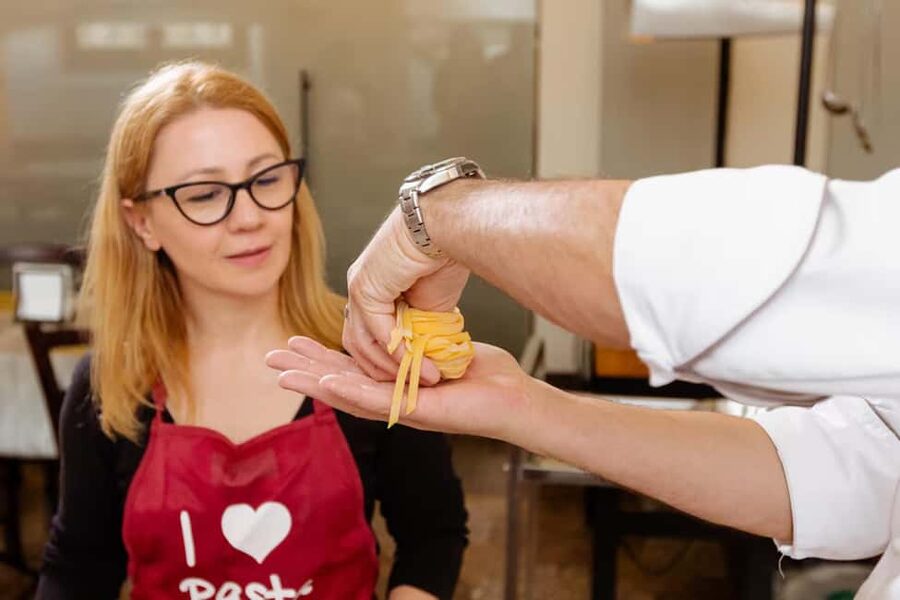
The central lesson begins with the basic pasta dough. You put on an apron, take up a rolling pin, and combine eggs and flour with your own hands.
The instructor guides you through kneading and explains how the dough should feel as it comes together. For a first-time cook, this is the useful part: pasta making is less about memorizing a rigid formula and more about learning to notice texture. The class is designed for beginners, and several people with little or no kitchen confidence found the process easy to follow.
You do not need previous pasta-making experience. The instructor moves around the room to help with technique, which is especially useful when dough feels too sticky, too dry, or unevenly rolled. The group format also means you can watch how other people handle the same steps.
The teaching style varies by instructor, but the strongest pattern is clear. Camilla is praised for being funny and engaging. Giacomo is described as welcoming and good at drawing the whole group into conversation. Sarno receives high marks for his pasta technique and enthusiasm. Lucrezia is praised for making both children and older family members feel included.
Those personal touches matter. A cooking class can become awkward if the instructor demonstrates once and leaves everyone to struggle. Here, the best experience comes when the teacher keeps moving, checks each work surface, and gives direct help.
Three shapes, three useful techniques
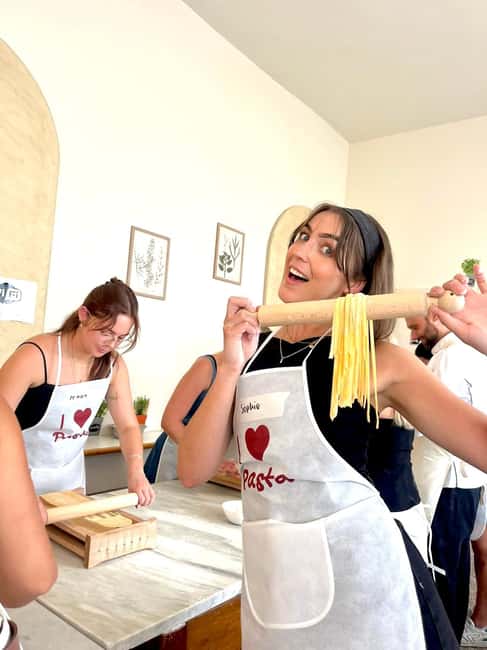
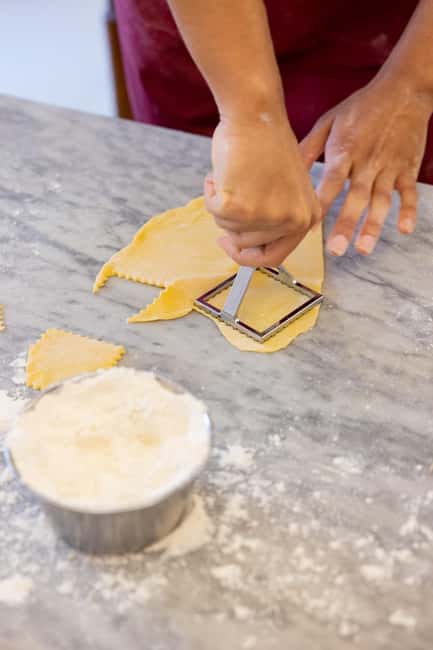
You prepare ravioli, tortelli, and fettuccine. That is a strong lineup because each shape calls for a slightly different approach.
Still Florence, but a slower afternoon:
- Florence: Skip-The-Line Uffizi Gallery Timed Entry Ticket
★ 4.5 · 27,832 reviews - Tuscany Day Trip from Florence: Siena, San Gimignano, Pisa and Lunch at a Winery
★ 5.0 · 21,634 reviews - Florence: Timed Entrance Ticket to Michelangelo’s David
★ 4.6 · 16,983 reviews - Florence: Michelangelo’s David Skip-the-Line Entry Ticket
★ 4.5 · 12,764 reviews
Ravioli
Ravioli gives you practice with filled pasta. You work with the filling, place portions on the pasta sheet, seal the edges, and cut the pieces into shape. The instructor also shows how to avoid trapping too much air inside, which can affect the finished pasta during cooking.
The filling and some sauces are prepared in advance for logistical reasons. That lets the class spend its time on rolling, filling, shaping, and cooking rather than waiting for every component to be made from scratch. If you expect to prepare every sauce and filling yourself, this is worth knowing before you book.
Tortelli
Tortelli uses another filled-pasta shape and gives you a second chance to improve your sealing and shaping. Making both ravioli and tortelli helps you see that fresh pasta is not one single technique. Small changes in folding and cutting create different results on the plate.
This is also where careful instruction makes a difference. The dough must be thin enough to cook well but sturdy enough to hold the filling. The class gives you repeated practice, rather than one quick attempt.
Fettuccine
Fettuccine is the broad, ribbon-like pasta in the lesson. You roll and cut the dough into strands, learning how to keep the pieces from sticking together.
One particularly memorable detail from the class is the pasta guitar, a traditional cutting tool used to create even strands. It is the sort of small, hands-on touch that makes the workshop more than a basic pasta demonstration. You leave with a better feel for how fresh noodles are shaped and handled.
Making three forms in one class also makes the experience useful at home. You are not learning one dish for one evening. You are learning several basic methods that can be adapted to future meals.
Cooking the pasta and watching the sauces come together
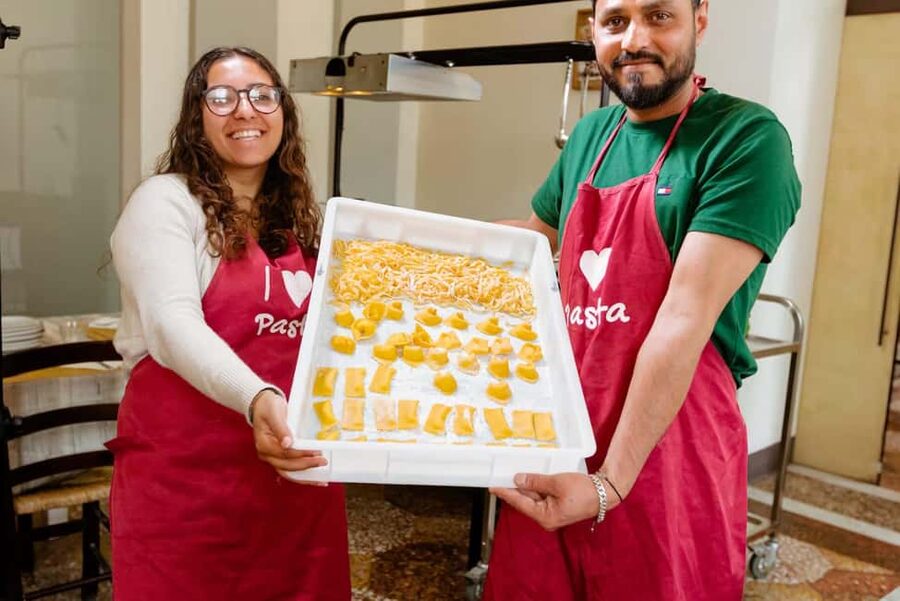
Once everyone has shaped their pasta, the instructors cook it together in one pot. The group meal is part of the point. You are not sent away with a container or left to eat separately at your work station.
A signature tomato sauce simmers for hours in advance. The butter and sage sauce for the ravioli and tortelli is prepared in front of you shortly before serving. This gives you a useful comparison: one sauce develops through long cooking, while the other depends on a simple combination made at the right moment.
The pasta is fresh, so cooking time and handling matter. Watching the instructor manage the finished pieces helps connect the work at your table with what arrives on your plate. You get to see how delicate filled pasta is handled and how fresh noodles differ from dried supermarket pasta.
The food is repeatedly praised for quality and flavor. Portions are described as satisfying, and the meal gives you a proper reward after the work. Still, the class is built around preparation and shared dining, not around a long list of dishes. If you want a broad tasting menu, choose a restaurant meal instead.
The shared table is half the experience
After the cooking, everyone gathers around a large communal table. You eat the pasta you made, share stories with people from different countries, and enjoy the relaxed rhythm of an Italian family meal.
This social element works well for couples, solo participants, friends, and families. A family group with children as young as 12 found the class engaging for everyone, while another large family used the experience to celebrate a 50th wedding anniversary. The instructors make an effort to involve different ages and cooking abilities.
You should expect conversation and group interaction. That is a plus if you want a social evening, but less so if you prefer quiet instruction or a private cooking lesson. The class size can vary. One group had 10 participants, and another had eight. These are small enough for personal assistance while still giving the meal a shared atmosphere.
Several people also liked meeting other participants during the meal. You get a simple taste of Italian hospitality without needing to arrange a large family dinner of your own.
Tuscan wine, dessert, and limoncello
Wine is served with the meal, including organic Dalle Nostre Mani Tuscan wines produced using natural methods. The experience includes tastings, and one participant specifically advised staying for the wine tasting afterward.
The wine adds value because it is part of the table experience rather than an unrelated extra. You can taste it alongside the pasta and learn how the meal works as a whole. Additional food and drinks are not included, so do not expect an unlimited beverage service.
Dessert follows the pasta. The dessert is prepared ahead, which keeps the class moving, and it has been well received alongside the meal. A small limoncello shot brings the session to a cheerful close.
Alcohol is served only to participants of legal drinking age. If you do not drink, the class still includes the pasta, dessert, and social meal, but the wine and limoncello are part of the planned ending.
The cooking school also has an organic store, according to one participant, with olive oil and other products available to buy. That can be handy if you want to take home a food souvenir, though extra purchases are not part of the class.
What the instructors do especially well
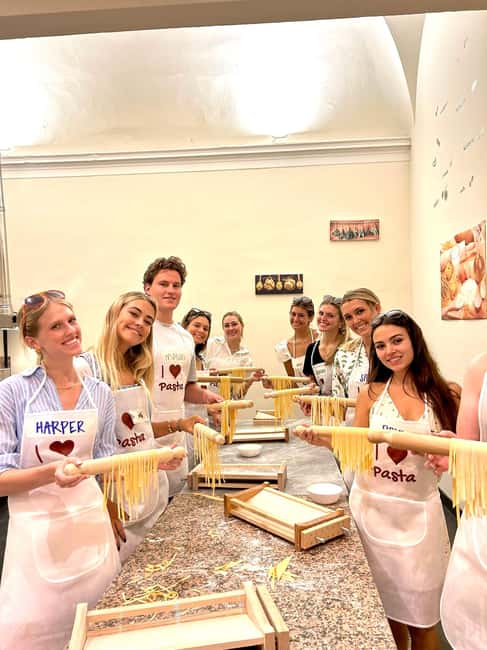
The teachers are the heart of the experience. The names that come up most often include Camilla, Giacomo, Francesca, Sarno, Christine, Caterina, Ezgi, Nicola, and Lucrezia.
Their strengths are not identical, but the pattern is consistent: humor, patience, clear demonstrations, and active help at each work station. Christine is praised for making the process friendly and easy to follow. Nicola is described as helpful and approachable. Caterina is remembered for making people feel at home in the kitchen.
The personal stories also add warmth. Several instructors talk about learning pasta from their grandmothers, including recipes and methods passed down through family kitchens. That connection gives the class more meaning than a generic cooking lesson.
Do not book based on a specific instructor, since teaching assignments can change. Instead, book knowing that the experience depends heavily on the person leading your session. The available feedback points to a strong teaching team, but the exact personality and pacing will be different each time.
Who should book, and who should skip it
I would recommend this class to:
- First-time pasta makers
- Couples looking for a shared activity
- Families with older children and teenagers
- Solo visitors who enjoy meeting people over food
- Friends who want a relaxed group experience
- Corporate or student groups
- Anyone who wants a meal that connects directly to local food traditions
You do not need advanced cooking skills. The class is structured so beginners can keep up, while more experienced cooks can pay closer attention to dough texture, shaping, and sauce technique.
The experience is not suitable for vegans, people with gluten intolerance, people with lactose intolerance, or people with nut allergies. Vegetarian options are available, and other dietary needs may be supported, but the information is inconsistent about exactly what can be accommodated. Contact the provider before booking and explain your needs clearly.
Mobility can also be a concern. The class is listed as unsuitable for people with mobility impairments. Smoking is not allowed.
Value, flexibility, and practical planning
No price is provided here, so I cannot judge the exact cost against competing Florence classes. I can judge what you receive: three hours of instruction, equipment, ingredients, three pasta shapes, a prepared meal, organic Tuscan wine, dessert, and limoncello.
That package can be good value if you want both an activity and dinner. You are paying for instruction, food, a central location, and the chance to meet people. A standard restaurant meal may be less expensive, but it will not teach you how to make ravioli or give you the same hands-on memory.
The value is strongest for people who will use the recipes again. One participant appreciated receiving a recipe book to recreate the pasta at home. If you plan to buy a rolling pin, pasta cutter, or pasta guitar later, the class can give you a clearer idea of what tools and techniques suit you.
Booking is flexible, with free cancellation up to 24 hours before the activity and a reserve-now, pay-later option. The class requires a minimum number of participants. If that number is not reached, the provider may offer another time or date, or a full refund.
Should you book this Florence pasta class?
Book it if you want to do something active, social, and firmly tied to Italian food. The strongest reasons are the three pasta shapes, the instructors’ personal attention, the meal made from your own work, and the generous finish with wine, dessert, and limoncello.
Skip it if you need strict vegan, gluten-free, lactose-free, or nut-free cooking, or if you want a private lesson with complete control over every ingredient. Also skip it if your main goal is a long wine tasting or a full restaurant-style menu.
For most visitors who can eat the food and enjoy a group setting, this is an easy Florence choice. Arrive early, wear practical clothes, tell the school about dietary needs in advance, and stay through the final tasting. The pasta is the lesson, but the shared table is what makes the afternoon or evening memorable.
FAQ
How long does the Florence pasta class last?
The class lasts three hours, including the introduction, pasta preparation, cooking, shared meal, dessert, wine, and limoncello.
Where does the class meet?
You meet directly at the cooking school at Lungarno Guicciardini, 17r, 50125 Firenze FI, Italy, near Ponte Vecchio.
What language is the class taught in?
The instructor teaches in English.
Do I need previous cooking experience?
No. The class is designed for beginners, and the instructor provides guidance while you knead, roll, cut, and shape the pasta.
Which types of pasta do I make?
You make ravioli, tortelli, and fettuccine by hand.
Is wine included?
Yes. The experience includes tastings of organic Tuscan wines. Wine is served only to participants of legal drinking age.
Are dessert and limoncello included?
Yes. Dessert and a limoncello shot are included at the end of the meal.
Can vegans attend?
No. The activity is listed as unsuitable for vegans.
Can I attend with a gluten or lactose intolerance?
No. The activity is listed as unsuitable for people with gluten intolerance and lactose intolerance. You should contact the provider before booking if you have any dietary concern.
How early should I arrive?
Arrive five minutes before the scheduled check-in time. Wear comfortable clothing suitable for cooking and report allergies or dietary restrictions before the class.
Recently added around Florence
- Florence Uffizi Gallery monolingual Small Group Tour★ 4.0 · 621 reviews
- Florence Private Walking tour with Skip-the-line to Accademia★ 4.5 · 236 reviews
- Uffizi Gallery Entrance Ticket with Priority Access★ 3.5 · 1,029 reviews
- Florence Skip-the-Line Duomo Tour with Guide & Brunelleschi Dome★ 5.0 · 1,176 reviews
- Skip-the-Line Accademia Guided Visit: David Secrets and Beyond★ 4.0 · 525 reviews
- Priority Entrance : Florence Accademia Gallery Timely Tickets★ 4.0 · 603 reviews
- Private Tour in Siena, San Gimignano and Chianti Day Trip from Florence★ 5.0 · 405 reviews
- Accademia Gallery Entrance Ticket with Priority Access★ 4.0 · 1,088 reviews
Workshops, compared.
3 in 1 Cooking Class near Navona: Fettuccine, Ravioli & Tiramisu
Read our review →
Florence Pizza or Pasta Class with Gelato Making at a Tuscan Farm
Read our review →
Pasta & Tiramisu Cooking Class with Unlimited Wine
Read our review →
Pizza-Making Workshop with Drink and Appetizer
Read our review →
Pasta & Tiramisu Class with Fine Wine by the Vatican
Read our review →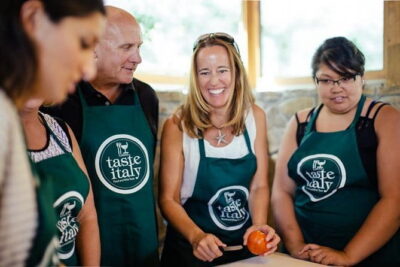
Cooking Class and Lunch at a Tuscan Farmhouse with Local Market Tour from Florence
Read our review →Browse the lists this tour appears in