
Reviewed · GUIDED
Rome: Trevi Fountain District Underground Domus Guided Tour
Rome keeps another city below its fountains. This 45-minute tour leads you nine meters underground to Vicus Caprarius, where ancient masonry, water channels, coins, amphorae, and the remains of a luxurious Roman home reveal how Rome functioned beneath street level. I especially like the archaeologist-led storytelling and the cool, atmospheric setting beneath the Trevi District.
The tour also gives you a useful new way to read the Trevi Fountain, tracing its water supply back through Roman engineering. The main thing to understand is that you do not go underneath the actual fountain or receive private access to it. The archaeological site is nearby, and the fountain visit takes place afterward in a public area that can be very crowded.
In This Review
- Key points to know before you book
- Entering Vicus Caprarius at Vicolo del Puttarello 25
- The City of Water and Rome’s working infrastructure
- Three sections that reveal domestic Roman life
- Coins, amphorae, marble, and the head of Alessandro Helios
- What the 40-minute underground portion feels like
- The Trevi Fountain stop, and what it really includes
- Is $50 a fair price for 45 minutes?
- The guides are the heart of the experience
- Who will enjoy this Rome underground tour?
- Should you book Vicus Caprarius and Trevi Fountain?
- FAQ
- Where does the tour meet?
- How long does the tour last?
- Is the tour conducted in English?
- Does the tour go underneath the actual Trevi Fountain?
- Does the tour include skip-the-line access to Trevi Fountain?
- Is the tour wheelchair accessible?
Key points to know before you book
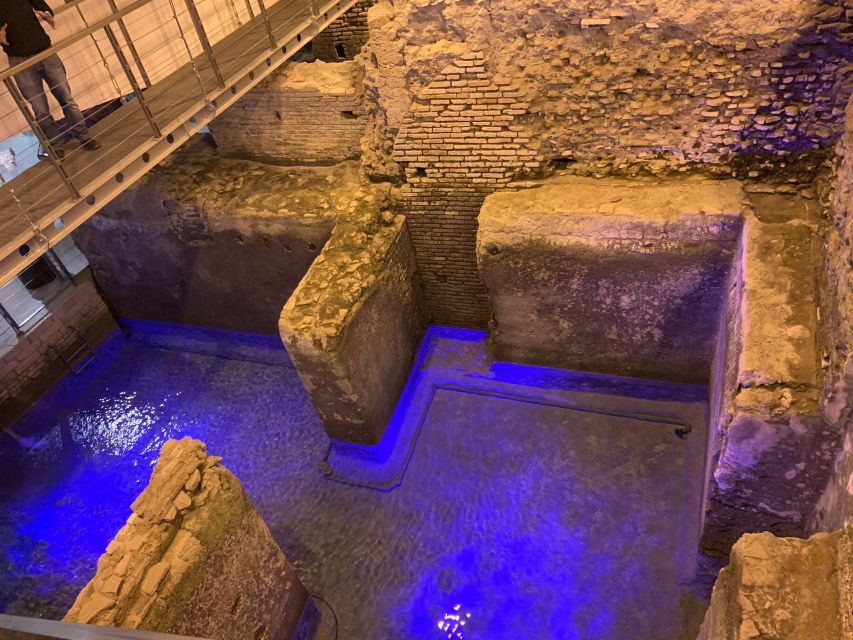
- Nine meters below modern Rome: Walk through Vicus Caprarius, an archaeological site known as the City of Water.
- Ancient engineering takes center stage: See the water system linked to the spring that supplies the Trevi Fountain.
- Small but packed with detail: The underground area is not huge, so the guide’s explanations make the visit worthwhile.
- Archaeology guides make the difference: Erica, Naomi, Noemi, Alessia, and other guides receive repeated praise for clear, lively storytelling.
- Trevi Fountain is viewed afterward: The fountain is free to access, but skip-the-line entry and private viewing are not included.
- Good value at $50: The price makes the most sense if you want context, interpretation, and reserved entry rather than a long sightseeing session.
Entering Vicus Caprarius at Vicolo del Puttarello 25
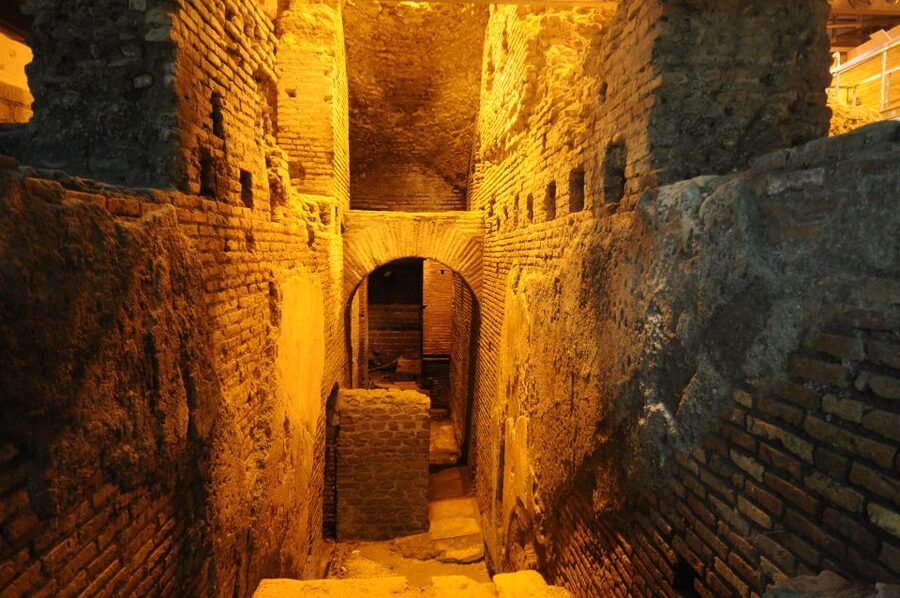
Your meeting point is the entrance to the Vicus Caprarius archaeological area at Vicolo del Puttarello 25. This is close to the Trevi Fountain, but it is not the fountain itself, so allow enough time to find the small street and reach the entrance.
The tour begins underground, with a descent of roughly nine meters. Comfortable shoes matter here. The site is not suitable for wheelchair users or people with mobility impairments, and the underground rooms can feel compact when more than one group is moving through the area.
The main attraction is not one giant monument. It is the way several layers of Roman life sit together. You see remains connected with water, domestic buildings, construction changes, and objects recovered from the site. The guide helps you connect those fragments into a story instead of leaving you to stare at old walls and guess what they once meant.
That is where the live guide earns the admission price. Several guides, including Erica, Naomi, Noemi, Michelle, and Alessia, are praised for their humor, patience, and ability to answer questions. The strongest descriptions focus not just on facts, but on enthusiasm. One guide was an archaeology student, while others brought years of study and a broad grasp of Rome’s past to the walk.
A few more Rome bookings to compare
- Vatican: Museums & Sistine Chapel Entrance Ticket
★ 4.5 · 144,003 reviews - Vatican Museums & Sistine Chapel Tour with Optional Basilica
★ 4.3 · 67,413 reviews - Colosseum, Roman Forum & Palatine Guided Tour
★ 4.7 · 63,148 reviews
The City of Water and Rome’s working infrastructure
Vicus Caprarius is often called the City of Water, and the name makes sense once you see how much of the site concerns Rome’s water supply. The path of water from the Trevi spring passes through ancient masonry and into channels, pipes, and pools connected with the Roman buildings above and around it.
This is a good reminder that Roman monuments were not isolated works of art. They depended on practical systems that moved water, supported homes, and served daily needs. The tour gives you a look at that less glamorous side of Rome, the pipes and channels that made luxurious living possible.
The water system is also the link to the Trevi Fountain. You learn how the ancient spring and its channels continue to shape the fountain’s story. Several guides have taken extra time outside to point out details at the fountain, making the connection clearer than a quick underground visit alone would.
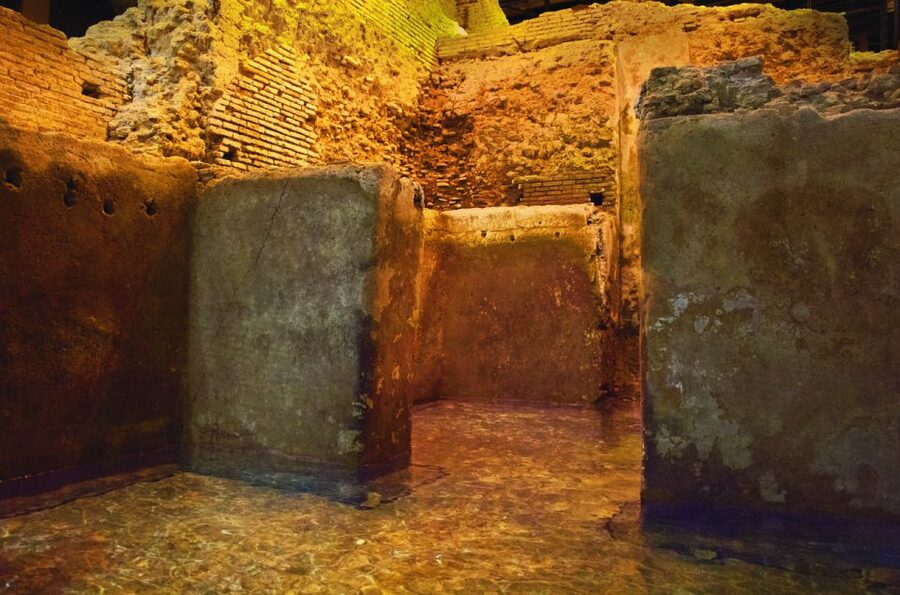
Do not expect an intact Roman aqueduct stretching through a vast tunnel. The site is a compact excavation with exposed remains. One visitor found the space smaller than expected, and that is a fair warning. The value comes from the interpretation and the close look at surviving details, not from scale.
Three sections that reveal domestic Roman life

The archaeological area is arranged in three sections. Together, they show how the site changed over time and how Roman architecture served both practical and luxurious purposes.
The remains include a domus, or private Roman residence, with evidence of impressive decoration and water features. The residence had pools and pipes supplied by the nearby water system. That combination of plumbing and decoration gives you a feel for the comfort available to wealthy Roman households.
The site also contains evidence of later changes, helping you follow the development of the area from the Imperial Age into the medieval period. The exact story depends on the guide’s explanation, but the larger point is clear: Rome was repeatedly rebuilt, reused, and layered over itself.
This is one of the tour’s best qualities. Instead of treating Ancient Rome as a single frozen period, the guide explains how the site moved through different stages. You see how buildings were altered, how old structures became part of newer ones, and how the ground level of Rome gradually rose above earlier streets and homes.
Coins, amphorae, marble, and the head of Alessandro Helios
The objects found at Vicus Caprarius add human scale to the architecture. You can see ancient coins dating from the Imperial Age and hundreds of coins recovered from the area. They are small, but they help place ordinary economic activity within the larger story of Roman construction and daily life.
The site also contains African amphorae, large ceramic containers used to transport oil. These vessels point to the wide trade networks that supplied Rome. A broken storage jar can tell you as much about the city’s connections as a grand building, especially when the guide explains what it carried and where it came from.
Look for references to polychrome marble and the head of Alessandro Helios. The colored marble reflects the taste and expense of an affluent residence, while the sculpted head offers a more personal glimpse of the art that once decorated the site.
These details are easy to miss on your own. The rooms do not present every object with the same level of explanation you might receive in a major museum. I would choose the guided option because the guide turns coins, pottery, marble, and sculpture into evidence of trade, wealth, water use, and decoration.
Still Rome, but a slower afternoon:
- Vatican Museums, Sistine Chapel & St Peter’s Basilica Guided Tour
★ 4.5 · 39,149 reviews - Rome: Colosseum, Palatine Hill and Roman Forum Guided Tour
★ 4.8 · 32,814 reviews - Rome: Guided Tour of Colosseum, Roman Forum & Palatine Hill
★ 4.7 · 27,897 reviews - Rome: Colosseum & Forum with Audio Guide App -Optional Arena
★ 4.2 · 24,770 reviews
What the 40-minute underground portion feels like

About 40 minutes are devoted to Vicus Caprarius. The pace is steady, with time to listen, look around, and ask questions. The guides are repeatedly praised for making room for questions and photographs, though the short duration means the talk can feel full.
One particularly useful comment is that a guide seemed to have more to explain but had limited time. That is not a flaw in the guide. It reflects the amount of material packed into a 40-minute visit. If you enjoy archaeology, Roman engineering, or asking detailed questions, you may wish the tour lasted longer.
The underground setting is also a practical advantage in hot weather. One visitor described it as a cool break from Rome’s summer heat. At other times of year, the temperature difference may still be noticeable, so a light extra layer could be useful, though only comfortable shoes are specifically required.
Groups can be small, which helps when you want to hear the guide or ask something. Some sessions may share the site with another tour in a different language, and the rooms can feel busy when groups overlap. Radios have been used on some tours, a helpful feature when the guide is speaking in a compact space.
The Trevi Fountain stop, and what it really includes
The final five minutes take place at the Trevi Fountain. The guide explains parts of the fountain’s history and Baroque design, then you have the chance to admire it and make the traditional wish.
This part requires realistic expectations. The fountain itself is free to enter, and the tour does not provide skip-the-line access. The area can be extremely crowded, with a long wait simply to get close during busy periods. The guide may take you to the fountain afterward, point out features, and help with photos, but this is not a private fountain experience.
That distinction matters because the tour title can suggest an underground route directly beneath Trevi Fountain. You are actually visiting the nearby Vicus Caprarius excavation, which is connected to the fountain through Rome’s water story. The archaeological site is the substantial part of the experience, while the fountain stop is a short outdoor conclusion.
I see this as a benefit if you already plan to visit Trevi Fountain. You get a quieter historical explanation before facing the crowds. If you are booking mainly for special access to the fountain, though, this is not the right product.
Is $50 a fair price for 45 minutes?
At $50 per person, this is not a bargain basement attraction. The total time is short, and the fountain itself is free. Still, the price includes reserved entry to Vicus Caprarius, a live English-speaking guide, assistance during the visit, and the interpretation that makes the site understandable.
For me, the value rests on three things:
- You avoid relying on a self-guided visit at a site where context matters.
- You get a direct link between the underground water system and the Trevi Fountain.
- You see archaeological remains that are easy to overlook while walking Rome’s busy streets.
The price is easier to justify for a first visit to Rome, when you are still learning how the city’s layers fit together. One person wished they had taken the tour at the beginning of their stay rather than the end, because the explanations helped make sense of other Roman sights.
It is less compelling if you have only a few hours in Rome and want a major monument such as the Colosseum or Pantheon. It is also less suitable if you expect a large underground complex, a long fountain visit, or extensive free time at the site.
Some bookings may offer an ice cream option with a voucher for a shop near Trevi Fountain. If that option is available when you reserve, it can add a pleasant finish, especially since you can use the voucher at any time during your stay.
The guides are the heart of the experience
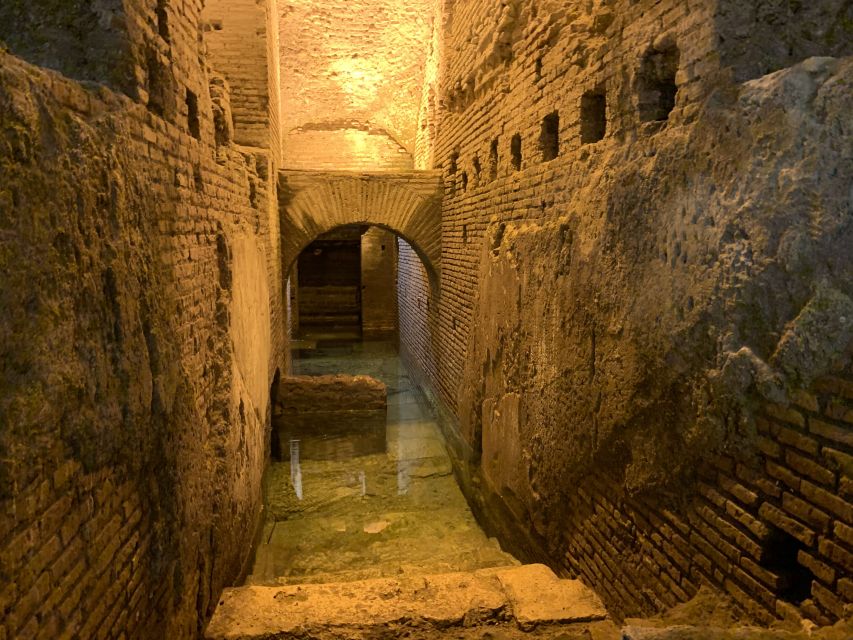
The strongest part of this tour is the quality of the guiding. Erica is praised for her history, humor, photo help, and ability to make the engineering feel alive. Naomi receives similar praise for storytelling, warmth, and clear explanations. Noemi is remembered for mixing interesting stories with good humor, while Alessia is singled out for making the subject especially engaging.
That consistency matters. Underground archaeology can be dry if you are left with dates and labels. Here, the guide explains the site as a working place, showing how water, homes, trade, decoration, and changing street levels fit together.
You should also feel comfortable asking questions. Guides are described as patient and willing to respond, even when the questions move beyond Vicus Caprarius into the wider history of Rome. English is the tour language, and an Italian guide praised for excellent English had no trouble communicating with an English-speaking group.
The enthusiasm can sometimes push against the clock. You may hear that there is more to say than the 40-minute schedule allows. I would rather have that problem than a rushed or indifferent guide, but it is worth knowing if you prefer a slow, scholarly visit.
Who will enjoy this Rome underground tour?
I would recommend it most strongly to you if you enjoy:
- Roman engineering and ancient water systems
- Archaeology presented through real objects and building remains
- Small historic sites away from the city’s largest monuments
- A short activity that fits around Trevi Fountain
- Guides who explain context rather than simply naming dates
- A cool indoor stop during a hot day
Families with older children may enjoy the coins, pipes, pools, and underground setting, though the compact rooms and history-heavy presentation will suit curious children best. Anyone with limited mobility should choose another activity because wheelchair access is not available.
Photography is part of the experience, but the site is not a giant open ruin where you can wander freely. You will follow the guide through the three sections, listen closely, and pause for pictures where appropriate.
I would schedule this early in your Rome visit if possible. Once you understand how the water system, domus, and later building layers work, other Roman sites become easier to read. Then visit the Trevi Fountain again at a quieter time if you want better photographs, since the included five-minute stop cannot control the public crowds.
Should you book Vicus Caprarius and Trevi Fountain?
Book this tour if you want the story beneath the postcard. The underground site is compact, but its water channels, Roman residence, coins, amphorae, marble, and sculpture give you a close look at how Rome worked. The excellent guides are the main reason the experience earns its price.
Skip it if your main goal is to go underneath the Trevi Fountain, receive private access, or spend a long time at the fountain itself. You will not get that. You will get a nearby archaeological site, a short public fountain visit, and a strong explanation of the water system connecting them.
For most history-minded visitors, I think the distinction is easy to accept. At $50, it is a focused and worthwhile addition to a Rome itinerary, especially when you want something smaller and more unusual than another grand monument.
FAQ
Where does the tour meet?
Meet your guide at the entrance to the Vicus Caprarius archaeological area at Vicolo del Puttarello 25.
How long does the tour last?
The full experience lasts 45 minutes. About 40 minutes are spent at Vicus Caprarius, followed by about five minutes at the Trevi Fountain.
Is the tour conducted in English?
Yes. The live tour guide speaks English.
Does the tour go underneath the actual Trevi Fountain?
No. The underground visit takes place at Vicus Caprarius, a nearby archaeological site connected to the Trevi Fountain through its water system. The fountain visit takes place afterward in the public outdoor area.
Does the tour include skip-the-line access to Trevi Fountain?
No. The fountain is free to access, but skip-the-line entry is not included. The area can be very crowded.
Is the tour wheelchair accessible?
No. The activity is not suitable for wheelchair users or people with mobility impairments. Comfortable shoes are recommended.
Recently added around Rome
- Palatine Hill and Roman Forum Tour with Fast-Track Entrance★ 4.2 · 417 reviews
- Tivoli: Villa D’Este & Villa Adriana Pass & App Audioguide★ 4.4 · 364 reviews
- From Rome: Villa D’Este & Villa Adriana Day Trip with Lunch★ 4.4 · 289 reviews
- Vatican Museums & Sistine Chapel Skip-the-Line Guided Tour★ 4.6 · 254 reviews
- Rome: The Three Tenors at St. Paul’s Church Concert Ticket★ 4.7 · 699 reviews
- Tivoli: Villa D’Este Entry Ticket and App Audio Guide★ 4.3 · 191 reviews
- Rome: Capitoline Museums and Centrale Montemartini Tickets★ 4.4 · 328 reviews
- Rome: St. Peter’s Basilica and Papal Tombs Guided Tour★ 4.6 · 477 reviews
Guided, compared.
Colosseum, Roman Forum & Palatine Guided Tour
Read our review →
Vatican Museums, Sistine Chapel & St Peter’s Basilica Guided Tour
Read our review →
Colosseum, Palatine Hill and Roman Forum Guided Tour
Read our review →
Guided Tour of Colosseum, Roman Forum & Palatine Hill
Read our review →
Colosseum & Forum with Audio Guide App -Optional Arena
Read our review →
Colosseum, Roman Forum and Palatine Hill Guided Tour
Read our review →
Naples Underground Entry Ticket and Guided Tour
Read our review →