
Reviewed · COOKING CLASSES
Rome: Pizza Making Class Small Group Experience
Fresh pizza is a fine reason to put down your map.
This small-group class near the Vatican Museums gives you a hands-on way to understand one of Italy’s most famous foods. I like the individual workstation, which lets you mix, shape, and top your own pizza instead of simply watching a chef. I also like the generous food and drink package, including an aperitivo, chips, water, and a choice of wine, beer, or soft drink. The main consideration is that the dough you first mix is not the dough you eventually eat, since proper pizza dough needs about two days to rest.
The class lasts about two hours, with roughly one hour devoted to hands-on pizza work. I would book it if you want a relaxed food activity near the Vatican, especially with children, friends, or a partner. It is less useful if you want a long, highly technical cooking course or a full meal made from several dishes.
In This Review
- Key points to know before booking
- Starting near the Vatican Museums on Via Andrea Doria
- A Roman aperitivo gets the class moving
- Mixing flour, water, and yeast
- Stretching and topping your own pizza
- Sliding the pizza into the oven
- Why the small group format matters
- Dietary needs and family suitability
- What you get for $64.09
- What you can take home
- Booking, cancellation, and timing advice
- Who should book this pizza class?
- Final verdict: book it if you want lunch with a lesson
- FAQ
- Where does the pizza-making class meet?
- How long does the experience last?
- Is the class taught in English?
- What food and drinks are included?
- Are gluten-free or vegetarian options available?
- How many people can attend?
- Can I cancel for a full refund?
Key points to know before booking
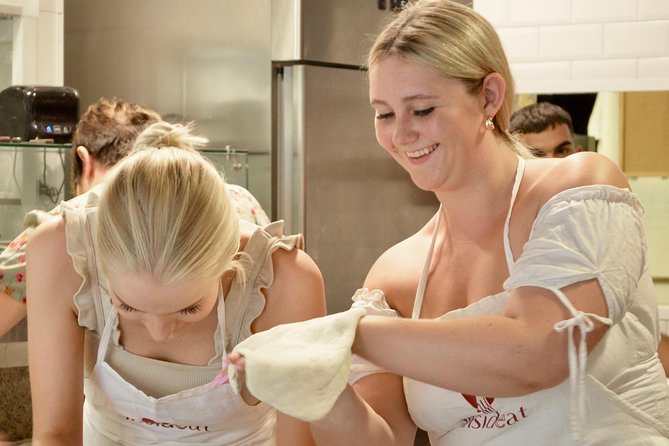
- Your own workstation: Each person gets cooking tools, ingredients, and an apron, so you take an active role from start to finish.
- Aperitivo before the dough: Begin with a Spritz or sparkling wine, plus homemade chips with Roman cheese and pepper.
- The dough lesson has a clever shortcut: You mix flour, water, and yeast, then work with properly rested dough so you can eat your pizza during the class.
- Pizza goes into the oven by you: You choose toppings and get to slide your pizza into the oven yourself.
- Drinks and a recipe book are included: Your meal includes water and one wine, beer, or soft drink, plus recipes sent or provided for home cooking.
- Small but not private: The maximum group size is 14, though some sessions may be much smaller.
Starting near the Vatican Museums on Via Andrea Doria
The class begins at Via Andrea Doria, 41 M, near the Vatican Museums. That location makes the activity easy to pair with a day in the area, though you should allow enough time to reach the meeting point rather than trying to squeeze it between tightly timed museum reservations.
The restaurant is air-conditioned, which matters in Rome’s warmer months. Kneading dough beside a hot oven is much more pleasant when the rest of the room is cool. There is also an outdoor terrace where you can sit after cooking, giving you a choice between indoor comfort and an open-air meal.
The activity ends back at the meeting point. That keeps the plan simple, especially if you are staying near the Vatican or using public transportation. The meeting point is near transit, but the supplied details do not specify a particular station or route, so check your own map before leaving.
More Cooking Classes in Rome
- 3 in 1 Cooking Class near Navona: Fettuccine, Ravioli & Tiramisu
★ 5.0 · 7,376 reviews - Rome: Pasta & Tiramisu Class with Fine Wine by the Vatican
★ 4.9 · 4,852 reviews - Rome: Pasta Making Class with Wine, Limoncello, and Dessert
★ 4.9 · 3,177 reviews
A Roman aperitivo gets the class moving
The welcome starts with a classic Italian aperitivo. You receive a Spritz or sparkling wine, along with homemade crunchy chips served with a typical Roman cheese and pepper combination.
This opening is more than a free drink. It gives you time to settle in, meet the chef, and get comfortable before flour appears on the work surface. The chips also add a local touch, since the class does not begin with generic snacks or a standard tourist buffet.
The food and drink package is one of the better parts of the price. You receive the welcome drink, the chips, your pizza, water, and one meal drink afterward. The final drink can be wine, beer, or a soft drink. If you are measuring value by what you actually consume, this is closer to a complete lunch than a short demonstration with a small taste at the end.
Keep in mind that the menu is focused. You are not making pasta, dessert, or several courses. The appeal is concentration: one iconic dish, prepared by you, with enough extras to make the two-hour visit feel like a proper meal.
Mixing flour, water, and yeast
After the aperitivo, the chef explains the basic pizza process. You begin with simple ingredients and work through the early stages of dough preparation. The class places attention on the reasons behind each step, not just the motions.
That science matters. Dough can seem easy until you try to understand how flour, water, yeast, kneading, and resting affect the final crust. The teaching covers why the steps matter, which gives you a better chance of repeating the recipe at home instead of simply copying a sequence of hand movements.
There is one important detail to understand before you book. Dough made during the class cannot be baked and eaten immediately in its best form. Proper dough needs about two days to rest. You still mix the ingredients yourself, but the class then uses dough that has already had the right amount of time to develop.
That may sound like a trick, but it is a sensible cooking choice. It lets you learn the process while also eating a pizza with properly rested dough. If you expected to eat the exact dough you mixed at the beginning, you could feel surprised. The chef should explain this clearly, and it is worth treating the switch as part of the lesson rather than as a flaw.
Stretching and topping your own pizza
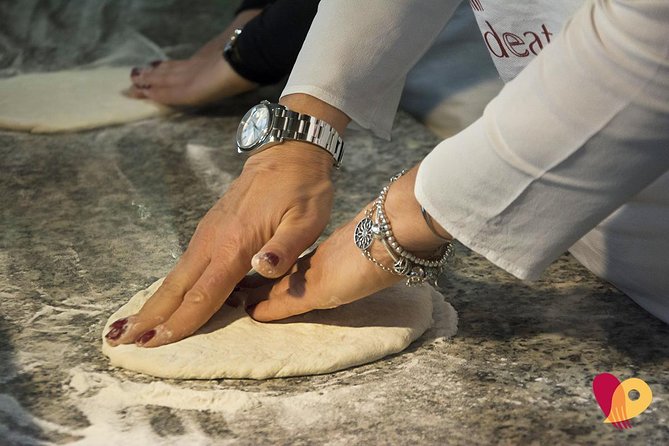
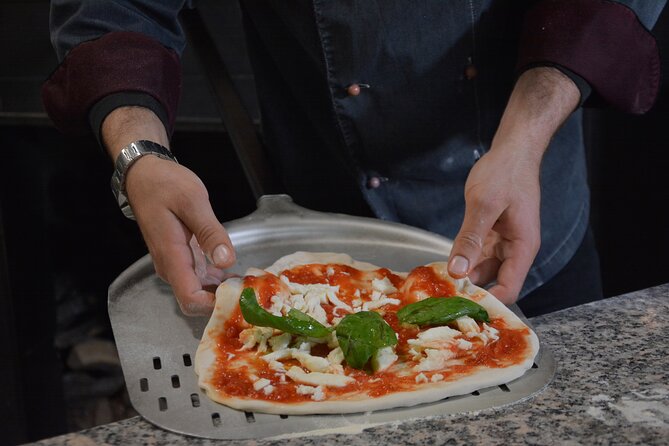
Once the rested dough is ready, you shape it by hand. This is where the class becomes especially good for people who learn by doing. You get to handle the dough, work it into shape, and see how pressure affects the base.
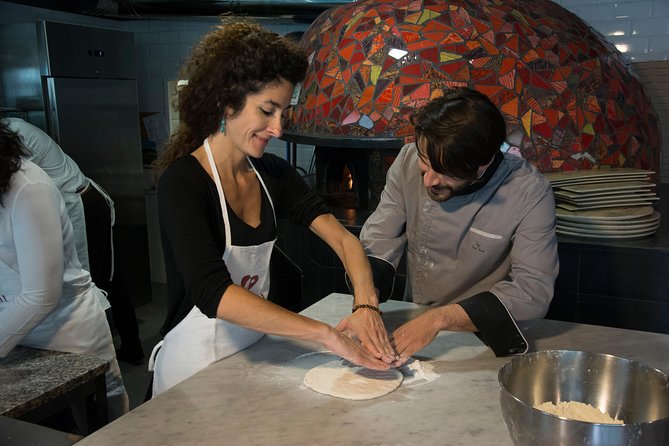
The instructors use a friendly, patient teaching style. Davide and Carlo are both praised for making the process easy to follow, while Mara is singled out for working especially well with a young child. The exact chef may vary, but the teaching style appears to be warm, humorous, and encouraging.
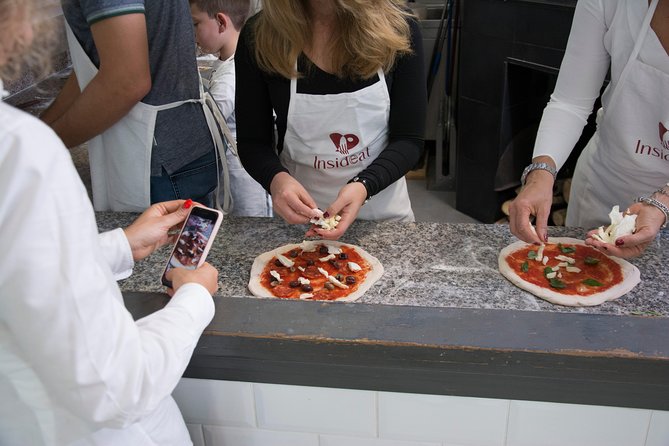
You then choose your toppings from fresh, seasonal ingredients. A classic Margherita is available, but you can also build a pizza around your preferred flavors. This flexibility helps the class work for mixed groups, since one person can keep things traditional while another experiments.
I would encourage you not to overload the pizza. A crowded topping can hide the texture you just worked to create. The class gives you freedom, but the best learning comes from noticing how a few good ingredients behave in the oven.
Still Rome, but a slower afternoon:
- Vatican: Museums & Sistine Chapel Entrance Ticket
★ 4.5 · 144,003 reviews - Vatican Museums & Sistine Chapel Tour with Optional Basilica
★ 4.3 · 67,413 reviews - Colosseum, Roman Forum & Palatine Guided Tour
★ 4.7 · 63,148 reviews - Vatican Museums, Sistine Chapel & St Peter’s Basilica Guided Tour
★ 4.5 · 39,149 reviews
Sliding the pizza into the oven
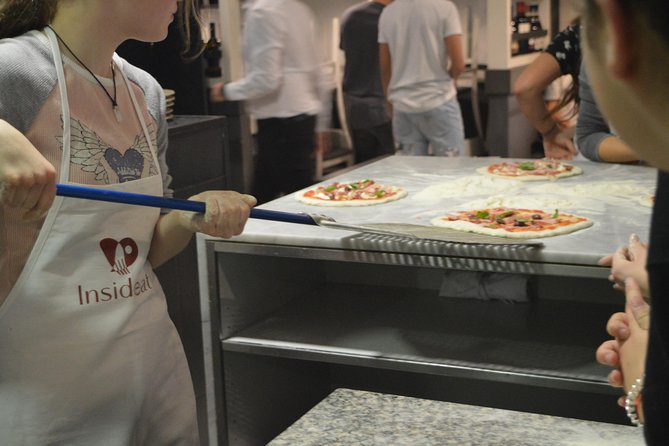
The oven is the most satisfying part of the class. You do not simply hand over your finished pizza and wait for it to return. You get to place it into the oven yourself, which gives the meal a clear sense of completion.
One account describes the process of working the dough, selecting toppings, and sliding the pizza into a wood-fired oven. The supplied information does not promise that every session uses the same oven, so I would treat that detail as dependent on the class setup. Still, the basic benefit remains: you take part in the cooking rather than watching from a distance.
This part can also be useful for children. It turns the pizza from a plate of food into a project with visible stages. Parents should remember that the cooking area is hot and that children must be accompanied by an adult, but the activity is designed for all ages and skill levels.
After baking, you sit down in the cozy restaurant or on the terrace. The pizza you made becomes your main meal, and you receive water plus one wine, beer, or soft drink. There is no cleanup for you, a small but welcome luxury after flour, toppings, and cooking utensils have done their work.
Why the small group format matters
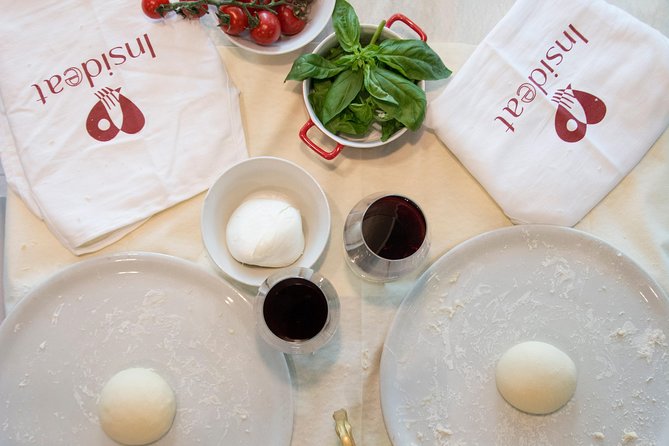
The maximum group size is 14 people. That is small enough for a cooking class to feel active, but it is not a guaranteed private lesson. You should expect other couples, families, solo participants, or friends to share the session.
The individual workstation makes the group size less of a problem. You are not waiting for one person to finish before taking your turn. Each person has access to an apron, cooking utensils, ingredients, and a place to work.
The group can also add to the social side of the meal. One session included solo participants, a couple, and a small family, which is a useful mix for anyone booking alone. Another couple happened to be the only two people attending and enjoyed what felt like a private lesson. That kind of small attendance may happen, but it should be considered a pleasant possibility rather than a promise.
The two-hour length is another practical advantage. It is long enough to include instruction, preparation, baking, and eating without taking up an entire day. At the same time, only about one hour is listed as hands-on cooking, so you should not expect two continuous hours at the work surface.
Dietary needs and family suitability
The class welcomes vegetarians and pescatarians, and lactose-intolerant participants can be accommodated. Gluten-free options are available if requested in advance. Vegan guests can also be accommodated, but advance notice is the smart approach for any dietary need.
I would not wait until you arrive to mention an allergy or special diet. The menu centers on pizza, cheese, and common wheat-based ingredients, so the kitchen needs time to prepare a suitable option.
Families are a strong match for this activity. The class is suitable for all ages and skill levels, and a six-year-old is specifically described as enjoying the experience. Children must be accompanied by an adult, and parents should be ready to help with hot equipment and dough handling.
Solo visitors can also book with confidence. The workstations give you something to do immediately, and the social meal afterward keeps the activity from feeling awkward. If you prefer a quiet, self-contained lunch, the class may be more interaction than you want.
What you get for $64.09
At $64.09 per person, this is not the cheapest lunch in Rome. You can find pizza for far less if all you want is a quick slice or a simple round pie.
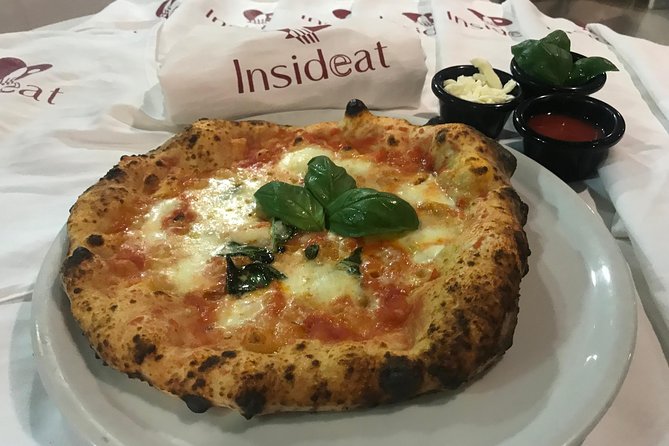
The value is in the complete package. You get a roughly two-hour activity, a local chef, ingredients, equipment, an apron, an aperitivo, chips with Roman cheese, your own pizza, water, and one additional drink. You also receive an exclusive cookbook with recipes for home use. Taken together, the price pays for both a meal and a cooking lesson.
The class also solves a common vacation problem: finding something to do after a major sightseeing stop that is fun but not another museum. If you have already spent hours inside the Vatican Museums, a seated meal that includes a hands-on activity can make a pleasant change of pace.
I would consider the price fair for families and couples who want an activity attached to lunch. It is less compelling for a strict budget visitor who does not care about learning the recipe or meeting other people. In that case, a local pizzeria will feed you for less.
What you can take home
The most useful souvenir is not a trinket. It is the recipe knowledge.
The class explains the science behind the dough and gives you recipes to use at home. One participant received the recipe and class information by email afterward, while the package also includes an exclusive cookbook. The exact delivery method may vary, but you should leave with written guidance rather than relying only on memory.
Do not expect to recreate a Rome restaurant kitchen perfectly with ordinary home equipment. The class gives you access to ingredients and tools that may not be available in your kitchen, and the proper resting period for dough takes planning. Still, learning how to knead, shape, top, and bake gives you a practical starting point.
The two-day dough detail is especially useful. If you try the recipe at home, you will know not to rush straight from mixing to baking and then wonder why the result differs from the class pizza.
Booking, cancellation, and timing advice
This activity is offered in English and includes a mobile ticket. Confirmation is provided when you book, and the class is often reserved well ahead of time, with an average booking lead time of 46 days. That suggests you should reserve early if your Rome dates are fixed.
You can cancel for a full refund up to 24 hours before the local start time. Changes or cancellations made inside that 24-hour window are not accepted for a refund. The class also requires a minimum number of participants, so if the operator cancels because that minimum is not met, you receive a different date or experience, or a full refund.
I would avoid booking this directly before a timed Vatican entry. Even with a two-hour estimate, cooking classes work better when you have breathing room. Pair it with a flexible afternoon or lunch period instead.
Who should book this pizza class?
I would recommend it most strongly for:
- Families looking for an activity that keeps children involved
- Couples who want lunch with a shared project
- Solo visitors who enjoy meeting people in a relaxed setting
- Food lovers curious about dough, resting, and pizza technique
- People staying near the Vatican or planning to sightsee there
- Vegetarians, pescatarians, and people with dietary needs who notify the kitchen ahead of time
You may want to skip it if you dislike group activities, need a strictly timed meal, or want a serious professional cooking course. The class is designed to be friendly and accessible, not demanding or formal.
Final verdict: book it if you want lunch with a lesson
I like this class because it gives you more than a pizza and less than a full culinary school day. You learn the basic process, handle the dough, choose toppings, cook your own pizza, and sit down with a drink afterward.
The strongest feature is the teaching. Chefs such as Carlo, Davide, and Mara are praised for patience, humor, and clear explanations, and the science of the dough gives the class real substance. The honest caveat is that your first dough is replaced with rested dough, and the hands-on portion is closer to one hour than two.
Book it if you want an easygoing, family-friendly food activity near the Vatican. Skip it if you only need a cheap meal. For most people who want to connect food with place, the included meal, personal workstation, recipe material, and friendly instruction make the $64.09 a reasonable Rome splurge.
FAQ
Where does the pizza-making class meet?
The class begins and ends at Via Andrea Doria, 41 M, 00192 Rome, Italy, near the Vatican Museums.
How long does the experience last?
The activity lasts approximately two hours. About one hour is listed as hands-on pizza cooking.
Is the class taught in English?
Yes. The experience is offered in English.
What food and drinks are included?
You receive a Spritz or sparkling wine, homemade chips with typical Roman cheese, your pizza, water, and one meal drink. The meal drink can be wine, beer, or a soft drink.
Are gluten-free or vegetarian options available?
Vegetarian, pescatarian, and lactose-intolerant options are available. Gluten-free options can be arranged if you request them in advance. Vegan participants can also be accommodated.
How many people can attend?
The class has a maximum of 14 participants. Some sessions may be smaller, but a private class is not guaranteed.
Can I cancel for a full refund?
Yes. You can cancel at least 24 hours before the experience start time for a full refund. Cancellations or changes made less than 24 hours before the start time are not refunded.
Recently added around Rome
- Rome: Pantheon, Trevi Fountain & Roman Squares Guided Tour★ 4.7 · 386 reviews
- Vatican: Pope Francis Tomb and Papal Basilicas Tour★ 4.7 · 340 reviews
- Vatican: St. Peter’s Basilica with Audio Guide and Options★ 3.4 · 269 reviews
- Rome: Vatican Museums Skip-the-line Entry Ticket and Tour★ 4.2 · 400 reviews
- Rome: Vatican Museums & Sistine Chapel Ticket + Tour Options★ 4.7 · 344 reviews
- Vatican Museums & Sistine Chapel Guided Tour★ 4.3 · 832 reviews
- Vatican Museums & Sistine Chapel Entry Ticket★ 4.4 · 245 reviews
- Vatican: Museums, Raphael & Sistine Chapel + Basilica Option★ 4.7 · 350 reviews
Cooking Classes, compared.
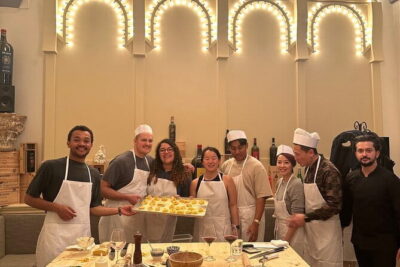
3 in 1 Cooking Class near Navona: Fettuccine, Ravioli & Tiramisu
Read our review →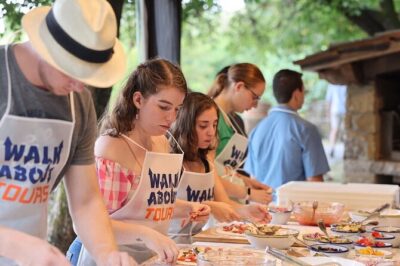
Florence Pizza or Pasta Class with Gelato Making at a Tuscan Farm
Read our review →
Pasta & Tiramisu Cooking Class with Unlimited Wine
Read our review →
Pizza-Making Workshop with Drink and Appetizer
Read our review →
Pasta & Tiramisu Class with Fine Wine by the Vatican
Read our review →
Cooking Class and Lunch at a Tuscan Farmhouse with Local Market Tour from Florence
Read our review →Browse the lists this tour appears in