
Reviewed · COOKING CLASSES
Rome: Pasta & Tiramisu Cooking Class near the Spanish Steps
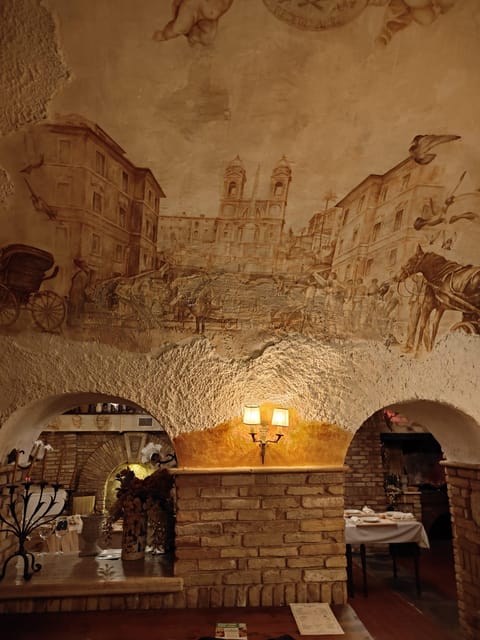
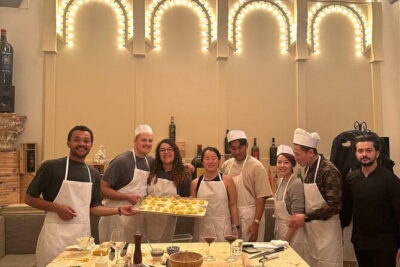
Fresh pasta is Rome’s best souvenir. This two-hour class near the Spanish Steps lets you turn flour and egg into fettuccine, then make your own tiramisu with help from a friendly English or Spanish-speaking chef. I especially like the central location and the chance to eat what you prepare, rather than simply watching a demonstration. The setting also has original 19th-century wall paintings inside a 17th-century building, which gives the class more character than a plain modern kitchen.
I also like the social side. Solo visitors, couples, families, and teens can share a table and a meal, and instructors such as Lucas, Ricardo, Andrea, Federico, Irene, and Gabi have been praised for being patient, funny, and attentive. The main consideration is that this is a group class: pasta is cooked collectively, sauces come from the restaurant kitchen, and the tiramisu cream is prepared as a group. If you want a private lesson or a fully from-scratch sauce workshop, this may feel more like a lively introduction than a serious culinary course.
In This Review
- Key points at a glance
- A cooking class in an old Roman dining room
- Starting with the basics: egg, flour, and your own hands
- Choosing your sauce and eating the pasta you made
- Making tiramisu without the usual fuss
- Wine, limoncello, and the social side
- What the $58 price really covers
- Who will enjoy this most
- Practical timing and planning advice
- Is this a serious lesson or a fun Roman night?
- Should you book the Spanish Steps pasta class?
- FAQ
- Where does the cooking class meet?
- How long does the experience last?
- What food will I make?
- Are the sauces made during the class?
- Is wine included?
- Can children join the class?
Key points at a glance
- A short walk from the Spanish Steps: You can fit this class neatly into an afternoon or evening around central Rome.
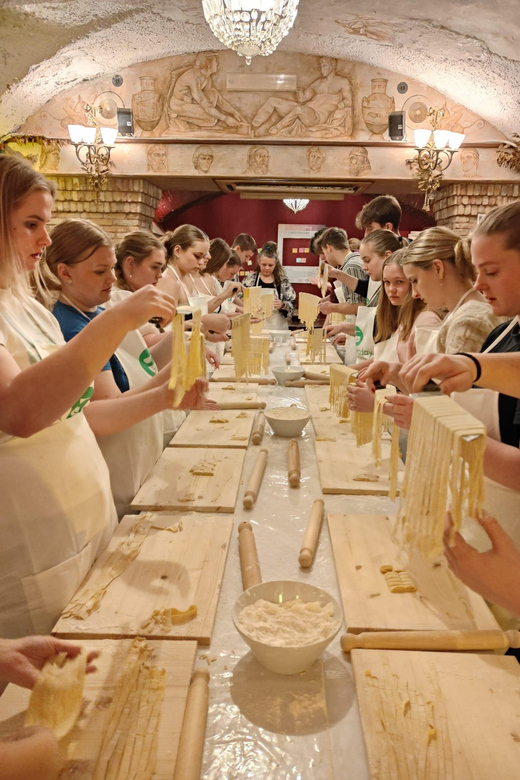
- Handmade fettuccine: You work with egg and flour, roll the dough, and cut the pasta by hand.
- Three sauce choices: Your pasta is served with tomato and basil, pesto, or Alfredo, with the sauce prepared by the restaurant kitchen.
- Tiramisu made at your station: The cream is mixed as a group, then you assemble your own dessert.
- A complete Italian-style meal: Your pasta comes with water and a choice of wine or soft drink, followed by tiramisu and a limoncello toast.
- A practical keepsake: You receive recipes and a participation certificate, useful reminders of the class once you are home.
A cooking class in an old Roman dining room
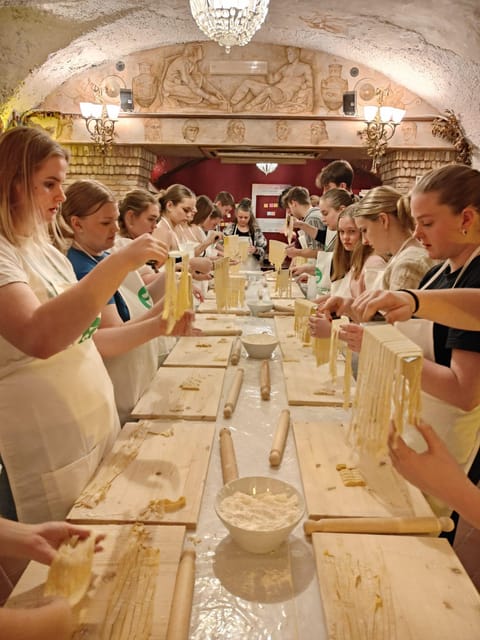
The meeting point is inside Trattoria Amici. Go into the restaurant and ask for the cooking class room. Since the activity is near the Spanish Steps, it is easy to pair with central Rome sightseeing, though you should allow time to find the correct entrance and arrive at least 15 minutes early.
The room is part of a 17th-century building, with original wall paintings from the 1800s. That detail matters. You are not just sitting in a rented classroom with stainless-steel counters and blank walls. You are cooking in an old Roman setting that feels tied to the city around you.
The room is air-conditioned, a useful point during Rome’s warmer months. The class lasts two hours, so the pace is brisk enough to keep things moving without taking up your entire day. Some people find the process slightly fast, especially when rolling and cutting pasta for the first time, but the instructors circulate and help at the workstations.
More Cooking Classes in Rome
- 3 in 1 Cooking Class near Navona: Fettuccine, Ravioli & Tiramisu
★ 5.0 · 7,376 reviews - Rome: Pasta & Tiramisu Class with Fine Wine by the Vatican
★ 4.9 · 4,852 reviews - Rome: Pasta Making Class with Wine, Limoncello, and Dessert
★ 4.9 · 3,177 reviews
Starting with the basics: egg, flour, and your own hands
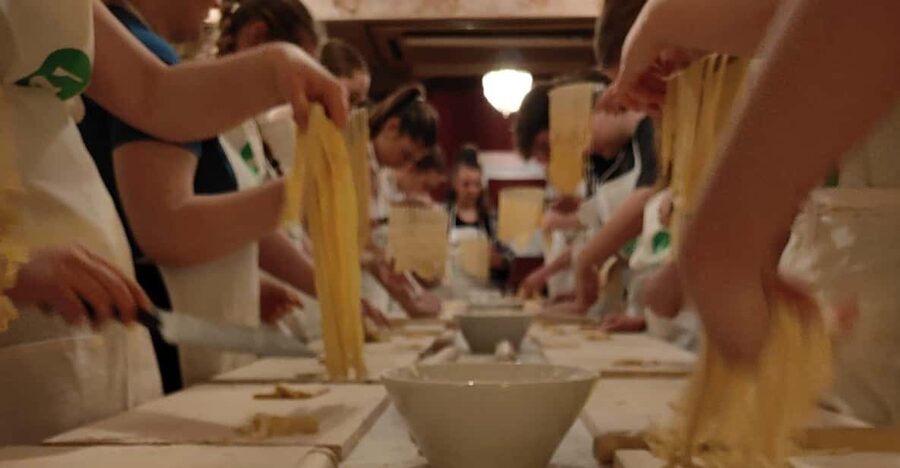
The pasta lesson begins with a very simple idea: combine an egg and flour, then work the mixture by hand until it becomes dough. You do not need prior experience. The value here is tactile. You feel when the dough is too dry, when it begins to come together, and how much effort is needed to make it smooth.
The instructor demonstrates the method before you begin. Names and teaching styles vary by class, but Lucas and Ricardo have received particular praise for keeping the room light while still explaining the process clearly. Irene has also been singled out for careful demonstrations of both pasta and tiramisu.
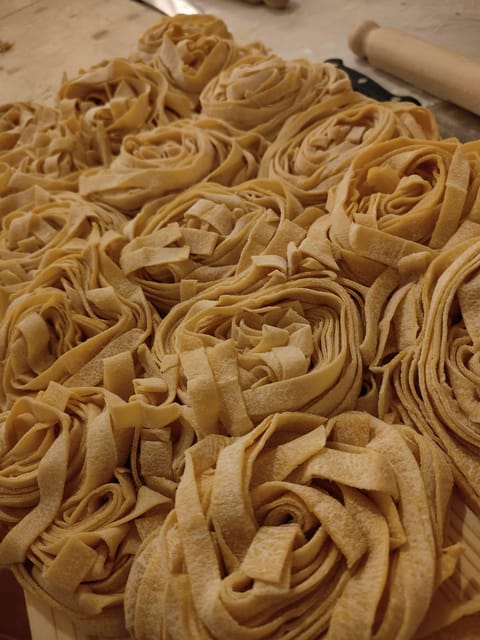
You roll and shape the dough, then cut it into fettuccine. It is not a polished chef’s school lesson with every gram measured and every technique examined in detail. It is more approachable than that, and probably more fun for most visitors. You are there to learn a traditional skill, laugh at the occasional uneven noodle, and sit down to eat your result.
That last part is important. Homemade pasta does not always look like the neat bundles served in a Roman restaurant. It may vary in thickness or length. That is part of the charm, but you should not expect restaurant-kitchen precision from your first attempt.
Choosing your sauce and eating the pasta you made
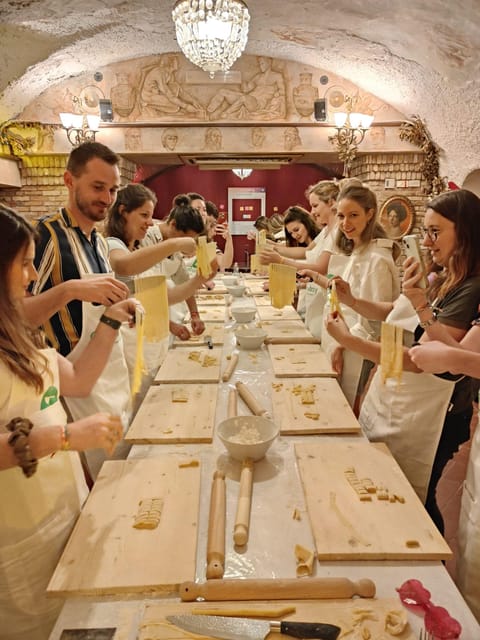
The available sauces are tomato and basil, pesto, or Alfredo. The restaurant kitchen prepares the sauces, while the class focuses on the pasta itself. Your handmade fettuccine is cooked collectively and then divided according to the sauce choices.
This setup keeps the class within two hours and makes serving a full group practical. It also means you are not preparing every part of the meal from scratch. If your main goal is learning fresh pasta dough, the arrangement works well. If you want to learn how to make ragù, pesto, tomato sauce, or Alfredo step by step, you will need another class.
Once the pasta is ready, you sit down to eat it with the group. A glass of red or white wine is included, or you can choose a soft drink. Water is available throughout. The meal is simple, but it carries the small satisfaction that comes from knowing you made the pasta yourself.
A few participants have found the pasta good rather than life-changing. That is a fair way to view it. You are paying for instruction, participation, a meal, drinks, and the setting. The dish itself is only one part of the value.
Making tiramisu without the usual fuss
The dessert portion is particularly friendly for beginners. The tiramisu cream is prepared as a group, and then each participant makes a personal tiramisu. You get the fun of assembling your own dessert without having to manage every part of the cream-making process alone.
This division also helps the class stay organized. Tiramisu can look complicated when you encounter it in a pastry kitchen, but the assembly is accessible. You build the dessert, then enjoy it after the pasta course.
Many people find the tiramisu one of the strongest parts of the meal. It is also the easier recipe to recreate at home, since the class breaks the process into clear steps. The included recipes are meant to help you repeat both dishes after your trip. Keep track of them before leaving, since at least one participant had trouble locating the recipe information afterward.
Still Rome, but a slower afternoon:
- Vatican: Museums & Sistine Chapel Entrance Ticket
★ 4.5 · 144,003 reviews - Vatican Museums & Sistine Chapel Tour with Optional Basilica
★ 4.3 · 67,413 reviews - Colosseum, Roman Forum & Palatine Guided Tour
★ 4.7 · 63,148 reviews - Vatican Museums, Sistine Chapel & St Peter’s Basilica Guided Tour
★ 4.5 · 39,149 reviews
Wine, limoncello, and the social side
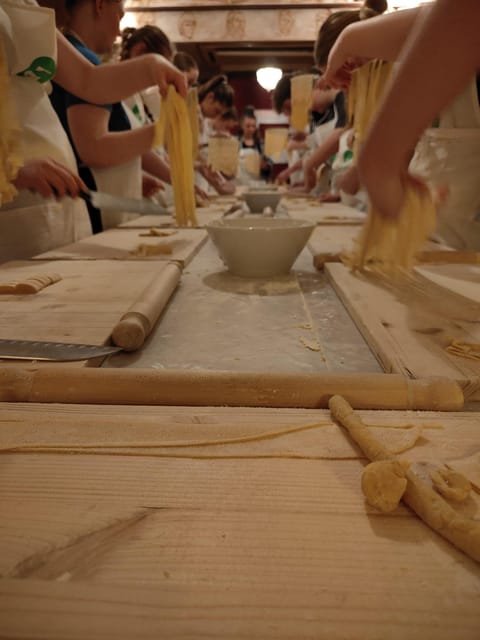
The class is designed as a shared meal, not a silent workshop. You work near other people, help compare results, and then sit together to eat. For a solo visitor, this can be a pleasant way to meet people without having to force conversation at a bar or restaurant.
Families also fit well here. Children under seven may join free, but they must share a workstation with an accompanying adult. Older children and teens can take part, and the activity has worked well for families looking for something different from another museum or monument.
The instructors play a large role in the mood. Lucas is often praised for his humor, patience, music choices, and habit of checking on everyone. Ricardo is known for a warm, playful teaching style, while Gabi has handled classes in both English and Spanish. Individual instructors can change, so do not book solely to meet one particular person.
At the end, you raise a limoncello toast. The included drink is for the toast, not a take-away bottle. Additional drinks and extra food cost more, and a personal limoncello option may be offered separately, but it is not part of the basic package.
What the $58 price really covers
At $58 per person, this is not the cheapest meal you can find in Rome. You could eat pasta and dessert for less at a casual restaurant, especially away from the Spanish Steps. But that comparison misses the main point.
The price includes two hours of instruction, ingredients, equipment, handmade pasta, a sauce, tiramisu, water, one wine or soft drink, limoncello, recipes, and a certificate. You are also paying for a central location and an activity that replaces part of an evening meal.
I see the value most clearly for first-time pasta makers, families, and solo visitors. You receive an experience rather than just a plate of food. The certificate is a small touch, but it gives children and first-time cooks something tangible to take home.
The value is less convincing if you are mainly seeking a serious culinary education. The sauces are not taught in detail, pasta is cooked as a group, and the tiramisu cream is a shared preparation. A private chef or smaller specialist workshop would offer more depth, but likely at a higher price.
Who will enjoy this most
I would recommend this class to you if you want a relaxed activity close to Rome’s main sights. It suits people who enjoy learning by doing, even if their dough ends up looking a little rough around the edges.
It is especially useful for:
- Families with children and teens
- Couples looking for a shared evening activity
- Solo visitors who want an easy social setting
- Anyone who enjoys Italian food and wants recipes to try at home
- Visitors needing an indoor plan on a rainy day
- Beginners who prefer clear instruction over a demanding chef’s course
The class is offered in English and Spanish. You should tell the provider about allergies or dietary restrictions in advance. The kitchen cannot promise a completely allergen-free environment or prevent cross-contamination.
Vegans should not book this experience. It is also not suitable for wheelchair users. The information provided does not promise every possible dietary adaptation, so you should ask before booking if your needs go beyond the stated options.
Practical timing and planning advice
Arrive 15 minutes before the scheduled start. Late arrivals may not be accepted and may need to move to another class, with a €15 rescheduling fee per person. That is an avoidable cost, so do not squeeze this between two tightly timed Rome appointments.
The class lasts two hours, but you should allow extra time to reach the restaurant, find the room, and finish the meal. It works well after sightseeing near the Spanish Steps, or as an early evening plan before continuing elsewhere in central Rome.
The experience requires a minimum number of participants. If that minimum is not met, you are offered another date or a full refund. You can cancel up to 24 hours ahead for a full refund, and the reserve-now, pay-later option can help if your Rome schedule is still shifting.
There is a separate entrance for the class, described as a skip-the-line entry. Still, check the meeting instructions carefully and go inside Trattoria Amici rather than waiting outside for a cooking-school sign.
Is this a serious lesson or a fun Roman night?
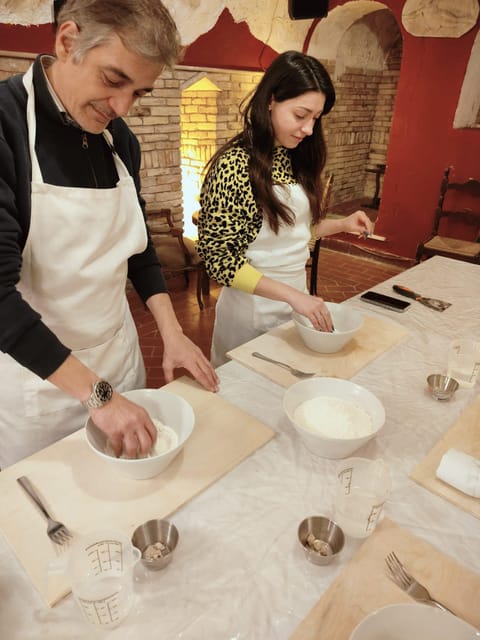
It is best understood as a fun, practical introduction to Italian cooking. You will learn the central steps of fresh pasta and tiramisu, but you will not make every component of the meal independently.
That balance explains the class’s broad appeal. The instructors keep the mood warm and informal, while the meal gives the activity a satisfying finish. The old walls add atmosphere, and the Spanish Steps location makes it easy to connect the class with the rest of your Rome plans.
The strongest part is the combination of instruction and shared dining. You are not handed a finished plate after a short demonstration. You handle the dough, assemble the dessert, sit with your classmates, and taste the result. Even if the pasta is not the finest you eat in Rome, it may be the most memorable because you made it.
Should you book the Spanish Steps pasta class?
Book it if you want an easygoing two-hour activity, a central location, and a meal you help create. It is a good choice for families, couples, solo visitors, and anyone who wants to take home more than photographs from Rome.
Skip it if you are vegan, use a wheelchair, need a fully allergen-free kitchen, or want a private, advanced lesson covering sauces and pasta production in exacting detail. For everyone else, the $58 price is reasonable because it covers a full meal, drinks, instruction, recipes, and a social evening in an atmospheric old building.
FAQ
Where does the cooking class meet?
Go inside Trattoria Amici near the Spanish Steps and ask for the cooking class room.
How long does the experience last?
The class lasts two hours. Starting times vary, so you should check availability when choosing a date.
What food will I make?
You will make fresh fettuccine from egg and flour, then prepare your own tiramisu. The pasta comes with tomato and basil, pesto, or Alfredo sauce.
Are the sauces made during the class?
No. The restaurant kitchen prepares the sauces. The pasta is cooked collectively and then divided according to the selected sauces.
Is wine included?
Yes. You receive a glass of red or white wine, or a soft drink. Water is available during the class, and the experience ends with a limoncello toast. Extra drinks and take-away limoncello are not included.
Can children join the class?
Children under seven may join free, but they must share a workstation with an accompanying adult. The activity is not suitable for vegans or wheelchair users.
Recently added around Rome
- Palatine Hill and Roman Forum Tour with Fast-Track Entrance★ 4.2 · 417 reviews
- Tivoli: Villa D’Este & Villa Adriana Pass & App Audioguide★ 4.4 · 364 reviews
- From Rome: Villa D’Este & Villa Adriana Day Trip with Lunch★ 4.4 · 289 reviews
- Vatican Museums & Sistine Chapel Skip-the-Line Guided Tour★ 4.6 · 254 reviews
- Rome: The Three Tenors at St. Paul’s Church Concert Ticket★ 4.7 · 699 reviews
- Tivoli: Villa D’Este Entry Ticket and App Audio Guide★ 4.3 · 191 reviews
- Rome: Capitoline Museums and Centrale Montemartini Tickets★ 4.4 · 328 reviews
- Rome: St. Peter’s Basilica and Papal Tombs Guided Tour★ 4.6 · 477 reviews
Cooking Classes, compared.
3 in 1 Cooking Class near Navona: Fettuccine, Ravioli & Tiramisu
Read our review →
Florence Pizza or Pasta Class with Gelato Making at a Tuscan Farm
Read our review →
Pasta & Tiramisu Cooking Class with Unlimited Wine
Read our review →
Pizza-Making Workshop with Drink and Appetizer
Read our review →
Pasta & Tiramisu Class with Fine Wine by the Vatican
Read our review →
Cooking Class and Lunch at a Tuscan Farmhouse with Local Market Tour from Florence
Read our review →Browse the lists this tour appears in