
Reviewed · MILAN TOURS
Rome: Leonardo Da Vinci Experience Entry Ticket
Leonardo’s ideas still feel surprisingly modern. Near St Peter’s Square, this hands-on museum brings his flying machines, war engines, bridge designs, optical experiments, and paintings together in five compact halls. I like the working, touchable models and the easy self-guided format, which lets you stop where your interest takes you. The air conditioning is another welcome bonus in hot Rome.
The main thing to consider is size. This is a small exhibition, not a grand national museum, and some visitors finish in under an hour. At $18, I think it offers good value if you use the audio guide and try the interactive displays, but it may feel expensive if you only glance at the machines and leave quickly.
In This Review
- Key points to know before you go
- A small museum with a very large subject
- The invention halls: machines you can actually test
- Building Leonardo’s bridge and testing the displays
- The Room of Mirrors and Leonardo’s study of light
- The exhibition gallery and the famous paintings
- How the audio guide shapes the visit
- How long should you allow?
- Is the $18 ticket good value?
- The best time to fit it into your Rome plans
- Who will enjoy it most?
- Should you book the Leonardo Da Vinci Experience?
- FAQ
- Where is the Leonardo Da Vinci Experience in Rome?
- How much does admission cost?
- How long is the ticket valid?
- How long does a visit usually take?
- Is a guided tour included?
- Which languages are available for the audio guide?
- Should I bring headphones?
- Are the paintings original Leonardo works?
- What can children do at the museum?
- Is the museum air-conditioned?
- Can I cancel the booking?
- Can I reserve before paying?
Key points to know before you go
- Try Leonardo’s inventions: Many of the 50 models are built for interaction, including a bridge, lifting devices, and mechanical machines.
- Expect a compact museum: Most visits last about one hour to 90 minutes, though careful visitors can spend two to three hours.
- Use the audio guide: Commentary is available in English, Spanish, French, Italian, German, Portuguese, Russian, and Chinese.
- See art beyond the Mona Lisa: The gallery includes 20 certified reproductions, including two versions of The Virgin of the Rocks and Lady with an Ermine.
- Cool off near the Vatican: The air-conditioned interior makes this a useful break during a warm sightseeing day.
- Bring your own headphones: They are specifically requested, and one visitor found personal headphones made the audio equipment easier to use.
A small museum with a very large subject
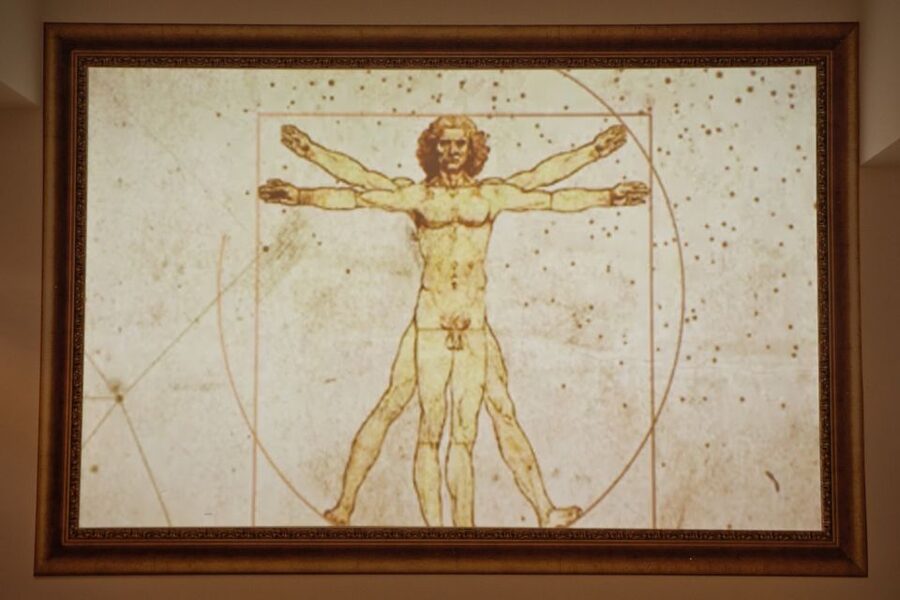
Leonardo da Vinci is often reduced to the Mona Lisa and The Last Supper. This exhibition makes a stronger case for him as an engineer, inventor, scientist, architect, sculptor, and artist all at once.
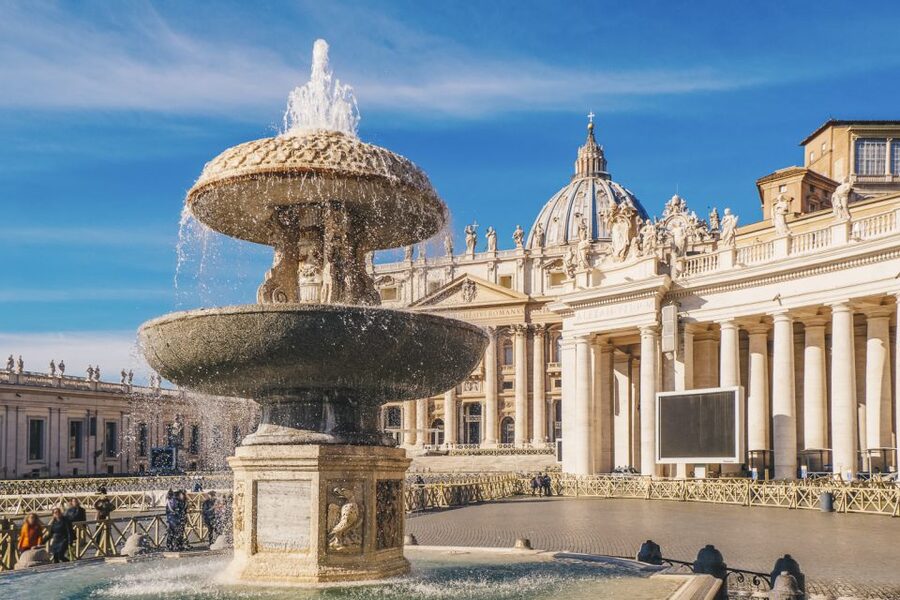
The museum is at Via della Conciliazione 19, only about 150 meters from St Peter’s Square. That location matters. You can fit it before or after St Peter’s Basilica, use it as a cool indoor pause, or visit when you have an open hour between Vatican plans.
I would not plan an entire afternoon around the museum unless you enjoy reading every explanation and testing each model. The rooms are compact, and the displays are close together. That is part of the charm, but it also explains why some people feel the exhibition is smaller than expected.
The layout is divided into five exhibition halls. You move through inventions, machines, optical experiments, and art rather than following a formal guided group. You can linger at a bridge or bicycle, then move quickly past a device that interests you less.
A few more Milan bookings to compare
- Milan: Cathedral and Duomo’s Terraces Entrance Ticket
★ 4.6 · 61,054 reviews - Milan: Da Vinci’s Last Supper Guided Tour
★ 4.7 · 10,143 reviews - Milan: Science and Technology Leonardo da Vinci Museum Entry
★ 4.5 · 7,169 reviews
The invention halls: machines you can actually test
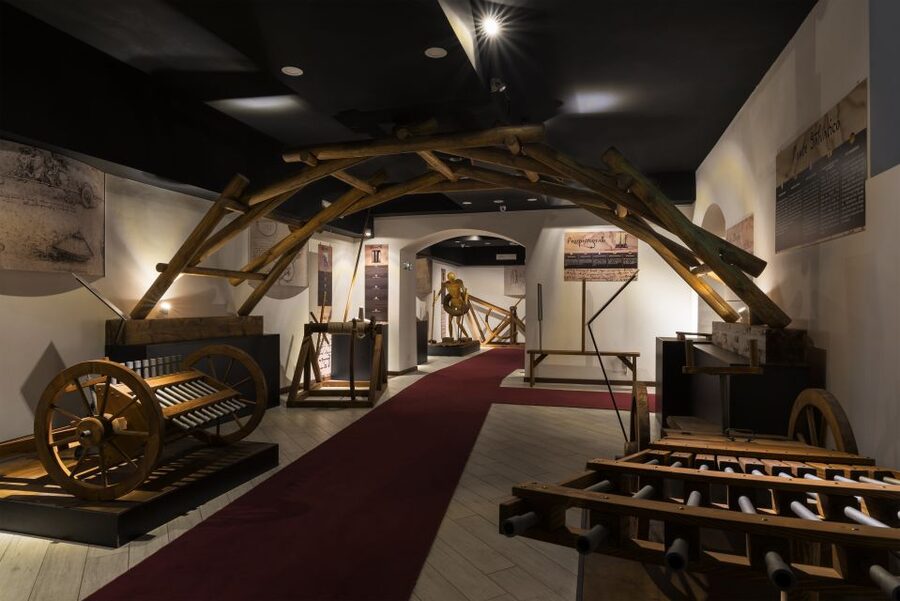
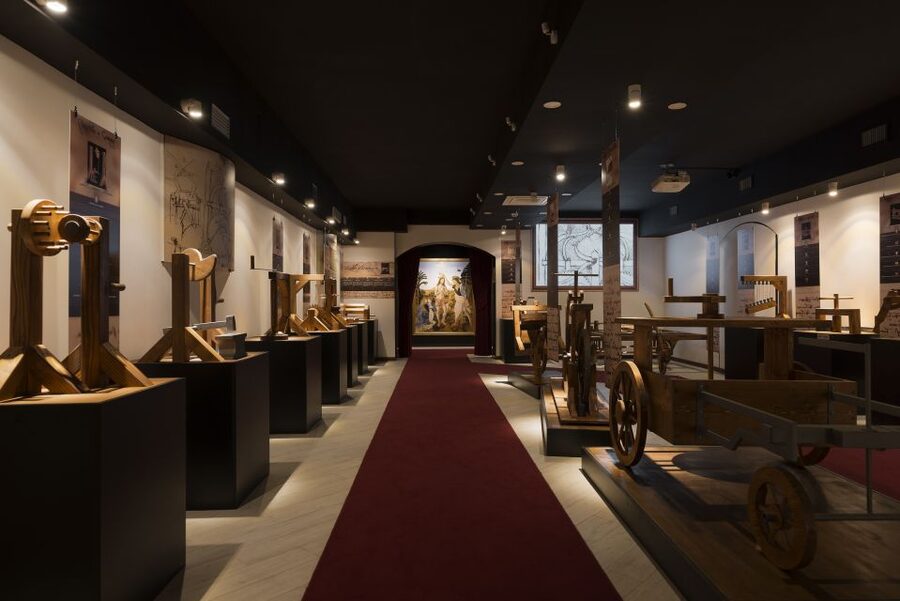
The best part of the visit is the collection of roughly 50 models made from Leonardo’s drawings and designs. These are not original Renaissance machines. They are full-scale or reconstructed examples designed to show how his ideas worked.
That distinction is important. You are not looking at priceless artifacts behind glass. You are looking at practical demonstrations, many of which you can touch, move, or operate to some degree. For children, this changes the visit from a painting lesson into a problem-solving activity. Adults get a clearer sense of how Leonardo turned observation into design.
You might see models connected with:
- Flying machines and a helicopter-like design
- Armored vehicles and war machines
- Submarines and underwater breathing equipment
- A machine gun design
- Bicycles and water skis
- Sewing and lifting machines
- Digging equipment
- Solar-powered machinery
- A suspension bridge designed without traditional support
The war machines make an immediate visual impression, but I find the everyday inventions more revealing. A lifting device or sewing machine shows Leonardo thinking about work, force, and movement. The bicycle and water skis make his sketches feel less like distant curiosities and more like early attempts at familiar technology.
The displays also help you understand the limits of his drawings. A sketch on paper can look simple. A built model shows the practical problems of balance, leverage, weight, and motion. That is where the museum earns its entry price.
Building Leonardo’s bridge and testing the displays
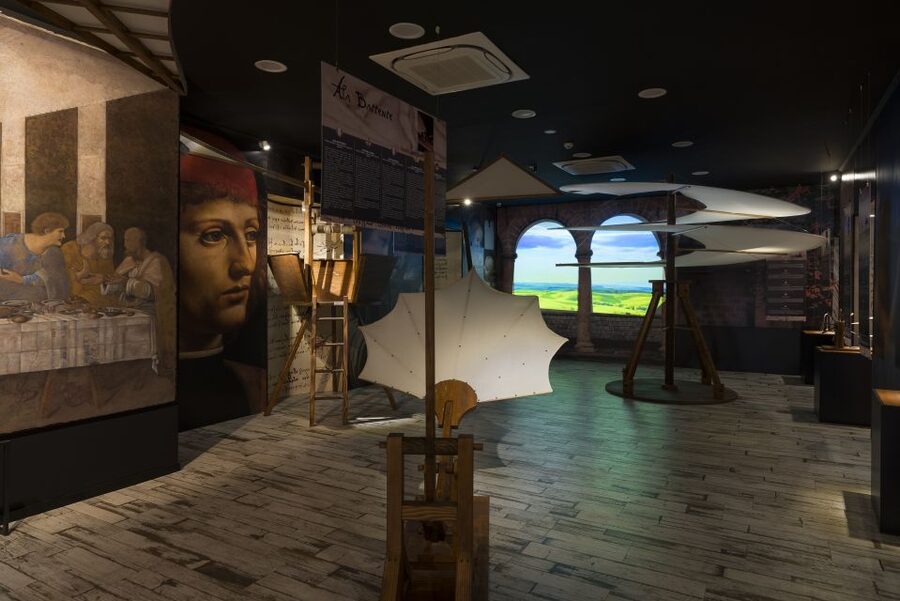
One of the most memorable hands-on activities is building Leonardo’s self-supporting bridge. It is a simple idea, but assembling the pieces gives you a direct lesson in weight and structure.
I would give this display time instead of merely photographing it. You can see why the design works without nails or permanent supports, and children can experiment with the pieces. It is an excellent example of the museum’s basic strength: the inventions make more sense when your hands are involved.
Other machines offer smaller experiments. You can try mechanisms related to digging, lifting, and movement, and examine how Leonardo’s principles still appear in modern equipment. The displays are especially useful for families because younger visitors do not need to understand every historical detail to enjoy the physical challenge.
The interactive elements are not all equally dramatic. Some are mainly models with explanations, while others invite direct use. Still, the ability to test several inventions gives this place more energy than a standard portrait gallery.
If you are visiting with teenagers, let them lead for part of the visit. They may skip the long art commentary but spend time with the machines. That is fine. The exhibition works best when you follow your curiosity rather than force yourself through every item at the same speed.
The Room of Mirrors and Leonardo’s study of light
The Room of Mirrors is a smaller but memorable section. It explores Leonardo’s interest in light, reflection, and vision, then connects those studies with the later development of photography and projection.
This room gives the exhibition a useful change of pace. After the large mechanical models, you are asked to think about how images are formed and how the eye receives them. It is also one of the better places for a quick photograph.
You can take pictures beside a helicopter model or an armored tank, and the museum provides several visual set pieces that work well for families. Photography is not the only point, though. The displays show that Leonardo’s curiosity did not fit neatly into modern subjects such as art, physics, or engineering. He treated them as parts of the same investigation.
The audio guide helps here because optical experiments can be difficult to understand from a label alone. Bring headphones if possible. The supplied audio equipment works, but personal headphones can make listening more comfortable and private.
Still Milan, but a slower afternoon:
- Milan: City Sightseeing Hop-On Hop-Off Bus with Audio Guide
★ 4.0 · 6,256 reviews - Milan Cathedral: Duomo Terraces Ticket (No Church Access)
★ 4.6 · 6,111 reviews - Milan: Milan Cathedral Direct Entrance – Terrace Excluded
★ 4.5 · 5,782 reviews - Milan: Guided Walking Tour & Last Supper Visit with Ticket
★ 4.7 · 5,409 reviews
The exhibition gallery and the famous paintings
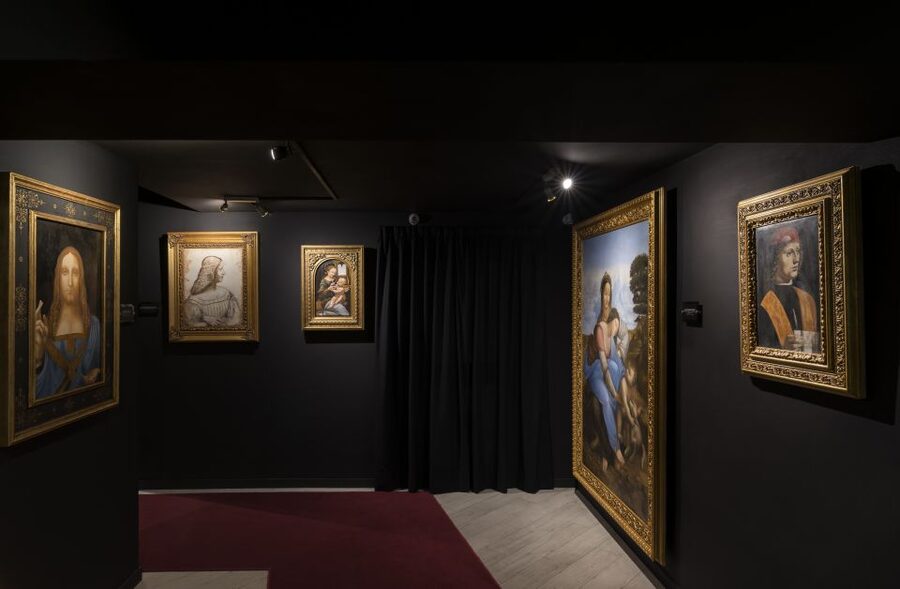
The art section includes 20 certified reproductions painted by prominent Vatican Museum restoration artists. These are reproductions, not the original works held in the Louvre, London’s National Gallery, or other collections around the world.
That may disappoint anyone expecting original Leonardo paintings. It should not, however, make the gallery irrelevant. The reproductions let you examine famous works in one place, supported by explanations about Leonardo’s technique and artistic changes.
Two versions of The Virgin of the Rocks are included. The originals are in the Louvre and London’s National Gallery, so seeing both versions together is a useful comparison. Look for differences in composition, treatment, and detail as you listen to the commentary.
The gallery also includes Lady with an Ermine, a portrait that helped change the conventions of classical portraiture. The audio guide explains why Leonardo’s approach to the sitter was important, rather than leaving you with only a famous name and a pretty picture.
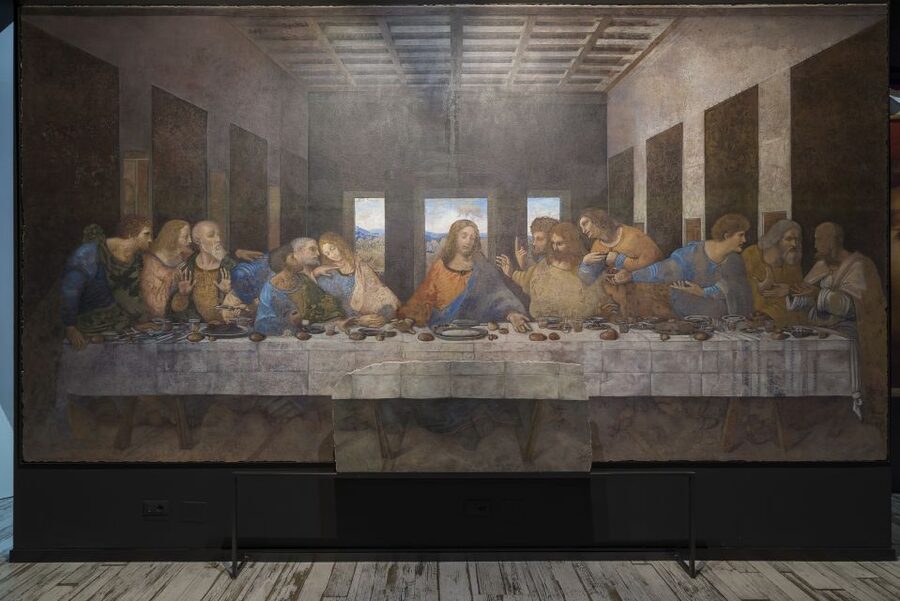
The full-sized reproduction of The Last Supper is another major draw. This is the painting linked to Dan Brown’s The Da Vinci Code, so some visitors arrive expecting a mystery-solving experience. The exhibition is better understood as a chance to study the image and its background, not as a theatrical presentation of the novel.
The reproduction is useful because the original in Milan is difficult to see and requires advance planning. You will not get the same experience as standing before Leonardo’s actual wall painting, but you can examine the composition and hear context without arranging a separate trip.
How the audio guide shapes the visit
The audio guide is included and is one of the strongest parts of the ticket. It is offered in English, Spanish, French, Italian, German, Portuguese, Russian, and Chinese.
This is a self-guided visit, not a guided tour. You receive the audio equipment at entry, then choose how much commentary you want. That format suits me because I can spend extra time with the bridge or a favorite painting and move on from displays that hold less interest.
The commentary covers both the inventions and the paintings. Several people have found that the audio explanations add enough detail to keep the visit interesting for more than an hour. Without the guide, the museum could feel like a quick walk past wooden models.
The system may take a moment to understand. Look for the number connected to each exhibit and select the matching commentary. Once you get the hang of it, the pace becomes easy.
Bring headphones. This is the most practical tip I can give you. You can use the museum’s equipment, but personal headphones may improve the sound and make it easier to listen in crowded areas.
How long should you allow?
The official ticket is valid for one day, but the actual visit is much shorter than a full day. Most people should allow 60 to 90 minutes.
You can finish in less than an hour if you move quickly. One visitor spent only about 20 minutes, while others took two or three hours by listening to the full audio commentary, reading the labels, and experimenting with the machines.
I would budget 90 minutes if you are visiting with children. Interactive displays take time, and you will probably stop for photos. If you are pairing this with the Vatican, allow extra time for the walk between the museum and St Peter’s Square, even though the distance is short.
The museum is air-conditioned, with restrooms and free WiFi. Those are modest details, but they make a difference after a long morning in Rome. The cool interior is especially welcome in summer.
Is the $18 ticket good value?
At $18 per person, the ticket is reasonably priced for a central Rome attraction, provided you use the audio guide and interactive displays. You are paying for a compact educational exhibition, not an enormous museum with original masterpieces.
The value is strongest for three types of visitors:
- Families who want children to handle models and solve simple mechanical problems
- Adults who are curious about Leonardo’s engineering, not only his paintings
- People near the Vatican who need an interesting indoor activity lasting about an hour
The value is weaker if you expect original works of art, a full guided tour, or a large museum covering every stage of Leonardo’s life. A guided tour is not included, and the art is made up of certified reproductions.
One practical note: an October 2023 visitor found that the museum’s own ticket price was cheaper than an online booking price at that time. Prices can change, so compare the current direct price before paying. The listed price for this experience is $18.
Free cancellation up to 24 hours before the visit and the option to reserve now and pay later add flexibility. They are useful if your Vatican schedule is still shifting.
The best time to fit it into your Rome plans
I would visit in the morning if you want to concentrate on the explanations. A visitor who arrived around 10 a.m. found the museum cool and not overcrowded, while another advised going early because waiting can develop later.
You can also use the museum late in the day, but fatigue matters. One person visited after a long day and felt too tired to take in everything. Leonardo’s inventions reward attention, so this is not the best place to drag yourself when you are already worn out.
The easiest pairing is with St Peter’s Square and the Vatican area. The museum’s position on Via della Conciliazione makes it convenient, and you do not need transport between the two sites.
Do not confuse this ticket with entry to the Vatican Museums or St Peter’s Basilica. Those are separate attractions. The Leonardo museum is nearby, not part of the Vatican complex.
Who will enjoy it most?
I would recommend it most strongly to families with school-age children and adults who like science, design, art, or puzzles. The interactive machines give children something to do, while the paintings and commentary give adults a reason to slow down.
It also works well for a mixed group. One person can focus on the engineering halls while another spends more time with the gallery. The self-guided system prevents the whole group from being locked into one pace.
Art specialists may find the reproductions limited. Visitors hoping for a major Leonardo collection may also be disappointed by the museum’s size. But if you treat it as a practical introduction to his range of ideas, it delivers a lively hour or two.
The staff are generally described as friendly and helpful. One recent visitor had a less positive impression of customer service, so I would keep expectations realistic. The experience depends more on the displays and audio guide than on personal guiding.
Should you book the Leonardo Da Vinci Experience?
Book it if you want an interactive break near the Vatican, especially with children or during hot weather. The working models, bridge-building activity, optical room, and multilingual audio guide give you more to do than a simple display of pictures.
Skip it if your Rome schedule is packed with major museums and you only want original art. The exhibition is small, and the paintings are reproductions. At $18, it is best viewed as a focused, hands-on museum visit that brings Leonardo’s engineering sketches to life.
For most people, I would allow 90 minutes, bring headphones, arrive earlier rather than later, and use the audio guide fully. That is when this compact museum feels worth the stop.
FAQ
Where is the Leonardo Da Vinci Experience in Rome?
It is at Leonardo da Vinci Experience, Via della Conciliazione 19, about 150 meters from St Peter’s Square.
How much does admission cost?
The listed price is $18 per person.
How long is the ticket valid?
The ticket is valid for one day. You should check availability for the available starting times.
How long does a visit usually take?
The displays can be seen in under an hour, but most visitors should allow about one to 90 minutes. Spending two to three hours is possible if you use the audio guide carefully and test the interactive models.
Is a guided tour included?
No. A guided tour is not included. The admission includes a self-guided audio guide.
Which languages are available for the audio guide?
The audio guide is available in English, Spanish, French, Italian, German, Portuguese, Russian, and Chinese.
Should I bring headphones?
Yes. Headphones are listed as something to bring, and personal headphones may make the audio equipment easier to use.
Are the paintings original Leonardo works?
No. The exhibition gallery contains 20 certified reproductions painted by prominent Vatican Museum restoration artists.
What can children do at the museum?
Children can try several reconstructed inventions and interact with models, including a design for Leonardo’s self-supporting bridge. The machines are also suitable for adults.
Is the museum air-conditioned?
Yes. The experience takes place in a fully air-conditioned environment and includes access to restrooms and free WiFi.
Can I cancel the booking?
Yes. You can cancel up to 24 hours in advance for a full refund.
Can I reserve before paying?
Yes. The reserve-now, pay-later option allows you to keep your plans flexible and pay nothing at the time of booking.
Recently added around Milan
- Milan: City Highlights Walking Tour with The Last Supper★ 4.9 · 195 reviews
- Milan: The Milan Pass City Card★ 4.0 · 655 reviews
- Milan: Skip-the-Line Guided Walk and “The Last Supper”★ 4.5 · 606 reviews
- Milan: Duomo & Rooftop Tour with Optional Hop-On Hop-Off Bus★ 4.5 · 262 reviews
- Milan: Duomo and The Last Supper Skip-the-Line Guided Tour
- Milan: Sforza Castle and Michelangelo’s Pietà Rondanini Tour★ 4.7 · 1,119 reviews
- Milan: Leonardo’s Last Supper and Michelangelo’s Pietà Tour★ 4.6 · 559 reviews
- Milan: San Sepolcro Crypt Skip-the-Line Entry Ticket★ 4.2 · 512 reviews
Milan Tours, compared.
Cathedral and Duomo’s Terraces Entrance Ticket
Read our review →
Science and Technology Leonardo da Vinci Museum Entry
Read our review →
City Sightseeing Hop-On Hop-Off Bus with Audio Guide
Read our review →
Milan Cathedral: Duomo Terraces Ticket (No Church Access)
Read our review →
Milan Cathedral Direct Entrance – Terrace Excluded
Read our review →
Guided Walking Tour & Last Supper Visit with Ticket
Read our review →
Fast-Track Milan Cathedral and Terraces Guided Tour
Read our review →Browse the lists this tour appears in