Reviewed · GUIDED
Rome: Domus Aurea Guided Tour and Virtual Reality Experience
Nero’s lost palace comes back to life. I like the clever mix of Roman archaeology and virtual reality, which helps you picture rooms now reduced to brick, plaster, and fragments of painted decoration. I also like the chance to see famous spaces such as the Octagonal Hall, Cryptoporticus, and Hall of Birds. The main drawback is practical: the underground complex is cool, dim, and enclosed, and the acoustics can make a live guide hard to hear.
This 90-minute visit costs about $67 per person and begins at the Colosseo metro station before moving to the Domus Aurea for a guided visit of about 70 minutes. The virtual reality presentation is the star for many people, while guides such as Claudia have earned praise for clear explanations and patient answers. Bring a jacket, wear good shoes, and arrive early.
In This Review
- Key points to know before booking
- Why Nero’s palace is worth your Rome time
- Meeting at the Colosseo metro station
- The 70-minute guided visit inside the Domus Aurea
- The Golden Vault and the virtual reality presentation
- The Octagonal Hall, Cryptoporticus, and Hall of Birds
- Roman concrete and the palace’s original scale
- How the guide affects the experience
- Is $67 a fair price?
- Temperature, clothing, and physical comfort
- Who should book this Domus Aurea visit?
- Final verdict: book it for the virtual reconstruction
- FAQ
- Where does the Domus Aurea tour meet?
- How long does the experience last?
- What languages are available?
- Is the virtual reality experience included?
- How cold is the Domus Aurea?
- What identification should I bring?
- Is the tour suitable for wheelchair users or people with claustrophobia?
Key points to know before booking
- Nero’s Golden House was far larger than the surviving rooms suggest: The tour explains Nero’s plan to connect palatine residences with the Esquiline gardens and create a huge dynastic home.
- The virtual reality sequence shows the Golden Vault as it may have looked: It gives shape and color to a site that otherwise requires plenty of imagination.
- The Octagonal Hall and painted decoration are major highlights: You see some of the most important surviving features of the palace.
- The interior stays around 10 degrees Celsius: A light jacket is not optional for most people.
- The guide makes a difference: Claudia received special praise for her explanations, though sound can be a problem inside.
- The meeting point is easy to miss: Look for the green kiosk on the street-level floor of the Colosseo metro station and staff carrying a C.I.S. Tours sign.
Why Nero’s palace is worth your Rome time
The Domus Aurea, or Golden House, is one of Rome’s strangest archaeological visits. It was not a single elegant villa in the usual sense. It was a vast imperial complex created under Emperor Nero, with residences, gardens, decorated rooms, and space for court life and productive activities.
The palace reflected Nero’s desire to join existing homes on the Palatine with the broad Esquiline gardens. He wanted a dynastic residence on the scale of the grand Hellenistic palaces. That ambition helps explain the size and theatrical character of the project.
Nero’s reputation for extravagance is part of the appeal, but the site is more than a story about wild parties. You also learn how Roman builders used concrete to create ambitious spaces. That building material allowed them to form vaults, domes, and unusual room shapes that would have been difficult to make with traditional stone construction alone.
Today, you do not see a fully restored palace. Much of the Domus Aurea lies beneath later layers of Rome, and the surviving interior is dark and unfinished in places. That can feel underwhelming if you expect gold-covered halls. The guided interpretation and virtual reality are important because they bridge the gap between the surviving fabric and Nero’s original vision.
A few more Rome bookings to compare
- Vatican: Museums & Sistine Chapel Entrance Ticket
★ 4.5 · 144,003 reviews - Vatican Museums & Sistine Chapel Tour with Optional Basilica
★ 4.3 · 67,413 reviews - Colosseum, Roman Forum & Palatine Guided Tour
★ 4.7 · 63,148 reviews
Meeting at the Colosseo metro station
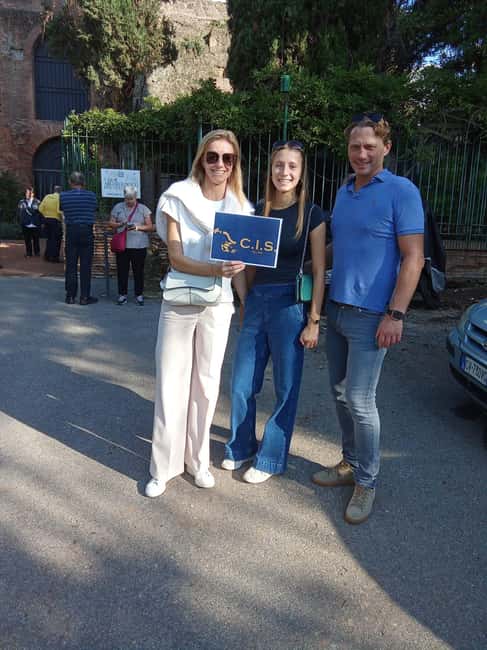
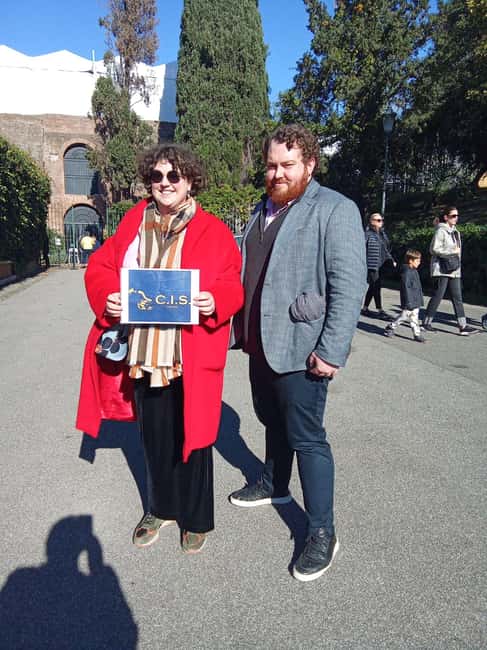
The tour starts at the Colosseo metro station, not directly at the palace entrance. Meet on the lower floor, at street level, near the green kiosk. Staff should be carrying a C.I.S. Tours sign.
This arrangement is simple once you know what to look for, but the area around the Colosseum can be crowded and distracting. I would arrive at least 20 minutes before the booked start time, as required. Do not cut it close after a visit to another monument.
The meeting point also matters because the group needs to gather before entering the archaeological site. One booking experienced a delay in ticket collection, with a 10:30 start shifting to 11:15. That appears to be an isolated logistical problem, but it is a good reason not to schedule a hard-to-miss lunch, train, or museum reservation immediately afterward.
Tickets are nominative, so the full names of all participants are required. Bring a passport or identity card, including for children. You cannot bring food, drinks, luggage, or large bags into the experience.
The 70-minute guided visit inside the Domus Aurea
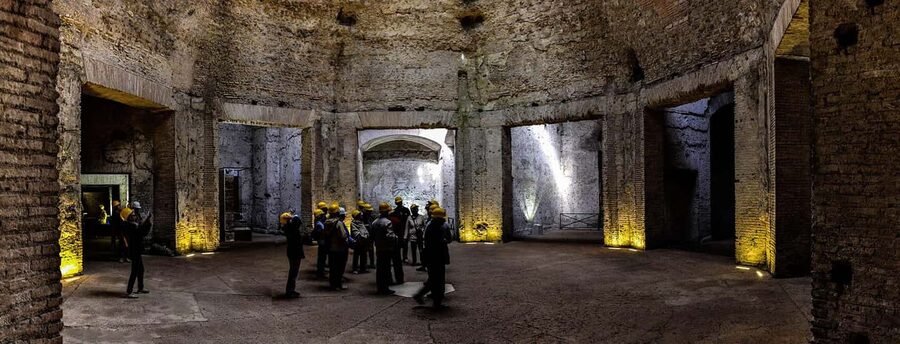
Once inside, the visit focuses on the remains of Nero’s palace and the ideas behind its design. A live guide is available in Italian, English, French, or Spanish. An audio guide is also offered in those languages.
The exact order of rooms may vary, but the visit includes several important spaces. Your guide helps you read the walls, vaults, passageways, and decorative fragments rather than simply walking past them.
The palace can be difficult to understand at first. You may see a large room, but its original color, furniture, light, and use are gone. A good explanation turns those bare surfaces into evidence. You begin to see how the rooms connected, how visitors might have moved through them, and why Roman builders chose concrete for such ambitious forms.
The tour also gives useful context about Nero’s building program. His palace was not just a private retreat. It was intended as a large imperial residence that could contain a court and activities connected to the running of the household. That scale is easy to miss if you only focus on the surviving decorations.
The Golden Vault and the virtual reality presentation
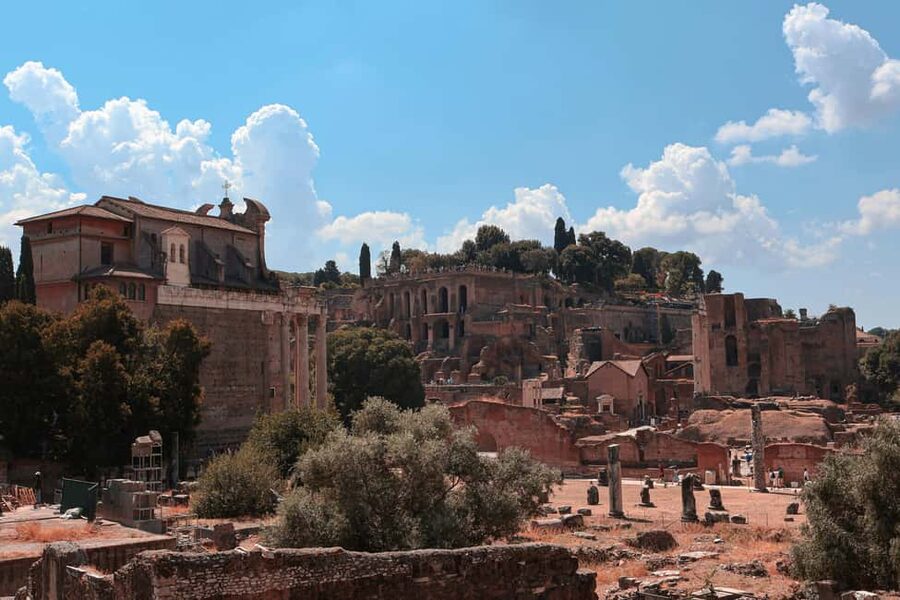
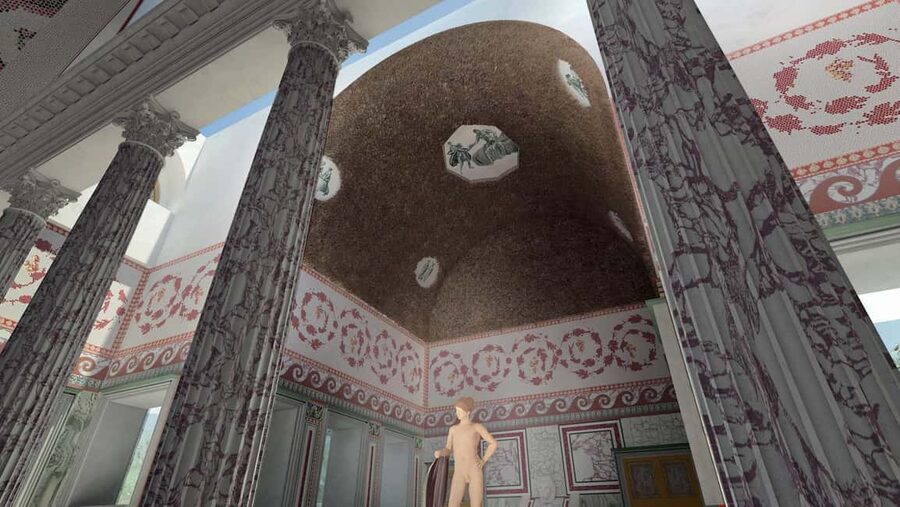
The virtual reality experience is the most praised part of the tour, and I understand why. The Oculus presentation lets you see the Room of the Golden Vault as historians and archaeologists believe it may have appeared in Nero’s time.
This is not a simple slideshow. It is a multisensory video storytelling project that uses reconstructed images to suggest the palace’s former color, decoration, and spatial drama. The effect is especially useful here because the actual rooms are underground and often stripped of their original finish.
You should keep one distinction in mind: the virtual reconstruction is an interpretation based on archaeological and historical evidence, not a direct recording of the past. That does not make it less useful. It simply means you should enjoy the presentation as an informed visual guide while treating the surviving walls as the primary evidence.
The short presentation received especially strong praise, with several people calling the images impressive and the experience a highlight of their time in Rome. It works best when paired with the live explanation. The guide gives you the historical framework, then the virtual reality lets you picture the missing palace.
If you dislike headsets or motion-based visual experiences, this part may not be your favorite. Still, the technology has a clear purpose here. It solves a genuine problem rather than being added as a gimmick.
Still Rome, but a slower afternoon:
- Vatican Museums, Sistine Chapel & St Peter’s Basilica Guided Tour
★ 4.5 · 39,149 reviews - Rome: Colosseum, Palatine Hill and Roman Forum Guided Tour
★ 4.8 · 32,814 reviews - Rome: Guided Tour of Colosseum, Roman Forum & Palatine Hill
★ 4.7 · 27,897 reviews - Rome: Colosseum & Forum with Audio Guide App -Optional Arena
★ 4.2 · 24,770 reviews
The Octagonal Hall, Cryptoporticus, and Hall of Birds
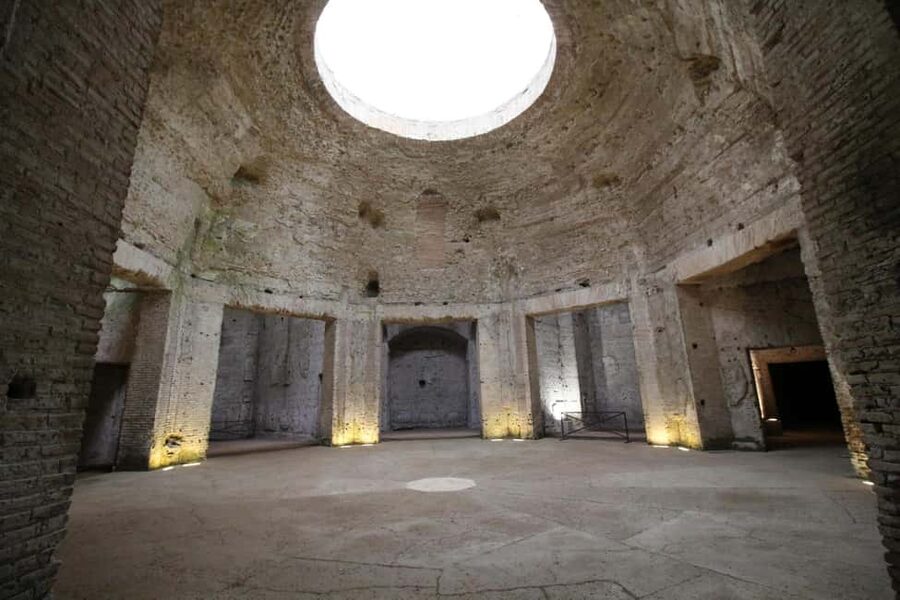
The Octagonal Hall is one of the site’s most memorable spaces. Its unusual shape and concrete construction show how Roman architects experimented with large, complex interiors. The room is a useful reminder that the Domus Aurea was designed to impress through engineering as much as decoration.
The Cryptoporticus adds another layer to the visit. This covered passageway helps you understand how the palace functioned as a connected complex rather than a set of isolated rooms. As you move through the underground remains, the relationship between corridors and decorated chambers becomes clearer.
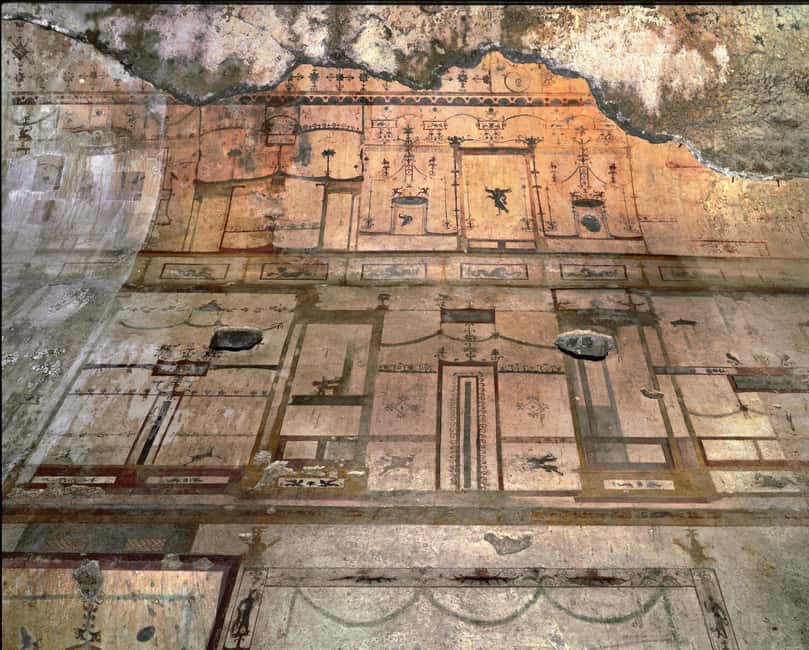
The Hall of Birds is important for its painted decoration. The Domus Aurea contains some of the most interesting examples of Roman wall painting, and the surviving details reward a slower look. You may not see complete scenes in the way you would in a fully preserved villa, but the fragments show the fine decorative standard of the palace.
I would listen closely for explanations of the artwork rather than rushing to take photographs. The value lies in learning how archaeologists interpret the remaining patterns, colors, and motifs. The virtual reality segment then helps you imagine how those details may have worked across a complete room.
Roman concrete and the palace’s original scale
Concrete can sound like a dull technical subject, but it is central to understanding the Domus Aurea. Roman concrete gave builders the freedom to create vaulted rooms and broad interior spaces without relying entirely on cut stone blocks.
Your guide explains how this material shaped the palace. The surviving rooms are not only remnants of Nero’s taste. They are also records of Roman construction methods and the confidence of imperial architects.
The palace’s scale is another important point. Nero wanted to connect homes on the Palatine with the Esquiline gardens, producing a residence large enough for an entire court and related activities. That plan helps explain why the Domus Aurea can feel more like an urban complex than a conventional house.
The building also tells a story about political memory. Nero became one of Rome’s most notorious emperors, and later rulers had little interest in preserving his personal palace as a monument to his rule. The site’s later burial and reuse contributed to the loss of its original appearance. The tour presents the archaeology without reducing everything to scandal.
How the guide affects the experience
A strong guide is important at the Domus Aurea because the ruins do not explain themselves. The best commentary connects architecture, decoration, construction, and imperial politics in a way that gives each room a purpose.
Claudia received particular praise for being friendly, clear, and willing to answer questions. Other guides have also been described as easy to understand and well prepared. This is a good choice if you prefer to ask questions rather than simply follow a prerecorded route.
There is one sound-related weakness. The acoustics inside the Domus Aurea can be poor, and one person found it difficult to hear an otherwise excellent guide. Since the tour includes an audio guide, you may have another way to catch details, but it is still worth staying near the guide whenever possible.
If you have hearing difficulties, ask about the audio option when you meet the group. A headset might make the commentary easier to follow, though the supplied information does not confirm that headsets are provided for the live explanation.
Is $67 a fair price?
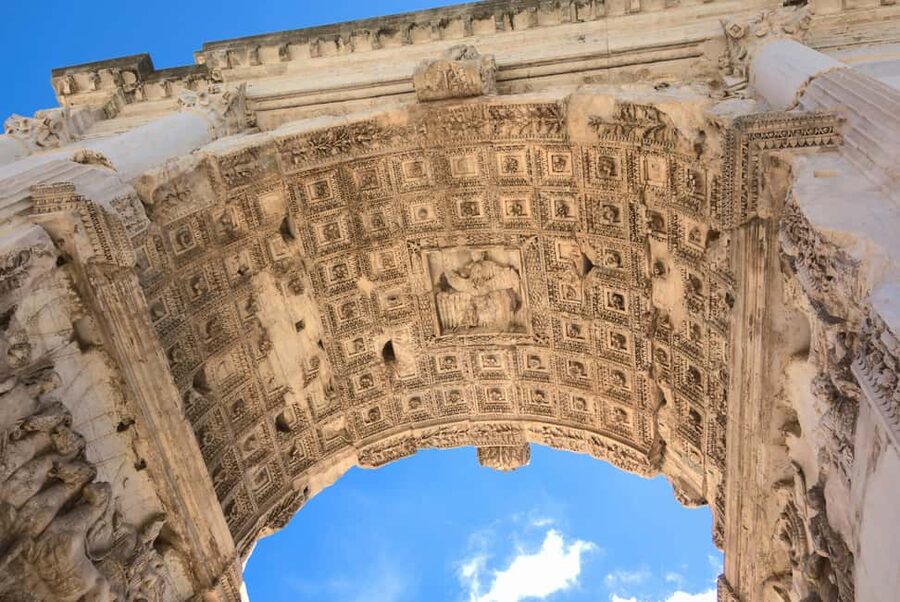
At $67, this is not the cheapest way to see an archaeological site in Rome. The price includes the Domus Aurea ticket, a live guided tour, the virtual reality experience, and taxes and fees. You are paying for interpretation as well as entry.
I think the cost is reasonable if you want help making sense of a complex ruin. The virtual reality element adds real value because it shows a version of the palace that cannot be seen with the naked eye. You also avoid a separate search for admission and an explanation of the rooms.
The value is weaker if you prefer to move independently or already have detailed knowledge of the Domus Aurea. The visit lasts 1.5 hours, with about 70 minutes inside the site, so you are buying a focused introduction rather than an extended archaeological study.
The tour is particularly worthwhile for first-time visitors who want one clear explanation of Nero’s palace. It also suits anyone who has already seen the Colosseum and Roman Forum and wants a less familiar Roman monument.
Temperature, clothing, and physical comfort
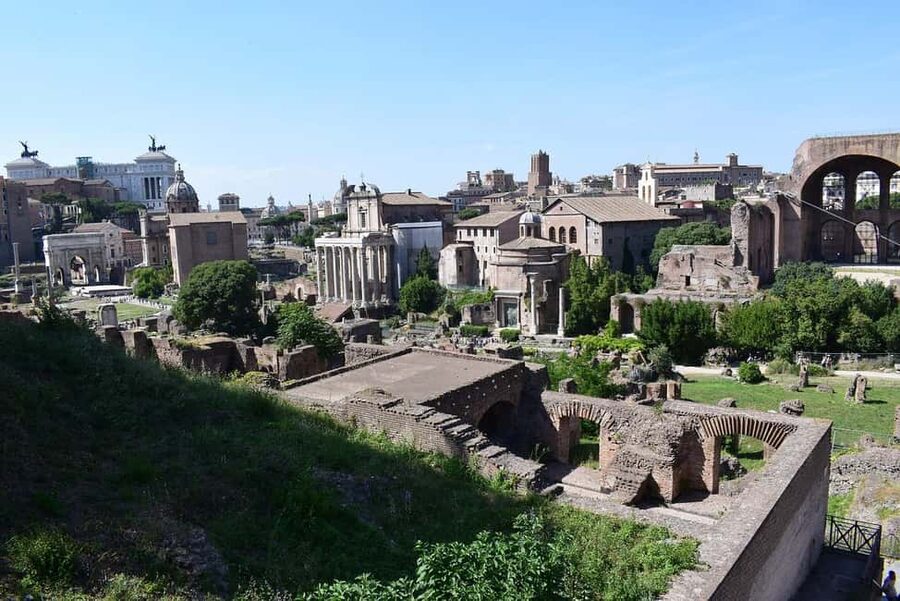
The Domus Aurea stays at around 10 degrees Celsius. Rome may be warm outside, but the underground rooms feel cold. Bring a jacket or sweater even during summer.
Comfortable shoes are important because this is an archaeological visit, not a polished museum walk. The activity is not suitable for wheelchair users or people with mobility impairments. It is also a poor fit if you have claustrophobia, since the rooms are underground, enclosed, and often dim.
Large bags, luggage, food, and drinks are not allowed. Plan to visit without bulky items, especially if you are arriving from a hotel checkout or train station.
Children must have identification, and minors cannot attend without an accompanying adult. These rules are easy to handle if you prepare, but they can cause trouble if you arrive without the required documents.
Who should book this Domus Aurea visit?
I would choose this tour for you if you enjoy ancient architecture but need visual help to picture ruined buildings. The combination of a live guide and reconstructed scenes makes the palace easier to understand than a bare archaeological visit.
It is also a good fit if Nero’s imperial world interests you. The tour covers his building plans, courtly residence, decorative program, and use of Roman concrete. You get more than a quick look at an underground ruin.
You may want to skip it if you dislike enclosed spaces, cold interiors, or guided timing. The sound inside can also be imperfect, so people who need consistently clear spoken commentary should consider that before paying.
The visit works well alongside the Colosseum because the meeting point is nearby, but do not assume you can combine both attractions in a rushed morning. Arrive early, allow time for the meeting process, and leave a buffer after the tour.
Final verdict: book it for the virtual reconstruction
I recommend the Domus Aurea tour if you want to understand what Nero’s palace was meant to be, not just see what survives. The virtual reality presentation is the strongest reason to book, while the guide adds the archaeological and political context that the headset cannot provide.
At $67, it offers fair value for a short, focused experience with admission, guidance, and technology included. Book it if you can handle the cold, enclosed setting and do not mind a scheduled visit. Skip it if you want open-air ruins, unlimited time, or a fully accessible route.
FAQ
Where does the Domus Aurea tour meet?
Meet in front of the Colosseo metro station, on the lower floor at street level. Look near the green kiosk for staff with a C.I.S. Tours sign.
How long does the experience last?
The full activity lasts 1.5 hours. The guided visit inside the Domus Aurea lasts about 70 minutes.
What languages are available?
Live guides and audio guides are available in Italian, English, French, and Spanish.
Is the virtual reality experience included?
Yes. The Oculus virtual reality experience is included with the Domus Aurea ticket and guided tour.
How cold is the Domus Aurea?
The temperature inside is around 10 degrees Celsius. Bring a jacket or sweater.
What identification should I bring?
Bring a passport or identity card. Children also need a passport or identity card, and participant names are required because tickets are nominative.
Is the tour suitable for wheelchair users or people with claustrophobia?
No. The experience is not suitable for wheelchair users, people with mobility impairments, or people with claustrophobia.
Recently added around Rome
- Palatine Hill and Roman Forum Tour with Fast-Track Entrance★ 4.2 · 417 reviews
- Tivoli: Villa D’Este & Villa Adriana Pass & App Audioguide★ 4.4 · 364 reviews
- From Rome: Villa D’Este & Villa Adriana Day Trip with Lunch★ 4.4 · 289 reviews
- Vatican Museums & Sistine Chapel Skip-the-Line Guided Tour★ 4.6 · 254 reviews
- Rome: The Three Tenors at St. Paul’s Church Concert Ticket★ 4.7 · 699 reviews
- Tivoli: Villa D’Este Entry Ticket and App Audio Guide★ 4.3 · 191 reviews
- Rome: Capitoline Museums and Centrale Montemartini Tickets★ 4.4 · 328 reviews
- Rome: St. Peter’s Basilica and Papal Tombs Guided Tour★ 4.6 · 477 reviews
Guided, compared.
Colosseum, Roman Forum & Palatine Guided Tour
Read our review →
Vatican Museums, Sistine Chapel & St Peter’s Basilica Guided Tour
Read our review →
Colosseum, Palatine Hill and Roman Forum Guided Tour
Read our review →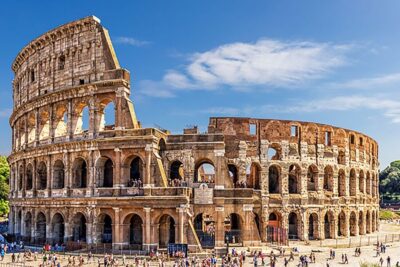
Guided Tour of Colosseum, Roman Forum & Palatine Hill
Read our review →
Colosseum & Forum with Audio Guide App -Optional Arena
Read our review →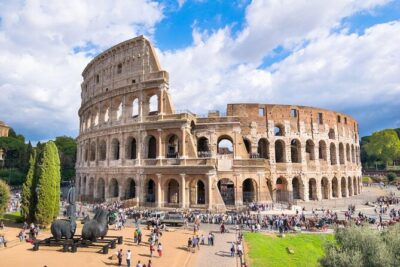
Colosseum, Roman Forum and Palatine Hill Guided Tour
Read our review →
Naples Underground Entry Ticket and Guided Tour
Read our review →