Reviewed · GUIDED
Rome: Domus Aurea Guided Group Tour
Beneath Rome sits an emperor’s fantasy palace. The Domus Aurea, or Golden House, is one of Rome’s most unusual ancient sites: a buried palace of huge rooms, soaring vaults, surviving frescoes, and grand ideas that Nero’s successors tried to erase. I especially like the chance to see an active excavation site and the clever virtual reality experience, which helps you picture the palace before it was buried. The main drawback is that this is a dark, underground walking tour with steps, uneven ground, and no wheelchair access.
The two-hour visit costs $55 per person. That is more than a simple entry ticket, but the English tour, reservation fees, guided interpretation, express security check, and virtual reality presentation make it fair value if Roman history interests you. Guide quality can vary, though many guides, including Valentina, Thomas, Brandon, Monica, Elena, and Renata, have been praised for clear explanations and lively storytelling.
In This Review
- Key points to know before you book
- Why Nero’s Golden House is different from other Rome sights
- Meeting at Oppio Caffè near Oppian Hill
- Descending into the buried palace
- What you see inside the Domus Aurea
- The Renaissance connection
- Why the virtual reality experience is worth your time
- The guide can shape the whole experience
- Two hours, small groups, and a sensible pace
- Is the $55 price fair?
- Who should book this experience?
- Should you book the Domus Aurea tour?
- FAQ
- How long is the Domus Aurea guided tour?
- What is included in the price?
- Where does the tour meet?
- How will I recognize the guide?
- Where does the tour finish?
- Is transportation included?
- What should I wear or bring?
- Can I bring luggage or a large bag?
- Is the tour suitable for wheelchair users?
Key points to know before you book
- Nero’s palace is underground: You descend beneath Oppian Hill into rooms hidden under centuries of earth.
- The virtual reality segment matters: It reconstructs Nero’s palace, gardens, and surrounding terrain, making the bare ruins much easier to understand.
- Original decoration survives: Look for fresco fragments, painted walls, tiled floors, and the famous decorative style later copied by Renaissance artists.
- This is an active archaeological site: Access is limited, and the preservation work is part of what makes the visit special.
- The tour is physically demanding: Expect stairs, steps, uneven surfaces, and a cool interior. Wear good shoes and bring a warm layer.
- The guide makes a real difference: The strongest tours combine archaeology with a good story about Nero, Rome, and the palace’s later burial.
Why Nero’s Golden House is different from other Rome sights
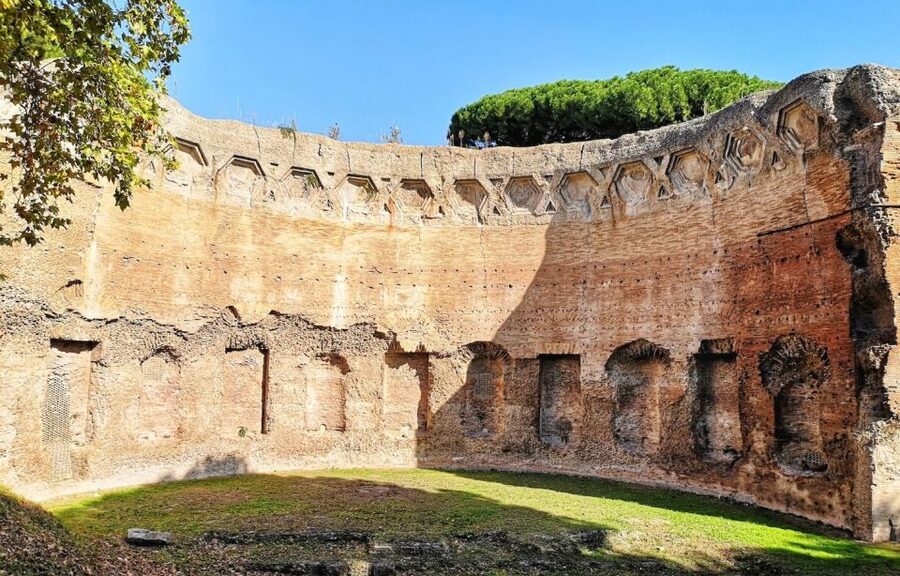
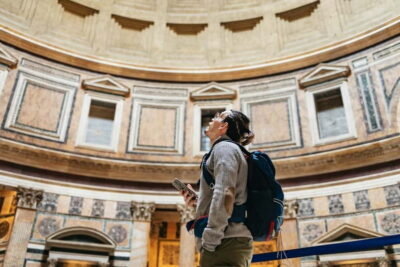
Rome gives you plenty of grand monuments, but the Domus Aurea feels different from the Colosseum or Pantheon. You are not walking through a fully restored building. You are moving through a partially excavated palace, with unfinished conservation work, bare brick, dim rooms, and fragments of decoration still clinging to the walls.
That raw quality is the point. The palace was buried deliberately after Nero’s death, and much of what survives is hidden beneath the modern city. You get a strong sense of archaeology in progress rather than a polished museum display.
Nero ruled from AD 54 to 68, a short reign remembered for extravagance, political violence, and his troubled relationship with Rome’s citizens and elite. After a major fire devastated much of the city in AD 64, Nero’s architects built an enormous palace complex over parts of the damaged area.
The name Domus Aurea means Golden House. It was not just one house in the ordinary sense. It was a huge imperial pleasure complex with grand rooms, gardens, fountains, and unusual engineering. Accounts describe a rotating dining room that opened to the night sky and a large artificial lake.
The palace became a powerful symbol of Nero’s excess. After his death, his successors moved quickly to erase his memory. They filled in the lake and built the Colosseum on the site soon afterward. The palace itself was covered over, which helped preserve parts of its decoration even as the building disappeared from view.
A few more Rome bookings to compare
- Vatican: Museums & Sistine Chapel Entrance Ticket
★ 4.5 · 144,003 reviews - Vatican Museums & Sistine Chapel Tour with Optional Basilica
★ 4.3 · 67,413 reviews - Colosseum, Roman Forum & Palatine Guided Tour
★ 4.7 · 63,148 reviews
Meeting at Oppio Caffè near Oppian Hill
The tour begins at Oppio Caffè, on the corner of Via Nicola Salvi and Via delle Terme di Tito. The stated address is Via delle Terme di Tito 72. Your guide should be holding a Through Eternity sign or flag.
Give yourself enough time to find the corner. The meeting point is close to the Colosseum, but the streets around Oppian Hill can be confusing, especially if you are coming from the Colosseum metro station or walking through the archaeological area. GPS can help, but look for the café and the guide’s sign rather than relying only on a pin on your phone.
Transportation is not included. You make your own way to the meeting point, and the visit ends at the Domus Aurea. That is useful because you are already near several major sights, but you need to plan the rest of your day around the tour rather than expecting a transfer elsewhere.
The first contact with the guide matters here. Some tours have been led throughout by an archaeologist, while in some cases the Through Eternity representative has escorted the group and the official Domus Aurea guide has conducted the site visit. The booking information promises an English-speaking archaeologist guide, but the exact arrangement may vary.
Descending into the buried palace
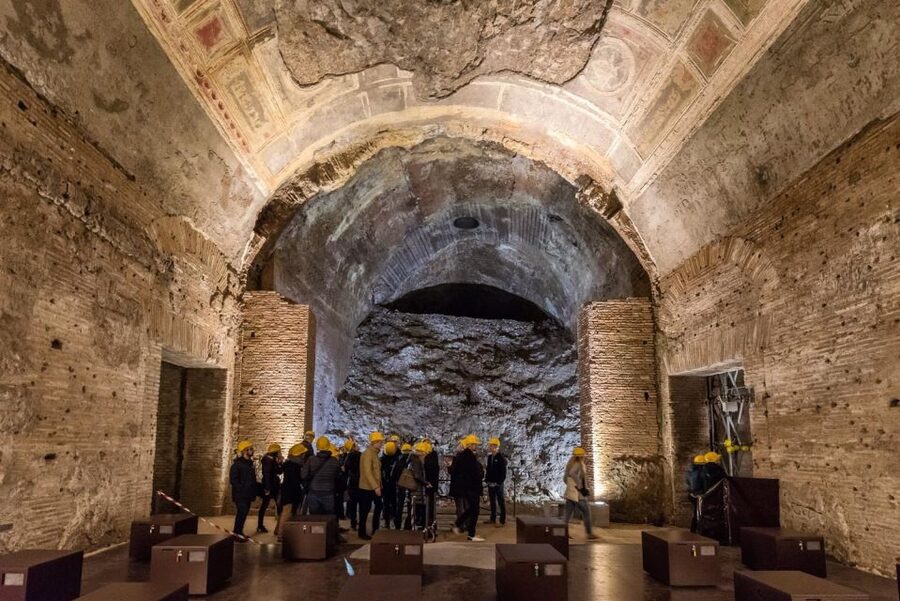
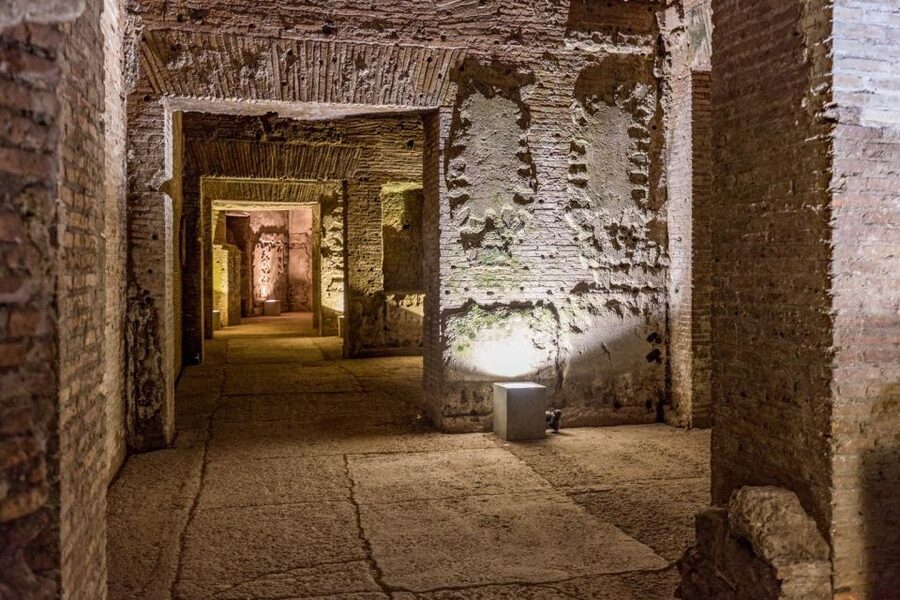
The tour takes you below the modern level of Rome. That descent is more than a dramatic entrance. It explains why the Domus Aurea feels so unlike a normal archaeological monument. You are entering rooms that survived because they were buried beneath later construction and earth.
Expect stairs and uneven surfaces as you move through the site. This is not a good choice if you need a completely level route. Wheelchair users cannot take this tour, and anyone with mobility concerns should tell the provider during booking so possible accommodations can be considered.
The interior can feel cool, even when Rome is hot outside. Bring warm clothing and water. Comfortable walking shoes are essential, since the route includes steps, staircases, and rough ground.
Large bags and luggage are not allowed. Bring only what you need for the two-hour visit. That is practical for conservation, but it means you should not arrive with a suitcase or a large daypack.
What you see inside the Domus Aurea
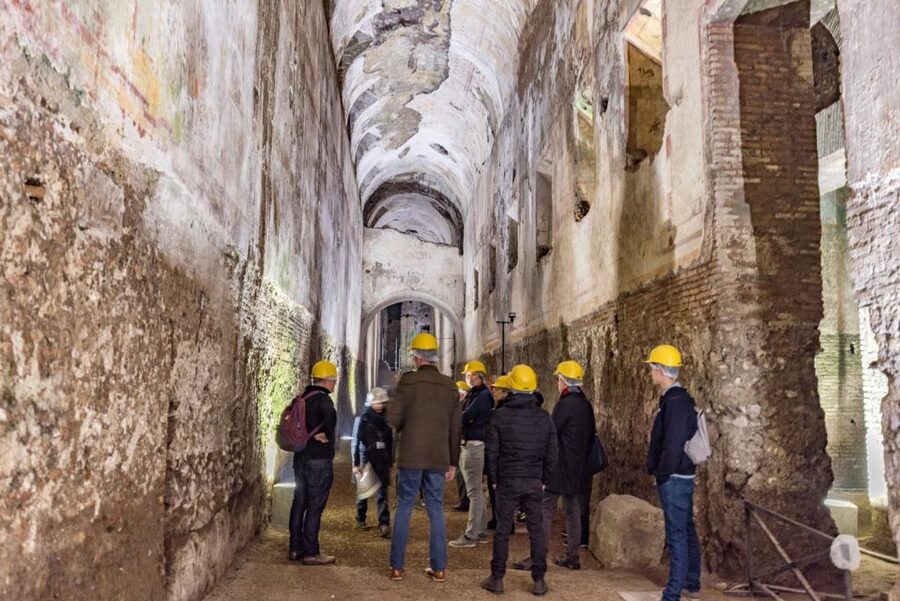
The surviving rooms give you a sense of scale before they give you a complete picture. You see broad chambers, high vaulted ceilings, passageways, and sections where the original decoration has survived. The building is not intact enough to show the entire palace plan in an easy way, so the guide’s explanation is important.
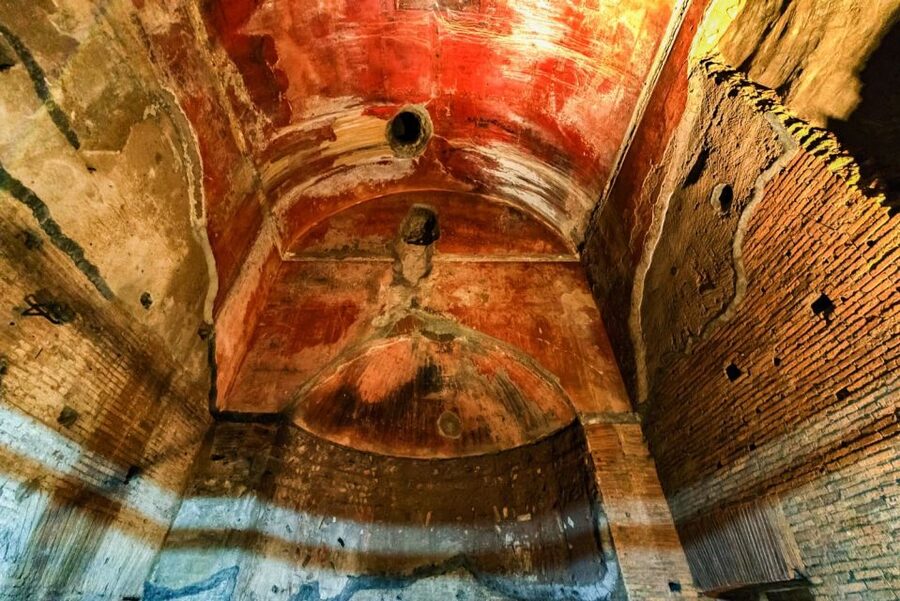
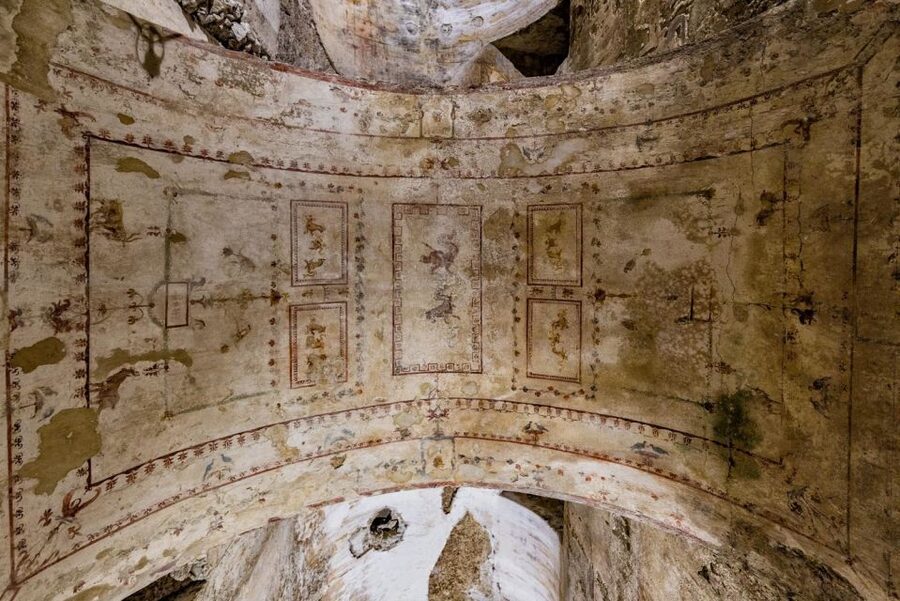
Look closely at the walls. Some frescoes remain in surprisingly good condition, although you should expect fragments rather than full, bright scenes everywhere. Painted figures, borders, and delicate decorative designs appear across the surviving surfaces.
The architecture is the real surprise. Nero’s architects used large spaces and ambitious forms to create a palace meant to impress. The rooms feel oversized, and the height of the vaults gives the site a theatrical quality.
You may also see tiled floors and important surviving areas such as the pavilion. These details help connect the palace to daily life. The floor is not just decoration, and the frescoes are not simply pretty pictures. Together, they show how Roman elites used architecture, color, mythological imagery, and precious materials to project power.
A good guide also places the rooms in the larger story of Rome. The Domus Aurea is tied closely to the Colosseum, the fire of AD 64, the Flavian dynasty, and later Roman attitudes toward Nero. After the palace was buried, its decorated rooms were forgotten for centuries.
Still Rome, but a slower afternoon:
- Vatican Museums, Sistine Chapel & St Peter’s Basilica Guided Tour
★ 4.5 · 39,149 reviews - Rome: Colosseum, Palatine Hill and Roman Forum Guided Tour
★ 4.8 · 32,814 reviews - Rome: Guided Tour of Colosseum, Roman Forum & Palatine Hill
★ 4.7 · 27,897 reviews - Rome: Colosseum & Forum with Audio Guide App -Optional Arena
★ 4.2 · 24,770 reviews
The Renaissance connection
The palace’s later story is one of the best reasons to take a guided visit. During the Renaissance, artists entered some of the buried rooms and copied the strange decorative designs they found there.
These motifs became known as grotesques, from the Italian word for grotto, or cave. The influence spread through Renaissance art and helped renew interest in ancient Roman decoration.
The Domus Aurea therefore reaches far beyond Nero’s reign. It connects imperial Rome with the artists and scholars who helped shape European art many centuries later. If you are interested in the Renaissance, the visit adds useful context to what you see in churches, palaces, and museums across Rome.
The guide can make this connection clear in a way a quick walk through the rooms cannot. You are not just seeing faded wall paintings. You are seeing decoration that helped influence a later artistic movement.
Why the virtual reality experience is worth your time
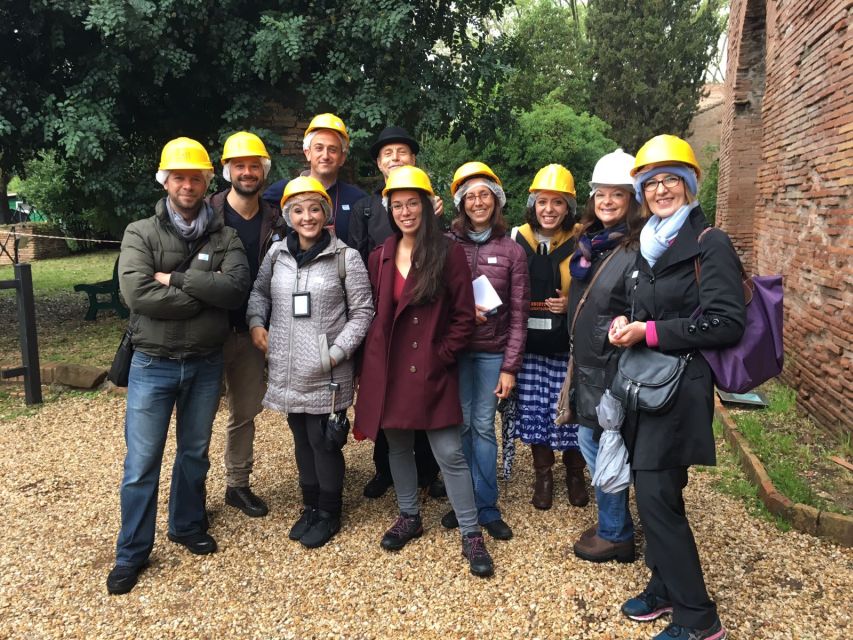
The virtual reality presentation is one of the strongest parts of the visit. Ruins can be hard to read, especially when walls are incomplete and rooms are dim. The VR experience reconstructs the palace as it may have appeared in Nero’s time, including the building and surrounding terrain.
This does not replace the ancient remains. It gives them a frame of reference. After seeing the plain brick and fragmentary frescoes, you can better imagine the painted surfaces, open spaces, gardens, water features, and imperial scale of the original complex.
Several people have found the multimedia portion especially powerful. It is also useful for children and for anyone who does not already know Roman architecture. Instead of asking you to build the whole palace in your head from a few walls, the presentation gives you a visual guide.
The technology is not a gimmick here. It solves a genuine problem: Nero’s palace was vast, much of it is gone or inaccessible, and the remains can be difficult to interpret without help.
The guide can shape the whole experience
This is a guided visit, and the human element matters. The best guides bring together archaeology, politics, architecture, and storytelling. Valentina has been praised for combining clear facts with humor and enthusiasm. Thomas has been singled out for his pace and delivery, while Brandon has been praised for being friendly, engaging, and well informed.
Other guides named in connection with successful visits include Elena, Monica, Renata, Marco, Federico, and Frank. An archaeologist guide can explain why a wall matters, how restoration works, and what remains uncertain. That is more useful than a simple list of dates.
The main weakness reported about some visits is sound quality. One guide was difficult to hear, particularly during the museum portion, and no audio devices such as whisper systems were provided. If you have hearing trouble, try to stay close to the guide and mention the issue at the start.
English is the available tour language. Accents and speaking volume can vary, so the experience is better for listeners who are comfortable following a spoken tour in English.
Two hours, small groups, and a sensible pace
The scheduled duration is two hours. That is long enough to explain the site without turning the visit into an exhausting half-day commitment.
The route is conducted in small groups because access to the archaeological site is limited. That helps preserve the atmosphere. You are not being pushed through a giant crowd, and you have a better chance of seeing details on the walls.
The pace has generally been described as comfortable, though one person wished for more time in the rooms. That is a fair concern. There is a lot to absorb, and the palace is fascinating enough that you may want to linger over the frescoes or pavilion.
Plan for the full two hours, including the guided explanation and VR segment. Do not book a tight connection immediately afterward. The tour finishes at the Domus Aurea, not back at Oppio Caffè, so allow time to orient yourself before moving on.
Is the $55 price fair?
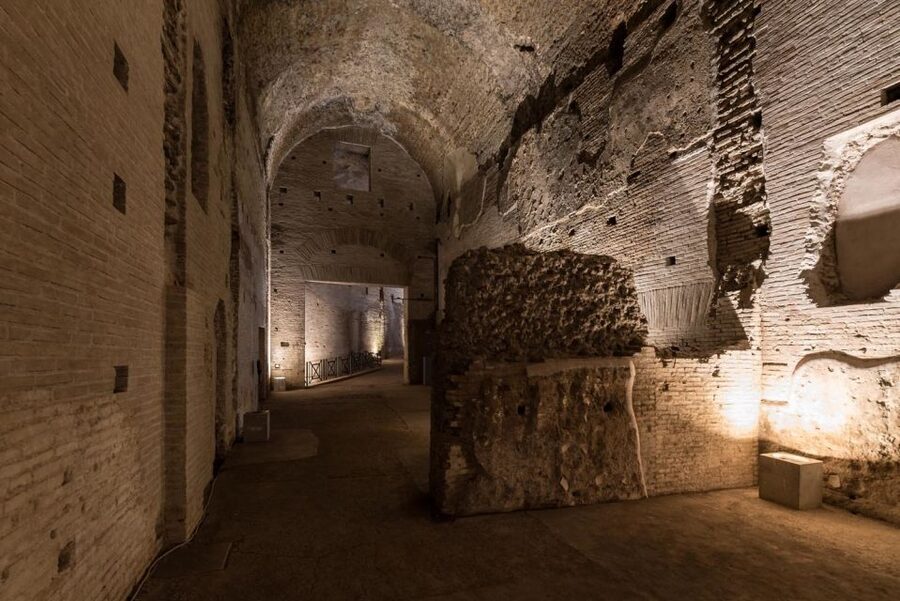
At $55, this is not Rome’s cheapest ancient site. You are paying for more than admission, though. The price includes access, reservation fees, the English tour, an archaeologist guide, express security entry, and the VR experience.
I think the cost is reasonable for visitors who want interpretation rather than a quick look at ruins. The Domus Aurea is not as straightforward to understand as the Colosseum. Without context, you might see a series of underground rooms and miss the scale, purpose, destruction, and later influence of the palace.
The price is less attractive if you prefer to explore independently or if you are mainly interested in complete monuments. The Domus Aurea is partly excavated and partly preserved, so its appeal depends on your interest in archaeology and reconstruction.
Students should bring a valid student ID to receive the discount. Without proper identification, you may be charged the full entry price on the day.
Who should book this experience?
I would choose this tour for anyone who has already seen Rome’s famous monuments and wants something less predictable. It is also a strong choice for Roman history fans, architecture students, art lovers, and people curious about how archaeology works today.
Families can enjoy it, especially because the VR presentation makes the lost palace easier to picture. Children’s questions have been handled well by several guides, but the physical route and the serious subject matter may not suit very young children.
You should think twice if you dislike underground spaces, stairs, uneven floors, or guided groups. The tour is not suitable for wheelchair users, and large luggage is prohibited.
The visit also works well alongside the Colosseum. The two sites are close, and the history is connected by the artificial lake that once occupied the area where the Flavian Amphitheatre was later built. Still, do not assume you can rush from one ticketed attraction to the other. Allow breathing room in your schedule.
Should you book the Domus Aurea tour?
Book it if you want to understand how Nero’s palace changed Rome, influenced Renaissance art, and survived through burial and restoration. The original frescoes, huge vaulted rooms, archaeological setting, and VR reconstruction make this a memorable two hours.
I would not book it simply because you want another famous Roman building to photograph. The Domus Aurea asks you to look closely, listen carefully, and accept incomplete ruins. For the right visitor, that is exactly its strength.
At $55, the tour offers good value when the guide is strong and the archaeological setting interests you. Wear proper shoes, carry a warm layer, arrive at Oppio Caffè early, and stay near the guide if hearing is a concern. If those conditions suit you, this is one of Rome’s most rewarding lesser-known archaeological visits.
FAQ
How long is the Domus Aurea guided tour?
The tour lasts two hours.
What is included in the price?
The price includes access to the Domus Aurea, reservation fees, an English-speaking guide, and a virtual reality experience. Express security entry is also included.
Where does the tour meet?
Meet your guide on the corner of Via Nicola Salvi and Via delle Terme di Tito, in front of Oppio Caffè. The stated address is Via delle Terme di Tito 72.
How will I recognize the guide?
The guide should have a Through Eternity sign or flag.
Where does the tour finish?
The tour finishes at the Domus Aurea.
Is transportation included?
No. Transportation to and from the meeting and ending points is not included.
What should I wear or bring?
Wear comfortable walking shoes, bring water, and carry warm clothing because the underground site can be cool.
Can I bring luggage or a large bag?
No. Luggage and large bags are not allowed.
Is the tour suitable for wheelchair users?
No. The route includes steps, staircases, and uneven surfaces, and the tour is not suitable for wheelchair users. Tell the activity provider about mobility concerns during booking so they can advise you about possible accommodations.
Recently added around Rome
- Palatine Hill and Roman Forum Tour with Fast-Track Entrance★ 4.2 · 417 reviews
- Tivoli: Villa D’Este & Villa Adriana Pass & App Audioguide★ 4.4 · 364 reviews
- From Rome: Villa D’Este & Villa Adriana Day Trip with Lunch★ 4.4 · 289 reviews
- Vatican Museums & Sistine Chapel Skip-the-Line Guided Tour★ 4.6 · 254 reviews
- Rome: The Three Tenors at St. Paul’s Church Concert Ticket★ 4.7 · 699 reviews
- Tivoli: Villa D’Este Entry Ticket and App Audio Guide★ 4.3 · 191 reviews
- Rome: Capitoline Museums and Centrale Montemartini Tickets★ 4.4 · 328 reviews
- Rome: St. Peter’s Basilica and Papal Tombs Guided Tour★ 4.6 · 477 reviews
Guided, compared.
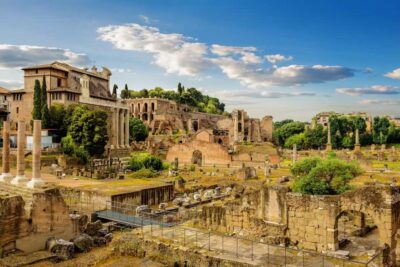
Colosseum, Roman Forum & Palatine Guided Tour
Read our review →
Vatican Museums, Sistine Chapel & St Peter’s Basilica Guided Tour
Read our review →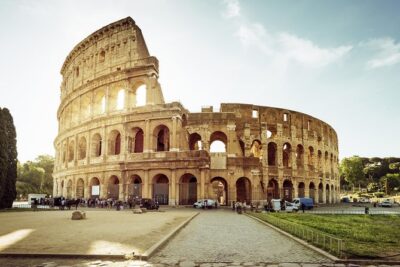
Colosseum, Palatine Hill and Roman Forum Guided Tour
Read our review →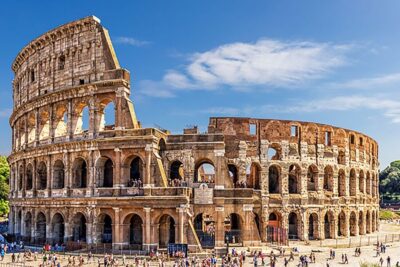
Guided Tour of Colosseum, Roman Forum & Palatine Hill
Read our review →
Colosseum & Forum with Audio Guide App -Optional Arena
Read our review →
Colosseum, Roman Forum and Palatine Hill Guided Tour
Read our review →
Naples Underground Entry Ticket and Guided Tour
Read our review →