Reviewed · TICKETS
Rome: Colonna Palace Entry Ticket
Step inside one of Rome’s best surprises. Palazzo Colonna gives you ornate rooms, major paintings, marble sculpture, and garden views without the scale and noise of the city’s biggest museums. I especially like the Galleria Colonna’s Roman Baroque design and the chance to add Princess Isabelle’s apartment, a more personal look at palace life.
The gardens are another strong point. From the grounds and upper viewpoints, you may see the Vittorio Emanuele II Monument and even the dome of St. Peter’s Basilica. The main drawback is simple: the ticket is non-refundable, and the palace can become busy despite its quieter reputation, so arriving on time matters.
At $23 per person, this is a fair Rome ticket if you enjoy architecture and art rather than only chasing famous ruins. You can use it for one day, and the gallery, gardens, and apartments offer enough variety to fill a relaxed visit.
In This Review
- Key points to know before you go
- Why Palazzo Colonna feels different from Rome’s major museums
- The Galleria Colonna and its grand Baroque setting
- The paintings worth seeking out
- Paintings, sculpture, mirrors, and furnishings together
- Why the Princess Isabelle apartment is worth adding
- The gardens at the base of the Quirinal Hill
- Tickets, timing, and the $23 value
- Crowds, staff, and the pace of the visit
- Who should visit Palazzo Colonna
- Should you book the Colonna Palace ticket?
- FAQ
- Where is Palazzo Colonna located?
- What does the basic Colonna Palace ticket include?
- Does the ticket include the Princess Isabelle apartment?
- Is a guided tour included?
- How long is the ticket valid?
- How much does the experience cost?
- Can I cancel the booking?
- What artwork can I see inside the palace?
- Can I see views of Rome from the palace?
Key points to know before you go
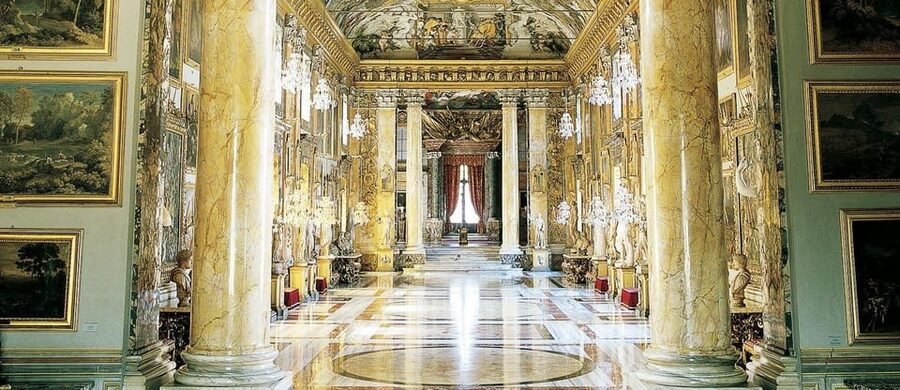
- The gallery dates to the 1600s: Cardinal Girolamo I Colonna and Lorenzo Onofrio Colonna commissioned the grand Galleria Colonna in the mid-17th century.
- The art is serious: Look for works connected with Bronzino, Guercino, Salvator Rosa, Tintoretto, Salviati, Guido Reni, and Giovanni Lanfranco.
- The gardens add breathing room: They sit at the base of the Quirinal Hill and include sculpture and views across central Rome.
- The apartment upgrade is worthwhile: Princess Isabelle’s rooms provide a more intimate contrast to the formal gallery.
- Tickets help at the entrance: Prebooking avoids buying admission when you arrive, though you should still be at the correct entrance and on time.
- This is not a guided tour by default: You receive entry, not a guide, so plan to explore at your own pace.
Why Palazzo Colonna feels different from Rome’s major museums
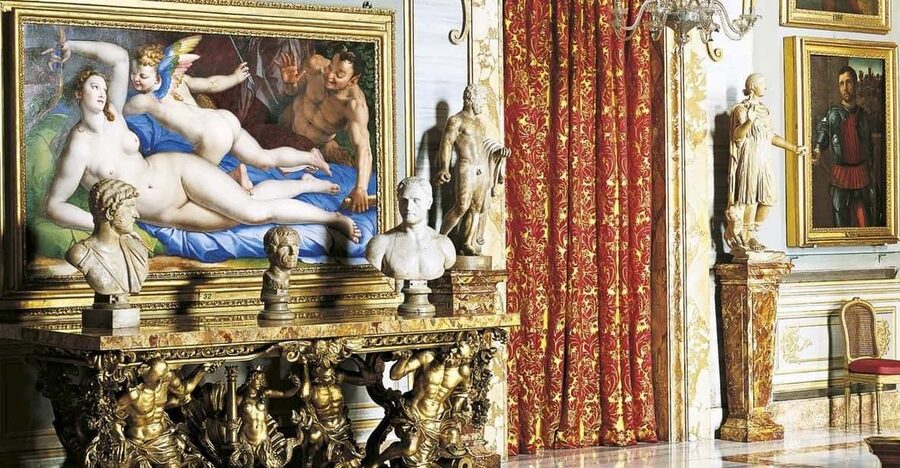
Rome has no shortage of grand interiors, but Palazzo Colonna feels less like a public museum and more like a family residence that happens to contain an extraordinary art collection. That difference matters. Instead of moving through a vast state collection, you see paintings, sculpture, furniture, mirrors, and wall decorations in rooms designed to work together.
The Colonna family has occupied this palace for centuries. The building began in the 14th century and grew into one of Rome’s oldest and largest private palaces. The result is not one tidy architectural period. You encounter the long life of an aristocratic home, with older foundations, later decoration, and a gallery shaped by the family’s ambitions in the 1600s.
I like this setting because the art does not feel isolated from its surroundings. A painting hangs beneath a decorated ceiling. A mirror catches the light from a window. Furniture, sculpture, and wall hangings help explain how these rooms were meant to look when the palace was a living center of family power.
That also means you should not expect the clean, quiet display style of a modern art museum. The rooms are visually packed. If you prefer one painting at a time with lots of wall space and detailed labels, the palace may feel busy. If you enjoy the full effect of a historic interior, that density is part of the fun.
A few more Rome bookings to compare
- Vatican: Museums & Sistine Chapel Entrance Ticket
★ 4.5 · 144,003 reviews - Vatican Museums & Sistine Chapel Tour with Optional Basilica
★ 4.3 · 67,413 reviews - Colosseum, Roman Forum & Palatine Guided Tour
★ 4.7 · 63,148 reviews
The Galleria Colonna and its grand Baroque setting
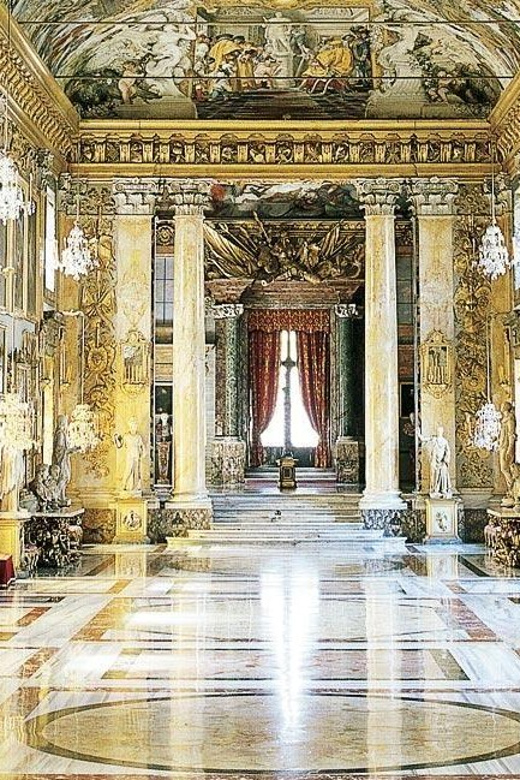
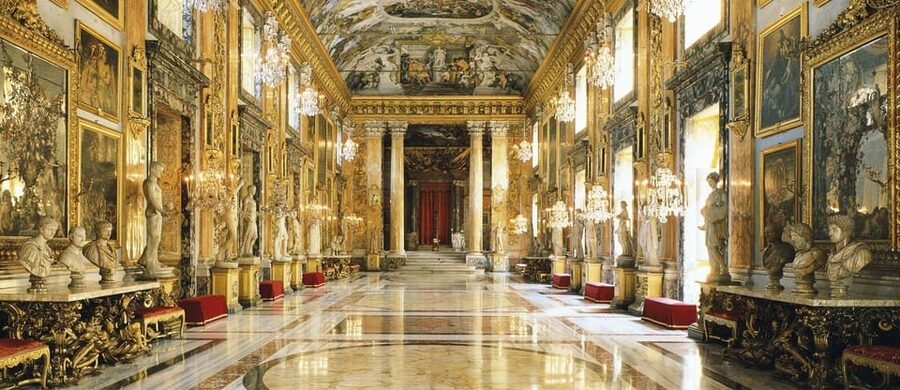
The main event is the Galleria Colonna, described as a jewel of Roman Baroque. It is easy to see why. This is not merely a corridor lined with pictures. It is a ceremonial space where architecture and art were planned to impress.
Look up as much as you look ahead. Painted ceilings draw your eye above the gallery, while mirrors, sculpture, and ornate furnishings create the sense of a room built for display. The scale is grand, but the details reward slow looking. You may notice carved frames, marble surfaces, decorative designs, and carefully arranged artworks that are easy to miss if you hurry.
The gallery was commissioned in the mid-1600s by Cardinal Girolamo I Colonna and his nephew Lorenzo Onofrio Colonna. That date helps explain the mood of the space. This was an age when powerful Roman families used architecture, art, and ceremony to show their place in society. The gallery is both a collection and a statement.
Give yourself time to adjust before trying to identify every artist. The first impression comes from the whole room: painted surfaces, glinting mirrors, sculpture, and the rhythm of the walls. Then look more closely at the individual works.
The paintings worth seeking out
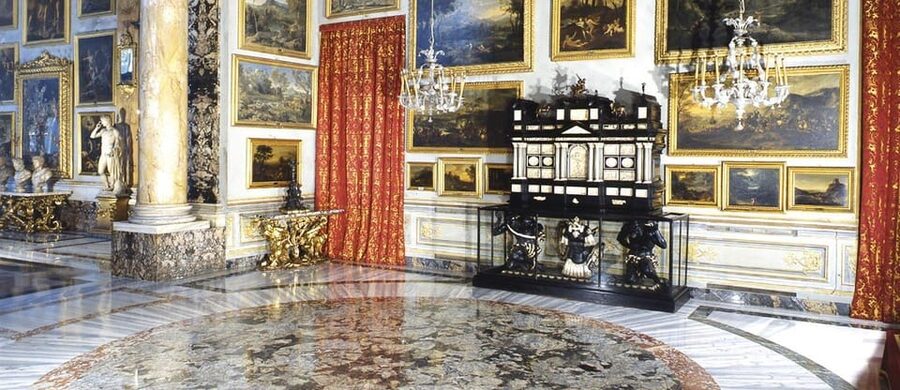
The collection includes artists from several important chapters of Italian painting. Names connected with the palace include Bronzino, Guercino, Salvator Rosa, Jacopo Tintoretto, Francesco Salviati, Guido Reni, and Giovanni Lanfranco.
That list gives you a useful way to approach the visit. Bronzino and Salviati represent the polished, refined style associated with the 16th century. Tintoretto brings the drama and movement of Venetian painting. Guido Reni and Lanfranco are tied to the grand theatrical style that became so important in Rome.
Guercino is another name to watch for, with a style known for strong feeling and energetic composition. Salvator Rosa is associated with rugged scenes and a more restless mood. You do not need an art-history background to enjoy these works. Simply compare the different ways artists handle faces, fabric, light, and movement.
The palace works best when you resist the urge to treat it like a checklist. You can certainly admire the famous names, but the real pleasure comes from seeing them in a room filled with other visual details. A lesser-known painting may catch your eye because of its color or subject, while a famous artist may make more sense after you have seen the room around it.
Labels and staff can help with questions. Several visitors found the staff kind and willing to assist, which is useful in a private palace where the layout may not feel as straightforward as a standard gallery.
Paintings, sculpture, mirrors, and furnishings together
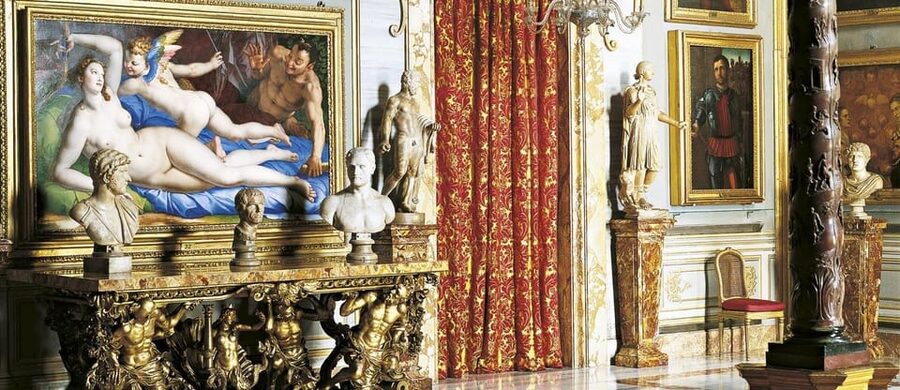
The art collection is only one part of the experience. Marble statues, precious furnishings, decorated ceilings, mirrors, and wall hangings all contribute to the palace atmosphere.
This combination is valuable because it shows how elite Roman interiors were actually experienced. Paintings were not always meant to be admired in isolation. They were part of a room that communicated wealth, education, family connections, and taste.
The mirrors deserve special attention. In a grand gallery, they multiply the sense of space and reflect both the artwork and the architecture. They also make the room feel theatrical. You may find yourself looking at a painting through a mirror or noticing a sculptural detail from an angle you would otherwise miss.
The furnishings help keep the visit grounded. A palace can otherwise become a parade of ceilings and canvases. Tables, chairs, textiles, and decorative objects remind you that people lived and received important visitors here. The building was not created solely for tourists or for an art display. It was a working residence for a powerful Roman family.
If you have limited time, do not rush through the rooms simply to reach the garden. The indoor decoration is the core of the visit, and it deserves at least an hour of calm attention. The exact visit length is not specified, so your pace will depend on how closely you study the art and whether you add the apartments.
Still Rome, but a slower afternoon:
- Vatican Museums, Sistine Chapel & St Peter’s Basilica Guided Tour
★ 4.5 · 39,149 reviews - Rome: Colosseum, Palatine Hill and Roman Forum Guided Tour
★ 4.8 · 32,814 reviews - Rome: Guided Tour of Colosseum, Roman Forum & Palatine Hill
★ 4.7 · 27,897 reviews - Rome: Colosseum & Forum with Audio Guide App -Optional Arena
★ 4.2 · 24,770 reviews
Why the Princess Isabelle apartment is worth adding
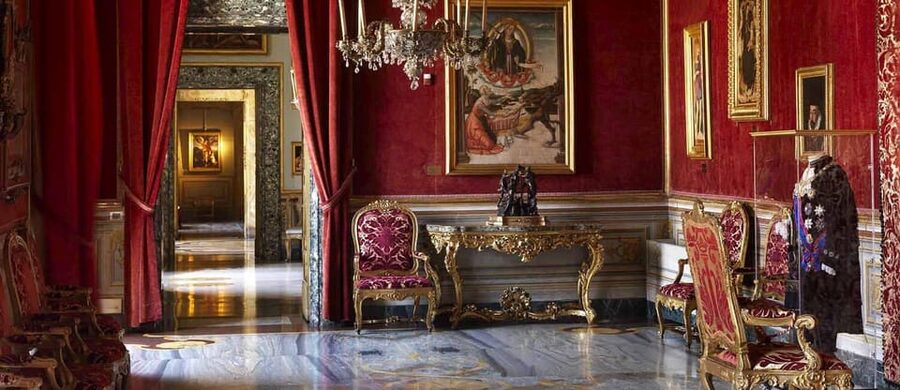
The optional apartment once used by Princess Isabelle offers a different kind of palace experience. The main gallery is formal, public, and designed to impress. The apartment brings you closer to the private side of aristocratic life.
This is the upgrade I would consider most carefully. One visitor regretted not adding it, while another described the princess’s bedrooms as a must-see. Those rooms can make the palace feel more human. You are no longer looking only at ceremonial spaces. You are seeing where a member of the family lived and slept.
The apartment also includes a secret passage. The existence of this feature is easy to miss, so ask staff about it and use it if access is available during your visit. It is a small detail, but it adds a sense of discovery to the palace and gives you a better idea of how large, layered, and private these residences could be.
The apartment option costs more than the basic ticket, though the exact upgrade price is not provided here. If you are mainly interested in the famous gallery, the standard admission may be enough. If you enjoy domestic interiors, palace history, or unusual architectural details, I would lean toward adding it.
The gardens at the base of the Quirinal Hill
The gardens provide a welcome change after the ornate rooms. Set at the base of the Quirinal Hill, they include elegant sculpture and open views over Rome.
This is not just a decorative extra. The garden gives you space to process what you have seen indoors. After the concentrated visual detail of the gallery, a walk outside feels calmer and less demanding. The grounds are also a strong reason to visit at a slower pace rather than squeezing the palace into a rushed hour between major sights.
The views are one of the most praised features of the experience. Depending on your position and visibility, you can look toward the Vittorio Emanuele II Monument and the dome of St. Peter’s Basilica. These recognizable landmarks help place the palace within the wider city.
The grounds are described as large, so allow time for more than a quick photograph. Sculpture adds interest along the way, and the garden can feel like a small pause from central Rome’s traffic and crowds. It is especially useful if your sightseeing day has already included churches, ruins, and busy piazzas.
Do not assume the garden alone is the main reason to come. The palace interiors remain the stronger attraction. Think of the garden as the part that rounds out the visit and keeps it from becoming an entirely indoor art stop.
Tickets, timing, and the $23 value
At $23 per person, the basic ticket is not the cheapest cultural stop in Rome, but it offers several distinct elements: the gallery, the historic residence, and the gardens. That makes the price reasonable for someone who will take time with the rooms rather than simply entering for a quick look.
The ticket is valid for one day, with available starting times shown when you book. It is not a hop-on, hop-off style admission, and no guided tour is included. You are paying for access and the freedom to set your own pace.
Prebooking has a practical benefit. You can avoid standing at the palace to buy entry, which makes the arrival easier. Still, do not treat a timed starting time casually. One visitor found the entrance easy to locate but warned that the palace became crowded quickly. Another had trouble because the stated meeting point was not the actual entrance, with Piazza Apostoli used as an exit point instead.
The safest approach is to check your voucher carefully for the entrance instructions and arrive early. Go to the entrance, not simply to a nearby exit or meeting location. This matters more than it might at an ordinary museum because the palace can be quiet one moment and noticeably busier soon after opening.
The activity is non-refundable. I would not book it until your Rome schedule is firm. If you are choosing between the basic ticket and the apartment option, decide before arrival when possible, especially if the apartment is a priority.
Crowds, staff, and the pace of the visit
The palace often feels calmer than Rome’s headline attractions, but calm does not mean empty. The experience can change with the time slot. Early arrival is a sensible choice, particularly during busy periods.
Staff are a real asset here. You may need help finding the right route, understanding which areas are included, or locating the secret passage connected with the apartment. The welcome is generally described as warm and professional, and staff have been willing to answer questions.
This is a place where independent sightseeing works well. You can pause in front of a ceiling, return to a favorite room, or spend extra time in the garden without keeping up with a group. On the other hand, the lack of a guide means you will need to supply your own context. A basic art guide, audio material, or a little reading before you arrive could make the paintings easier to place.
One separate experience connected with the palace involved a guide and a more demanding itinerary. That feedback points to a practical concern: a full route through a large historic residence can require physical effort. If you have movement limitations, ask about the route and included areas before booking, rather than assuming every part will be equally easy to reach.
Who should visit Palazzo Colonna
I would recommend this ticket to you if you enjoy:
- Historic homes that still feel personal and lived-in
- Baroque architecture and decorative interiors
- Paintings shown in their original type of setting
- Gardens and city views alongside indoor art
- Less predictable additions to a Rome sightseeing plan
It suits couples, solo visitors, families with older children, and anyone who has already seen the Colosseum and Vatican Museums and wants a different side of the city. It can also work well for a slower afternoon, since the visit combines indoor rooms with outdoor space.
Families should check the total cost carefully. One visitor found the lack of a family option made the outing expensive for five people. At $23 per person before any apartment upgrade, the price adds up quickly for a large group.
You may want to skip it if your Rome schedule is packed with major archaeological sites and you have no interest in decorative art. You should also think twice if you dislike ornate interiors or prefer highly organized guided interpretation. The palace rewards curiosity, but it does not explain every detail for you.
Should you book the Colonna Palace ticket?
Yes, if you want an elegant, art-filled stop that feels different from Rome’s usual routes. The Galleria Colonna is the main reason to go, with its painted ceilings, mirrors, sculpture, furnishings, and works by major Italian artists. The garden views add real value, not just a token patch of greenery.
I would book the apartment upgrade if private rooms and unusual palace details appeal to you. The Princess Isabelle rooms and secret passage give the visit a more intimate edge. If you are watching your budget, the basic gallery and garden ticket still makes a worthwhile visit at $23.
Check the entrance details, arrive early, and keep your schedule flexible enough to look carefully. Palazzo Colonna is best enjoyed as a discovery, not as another box to tick before racing to the next monument.
FAQ
Where is Palazzo Colonna located?
Palazzo Colonna is in Rome, in the Lazio region of Italy. The gardens are at the base of the Quirinal Hill.
What does the basic Colonna Palace ticket include?
The basic ticket includes entry to the Colonna Gallery and Gardens.
Does the ticket include the Princess Isabelle apartment?
Only if you choose the upgraded option. That ticket includes the Colonna Gallery, Gardens, and Apartments.
Is a guided tour included?
No. The activity includes entry tickets, but a guided tour is not included.
How long is the ticket valid?
The ticket is valid for one day. Available starting times are shown when you check availability.
How much does the experience cost?
The listed price is $23 per person. The price of the apartment upgrade is not specified in the provided information.
Can I cancel the booking?
No. This activity is non-refundable.
What artwork can I see inside the palace?
The collection includes works associated with Bronzino, Guercino, Salvator Rosa, Jacopo Tintoretto, Francesco Salviati, Guido Reni, Giovanni Lanfranco, and other artists.
Can I see views of Rome from the palace?
Yes. The gardens and palace viewpoints can offer views that include the Vittorio Emanuele II Monument and the dome of St. Peter’s Basilica.
Recently added around Rome
- Palatine Hill and Roman Forum Tour with Fast-Track Entrance★ 4.2 · 417 reviews
- Tivoli: Villa D’Este & Villa Adriana Pass & App Audioguide★ 4.4 · 364 reviews
- From Rome: Villa D’Este & Villa Adriana Day Trip with Lunch★ 4.4 · 289 reviews
- Vatican Museums & Sistine Chapel Skip-the-Line Guided Tour★ 4.6 · 254 reviews
- Rome: The Three Tenors at St. Paul’s Church Concert Ticket★ 4.7 · 699 reviews
- Tivoli: Villa D’Este Entry Ticket and App Audio Guide★ 4.3 · 191 reviews
- Rome: Capitoline Museums and Centrale Montemartini Tickets★ 4.4 · 328 reviews
- Rome: St. Peter’s Basilica and Papal Tombs Guided Tour★ 4.6 · 477 reviews
Tickets, compared.
Cathedral and Duomo’s Terraces Entrance Ticket
Read our review →
Skip-The-Line Uffizi Gallery Timed Entry Ticket
Read our review →
Naples Underground Entry Ticket and Guided Tour
Read our review →
Pantheon Fast-Track Ticket and Official Audio Guide
Read our review →
Entry Ticket and Guided Tour with an Archaeologist
Read our review →