Reviewed · TICKETS
Rome: Catacombs of St. Sebastian Entry Ticket & Guided Tour
Rome has a quieter world below its streets. At the Catacombs of Saint Sebastian, you walk through third-century burial passages, ancient pagan tombs, and a basilica tied to Rome’s early Christian story. I like the clear, well-organized guide service and the chance to see several layers of history in only 30 minutes. I also like the modest $16 price, especially if you want a focused break from Rome’s crowded center.
The main drawback is the short visit. The passages can be tight, the route is mostly single file, and people who dislike enclosed spaces or have mobility limits should skip this one. Bring a jacket, arrive at the ticket office at least 10 minutes early, and do not expect a long archaeological tour.
In This Review
- Key points to know before you go
- What makes Saint Sebastian’s catacombs different
- Beginning at the ticket office
- The ancient quarry beneath the cemetery
- Mausoleums, columbaria, and Roman burial customs
- The Triclia and the memory of Peter and Paul
- Saint Sebastian, Eutichio, and the Christian catacombs
- The Constantinian basilica above ground
- How much do you see in 30 minutes?
- Group size, pace, and comfort underground
- Is $16 a fair price?
- Who should book this tour?
- Should you book the Catacombs of Saint Sebastian?
- FAQ
- How long does the Catacombs of Saint Sebastian tour last?
- How much does the tour cost?
- What is included in the ticket?
- Which languages are available?
- Where do I meet the guide?
- How early should I arrive?
- Is hotel pickup included?
- Can I take photographs inside the catacombs?
- What should I wear?
- Is the tour suitable for people with claustrophobia or mobility impairments?
Key points to know before you go
- A 30-minute underground tour: You see the main catacomb areas, tombs, and the church without giving up half a day.
- A cool escape from Rome’s heat: The underground rooms are colder, so layers are useful even in summer.
- Guides make the difference: English, Italian, Spanish, and French tours are available, with guides such as Micah and Niko praised for clear explanations.
- A layered archaeological site: The visit includes Christian catacombs, pagan burial structures, ancient quarries, and the basilica above.
- No photography underground: You can take photographs in the basilica, but cameras and video are not allowed inside the catacombs.
- Best for mobile visitors: Baby carriages are not allowed, and the site is not suitable for people with mobility impairments or claustrophobia.
What makes Saint Sebastian’s catacombs different
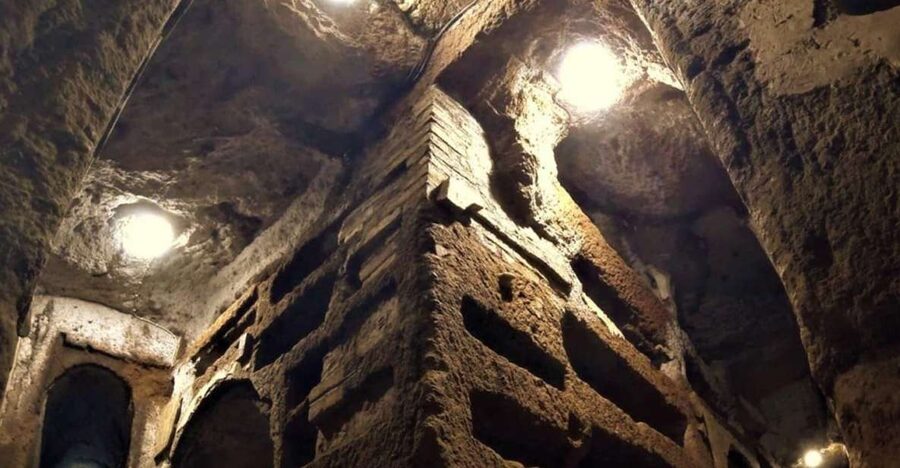
Rome has several catacomb sites, but Saint Sebastian offers more than a simple walk through underground corridors. The site brings together a former pozzolana quarry, surface tombs, Roman villas, mausoleums, Christian burial galleries, and a basilica connected with the emperor Constantine.
That mix matters. You are not looking at one isolated cemetery built at one moment. You are seeing a place that changed over many centuries as Romans quarried the ground, built homes, buried the dead, honored their gods, and later developed Christian worship here.
The name itself comes from the site’s ancient setting. The area was once a deep hollow used for extracting pozzolana, a volcanic material used in Roman construction. The phrase ad catacumbas, meaning near the cavities, eventually became linked with underground cemeteries in general.
I find that detail useful because it corrects a common assumption. Catacombs were not simply mysterious tunnels dug for one purpose. Saint Sebastian’s site grew out of practical Roman industry and burial customs, then took on new religious importance.
A few more Rome bookings to compare
- Vatican: Museums & Sistine Chapel Entrance Ticket
★ 4.5 · 144,003 reviews - Vatican Museums & Sistine Chapel Tour with Optional Basilica
★ 4.3 · 67,413 reviews - Colosseum, Roman Forum & Palatine Guided Tour
★ 4.7 · 63,148 reviews
Beginning at the ticket office
You go directly to the catacomb ticket office and show your reservation. The instructions ask you to arrive at least 10 minutes before your scheduled time, which is sensible here. The guide needs to gather the group, confirm the language, and begin the visit on time.
There is no hotel pickup or drop-off. One particularly useful transport detail is that bus 118 provides access to the site. Check your route before leaving central Rome, since the catacombs are not a quick stroll from the main historic-center sights.
The tour is operated by Opera Romana Pellegrinaggi. The reservation includes the entrance ticket and the guided tour in your chosen language. You should check the available start times before booking because the ticket is valid for a specific 30-minute visit.
The meeting instructions are simple, but one practical point deserves attention: go to the ticket office, not an assumed street meeting spot. A few people have found the starting location less obvious than expected, so give yourself time to locate the entrance rather than arriving at the last second.
The ancient quarry beneath the cemetery
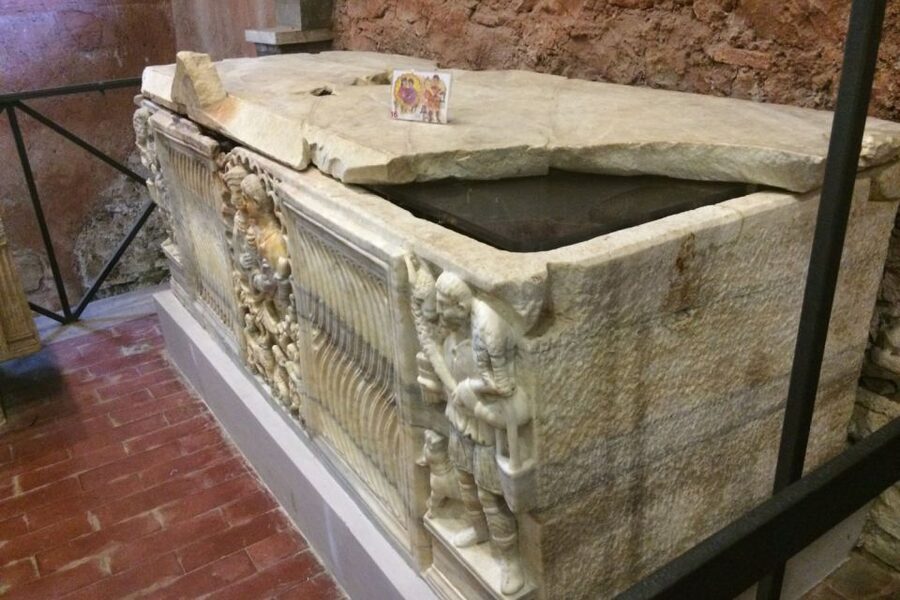
The first part of the visit helps you understand the ground beneath your feet. Before it became a Christian burial site, this was a quarry for pozzolana. The excavated hollow created the spaces that later made underground burials possible.
Since the first century, the area was heavily used and altered. Underground galleries were adapted for burial niches, while the surface held columbaria and at least two residential complexes. These homes, known as the small villa and large villa, had decorated walls, giving you a reminder that this was once a working and lived-in Roman setting, not only a place of death.
The guide’s role is especially useful here. Without explanation, a narrow passage can look like a confusing series of walls and recesses. With context, you can see how the same site was reused over time.
This is one reason the tour suits people who want a short introduction rather than a specialist archaeological study. You receive the main facts in a compact format, and the guide can explain the difference between burial niches, family tombs, and earlier pagan structures.
Mausoleums, columbaria, and Roman burial customs
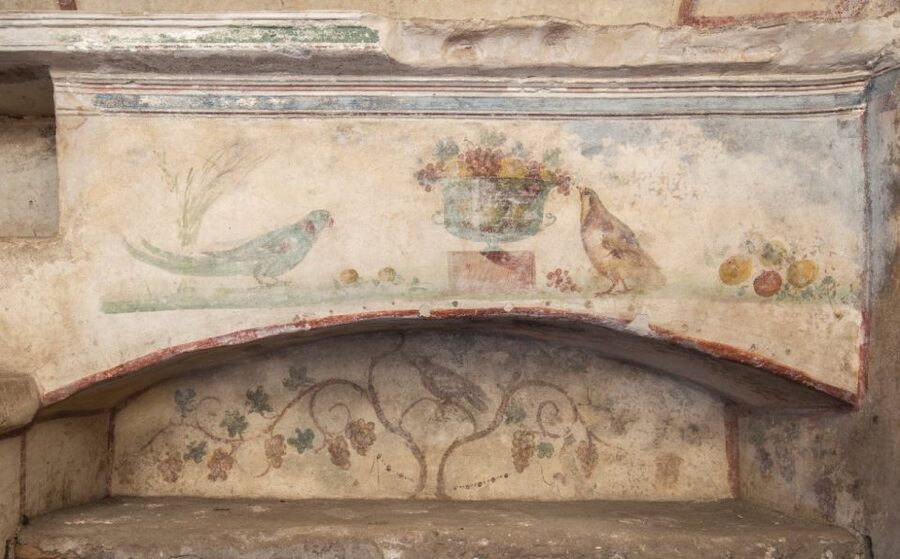
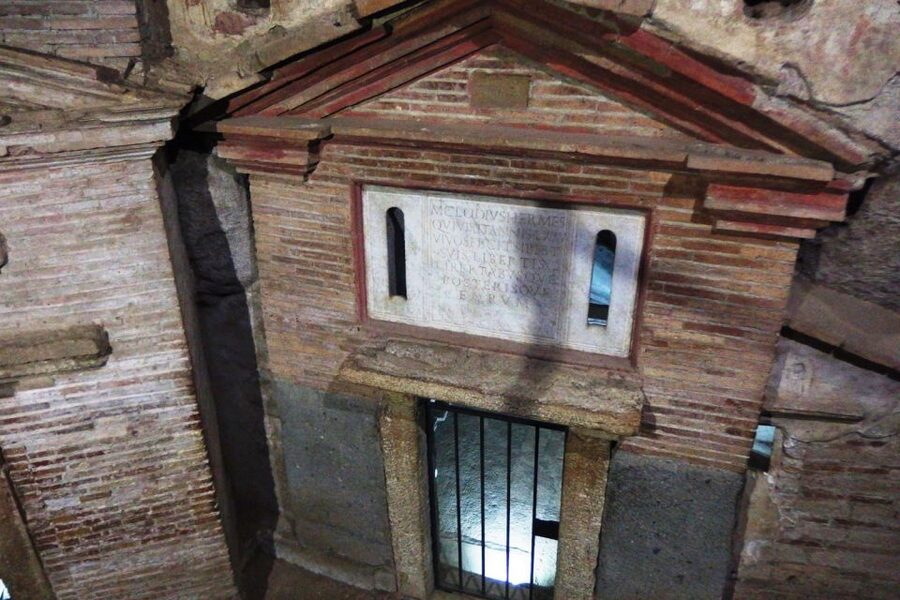
Around the middle of the second century, the valley floor was filled in to create a level area. Three mausoleums were then built in succession. They belonged to Clodius Hermes, the Innocentiores, and the Ax family.
These structures help place early Christian burial in a wider Roman setting. The site was not exclusively Christian from the beginning. Pagan tombs and other burial forms were part of the picture, and the tour gives you a chance to compare those remains with the later Christian galleries.
The columbaria are also important. Romans used these communal burial structures for cremated remains, with small niches arranged along the walls. Their presence shows how burial practice changed over time, while the mausoleums reflect families or individuals who could commission more substantial monuments.
You will not have unlimited time to study every feature. The 30-minute route moves at a steady pace, and some areas require people to walk in single file. That makes the visit efficient, but it can feel rushed if you want to examine every wall or ask a long series of questions.
Still Rome, but a slower afternoon:
- Vatican Museums, Sistine Chapel & St Peter’s Basilica Guided Tour
★ 4.5 · 39,149 reviews - Rome: Colosseum, Palatine Hill and Roman Forum Guided Tour
★ 4.8 · 32,814 reviews - Rome: Guided Tour of Colosseum, Roman Forum & Palatine Hill
★ 4.7 · 27,897 reviews - Rome: Colosseum & Forum with Audio Guide App -Optional Arena
★ 4.2 · 24,770 reviews
The Triclia and the memory of Peter and Paul
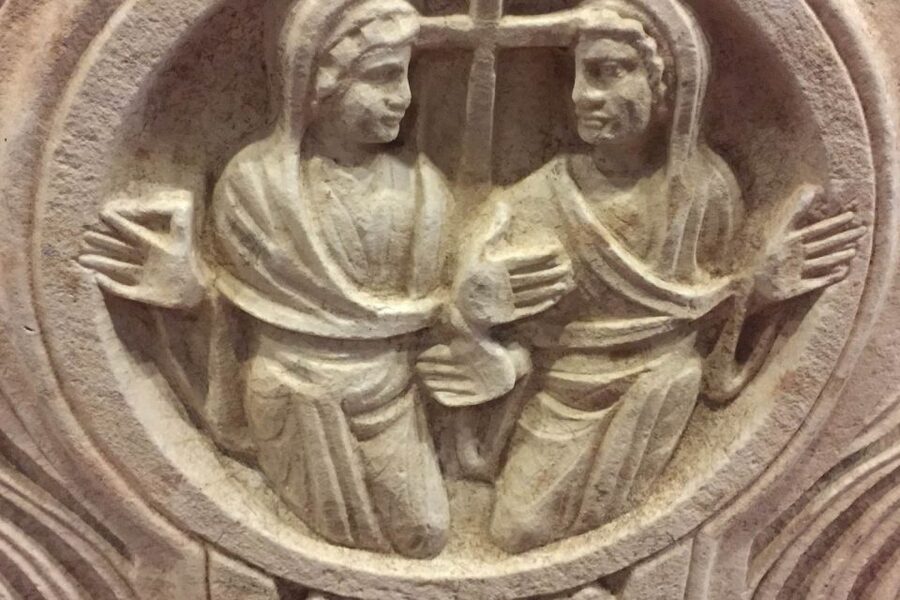
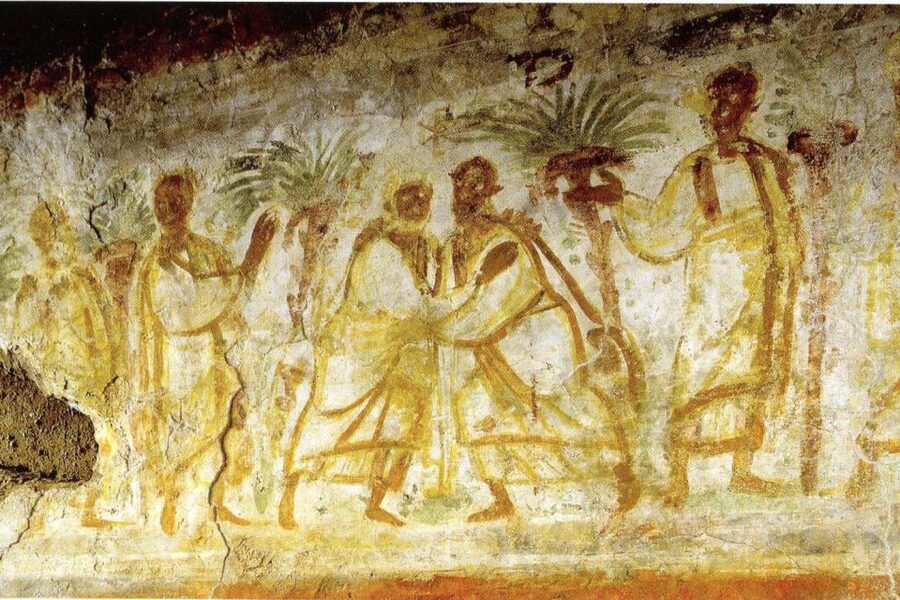
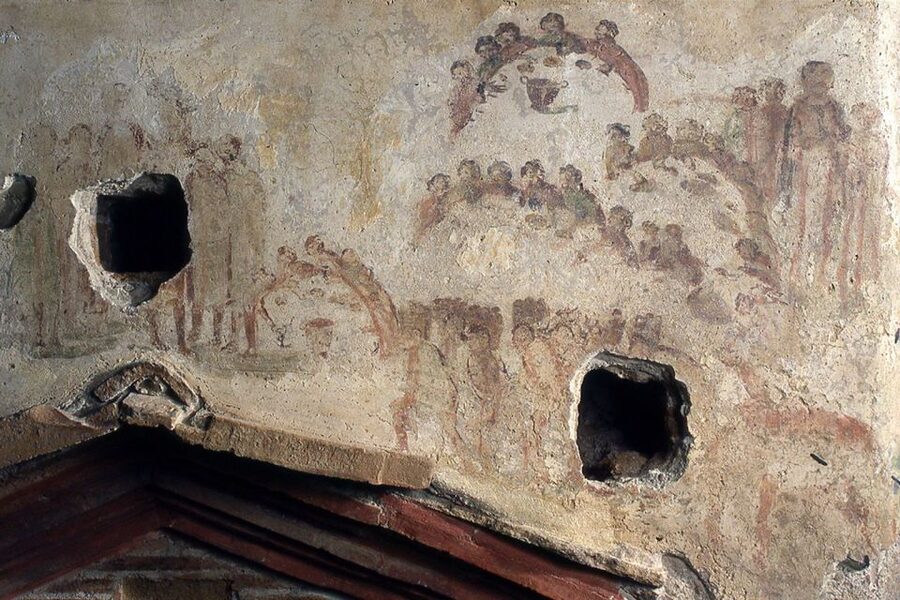
One of the site’s most unusual features is the triclia, a portico created after another filling of the valley. Its wall carried many graffiti inscriptions invoking Saints Peter and Paul, who were honored together at this location around the year 250.
This is where the visit moves from Roman burial customs into early Christian memory. The inscriptions are valuable because they show personal acts of devotion rather than only official monuments. Someone took the time to write a name or prayer on the wall, leaving a small record of belief and pilgrimage.
The guide will provide the meaning behind this area, which is far more useful than simply seeing ancient marks in a dark room. You can begin to picture the site as a place where people came to remember important religious figures, not merely as a cemetery.
Photography is not allowed inside the catacombs, so listen closely and save your camera for the basilica. That rule may disappoint anyone hoping to document the walls, but it also keeps the tour moving and protects the atmosphere of the underground spaces.
Saint Sebastian, Eutichio, and the Christian catacombs
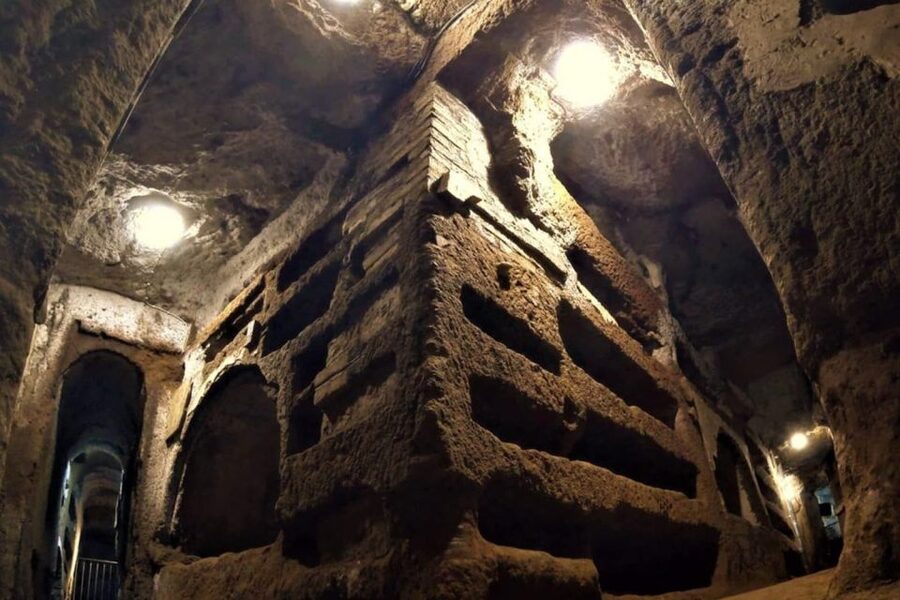
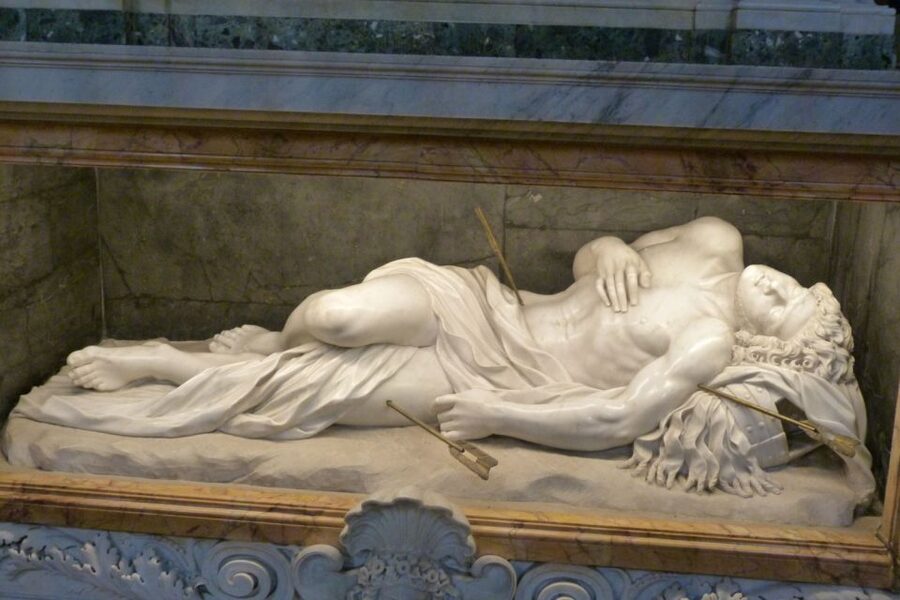
The underground catacomb developed in the third century and included the tombs of the martyrs Sebastian and Eutichio. Saint Sebastian is the figure most closely associated with the site, and the guide explains how his memory shaped the religious importance of the cemetery.
The catacomb passages contain burial niches cut into the walls. Some spaces are narrow and require a single-file walk, while larger chambers allow the group to stop and hear the explanation. This change in space is worth noting because it affects the pace. You may move quickly through a passage, then pause when the guide gathers everyone in a wider room.
Several people have praised the guides for making complicated history easy to follow. That is important here. The site includes quarrying, Roman domestic life, pagan burial, early Christian worship, martyrs, and imperial building projects. A good guide gives those pieces a clear order.
Guides are available in English, Italian, Spanish, and French. Micah has been singled out for a warm and engaging presentation, while Niko was praised for answering broader questions about Roman history as well as the catacombs. You cannot choose a specific guide in advance from the information provided, but the quality of the explanation is one of the strongest reasons to book a guided visit instead of treating the site as a quick ticketed entry.
The Constantinian basilica above ground
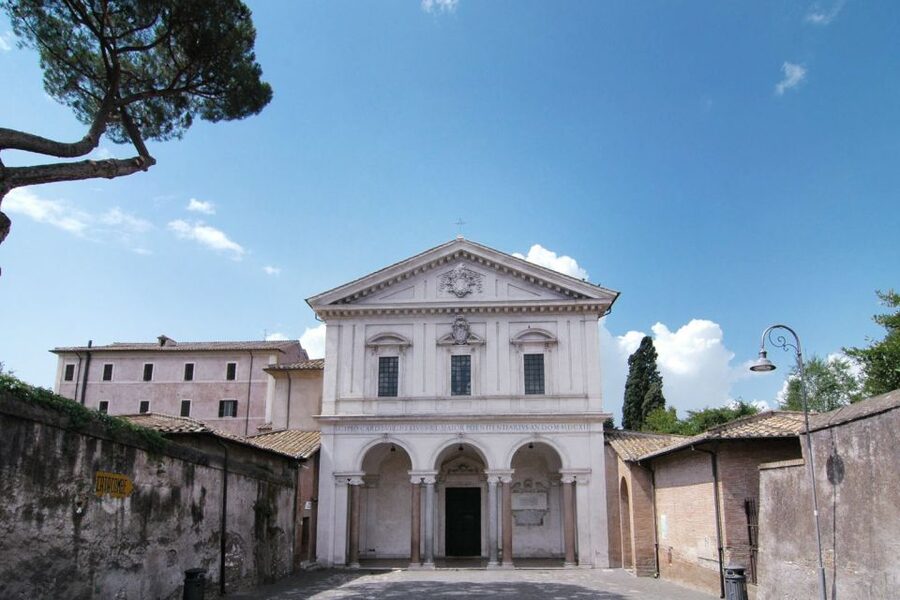
The visit also includes the basilica built during the reign of Constantine, from 306 to 337. Its unusual shape followed the form of a Roman circus, and it is known as a circiforme basilica.
This upper-level church gives the tour a welcome change of pace. After the dark passages and narrow corridors, you return to an open interior where the building’s scale and decoration are easier to appreciate. One especially striking detail is the hand-carved wooden ceiling, which has impressed people who took the tour.
Photography is permitted in the basilica, unlike in the catacombs. Keep that distinction in mind so you do not take out your camera underground and risk being asked to put it away.
The basilica also helps connect the burial site with the later development of public Christian worship. The catacombs feel personal and hidden, while the church reflects a more formal and visible religious presence. Seeing both in one short visit gives the experience more depth than an underground corridor tour alone.
How much do you see in 30 minutes?
You can see a surprising amount in half an hour, but you need realistic expectations. The route covers the Christian catacombs, pagan tombs, sections linked with ancient burial practices, and the basilica. The guide also explains Saint Sebastian and the site’s broader development.
Several people have liked the compact timing because it fits neatly into a morning or afternoon. It works well if you are building a day around the Appian Way area, or if you want a cooler indoor stop during hot weather.
The tradeoff is that the tour does not linger. One person wished it were longer, and another felt the group moved quickly through the narrow sections. If you enjoy detailed archaeology, long pauses, or extensive photography, 30 minutes may leave you wanting more.
For most people, I would treat the tour as a concentrated introduction. You get the essential story, see the principal spaces, and avoid spending hours underground. The short format is a strength for a first visit, but a weakness for anyone seeking a full study of the site.
Group size, pace, and comfort underground
The group size can affect the experience. A small group feels much better in narrow areas, since the passages already limit movement. One visitor happened to have a private tour with only their own party, while another noted that the guide stopped in wider spaces to gather everyone before continuing.
You should expect a walking tour rather than a relaxed museum visit. Wear comfortable shoes, since the route takes place on foot and may include uneven or confined areas. A jacket or warm layer is a smart choice because the temperature drops farther below ground, even when Rome is hot outside.
The catacombs are not suitable for people with claustrophobia. They are also not suitable for people with mobility impairments, and baby carriages are not allowed. These are not minor footnotes. The physical setting determines how much you can enjoy the tour, so consider your comfort before paying.
The guide’s pacing helps. Strong guides pause when the group reaches a larger room, explain the tombs and symbols, and answer questions without letting the tour lose its shape. The most praised guides have been friendly, clear, and able to explain difficult subjects in simple terms.
Is $16 a fair price?
At $16 per person, this is a reasonably priced guided attraction in Rome. The cost includes both admission and a live guide in English, Italian, Spanish, or French. That matters because the site’s meaning is not always obvious from the physical remains alone.
You may pay a little more than the on-site ticket price, according to one price-conscious assessment. The extra amount buys advance planning and a place in a scheduled language tour, though the information available here does not confirm the exact walk-up price or whether advance booking is always possible directly.
I think the value is strongest if you want an explanation and have limited time. The tour does not include transport, so your real cost also includes getting to the site. If you are already nearby, the $16 price is easier to justify. If reaching the catacombs takes a long ride, the short duration becomes a bigger part of the calculation.
Free cancellation up to 24 hours before the tour reduces the risk of booking ahead. Check the exact starting time and language before confirming, then arrive early enough to find the ticket office.
Who should book this tour?
I would recommend it to you if you enjoy ancient Roman sites but want something quieter than the Colosseum or Roman Forum. It also suits anyone interested in early Christianity, burial customs, and the way one Roman site changed purpose across centuries.
Families with older children may appreciate the short length, but baby carriages are not permitted and the underground setting may not suit every child. The tour can also work well on a hot day, since the catacombs offer a cool break from the city.
You should think twice if you need step-free access, dislike tight passages, or want extensive time for photographs. You should also avoid squeezing it into a schedule with no travel buffer. The visit itself lasts only 30 minutes, but getting to the site and finding the correct ticket office takes additional time.
Should you book the Catacombs of Saint Sebastian?
Book it if you want a short, guided look at Rome underground with more substance than a simple walk through old tunnels. The combination of quarry, pagan tombs, Christian burial galleries, the Triclia, and Constantine’s basilica gives you a strong historical sequence in a small package.
Skip it if you want a long archaeological tour or feel uneasy in enclosed spaces. For everyone else, $16 is fair for a clear introduction, especially when you arrive prepared with comfortable shoes, warm clothing, and realistic expectations about the 30-minute limit.
FAQ
How long does the Catacombs of Saint Sebastian tour last?
The guided visit lasts 30 minutes.
How much does the tour cost?
The listed price is $16 per person.
What is included in the ticket?
The price includes the entrance ticket and a guided tour in the language you choose.
Which languages are available?
Tours are available in English, Italian, Spanish, and French.
Where do I meet the guide?
Go directly to the ticket office at the Catacomb of Saint Sebastian and show your reservation.
How early should I arrive?
You should arrive at least 10 minutes before the scheduled tour time.
Is hotel pickup included?
No. Hotel pickup and drop-off are not included.
Can I take photographs inside the catacombs?
No. Photography is not allowed inside the catacombs. Photography is allowed in the basilica.
What should I wear?
Wear comfortable shoes and bring warm clothing or a jacket because it can be colder farther underground.
Is the tour suitable for people with claustrophobia or mobility impairments?
No. The tour is not suitable for people with claustrophobia or mobility impairments. Baby carriages are also not allowed.
Recently added around Rome
- Palatine Hill and Roman Forum Tour with Fast-Track Entrance★ 4.2 · 417 reviews
- Tivoli: Villa D’Este & Villa Adriana Pass & App Audioguide★ 4.4 · 364 reviews
- From Rome: Villa D’Este & Villa Adriana Day Trip with Lunch★ 4.4 · 289 reviews
- Vatican Museums & Sistine Chapel Skip-the-Line Guided Tour★ 4.6 · 254 reviews
- Rome: The Three Tenors at St. Paul’s Church Concert Ticket★ 4.7 · 699 reviews
- Tivoli: Villa D’Este Entry Ticket and App Audio Guide★ 4.3 · 191 reviews
- Rome: Capitoline Museums and Centrale Montemartini Tickets★ 4.4 · 328 reviews
- Rome: St. Peter’s Basilica and Papal Tombs Guided Tour★ 4.6 · 477 reviews
Tickets, compared.
Cathedral and Duomo’s Terraces Entrance Ticket
Read our review →
Skip-The-Line Uffizi Gallery Timed Entry Ticket
Read our review →
Naples Underground Entry Ticket and Guided Tour
Read our review →
Pantheon Fast-Track Ticket and Official Audio Guide
Read our review →
Entry Ticket and Guided Tour with an Archaeologist
Read our review →