Reviewed · TICKETS
Rome: Catacombs of St. Callixtus Entry Ticket & Guided Tour
Ancient Rome has a quieter side underground. The Catacombs of St. Callixtus offer a brief but striking look at early Christian burial customs beneath the Appian Way. I especially like the Crypt of the Popes and the chance to hear how Rome’s first Christian communities cared for their dead. The guide-led format also packs useful context into just 30 minutes.
The main drawback is the location. The catacombs sit outside central Rome, and reaching them by bus takes planning. The underground rooms are cool, dim, and narrow, so this visit is not suitable for people with mobility impairments or claustrophobia. Still, at about $16 per person, it gives you a meaningful historical stop without the cost or time commitment of a longer tour.
In This Review
- Key points to know before you go
- Why the Catacombs of St. Callixtus matter
- Getting to the Appian Way site
- The ticket office and meeting point
- A 30-minute route through the burial chambers
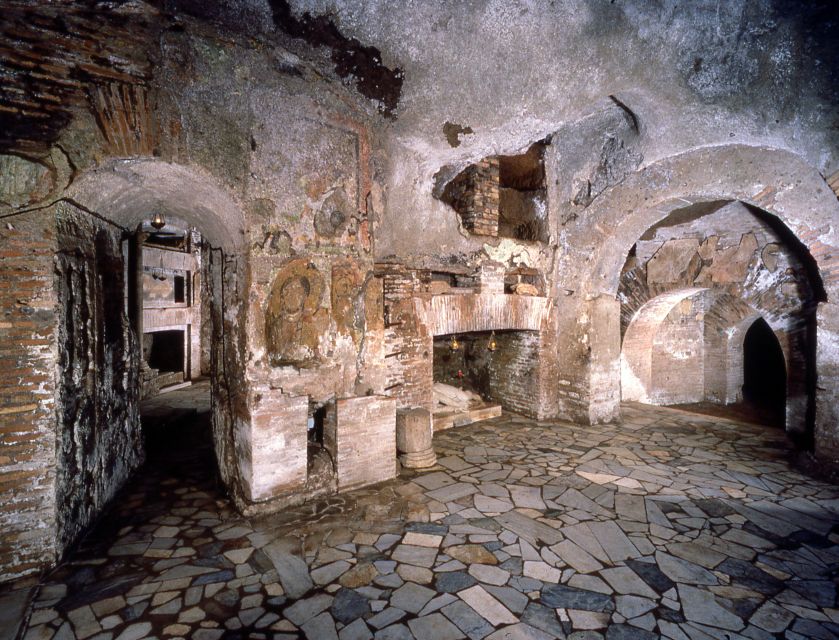
- The Crypt of the Popes
- The Crypt of St. Cecilia
- Ancient frescoes and Area I
- What the catacombs look and feel like
- Is $16 good value?
- Who should book this tour?
- Practical advice for a smoother visit
- Should you book the Catacombs of St. Callixtus?
- FAQ
- How long does the Catacombs of St. Callixtus tour last?
- What is included in the ticket?
- Where should I meet the guide?
- How do I reach the catacombs from Termini Station?
- Can I take public transport from the Colosseum area?
- Are photographs allowed inside?
- Will I see skeletons?
- Is the tour suitable for people with mobility impairments or claustrophobia?
Key points to know before you go
- See the Crypt of the Popes: Nine popes and three bishops were buried in this important chamber.
- Expect a short, fully guided visit: The tour lasts about 30 minutes, and you stay with the group.
- Do not expect visible skeletons: You see burial chambers, wall paintings, and tomb spaces rather than exposed bones.
- Plan your journey carefully: The catacombs are reached by bus from the central metro stations, not by a simple walk from the historic center.
- Bring a light layer: Underground temperatures are cool, around 15 degrees Celsius according to one account.
- Leave your camera in your bag: Photography is not allowed inside the catacombs.
Why the Catacombs of St. Callixtus matter
Rome is famous for emperors, arenas, fountains, and grand churches. The Catacombs of St. Callixtus show another Rome, one shaped by small Christian communities, burial rituals, persecution, and care for the dead.
This is one of the largest Christian burial sites in Rome. An estimated half a million Christians were buried through the wider complex over time, making its scale hard to grasp from the short route alone. The underground passages extend for many miles, although this tour visits only selected areas.
The catacombs are also described as the oldest official cemetery of Rome’s Christian community. The site takes its name from Callixtus, who was connected with the administration of the cemetery before becoming pope. Your guide explains this background as you walk through the chambers, helping you understand that these were not simply secret hiding places. They were organized burial grounds used by a large and active religious community.
I find that distinction important. Popular stories often picture Christians hiding underground during every period of Roman persecution. The reality was more practical and more human: families and communities needed places to bury their dead, mark graves, and preserve religious traditions. The tour gives you a short introduction to that world without turning the visit into a dry archaeology lecture.
A few more Rome bookings to compare
- Vatican: Museums & Sistine Chapel Entrance Ticket
★ 4.5 · 144,003 reviews - Vatican Museums & Sistine Chapel Tour with Optional Basilica
★ 4.3 · 67,413 reviews - Colosseum, Roman Forum & Palatine Guided Tour
★ 4.7 · 63,148 reviews
Getting to the Appian Way site
The catacombs are not in the center of Rome. They sit along the Appian Way area, where the setting becomes quieter and greener than the streets around the Colosseum or Trevi Fountain.
From Termini Station, take Metro A toward Anagnina to San Giovanni. From there, continue by bus 218 toward Ardeatina and get off at Fosse Ardeatine. The entrance to the catacombs should be in front of you at that stop.
Another route uses Metro B. Travel toward Laurentina and get off at Colosseo or Circo Massimo. From the bus stop at Terme Caracalla or Porta Capena, take bus 118 toward Appia or Villa Dei Quintili and leave at Catacombe di San Callisto.
Give yourself extra time. Waiting for a bus can add 20 minutes, and finding the correct stop may take longer if you are unfamiliar with Rome’s transport system. Several people have found the site easy enough to reach by local bus once they understood the route, but getting a taxi back can be less predictable. A taxi or rideshare can save time, especially if you are traveling alone or have a tight schedule.
The setting itself is part of the appeal. You leave the thickest crowds behind and arrive at a peaceful property with well-kept green surroundings. That calm atmosphere prepares you for a visit that is reflective rather than dramatic.
The ticket office and meeting point
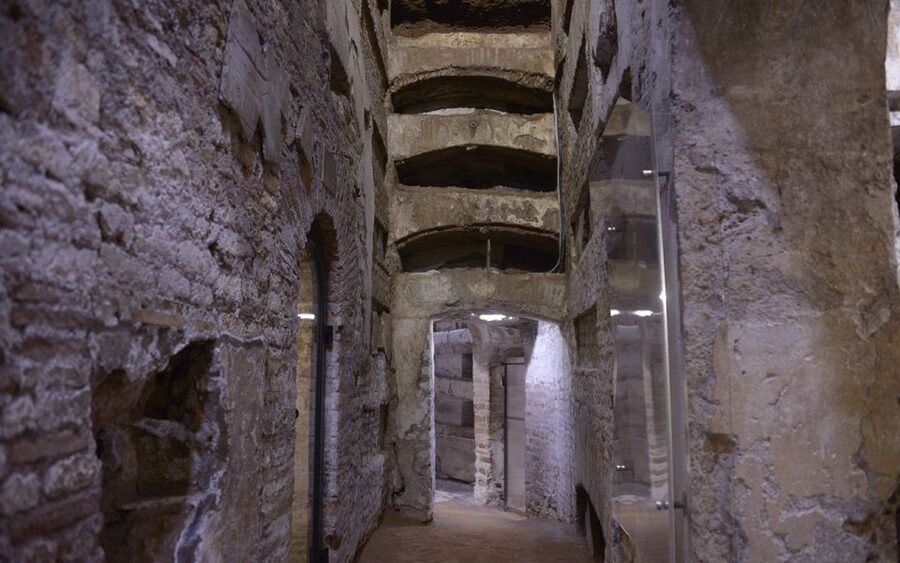
Go directly to the catacomb ticket office, not to a general parking area or an unrelated meeting point. Show your voucher at least 10 minutes before the scheduled start.
This detail matters because the exact meeting instructions have caused some confusion. The ticket office may be about 100 meters from the point shown on some directions, and you need to exchange or show your voucher there for the entry ticket. Allow enough time to identify the correct building.
The entry ticket and guided tour are included in the advertised price. Hotel pickup, drop-off, food, and drinks are not included. If you are using public transport, do not arrive at the last minute. Rome’s buses can be straightforward, but stops and schedules are not always obvious to a first-time visitor.
A 30-minute route through the burial chambers
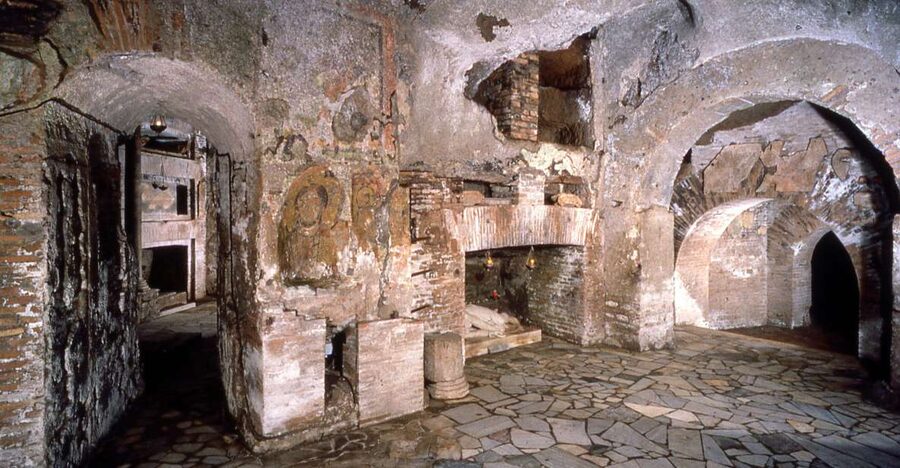
The tour is short, but it is not simply a quick walk through an empty tunnel. You follow a guide through selected sections of the cemetery and hear about the martyrs, popes, and ordinary Christians connected with the site.
You remain with the group for the full visit. This is not a place where you wander off on your own, and that rule makes sense. The passages are underground, the lighting is limited, and the historical value depends on understanding what you are looking at.
The exact presentation depends on the guide. English, Italian, French, and German tours are available. Guides such as Francesca, Sam, Arishba, Comfort, and Don Sam have been praised for clear explanations, humor, patience, and a strong command of the subject. One guide was a recently ordained priest, while Francesca was described as an archaeologist. The style can therefore vary, but the central route and subject matter remain focused.
Some visits last a little longer than the scheduled 30 minutes. That extra time is welcome, particularly when the guide allows questions at the end. One guide stayed afterward to answer questions and point out other important places on the property. You should not count on every tour extending, but the compact schedule still contains a surprising amount of information.
Still Rome, but a slower afternoon:
- Vatican Museums, Sistine Chapel & St Peter’s Basilica Guided Tour
★ 4.5 · 39,149 reviews - Rome: Colosseum, Palatine Hill and Roman Forum Guided Tour
★ 4.8 · 32,814 reviews - Rome: Guided Tour of Colosseum, Roman Forum & Palatine Hill
★ 4.7 · 27,897 reviews - Rome: Colosseum & Forum with Audio Guide App -Optional Arena
★ 4.2 · 24,770 reviews
The Crypt of the Popes
The Crypt of the Popes is the main historical focus of the visit. Nine popes and three bishops were laid to rest here, making the chamber one of the most important spaces in the catacombs.
The room is not grand in the way a Roman basilica is grand. Its power comes from its purpose and age. You stand in a space connected with the early leadership of the Christian community, surrounded by evidence of a burial tradition that existed long before Christianity became the dominant religion of the Roman Empire.
Your guide explains the inscriptions, tombs, and people associated with the crypt. This is where a live guide adds real value. Without explanation, an ancient wall or empty burial recess can be difficult to read. With a good guide, the chamber becomes a record of leadership, faith, and changing burial customs.
The setting is reverent, and the best guides treat it that way. At the same time, several guides have used gentle humor to keep the short tour lively. That balance works well, particularly for families with older children and teenagers who may not arrive eager to study ancient burial practices.
The Crypt of St. Cecilia
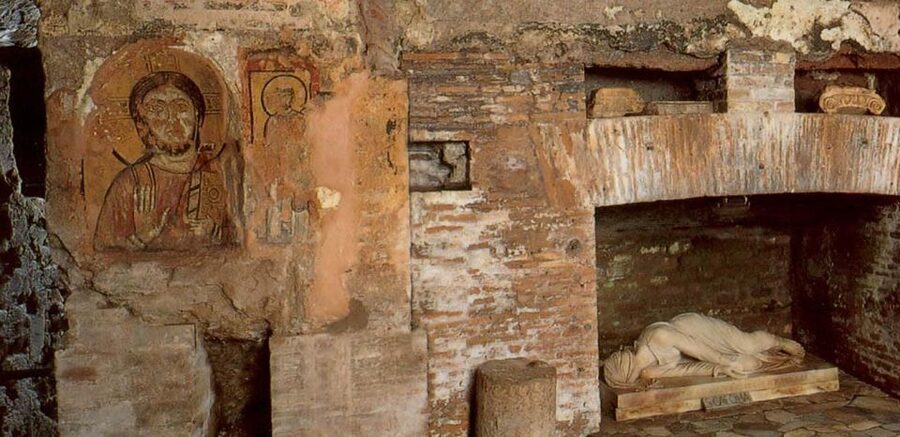
The adjoining Crypt of St. Cecilia introduces a different kind of story. Cecilia was a Roman matron remembered for helping ensure that many martyrs received proper burials.
Her connection to the site gives the tour a more personal angle. The catacombs were not only about church leaders. They were also shaped by the work of people who cared for the dead during difficult periods. The story of Cecilia helps you think about burial as an act of dignity, loyalty, and community responsibility.
The chamber is also important for its religious associations and decoration. Your guide explains what you are seeing rather than leaving you to guess at the meaning of the space. If you are interested in early Christianity, this is one of the most engaging parts of the route.
Ancient frescoes and Area I
The tour includes some of the oldest frescoes found in Rome’s catacombs. The wall paintings are not large, polished works like those in the Vatican Museums. Their value lies in their age, subject matter, and survival in an underground setting.
Lighting is limited, and some corners or steps may be harder to see than others. Wear comfortable shoes and pay attention as you walk. One practical suggestion from a visitor was that brighter lighting in certain areas would help older people who want to focus on the history rather than watch every footstep.
Area I contains the cubicles of the sacraments. These small burial rooms are among the places where the early Christian community expressed its beliefs through symbols and painted scenes. The guide helps connect the artwork with the people who commissioned and used these spaces.
You will not see every part of the catacomb complex. That is worth remembering when you read that the underground network extends for roughly 20 kilometers. This visit gives you a carefully selected introduction, not a full exploration of the entire cemetery.
What the catacombs look and feel like
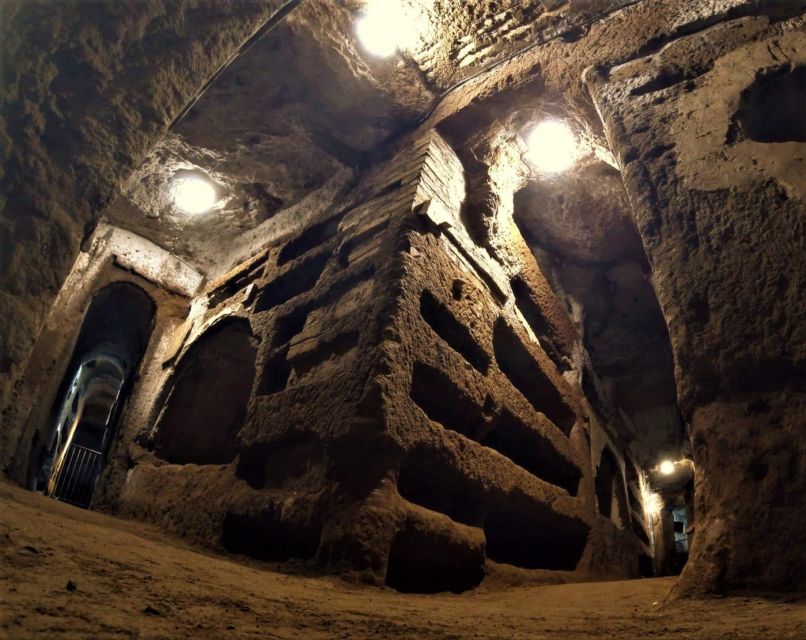
Expect narrow underground passages, burial recesses, stone walls, and dim lighting. The atmosphere is quiet and serious, but it is not presented as a horror attraction.
The temperature below ground is cool, around 15 degrees Celsius. In Rome’s summer heat, that can be a pleasant break, but you may want a light jacket or sweater. In cooler weather, you will be glad to have a comfortable layer.
Photography is forbidden inside. This may disappoint you if you hoped to record the frescoes or share images from the chambers. The rule protects the setting and keeps the group moving, but it also means you should pay close attention while you are there. Take in the details during the visit rather than trying to frame them through a phone.
You should also adjust your expectations about human remains. The tour does not display skeletons or piles of bones. You see the places where people were buried and learn how the cemetery functioned. If your main interest is visible bones, this is probably not the right Roman catacomb visit for you.
Is $16 good value?
At around $16 per person, I consider this good value for a guided historical visit. The price includes entry and a live guide, and the tour gives you access to a site that is difficult to understand without interpretation.
The main limitation is duration. Thirty minutes goes quickly, especially after allowing for the trip out from central Rome. You are paying not only for half an hour underground, but also for access to a distinct part of Roman history that you cannot experience by simply walking through the city center.
The value improves if you are already visiting the Appian Way area. You can combine the catacombs with other nearby sights and make the journey more worthwhile. If you are crossing Rome solely for this short visit, the transport time becomes a larger part of the calculation.
Free cancellation up to 24 hours before the scheduled time and a reserve-now, pay-later option make it easier to fit the tour into a changing Rome itinerary. Those policies are useful, but the practical question is still simple: can you spare the travel time for a short, focused underground visit?
Who should book this tour?
I would recommend it to you if you enjoy archaeology, early Christian history, ancient Rome beyond the usual monuments, or quiet places with a strong sense of time. Families with older children and teenagers can enjoy it, especially when the guide uses stories and humor to explain the site.
It is also a good choice if you want a break from crowded museums. The surrounding property is peaceful, and the underground chambers offer a cool change during hot weather.
I would not choose it for someone with claustrophobia or limited mobility. Comfortable shoes and clothes are essential, and the dim passages and steps may make the visit tiring for some people. It is also not ideal if you want a flexible, self-guided stop or a dramatic display of bones.
The guide can make a major difference. Strong guides have been described as warm, clear, funny, patient, and able to answer questions. The best visits are not just a walk through old rooms. They explain how ordinary Christians, martyrs, bishops, and popes fit into the story of Rome.
Practical advice for a smoother visit
- Arrive at the catacomb ticket office at least 10 minutes early.
- Confirm the ticket office location rather than relying only on a map pin.
- Allow extra time for bus waits and route finding.
- Consider a taxi or rideshare if you are short on time.
- Wear shoes suitable for uneven or dimly lit underground paths.
- Bring a sweater or light jacket, even in summer.
- Do not bring a baby carriage, which is not permitted.
- Keep your phone and camera put away inside.
- Expect a guided group visit, not independent exploration.
- Do not plan the tour around seeing exposed human remains.
The site is operated by Opera Romana Pellegrinaggi, and tours are offered in English, Italian, French, and German. Check the available start time in your chosen language before booking.
Should you book the Catacombs of St. Callixtus?
Book it if you want a compact, well-priced introduction to Rome’s early Christian burial world and you are willing to travel beyond the center. The Crypt of the Popes, the Crypt of St. Cecilia, and the ancient frescoes give the visit real substance.
Skip it if you dislike enclosed spaces, need step-free access, or expect a large collection of visible skeletons. For everyone else, this is a worthwhile 30-minute stop, especially when led by a guide like Francesca, Sam, Comfort, or Don Sam who can turn quiet chambers into understandable human stories.
FAQ
How long does the Catacombs of St. Callixtus tour last?
The scheduled duration is 30 minutes. Some tours may run a little longer, especially if the guide answers questions after the main route.
What is included in the ticket?
The price includes entry to the Catacombs of Saint Callixtus and a guided tour. Hotel pickup, hotel drop-off, food, and drinks are not included.
Where should I meet the guide?
Go directly to the catacomb ticket office and show your voucher at least 10 minutes before the scheduled start. Some directions may place the meeting point about 100 meters away, so confirm that you are at the ticket office rather than a parking area.
How do I reach the catacombs from Termini Station?
Take Metro A toward Anagnina to San Giovanni, then bus 218 toward Ardeatina. Get off at Fosse Ardeatine, where the catacomb entrance should be in front of you.
Can I take public transport from the Colosseum area?
Yes. Take Metro B toward Laurentina to Colosseo or Circo Massimo. From Terme Caracalla or Porta Capena, take bus 118 toward Appia or Villa Dei Quintili and get off at Catacombe di San Callisto.
Are photographs allowed inside?
No. Photography is not allowed inside the catacombs.
Will I see skeletons?
No. The visit shows burial places, chambers, frescoes, and the history of the cemetery. It does not include exposed skeletons.
Is the tour suitable for people with mobility impairments or claustrophobia?
No. The tour is not suitable for people with mobility impairments or claustrophobia. Comfortable shoes and comfortable clothing are recommended.
Recently added around Rome
- Palatine Hill and Roman Forum Tour with Fast-Track Entrance★ 4.2 · 417 reviews
- Tivoli: Villa D’Este & Villa Adriana Pass & App Audioguide★ 4.4 · 364 reviews
- From Rome: Villa D’Este & Villa Adriana Day Trip with Lunch★ 4.4 · 289 reviews
- Vatican Museums & Sistine Chapel Skip-the-Line Guided Tour★ 4.6 · 254 reviews
- Rome: The Three Tenors at St. Paul’s Church Concert Ticket★ 4.7 · 699 reviews
- Tivoli: Villa D’Este Entry Ticket and App Audio Guide★ 4.3 · 191 reviews
- Rome: Capitoline Museums and Centrale Montemartini Tickets★ 4.4 · 328 reviews
- Rome: St. Peter’s Basilica and Papal Tombs Guided Tour★ 4.6 · 477 reviews
Tickets, compared.

Cathedral and Duomo’s Terraces Entrance Ticket
Read our review →
Skip-The-Line Uffizi Gallery Timed Entry Ticket
Read our review →
Naples Underground Entry Ticket and Guided Tour
Read our review →
Pantheon Fast-Track Ticket and Official Audio Guide
Read our review →
Entry Ticket and Guided Tour with an Archaeologist
Read our review →