Reviewed · TICKETS
Rome: Catacombs of Priscilla Entry Ticket & Guided Tour
Rome has a quieter world beneath its roads. The Catacombs of Priscilla offer a close look at early Christian burial practices and some of Rome’s oldest surviving religious art. I like the small groups, capped at 10 people, and the guides’ clear passion for the site, especially guides such as Sister Lydia and Alexandra.
I also like the setting’s lack of showy tourist treatment. You are visiting a real underground burial complex, not a reconstructed attraction. The main tradeoff is that the tour lasts only 45 minutes, and the narrow underground passages are not suitable for people with mobility impairments. You also cannot take photographs inside.
In This Review
- Key points to know before you go
- Why the Catacombs of Priscilla feel different from Rome’s famous sights
- Entering the underground galleries on Via Salaria
- Following the first-floor burial passages
- The Greek Chapel and the Acili hypogeum
- Seeing the early Christian paintings
- The martyrs and popes connected with Priscilla
- What the 45-minute length really means
- Is the $16 price good value?
- Who should book this catacomb tour?
- Planning the visit without wasting time
- Should you book the Catacombs of Priscilla?
- FAQ
- How long does the Catacombs of Priscilla tour last?
- What is included in the ticket?
- How much does the experience cost?
- Which languages are available?
- How large is the tour group?
- Where do I meet the guide?
- Is transportation included?
- Can I take photographs inside?
- Is the tour suitable for people with mobility impairments or baby strollers?
Key points to know before you go
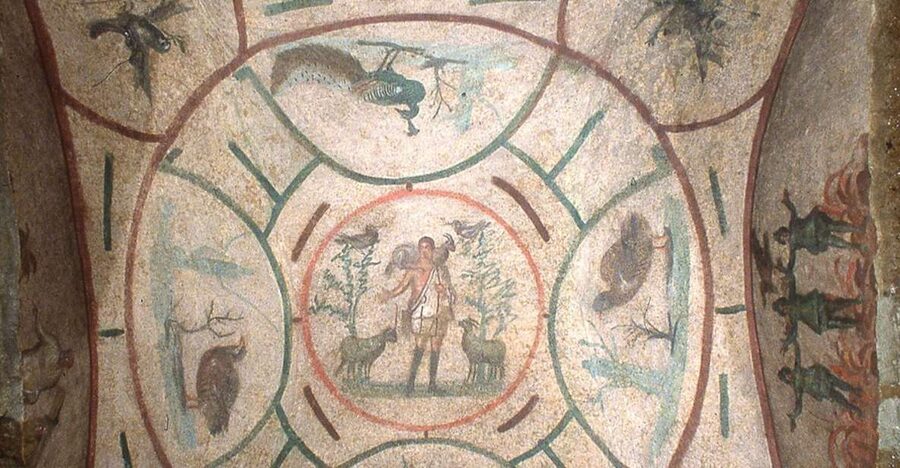
- Ancient Christian art: See paintings dating from the third century, including an image often identified as one of the oldest known depictions of the Virgin Mary and Child.
- Two underground levels: The catacomb includes irregular galleries, burial niches, a cryptoporticus, and the Greek Chapel.
- Small guided groups: Groups are limited to 10, which helps in tight corridors and makes it easier to ask questions.
- Strong guides: Guides including Sister Lydia, Clara, Alexandra, and others are praised for combining archaeology, art, faith, and storytelling.
- A short but focused visit: The standard tour takes 45 minutes, though some groups have received extra time when schedules allowed.
- Practical setting: The entrance is on Via Salaria, away from the main ancient-city sights, so allow time for transport.
Why the Catacombs of Priscilla feel different from Rome’s famous sights
Rome can fill your day with enormous monuments, grand churches, and long lines. The Catacombs of Priscilla offer something quieter and more personal. You move through low underground passages where Christian communities buried their dead and gathered to remember them.
That change in scale matters. At the Colosseum, you are looking at a huge public building. Here, you are looking at small spaces shaped by private grief, family ties, religious belief, and the practical needs of an early Christian community.
The catacomb is on Via Salaria and extends across two floors. Its name probably comes from Priscilla, a member of the Acili senatorial family. Her name appears in an inscription connected with the hypogeum of the Acili, an underground burial area on the first floor.
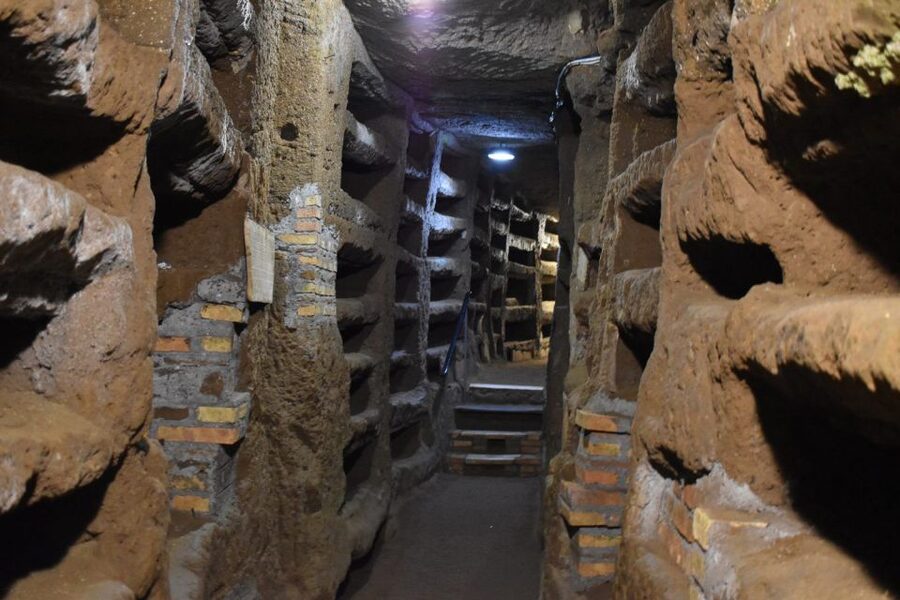
The site began in a different way from many Roman catacombs. It was first an arenarium, a place where sand or other material was extracted. After it was abandoned, Christians began adapting its large, uneven galleries around the beginning of the third century.
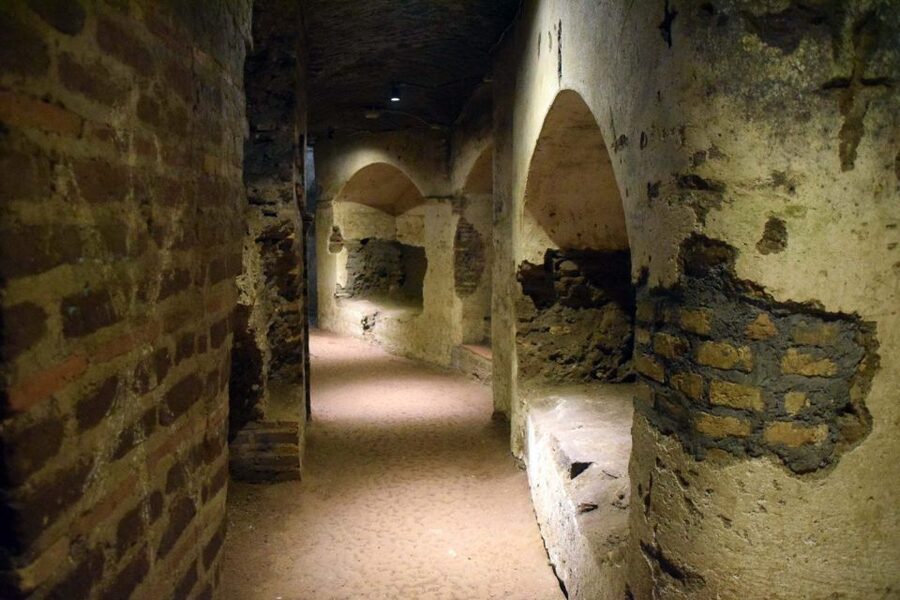
Instead of one orderly underground hall, you find a network of passages and wall niches. Around 20 larger niche tombs were built, and hundreds of smaller burial spaces were cut into the walls. That rough beginning helps explain why the route can feel irregular and intimate.
A few more Rome bookings to compare
- Vatican: Museums & Sistine Chapel Entrance Ticket
★ 4.5 · 144,003 reviews - Vatican Museums & Sistine Chapel Tour with Optional Basilica
★ 4.3 · 67,413 reviews - Colosseum, Roman Forum & Palatine Guided Tour
★ 4.7 · 63,148 reviews
Entering the underground galleries on Via Salaria
You go directly to the catacomb ticket office and show your reservation at least 10 minutes before the scheduled start. This is important because the experience is not a hotel pickup excursion. Transportation and transfers are not included, so you need to make your own way to Via Salaria.
The location is outside the most concentrated tourist zone of ancient Rome. One practical option is the bus, which has been described as inexpensive and reliable. Check your route before leaving, and do not assume that a visit to the Colosseum or Trevi Fountain puts you right next door.
Once inside, the underground temperature is cooler than Rome’s summer streets. A light extra layer is a sensible idea, even if the day above ground is hot. The passages are not presented as a polished museum route, and that is part of the appeal. You are seeing an archaeological site that still carries its original purpose.
The group limit of 10 is useful here. Corridors can be narrow, and it is easy for a large party to block a view. With a small group, you have a better chance of seeing the details the guide points out and asking questions without shouting across the passage.
Following the first-floor burial passages
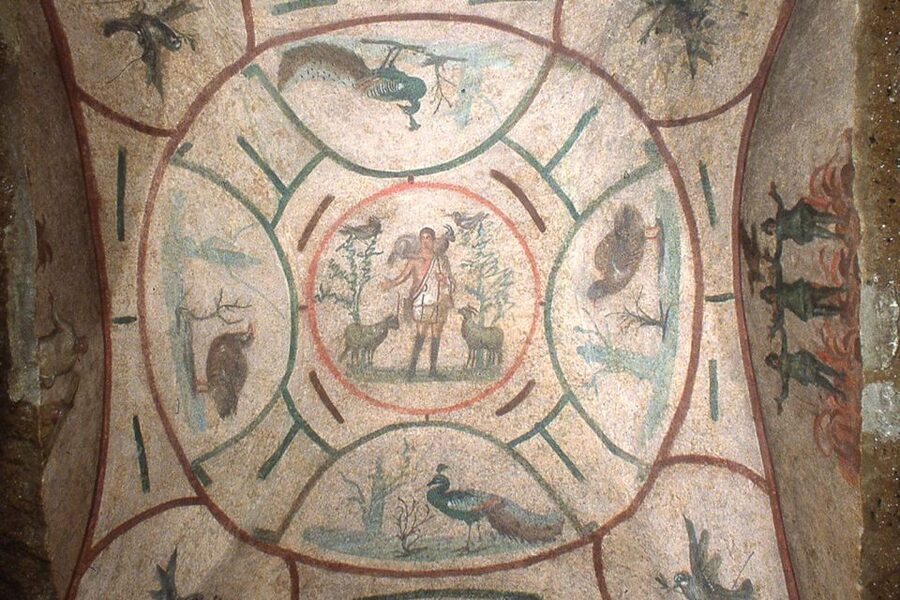
The first major part of the visit takes you through the galleries used by Christians from the early third century onward. The walls contain burial niches, some small and some more substantial, showing how the underground site was gradually adapted.
The guide helps turn what might otherwise look like a maze of rock and recesses into a human story. You learn how the burial areas were formed and how the Christian community used them for burial and funeral commemoration.
It is worth paying attention to the difference between the various spaces. Some areas began as practical excavations, while others were built or modified for more specific family or community use. The site is not one single chamber designed all at once. It developed over time.
The experience is more about context than spectacle. You will not find the scale of the Vatican Museums or the visual drama of the Colosseum. Instead, you get a close look at a place connected to ordinary burial customs, religious identity, and the changing life of Rome.
Some visitors expect to see human remains. The tombs are empty, and the bodies have been moved. That detail is worth knowing before you arrive. The focus is on the spaces, inscriptions, paintings, and archaeological evidence rather than on exposed skeletons.
The Greek Chapel and the Acili hypogeum
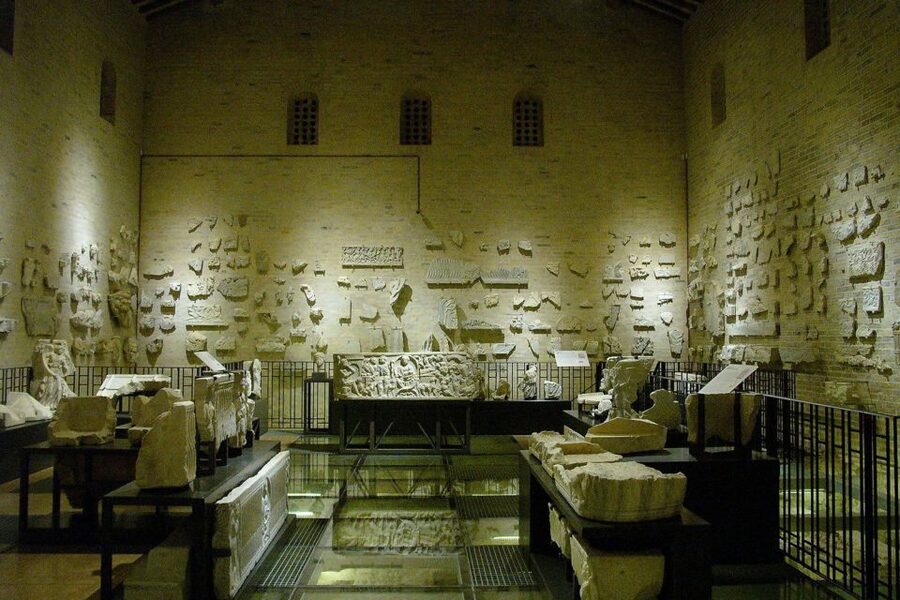
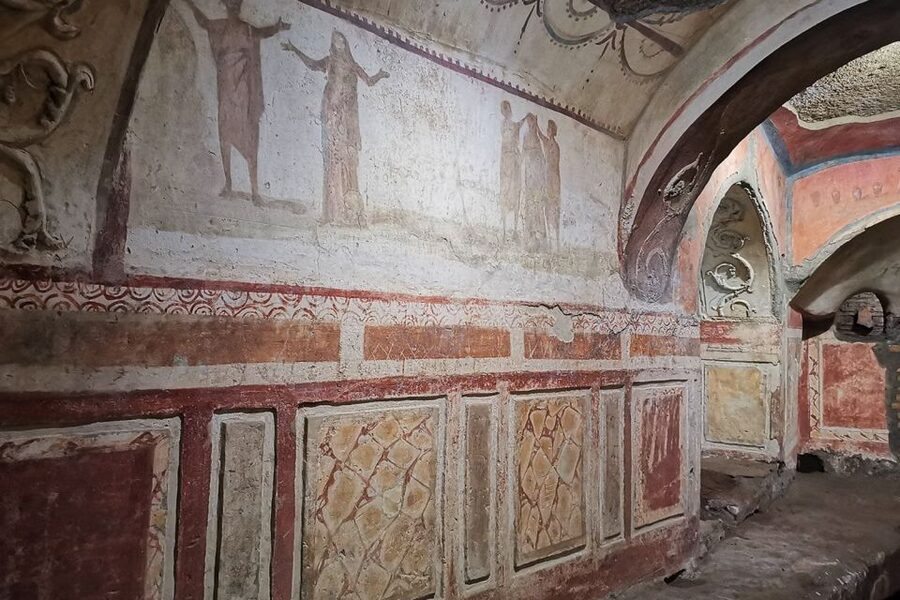
An adjacent area contains a cryptoporticus and the Greek Chapel. The chapel is one of the memorable parts of the route because it shows how the catacomb includes spaces with a more formal and decorative character.
The site also connects with the hypogeum of the Acili. This area began as a water cistern before being used as a noble family burial ground and later linked to the catacomb. Inscriptions connected with the Acili family were found there and are now exhibited.
This layering is one of the best reasons to take the guided tour. Without explanation, it would be hard to understand how a cistern, a family burial area, and a Christian catacomb fit together. The guide provides the sequence and explains why the spaces matter.
The tour is conducted in Italian, English, or Spanish. English-language guides have received particular praise for explaining the material clearly, although one visitor found the English less polished than expected. The general impression is that the guides know the subject well and are ready to answer questions.
Sister Lydia has been especially warmly received for her mix of kindness, humor, and religious and archaeological insight. Clara has also been praised for adding facts and small pieces of trivia while patiently handling questions. Alexandra has been described as a strong guide who explained the site with care and enthusiasm.
Still Rome, but a slower afternoon:
- Vatican Museums, Sistine Chapel & St Peter’s Basilica Guided Tour
★ 4.5 · 39,149 reviews - Rome: Colosseum, Palatine Hill and Roman Forum Guided Tour
★ 4.8 · 32,814 reviews - Rome: Guided Tour of Colosseum, Roman Forum & Palatine Hill
★ 4.7 · 27,897 reviews - Rome: Colosseum & Forum with Audio Guide App -Optional Arena
★ 4.2 · 24,770 reviews
Seeing the early Christian paintings
The art is the chief reason many people choose Priscilla over another underground site. Several paintings date from the third century, including works associated with the period from about 240 to 280 AD.
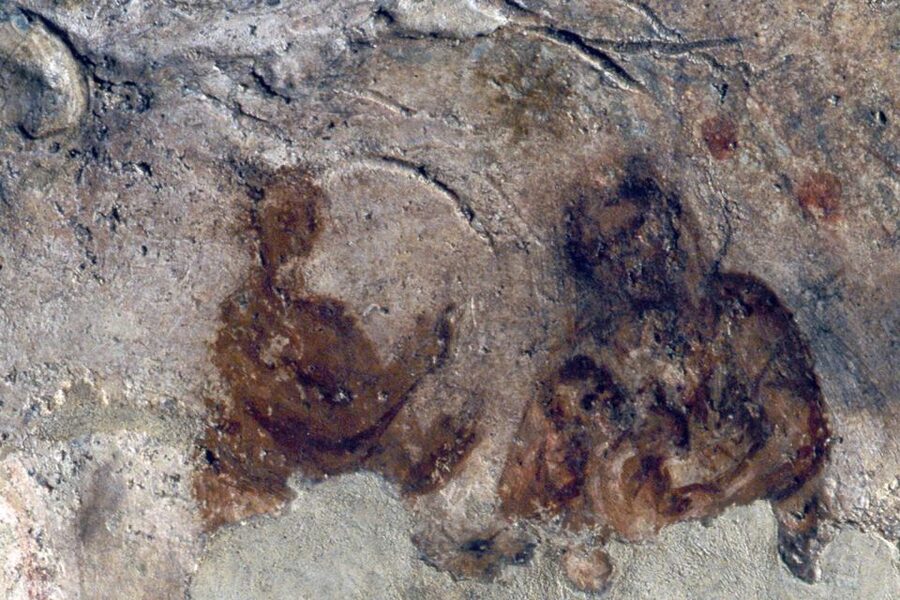
The most talked-about image is a depiction of the Virgin Mary and Child, often described as the oldest known or one of the oldest known examples of this subject. The exact wording matters because early art can be dated and interpreted in different ways, but there is no doubt that the image is a major highlight of the visit.
The paintings are not large, bright frescoes designed to impress from across a basilica. They are old, fragile works viewed in an underground setting. Their survival after many centuries is what makes them moving. You are looking at an early stage in the development of Christian imagery, before later religious art became more familiar to modern eyes.
Photography is not allowed inside. That can disappoint, especially when you see the paintings for the first time. Still, the restriction protects the site and encourages you to look closely rather than experience everything through a phone screen.
Postcard prints of some of the art have been available at a low price, including prints reported at 30 cents. If you want a keepsake, this is a practical substitute for taking pictures.
The guide’s role is particularly valuable in this section. You need help understanding what you are seeing, why a symbol appears, and how the images relate to early Christian belief. Several guides have approached the art from both an archaeological and faith-based perspective, which gives the visit more depth without turning it into a simple religious lecture.
The martyrs and popes connected with Priscilla
Priscilla is also linked with important early Christian figures. Among the martyrs associated with the site are the brothers Felice and Filippo, who were probably killed during the reign of Diocletian.
They are remembered alongside their mother, Saint Felicita, and their brothers Alessandro, Marziale, Vitale, Silano, and Gennaro. These names give the catacomb a personal dimension. The history is not only about anonymous burial niches. It includes family groups, martyrdom, and the memory of people whose stories shaped the Christian community.
Several popes were also buried at Priscilla:
- Marcellino, who served from 296 to 304
- Marcello, from 308 to 309
- Silvestro, from 314 to 335
- Liberius, from 352 to 366
- Siricius, from 384 to 399
- Celestino, from 422 to 432
- Vigilius, from 537 to 555
You will not spend the entire 45 minutes hearing a biography of every person connected with the site. The names are useful because they show the catacomb’s long period of use and its importance within early Christian Rome.
Near the relevant burial area, Pope Saint Silvestro built a basilica in correspondence with the tomb of Felice and Filippo. Inside Villa Ada, a museum also holds hundreds of sarcophagus fragments found during excavations in the area.
The museum and basilica may not form part of the short underground route itself, so check what is open and included when planning your day. Even when you only take the catacomb tour, this surrounding information helps you understand that Priscilla was part of a wider religious and archaeological area.
What the 45-minute length really means
Forty-five minutes is enough to give you a strong introduction, but not enough to cover every corner or every historical detail. I think the length works well for many visitors because underground spaces can become tiring, especially when you are standing in a cool, confined environment.
One visitor felt the tour was over too quickly and wanted more time. Another appreciated the short format and felt that 45 minutes was about the maximum time they would want to spend in a catacomb. Both reactions make sense.
The length is ideal if you want to add one distinctive experience between larger Roman sights. It is less ideal if you are deeply focused on early Christian archaeology and want a long, slow study of every inscription and painting.
Some guides have allowed an extra 10 minutes or even extended the visit when circumstances permitted. You should not count on that, since the advertised duration remains 45 minutes. Think of any additional time as a welcome bonus.
Is the $16 price good value?
At $16 per person, the tour is reasonably priced for Rome. The fee includes the entrance ticket and a live guided visit. Since the guide supplies the historical, artistic, and religious context, you are paying for more than access to a dark set of corridors.
The value is strongest if you are interested in ancient Rome, Christian art, archaeology, or burial customs. The guided explanation makes the paintings and inscriptions far easier to appreciate than they would be on your own.
The value is weaker if you want a grand visual show. This is not a substitute for the Vatican, the Colosseum, or a major museum. The site is smaller in scale, and some parts may feel plain or repetitive if you are expecting dramatic rooms at every turn.
For families, the modest price and limited duration work well. Teenagers aged 15 and 18 have found the visit interesting, especially because the experience differs from the usual Roman highlights. Younger children may find the quiet passages and burial subject less engaging, and strollers are not allowed.
Who should book this catacomb tour?
I would choose Priscilla if you have already seen several of Rome’s headline sights and want a change of pace. It is also a strong choice if you are curious about how early Christian communities lived, buried their dead, and expressed their beliefs through art.
The tour suits:
- Adults interested in archaeology and ancient religious art
- Families with older children or teenagers
- Visitors who prefer smaller groups
- People looking for a cooler break from Rome’s summer heat
- Anyone who wants a less polished and more original historic setting
- Visitors comparing Priscilla with other Roman catacombs
You should think twice if you have difficulty walking through narrow underground passages. The site is not suitable for people with mobility impairments, and baby strollers are not allowed.
You should also reconsider if photography is central to your sightseeing. No photos are permitted inside, though inexpensive art prints may be available.
Planning the visit without wasting time
Arrive at the ticket office at least 10 minutes before your scheduled tour. Show your reservation there rather than waiting for a pickup or looking for a guide elsewhere.
Build in extra travel time because Via Salaria is outside the main ancient-center cluster. A bus can be a cheap option, but check the route and allow a margin for finding the entrance. Signage near the catacomb has been described as less clear than ideal.
Wear shoes that feel secure on uneven underground surfaces, though the supplied information does not specify the exact condition of every passage. Bring a light layer because the temperature below ground can feel cool, especially after walking in the sun.
The cancellation policy allows a full refund if you cancel at least 24 hours in advance. That gives you some flexibility when arranging a busy Rome schedule.
Should you book the Catacombs of Priscilla?
Yes, if you want ancient Rome from a quieter angle. For $16, you get admission, a small-group guide, third-century Christian art, burial galleries, and a site tied to martyrs and several popes.
I would not book it expecting grand architecture or a long museum visit. I would book it for the oldest Christian paintings, the unusual underground setting, and the chance to hear the site explained by a guide who cares about both history and faith.
The best fit is a visitor who can spare 45 minutes, does not need photographs, and is willing to travel beyond the central sights. If that sounds like you, Priscilla is a thoughtful and fairly priced addition to a Rome itinerary.
FAQ
How long does the Catacombs of Priscilla tour last?
The guided tour lasts 45 minutes. Some groups have received extra time, but you should plan around the stated 45-minute duration.
What is included in the ticket?
The price includes entrance to the Catacombs of Priscilla and a guided tour.
How much does the experience cost?
The listed price is $16 per person.
Which languages are available?
Tours are available in Italian, English, and Spanish.
How large is the tour group?
The tour is offered in a small group limited to 10 participants.
Where do I meet the guide?
Go directly to the ticket office at the Catacombs of Priscilla on Via Salaria. Show your reservation at least 10 minutes before the scheduled start.
Is transportation included?
No. Hotel pickup, hotel drop-off, and transportation are not included. You need to make your own way to the catacomb.
Can I take photographs inside?
No. Photography is not allowed inside the catacombs. Postcard prints of some artwork may be available.
Is the tour suitable for people with mobility impairments or baby strollers?
No. The experience is not suitable for people with mobility impairments, and baby strollers are not allowed.
Recently added around Rome
- Palatine Hill and Roman Forum Tour with Fast-Track Entrance★ 4.2 · 417 reviews
- Tivoli: Villa D’Este & Villa Adriana Pass & App Audioguide★ 4.4 · 364 reviews
- From Rome: Villa D’Este & Villa Adriana Day Trip with Lunch★ 4.4 · 289 reviews
- Vatican Museums & Sistine Chapel Skip-the-Line Guided Tour★ 4.6 · 254 reviews
- Rome: The Three Tenors at St. Paul’s Church Concert Ticket★ 4.7 · 699 reviews
- Tivoli: Villa D’Este Entry Ticket and App Audio Guide★ 4.3 · 191 reviews
- Rome: Capitoline Museums and Centrale Montemartini Tickets★ 4.4 · 328 reviews
- Rome: St. Peter’s Basilica and Papal Tombs Guided Tour★ 4.6 · 477 reviews
Tickets, compared.
Cathedral and Duomo’s Terraces Entrance Ticket
Read our review →
Skip-The-Line Uffizi Gallery Timed Entry Ticket
Read our review →
Naples Underground Entry Ticket and Guided Tour
Read our review →
Pantheon Fast-Track Ticket and Official Audio Guide
Read our review →
Entry Ticket and Guided Tour with an Archaeologist
Read our review →