Reviewed · TICKETS
Ravenna: UNESCO Mosaics Entry Tickets
Ravenna keeps its best secrets overhead. This $14 ticket gives you access to some of Italy’s finest early Christian and Byzantine art, including the dazzling mosaics of San Vitale and Sant’Apollinare Nuovo. I like the seven-day validity, which lets you see the monuments at a sensible pace, and the strong value if you choose the five-monument option. The main drawback is that this is an entry ticket, not a guided tour, so you need to bring your own context.
The sites are close enough to visit on foot, and the 20 percent bookshop discount is a useful bonus for anyone who wants a guidebook or art book afterward. I would plan carefully, though: the ticket allows one visit to each monument, and the digital ticket is sent in a separate email. A ticket recognition problem at one entrance caused trouble for one customer, so keep the official booking message easy to find.
In This Review
- Key points at a glance
- Why Ravenna’s mosaics deserve your time
- San Vitale, Ravenna’s great octagonal church
- Galla Placidia’s small, glowing mausoleum
- Sant’Apollinare Nuovo and its long mosaic procession
- St. Andrew’s Chapel inside the Archiepiscopal Museum
- The Neonian Baptistery and its mosaic dome
- Three monuments or five?
- How much time should you allow?
- Price, value, and the missing guide
- Practical details before you go
- Who should choose this ticket?
- Should you book the Ravenna mosaics ticket?
- FAQ
- How much does the Ravenna mosaics ticket cost?
- How long is the ticket valid?
- Which sites are included in the basic ticket?
- Which sites are added with the five-monument option?
- Is a guided visit included?
- Can I use the ticket more than once at each site?
- Is the ticket wheelchair accessible?
- What clothing is required?
- Is photography allowed inside the monuments?
- Is cancellation available?
Key points at a glance
- San Vitale’s octagonal interior combines Roman design with Byzantine mosaic art, including portraits of Emperor Justinian I and Empress Theodora.
- Galla Placidia’s mausoleum is available with the five-monument option and contains some of Ravenna’s most intimate decoration.
- Sant’Apollinare Nuovo has floor-to-ceiling mosaics and the oldest known cycle connected with the life of Christ.
- St. Andrew’s Chapel sits inside the Archiepiscopal Museum, with mosaics, inscriptions, church treasures, and an ivory throne.
- The Neonian Baptistery is included only with the five-monument choice and has a fully decorated mosaic dome.
- Seven-day validity makes this better suited to a relaxed stay than a rushed morning visit.
Why Ravenna’s mosaics deserve your time
Ravenna is not a city where you simply tick off one famous building and move on. Its important monuments are spread through the historic center, and each one adds another piece to the story of Roman, Ostrogothic, and Byzantine rule.
The mosaics are the reason to come. Tiny pieces of colored glass and stone cover walls, domes, and apses with scenes that still look remarkably precise after centuries. You will see biblical stories, imperial portraits, processions, symbols, and decorative patterns. The effect changes from building to building. Some interiors feel grand and ceremonial. Others are small, dark, and almost jewel-like.
I like this ticket because it lets you compare those moods without committing to a fixed tour schedule. You can visit the largest basilicas when you have the most energy, then return to the smaller sites when you are ready for closer looking.
The overall rating is 4.7 from 255 reviews, and the praise is easy to understand. The mosaics are the main event, and the five sites are within walking distance of one another. This is an unusually efficient way to see Ravenna’s central collection of UNESCO-listed monuments.
A few more Italy bookings to compare
- Vatican: Museums & Sistine Chapel Entrance Ticket
★ 4.5 · 144,003 reviews - Milan: Cathedral and Duomo’s Terraces Entrance Ticket
★ 4.6 · 61,054 reviews - Venice: Doge’s Palace Reserved Entry Ticket
★ 4.6 · 42,716 reviews
San Vitale, Ravenna’s great octagonal church
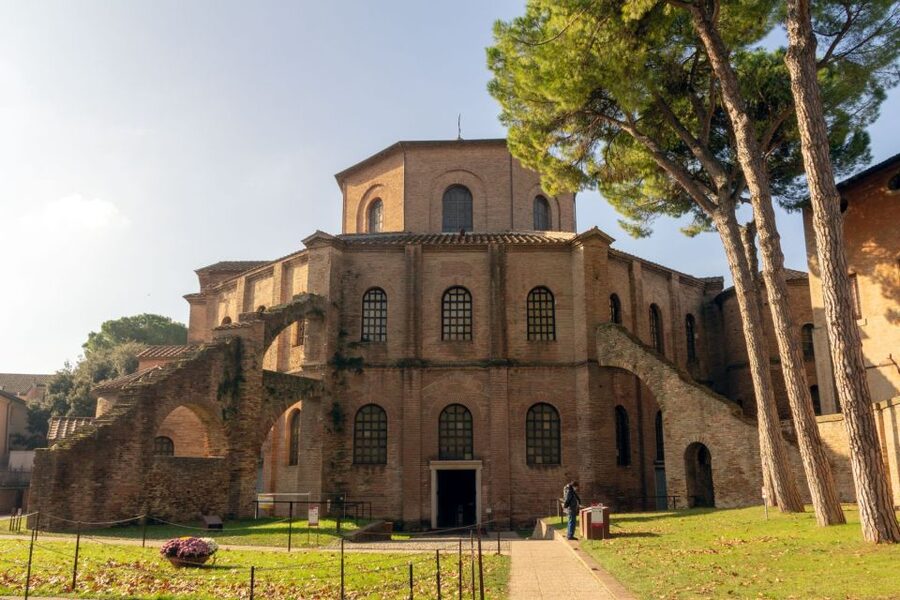
Start with the Basilica of San Vitale if you want the biggest visual impact. Built in the sixth century, this octagonal church joins classic Roman architectural ideas with Byzantine decoration. The unusual shape already gives the interior a different feel from a standard basilica.
Look up and around slowly. The walls contain scenes from the Old Testament made from thousands of small tiles. The workmanship is detailed enough that faces, clothing, gestures, and objects remain readable. The famous panels of Emperor Justinian I and Empress Theodora bring imperial power into the church’s religious setting.
San Vitale is not a quick photo stop. Give yourself time to let your eyes adjust and to study the arrangement of the decoration. The mosaics are not scattered ornaments. They guide your attention toward the altar and create a carefully planned visual message.
This is also where the ticket begins to make financial sense. At $14 per person, access to San Vitale alone would not tell the whole story, but combined with the other monuments, it gives you a full morning or afternoon of art for a modest price.
The limitation is simple: no guide is included. You can appreciate the colors and scale without help, but the biblical scenes and imperial symbols are easier to understand with a printed guide or book. The 20 percent discount at the site bookshops can help if you want to pick up reading material on the spot.
Galla Placidia’s small, glowing mausoleum
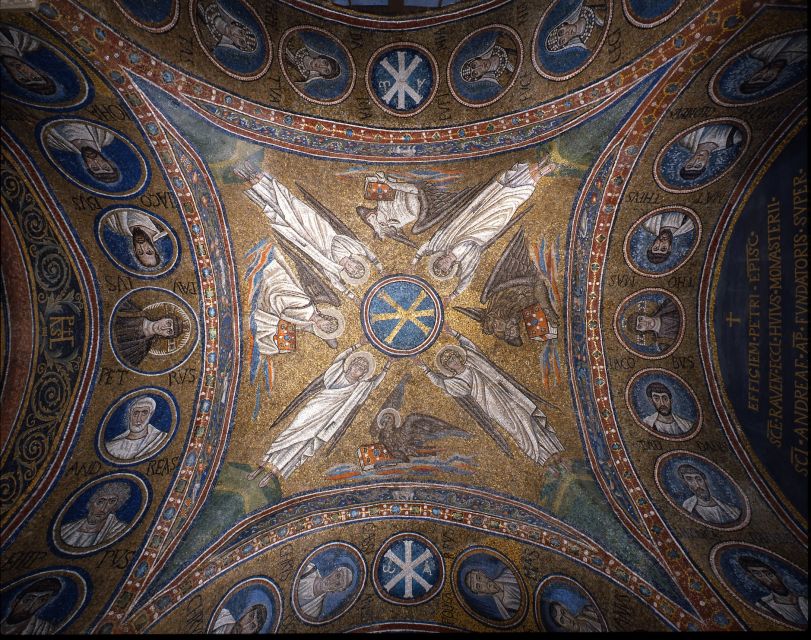
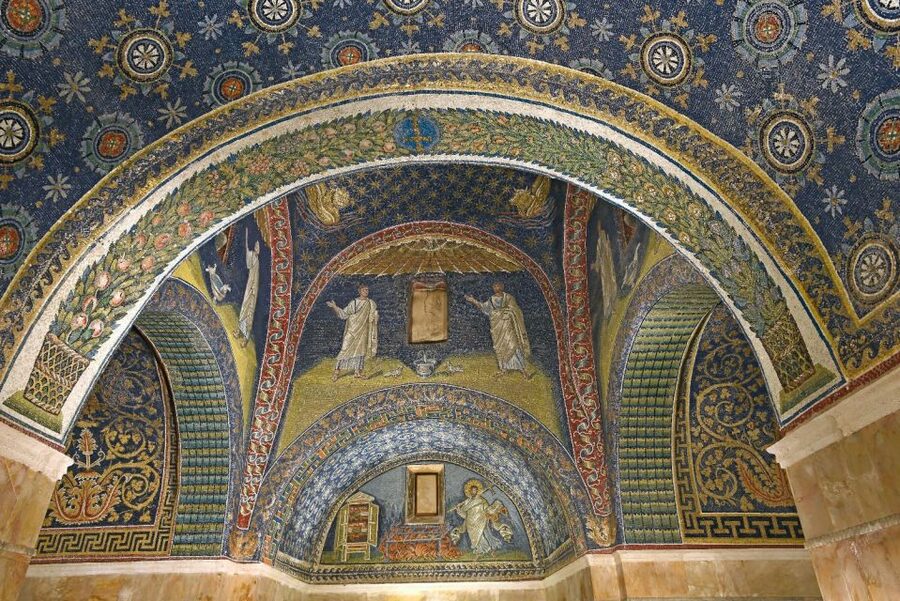
The Mausoleum of Galla Placidia is included with the five-monument option. It is close to San Vitale, so adding it does not require a separate journey across town.
The building dates from the first half of the fifth century. Compared with San Vitale, it is smaller and more enclosed. That change in scale matters. Instead of looking across a large ceremonial space, you are brought close to the decoration.
The mausoleum is one of the places where patience pays off. The mosaics are centuries old, yet their color and fine detail can feel surprisingly immediate. The contrast between the plain exterior and the decorated interior is part of the experience.
If you are choosing between the three-monument and five-monument versions, this is one of the strongest reasons to pay for the larger option. The extra sites add variety, not just quantity. You get a compact interior that feels different from the broad basilicas.
Remember that the five-monument ticket gives you one visit to each monument. If this is the sort of place you want to study, do not rush through it simply because the room is small.
Sant’Apollinare Nuovo and its long mosaic procession
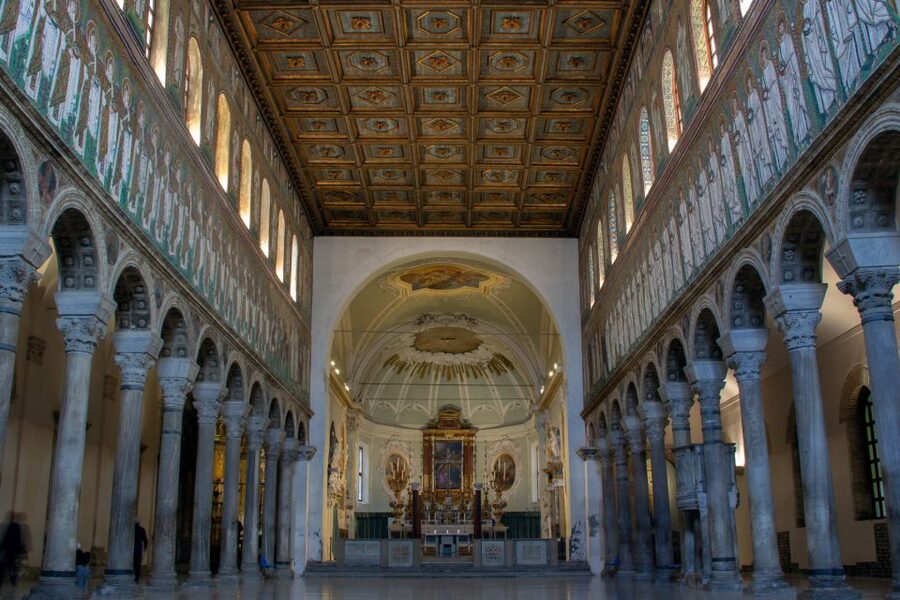
Sant’Apollinare Nuovo was built in the sixth century by Ostrogothic king Theodoric the Great. Its exterior may seem restrained, but the interior opens into a long sequence of Byzantine mosaics.
Here you will find decoration running from floor level toward the ceiling, with processions and scenes linked to the life of Christ. The building is especially valuable for anyone interested in how Christian art developed across different periods. It is not just a pretty church. It preserves a major visual record of early Christian storytelling.
Some of the mosaics were damaged over time. Parts were once painted black under Pope Gregory the Great, apparently to keep worshippers focused on prayer. Later damage from World War I required reconstruction. That history gives the interior another layer to consider: you are seeing both original work and the results of preservation.
I would not treat Sant’Apollinare Nuovo as a lesser stop after San Vitale. Its long walls reward a different kind of attention. At San Vitale, you study a concentrated central space. Here, you follow a narrative across the building.
If you appreciate art or church history, this basilica may be one of the most satisfying stops. If you are short on time, it can be tempting to hurry because the decoration stretches so far. Resist that urge for at least a few minutes. Pick one section and examine the faces, clothing, gestures, and repeated patterns.
Still Italy, but a slower afternoon:
- Vatican Museums & Sistine Chapel Tour with Optional Basilica
★ 4.3 · 67,413 reviews - Colosseum, Roman Forum & Palatine Guided Tour
★ 4.7 · 63,148 reviews - Vatican Museums, Sistine Chapel & St Peter’s Basilica Guided Tour
★ 4.5 · 39,149 reviews - Rome: Colosseum, Palatine Hill and Roman Forum Guided Tour
★ 4.8 · 32,814 reviews
St. Andrew’s Chapel inside the Archiepiscopal Museum
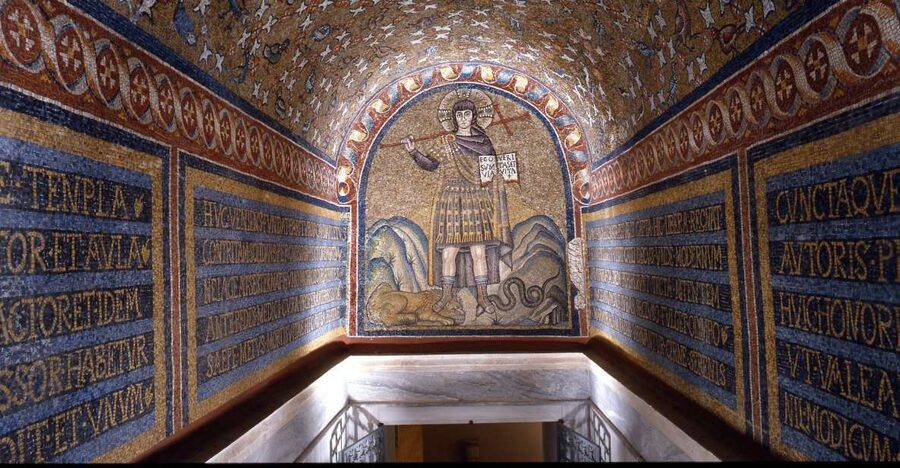
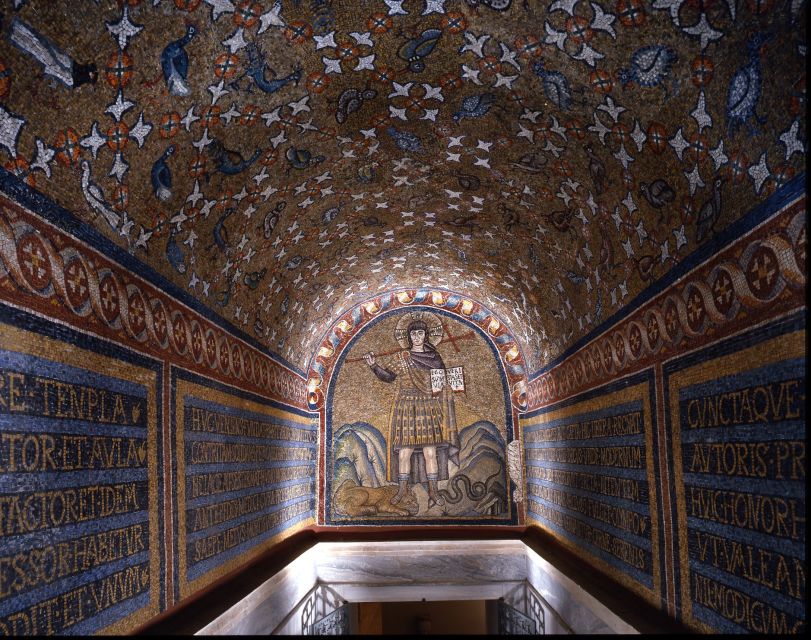
The Archiepiscopal Museum includes St. Andrew’s Chapel, the private chapel once used by Ravenna’s bishops. It is often described as a small but important part of the city’s religious heritage, and its setting inside the museum makes it different from the major basilicas.
The chapel contains mosaics connected with important people and places in Ravenna. It also offers evidence of the religious divisions of the early Byzantine period. That makes it especially worthwhile if you want more than beautiful surfaces. The decoration carries political and religious meaning.
Inside the museum, you can also see inscriptions, the cathedral treasure, and an ivory throne associated with Bishop Maximian. These objects help connect the mosaics to the people and institutions that commissioned, used, and protected them.
This stop is included in the basic combination covering San Vitale, Sant’Apollinare Nuovo, the Archiepiscopal Museum, and St. Andrew’s Chapel. It is a good reminder that Ravenna’s art is not confined to vast churches. Some of its most telling pieces are found in smaller, more personal settings.
Because no guided visit is included, the museum may require more independent reading than the basilicas. I would use the stop to slow down rather than rush toward the next church. The smaller scale rewards close observation.
The Neonian Baptistery and its mosaic dome
The Battistero Neoniano, or Neonian Baptistery, is included only with the five-monument option. It was begun under Bishop Ursus and completed under Bishop Neon, whose name it carries.
The key feature is the mosaic-covered dome. The decoration fills the upper space, making the building feel much larger than its footprint suggests. As with the other sites, look upward before moving on. The most important work is not at eye level.
The baptistery adds architectural variety to the ticket. You have basilicas, a mausoleum, a chapel, a museum, and a baptismal building, all within a walkable part of Ravenna. That range is more useful than visiting several similar churches.
One customer who visited a larger group of Ravenna monuments wished for more time inside the Neonian Baptistery. That is good advice even if you are following the smaller ticket. The dome deserves a calm look, and the compact room can become crowded with people trying to photograph the same view.
Flash photography is prohibited. That protects the artwork and also encourages you to look rather than simply collect pictures.
Three monuments or five?
The ticket structure is important. The core option includes:
- San Vitale Basilica
- Sant’Apollinare Nuovo Basilica
- The Archiepiscopal Museum and St. Andrew’s Chapel
The five-monument option adds:
- The Mausoleum of Galla Placidia
- The Neonian Baptistery
I would choose five if you have enough time in Ravenna and a serious interest in mosaic art. The extra sites are close by and add two very different interiors. The larger ticket also gives you a better sense of the city’s range.
The three-monument choice works if you want the main highlights without packing your day. San Vitale and Sant’Apollinare Nuovo are the major basilicas, while St. Andrew’s Chapel and the museum provide a smaller-scale complement.
The ticket is valid for seven days, with one visit per monument. That is a real advantage. You do not need to force all the sites into a single hot afternoon or race from one entrance to another. If you are staying in Ravenna for several days, spread the visits out and give the mosaics the attention they deserve.
How much time should you allow?
No official duration is provided because this is a flexible entry ticket rather than a timed guided tour. Your pace will depend on how closely you study the mosaics.
At a minimum, plan enough time to visit the selected monuments without treating them as quick photo stops. The sites are within walking distance, which keeps the day simple, but the walking distance does not mean the art should be rushed.
You may find that San Vitale and Sant’Apollinare Nuovo take the most time because of their scale. The mausoleum and baptistery are smaller, but their domes and close decoration deserve careful viewing. The museum and chapel need time for objects and inscriptions as well as mosaics.
The seven-day validity is useful for two kinds of visitors. You can split the sites across multiple days, or you can use one day for the main basilicas and return later to the smaller interiors. I prefer the second approach when possible.
Price, value, and the missing guide
At $14 per person, this is a strong-value sightseeing ticket, especially with the five-monument option. You are paying for access to several major cultural sites rather than a single attraction, and the monuments are close enough to visit without arranging transport between them.
The bookshop discount adds a practical benefit. You receive 20 percent off purchases at the sites, which could reduce the cost of a guidebook or art book. That is particularly helpful here because the ticket does not include a guided visit.
The lack of a guide is the main tradeoff. You can see the mosaics independently, but you may miss the meaning behind specific scenes, imperial portraits, and religious references. One highly positive assessment of the experience still wished for a guide or tour to explain the artwork.
If you want a fully narrated visit, this ticket is not the right product on its own. If you prefer to set your own pace, read as you go, and avoid being tied to a group, the freedom is worth more than the missing commentary.
Practical details before you go
You must show the official ticket at the entrance to each attraction. The booking ticket is sent in a separate email, so check for that message before you arrive and keep it available on your phone.
One customer had trouble because an entrance did not recognize the ticket issuer and had to return to the ticket office for help. This does not appear to have been the normal experience, but it is a reason to save the booking email, confirmation details, and any voucher information.
Wear comfortable shoes. The monuments are within walking distance, and you will likely spend a good part of the day moving between them and standing inside the sites.
Dress respectfully. Knees and shoulders must be covered, and clothing with rips, holes, or transparent material is not allowed. Flash photography is prohibited.
The activity is wheelchair accessible. Free cancellation is available up to 24 hours in advance for a full refund. Starting times depend on availability, so check the booking details rather than assuming a fixed departure time.
Who should choose this ticket?
I would recommend it to anyone who cares about art, architecture, early Christian history, or Byzantine culture. It also suits independent sightseers who want flexibility instead of a fixed guided schedule.
Families can use the seven-day validity to avoid overloading children with several churches in one day. The mosaics offer plenty to point out, from imperial clothing to animals and biblical scenes, though younger children may need short visits and breaks.
It is less suitable if you want a guide to explain every monument in person. The ticket gives you access, not a lesson. You may want to use the discounted bookshops to find a guidebook, or arrange a separate guided visit if detailed interpretation is your priority.
Should you book the Ravenna mosaics ticket?
Yes, if you want to see Ravenna’s finest monuments at a reasonable price and on your own schedule. I would choose the five-monument option for a longer stay, since Galla Placidia’s mausoleum and the Neonian Baptistery add real variety.
Choose the three-monument ticket if you have limited time or mainly want San Vitale, Sant’Apollinare Nuovo, and St. Andrew’s Chapel. Either option gives you access to artwork that is among Italy’s most striking, and the seven-day validity removes much of the pressure.
Bring comfortable shoes, cover your shoulders and knees, save the separate ticket email, and allow time to look upward. Ravenna rewards slow eyes.
FAQ
How much does the Ravenna mosaics ticket cost?
The ticket costs $14 per person.
How long is the ticket valid?
The ticket is valid for seven days. You may visit each included monument once during that period.
Which sites are included in the basic ticket?
The basic ticket includes San Vitale Basilica, Sant’Apollinare Nuovo Basilica, the Archiepiscopal Museum, and St. Andrew’s Chapel.
Which sites are added with the five-monument option?
The five-monument option adds the Mausoleum of Galla Placidia and the Neonian Baptistery.
Is a guided visit included?
No. This is an entry ticket and does not include a guided visit.
Can I use the ticket more than once at each site?
No. The ticket allows one visit per monument during its seven-day validity.
Is the ticket wheelchair accessible?
Yes, the activity is wheelchair accessible.
What clothing is required?
Your knees and shoulders must be covered. Clothing with rips, holes, or transparent material is not allowed.
Is photography allowed inside the monuments?
Flash photography is prohibited.
Is cancellation available?
Yes. You can cancel up to 24 hours in advance for a full refund.
Recently added around Italy
- Florence Uffizi Gallery monolingual Small Group Tour★ 4.0 · 621 reviews
- Florence Private Walking tour with Skip-the-line to Accademia★ 4.5 · 236 reviews
- Uffizi Gallery Entrance Ticket with Priority Access★ 3.5 · 1,029 reviews
- Florence Skip-the-Line Duomo Tour with Guide & Brunelleschi Dome★ 5.0 · 1,176 reviews
- Skip-the-Line Accademia Guided Visit: David Secrets and Beyond★ 4.0 · 525 reviews
- Priority Entrance : Florence Accademia Gallery Timely Tickets★ 4.0 · 603 reviews
- Accademia Gallery Entrance Ticket with Priority Access★ 4.0 · 1,088 reviews
- Skip the line : David Guided Experience★ 4.5 · 1,076 reviews
Tickets, compared.
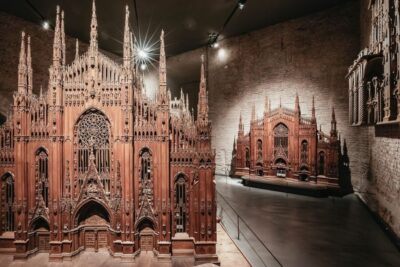
Cathedral and Duomo’s Terraces Entrance Ticket
Read our review →
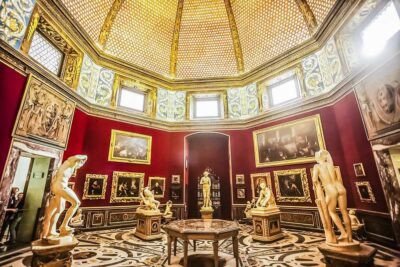
Skip-The-Line Uffizi Gallery Timed Entry Ticket
Read our review →
Naples Underground Entry Ticket and Guided Tour
Read our review →
Pantheon Fast-Track Ticket and Official Audio Guide
Read our review →
Entry Ticket and Guided Tour with an Archaeologist
Read our review →