Reviewed · TICKETS
Perugia: Entry Ticket and Guided Tour of Perugia Underground
Perugia keeps its oldest stories underground. This compact tour leads you beneath Saint Lawrence Cathedral, where Etruscan, Roman, and medieval remains appear in layers beneath the modern city. I especially like the clear sense of time passing as you move through the site, and the final VR presentation, which helps you picture how Perugia once looked. The main drawback is language: the live tour is in Italian, with a tablet and headphones supplied for other languages, and some visitors find it hard to keep up.
At $14 per person and about 50 minutes long, this is an easy experience to fit between Perugia’s cathedral, Palazzo dei Priori, and the streets around Piazza IV Novembre. I like that you do not simply look at ruins behind glass. You walk through the archaeological remains with a guide, then use modern technology to connect the fragments to the city above.
In This Review
- Key points to know before you go
- Starting in the cloister of Saint Lawrence
- Etruscan walls and the first city beneath your feet
- Roman roads, houses, and the siege of Perugia
- Medieval layers under the cathedral
- How the Italian guide and translation tablet work
- The VR presentation brings the ruins back to life
- Is 50 minutes long enough?
- What the $14 price really delivers
- Practical details for comfort and access
- Who will enjoy this Perugia experience most?
- Should you book Perugia Underground?
- FAQ
- Where does the Perugia Underground tour begin?
- How long does the tour last?
- What languages are available?
- Is the entrance ticket included?
- Does the route include stairs?
- Can wheelchair users or strollers take the tour?
- Are food, drinks, and pets allowed?
Key points to know before you go
- The route reaches 15 metres below the cathedral: You gradually move into the hill beneath Saint Lawrence Cathedral, passing through several periods of Perugia’s past.
- Three major eras appear underground: Etruscan construction, Roman roads and houses, and medieval remains all form part of the visit.
- The live guide speaks Italian: If you need another language, a tablet with translation and headphones are available, though keeping pace can take effort.
- The VR finale is the tour’s modern surprise: The headset gives you a visual reconstruction of earlier Perugia and helps make the archaeological remains easier to understand.
- The tour begins in the cathedral cloister: Enter through the large portal in Piazza IV Novembre, beside Libreria delle Volte, rather than looking for a separate street entrance.
- Stairs limit access: The route is not suitable for wheelchair users, strollers, or people with significant mobility difficulties.
Starting in the cloister of Saint Lawrence
Your visit begins in the cloister of Saint Lawrence Cathedral, part of the monumental Saint Lawrence Island complex in central Perugia. The entrance is through a large portal in Piazza IV Novembre, next to the bookstore Libreria delle Volte.
This meeting point matters because the surrounding square has several cultural sites and entrances. Give yourself enough time to find the cloister, especially if you are arriving while the square is busy with sightseeing. The ticket office and tour start are connected with the cathedral complex, not presented as a separate underground attraction on another street.
The opening setting gives you a useful first clue. Perugia is a hill city built in layers, and the cathedral complex sits over earlier phases of settlement. From the cloister, the route turns away from the open square and begins moving into the body of the hill.
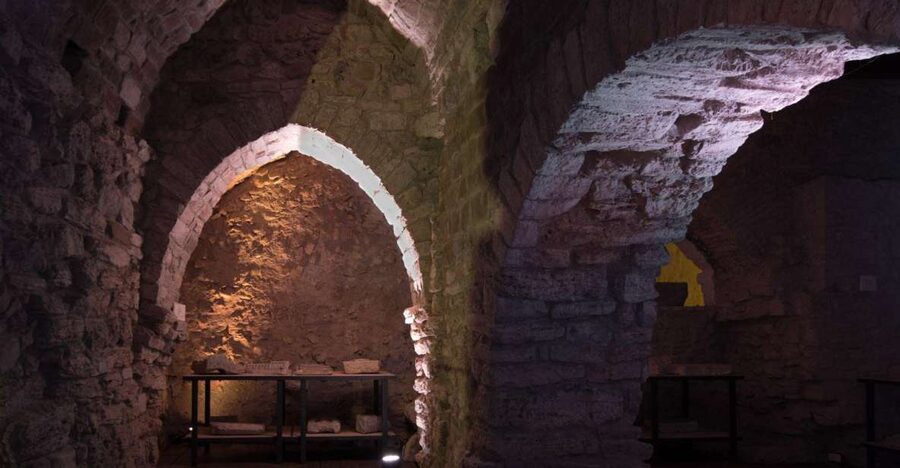
The atmosphere changes quickly. You leave the bright center of the city and enter a quieter archaeological space. The route takes you as far as 15 metres below the cathedral’s present level, which makes the height of modern Perugia feel physical rather than just historical.
A few more Italy bookings to compare
- Colosseum, Roman Forum & Palatine Guided Tour
★ 4.7 · 63,148 reviews - Vatican Museums, Sistine Chapel & St Peter’s Basilica Guided Tour
★ 4.5 · 39,149 reviews - Rome: Colosseum, Palatine Hill and Roman Forum Guided Tour
★ 4.8 · 32,814 reviews
Etruscan walls and the first city beneath your feet
The Etruscan remains are one of the strongest reasons to take this tour. Perugia’s story reaches back more than 2,500 years, and the underground route lets you see evidence of a settlement that existed long before the cathedral and the medieval city.
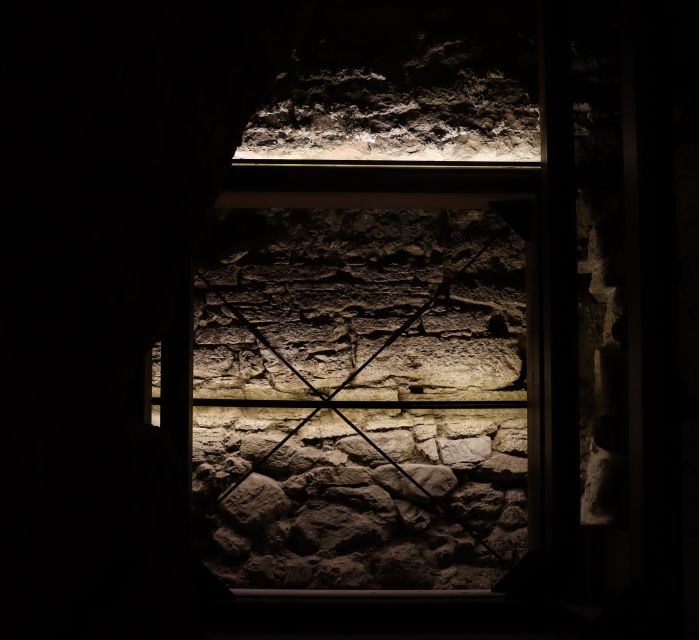
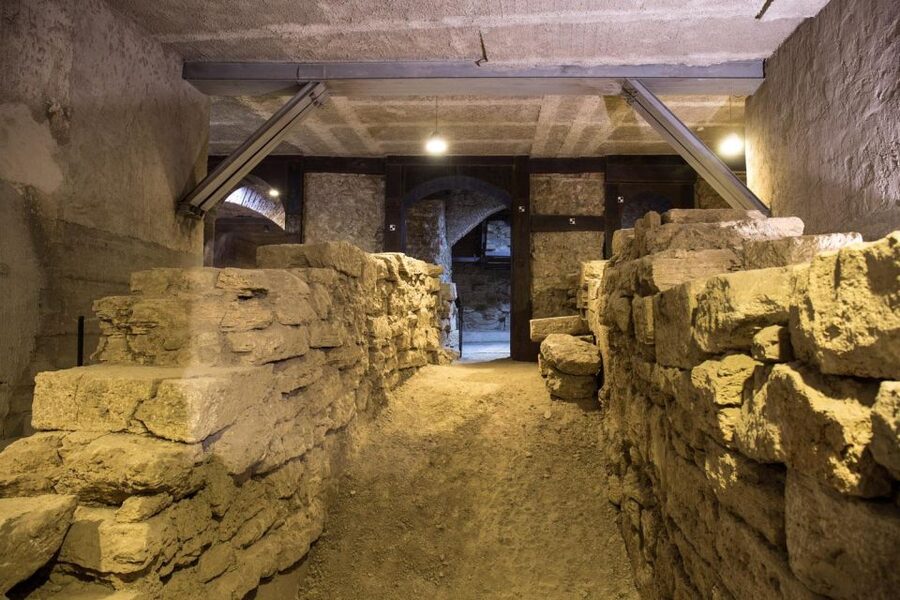
Your guide explains the construction and the way the Etruscans shaped the hill. One particularly useful part of the experience is seeing how advanced their building work was. The remains are not presented as isolated stones. They form part of a wider explanation of how the city was established and expanded.
You should not expect a large museum collection or a room filled with objects. This is mainly an architectural and archaeological walk. The interest comes from walls, routes, levels, and the way one period was built over another.
That approach suits you if you like understanding how cities grow. It is less ideal if you want a long display of excavated objects with labels to read at your own pace. One useful criticism is that the site has fewer individual finds on display than some visitors expect. The guide supplies much of the meaning.
The Etruscan section also gives the tour its best sense of discovery. Above ground, Perugia can feel thoroughly medieval and early modern. Below the cathedral, you begin to see that the city’s foundations are far older.
Roman roads, houses, and the siege of Perugia
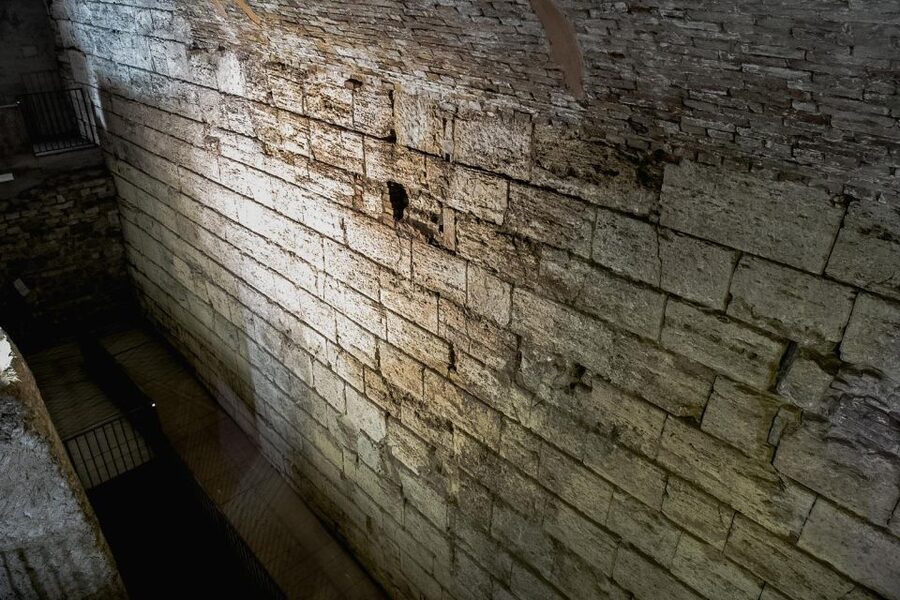
The next historical layer brings Roman Perugia into view. The tour covers Roman roads and houses, allowing you to see physical traces of how the settlement changed under Roman rule.
The route also connects the remains with major historical figures and events. Julius Caesar, Gaius Octavius Caesar Augustus, the siege of Perugia, and the Gate of Augustus all form part of the story explained along the way.
This is where a live guide adds real value. A road fragment or wall can be difficult to read on its own. With the historical setting supplied at the right moment, you can better understand what you are looking at and why it mattered.
The Roman section is also a good reminder that ancient cities were practical places. Roads linked buildings and neighborhoods. Houses occupied the available ground. Later construction did not erase every earlier feature, so parts of the Roman city remain woven into the levels beneath the cathedral.
I would not expect an hour-long lecture on Roman history. The entire route lasts only 50 minutes, and the guide has to cover several thousand years. The reward is a brisk introduction rather than a specialist study.
Guides such as Beatrice and Lorenzo have received particular praise for their warm, energetic presentation. The best guides make the route feel like a connected story instead of a checklist of dates. Lorenzo, for example, is especially effective at linking construction, Roman politics, and the siege of Perugia.
Medieval layers under the cathedral
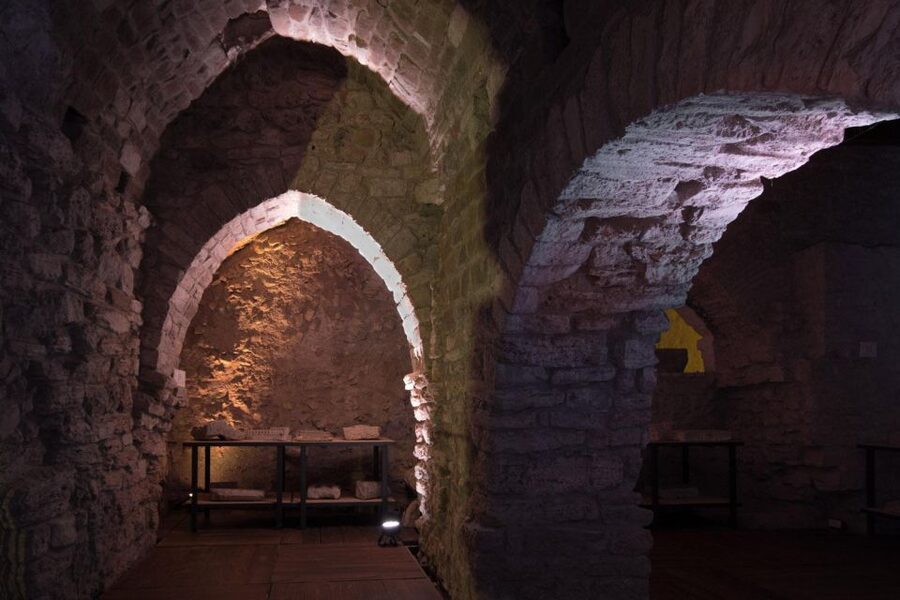
The medieval remains show how the city continued to change after the ancient periods. You move through spaces shaped by later building, reuse, and the growth of the cathedral complex.
This part of the visit helps explain why Perugia’s streets and buildings can feel so layered above ground. Medieval cities often reused earlier foundations, and here that process is visible below your feet. The underground route gives you a practical sense of how one city can occupy the same hill for centuries.
The guide’s explanations are important because the remains may not always announce their age. You are looking at different construction phases, not a perfectly preserved ancient neighborhood. Walls and passageways can look similar until someone points out the clues.
The pace is generally efficient, but it can feel quick. Some people would like more time to study each section or see more objects found during the excavations. If you are the sort of person who wants to photograph every wall and read every panel, you may find the group moving on before you are ready.
That is the trade-off for the low price and short duration. You get a focused introduction to the underground city, but not an unhurried archaeological museum visit.
Still Italy, but a slower afternoon:
- Vatican: Museums & Sistine Chapel Entrance Ticket
★ 4.5 · 144,003 reviews - Vatican Museums & Sistine Chapel Tour with Optional Basilica
★ 4.3 · 67,413 reviews - Milan: Cathedral and Duomo’s Terraces Entrance Ticket
★ 4.6 · 61,054 reviews - Venice: Doge’s Palace Reserved Entry Ticket
★ 4.6 · 42,716 reviews
How the Italian guide and translation tablet work
The live tour is in Italian. A tablet with headphones and translated content is available when needed, which makes the experience possible for visitors who do not understand Italian.
The translation system is useful, but it is not identical to having an English-speaking guide. You listen to or read the translated material while the guide continues speaking and the group moves through the site. One practical complaint is that the English version can run slower than the guide’s Italian explanation, leaving you rushing through the tablet before the next stop.
You can make this easier by focusing on the tablet’s main points rather than trying to read every word. Keep one ear available for the guide’s movement cues and look up often so you do not miss the physical features being described.
The language arrangement is worth considering before booking. If you speak Italian, you can follow the full live presentation and ask questions more naturally. If you do not, you still receive useful information, but the experience may feel less relaxed than a tour conducted fully in your language.
Some visitors have found English-speaking guides on particular departures, but the listed tour language is Italian. I would plan on using the translation tablet unless your booking confirmation clearly states otherwise.
The VR presentation brings the ruins back to life
The tour ends with a VR experience, and this is one of its most successful features. After walking through walls and foundations, you see a visual version of how parts of the city may have looked in earlier periods.
The headset helps solve a common problem with archaeology: ruins show you what survives, but not always what once stood there. The VR presentation gives shape to the missing buildings and helps connect the separate historical periods covered by the guide.
I like that it comes after the walk. You first see the actual remains, then receive a visual reconstruction. That sequence makes the technology feel tied to the site rather than added as a stand-alone gadget.
A few people would prefer to see the large-picture reconstruction before entering the archaeological area. That order could help you understand the explanations as you walk. Still, the final presentation works well as a closing piece, and many visitors consider it the highlight.
The VR segment is also helpful if you are visiting Rocca Paolina later. It gives you a better feel for Perugia’s underground and layered character, making the later fortress visit easier to place within the city’s structure.
Is 50 minutes long enough?
For a first look at Perugia’s underground, 50 minutes is a sensible length. You cover Etruscan, Roman, and medieval remains without giving up half a day.
The short format works particularly well if you are spending one day in Perugia. You can fit the tour into a morning or afternoon of sightseeing, then continue through the cathedral complex and central streets.
The limit is depth. The guide must move quickly across more than 2,500 years, so the tour gives you the main outline rather than every archaeological detail. Some people find the pace slightly rushed, especially when using the tablet translation.
I would treat the visit as a strong introduction. It gives you enough background to notice older layers elsewhere in Perugia, including the relationship between the hilltop center and sites such as Rocca Paolina. If you already have specialist knowledge of Etruscan or Roman archaeology, you may want more detailed interpretation than this short route provides.
What the $14 price really delivers
At $14, this is good value for a guided archaeological visit in a major historic center. Your ticket includes entrance, the live guide, translation equipment if needed, and the VR presentation.
The price is especially fair because the route is not simply an unstaffed underground passage. The guide supplies the historical links, and the VR finale adds something beyond a standard walk through ruins.
You are paying for a compact experience, not a full museum afternoon. If you want extensive displays, many excavated objects, or time to explore independently, this will feel limited. If you want a clear introduction without a large time or money commitment, it makes sense.
The reserve-now-and-pay-later option and free cancellation up to 24 hours before the visit also make it easier to fit into a changing schedule. Those policies are useful in Perugia, where weather, train timing, and a long lunch can easily shift your plans.
Practical details for comfort and access
Wear shoes that feel secure on stairs. The route includes several flights, and the site is not suitable for wheelchair users, strollers, or people with significant mobility difficulties.
The underground area has a slight temperature change. Bring a light garment, even during warm weather. You are not entering a freezing cavern, but the cooler air can be noticeable after time in the sun.
Pets, food, and drinks are not allowed. Baby strollers are also excluded, so families with young children should plan around that restriction.
Photography may be awkward if you are carrying the tablet and headphones. You can still look around and take pictures where permitted, but the equipment makes it harder to move quickly between stops. I would keep your phone easy to reach and avoid treating the tour as a photo session.
The meeting point deserves one final check. Look for the cathedral cloister accessed from Piazza IV Novembre beside Libreria delle Volte. If you are unsure, ask at the cathedral complex rather than wandering around the square for a separate underground entrance.
Who will enjoy this Perugia experience most?
I recommend this tour to you if you enjoy history but do not want a long academic presentation. It also suits first-time visitors who want to understand why Perugia has so many different levels and building periods.
Families with older children may appreciate the VR section, which gives the ancient remains a visual punch. The technology is not a substitute for the archaeology, but it can hold attention after a series of walls and foundations.
The tour is less suitable if you need step-free access, dislike guided pacing, or want a tour fully in English. In those cases, the stairs and Italian-language format may outweigh the low price.
If you speak Italian, the experience is likely to feel smoother. If you do not, you can still get a lot from it, but be ready to use the tablet while walking and listening.
Should you book Perugia Underground?
I would book it if you have about an hour in central Perugia and want more than the usual cathedral visit. The combination of ancient remains, a passionate guide, and a strong VR ending gives you a useful picture of the city beneath the city.
Book with realistic expectations. This is a short, guided introduction, not a large archaeological museum. The Italian presentation and stairs are the main concerns, while the tablet translation and quick pace may require extra attention.
At $14, the balance is favorable. You see Etruscan, Roman, and medieval layers, reach 15 metres below the cathedral, and finish with a memorable visual reconstruction. For most visitors who can manage the stairs, it is a smart addition to a day in Perugia.
FAQ
Where does the Perugia Underground tour begin?
The ticket office and starting point are in the cloister of Saint Lawrence Cathedral. Enter through the large portal in Piazza IV Novembre, beside Libreria delle Volte.
How long does the tour last?
The visit lasts about 50 minutes.
What languages are available?
The live guide speaks Italian. A tablet with translation and headphones is provided when needed.
Is the entrance ticket included?
Yes. The price includes entry to the Perugia Underground archaeological area, the guided tour, translation equipment if needed, and the VR experience.
Does the route include stairs?
Yes. The route has several flights of stairs and reaches about 15 metres below the current cathedral level.
Can wheelchair users or strollers take the tour?
No. The route is not suitable for wheelchair users, baby strollers, or people with significant mobility difficulties.
Are food, drinks, and pets allowed?
No. Pets, food, and drinks are not allowed on the tour.
Recently added around Italy
- Florence Uffizi Gallery monolingual Small Group Tour★ 4.0 · 621 reviews
- Florence Private Walking tour with Skip-the-line to Accademia★ 4.5 · 236 reviews
- Uffizi Gallery Entrance Ticket with Priority Access★ 3.5 · 1,029 reviews
- Florence Skip-the-Line Duomo Tour with Guide & Brunelleschi Dome★ 5.0 · 1,176 reviews
- Skip-the-Line Accademia Guided Visit: David Secrets and Beyond★ 4.0 · 525 reviews
- Priority Entrance : Florence Accademia Gallery Timely Tickets★ 4.0 · 603 reviews
- Private Tour in Siena, San Gimignano and Chianti Day Trip from Florence★ 5.0 · 405 reviews
- Accademia Gallery Entrance Ticket with Priority Access★ 4.0 · 1,088 reviews
Tickets, compared.
Cathedral and Duomo’s Terraces Entrance Ticket
Read our review →
Skip-The-Line Uffizi Gallery Timed Entry Ticket
Read our review →
Naples Underground Entry Ticket and Guided Tour
Read our review →
Pantheon Fast-Track Ticket and Official Audio Guide
Read our review →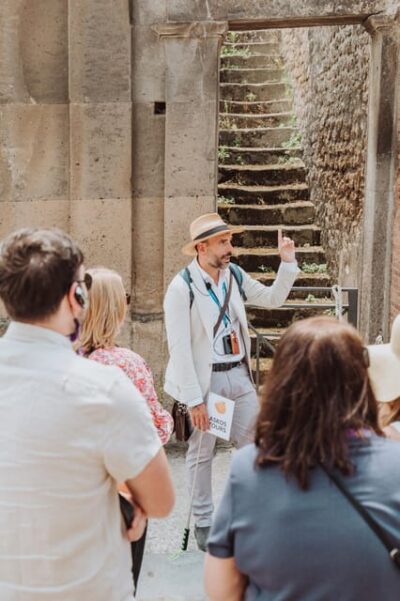
Entry Ticket and Guided Tour with an Archaeologist
Read our review →