Reviewed · TICKETS
Paestum: Small-Group Tour with an Archaeologist and Tickets
Paestum rewards curious visitors. This two-hour walking tour makes the ancient city much easier to understand, pairing the remarkably preserved Greek temples with Roman streets, the forum, amphitheater, and the National Archaeological Museum. I especially like the archaeologist-led commentary and the fact that museum admission is included, since Paestum’s stones are impressive but its details are easy to miss without help.
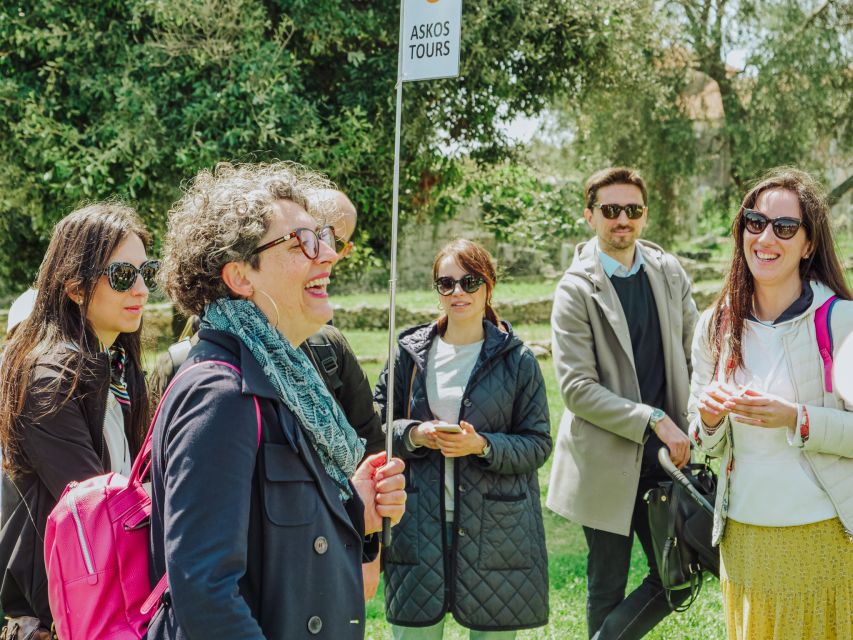
The small-group format is another strong point. Guides such as Mario, Ivan, Maria, and Francesca have been praised for clear explanations, good storytelling, and patience with questions. The main drawback is the pace: two hours goes quickly, and some people may want extra time in the museum or a break after walking outdoors in hot weather.
In This Review
- Paestum tour highlights at a glance
- Why Paestum deserves time beyond Pompeii
- Starting near the Basilica Paleocristiana dell’Annunziata
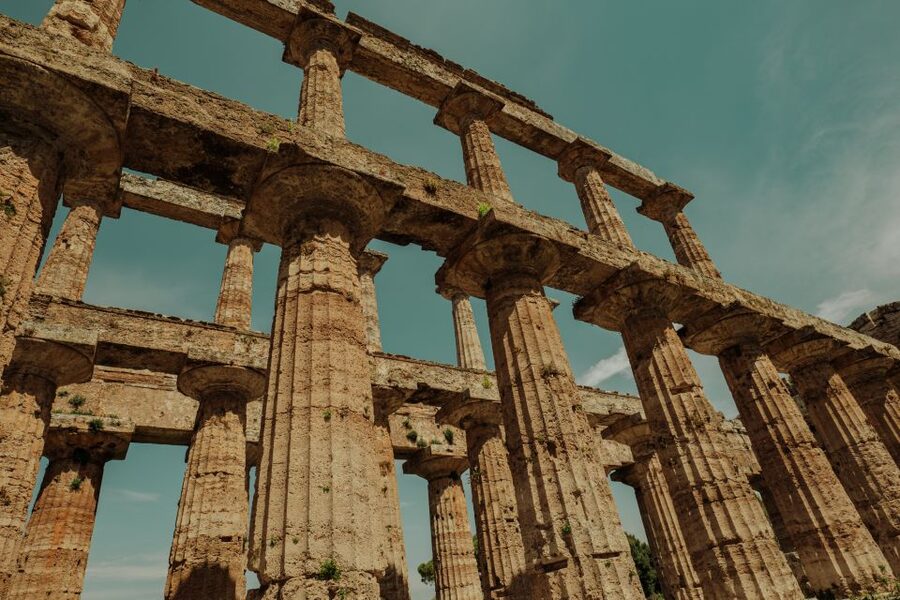
- Walking among Paestum’s three Greek temples
- Roman Paestum: Forum, comitium, and amphitheater
- Thirty minutes in the National Archaeological Museum
- What the archaeologist guide adds
- Is two hours long enough?
- Small-group value at $47 per person
- Who should book this Paestum experience?
- Booking advice and final verdict
- FAQ
- How long does the Paestum tour last?
- What does the tour include?
- Is transportation included?
- Where does the tour meet?
- Which languages are available?
- Can I book a private group?
- What should I bring?
- Is the tour suitable for wheelchair users?
Paestum tour highlights at a glance
- Three unusually well-preserved Greek temples: See the Temple of Neptune, Temple of Ceres, and the so-called basilica, all dating from the sixth century B.C.
- An archaeologist at your side: Guides explain the Greek, Lucanian, and Roman layers instead of leaving you to guess what each ruin once did.
- The Tomb of the Diver: Visit Paestum’s most famous museum object, a painted Greek tomb with a remarkable image on its lid.
- Roman life beyond the temples: The route includes the comitium, forum, markets, amphitheater, roads, city walls, and other remains.
- Small groups and included admission: A group of six, noted by one participant, made it easy to hear and ask questions.
- A good archaeological value: At $47 per person, the ticket and two hours of expert interpretation make this a sensible choice for first-time visitors.
Why Paestum deserves time beyond Pompeii
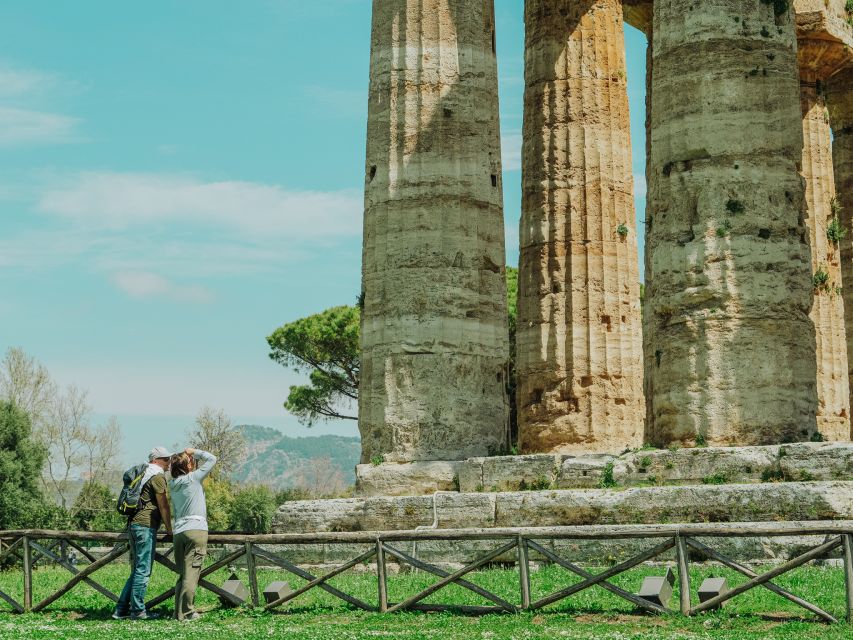
Paestum is sometimes left off a Campania itinerary because Pompeii gets the headlines. That is a mistake if you care about ancient Greek architecture. The site presents three tall, elegant temples in a setting where you can see their columns and proportions without the same level of urban clutter found at more famous archaeological sites.
The city began as a Greek settlement and later became part of the Lucanian and Roman worlds. That mixture is what makes the visit rewarding. You are not looking at a single frozen moment. You are seeing layers of political life, religion, engineering, trade, and building methods that changed over centuries.
I like Paestum because the major sights are visually clear. You can understand the basic shape of a temple even before the guide speaks. Then the explanation adds the useful questions: who used it, how was it built, how did its design change, and what happened when Roman life took over?
A good guide also helps separate the three temples. They are not simply three copies of the same building. Their dates, proportions, and likely religious roles differ, and the tour explains those differences in plain language.
A few more Italy bookings to compare
- Vatican: Museums & Sistine Chapel Entrance Ticket
★ 4.5 · 144,003 reviews - Milan: Cathedral and Duomo’s Terraces Entrance Ticket
★ 4.6 · 61,054 reviews - Venice: Doge’s Palace Reserved Entry Ticket
★ 4.6 · 42,716 reviews
Starting near the Basilica Paleocristiana dell’Annunziata
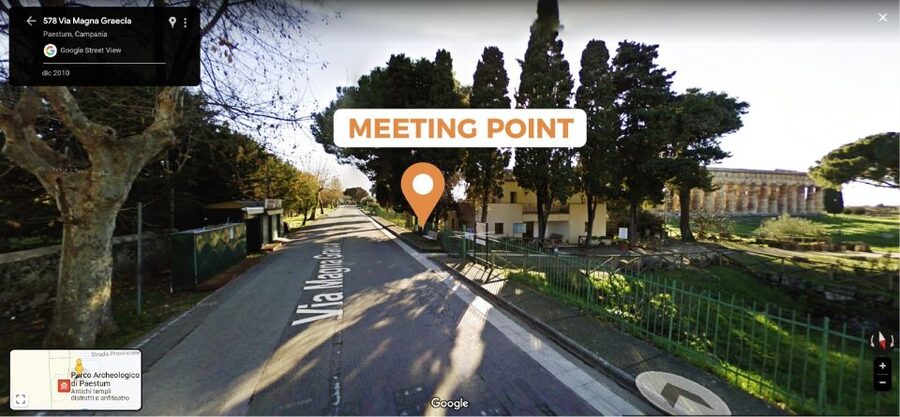
The listed meeting point is the Basilica Paleocristiana dell’Annunziata on Via Magna Graecia, 919, though the exact meeting arrangement can vary with the option you book. Check your confirmation carefully before setting out, especially if you are arriving independently.
Transportation is not included, so you need to arrange your own way to Paestum. The tour begins and ends at the listed meeting area, making it practical if you have already reached the archaeological zone. It is not a transfer service from Naples, the Amalfi Coast, or another Campania base.
Allow yourself enough time to locate the guide. Archaeological sites can have several entrances and nearby monuments, and a calm arrival is better than starting the tour while trying to work out where you are.
Walking among Paestum’s three Greek temples
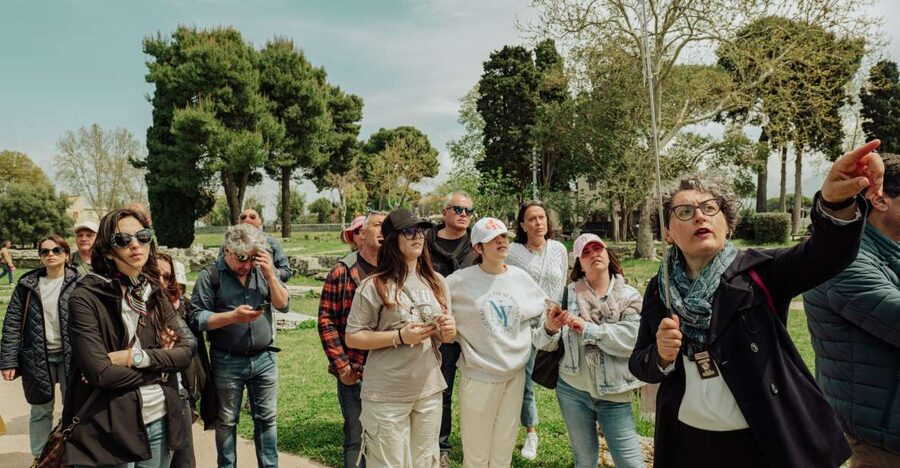
The first major portion lasts about 90 minutes inside the Archaeological Park of Paestum. This is where the archaeologist’s background matters most. The temples are visually powerful, but the guide gives you the tools to read them.
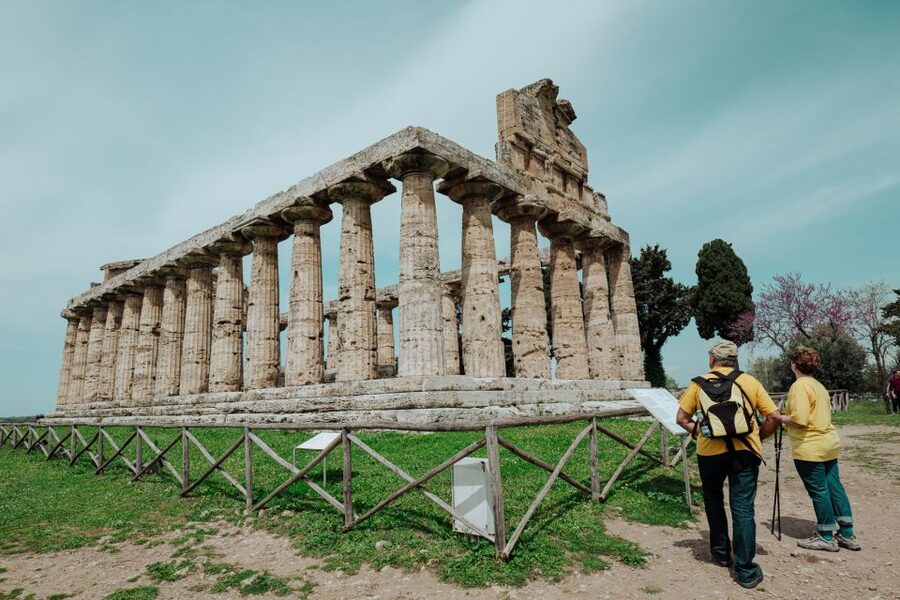
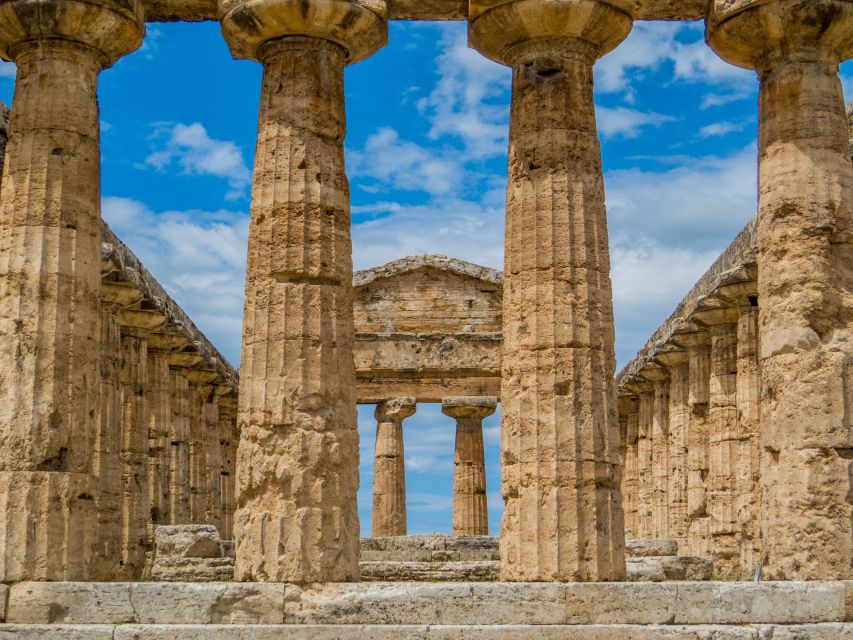
The Temple of Neptune is generally the showpiece. Its columns and upper structure are unusually complete, giving you a strong sense of the scale and order of a Greek temple. The Temple of Ceres, along with the building often called the basilica, adds a useful comparison. You can look at differences in column style, proportions, and construction rather than simply checking off three ruins.
The supplied information compares the temples with the Parthenon in Athens, and the comparison is easy to understand once you are standing in front of them. Paestum’s temples are not copies of Athens, but their height, symmetry, and preservation give you a rare close look at early Greek temple design.
You may also be able to step inside one of the temples, a detail that made a strong impression on one participant. Access can depend on current site conditions, so treat this as a possible part of the visit rather than a guaranteed feature.
The guide does more than identify buildings. Mario, Ivan, Angelo, and other guides have been praised for explaining construction methods, religious use, and the way Greek, Lucanian, and Roman cultures shaped the city. Ivan has also been described as an archaeologist involved in excavations at Paestum, which can add a personal connection to the work being done on the site.
Roman Paestum: Forum, comitium, and amphitheater
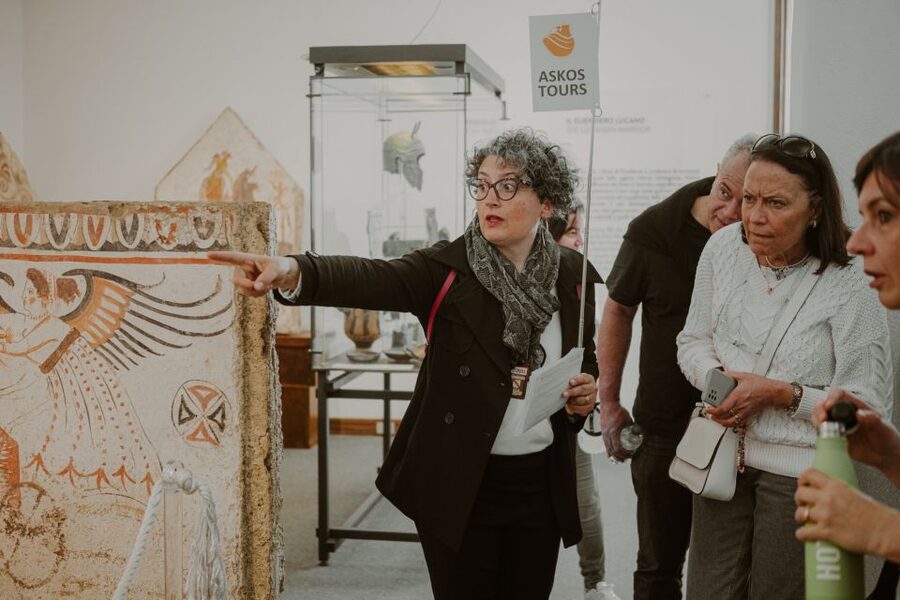
Once you have seen the temples, the tour turns toward the later city. This is an important part of the experience because it keeps Paestum from becoming only a temple stop.
The comitium was a political assembly hall, and the forum shows how Roman civic life reorganized the older Greek settlement. The amphitheater, markets, roads, and other structures help you picture Paestum as a functioning city rather than an isolated religious center.
The city walls are also worth your attention. They show the practical side of ancient urban planning, including defense and control of movement. You might otherwise walk past them as background stonework, but a guide can connect them to the city’s changing political role.
This section is particularly useful if you have visited Pompeii. The sites are different, but both reward attention to everyday public life. The guide may also discuss comparisons between Paestum and Pompeii, as Angelo did for one group, helping you place the ruins within the wider history of Campania.
I appreciate that the tour includes less obvious remains instead of rushing from temple to temple. One participant specifically valued being shown places that people often walk past. That is one of the clearest benefits of going with a specialist.
Still Italy, but a slower afternoon:
- Vatican Museums & Sistine Chapel Tour with Optional Basilica
★ 4.3 · 67,413 reviews - Colosseum, Roman Forum & Palatine Guided Tour
★ 4.7 · 63,148 reviews - Vatican Museums, Sistine Chapel & St Peter’s Basilica Guided Tour
★ 4.5 · 39,149 reviews - Rome: Colosseum, Palatine Hill and Roman Forum Guided Tour
★ 4.8 · 32,814 reviews
Thirty minutes in the National Archaeological Museum
The final 30 minutes are spent at the National Archaeological Museum of Paestum. The museum contains local Greek works dating from the seventh century B.C., along with finds connected to the city and its surrounding area.
The highlight is the Tomb of the Diver. Its painted image is one of Paestum’s most memorable discoveries, and seeing it after the outdoor ruins gives the visit a stronger sense of context. You have just seen the city where people lived, worshiped, traded, and governed. Inside, the painted tomb shows how art and burial customs fit into that ancient world.
The museum also helps explain objects that can seem too small or fragmentary outdoors. Architectural pieces, decorative details, and burial material make more sense once the guide connects them to the buildings you have already seen.
Thirty minutes is enough for a focused introduction, but it is not a long museum visit. One person wished for additional time to explore independently and rest after spending more than two hours on foot in heat above 30 degrees Celsius. That is a fair criticism.
There is also an important practical point: access back into the museum after the guided portion may not be possible. If you want extra time with the exhibits, ask the guide or staff about the exact re-entry rules before leaving the building. Plan water and rest breaks carefully, particularly in summer.
What the archaeologist guide adds
Paestum is one of those places where a guide can change the entire experience. Without help, you will still see enormous columns and broad ancient spaces. With help, you can follow the city’s changing cultures and understand why the buildings look the way they do.
The most praised guides have different personalities, but the pattern is consistent. Mario is often described as engaging, enthusiastic, humorous, and generous with explanations. Ivan is praised for speaking clearly to non-specialists and for sharing insight from his archaeological work. Maria is noted for answering questions and adapting her explanations to the group.
Francesca has been praised for keeping information interesting throughout the walk, while Angelo is described as thorough and attentive to architectural questions. Nan was appreciated for giving just enough technical detail without making the visit feel like a lecture.
That range matters because archaeology can become either too thin or too academic. The best guide finds the middle ground. You learn what you are seeing, but you also have room to look, ask, and enjoy the place.
The language choices are broad: English, Italian, French, Spanish, and German are offered. If your group is larger, disposable earphones are provided so you can hear the guide more easily. In a small group, you should have a better chance of asking questions and staying close enough to follow the commentary.
Is two hours long enough?
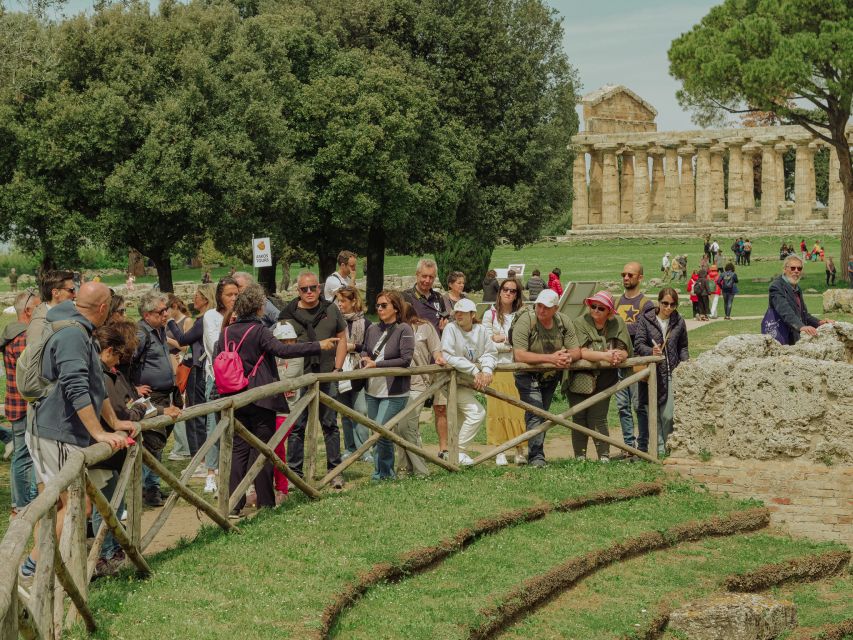
Two hours is enough for a well-organized introduction to Paestum. The schedule gives roughly 90 minutes to the ruins and 30 minutes to the museum, with the remaining time used for meeting, walking, and transitions.
For most first-time visitors, this is a sensible length. You see the major temples, the key Roman remains, the city walls, and the museum’s main treasure without committing an entire day to a single archaeological site.
Still, the schedule is active. You will spend much of the time standing and walking outdoors. In August, one participant found the heat tiring, and another felt the tour would benefit from an extra hour. If you like to study inscriptions, take photographs slowly, or browse museum displays at your own pace, you may feel rushed.
I would choose a morning departure in hot weather if available. Bring water, wear comfortable shoes, and use light, practical clothing. There is no food or drink included, so plan refreshments before or after the tour rather than expecting a break during it.
Small-group value at $47 per person
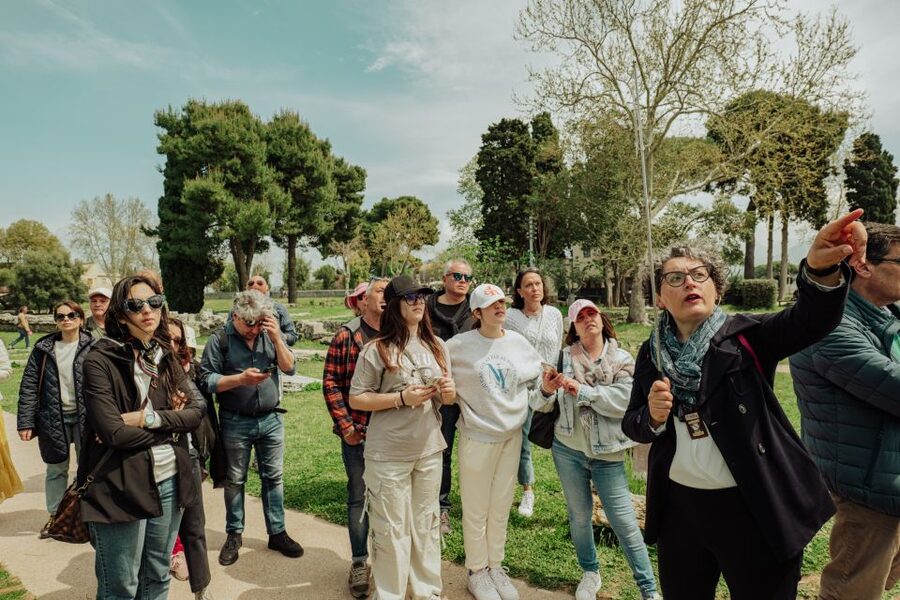
At $47 per person, this is a strong value if you want more than a scenic walk through ruins. The fee includes the archaeologist guide and skip-the-line admission to Paestum, so you are paying for both access and interpretation.
The ticket matters most when the entrance area is busy. Skipping the ticket line does not remove every possible wait, but it makes the start more straightforward and leaves your limited time for the site itself.
A small group also gives the price more weight. You are not simply listening to a speech from a distance. You can ask about temple design, Roman buildings, excavation work, or anything that catches your eye. One group had only six people, making it easy to hear every word.
A private group is available if you want a more personal pace or have particular interests. The shared small-group option should suit most visitors, especially couples, families with older children, and people who want expert help without paying for a full private tour.
The tour does not include transportation, food, or drinks. Add those costs when planning your day. If you are already near Paestum, the price is especially attractive. If you need a complicated journey from elsewhere in Campania, the transportation arrangements may require more planning than the tour itself.
Who should book this Paestum experience?
I would recommend this tour to first-time visitors, history fans, architecture students, and anyone who wants the ancient city explained rather than merely photographed. It is also a good choice if Pompeii left you wishing you had more help identifying buildings and understanding how the city worked.
Families can enjoy it too, provided children are patient with a walking tour and comfortable standing for extended periods. One guide was praised for keeping children interested, but the two-hour schedule still asks for attention.
The tour is less suitable for people with mobility impairments or wheelchair users. The activity involves walking through an archaeological park, and the experience is specifically marked as unsuitable for those visitors.
You should also think about weather. Paestum is an outdoor site, and summer heat can make the pace feel demanding. Comfortable shoes, water, and suitable clothing are essential rather than optional extras.
Booking advice and final verdict
This tour has earned a 4.9 rating from 451 reviews, and the praise is unusually consistent about the guides. The strongest reason to book is not simply the temples. It is the chance to hear an archaeologist explain how Greek, Lucanian, and Roman life shaped the same city.
Book it if you want a clear introduction, included admission, and a small group where questions are welcome. Choose it especially if you have only a few hours at Paestum and want to make those hours count.
Skip it only if you strongly prefer exploring alone, need a long museum visit, or want a slower day with frequent rests. In that case, an independent visit may give you more freedom, but you will need to provide your own interpretation.
For most visitors, I think the guided option is the smarter $47 choice. Paestum’s temples are extraordinary on their own, but the comitium, amphitheater, museum, and Tomb of the Diver turn the visit into a much fuller picture of an ancient city.
FAQ
How long does the Paestum tour last?
The tour lasts two hours. About 90 minutes are spent in the Archaeological Park of Paestum, followed by about 30 minutes at the National Archaeological Museum.
What does the tour include?
It includes a guided tour with an archaeologist and a skip-the-line entry ticket for Paestum.
Is transportation included?
No. Transportation, food, and drinks are not included, so you must arrange your own transport to the meeting point.
Where does the tour meet?
The listed meeting point is the Basilica Paleocristiana dell’Annunziata on Via Magna Graecia, 919. The exact meeting point may vary depending on the option booked.
Which languages are available?
Live guides are available in English, Italian, French, Spanish, and German.
Can I book a private group?
Yes. A private group option is available.
What should I bring?
Bring comfortable shoes, water, and comfortable clothing. You will spend much of the tour walking and standing outdoors.
Is the tour suitable for wheelchair users?
No. The experience is marked as unsuitable for wheelchair users and people with mobility impairments.
Recently added around Italy
- Florence Uffizi Gallery monolingual Small Group Tour★ 4.0 · 621 reviews
- Florence Private Walking tour with Skip-the-line to Accademia★ 4.5 · 236 reviews
- Uffizi Gallery Entrance Ticket with Priority Access★ 3.5 · 1,029 reviews
- Florence Skip-the-Line Duomo Tour with Guide & Brunelleschi Dome★ 5.0 · 1,176 reviews
- Skip-the-Line Accademia Guided Visit: David Secrets and Beyond★ 4.0 · 525 reviews
- Priority Entrance : Florence Accademia Gallery Timely Tickets★ 4.0 · 603 reviews
- Skip the line : David Guided Experience★ 4.5 · 1,076 reviews
- Private Tour in Siena, San Gimignano and Chianti Day Trip from Florence★ 5.0 · 405 reviews
Tickets, compared.
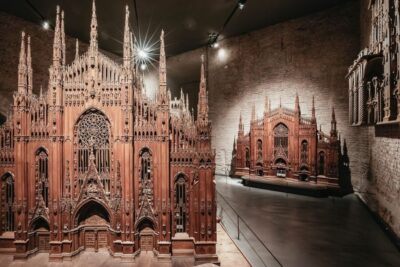
Cathedral and Duomo’s Terraces Entrance Ticket
Read our review →
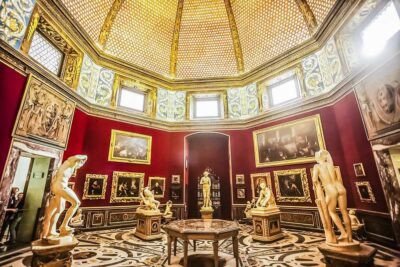
Skip-The-Line Uffizi Gallery Timed Entry Ticket
Read our review →
Naples Underground Entry Ticket and Guided Tour
Read our review →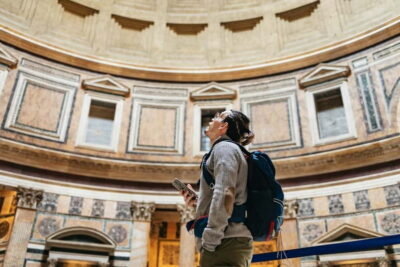
Pantheon Fast-Track Ticket and Official Audio Guide
Read our review →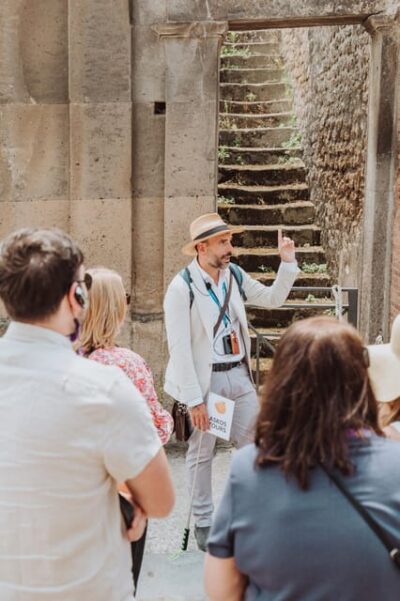
Entry Ticket and Guided Tour with an Archaeologist
Read our review →