
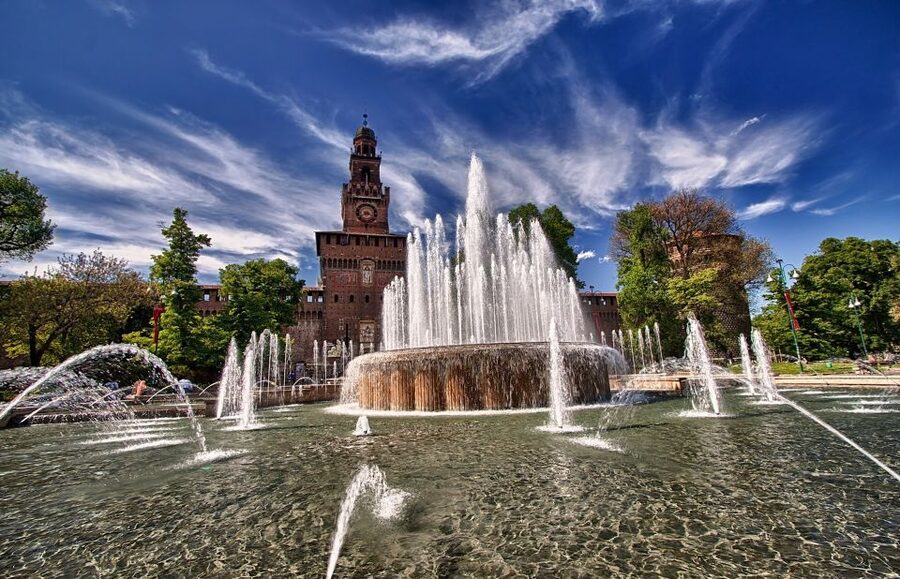
Reviewed · MILAN TOURS
Milan: Sforza Castle and Michelangelo’s Pietà Rondanini Tour
Art can make a fortress feel intimate. This 90-minute tour links Milan’s ducal past with Michelangelo’s final sculpture, while also bringing Leonardo da Vinci’s years at the Sforza court into view. I like the focused look at the Pietà Rondanini and the way the guide connects it to Michelangelo’s final years. I also like the small-group format, which gives you a better chance to ask questions than a large city tour. The main drawback is time: the castle complex holds several museums, and 90 minutes can feel short if you want to examine every room.
The tour costs $47 per person, including admission and a guide. That is not the cheapest way to see Sforza Castle, but it can be good value if Milan’s history feels like a jumble of Viscontis, Sforzas, dukes, artists, and political plots. You need to meet outside at the Filarete clock tower, not inside the courtyards, so arrive with that detail firmly in mind.
In This Review
- Key points to know before booking
- Why Sforza Castle matters in modern Milan
- Meeting beneath the Filarete clock tower
- The Pietà Rondanini: Michelangelo at the end of his life
- Inside the Ducal Courtyard
- Leonardo da Vinci’s long Milan connection
- What the 90-minute itinerary does well
- Guide quality and the small-group advantage
- Is $47 a fair price?
- Who should book this Sforza Castle tour?
- My final recommendation
- FAQ
- How long does the Sforza Castle and Pietà Rondanini tour last?
- How much does the tour cost?
- What is included in the price?
- Where is the meeting point?
- How will I identify the guide?
- What languages are available?
- Is the tour wheelchair accessible?
- Can I book a private group?
- Are hotel transfers included?
Key points to know before booking
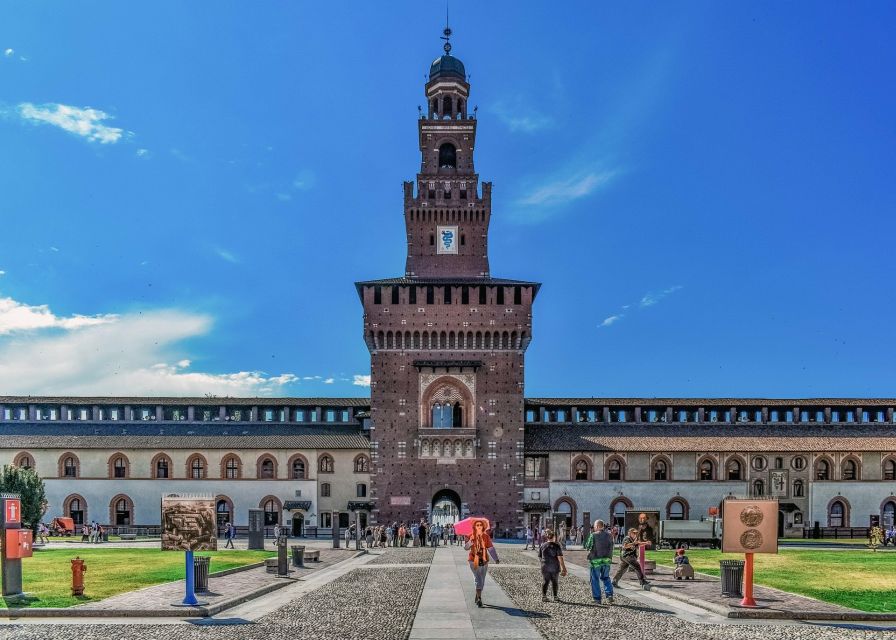
- Michelangelo’s unfinished final work: The Pietà Rondanini offers a very different experience from the polished sculptures most people expect.
- Leonardo’s Milan home: The castle was where Leonardo lived and worked for nearly 20 years under Ludovico il Moro.
- A short, tightly guided visit: The 1.5-hour schedule covers key highlights, but leaves limited time for independent museum browsing.
- Small groups make a difference: Many departures have been notably intimate, sometimes with only a few people.
- Five guide languages: Tours are offered in Italian, English, German, French, and Spanish.
- Clear meeting point required: Find the guide under the Filarete clock tower in Piazza Castello, beside the castle entrance.
Why Sforza Castle matters in modern Milan
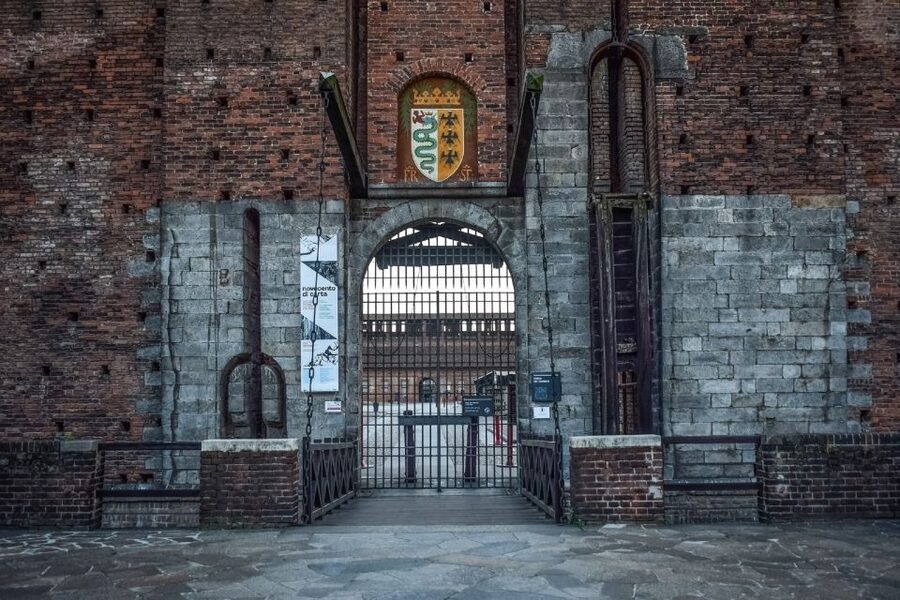
Milan can seem thoroughly modern. Its fashion shops, offices, trams, and broad avenues often take center stage. Yet Sforza Castle gives you a direct look at the city when military strength and dynastic power shaped daily life.
The castle began as a defensive stronghold connected to the Visconti family. The Sforzas later expanded and reshaped it, turning a medieval fortress into a ducal residence and court. That change is the central story of the tour. You are not simply looking at old walls. You are seeing how rulers used architecture to show authority.
The location helps. Sforza Castle sits close to the Duomo, so it fits easily into a day of central Milan sightseeing. You can visit the cathedral area, walk toward Piazza Castello, and shift from Gothic religious power to ducal military power in a fairly short stretch.
I find the castle especially useful early in a Milan visit because it gives context to the city. The names and symbols you encounter here help explain why Milan became such an important center during the Renaissance.
A few more Milan bookings to compare
- Milan: Cathedral and Duomo’s Terraces Entrance Ticket
★ 4.6 · 61,054 reviews - Milan: Da Vinci’s Last Supper Guided Tour
★ 4.7 · 10,143 reviews - Milan: Science and Technology Leonardo da Vinci Museum Entry
★ 4.5 · 7,169 reviews
Meeting beneath the Filarete clock tower
Your starting point is Piazza Castello, beneath the Filarete clock tower, in front of Sforza Castle. The instructions are specific for a reason: you should not go inside the courtyards looking for the group.
Look for the guide holding a purple Hidden Experiences flag or board. This is a practical detail worth remembering, since a large castle entrance can make a vague meeting point frustrating. Give yourself enough time to locate the tower and identify the correct guide before the scheduled start.
The tour is available as a small-group experience, with a private group option also offered. The group size can vary, but several departures have been especially small. One visitor described a group of three, while another had only four people. That can change the feel of the tour considerably. In a small group, the guide can slow down, answer questions, and adjust the explanation to the people in front of them.
If your group is larger than 10 people, headphones are provided. That matters inside courtyards and museum rooms, where it can be easy to lose a guide’s voice among other groups.
The Pietà Rondanini: Michelangelo at the end of his life
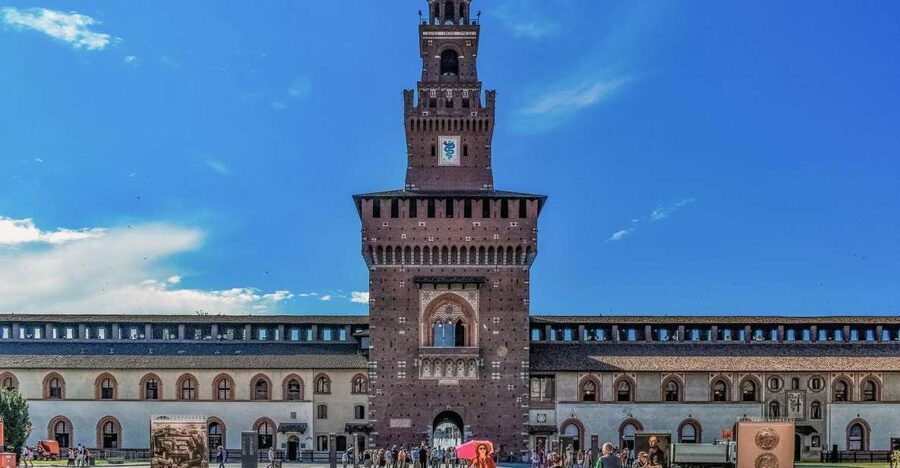
The strongest part of the tour for many people is the Pietà Rondanini. It is Michelangelo’s last sculpture, left unfinished, and it does not look like the idealized marble figures that made him famous.
Michelangelo worked on the piece until only a few days before his death at age 89. The subject is familiar: Mary supports the body of Christ. But the treatment is spare and unusual. The figures are elongated, the surfaces remain rough, and the sculpture has an unfinished, almost raw quality.
That roughness is not a flaw to overlook. It is the point of the work’s emotional force. Instead of presenting perfect anatomy and carefully finished surfaces, Michelangelo seems to reduce the scene to grief, physical closeness, and spiritual struggle.
Your guide spends time explaining the difference between Michelangelo’s early and late work. That context is valuable because the Pietà Rondanini can confuse you at first. If you expect another David or a polished Vatican Pietà, you might wonder why the forms appear so thin and incomplete. The explanation helps you see the sculpture as a late work shaped by mortality, rather than as an unfinished version of a more conventional masterpiece.
I like that the tour gives this work a sustained reading instead of treating it as one stop among many. The sculpture deserves quiet attention, and a guide can point out how the unfinished marble affects the relationship between the two figures.
This is also the most reflective part of the visit. The castle’s military setting creates a sharp contrast with the sculpture’s private sorrow. You move from walls built to defend a dynasty to a marble work concerned with human weakness and death.
Inside the Ducal Courtyard
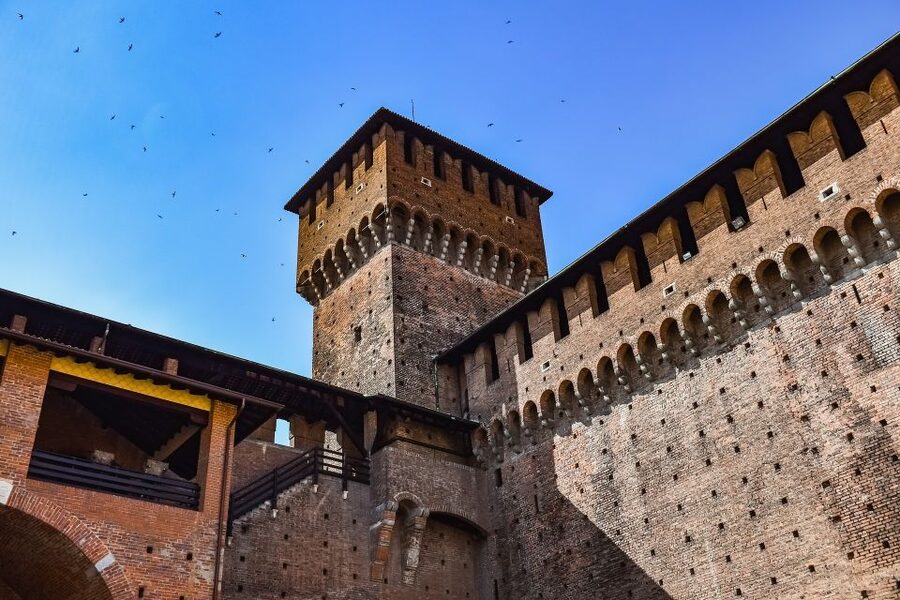
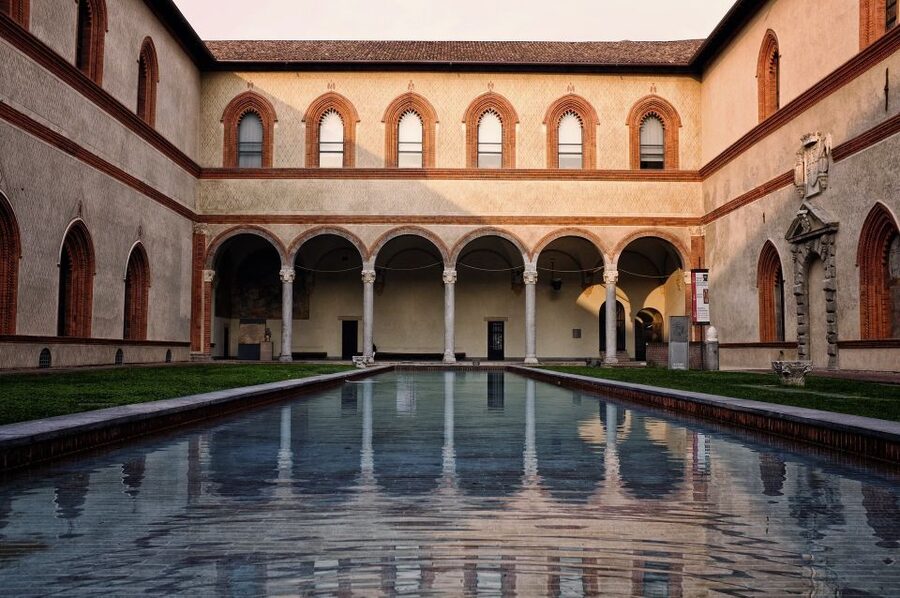
After the Pietà Rondanini, the tour shifts toward the castle’s courtyards and Renaissance architecture. The Corte Ducale was tied to the life of the ruling court, while the Cortile della Rocchetta reflects the castle’s defensive side.
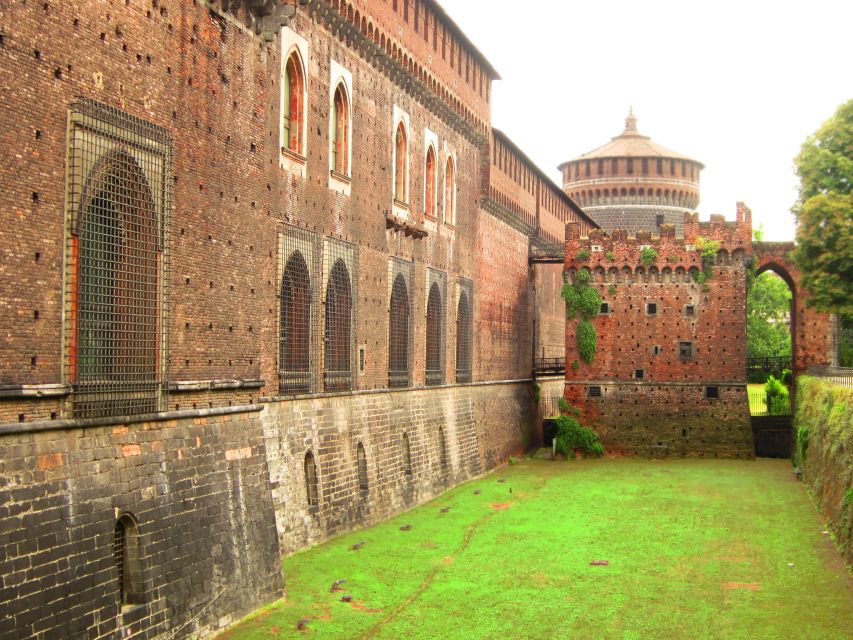
These spaces help you understand the building as both palace and fortress. The dukes needed thick walls and towers, but they also wanted elegant courtyards suitable for court life. That mixture is one of Sforza Castle’s great visual pleasures.
The guide explains how the Visconti and Sforza families shaped Milan. Their story includes ambition, marriages, political maneuvering, and the use of art to reinforce power. You hear about the men who ruled and the women whose roles influenced the court and its culture.
The castle’s famous Biscione, the serpent emblem associated with Milan, becomes more meaningful in this setting. It is not just a decorative symbol. It represents the dynastic identity that appeared across the city and helped connect the rulers with Milan itself.
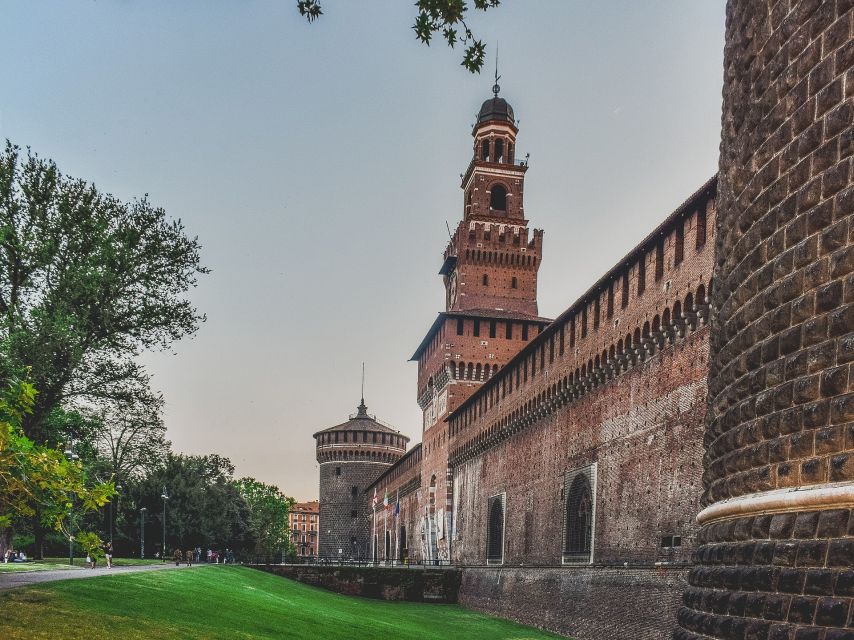
Look up as you walk beneath the Filarete Tower. The tower is one of the castle’s most recognizable features and a useful point for understanding the scale of the complex. The tour places it within the story of the castle’s survival through political change and the passage of centuries.
I appreciate guides who explain how a building was used, not just when it was built. Knowing that these courtyards were tied to the daily life of a court makes them easier to read. You can imagine movement between formal spaces, defensive areas, and rooms connected with the duke’s household.
Still Milan, but a slower afternoon:
- Milan: City Sightseeing Hop-On Hop-Off Bus with Audio Guide
★ 4.0 · 6,256 reviews - Milan Cathedral: Duomo Terraces Ticket (No Church Access)
★ 4.6 · 6,111 reviews - Milan: Milan Cathedral Direct Entrance – Terrace Excluded
★ 4.5 · 5,782 reviews - Milan: Guided Walking Tour & Last Supper Visit with Ticket
★ 4.7 · 5,409 reviews
Leonardo da Vinci’s long Milan connection
Leonardo’s name adds another layer to the castle. He is most closely associated with The Last Supper in Milan, but his role at the Sforza court was much broader.
Leonardo lived and worked in Milan for nearly 20 years. At the castle, he served Ludovico il Moro as a court engineer and architect, among other roles. This means his relationship with the Sforzas was not limited to painting. He was involved in design, engineering, court projects, and the practical problems of a powerful Renaissance government.
The guide uses the castle to explain this wider Leonardo. That is one reason I would choose a guided visit instead of simply wandering through the courtyards. On your own, you can admire the architecture and read museum labels, but you may miss the connection between the castle, the Sforza court, and Leonardo’s working life.
The tour does not turn the entire castle into a Leonardo exhibition. That is worth understanding before you book. Leonardo’s presence is part of the wider story, while the main art focus is the Pietà Rondanini.
Still, the connection is useful. It shows why Milan attracted leading artists and thinkers. The Sforzas used culture as part of their political project, and artists such as Leonardo helped make the court a major Renaissance center.
What the 90-minute itinerary does well
A 1.5-hour visit forces the guide to choose. In this case, the tight schedule is both a strength and a limitation.
It is a strength if you have only a short time in Milan or want a clear introduction before exploring independently. The guide keeps the tour moving between the Pietà Rondanini, the principal courtyards, Leonardo’s connection, and the families who ruled Milan.
Several guides have been praised for selecting the most important works and explaining them clearly. Names that have received particularly warm feedback include Giorgio, Fabio, Simon, Lorella, Simone, Stefania, and Sylvia. Individual guide assignments can change, so you should not book on the assumption that one particular person will lead your group. The consistent point is the value of a guide who can explain complex history without turning the visit into a lecture.
The limitation is museum time. One person enjoyed the tour but felt the archaeological museum was covered too quickly. That is a fair criticism. Sforza Castle contains more than one museum and exhibition area, and you cannot study all of them properly during a short guided route.
If you want a broad introduction, 90 minutes works well. If you want extended time with artifacts, paintings, or archaeological displays, plan to return on your own if admission arrangements allow. The tour is best viewed as an informed orientation, not a complete museum day.
Guide quality and the small-group advantage
The guides are the main reason this experience receives such strong praise. The overall rating is 4.7 from 1,119 reviews, and the most common compliment is not simply that the guide knew the facts. It is that the guide made the material easy to follow and enjoyable.
That distinction matters. Milan’s political history can become a long list of names. A good guide turns those names into a sequence of rival families, court personalities, artistic commissions, and power shifts.
You can expect explanations in Italian, English, German, French, or Spanish. English-language feedback has often highlighted clear speech, patient answers, and engaging storytelling. One guide was praised for speaking slowly and clearly, which is especially helpful in a museum where you may be trying to look at a sculpture at the same time.
The group format also affects the pace. A small group may allow the guide to spend more time on the Pietà Rondanini or answer questions about Leonardo. On one departure, the guide even offered tips for other places to see in Milan. That sort of local advice is a useful bonus, though it depends on the guide and the time available.
One practical point: summer heat may affect the courtyard portion. A guide received praise for seeking shade and breezy areas during a hot visit. The courtyards are open spaces, so bring water and be ready for sun, especially in warmer months.
Is $47 a fair price?
At $47 per person, the tour is priced above a simple castle entrance. You are paying for admission, a certified guide, and a small-group explanation of the castle and its art.
The value depends on how you like to visit museums. If you enjoy reading every label and setting your own pace, you may prefer independent entry. You will have more freedom, especially if the castle’s archaeological displays interest you.
I think the price makes more sense for first-time visitors who want the castle’s story organized clearly. The guide helps you understand why the building mattered, how the Visconti and Sforza families used it, what Leonardo did there, and why the Pietà Rondanini looks so different from Michelangelo’s earlier sculptures.
The cost is also easier to justify when the group is very small. A private-feeling visit for three or four people offers much more contact with the guide than a crowded walk through a major Milan attraction.
Still, do not expect a full-day museum experience for $47. The tour lasts 90 minutes, and one of the tradeoffs is limited time in some museum areas. I would book it for interpretation and orientation, not for maximum time inside every collection.
Who should book this Sforza Castle tour?
I would recommend this tour to you if you enjoy art, political history, or architecture but do not want to research Milan’s ruling families before arriving. It also suits anyone with a packed itinerary who wants a focused visit that fits between other central Milan sights.
It is a strong choice for families, too. The stories of dukes, symbols, court life, and Leonardo give younger visitors more to hold onto than a silent walk through stone rooms. One family particularly enjoyed the guide-led format.
Art lovers should book if the Pietà Rondanini interests you. The guide’s explanation of Michelangelo’s late style can change the way you see this challenging sculpture.
You may want to skip it if you strongly prefer unstructured museum time. The tour moves with a set rhythm, and you will not have long to linger wherever you wish. You may also want extra time afterward if you are especially interested in the archaeological museum or other castle collections.
The castle is wheelchair accessible, according to the activity information. Hotel pickup and drop-off are not included, although an optional service is available for an extra charge. Food and drinks are also not included.
Free cancellation is available up to 24 hours before the tour for a full refund, and you can reserve now and pay later. Those terms are useful if your Milan schedule is still shifting.
My final recommendation
I would book this tour if you want Sforza Castle to make sense, not just look impressive. The Pietà Rondanini is the emotional center, while the courtyards, Filarete Tower, Leonardo connection, and Sforza family stories give the visit its wider purpose.
The main question is how much time you need. For a clear 90-minute introduction, $47 is reasonable, particularly if your group is small and your guide is as engaging as Giorgio, Fabio, Simone, Stefania, or the other highly praised guides. If you want to inspect every museum room at leisure, visit independently or plan additional time after the tour.
Be at the Filarete clock tower, listen for the story behind the serpent emblem, and give Michelangelo’s rough marble a little patience. This is a compact tour, but it can make Milan’s Renaissance past much easier to understand.
FAQ
How long does the Sforza Castle and Pietà Rondanini tour last?
The tour lasts 1.5 hours.
How much does the tour cost?
The listed price is $47 per person.
What is included in the price?
Admission to Sforza Castle and its museum, a certified tour guide, and headphones for groups of 11 or more are included.
Where is the meeting point?
Meet in Piazza Castello under the Filarete clock tower, in front of Sforza Castle. Do not go inside the courtyards to find the guide.
How will I identify the guide?
Look for a guide holding a purple Hidden Experiences flag or board.
What languages are available?
The live tour guide service is offered in Italian, English, German, French, and Spanish.
Is the tour wheelchair accessible?
Yes, the activity information states that the tour is wheelchair accessible.
Can I book a private group?
Yes, a private group option is available.
Are hotel transfers included?
No. Hotel pickup and drop-off are not included, but an optional service is available for an extra charge.
Recently added around Milan
- Milan: City Highlights Walking Tour with The Last Supper★ 4.9 · 195 reviews
- Milan: The Milan Pass City Card★ 4.0 · 655 reviews
- Milan: Skip-the-Line Guided Walk and “The Last Supper”★ 4.5 · 606 reviews
- Milan: Duomo & Rooftop Tour with Optional Hop-On Hop-Off Bus★ 4.5 · 262 reviews
- Milan: Duomo and The Last Supper Skip-the-Line Guided Tour
- Milan: Leonardo’s Last Supper and Michelangelo’s Pietà Tour★ 4.6 · 559 reviews
- Milan: San Sepolcro Crypt Skip-the-Line Entry Ticket★ 4.2 · 512 reviews
- Milan: QC Termemilano Spa Admission Ticket★ 4.6 · 685 reviews
Milan Tours, compared.
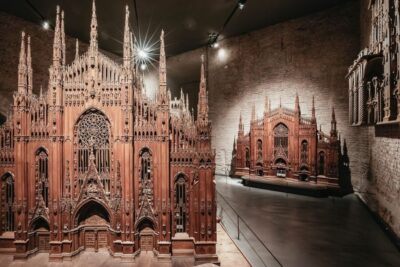
Cathedral and Duomo’s Terraces Entrance Ticket
Read our review →
Science and Technology Leonardo da Vinci Museum Entry
Read our review →
City Sightseeing Hop-On Hop-Off Bus with Audio Guide
Read our review →
Milan Cathedral: Duomo Terraces Ticket (No Church Access)
Read our review →
Milan Cathedral Direct Entrance – Terrace Excluded
Read our review →
Guided Walking Tour & Last Supper Visit with Ticket
Read our review →
Fast-Track Milan Cathedral and Terraces Guided Tour
Read our review →Browse the lists this tour appears in