
Reviewed · MILAN TOURS
Milan: Pinacoteca Ambrosiana and San Sepolcro Crypt Ticket
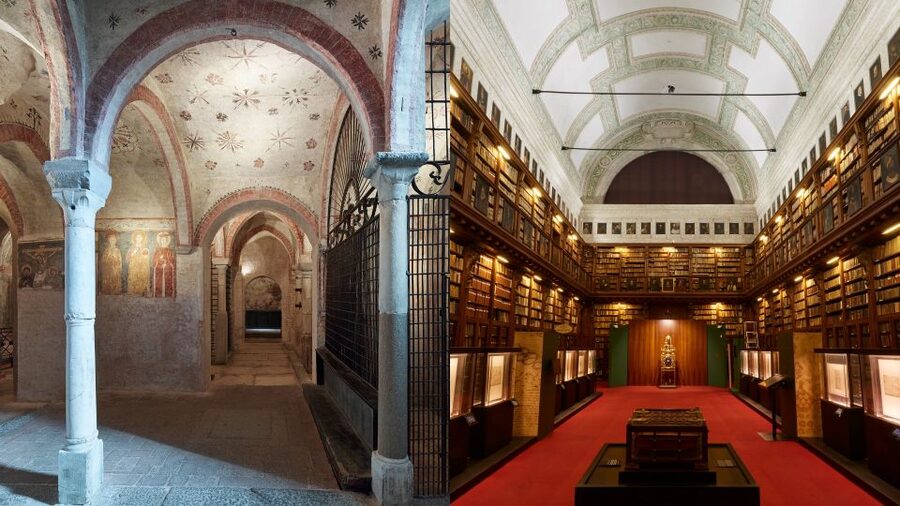
Milan keeps an art treasure near the Duomo. The Pinacoteca Ambrosiana packs Leonardo, Raphael, Caravaggio, and Brueghel into a manageable museum, and I especially like the Codex Atlanticus displays and the quiet pace. The attached San Sepolcro Crypt adds a striking glimpse beneath modern Milan. The main drawback is that the crypt is small, with stairs and architectural barriers that make the combined visit unsuitable for wheelchair users.
This $25 ticket is a good fit if you want major art without spending half a day in a huge museum. I like that you can explore independently and use the downloadable app at your own pace, but you need to watch the clock: the crypt’s last admission is 5:30 PM, and it closes at 6 PM.
In This Review
- Key points to know before you go
- Why this small Milan museum deserves your time
- Starting at Piazza Pio XI and the Pinacoteca Ambrosiana
- Caravaggio, Raphael, and the paintings worth seeking
- The reading room and Leonardo’s Codex Atlanticus
- Moving from the museum to the San Sepolcro Crypt
- Timing the two visits without missing the crypt
- Is $25 good value?
- Bags, comfort, and access
- Who will enjoy this experience most?
- Should you book the combined ticket?
- FAQ
- Where does the visit begin?
- Where is the San Sepolcro Crypt?
- How long does the full visit take?
- What is the latest admission time for the crypt?
- Is the visit guided?
- Does the ticket include the Codex Atlanticus exhibition?
- Are large bags and backpacks allowed?
- Is the combined visit wheelchair accessible?
- Can I cancel the booking?
Key points to know before you go
- Caravaggio’s Basket of Fruit is one of the museum’s most memorable paintings and a fine reason to visit on its own.
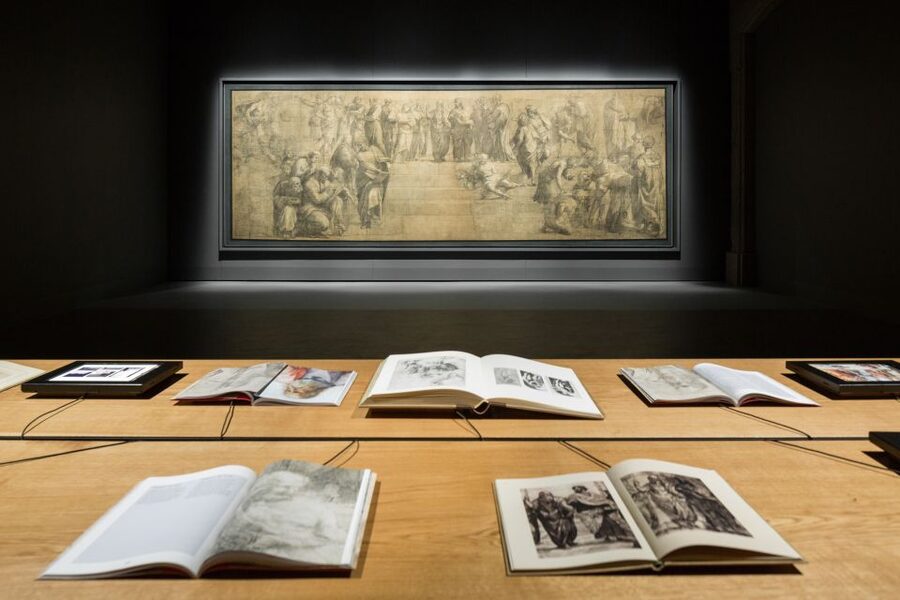
- Raphael’s Cartoon for the School of Athens lets you study the full-scale working drawing behind one of the Renaissance’s best-known frescoes.
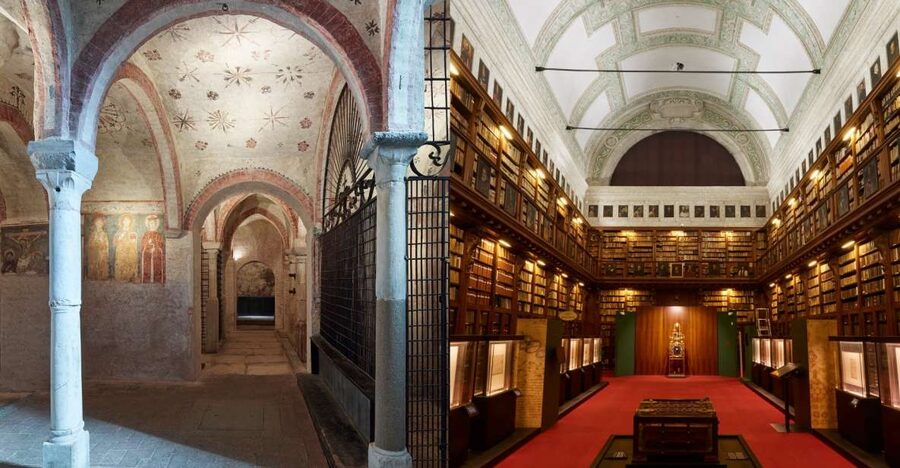
- Leonardo’s Codex Atlanticus appears in the Ambrosiana’s historic 17th-century reading room.
- The San Sepolcro Crypt occupies the site of ancient Milan, with a floor made from stones linked to Roman Mediolanum.
- Plan about two hours total, with roughly 90 minutes for the Pinacoteca and 30 to 40 minutes for the crypt.
- Leave large bags, backpacks, and strollers behind, since they are not allowed.
Why this small Milan museum deserves your time
Milan has famous sights that demand planning, crowds, and patience. The Pinacoteca Ambrosiana offers a different kind of museum visit. It is compact enough to handle in an afternoon, yet its collection includes artists who usually fill the biggest galleries in Italy.
You will not find endless rooms of similar paintings here. Instead, the visit moves through a focused selection of Renaissance, Baroque, and Flemish works, along with drawings, manuscripts, sculptures, and historic interiors. That makes the museum a sensible choice when you want quality without the fatigue of a vast collection.
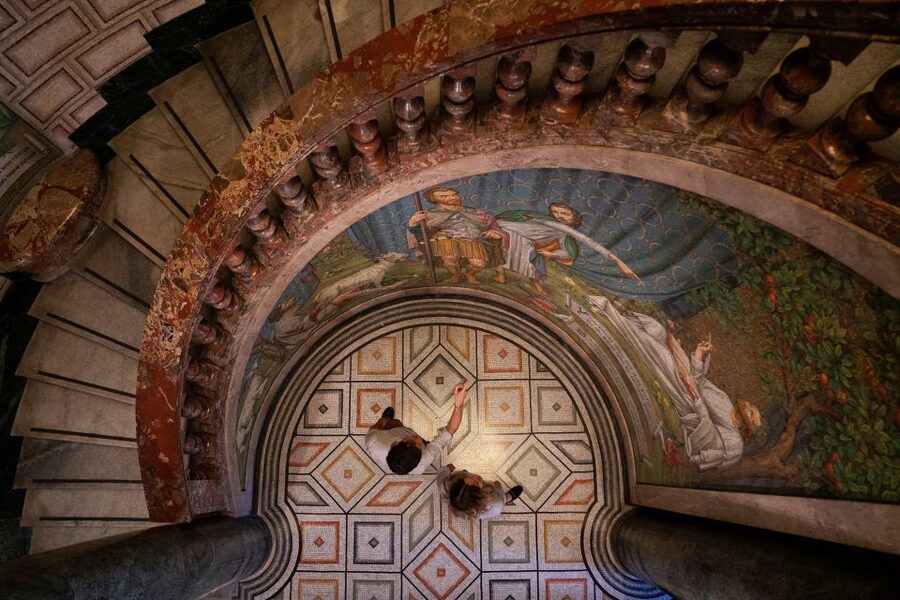
The building contributes much to the experience. Visitors often praise the architecture, the library, the lighted displays, and details such as the staircase. I recommend slowing down in the rooms rather than treating the museum as a checklist of famous names. The surroundings help explain why Cardinal Federico Borromeo founded the institution as a place for learning, art, and books.
The museum is about a five-minute walk from the Duomo, according to the practical experience of past visitors. That makes it easy to pair with central Milan sightseeing, and it is also a useful indoor plan on a hot or rainy day.
A few more Milan bookings to compare
- Milan: Cathedral and Duomo’s Terraces Entrance Ticket
★ 4.6 · 61,054 reviews - Milan: Da Vinci’s Last Supper Guided Tour
★ 4.7 · 10,143 reviews - Milan: Science and Technology Leonardo da Vinci Museum Entry
★ 4.5 · 7,169 reviews
Starting at Piazza Pio XI and the Pinacoteca Ambrosiana
Your visit begins at Piazza Pio XI 2. The combined ticket covers admission to the Pinacoteca and the Crypt of San Sepolcro, but the two stops are not in the same room. You enter the museum first, then exit onto Piazza San Sepolcro, where the crypt entrance is located.
The Pinacoteca is self-guided rather than a conventional group tour. That is good news if you dislike being hurried past paintings. You can linger over a favorite work, move quickly through less interesting sections, or take a quiet seat and look carefully.
Allow about 90 minutes for a normal visit. If you read labels, use the app, or enjoy drawings and manuscripts, you may need two hours or more. One visitor spent around three hours between the museum and crypt, while another found about an hour and a half enough. Your pace matters here.
The museum is generally well organized, and the rooms are easy to follow. Most exhibition areas are wheelchair accessible, but the combined ticket is not suitable for visitors with mobility impairments because of the crypt. If you use a wheelchair, the Pinacoteca by itself is the better choice.
Caravaggio, Raphael, and the paintings worth seeking
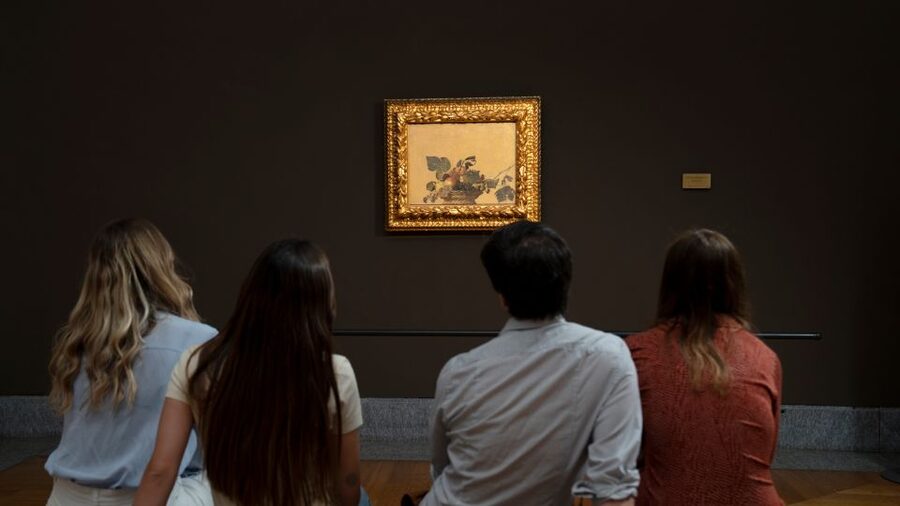
Caravaggio’s Basket of Fruit is the most obvious star. The subject is simple, but the painting gives you plenty to examine: the fruit, the leaves, the signs of ripeness, and the way ordinary objects become worthy of serious attention. It is a small work with a strong presence.
Raphael’s Cartoon for the School of Athens is another major attraction. In this setting, you can study the full working design for the famous fresco rather than seeing only a detail in a larger room. The scale and preparation behind the drawing help you understand the planning required for Renaissance wall painting.
The Raphael display is particularly rewarding because it shows process, not just a finished image. You can look at the figures, poses, and arrangement as a working artist would. If you have seen the School of Athens in reproduction many times, this is the piece that may change how you think about it.
Leonardo’s Portrait of a Musician gives the museum another powerful draw. It is not the same kind of spectacle as the Mona Lisa, and that is part of its appeal. You can focus on the face, the expression, and the unusual sense of a person caught between public portrait and private thought.
Brueghel’s flamboyant Vase of Flowers brings a different mood. Its detailed flowers and lively color offer a welcome change from the religious and intellectual subjects elsewhere in the collection. Look closely, since smaller details reward a slower visit.
The museum also includes work connected with Botticelli, Caravaggio, Raphael, Leonardo, Luini, Tiepolo, Mengs, and Flemish painters. Not every painting will affect you equally. Lighting can be uneven in places, and some secondary works may feel less important beside the headline pieces. Still, the strongest rooms make the ticket worthwhile.
The reading room and Leonardo’s Codex Atlanticus
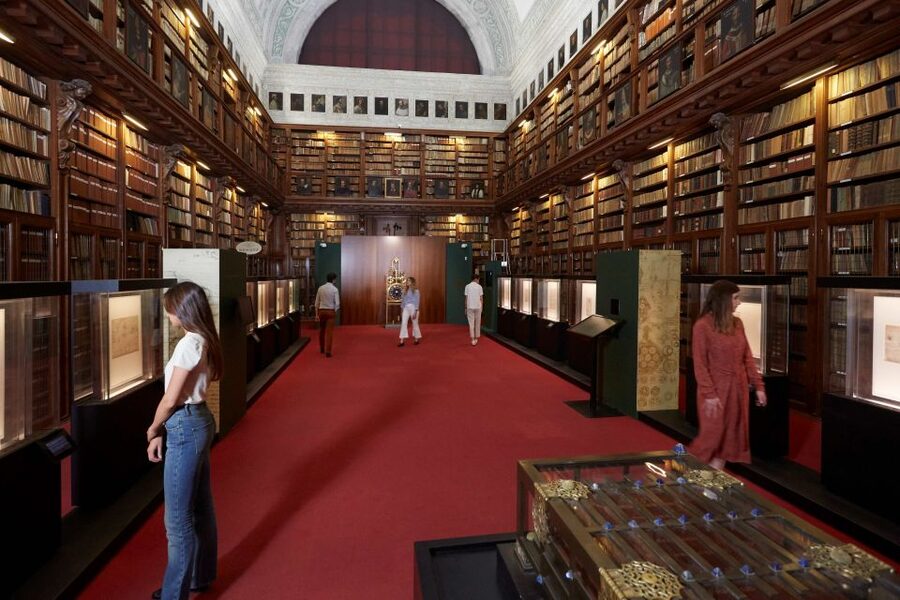
For many people, the library is the museum’s real surprise. You visit a historic 17th-century reading room, where original Leonardo drawings from the Codex Atlanticus are displayed.
The room itself deserves attention. It is not simply a case placed in a modern gallery. The library setting links art with study, collecting, science, and the work of the mind. You are looking at Leonardo’s ideas in a place built for books and research, which gives the drawings added force.
The Codex Atlanticus contains Leonardo’s notes and designs across many subjects. The displays allow you to see his working thoughts rather than only polished paintings. Some visitors find this connection between artistic and scientific thinking the most memorable part of the visit.
The material on display changes as part of preservation and exhibition practice, so you should not expect to see every page. What you do see is valuable because it brings you close to Leonardo’s handwriting, diagrams, and practical curiosity.
A few visitors have been especially impressed by the original writings and sheets attributed to Leonardo and by the relationship between the collection and the library. If your main interest is Leonardo, give the reading room plenty of time. Do not rush through it on the way to the paintings.
The downloadable app can add context, and you can listen on your own device, including after the visit. The ticket information does not list a guided tour as part of the admission. An onsite audio guide has also been available for an additional fee of about €4, though you should confirm the current arrangement when you arrive.
Still Milan, but a slower afternoon:
- Milan: City Sightseeing Hop-On Hop-Off Bus with Audio Guide
★ 4.0 · 6,256 reviews - Milan Cathedral: Duomo Terraces Ticket (No Church Access)
★ 4.6 · 6,111 reviews - Milan: Milan Cathedral Direct Entrance – Terrace Excluded
★ 4.5 · 5,782 reviews - Milan: Guided Walking Tour & Last Supper Visit with Ticket
★ 4.7 · 5,409 reviews
Moving from the museum to the San Sepolcro Crypt
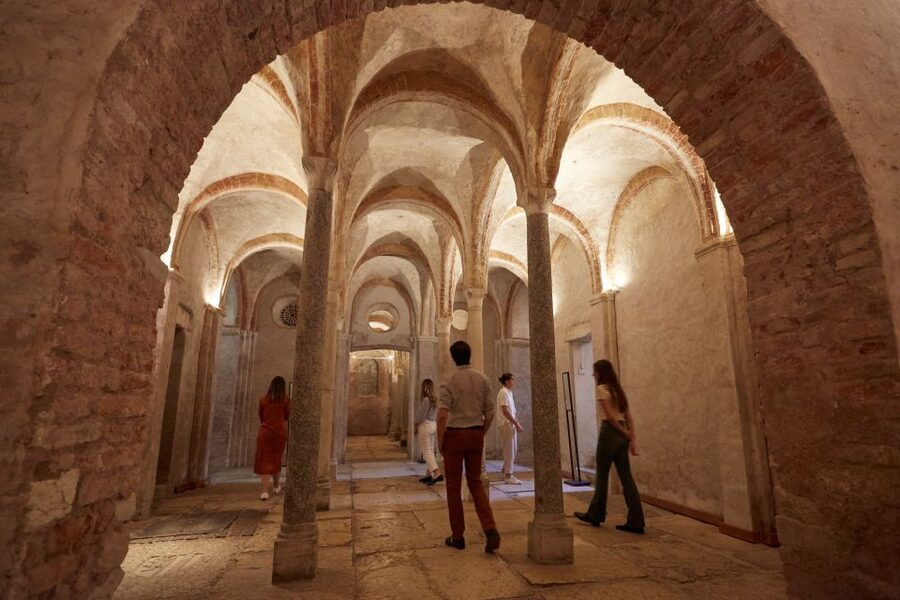
After the Pinacoteca, exit onto Piazza San Sepolcro. The crypt entrance is there, so you do not need transportation or a second trip across town. This simple change of setting is one of the ticket’s strengths: you move from paintings and manuscripts into the physical layers beneath Milan.
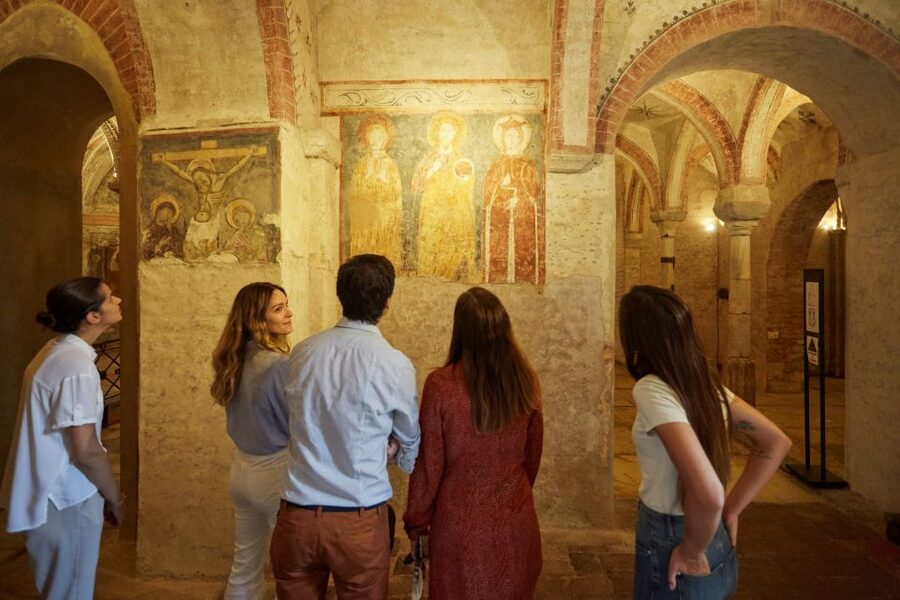
The Crypt of San Sepolcro is a medieval underground church. Its floor uses ancient stones associated with Mediolanum, the Roman city that preceded modern Milan. That detail gives the room its meaning. You are not just visiting a dark historic space. You are standing on traces of an earlier city.
Allow 30 to 40 minutes for the crypt. It is much smaller than the Pinacoteca, and some people may need only 10 to 15 minutes when it is quiet. That does not make it pointless, but it does mean you should set your expectations correctly. It is a place for atmosphere and historical context rather than a long series of exhibits.
Look up at the ceiling. The room can seem plain at first, especially if you arrive expecting a dramatic underground cathedral. Once you notice the structure, old stonework, and the relationship between the crypt and the city above, it becomes more interesting.
A virtual reality experience may be offered at the crypt for an extra charge. One particularly useful observation is that the VR option can help explain the site and Milan’s past. Without additional context, the crypt may look like a simple basement. If you enjoy history, ask about the current VR presentation before entering.
Timing the two visits without missing the crypt
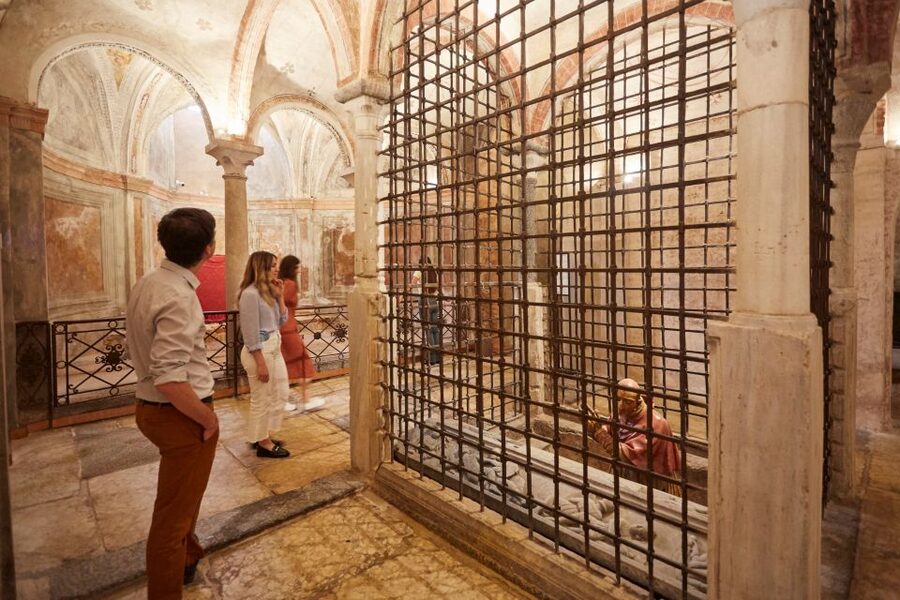
The order matters. Start with the Pinacoteca, then continue to the crypt. Do not leave the museum until late afternoon unless you already know how quickly you plan to move.
The crypt admits its last visitors at 5:30 PM and closes at 6 PM. Since the Pinacoteca normally takes about 90 minutes, an earlier start gives you more freedom to read, pause, and use the app. A late museum entry can work, but only if you keep an eye on the closing time.
The combined ticket is valid for one day, not an unlimited multi-day pass. You can treat it as one compact cultural outing in central Milan. It fits well between other sights, though I would avoid placing a rushed appointment immediately afterward.
The visit is self-guided, which has two practical effects. You control the pace, and you are responsible for managing your own time. That independence is a plus for couples, families with older children, and independent museum visitors. It is less ideal if you want a live expert explaining every room.
Is $25 good value?
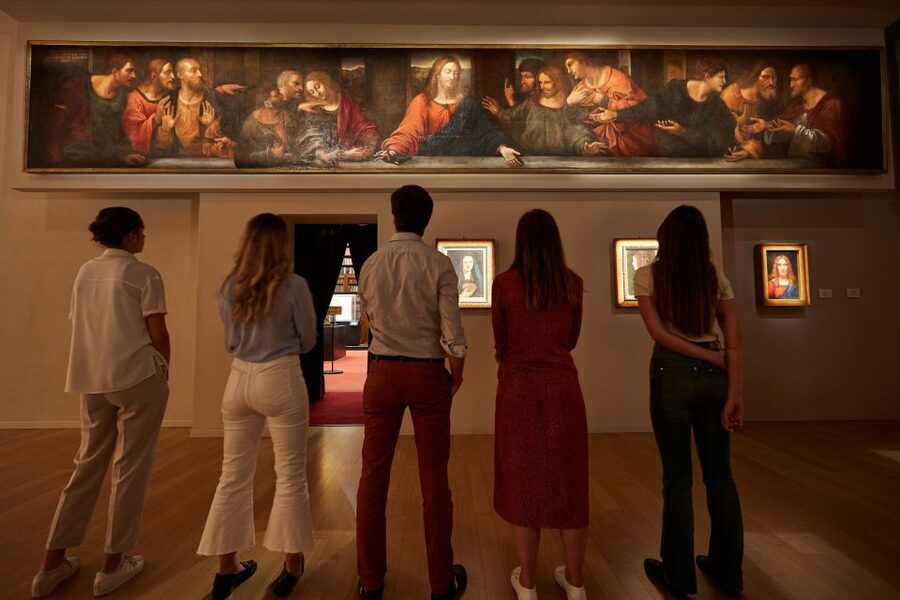
At $25 per person, the ticket offers solid value if you care about art, books, or Milan’s early history. The Pinacoteca alone contains several works that would justify a museum stop, particularly the Caravaggio, Raphael, Leonardo, and Codex Atlanticus displays.
The crypt adds another layer rather than another large attraction. Its value depends on how much you enjoy historical remains and atmospheric spaces. If you want a spectacular underground church with many rooms, you may find it underwhelming. If you like seeing how a modern city is built over older foundations, the short visit earns its place.
The price also buys convenience. You visit two nearby sites with one booking and skip the ticket line. You do not pay for a guide, and you can choose how long to spend in each area. Audio content may cost extra, so include that in your budget if you want more explanation.
For a central Milan activity, the combination is more useful than a ticket to a single small display. It also gives you an indoor option when the weather turns unpleasant. A rating of 4.6 from 1,331 reviews reflects the generally strong response, though the experience will naturally appeal more to art and history fans than to visitors seeking entertainment or panoramic views.
Bags, comfort, and access
Do not arrive with a large suitcase, bulky luggage, backpack, or baby stroller. These items are not allowed, and the safest plan is to visit with only a small personal bag if permitted by current museum rules.
Wear shoes you can manage on stairs and older surfaces. The crypt has architectural barriers and is not completely accessible for wheelchair users or people with physical impairments. Most Pinacoteca rooms are wheelchair accessible, so visitors with access needs should consider booking the museum alone rather than the combined ticket.
The museum itself is a comfortable place to slow down. There are seats in several areas, which helps if you want to study paintings rather than simply pass through. The peaceful atmosphere is another advantage, especially after crowded central Milan sights.
English is spoken by staff, according to visitor experience, and the app or audio option can help if you want more background. Since the visit is not led by a guide, check what language support is available before you begin.
Who will enjoy this experience most?
I would recommend the ticket to:
- Art lovers who want Leonardo, Raphael, Caravaggio, and Brueghel in one compact museum.
- Visitors interested in original drawings, manuscripts, and the working process behind famous art.
- People who prefer a quiet, self-paced visit to a guided group.
- Families with older children who can appreciate paintings and historic spaces.
- Anyone staying near the Duomo and looking for a short cultural stop.
- Visitors who want an indoor plan for a hot or rainy afternoon.
I would be more cautious if your priority is a grand, sprawling museum or a dramatic crypt. The Ambrosiana is focused, and the San Sepolcro Crypt is small. You get concentration rather than scale.
Should you book the combined ticket?
Book it if you want a well-priced art stop close to the Duomo, especially if Leonardo’s drawings and Raphael’s working cartoon appeal to you. The Pinacoteca is the main event, and it gives you enough important art to fill a relaxed afternoon without wearing you out.
Add the crypt because it changes the subject from art to the buried layers of Milan. Plan your timing carefully, leave bulky bags elsewhere, and consider the app or extra audio option if you want more explanation.
Skip the combined ticket if you use a wheelchair, have serious mobility limits, or mainly want a spectacular underground monument. For most independent visitors with an interest in art and history, though, this is a smart central Milan stop: compact, thoughtful, and full of works that are better seen in person than on a screen.
FAQ
Where does the visit begin?
You begin at the Pinacoteca Ambrosiana at Piazza Pio XI 2.
Where is the San Sepolcro Crypt?
The crypt is on Piazza San Sepolcro. You exit the Pinacoteca onto this square, where the crypt entrance is located.
How long does the full visit take?
The Pinacoteca normally takes about 1.5 hours. The crypt takes about 30 to 40 minutes, though a shorter visit is possible.
What is the latest admission time for the crypt?
The last admission is at 5:30 PM. The crypt closes at 6 PM, so you need to finish the Pinacoteca in time.
Is the visit guided?
The standard experience is self-guided. You can use a downloadable app on your device, and audio guide options may be available for an additional fee.
Does the ticket include the Codex Atlanticus exhibition?
Yes. The Pinacoteca visit includes access to the 17th-century reading room with original drawings from Leonardo da Vinci’s Codex Atlanticus.
Are large bags and backpacks allowed?
No. Luggage, large bags, backpacks, and baby strollers are not allowed.
Is the combined visit wheelchair accessible?
No. The activity is not completely accessible because the crypt has architectural barriers. Most Pinacoteca exhibition rooms are wheelchair accessible.
Can I cancel the booking?
You can cancel up to 24 hours in advance for a full refund. The reservation also allows you to pay later, according to the booking terms.
Recently added around Milan
- Milan: City Highlights Walking Tour with The Last Supper★ 4.9 · 195 reviews
- Milan: The Milan Pass City Card★ 4.0 · 655 reviews
- Milan: Skip-the-Line Guided Walk and “The Last Supper”★ 4.5 · 606 reviews
- Milan: Duomo & Rooftop Tour with Optional Hop-On Hop-Off Bus★ 4.5 · 262 reviews
- Milan: Duomo and The Last Supper Skip-the-Line Guided Tour
- Milan: Sforza Castle and Michelangelo’s Pietà Rondanini Tour★ 4.7 · 1,119 reviews
- Milan: Leonardo’s Last Supper and Michelangelo’s Pietà Tour★ 4.6 · 559 reviews
- Milan: San Sepolcro Crypt Skip-the-Line Entry Ticket★ 4.2 · 512 reviews
Milan Tours, compared.
Cathedral and Duomo’s Terraces Entrance Ticket
Read our review →
Science and Technology Leonardo da Vinci Museum Entry
Read our review →
City Sightseeing Hop-On Hop-Off Bus with Audio Guide
Read our review →
Milan Cathedral: Duomo Terraces Ticket (No Church Access)
Read our review →
Milan Cathedral Direct Entrance – Terrace Excluded
Read our review →
Guided Walking Tour & Last Supper Visit with Ticket
Read our review →
Fast-Track Milan Cathedral and Terraces Guided Tour
Read our review →Browse the lists this tour appears in