
Reviewed · WALKING TOURS
Matera: Caves and Rock Churches Walking Tour in English
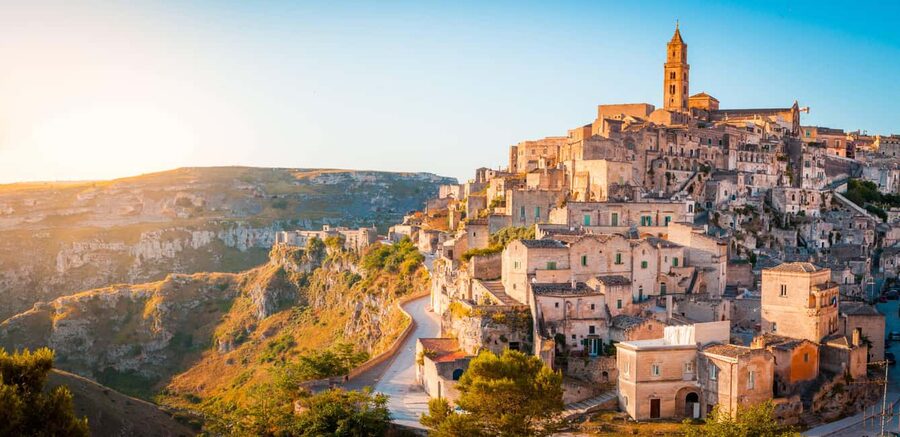
Matera rewards a closer look. This 2.5-hour walking tour takes you through the Sassi, where homes, churches, and cisterns were carved into pale rock. I like the way it connects grand history with ordinary family life, and I like that guide Gaetano Campanile adds local stories passed down by people whose families lived in the caves. The main consideration is the hilltop setting: expect stairs, uneven streets, and some climbing, even at the tour’s relaxed pace.
The tour costs $28 per person, a fair price for a licensed English-speaking guide and a focused introduction to Matera. You begin and end at Piazza S. Pietro Caveoso, visit an ancient cave house and the rock church of St. Mary of Idris, and come away better prepared to explore on your own.
In This Review
- Key points to know before you book
- Why a walking tour helps you understand Matera
- Meeting at Piazza S. Pietro Caveoso
- Entering the Sassi and its cave homes
- Following the rainwater through the rock
- St. Mary of Idris and the rock churches
- Viewpoints, lanes, and the changing face of Matera
- Gaetano’s guiding style
- What the $28 price delivers
- Who will enjoy this tour most
- Simple tips for making the walk better
- Should you book the Matera caves and rock churches tour?
- FAQ
- Where does the Matera walking tour start?
- Where does the tour finish?
- How long does the tour last?
- Is the tour conducted in English?
- Are there stairs on the route?
- What should I bring?
Key points to know before you book
- Gaetano Campanile brings local insight: His talks combine formal historical training with stories gathered from Matera families.
- The cave homes make the past tangible: You see how families lived underground, not just a set of scenic rock rooms.
- St. Mary of Idris is the visual centerpiece: This rock church links Matera’s religious life with its dramatic setting.
- The rainwater system explains survival: The cisterns show how residents collected and stored water in a dry, difficult environment.
- The pace is gentle but the route is not flat: Stairways are part of the Sassi experience, so comfortable shoes matter.
- It is a useful first activity: The stories and viewpoints give the rest of your time in Matera more meaning.
Why a walking tour helps you understand Matera
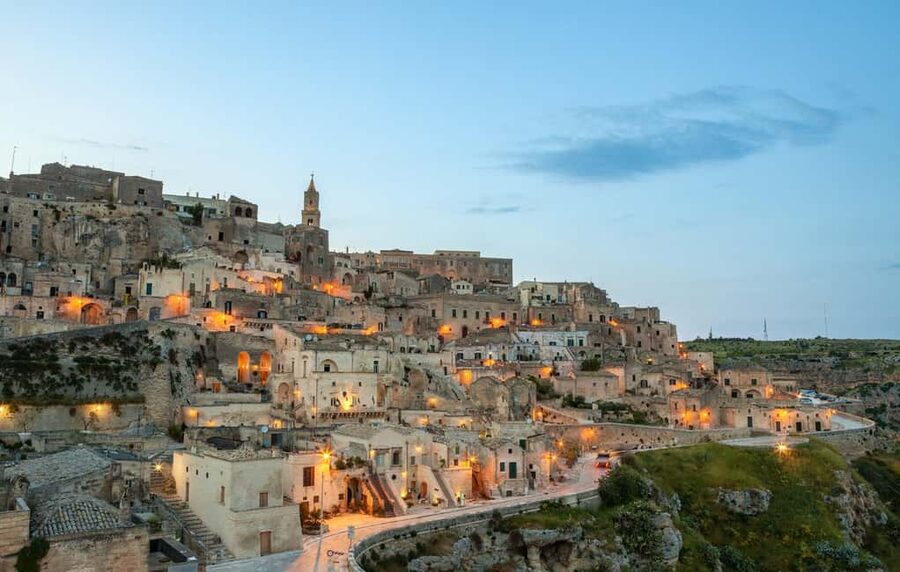
Matera is easy to admire and surprisingly hard to read. From a viewpoint, the Sassi can look like a beautiful arrangement of stone houses and caves. Without context, you may miss how people lived there, why the city fell into disgrace, and how it later became a UNESCO site and a major part of Italy’s cultural identity.
This tour gives you that missing frame. You walk through the ancient districts instead of simply photographing them from above. As you move between viewpoints, lanes, caves, and churches, the city changes from a striking picture into a place shaped by work, water, religion, poverty, and family life.
I especially like that the focus is not limited to famous architecture. The guide explains practical matters, such as how rainwater was gathered and stored. That detail may sound simple, but it helps you understand the challenge of living in a rocky city with limited supplies.
The social story is just as important. Matera was once called the shame of Italy, a harsh label connected to the difficult living conditions in the Sassi. The tour explains how the city moved from neglect and poverty toward conservation, recognition, and new life. That change gives the old streets a human edge.
More Walking Tours in Italy:
- Milan: Guided Walking Tour & Last Supper Visit with Ticket
★ 4.7 · 5,409 reviews - Naples: Street Food Walking Tour with Local Guide
★ 4.8 · 4,256 reviews - Venice Walking Tour and Gondola Ride
★ 3.5 · 3,630 reviews
Meeting at Piazza S. Pietro Caveoso
The starting point is Piazza S. Pietro Caveoso, directly in front of the church. This is a practical meeting place in the Sassi area, and the church makes it easier to find your guide.
Arrive ready to walk. The tour begins in one of the most striking parts of Matera, but the beauty comes with slopes, steps, and hard stone underfoot. You will not be marching at a punishing speed. Still, the route requires enough balance and energy for repeated stairways.
If you are driving, two multi-level car parks are listed nearby: one on Via Pasquale Vena and another on Via Rocco Scotellaro. Parking is worth sorting out before the start time, since the old city is not a place where you want to wander around looking for a space at the last minute.
The tour returns to the same meeting point. That makes it convenient if you have left a car nearby or want to continue from the Caveoso district after the walk.
Entering the Sassi and its cave homes
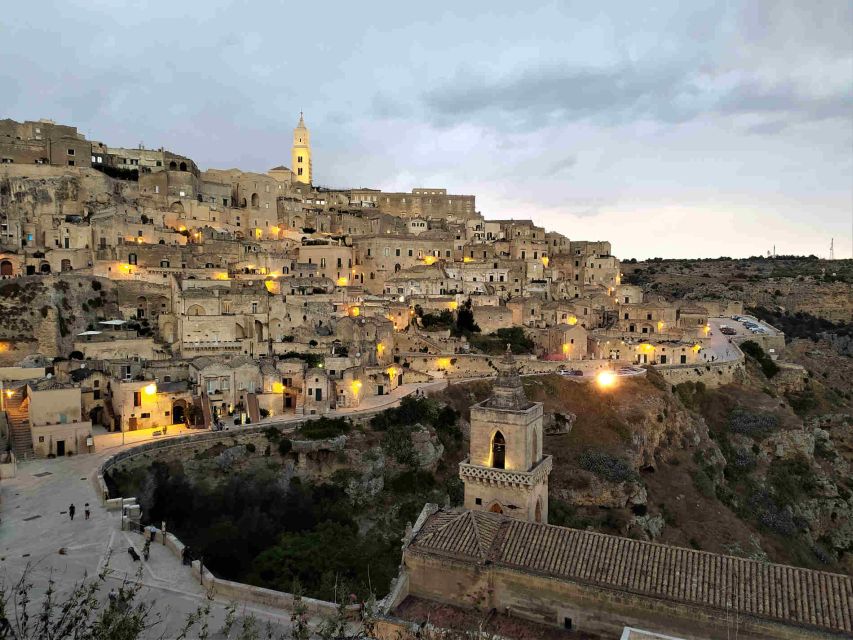
The Sassi are the heart of the experience. These ancient districts are made up of rock-cut dwellings, narrow passages, stairs, and buildings that seem to grow from the ravine. The guide leads you beyond the postcard views and into corners you might pass without noticing alone.
Inside a cave house, you learn how families once shared limited space and made use of the rock around them. This is where the tour becomes especially useful. A bare cave can look empty or mysterious, but an explanation of domestic life helps you picture the people who cooked, worked, stored belongings, and raised families there.
The best guides do not treat these spaces as movie sets. Gaetano’s approach, based on the many comments about his tours, is personal and grounded. He is a local resident with a strong attachment to Matera, and he uses family stories and oral accounts to give the rooms a human scale.
That local connection is one of the tour’s strongest features. You are not only hearing dates and labels. You are learning how residents remember the Sassi and how those memories fit with the wider story of the city.
The cave homes also raise difficult questions. Matera’s past was not simply picturesque. Crowded living conditions and poverty were real, and the tour does not need to romanticize them to make the setting interesting. I appreciate experiences that let you admire the stonework while still acknowledging the hardship behind it.
Following the rainwater through the rock
One of the most useful parts of the walk is the explanation of Matera’s water collection system. Rainwater was gathered and directed into cisterns carved into the rock, providing a vital supply for the population.
This is the sort of detail you might overlook while taking pictures. The system shows how carefully residents adapted to their surroundings. In a city where water could not simply be assumed, storage was central to daily life.
The cisterns also help explain why the Sassi developed as they did. Matera was not carved into rock only for visual effect. The stone offered shelter, building material, and a way to collect water. Once you understand that, the streets and caves feel more purposeful.
You may also see an old cistern during the walk, and some outings have included a workshop and additional ancient churches along the route. The exact sequence can vary, so I would treat those as welcome additions rather than guaranteed stops.
A few more Italy bookings to compare
- Matera: Sassi Tour with Cave House and Rupestrian Church
★ 4.7 · 6,618 reviews - Discover Matera, the ancient city – English tour
★ 5.0 · 1,771 reviews - Guided Tour of Matera Sassi
★ 4.5 · 1,312 reviews - Matera: Sassi Tour with Entry to Rock Houses and Churches
★ 4.6 · 622 reviews
St. Mary of Idris and the rock churches
The visit to the rock church of St. Mary of Idris is a major reason to choose this tour. Carved into the rock, the church brings together Matera’s religious traditions and its unusual geology.
The setting is memorable, but the guide’s explanation matters just as much as the church itself. Rock churches can be easy to confuse if you visit several without context. With a guide, you can better understand how worship took place in spaces shaped directly from the stone.
The church also adds balance to the cave-house portion of the tour. You see that the Sassi were not only domestic spaces. They held religious life, community memory, and artistic traces as well.
Take care on steps near rock-cut sites. The tour is described as leisurely, but leisurely does not mean completely effortless. Comfortable shoes are essential, especially if the stone is worn or uneven.
Viewpoints, lanes, and the changing face of Matera
Matera’s views are a major part of the pleasure. From the Sassi, you encounter broad scenes of stone dwellings and ravine country, then turn into a narrow passage where the view disappears. That contrast is part of the city’s charm.
A guide helps you stop at the right places and notice how the districts fit together. You can ask questions as the city unfolds, rather than trying to work out its layout from a map.
The walk also reaches less obvious corners. This is important because Matera’s most famous outlooks can give you only one side of the city. The quieter lanes and tucked-away rock spaces show how the Sassi functioned as a neighborhood, not just a scenic attraction.
You should allow yourself time to pause for photographs, but keep the tour’s purpose in mind. It is not a photography-only outing. The value comes from moving through the city while hearing why each place matters.
Gaetano’s guiding style
Gaetano Campanile receives repeated praise for his clear English, enthusiasm, humor, patience, and strong command of Matera’s past. Those qualities matter on a walking tour because two and a half hours can feel long if the guide simply recites facts.
His style appears to be lively but relaxed. He answers questions, adjusts to different ages and walking abilities, and keeps the explanation easy to follow. Several comments describe him as a good storyteller, which is a useful distinction. Knowing facts is one thing. Making those facts stick is another.
He also brings practical local advice. He has suggested places to eat, additional sights, and local shops, including a bread shop that one participant enjoyed so much that it became a serious bread-eating mission. Ask for recommendations if you want to continue exploring after the walk.
One helpful detail is that the tour has gone ahead with only two people. That suggests the activity is not necessarily dependent on a large group to operate, though you should still check current availability when booking.
The strongest reason to choose this tour is the guide, not simply the route. Matera has plenty of atmospheric streets. A good local explanation turns those streets into a story you can follow.
What the $28 price delivers
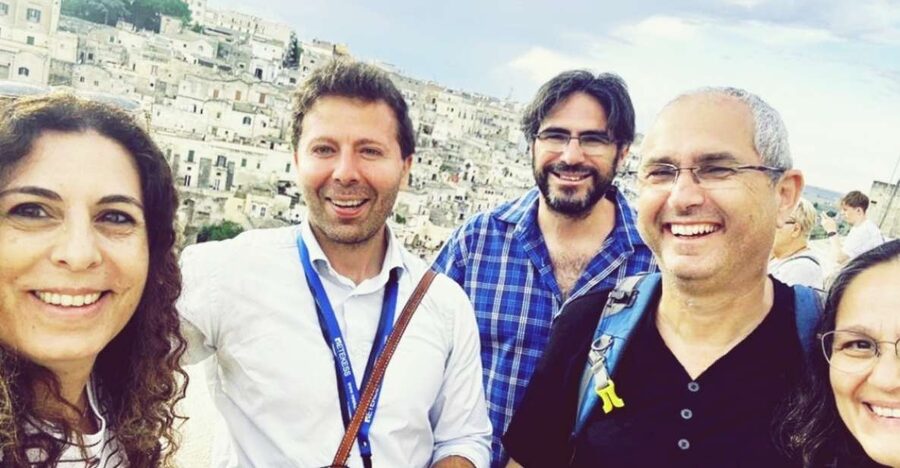
At $28, this is a modest investment for a licensed guide and 2.5 hours of walking through one of Italy’s most unusual cities. You are paying for interpretation, not transportation, meals, or entry to a long list of attractions.
That distinction helps set expectations. If you want a private vehicle, a meal, or an all-day excursion, this is not that kind of activity. If you want a clear introduction to the Sassi with an English-speaking local, the price is strong.
The value also comes from timing. Taking the tour near the start of your stay can improve everything afterward. Once you understand the cave homes, cisterns, churches, and social history, your independent walks become more rewarding. You notice details instead of seeing only stone and sunlight.
The booking terms add flexibility. You can reserve now and pay later, and cancellation is allowed up to 24 hours before the start for a full refund. Check the available starting times before you commit, since the duration is fixed at about two and a half hours.
Who will enjoy this tour most
I would recommend it to first-time visitors who want a firm sense of place before exploring Matera alone. It is also a good fit if you enjoy social history, local stories, architecture, or walking through old districts without rushing.
Families with older children may appreciate the visual setting and the cave interiors, though the stairways mean young children must be supervised. People in their 60s can manage the route if they are comfortable with stairs and take walking breaks, according to the practical feedback shared about mixed-age groups and different mobility levels.
You should think twice if stairs are difficult for you or if you prefer a completely flat route. The pace is gentle, but Matera’s old city is built on a hill. No guide can remove that basic fact.
The tour also suits independent-minded visitors. It gives you structure without taking over the whole day. Afterward, you can return to a favorite viewpoint, seek out a church, eat local bread, or simply wander the Sassi with a better grasp of what you are seeing.
Simple tips for making the walk better
Wear comfortable shoes with reliable grip. Sandals or smooth soles are a poor match for stone steps and sloping lanes.
Arrive at Piazza S. Pietro Caveoso with enough time to locate the church and guide. If you are driving, plan your parking before the meeting time.
Bring questions. Gaetano’s strength is not only prepared information but also his ability to respond to curiosity. Ask about family life, water storage, the churches, or the change from poverty to UNESCO recognition.
Schedule this tour early in your Matera stay if possible. The orientation will make later wandering more rewarding, and you can use the guide’s suggestions for food and other places to see.
Allow a little extra energy for the return to your accommodation. The activity ends at the meeting point, but your walk through Matera may not be finished there.
Should you book the Matera caves and rock churches tour?
I would book it if you want to understand Matera rather than simply photograph it. The combination of cave homes, the rainwater system, St. Mary of Idris, viewpoints, and Gaetano’s local storytelling gives you both the physical and human story of the Sassi.
The main caution is the terrain. You need comfortable shoes and a reasonable ability to handle stairs. If that works for you, $28 is good value for a well-paced English tour that can shape the rest of your visit.
FAQ
Where does the Matera walking tour start?
The tour starts in Piazza S. Pietro Caveoso. The guide waits directly in front of the church.
Where does the tour finish?
The activity ends back at the meeting point in Piazza S. Pietro Caveoso.
How long does the tour last?
The walking tour lasts 2.5 hours. Starting times depend on availability.
Is the tour conducted in English?
Yes. The tour includes a live English-speaking guide.
Are there stairs on the route?
Yes. Matera’s old city lies on a hill, so you should expect stairways. The walk proceeds at a leisurely pace.
What should I bring?
Bring comfortable shoes suitable for stairs, slopes, and uneven stone streets.
Recently added around Italy
- Florence Uffizi Gallery monolingual Small Group Tour★ 4.0 · 621 reviews
- Florence Private Walking tour with Skip-the-line to Accademia★ 4.5 · 236 reviews
- Uffizi Gallery Entrance Ticket with Priority Access★ 3.5 · 1,029 reviews
- Florence Skip-the-Line Duomo Tour with Guide & Brunelleschi Dome★ 5.0 · 1,176 reviews
- Skip-the-Line Accademia Guided Visit: David Secrets and Beyond★ 4.0 · 525 reviews
- Priority Entrance : Florence Accademia Gallery Timely Tickets★ 4.0 · 603 reviews
- Accademia Gallery Entrance Ticket with Priority Access★ 4.0 · 1,088 reviews
- Skip the line : David Guided Experience★ 4.5 · 1,076 reviews
Walking Tours, compared.
Guided Walking Tour & Last Supper Visit with Ticket
Read our review →
Rialto Bridge & Offbeat Unusual Venice Walking Tour
Read our review →
Private 3 hrs Venice Tour: St Mark’s, Walking tour & Boat tour
Read our review →
Skip the line: Uffizi and Accademia Small Group Walking Tour
Read our review →Browse the lists this tour appears in