
Reviewed · CITY TOURS
Discover Matera, the ancient city – English tour
Matera rewards a slower look. This English walking tour helps you understand how the Sassi Caveoso and Sassi Barisano grew, changed, and survived, while leading you through lanes that can be confusing on your own. I like the focus on ordinary life inside the cave homes, and I like the personal stories shared by guides such as Renato Favilli and Gaetano. One thing to know: this is not a standard church-by-church sightseeing tour, so you should choose another experience if your main goal is visiting cathedrals and rupestrian churches.
At about $36.28 per person and two to three hours long, the tour offers good value if you want context rather than a quick photo walk. The main drawback is that the maximum group size is 20, which is not truly intimate, and one person found the explanations repetitive. Still, the 4.9 rating from 1,771 reviews and the 98 percent recommendation rate point to a consistently strong experience.
In This Review
- Key Points Before You Book
- Why Matera Needs More Than a Pretty View
- Walking Through Sasso Caveoso
- Seeing Part of Sasso Barisano
- The Cave Homes and Everyday Life
- Rupestrian Sites Without a Church-Focused Tour
- From the Shame of Italy to UNESCO Status
- A James Bond Film Location With Local Detail
- Guides Who Make the Difference
- Group Size, Timing, and Physical Effort
- Is $36.28 Good Value?
- Who Should Book This Matera Walking Tour?
- Should You Book It?
- FAQ
- How long does the Matera tour last?
- What areas of Matera does the route cover?
- Is the tour offered in English?
- Does the tour focus on churches?
- How large is the tour group?
- Are service animals allowed?
- What is the cancellation policy?
Key Points Before You Book
- Personal stories from Matera guides: Renato, Gaetano, Sara, and Domenico bring local knowledge and, in some cases, family connections to the Sassi.
- A people-first view of the Sassi: You learn how residents lived, why they were moved, and how Matera changed from the Shame of Italy to a UNESCO World Heritage city.
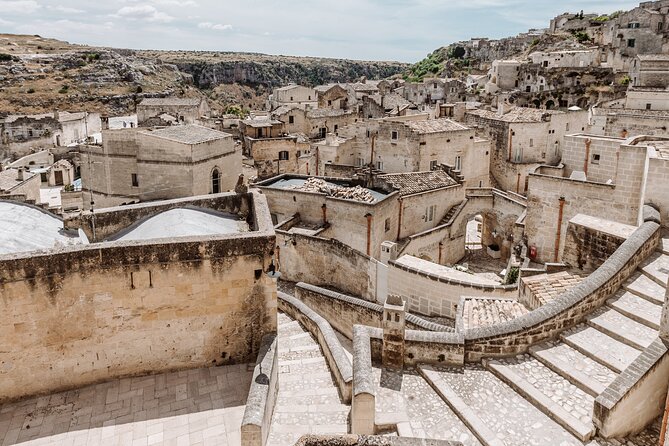
- Off-the-main-route walking: The route passes through suggestive corners and less familiar alleys in Sasso Caveoso and part of Sasso Barisano.
- Cave homes and water systems: You may learn about cave houses, traditional bakeries, and the public and private ways people collected water.
- Good orientation for a first visit: The guide helps you understand what you are seeing before you explore more of Matera alone.
- Flexible cancellation: Cancel at least 24 hours before the start for a full refund, though bad weather can affect the tour.
Why Matera Needs More Than a Pretty View
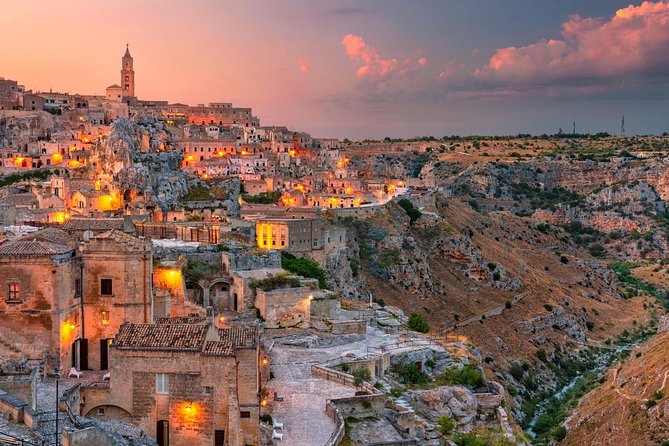
At first glance, Matera can feel almost too dramatic to be real. Stone homes, stairways, caves, churches, and terraces spread across the ravine in a jumble that makes a simple walk feel like an archaeological expedition.
The trouble is that the beauty can hide the human story. Without explanation, the Sassi may look like an atmospheric set for a film. With a good guide, you begin to see a working city, shaped by poverty, family life, farming, religion, public health, and forced relocation.
That is the strength of this tour. It does not treat Matera as a collection of photo stops. It uses the alleys and buildings to explain why people lived in caves, how their homes worked, and why the city was once viewed as a national embarrassment.
The phrase Shame of Italy refers to the harsh conditions associated with the Sassi before the major displacement of residents. The tour follows that change over time, helping you understand how Matera later became a UNESCO World Heritage site and gained new attention around the world.
A few more Italy bookings to compare
- Matera: Sassi Tour with Cave House and Rupestrian Church
★ 4.7 · 6,618 reviews - Guided Tour of Matera Sassi
★ 4.5 · 1,312 reviews - Matera: Sassi Tour with Entry to Rock Houses and Churches
★ 4.6 · 622 reviews
Walking Through Sasso Caveoso
The tour develops through Sasso Caveoso, one of the most suggestive parts of ancient Matera. You move through lanes, steps, and bends rather than following a simple street grid, which is exactly where a guide earns the price of admission.
I like this part because the route is not only about looking outward at the view. You also look closely at the places where people lived. The stone walls, openings, courtyards, and cave interiors begin to make more sense when someone explains their purpose.
The walking pace is generally relaxed and not described as especially strenuous, but you should still wear sensible shoes. Matera is built on slopes and stairways, and the surface underfoot can be uneven. The tour lasts roughly two to three hours, so comfortable footwear matters more than dressing for a formal city visit.
Your guide may pause to explain how families used the available space. This is where the experience becomes more than a history lecture. Architecture, family life, and local customs connect in a clear way.
Gaetano is praised for mixing humor with a detailed account of Matera. Renato is also noted for sharing personal stories and taking people to corners they might not find alone. The guide may vary, with Sara and Domenico also leading tours, so the exact style can depend on who is working that day.
Seeing Part of Sasso Barisano
The route also reaches part of Sasso Barisano. This gives you a broader sense of Matera instead of keeping you in one pocket of the old city.
The two Sassi districts can seem similar at first, but walking between them helps you notice different views, building patterns, and angles across the ravine. The guide’s job is to connect those visual details to the city’s development.
You are not simply asked to admire the stonework. You learn how the city’s form grew out of practical needs. Homes, paths, shared spaces, places of worship, water storage, and work areas were closely tied together.
The tour’s 360-degree approach includes art, anthropology, architecture, and local history. That may sound academic, but the strongest feedback points to an accessible presentation. Gaetano is often described as funny and easy to understand, while Renato is praised for using personal accounts to make the past feel close.
You also have time to ask questions and take pictures. That balance matters. A guide who talks without pause can turn a beautiful place into a classroom, but this tour appears to leave room for looking around.
The Cave Homes and Everyday Life
One of the most useful parts of the experience is its attention to daily life. The tour explains the people who lived in the Sassi, not just the people who designed or governed the city.
A particularly personal possibility is a stop at the cave house where Renato’s family lived. This gives the story a human scale. Instead of hearing only general facts about cave dwellings, you may connect the subject with one family’s experience.
The focus can include household arrangements, local work, traditional bakeries, and the way residents managed basic needs. These details help you understand why the Sassi were not abandoned ruins. They were homes and neighborhoods, with all the routines and problems that come with community life.
Water collection is another useful subject. The tour can explain public and private water systems, showing how residents stored and managed water in a place where everyday resources required careful planning.
I find this kind of information more valuable than a long list of dates. You leave with a better sense of how people adapted to the caves, how the community functioned, and why the later removal of residents was such a major change.
Still Italy, but a slower afternoon:
- Vatican: Museums & Sistine Chapel Entrance Ticket
★ 4.5 · 144,003 reviews - Vatican Museums & Sistine Chapel Tour with Optional Basilica
★ 4.3 · 67,413 reviews - Colosseum, Roman Forum & Palatine Guided Tour
★ 4.7 · 63,148 reviews - Milan: Cathedral and Duomo’s Terraces Entrance Ticket
★ 4.6 · 61,054 reviews
Rupestrian Sites Without a Church-Focused Tour
Matera is famous for its rupestrian churches, and the tour can bring you close to cave religious sites and other carved spaces. But you should read the character of the experience correctly.
This is not a classic tour built around entering one church after another. The route discovers the city through its meanders, homes, streets, viewpoints, and social history. If you want a full art-history tour of religious interiors, this may feel incomplete.
For many people, that is a benefit. The city already offers plenty to see, and it can be difficult to understand the Sassi if every stop is treated as a separate monument. Here, churches and cave structures fit into a larger story about community life and the way the city was shaped.
You may still see striking religious architecture and carved spaces, but the guide’s attention is spread across art, anthropology, architecture, and the experience of the people who lived in Matera. I would pair this tour with independent visits to specific churches if those interiors are a top priority.
From the Shame of Italy to UNESCO Status
The most important lesson is the city’s change in reputation. For much of the 20th century, Matera was associated with poor living conditions and overcrowded cave homes. The public response was displacement, and the Sassi gradually became quieter and more abandoned.
The story does not end there. Matera later gained recognition for its ancient settlement, unusual architecture, and cultural importance. Its UNESCO status helped bring attention and new life to the old districts.
A good guide makes this transformation easier to understand. The city did not simply go from old to fashionable. It went through a painful period in which residents were moved, buildings lost their original use, and the public view of the Sassi changed.
This tour’s strongest point is the attention given to that human cost. You hear about the people who lived in the caves, the reasons behind their displacement, and the way Matera’s past is viewed today.
That perspective also keeps the tour from becoming a simple celebration of pretty stone buildings. Matera is beautiful, but its beauty is tied to difficult questions about poverty, preservation, tourism, and who gets to remain in an old neighborhood after it becomes famous.
A James Bond Film Location With Local Detail
The route includes a well-known filming site connected with the James Bond film No Time to Die. That will appeal to film fans, but the more interesting part is the production story attached to the location.
The guide can explain an unusual fix used during filming when a problem arose. Details like this add a lighter note to a tour that otherwise deals with serious subjects.
The film connection also shows how Matera’s image has changed. The Sassi are no longer known only for hardship. They are now used as a dramatic setting for major productions, which brings attention and money but also changes how the city is presented.
You should not book this experience as a dedicated movie-location tour. The Bond site is one part of a broader walk. It works best as an extra detail within the historical and architectural story.
Guides Who Make the Difference
The guide is the central reason to book this tour. The route itself is valuable, but much of the experience depends on the person leading it.
Gaetano receives especially strong praise for his humor, clear English, and command of local history. He is described as engaging, entertaining, and able to answer questions fully without losing the group.
Renato is praised for his personal stories and family ties to Matera. His approach brings the Sassi close to the present instead of treating the people who lived there as distant figures from the past.
Sara and Domenico may also guide the walk. Since the provider is Renato Favilli, the experience has a clear local identity, but you should expect some variation in delivery depending on the guide.
The English is reported to be easy to understand. That matters in Matera, where a small misunderstanding can make a complicated story even harder to follow. The best guides appear to connect dates and facts with humor, family memories, and practical observations.
Several comments also point to useful restaurant suggestions after the tour. Gaetano can recommend places based on the type of meal you want, from casual to more formal. That is a nice bonus, especially because the walk can help you understand which parts of town you may want to explore next.
Group Size, Timing, and Physical Effort
The maximum group size is 20 people. That is smaller than a large coach excursion, but it is not a private walk. If everyone stays close and the guide speaks clearly, the size should still allow questions and personal attention.
The tour lasts about two to three hours. Some accounts describe the walk as around two hours, while the listed duration allows for closer to three. Plan enough time afterward rather than scheduling another fixed activity immediately.
The route is a walking experience through alleys and historic districts. Most people can take part, and service animals are allowed. Public transportation is nearby, which makes the meeting area practical for people arriving without a car.
Because Matera is hilly and includes steps, sensible shoes are a must. The physical effort is not described as severe, but you should be ready for uneven ground and repeated changes in level.
The tour requires good weather. If poor weather causes cancellation, you are offered another date or a full refund. For a normal cancellation, you need to cancel at least 24 hours before the start time for a full refund. Cancellations or changes inside that window are not accepted and are not refunded.
Is $36.28 Good Value?
At $36.28 per person, this is a fair price for a two to three hour guided walk, especially if you are visiting Matera for the first time.
You are paying for more than directions through the Sassi. The value comes from the explanation of the city’s social change, the local stories, the cave homes, the water systems, and the guide’s ability to point out places you might miss.
The price makes the most sense early in your stay. Once you understand the layout and the main story, you can return to places that caught your attention. You may also avoid spending time wandering without knowing what a building or alley represents.
If you already have strong knowledge of Matera and prefer to explore alone, the cost may feel less worthwhile. You will not be given a church-by-church tour, and the route is built around interpretation rather than a long list of formal entry tickets.
For most first-time visitors, though, the price is reasonable. The tour gives you a framework for the rest of your time in town, which is often more useful than seeing one extra monument without context.
Who Should Book This Matera Walking Tour?
I recommend it most for first-time visitors who want to understand Matera rather than only photograph it. It also suits people interested in architecture, anthropology, local customs, family stories, and the way historic districts change.
You should book it if you enjoy asking questions, hearing personal accounts, and walking at a steady pace. The English presentation is a strong point, and the humor helps keep the historical detail from becoming heavy.
Families and older visitors may appreciate the relaxed format, though anyone uncomfortable with hills or steps should consider the route’s physical demands. The tour is not presented as highly strenuous, but Matera itself is not flat.
Film fans will enjoy the No Time to Die location, but that should be treated as a bonus. The heart of the walk is the history of the Sassi and the people who lived there.
Should You Book It?
Book this tour if you want a human story of Matera, not just a parade of churches and viewpoints. Gaetano and Renato receive particular praise for humor, personal detail, and clear explanations, and the route gives you a useful first look at Sasso Caveoso and Sasso Barisano.
Skip it if you want a short photo stop, a private guide, or a tour devoted mainly to religious art. For everyone else, $36.28 buys a thoughtful orientation to one of Italy’s most unusual cities, with enough practical detail to make the rest of your visit more rewarding.
FAQ
How long does the Matera tour last?
The experience lasts approximately two to three hours. Some descriptions place the walk closer to two hours, so allow extra time in case it runs longer.
What areas of Matera does the route cover?
The route passes through Sasso Caveoso and part of Sasso Barisano. It follows suggestive places, viewpoints, alleys, and less familiar corners of ancient Matera.
Is the tour offered in English?
Yes. The tour is offered in English, and the English-speaking guides are described as clear and easy to understand.
Does the tour focus on churches?
No. This is not a classic church or cathedral tour. It may include rupestrian sites and cave structures, but its main focus is the city’s alleys, homes, architecture, social history, and the lives of the people who lived in the Sassi.
How large is the tour group?
The maximum group size is 20 people. It is intended as a small-group experience, though it is not a private tour.
Are service animals allowed?
Yes. Service animals are allowed on the experience.
What is the cancellation policy?
You can cancel at least 24 hours before the start time for a full refund. Cancellations or changes made less than 24 hours before the start are not accepted and are not refunded. If poor weather cancels the tour, you are offered another date or a full refund.
Recently added around Italy
- Florence Uffizi Gallery monolingual Small Group Tour★ 4.0 · 621 reviews
- Florence Private Walking tour with Skip-the-line to Accademia★ 4.5 · 236 reviews
- Uffizi Gallery Entrance Ticket with Priority Access★ 3.5 · 1,029 reviews
- Florence Skip-the-Line Duomo Tour with Guide & Brunelleschi Dome★ 5.0 · 1,176 reviews
- Skip-the-Line Accademia Guided Visit: David Secrets and Beyond★ 4.0 · 525 reviews
- Priority Entrance : Florence Accademia Gallery Timely Tickets★ 4.0 · 603 reviews
- Skip the line : David Guided Experience★ 4.5 · 1,076 reviews
- Private Tour in Siena, San Gimignano and Chianti Day Trip from Florence★ 5.0 · 405 reviews
City Tours, compared.
City Sightseeing Hop-on Hop-off Bus with Audioguide
Read our review →
City Sightseeing Hop-On Hop-Off Bus with Audio Guide
Read our review →
City Sightseeing Rome Hop-On Hop-Off Bus Tour
Read our review →

Fettuccine Pasta Cooking Class in Rome’s City Center
Read our review →
Vatican City: Vatican Museums & Sistine Chapel Entry Ticket
Read our review →

City Sightseeing Florence Hop-On Hop-Off Bus Tour
Read our review →Browse the lists this tour appears in