
Reviewed · EVENING EXPERIENCES
Lords of the Night Prisons Palace: Cells & Torture Tools Visit
Old prisons make history feel uncomfortably close. This 45-minute visit to the Palazzo delle Prigioni gives you a look at old cells, jail halls, and punishment tools beside St. Mark’s Square. I like the small private-group format, and I like the guide-led stories about Venetian justice, famous prisoners, and the Council of Ten. The main caution is scale: this is a small museum, and some visits take closer to 30 minutes than 45.
The setting is excellent, on the Riva degli Schiavoni, with the palace looking across the water near Venice’s grandest sights. Guides are often praised for their enthusiasm and clear explanations, including Ticiana and a young criminology student who impressed one family with his energy and command of the subject. Still, finding the entrance can be awkward, and guide quality or English clarity may vary.
In This Review
- Key points to know before booking
- What you actually see inside the Palazzo delle Prigioni
- The Council of Ten gives the visit its wider meaning
- Torture tools, old cells, and a little discomfort
- Casanova stories and the legends of the prison
- Why the small group matters
- Is $11.89 a fair price?
- How long should you allow?
- Who will enjoy this visit most?
- Practical advice for a smoother visit
- Should you book the Lords of the Night prison visit?
- FAQ
- Where does the Lords of the Night prison visit take place?
- How long does the tour last?
- What can I see during the visit?
- Is the tour offered in English?
- Is this a private tour?
- Is the meeting point easy to find?
- Are there stairs?
- Can I cancel for a full refund?
Key points to know before booking
- A compact prison museum beside St. Mark’s Square: You visit the Palazzo delle Prigioni, not a vast prison complex.
- Original cells and punishment displays: Expect old jail spaces and a collection of torture and punishment tools, though one account describes some items as replicas.
- Stories about Venetian justice: The guide explains the Council of Ten, courts, magistrates, policing, and the treatment of offenders.
- Best for a short history stop: The visit can fit neatly into an hour between major Venice sights.
- Small private group: Your booking is for your own group, giving you a better chance to ask questions.
- Practical warning: The entrance and meeting point can be hard to spot, and steep stone stairs are part of the visit.
What you actually see inside the Palazzo delle Prigioni
The tour begins at Circolo Artistico, Palazzo delle Prigioni, a historic building overlooking the Riva degli Schiavoni. Its location makes it easy to pair with St. Mark’s Square, but the entrance is not always obvious from the street.
One useful tip is to cross the bridge to your left as you face the water. Walk about 30 meters, then look for a door on the left. A booth attendant can check your voucher and direct you upstairs to the small meeting area. Do not rely blindly on the map pin, since one booking problem came from directions pointing to the wrong stretch of Riva degli Schiavoni.
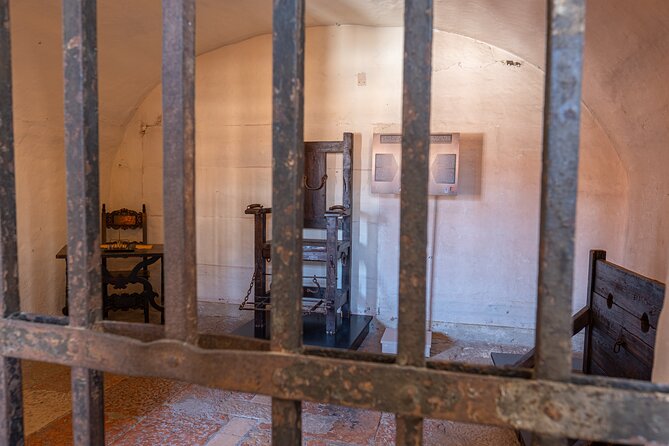
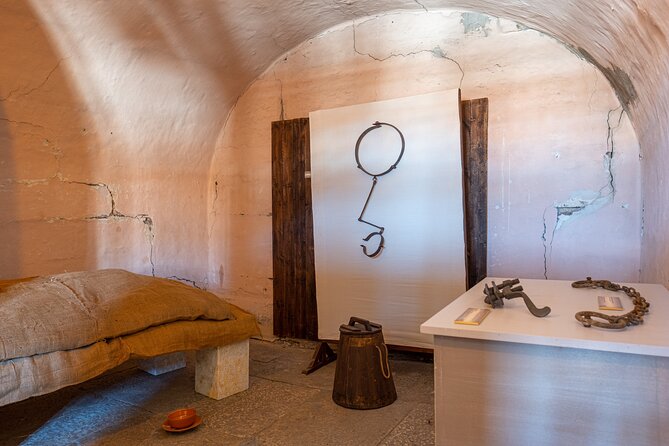
Inside, the visit focuses on cold cells, prison halls, and rooms displaying tools connected with torture, punishment, and humiliation. You will not be walking through a huge maze of dungeons. The museum is small, with only a handful of rooms, so your expectations matter.
I would think of this as a concentrated historical visit rather than a full prison tour. You get a physical sense of the old building, then spend much of the time hearing what the displays meant and how Venetian justice worked.
A few more Venice bookings to compare
- Venice: Doge’s Palace Reserved Entry Ticket
★ 4.6 · 42,716 reviews - Venice: Grand Canal Gondola Ride with App Commentary
★ 4.1 · 18,908 reviews - Boat Trip: Glimpse of Murano, Torcello & Burano Islands
★ 4.3 · 15,699 reviews
The Council of Ten gives the visit its wider meaning
The most useful part of the tour is not simply looking at spikes, restraints, or other grim objects. It is the explanation of the system behind them.
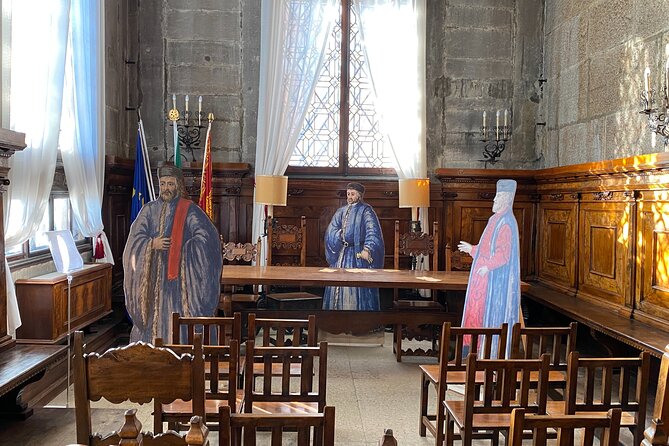
The guide discusses the Council of Ten, a powerful body made up of Venice’s highest political figures. This council oversaw justice across Venetian territory, alongside courts, lawyers, and magistrates. The story is less about random cruelty and more about how the Venetian Republic organized authority, law enforcement, punishment, and public order.
That context helps the rooms make sense. You are not just looking at devices from a distant past. You are seeing the tools connected with a formal system that investigated crimes, judged suspects, and punished people who broke the law.
The discussion also touches on the police role in settling fights and dealing with those accused of crimes. For me, that civic angle gives the visit more weight than a simple display of torture equipment. It shows how a proud republic could build an elaborate justice system while also using methods that feel brutal by modern standards.
The best guides invite questions as they go. Several positive accounts describe guides who took time to explain the museum and answer questions rather than rushing through each room. That is especially helpful in a place where the objects alone cannot tell you much.
Torture tools, old cells, and a little discomfort
The displays are the main visual draw. You may see devices associated with physical pain, restraint, punishment, and humiliation. Some accounts describe the tools as original instruments from the Venetian Republic, while another says the devices were replicas. Since the information is not consistent, I would not book this expecting every object to be authenticated as original.
The subject is not light. Some people find the displays fascinating from a historical point of view. Others find them disturbing or excessive. The visit can prompt a useful question: how did authorities use fear and pain to control a population, and how much of that control was presented as lawful justice?
One particularly memorable detail from the commentary concerns the many ways spikes could be used. That blunt observation captures the tone of the collection. You are likely to get concrete descriptions of how punishment worked, not just dates and names.
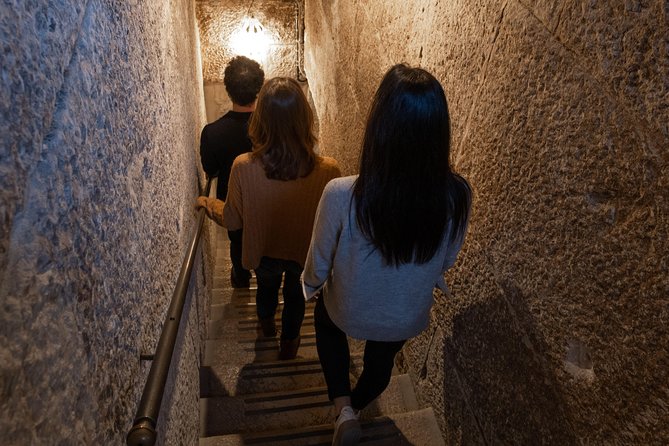
The building itself adds atmosphere. Stone stairs, narrow rooms, and old prison spaces create a sense of confinement that a modern gallery would struggle to copy. A hot day can make the climb and interior feel harder, especially if you are traveling with a young child or anyone who tires easily.
Do not expect a polished blockbuster attraction. The museum is modest, and some displays may feel more like a small historical collection than a major Venetian monument. That limitation is also part of the appeal for anyone who prefers a short, quiet stop away from the biggest crowds.
Casanova stories and the legends of the prison
Venice has no shortage of dramatic characters, and Casanova naturally appears in the stories connected with its prisons. The visit may include discussion of his imprisonment and escape, including the famous tale connected with a hole in the prison.
This is one area where I would keep expectations realistic. A few people hoped for a more detailed look at the exact place connected with Casanova’s escape and felt let down when the visit moved quickly. The subject may be mentioned as part of the wider story rather than presented as a full Casanova-focused tour.
The guide also explains myths and legends that remain attached to the old cells and halls. These stories can make the visit more entertaining, but it is worth separating legend from documented legal practice. A strong guide will help you understand both the dramatic tale and the historical setting around it.
The most successful guides seem to be the ones who bring personality to the subject. One young guide studying criminology was praised for being upbeat, animated, and full of useful facts. Another guide, Ticiana, was described as kind and generous with information. On the other hand, accents, fast speech, and multilingual commentary have made the tour difficult for some people to follow.
Still Venice, but a slower afternoon:
- Venice: Grand Canal by Gondola with Live Commentary
★ 4.1 · 13,681 reviews - Venice: La Fenice Opera House Entry Ticket with Audio Guide
★ 4.6 · 11,742 reviews - Doge’s Palace & St. Mark’s Basilica with Terrace Access Tour
★ 4.7 · 10,697 reviews - Venice: Burano, Torcello & Murano Boat Tour w/Glassblowing
★ 4.4 · 10,245 reviews
Why the small group matters
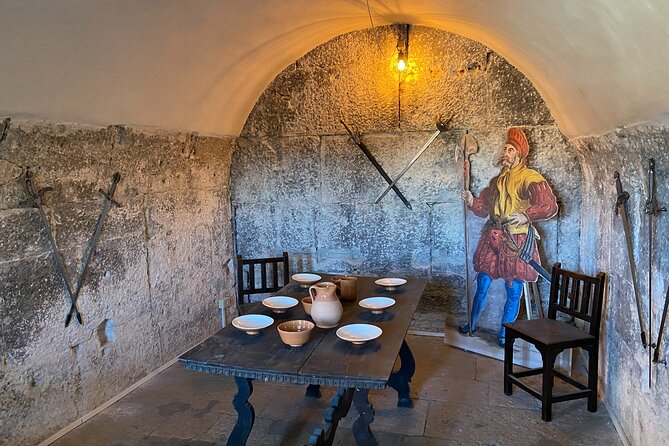
This is a private activity, so only your group takes part. That is a real advantage in a tiny museum. You can ask about a device, a prisoner, or a point about Venetian law without trying to speak over a large crowd.
A small group also helps with the physical layout. With only a few people in the rooms, you have a better chance to stand close enough to see the displays and hear the guide. One family of four felt the size was just right and suggested that a group larger than six to eight could feel crowded.
The private format does not guarantee a long tour. If you are the only family booked, the explanation may finish in about 30 minutes. A multilingual group may also take longer or feel less focused, since the guide may need to explain points in more than one language.
English is offered, but you should be ready for differences in speaking style. Most positive accounts describe clear and enthusiastic explanations. A few people had trouble with a strong accent, quick delivery, or a high-pitched voice. That does not mean the guide lacks subject knowledge, but it can affect how much you take away.
Is $11.89 a fair price?
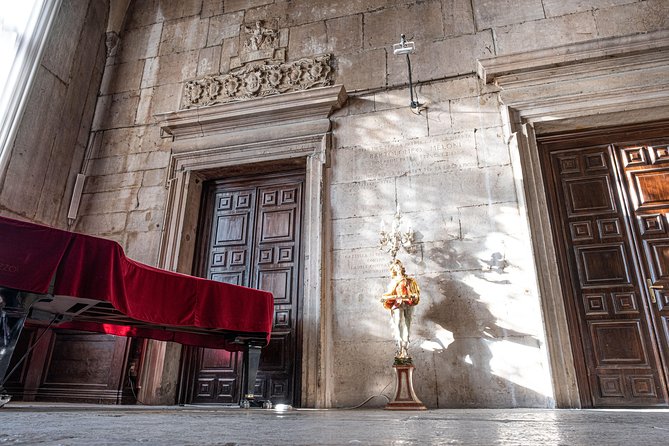
At $11.89 per person, this is one of the cheaper guided history stops you can add to a day in Venice. The price works best if you value the guide’s interpretation, not just entry to the rooms.
There is an important comparison to consider. One person found the basic entrance at the door slightly cheaper than the online total, paying 15 euros at the venue compared with 15.75 euros through the booking platform. Prices may change, but the point remains useful: check the direct admission cost if saving every euro matters to you.
The guided option is more worthwhile when you want background on the Council of Ten, Venetian courts, famous prisoners, and the meaning of the punishment displays. If you only want to see the objects, the extra charge may not feel justified, especially since the museum is small and self-guided viewing can be quick.
I see the best value in the time saved. You can place this visit beside St. Mark’s Square and get a focused explanation without committing half a day. For a short stop at a modest price, that is a reasonable deal, provided you accept that the tour may finish early.
How long should you allow?
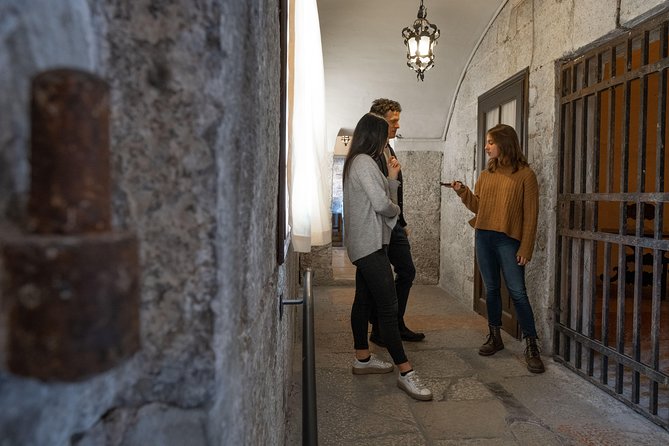
The advertised duration is about 45 minutes, but the real visit can be shorter. Several accounts describe guided commentary lasting under 30 minutes, while others treated the whole experience as a pleasant hour.
I would allow one hour from arrival to departure. That gives you time to find the entrance, show your confirmation, climb the stairs, listen to the explanation, and look at the displays without hurrying.
Do not schedule a tight connection immediately afterward. The meeting point can be confusing, and a missed start may not be refundable if you are late. Free cancellation is available up to 24 hours before the start time, but changes or cancellations inside that window are not accepted.
The experience is near public transportation, though Venice’s ferry system can be confusing. Build in extra time if you are arriving by vaporetto, particularly in hot weather or with a child. A full boat may delay you even if you arrive at the stop early.
Who will enjoy this visit most?

I would recommend it to people who enjoy social history, old justice systems, prison stories, and the uncomfortable side of the past. It suits a short Venice itinerary, especially if you are already near St. Mark’s Square and want something beyond palaces, churches, and canals.
Families with older children may find the subject memorable, though the torture displays are not gentle. One family found the tour entertaining, while others described the devices and punishments as too inhumane. Use your judgment based on the age and temperament of your group.
It also suits visitors who like asking questions. The private format and small rooms make conversation possible, and the best guides welcome curiosity. You may get more from the tour if you ask about the Council of Ten, Casanova, the difference between punishment and humiliation, and which objects are original.
I would be less enthusiastic if you want a large, detailed prison complex with many accessible cells. The collection is compact. If your main interest is architecture, painting, or a long account of prisoner life, this may feel thin.
Practical advice for a smoother visit
Arrive early. The location is easy to miss, and the entrance may not have a large sign identifying the tour. From St. Mark’s Square, use the bridge and water-facing directions carefully, then ask the booth attendant for help.
Wear comfortable shoes. You will climb steep stone stairs, and hot weather can make the visit less comfortable. The venue is near major transport links, but allow extra time for boat delays and the walk along the waterfront.
Keep your confirmation ready on your phone. The experience uses a mobile ticket, and confirmation is received at booking. If someone is supposed to meet you, look for staff near the entrance or upstairs rather than waiting in the middle of the square.
Finally, do not judge the visit by its title alone. The wording suggests a large tour through prison cells and torture rooms, but the actual experience is a small museum visit with a guide. Go for the setting, the stories, and the explanation of Venetian justice. Go elsewhere if you want a long, elaborate attraction.
Should you book the Lords of the Night prison visit?
Book it if you want a short, inexpensive history stop with a private guide and a slightly eerie atmosphere. I especially like it for people who have already seen St. Mark’s main sights and want a different view of Venice, one tied to law, punishment, political power, and old prison life.
Skip it if you dislike torture displays, need a fully accessible visit, or expect a large complex with hours of exhibits. The small size and uncertain tour length are genuine limits.
For most history-minded visitors, I would call it a worthwhile short add-on, not a must-see monument. Check the meeting point carefully, arrive early, and treat the 45-minute booking as an upper estimate. With the right expectations, the Palazzo delle Prigioni can give you a memorable look at the darker machinery behind the Republic of Venice.
FAQ
Where does the Lords of the Night prison visit take place?
The visit takes place at Circolo Artistico, Palazzo delle Prigioni, overlooking the Riva degli Schiavoni near St. Mark’s Square in Venice.
How long does the tour last?
The scheduled duration is approximately 45 minutes. Some visits have taken closer to 30 minutes, especially when the booking group was very small.
What can I see during the visit?
You can see original prison cells and jail halls from the 1500s, along with displays of torture and punishment tools. The museum is small and includes only a handful of rooms.
Is the tour offered in English?
Yes. English is one of the offered languages. Some guides also speak other languages, though multilingual tours may include commentary in more than one language.
Is this a private tour?
Yes. Only your group participates in the private activity.
Is the meeting point easy to find?
It can be unclear. From St. Mark’s Square, cross the bridge to your left while facing the water, walk about 30 meters, and look for the museum door on the left. Staff at the booth can direct you upstairs.
Are there stairs?
Yes. The visit includes steep stone stairs, and hot weather may make the climb less comfortable.
Can I cancel for a full refund?
Yes, if you cancel at least 24 hours before the experience start time. Cancellations or changes made less than 24 hours before the start time are not accepted for a refund.
Recently added around Venice
- Venice Walking Tour and Gondola Ride Combo★ 4.4 · 266 reviews
- Venice: Walking Tour and Shared Gondola Ride★ 4.1 · 466 reviews
- Venice: Private Tour with a Local Guide★ 4.6 · 718 reviews
- Venice: The Footsteps of Commissario Brunetti Walking Tour★ 4.9 · 445 reviews
- Venice: Vivaldi Four Seasons Concert at Vivaldi Church★ 4.8 · 287 reviews
- Venice: Walking Guided Tour of the City Must-See Sites★ 4.7 · 1,095 reviews
- Venice: Lagoon Catamaran Cruise with Music and Drinks★ 4.7 · 419 reviews
- Venice: The Three Tenors Concert Ticket★ 4.8 · 1,183 reviews
Evening Experiences, compared.

Winner 2025 Florence Sunset Food & Wine Tour by Eating Europe
Read our review →
Mount Etna Morning or Sunset Day Trip with Tasting
Read our review →
Sunset Jeep Tour of Mount Etna and Lava Flow Caves
Read our review →
Paranormal Night Walking Tour & Secret Backstreets
Read our review →

From Milazzo: Panarea and Stromboli Boat Trip by Night
Read our review →
Agrigento: Valley of the Temples Skip-the-Line Sunset Tour
Read our review →Browse the lists this tour appears in