
Reviewed · WORKSHOPS
Levanto: Pesto-Making Class
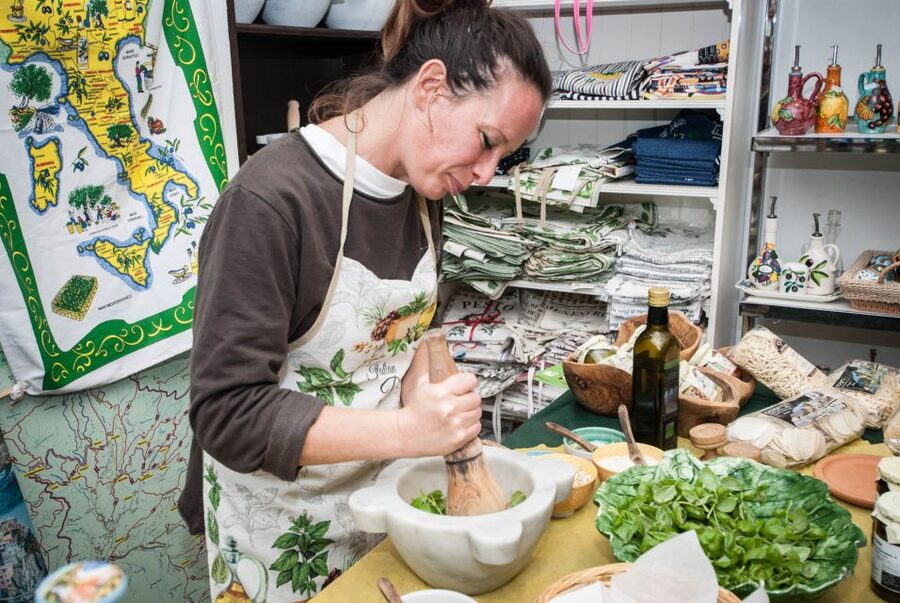
Pesto tastes better when you make it by hand. In Levanto’s old center, this 1.5-hour class takes you into Il Laboratorio del Pesto, a shop that has prepared Ligurian pesto since 1976. I especially like the small-group format, limited to eight people, and the generous tasting of pesto, olive oil, wine, and local snacks. The one point to note is the stated age rule: children under 10 are not suitable, even though one family reported that younger children took part.
The class is also a fine rainy-day activity in Levanto, only a short walk from the beach according to one participant. It costs $52 per person, which is not cheap for a short food class, but the hands-on lesson, drinks, food, and traditional mortar work make it better value than a simple tasting. You leave with a practical recipe and a much clearer idea of what fresh pesto should taste like.
In This Review
- Key points to know before you book
- Why pesto makes sense in Levanto
- What happens when you arrive at Il Laboratorio del Pesto
- The traditional mortar method, step by step
- The tasting is a real part of the class
- What makes the class worth $52
- Who will enjoy this most
- What the class is not
- Dietary needs and practical comfort
- A few tips for getting more from the experience
- Should you book the Levanto pesto class?
- FAQ
- How long does the Levanto pesto-making class last?
- How much does the experience cost?
- Where does the class meet?
- What languages are available?
- Is food and wine included?
- Can children join the class?
Key points to know before you book
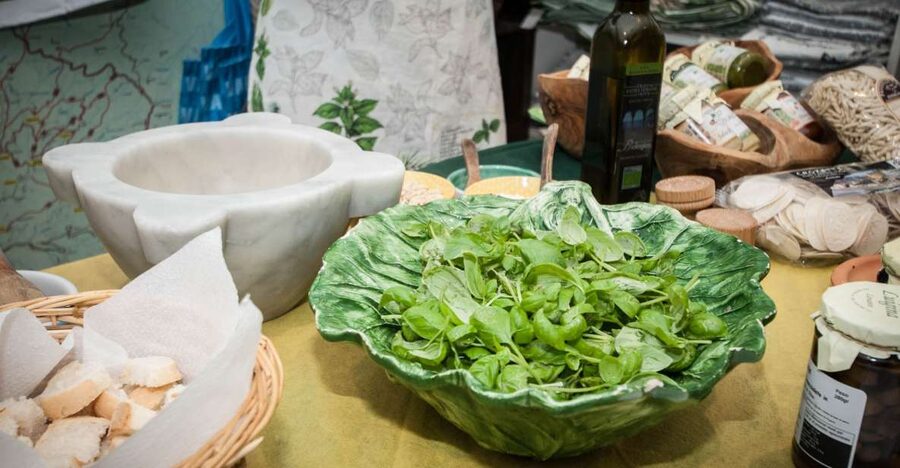
- You make pesto with a real mortar and pestle, pounding basil, salt, pine nuts, garlic, cheese, and olive oil by hand.
- The class takes place at Il Laboratorio del Pesto, a Levanto shop operating in the historic center since 1976.
- You taste several pesto styles, including pesto made by a modern method and the traditional Ligurian version.
- The tasting includes more than sauce, with sparkling wine, white wine, bruschetta, olives, anchovies, olive oil, and sometimes lemon cake and limoncino.
- The group is capped at eight people, although one older account described a group of 10, so the exact size may vary.
- English and Italian instruction is available, and the activity is listed as wheelchair accessible.
Why pesto makes sense in Levanto
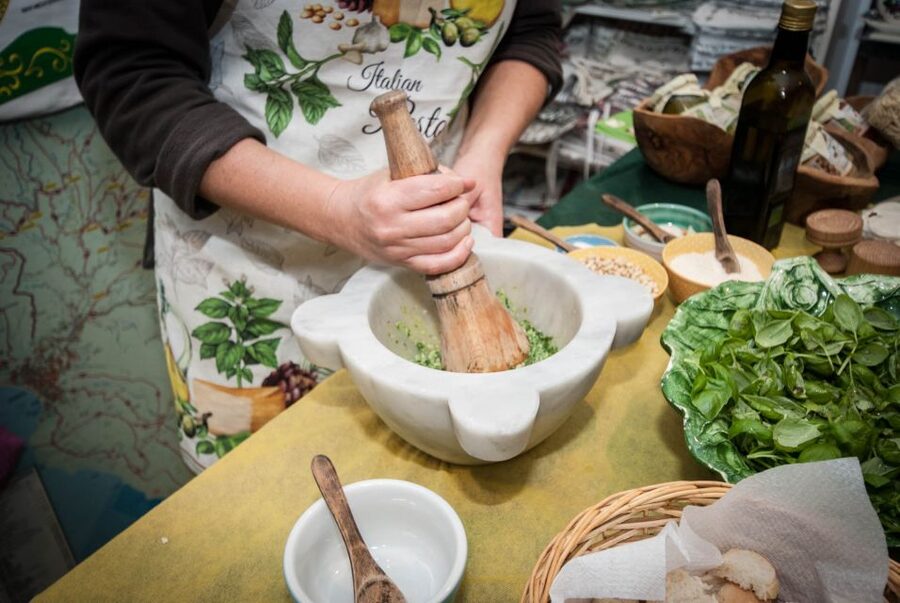
Liguria is the home of pesto Genovese, and this class gives you more than a quick recipe demonstration. It shows how the sauce fits into local food culture, where a few ingredients matter more than complicated cooking.
The basic list is simple: fresh basil, salt, pine nuts, garlic, Parmigiano cheese, and extra virgin olive oil. The work comes from how you handle them. With a blender, basil can turn dark and the sauce can become too smooth or oily. With a mortar, you crush and combine the ingredients gradually, producing a thicker sauce with a strong herbal smell.
I like this kind of food class because it explains a familiar dish through technique. You may already buy pesto at home. After this lesson, you can taste the difference between a fresh, hand-worked sauce and a factory-made jar.
The setting helps, too. Il Laboratorio del Pesto has called Levanto home since 1976, so the class is tied to an established local shop rather than a temporary cooking setup created only for visitors. You meet at the shop in Levanto’s historical center, close to the town’s beach and central streets.
Other ways to spend a day in Italy:
- Vatican: Museums & Sistine Chapel Entrance Ticket
★ 4.5 · 144,003 reviews - Vatican Museums & Sistine Chapel Tour with Optional Basilica
★ 4.3 · 67,413 reviews - Colosseum, Roman Forum & Palatine Guided Tour
★ 4.7 · 63,148 reviews
What happens when you arrive at Il Laboratorio del Pesto
The meeting point is straightforward: Il Laboratorio del Pesto. The class is held inside the shop, giving you a compact, food-focused setting rather than a large demonstration kitchen.
The experience begins with a welcome tasting. You may start with sparkling wine and local extra virgin olive oil served on bruschetta. This is a useful introduction because it gets your palate ready before the pesto work begins. Olive oil is not just a background ingredient here. Its flavor affects the final sauce, and tasting it on its own helps you notice that.
The host then introduces different kinds of pesto. The stated program includes a comparison with pesto prepared using a modern method. This gives you a clear before-and-after lesson: first taste the smoother, machine-made style, then learn how the traditional method changes the texture and aroma.
The class is conducted in Italian and English. Several participants praised the clear explanations and friendly presentation, with Georgia mentioned by name in many accounts. The host also offers to take photographs during the class, a nice touch if your hands are occupied with basil and a heavy pestle.
The traditional mortar method, step by step
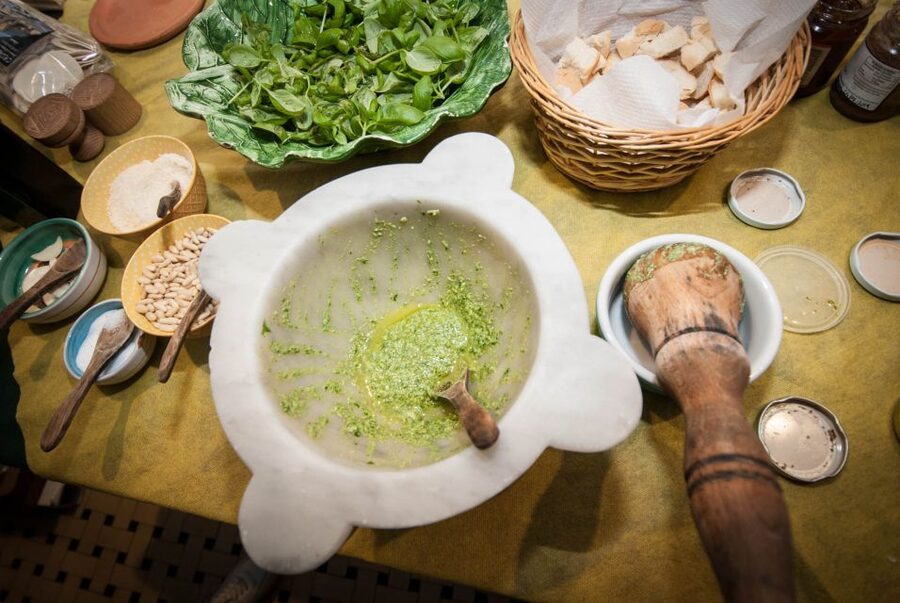
The central part of the class is hands-on. You wash and dry the basil leaves, then begin pounding them with salt, pine nuts, and garlic.
This is not a quick stir-and-serve recipe. The mortar forces you to work in stages. You crush the basil and other ingredients until they form a fragrant paste, then add Parmigiano cheese and extra virgin olive oil. The result is described as thick and aromatic, not thin or overly processed.
You should expect to take part rather than sit back for the full session. The instructor demonstrates the correct process, then guides participants through their own batches. The small group matters here. With only a handful of people, the host can watch your technique, explain each step, and help if your mixture needs more crushing or oil.
One especially useful feature is that you can compare the finished batches. Some people add more garlic. Others use a lighter hand with salt. Tasting these differences shows how small changes affect pesto, and it gives you permission to adjust the recipe when you make it at home.
The class also includes recipes and variations, according to one participant. That makes the experience more useful than a one-time performance. You are not simply shown a traditional method and left to remember it later.
The tasting is a real part of the class
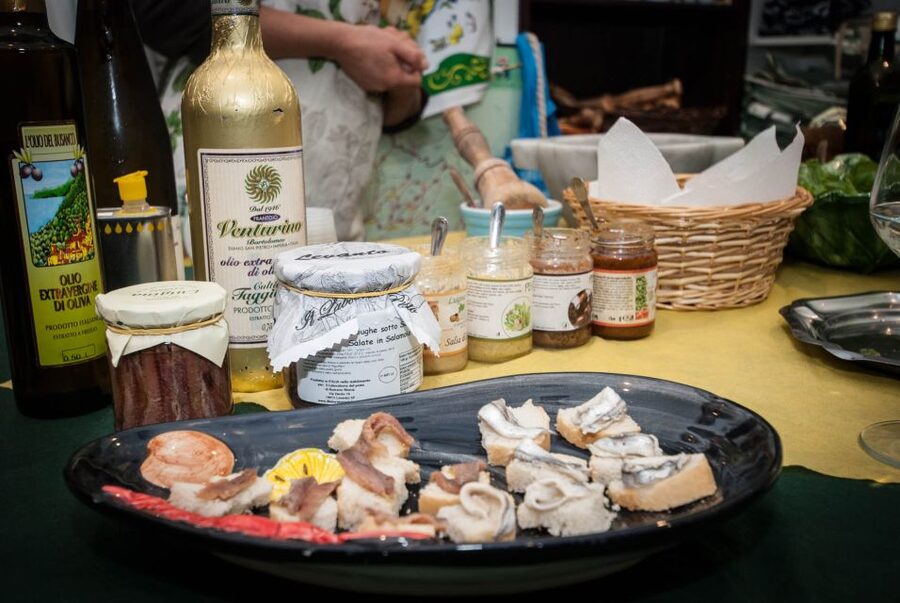
The food served here is not an afterthought. You taste your homemade pesto with local products and wine, making the lesson feel like a small Ligurian aperitivo.
The listed tasting includes a glass of white wine, olives, and bruschetta with anchovies. The opening may include sparkling wine and olive oil on bruschetta. Several accounts also mention lemon cake and limoncino at the end, along with extra pesto samples and local bites.
The exact selection may vary, but the pattern is clear: this is both a cooking class and a tasting. You get to try the pesto in a finished meal-like setting rather than eating it straight from the mortar.
That matters because pesto changes when paired with bread, oil, salt, fish, and wine. Bruschetta with anchovies adds a salty, savory contrast. Olives reinforce the local olive oil theme. Lemon cake and limoncino provide a sweet, citrusy finish.
The included drinks also improve the value. At $52, you are paying for instruction and ingredients, but you are also receiving wine and several food samples. It is not a full lunch or dinner, so do not book it expecting a meal replacement. Think of it as a substantial tasting before or after another meal.
Still Italy, but a slower afternoon:
- Milan: Cathedral and Duomo’s Terraces Entrance Ticket
★ 4.6 · 61,054 reviews - Venice: Doge’s Palace Reserved Entry Ticket
★ 4.6 · 42,716 reviews - Vatican Museums, Sistine Chapel & St Peter’s Basilica Guided Tour
★ 4.5 · 39,149 reviews - Rome: Colosseum, Palatine Hill and Roman Forum Guided Tour
★ 4.8 · 32,814 reviews
What makes the class worth $52
At first glance, $52 for 90 minutes can seem high for making a sauce. The value depends on what you want from the experience.
If you only want to eat pesto, you can buy it in a shop for less. If you want a long cooking lesson with multiple dishes, this class is too short. But if you want a local food experience that combines explanation, participation, wine, and tastings, the price is easier to justify.
You make your own batch instead of watching a chef do everything. You taste different preparations. You learn the traditional mortar method, receive recipe guidance, and sample local products. The intimate group also gives the class a more personal feel than a large demonstration.
I would compare it with the cost of a casual lunch plus a separate activity in Levanto. The class does not replace lunch, but it can provide enough food to feel satisfying for a midmorning or afternoon stop.
The shop’s long connection with Levanto adds some value, too. You are not learning an abstract Italian recipe in a generic kitchen. You are learning a famous Ligurian preparation in the region associated with it.
Who will enjoy this most
This is a strong choice for couples, solo visitors, friends, and families with older children. One solo participant said the small group was welcoming and accommodating, which is useful if you are not traveling with a companion.
You will probably enjoy it most if you like:
- Food traditions and simple regional recipes
- Small groups rather than large tours
- Hands-on activities
- Local wine and light tastings
- Practical souvenirs you can recreate at home
- A flexible activity for a rainy day
It also works well for people visiting Cinque Terre who want something other than trains, viewpoints, and crowded walking routes. Levanto is a convenient base for the area, and this class gives you a reason to spend time in town itself.
Children require more care when deciding. The official information says the activity is not suitable for children under 10. One older account describes children aged seven and nine enjoying the experience while adults drank wine, but that conflicts with the current stated restriction. I would follow the published age rule and confirm directly before booking for younger children.
What the class is not
This is not a full Italian cooking course. You focus on pesto, with tastings and local products around the lesson. You should not expect to prepare pasta, cook a complete meal, or sit down to a long lunch.
It is also not a museum visit about Ligurian food. The historical setting is part of the atmosphere, but the main activity is practical. You will spend your time tasting, listening, crushing ingredients, and eating.
The mortar method can take some effort. If you prefer fast demonstrations, the pace may feel slow. That slowness is part of the point, but it may not suit everyone. Pesto made by hand requires patience, and the class asks you to appreciate that process rather than rush toward the final bite.
There is also some uncertainty about the exact tasting menu. The official inclusions promise a glass of wine, local appetizers, and olive oil tasting. Individual accounts add details such as lemon cake, limoncino, two glasses of sparkling wine, and gluten-free alternatives. Those extras may depend on the day, so treat them as possible additions rather than guaranteed items.
Dietary needs and practical comfort
The experience includes bread-based tastings, anchovies, cheese, pine nuts, garlic, and wine. If you have allergies or dietary restrictions, tell the provider in advance and confirm what can be changed.
One participant with a gluten allergy received gluten-free bread and gluten-free chocolates. That is encouraging, but it is still best to arrange this before arriving rather than rely on a last-minute substitution.
The activity is listed as wheelchair accessible. The small-group setting may also make it easier to ask for help or adapt parts of the process, though you should confirm any specific mobility needs before booking.
The class lasts 1.5 hours, with starting times subject to availability. That makes it easy to fit into a day in Levanto, especially before an evening meal or after returning from nearby sightseeing.
Free cancellation is available up to 24 hours before the start time, and you can reserve now and pay later. Those terms are useful when your plans depend on weather or train schedules. A rainy afternoon in Levanto could be the ideal time to use the booking.
A few tips for getting more from the experience
Arrive ready to participate. You will wash basil, handle a mortar, and make your own mixture, so this is better approached as a workshop than a tasting counter.
Pay close attention during the ingredient stages. The important lesson is not simply how much basil or cheese to use. It is the order of work, the texture at each stage, and how gently you combine the ingredients.
Taste the different pestos with care. Try to notice garlic strength, salt, oil quality, thickness, and basil aroma. This turns the tasting into a useful lesson you can remember at home.
If you enjoy taking photos, ask the host to help. The host has offered to take pictures for participants, and your hands may be too busy for a good self-portrait.
Leave room for the snacks. The class is not lunch or dinner, but the wine, bruschetta, olives, anchovies, pesto, and possible dessert make it more filling than the title alone suggests.
Should you book the Levanto pesto class?
I would book it if you want a friendly, local food activity with real participation. The strongest parts are the traditional mortar work, the chance to compare pesto styles, and the warm instruction associated with Georgia. The tasting of wine, olive oil, anchovies, olives, and possible lemon sweets gives the short class a pleasant social rhythm.
I would skip it if you want a full meal, a long professional cooking course, or a low-cost tasting only. The $52 price makes sense for the lesson and food together, but it is more than you would pay for pesto alone.
For most food-loving adults spending time in Levanto, this is an easy recommendation. It is especially useful on a wet day, for solo visitors who want a small social activity, and for anyone who has eaten jarred pesto all over Italy and wants to understand the real thing.
FAQ
How long does the Levanto pesto-making class last?
The class lasts 1.5 hours.
How much does the experience cost?
The listed price is $52 per person.
Where does the class meet?
You meet the instructor at Il Laboratorio del Pesto in Levanto’s historical center.
What languages are available?
Instruction is available in Italian and English.
Is food and wine included?
Yes. The experience includes pesto making, a glass of wine, local appetizers, and an olive oil tasting. The tasting can include items such as bruschetta, olives, and anchovies. Some sessions have also included lemon cake and limoncino.
Can children join the class?
The activity is listed as unsuitable for children under 10. If you are traveling with younger children, confirm the age requirement with the provider before booking.
Recently added around Italy
- Florence Uffizi Gallery monolingual Small Group Tour★ 4.0 · 621 reviews
- Florence Private Walking tour with Skip-the-line to Accademia★ 4.5 · 236 reviews
- Uffizi Gallery Entrance Ticket with Priority Access★ 3.5 · 1,029 reviews
- Florence Skip-the-Line Duomo Tour with Guide & Brunelleschi Dome★ 5.0 · 1,176 reviews
- Skip-the-Line Accademia Guided Visit: David Secrets and Beyond★ 4.0 · 525 reviews
- Priority Entrance : Florence Accademia Gallery Timely Tickets★ 4.0 · 603 reviews
- Skip the line : David Guided Experience★ 4.5 · 1,076 reviews
- Private Tour in Siena, San Gimignano and Chianti Day Trip from Florence★ 5.0 · 405 reviews
Workshops, compared.

3 in 1 Cooking Class near Navona: Fettuccine, Ravioli & Tiramisu
Read our review →
Florence Pizza or Pasta Class with Gelato Making at a Tuscan Farm
Read our review →
Pasta & Tiramisu Cooking Class with Unlimited Wine
Read our review →
Pizza-Making Workshop with Drink and Appetizer
Read our review →
Pasta & Tiramisu Class with Fine Wine by the Vatican
Read our review →
Cooking Class and Lunch at a Tuscan Farmhouse with Local Market Tour from Florence
Read our review →Browse the lists this tour appears in