
Reviewed · WALKING TOURS
Lecce: Baroque Architecture and Underground Walking Tour
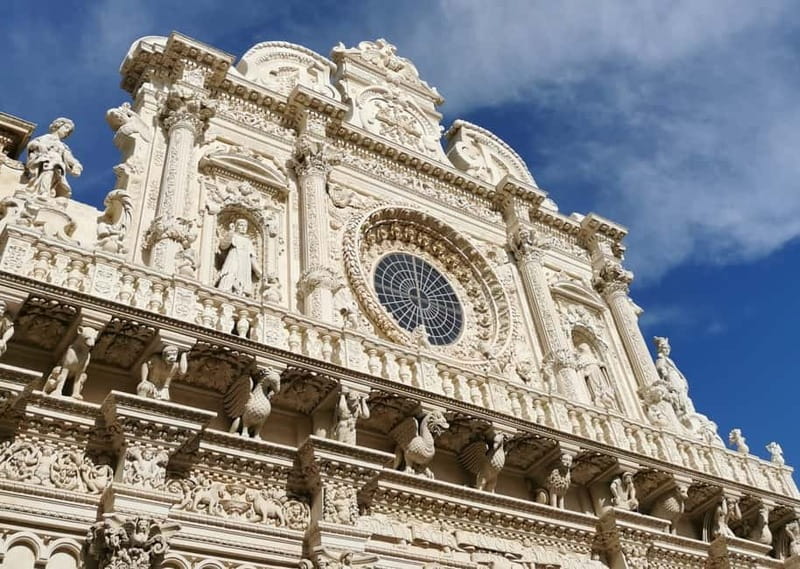
Lecce rewards a closer look. This 1.5 to 2 hour walk brings together the city’s curling Baroque stonework, Roman remains, grand squares, and an underground Jewish Museum in a compact introduction to the old town. I like the clear historical arc, from Roman Lecce to its Jewish past and dazzling 17th-century churches. I also like the choice of a small group or private guide, especially if you want time for questions.
The main drawback is pace. There is a lot to cover in a short visit, so some stops receive only about 15 minutes. The meeting point can also vary by booking option, and a few people have paid less by arranging a similar walk directly at the local office.
In This Review
- Key points at a glance
- Why Lecce’s Baroque needs a guide
- Starting at the underground Jewish Museum
- Santa Croce and Lecce’s carved stone
- Piazza Sant’Oronzo and the Roman layer
- Corso Vittorio Emanuele’s Baroque palaces
- Piazza Duomo’s grand architectural frame
- What the guide adds in 90 minutes
- Group size, timing, and walking comfort
- Is $28 a fair price?
- Small extras and useful surprises
- Who should book this Lecce walk?
- Should you book it?
- FAQ
- How long does the Lecce walking tour last?
- What language is the tour offered in?
- Is the Jewish Museum entry included?
- Does the tour include hotel pickup?
- Where does the tour end?
- Is the tour wheelchair accessible?
- Can I book a private tour?
- What sights are included?
- Are food and drinks included?
- Can I cancel for a full refund?
Key points at a glance
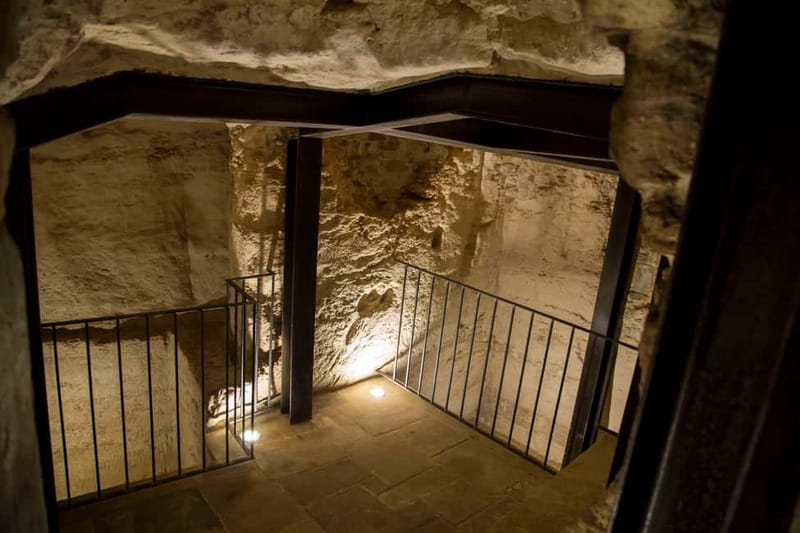
- Two Lecce stories underground and above ground: You visit the underground Jewish Museum, then walk through some of the city’s most famous Baroque spaces.
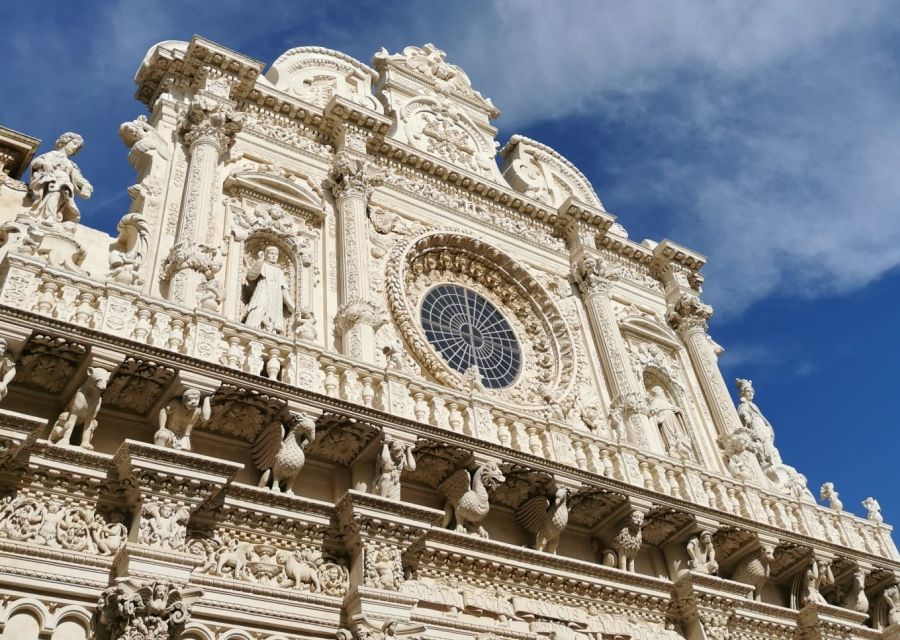
- Santa Croce begins the architecture lesson: Its elaborate stone facade shows why Lecce is known for theatrical Baroque design.
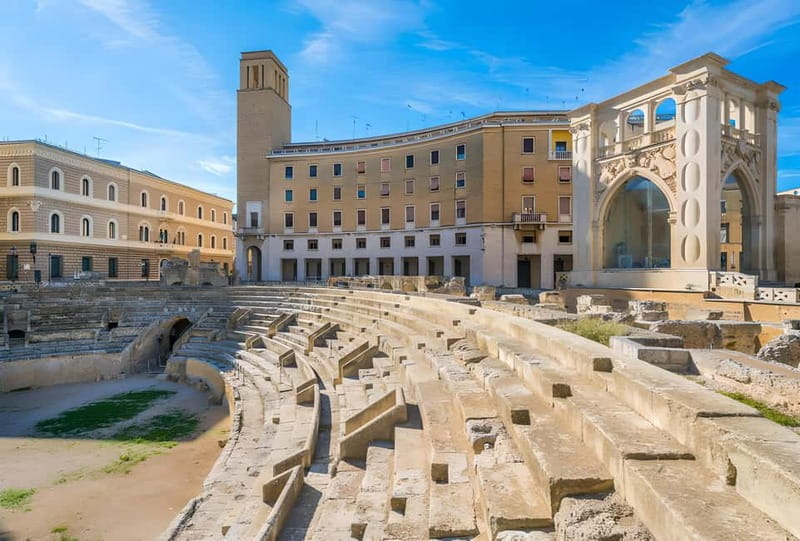
- Piazza Sant’Oronzo links Rome and modern Lecce: You see the Roman Column, amphitheater remains, Old Town Hall, and the former market square.
- Piazza Duomo is the grand finale: The cathedral, bell tower, Seminary, and Archbishop’s Residence form one of Italy’s finest architectural settings.
- Guides are the main strength: Angela, Antonio, Max, Massimiliano, Anita, and Luigi Bianco have all been singled out for clear, engaging explanations and local insight.
- The price needs a quick check: At $28 per person, the tour includes a guide and museum admission, but direct local booking may sometimes cost less.
Why Lecce’s Baroque needs a guide
Lecce’s Baroque style is not shy. Local limestone allowed artists to carve flowers, figures, animals, scrolls, and other lively details into church fronts and palaces. From street level, you can admire the effect, but a guide helps you notice how much work is packed into the stone.
I would not treat this as a simple photo walk. The better part is learning how different periods overlap in the same few blocks. Roman Lecce appears in the amphitheater and column. Medieval and early modern religious life appears in the churches and cathedral square. The Jewish Museum adds another chapter that is easy to miss if you only follow the main sightseeing route.
The strongest guides add personality to that outline. Max is repeatedly praised for humor, enthusiasm, and clear English. Antonio is described as funny and passionate, while Massimiliano connects the old buildings with life in Lecce today. Luigi Bianco made a particularly strong impression through his animated delivery and small anecdotes.
That matters because the tour covers many monuments quickly. A dry list of dates would be hard to remember. A good guide gives each place a reason to stay in your mind.
More Walking Tours in Lecce:
- Lecce: Guided Street Food Walking Tour with Food and Wine
★ 4.6 · 273 reviews - Milan: Guided Walking Tour & Last Supper Visit with Ticket
★ 4.7 · 5,409 reviews - Naples: Street Food Walking Tour with Local Guide
★ 4.8 · 4,256 reviews
Starting at the underground Jewish Museum
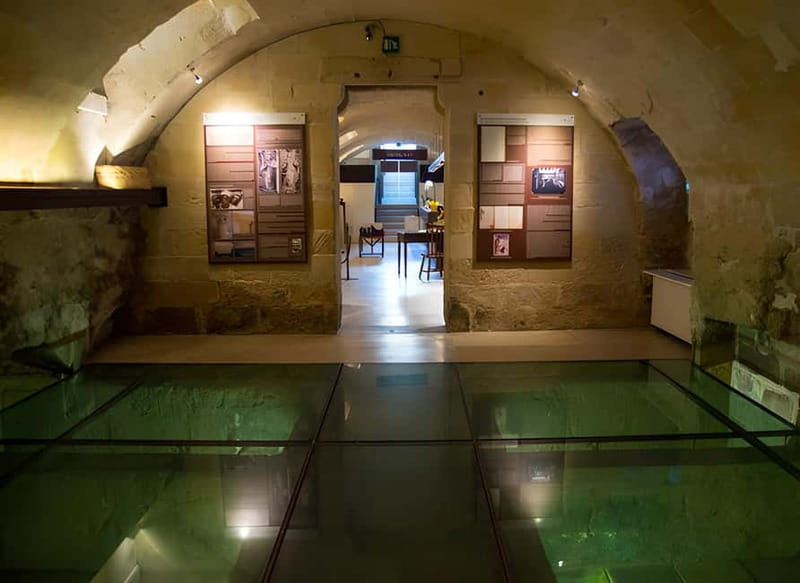
The Jewish Museum is a useful first stop because it takes you below the polished Baroque streets. The visit lasts about 15 minutes, so do not expect a long museum session, but it gives the tour a wider purpose than architecture alone.
Lecce’s Jewish story is often less visible than its churches and Roman remains. An underground setting makes that absence and presence easier to consider. You are not only looking at what survived above street level. You are also learning about a community and a part of the city’s past that can be overlooked on a standard walk.
The museum entry is included in the tour price, which improves the value. If you have already visited Lecce’s main churches, this stop may be the most distinctive part of the experience. If you are especially interested in Jewish history, 15 minutes may feel brief, so treat the visit as an introduction rather than a full museum tour.
Santa Croce and Lecce’s carved stone
Next comes Santa Croce Church, the great showpiece of Lecce’s Baroque architecture. The usual plan begins with an exterior visit, allowing you to study the facade and hear how its decoration fits into the city’s larger artistic style.
Give yourself a moment before the guide starts speaking. Santa Croce is filled with small carved details that can blur together at first. The value of having a guide is learning where to direct your eyes and understanding why the facade has such a dramatic appearance.
The guided portion is listed at about 15 minutes. That is enough for a focused explanation, but not enough for every architectural detail. Some departures have included entry to several churches, so the exact interior access may depend on the day and operating conditions. I would confirm this if stepping inside Santa Croce is essential to your plans.
For many people, this is the visual highlight. It also sets up the rest of the walk: once you understand Lecce’s fondness for ornate limestone, the palaces and churches along the route make more sense.
Piazza Sant’Oronzo and the Roman layer
From Santa Croce, the route reaches Piazza Sant’Oronzo, once the city’s market square. This is where Lecce’s Roman past becomes especially clear.
The Roman Column is one of the key landmarks. It is a reminder that the city was important long before the Baroque churches took their present form. Nearby, the remains of a large Roman amphitheater show the scale of the ancient settlement, even though only part of it is visible.
You also see the Old Town Hall in the square. Its presence beside Roman remains and later buildings makes Piazza Sant’Oronzo a good place to understand Lecce as a layered city, not a single-period museum.
The guide’s role here is more than naming monuments. Ask how the Roman remains fit into the modern square, and ask about the old market function if that interests you. Guides such as Antonio and Max have been praised for welcoming questions, which is useful at a stop with several competing points of interest.
The square can be visually busy, and the amphitheater is not a complete standing monument. If you expect a fully preserved arena, adjust your expectations. Its value is in the glimpse of size and position beneath the modern city.
A few more Lecce bookings to compare
- Small group tour of the caves of Santa Maria di Leuca
★ 5.0 · 806 reviews - 3 Hour Group Tour by Boat to the Caves of Santa Maria di Leuca
★ 5.0 · 472 reviews - Snorkelling-Tour in Porto Cesareo with typical aperitif
★ 5.0 · 452 reviews - Lecce: City Highlights Guided Tour by Bike
★ 4.8 · 362 reviews
Corso Vittorio Emanuele’s Baroque palaces
The walk continues along Corso Vittorio Emanuele, where Baroque palaces provide a change from church facades and Roman ruins. This section is about the city’s built fabric: doorways, balconies, carved stone, and the way private residences contribute to the overall look of the center.
Sant’Irene Church is another important stop, recently restored according to the tour information. Its facade and setting help show that Lecce’s Baroque was not limited to one famous church. The city’s character comes from repeated details across religious and civic buildings.
This is also one of the places where a local guide adds real value. You can easily walk along the street and see attractive buildings without knowing what they are or why they matter. A guide can point out the less obvious features and connect them with the larger story of Lecce’s architecture.
The timing remains fairly tight, with about 15 minutes assigned to several stops. If you like to photograph every balcony and doorway, you may feel hurried. I would save the most important photos for the end of each explanation and return later to any street that catches your eye.
Piazza Duomo’s grand architectural frame
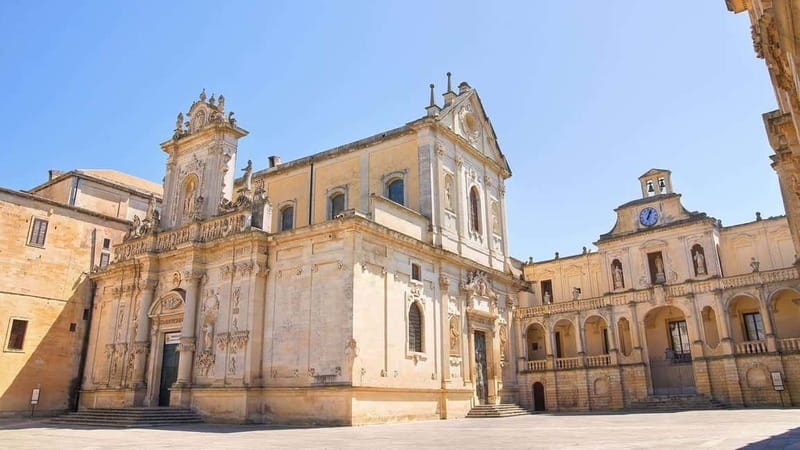
The final major outdoor stop is Piazza Duomo. This is not merely a square with a cathedral in it. The Archbishop’s Residence, Seminary, bell tower, and cathedral create a carefully framed architectural setting.
It is one of the most rewarding places on the route because the buildings work together. Look around the entire space rather than focusing only on the cathedral facade. The bell tower gives the square height, while the surrounding buildings create a sense of enclosure and ceremony.
The tour concentrates on exteriors here. That makes the guide’s explanation important, since you are learning to read the arrangement as a whole. The square is also the ending point, so you can stay nearby afterward and take a slower look once the formal walk is over.
The listed drop-off points are all around Piazza Duomo, including P.za del Duomo and Piazza del Duomo 11. Since the tour ends back at the meeting point, this is a practical location for continuing your own walk through central Lecce.
What the guide adds in 90 minutes
A short city tour succeeds or fails with its guide. This one has received strong praise for clear English, enthusiasm, humor, and local detail. Anita is praised for using whisper-style Bluetooth headsets, a welcome help when you are standing in a square with other sounds around you.
Max appears to be a particularly popular choice. His style is described as informed, witty, and easy to follow. He also handled tours in poor weather well, with much of the explanation taking place inside. That is worth noting if rain threatens your plans.
Angela is praised for energy and historical insight. Massimiliano is described as professional and good at linking the city’s past with present-day life. Luigi Bianco is noted for an animated voice and amusing anecdotes. The exact guide depends on the date and assignment, so you should not book on the assumption that one named guide will lead your departure.
One weaker experience involved a guide who was too relaxed, with some sections rushed and not enough encouragement for questions. That is a fair reminder that a group walk can vary slightly by guide and group size. Private or small-group booking gives you a better chance to shape the conversation.
Group size, timing, and walking comfort
The advertised duration is 1.5 to 2 hours. That makes this a good first activity in Lecce, especially if you arrive with limited time or want an orientation before exploring alone.
You should expect steady walking through the historic center, with several standing explanations. The tour is listed as wheelchair accessible, though the underground museum environment and old-town surfaces can still make it wise to confirm the exact route when booking.
There is no hotel pickup or drop-off. You meet at one of the stated Infotab Lecce Walking Tours locations, and the exact start point may vary by the option you choose. Check your confirmation carefully rather than relying on a general map pin.
The tour is offered in English, Italian, and French. The choice between a shared group and private format is useful. A shared walk usually keeps the cost lower and can be perfectly good with a lively guide. A private tour suits you better if you want to ask many questions, move at a slower pace, or focus on Jewish history, Roman archaeology, or church art.
Is $28 a fair price?
At $28 per person, I consider the tour reasonably priced if you want a guide and museum entry in one short outing. You are paying for local interpretation, a planned route, and access to the underground Jewish Museum rather than simply following a free map.
The value is strongest for a first visit. In 90 minutes or so, you cover the city’s key Baroque sights, Roman remains, Piazza Duomo, and a less obvious part of Lecce’s past. That saves you the effort of working out the route and gives you context that building plaques rarely provide.
The price is less compelling if you only want to see the main squares from the outside. Lecce is walkable, and you can explore many streets independently. Also, some people have found the same or a similar walk advertised at the local office for about $15 per person, roughly half the online price quoted here.
I would compare the direct price before booking, then weigh that saving against the convenience of reserving ahead. The online option includes free cancellation up to 24 hours before the activity and allows you to reserve now and pay later. Those terms have practical value if your Apulia plans may change.
Small extras and useful surprises
Food and drinks are not included. Still, some outings have ended with an unplanned olive oil and wine tasting, and participants enjoyed the chance to buy the products afterward. Treat that as a possible extra, not a guaranteed part of the advertised experience.
Guides have also offered restaurant, gelato, and local food suggestions. One particularly memorable recommendation involved trying horse meat, which gives you an idea of the informal local flavor that can appear in conversation. These tips are a bonus, but they can be useful when you are deciding where to eat after the walk.
Rain does not necessarily ruin the experience. Several churches and indoor stops help, though you should still wear suitable shoes and bring rain protection if the forecast looks poor. The tour remains primarily a walking activity, not a fully indoor museum program.
Who should book this Lecce walk?
I would recommend it most strongly if you are visiting Lecce for the first time and want a well-organized introduction without giving up half a day. It also suits you if architecture, archaeology, religion, or Jewish history interests you.
Families and mixed-interest groups may like the variety. Roman ruins offer one kind of story, ornate churches another, and the museum changes the pace. The humor and anecdotes supplied by a strong guide can also keep the walk lively.
You may want a longer or more specialized tour if you already know Lecce well. The short stops leave limited time for detailed photography, quiet contemplation, or extended museum viewing. In that case, use this walk to identify places for a second, slower visit.
Should you book it?
Book this tour if you want a compact, guided introduction to Lecce’s main historic layers and value explanations more than a slow, unstructured wander. The Jewish Museum is a worthwhile addition, and the route includes the city’s essential Baroque and Roman sights.
Before paying, compare the online fare with the local office price, check the precise meeting point, and confirm the language and group format. If you can get a small group with a lively guide such as Max, Angela, Antonio, Massimiliano, Anita, or Luigi Bianco, the experience should give you a strong start in Lecce. If your priority is maximum time inside each church or museum, plan a self-guided return afterward.
FAQ
How long does the Lecce walking tour last?
The tour lasts about 1.5 to 2 hours. Starting times vary, so check availability for the date you want.
What language is the tour offered in?
The live guide can conduct the tour in English, Italian, or French.
Is the Jewish Museum entry included?
Yes. Entry to the underground Jewish Museum is included in the tour price.
Does the tour include hotel pickup?
No. Hotel pickup and drop-off are not included. You meet at a designated Infotab Lecce Walking Tours location.
Where does the tour end?
The activity ends back at the meeting point, with listed ending locations around Piazza Duomo.
Is the tour wheelchair accessible?
Yes, the activity is listed as wheelchair accessible.
Can I book a private tour?
Yes. You can choose between a private tour and a shared small-group option, depending on availability.
What sights are included?
The route includes Santa Croce Church, Piazza Sant’Oronzo, the Roman Column, Roman amphitheater remains, Corso Vittorio Emanuele, Sant’Irene Church, Piazza Duomo, and the underground Jewish Museum.
Are food and drinks included?
No. Food and drinks are not included in the tour price.
Can I cancel for a full refund?
Yes. You can cancel up to 24 hours before the activity for a full refund. You can also reserve now and pay later.
Recently added around Lecce
- Private Tour of the Medieval Village of Ostuni by Tuk Tuk★ 4.5 · 278 reviews
- Lecce: Guided Street Food Walking Tour with Food and Wine★ 4.6 · 273 reviews
- Santa Maria di Leuca: Capo di Leuca Boat Tour★ 4.8 · 245 reviews
- Puglia: Masseria Seppunisi Tour, Cheese, Burrata Tasting★ 4.8 · 177 reviews
- Lecce: Street Food Tasting and Sightseeing Tour★ 4.8 · 197 reviews
- Lecce guided tour with underground discoveries★ 4.5 · 230 reviews
- Lecce: City Highlights Guided Tour by Bike★ 4.8 · 362 reviews
- Lecce: City Highlights Guided Tour by Rickshaw★ 4.8 · 236 reviews
Walking Tours, compared.
Guided Walking Tour & Last Supper Visit with Ticket
Read our review →
Rialto Bridge & Offbeat Unusual Venice Walking Tour
Read our review →
Private 3 hrs Venice Tour: St Mark’s, Walking tour & Boat tour
Read our review →
Skip the line: Uffizi and Accademia Small Group Walking Tour
Read our review →Browse the lists this tour appears in