
Reviewed · POMPEII & VESUVIUS TOURS
Herculaneum: Skip-the-Line Entry Ticket with Audio Guide
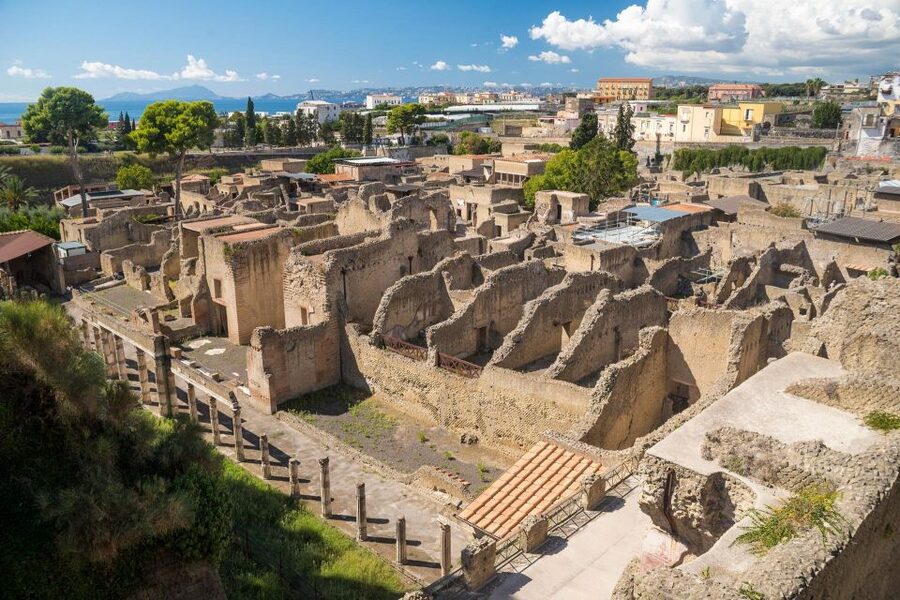
The past is startlingly close here. Herculaneum gives you a quieter, more intimate look at Roman life than Pompeii, with colorful frescoes, mosaics, wooden doors, statues, and even furniture preserved by the eruption of Vesuvius in 79 AD. I especially like the freedom to explore at your own speed and the audio guide’s detailed explanations of houses, temples, shops, and daily life.
I also like the site’s manageable size. You can see the main areas in two to three hours, yet there is enough detail to keep you busy for four hours if you stop often. The main drawback is the audio system: the numbers do not always match the buildings clearly, and some people have had to visit several desks to collect both the ticket and the device.
The experience costs about $15 per person, though you must select the option that includes the Herculaneum entry ticket. The lower-priced audio-guide-only option does not include admission, so check the booking choice carefully before paying.
In This Review
- Key points to know before you go
- Why Herculaneum feels different from Pompeii
- Getting to the ticket office and starting the visit
- Begin with the map, not the audio
- The houses reveal Roman life in surprising detail
- Shops, fountains, temples, and the public town
- The boat and the final, sobering evidence
- How long should you spend at Herculaneum?
- Is the $15 price good value?
- Who should book this experience?
- Practical tips for a smoother visit
- FAQ
- Does this experience include entry to Herculaneum?
- How long does the Herculaneum visit last?
- Which languages are available for the audio guide?
- Do I receive a map?
- Is a live guide included?
- What should I bring?
- Can I cancel the booking?
- Should you book Herculaneum with the audio guide?
Key points to know before you go
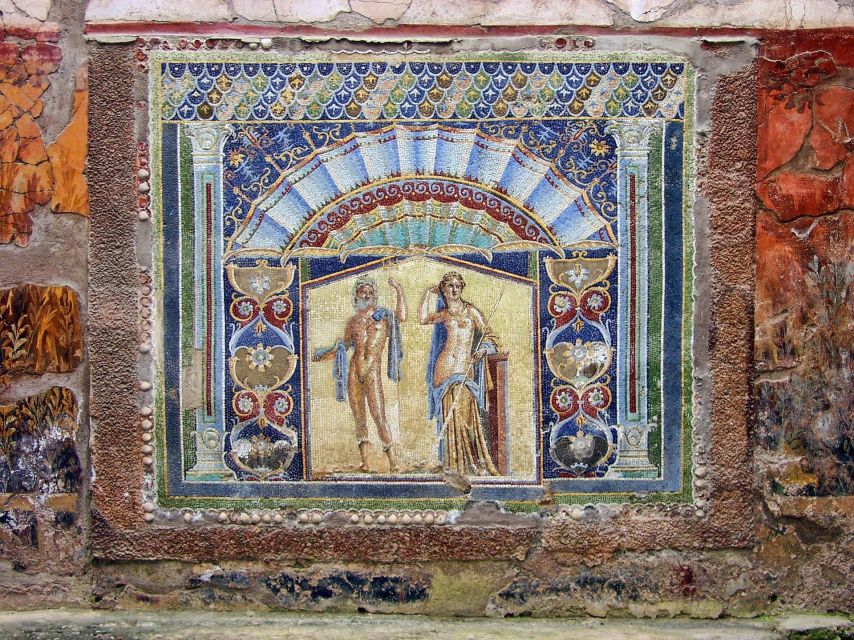
- Herculaneum is smaller than Pompeii but often better preserved, with original wood, frescoes, mosaics, doors, and household objects.
- The audio guide lets you choose your own route, but its building numbers can be confusing and do not always follow the site in a clear order.
- Allow two to three hours for the main visit, or closer to four hours if you want to study the houses and museum displays.
- Arrive early for a quieter visit, since the site gradually becomes busier later in the day.
- Bring comfortable shoes and identification, especially if you need to leave ID as security for the audio device.
- Check the ticket option carefully, because the audio guide and archaeological park entry may be sold separately.
Why Herculaneum feels different from Pompeii
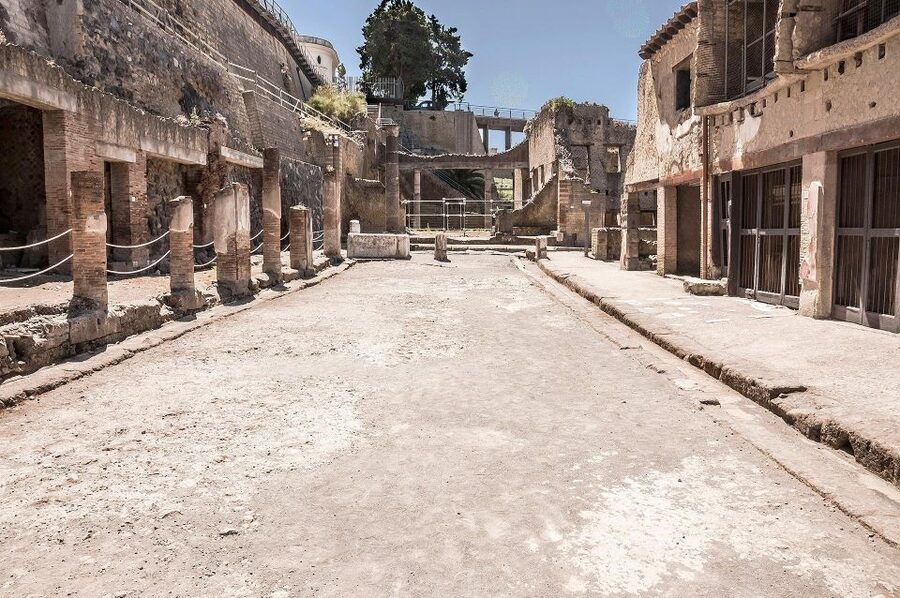
Herculaneum and Pompeii are often paired, but they offer different experiences. Pompeii is enormous and sprawling. Herculaneum is more compact, so you can understand its streets and buildings without spending a full day simply crossing the site.
The smaller scale does not make Herculaneum less impressive. In some ways, it makes the visit more powerful. You can look into a Roman house and see the floor decoration, wall paintings, storage spaces, and rooms in a way that feels unusually direct. The town gives you a closer look at ordinary domestic life, not just grand public monuments.
The eruption preserved Herculaneum in a different way from Pompeii. Volcanic material covered buildings and protected objects that would normally have disappeared over time. That is why you may see wooden beams, doors, and other fragile features alongside stone walls and marble details.
I find the result easier to grasp than a ruin made only of foundations. You can compare modest living quarters with the homes of wealthy Romans, then walk on to shops, fountains, temples, and public spaces. The site becomes less about isolated ruins and more about how a town worked.
More Pompeii and Vesuvius trips:
- From Naples: Pompeii Ruins & Mount Vesuvius Day Tour
★ 4.3 · 11,459 reviews - Naples or Sorrento: Full-Day Pompeii and Mount Vesuvius Tour
★ 4.6 · 4,235 reviews - Herculaneum: Skip-the-Line Guided Tour with Archaeologist
★ 4.8 · 3,439 reviews
Getting to the ticket office and starting the visit
Your meeting point is the Herculaneum Archaeological Park ticket office. You show your ticket there and begin the entry process.
The important detail is that the booking choices can be easy to misunderstand. The audio guide-only option does not include the archaeological park ticket, while the entry ticket must be selected as an extra. If you expect admission to be included, read the option name and price closely before confirming.
The skip-the-line promise may save time during a busy period, but it is not always useful in quieter months. Several visits had no meaningful queue, especially in September and April. In busier periods, though, avoiding a long wait can make the $15 price worthwhile.
The collection process has not always been perfectly clear. You may need to go to one desk for the audio device and another for entry, and some people have been directed between the ticket office and a nearby bookshop or side office. Staff have generally been helpful, but allow a little time to get oriented rather than expecting to walk straight through.
If you receive a handheld device, you may need to leave identification as security. An insurance card has been accepted in place of a passport in at least one instance, but bring your passport or ID card as the official requirement. Comfortable shoes are essential. The route includes cobblestones and some steep steps.
Begin with the map, not the audio
Take a moment at the entrance to study the map and understand the number system before pressing play. This small pause can prevent a great deal of wandering later.
The audio guide is available in English, French, German, Italian, and Spanish. It provides explanations of the main points of interest, including the homes, temples, public buildings, and areas connected with the eruption. Some versions also include map functions and visual features such as 3D or 360-degree views of selected objects as they may have appeared before the disaster.
The commentary is generally detailed and interesting. It helps you understand what you are seeing instead of simply walking past walls and doorways. You can learn how wealthy Romans lived, how slaves were housed, and what role markets, fountains, and public spaces played in the town.
The weak point is navigation. The numbers on the device or app may not match the numbers on the site, and the audio does not always follow the physical route. At times, a selection may take you to the wrong building or start partway through another description.
You do not need to follow the audio in numerical order. Choose the recording that matches the building or feature in front of you, and skip ahead if the route seems out of sequence. Ask for a printed map if one is not offered. The map is available as part of the experience, but one visitor was not given one at first, so it pays to request it.
If you have your own earphones, bring them if the device supports them. Bluetooth support has been requested, but it is not guaranteed. Some people found the audio quiet, while others found the handheld unit simple to use. A little patience at the start makes the system easier to manage.
The houses reveal Roman life in surprising detail
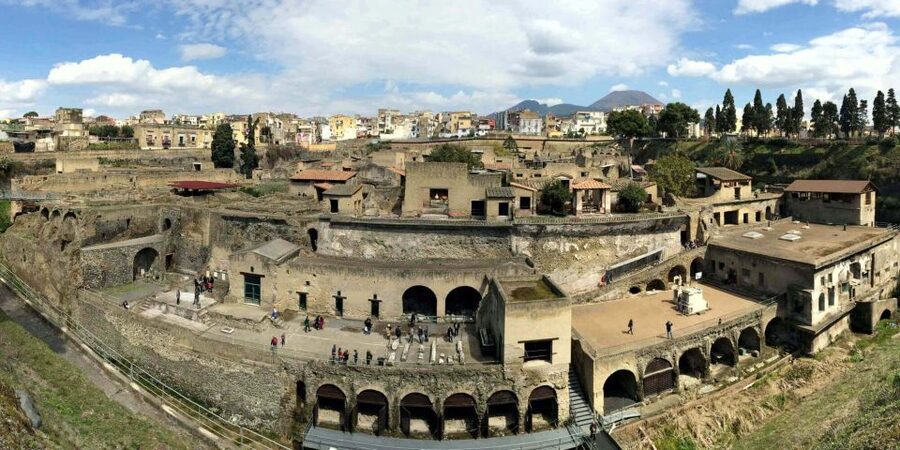
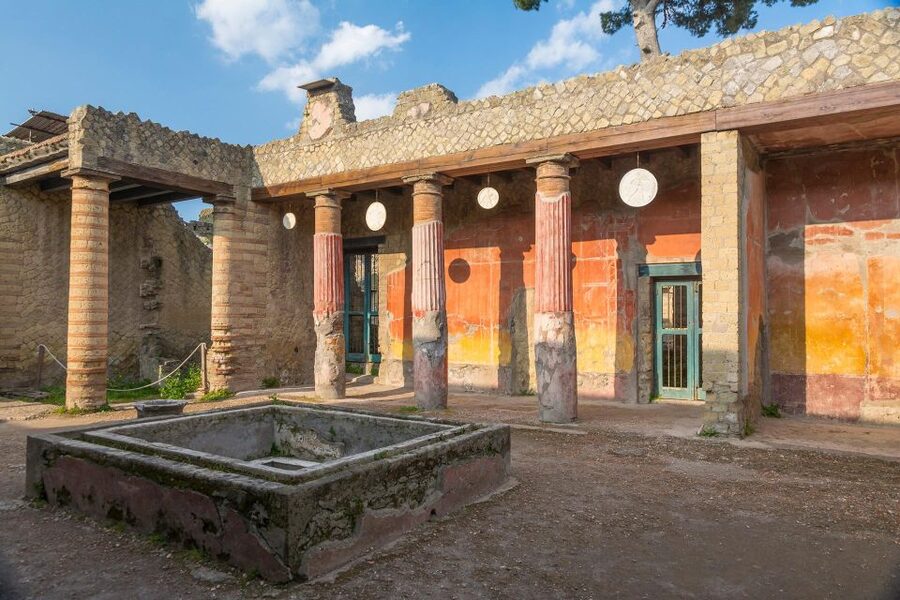
The private houses are the heart of the visit. Herculaneum’s preserved interiors help you imagine how rooms were arranged and how decoration signaled wealth.
Look for colorful frescoes, patterned mosaics, carved details, and wooden features. Original doors and beams are especially striking because wood rarely survives in ancient sites. These details turn the ruins from a collection of walls into recognizable homes.
The audio guide adds useful context as you move from one property to another. It explains the role of rooms, decorative choices, household arrangements, and the gap between the lives of wealthy Romans and enslaved people.
The contrast is one of the most useful parts of the visit. Lavish living spaces can sit close to simpler quarters, giving you a clearer sense of social division than a single grand villa could provide. You may find yourself paying as much attention to storage rooms and work areas as to the painted reception rooms.
Some buildings or exhibits may be closed during your visit. Internal signs are not always clear, and it may not be obvious which feature the audio is describing once you enter a house. Treat the guide as support rather than a perfect route planner. Look first, then listen, and use the map to confirm your position.
A few more Naples bookings to compare
- Naples: Naples Underground Entry Ticket and Guided Tour
★ 4.4 · 21,781 reviews - From Naples: Sorrento, Positano and Amalfi Full-Day Tour
★ 4.6 · 10,988 reviews - From Naples: Sorrento, Positano & Amalfi Coast – Small Group Tour
★ 5.0 · 8,643 reviews - Naples: Catacombs of San Gennaro Entry Ticket & Guided Tour
★ 4.6 · 7,941 reviews
Shops, fountains, temples, and the public town
Herculaneum was not only a collection of private villas. Its streets show the practical side of Roman town life.
Walk through the market area and imagine the movement of food, goods, and people through the town. Public fountains point to the everyday systems that kept the community functioning. The theatre and temples offer a different view, showing the importance of entertainment, religion, and civic identity.
The temple areas include depictions of ancient gods. These are not just decorative stops. They help you see how religion was woven into public and private life, from household decoration to formal worship.
The audio commentary is most useful here when it explains purpose. A wall may not look dramatic on its own, but knowing that it belonged to a market, fountain, temple, or theatre gives it meaning. You can move at your own pace and linger where the details catch your eye.
The site is well laid out overall, but some marked buildings are not included clearly in the audio system. Temporary closures can also interrupt the route. I would not plan your visit around listening to every numbered entry in sequence. Plan to wander, then use the guide selectively.
The boat and the final, sobering evidence
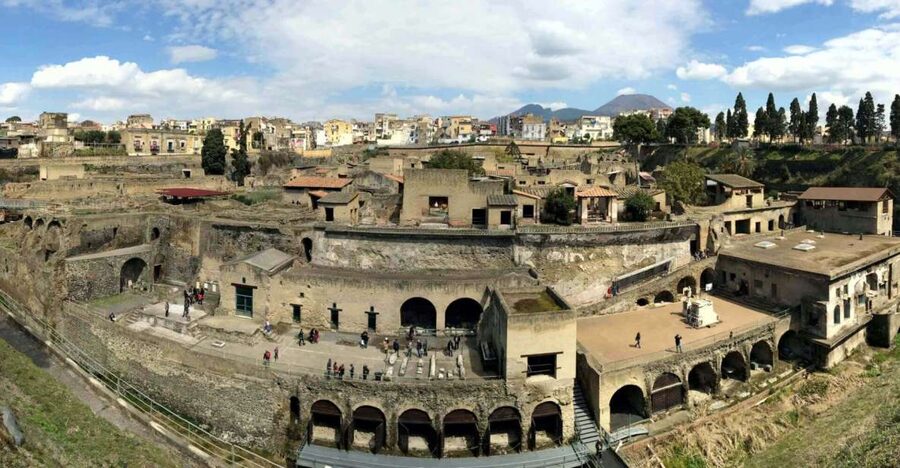
The visit becomes more emotional near the waterfront area and the boathouses. This is where the human cost of the eruption is most direct.
The area is connected with around 300 people who died while waiting for rescue from the sea. The preserved skeletal remains are a stark reminder that this was not simply a natural event that damaged buildings. Real people were trapped, frightened, and hoping to escape.
The boat display and the Antiquarium add important context. The museum near the entrance or exit contains artifacts, furniture, and objects recovered from the town. These pieces help explain the buildings you have just seen, and they are worth allowing time for rather than rushing past on your way out.
Some visitors prefer to end with the waterfront and skeletons because the final section is the most poignant. Others begin in the opposite direction to avoid the crowds and finish there. Since the audio route can be followed in any order, you have the freedom to choose.
The site also has a café and a place to buy snacks and drinks. There are spots where you can sit and eat a packed lunch, which is useful if you are taking your time. Toilets have received poor marks, so do not expect museum-quality facilities.
How long should you spend at Herculaneum?
For a focused visit, plan on two to three hours. That gives you time for the major houses, public buildings, the waterfront area, and the museum displays without racing.
If you like Roman history, photography, or architectural detail, allow four hours. A slower visit lets you listen to more commentary, compare houses, sit in shaded areas, and return to rooms that deserve a second look.
The site is compact enough for a short visit before a flight or another Naples-area activity. It also works well as a full morning or afternoon outing. One useful approach is to arrive at opening time, explore while it is quiet, and then stop for lunch nearby afterward.
Several people found the park calmer than Pompeii. That matters in practical terms. Fewer crowds make it easier to stand in front of a fresco, hear the audio, and imagine the scale of a room without being pushed along.
Is the $15 price good value?
At about $15 per person, this is a reasonable way to see one of Italy’s most important archaeological sites, provided your option includes admission. The audio guide adds value because a self-guided visit without context can leave you looking at beautiful but puzzling remains.
The ticket is less compelling during a quiet period when you can simply buy entry with little or no wait. In April and September, some visits found only a few people in line. During busier times, the skip-the-line element becomes more useful.
The bigger value comes from the site itself. Herculaneum gives you a great deal to see within a manageable area, and the quality of preservation is exceptional. For many people, it feels more rewarding than a larger ruin that requires several hours of walking between scattered highlights.
If you want a structured explanation from a person, the audio guide will not fully replace a live guide. Some people were offered an upgrade and found guides such as Tony or Fabio excellent, with clear explanations, humor, and a pace adjusted for hot weather. That is a different product, but it may suit you better if you prefer to ask questions and have someone identify the key details.
Who should book this experience?
I recommend it most strongly for first-time visitors to Herculaneum who want independence but still need background information. You can choose your own route, spend as long as you like in a house, and skip commentary that does not interest you.
It suits families, couples, solo visitors, and anyone combining Herculaneum with Pompeii. The compact layout is easier to manage than Pompeii’s huge area, but the uneven cobblestones and steep steps require steady footwear.
History fans will appreciate the preserved interiors, while casual sightseers may enjoy the visit because the town is easy to understand at a glance. If you are short on time, two focused hours can still cover the main attractions.
I would be more cautious if you dislike using electronic guides or become frustrated by imperfect directions. You may spend time matching numbers to buildings, and some recordings may not line up neatly with the route. In that case, a live guided tour is likely a better choice.
Practical tips for a smoother visit
- Arrive early if you want the quietest conditions.
- Confirm that your booking includes the entry ticket, not only the audio guide.
- Ask for the map before entering the ruins.
- Keep your passport or ID available if the audio device requires a deposit.
- Bring comfortable shoes for cobblestones and steep steps.
- Start with the map and select audio stops by location, not strict numerical order.
- Allow extra time for the Antiquarium and the boat display.
- Carry water or plan to use the café and snack facilities.
- If you are visiting on the first Sunday of the month, check the park’s free-entry arrangement before purchasing.
FAQ
Does this experience include entry to Herculaneum?
Entry is included only when you select the option with the Herculaneum entry ticket. The audio-guide-only option does not include admission, so check your selection carefully.
How long does the Herculaneum visit last?
The booking is valid for one day. Most people can see the main site in two to three hours, while a slower visit with the museum and extended stops can take around four hours.
Which languages are available for the audio guide?
The audio guide is available in English, French, German, Italian, and Spanish.
Do I receive a map?
A map is included and is useful for finding the numbered points of interest. Ask for one at the start if it is not handed to you.
Is a live guide included?
No. This experience includes an audio guide and map, but not a live guide. A guided-tour upgrade may sometimes be offered separately.
What should I bring?
Bring a passport or ID card and comfortable shoes. Identification may be needed as security for the audio device.
Can I cancel the booking?
You can cancel up to 24 hours in advance for a full refund. A reserve-now-and-pay-later option is also available.
Should you book Herculaneum with the audio guide?
Yes, if you want a flexible and affordable visit to a remarkably well-preserved Roman town. The houses, frescoes, mosaics, wooden features, boat display, and human remains make Herculaneum feel unusually close to the people who lived there.
Book it with realistic expectations about the audio system. The commentary is informative, but the numbering can be awkward, and the ticket collection process may involve more than one desk. Select the entry-ticket option, arrive early, ask for the map, and treat the audio as a helpful companion rather than a flawless navigation tool.
If you prefer personal explanations and easy questions, choose a live guided tour instead. For everyone else, this $15 option offers strong value, plenty of freedom, and a powerful look at Roman life beneath Vesuvius.
Recently added around Naples
- Vesuvius National Park Skip-the-Line Ticket★ 3.8 · 221 reviews
- Naples: The Holy Mile 3-Hour Guided Tour★ 4.9 · 711 reviews
- Pompeii and Vesuvius Full-Day Tour from Amalfi Coast★ 4.4 · 319 reviews
- From Naples: Pompeii & Herculaneum with Archaeologist Guide★ 4.8 · 665 reviews
- From Naples: Pompeii and Herculaneum Tour with Lunch★ 4.3 · 444 reviews
- From Naples: Pompeii Guided Tour with Skip-the-Line Tickets★ 4.8 · 1,171 reviews
- Naples: Day Trip to Pompeii and Capri★ 4.4 · 272 reviews
- From Naples: Pompeii & Amalfi Coast Full-Day Trip★ 4.5 · 279 reviews
Pompeii & Vesuvius Tours, compared.
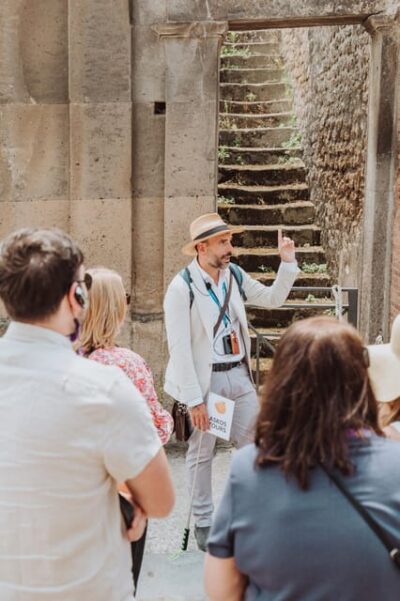
Entry Ticket and Guided Tour with an Archaeologist
Read our review →


Pompeii Small Group Tour with an Archaeologist
Read our review →
Pompeii, Amalfi Coast and Positano Day Trip from Rome
Read our review →Browse the lists this tour appears in