Reviewed · GUIDED
Guided Tour of Mosaic Tiles in Ravenna
Ravenna’s mosaics reward a closer look. This walking tour links the city’s major early Christian monuments with the religious politics, imperial power, and artistic skill behind their glittering walls. I like the way it combines Ravenna’s sacred art and history, and I like that admission to the featured monuments is included, saving you the trouble of arranging several entries yourself.
The guides are the heart of the experience. Names praised for clear explanations and lively storytelling include Elisabetta, Francesca, Marco, Serena, Silvia, Chiara, Assunta, and Bardo. The tour can be especially useful if you want someone to explain why a small detail in a mosaic matters, rather than simply pointing out that the walls are beautiful.
The main caution is sound and timing. Groups can reach 20 to 28 people, and a radio system is used when needed, but one poor audio experience can make the commentary hard to follow. The tour is advertised at two to three hours, yet you should leave room for it to run longer, especially if entrances or crowds slow things down.
In This Review
- Key points to know before booking
- Why Ravenna’s mosaics deserve a guided visit
- Starting at Piazza San Francesco 7
- Mausoleo di Galla Placidia and its starry ceiling
- Basilica di San Vitale and the imperial procession
- Battistero Neoniano and the Baptism of Christ
- Some departures include five mosaic sites
- The guides make the art easier to read
- Radio headsets, group size, and hearing the commentary
- How much walking and time to allow
- Is $33.86 good value?
- Who will get the most from this tour?
- Should you book the Ravenna mosaic tour?
- FAQ
- How much does the guided Ravenna mosaic tour cost?
- How long does the tour last?
- Which language is the tour offered in?
- Is admission included?
- Where does the tour begin?
- Where does the tour end?
- How large can the group be?
- Are audio devices available?
- Can I cancel for a full refund?
- What happens if the tour does not meet its minimum number of participants?
Key points to know before booking
- The stars of Galla Placidia inspired Dante: The mausoleum’s blue ceiling and countless stars helped fire the imagination of the poet behind the Divine Comedy.
- San Vitale delivers the grandest visual impact: Its apse mosaics present the Byzantine emperor Justinian and Empress Theodora in richly detailed processions.
- Admission is included: The listed visits include entrance tickets, a real convenience when several monuments are on your plan.
- You walk between major sites: This is not a ride-through sightseeing trip. Wear comfortable shoes and expect plenty of time on your feet.
- A radio device may make a large group workable: You can often move a little away from the guide and still hear, although equipment and voice clarity can vary.
- The meeting point needs care: Start at the Tourist Information Office at Piazza San Francesco 7, not simply somewhere in the square.
Why Ravenna’s mosaics deserve a guided visit
Ravenna is not a city where the full story sits on a single label beside one famous object. Its mosaics are spread through churches, chapels, and baptisteries, and their meaning depends on the people who commissioned them.
The decoration reflects several layers of power and belief. Ravenna was shaped by Roman rule, Christian worship, and strong eastern influence from Byzantium. A guide can help you connect the emperors, bishops, court ceremony, biblical scenes, and visual symbols that appear across the monuments.
I find this especially useful in Ravenna because the mosaics can seem simple at first glance. Then you notice how tiny glass and stone pieces catch the light, how the figures are arranged, and how color directs your eye. Without context, you may admire the surfaces but miss the message.
The tour also adds stories about Dante Alighieri and other famous Italians. That gives the walk a human thread. Ravenna is not only a collection of old religious buildings. It is also a place where later generations kept finding meaning in the city’s art.
A few more Italy bookings to compare
- Colosseum, Roman Forum & Palatine Guided Tour
★ 4.7 · 63,148 reviews - Vatican Museums, Sistine Chapel & St Peter’s Basilica Guided Tour
★ 4.5 · 39,149 reviews - Rome: Colosseum, Palatine Hill and Roman Forum Guided Tour
★ 4.8 · 32,814 reviews
Starting at Piazza San Francesco 7
The tour begins at Piazza San Francesco 7, at the Tourist Information Office. This detail matters because the address can feel vague if you expect to meet a guide outdoors in the middle of the square.
Go inside the information office and check in before the visit begins. That small step has caused confusion for some people, so I would arrive with enough time to locate the office rather than assuming the guide will be obvious.
The experience is offered in English and uses a mobile ticket. It is near public transportation, and most people can participate. The group limit is 28, though a group of around 20 to 25 can still feel large inside quiet churches.
A walking tour also depends on the pace of the group. The guides praised most often kept people moving at a reasonable speed while allowing time to look. You should still expect regular walking and standing. This is best treated as a serious art visit, not a quick photo stop.
Mausoleo di Galla Placidia and its starry ceiling
The first listed stop is the Mausoleo di Galla Placidia. Built around the middle of the fifth century at the request of Galla Placidia, who ruled the Western Roman Empire, the small building looks modest from the outside.
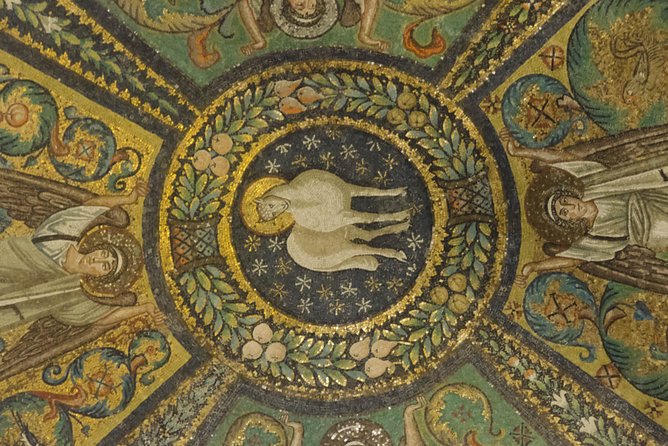
Inside, the mood changes at once. The Latin cross plan is compact, but the interior is covered with mosaic decoration. The famous ceiling presents a field of stars that has captured visitors’ imaginations for centuries.
The guide’s explanation is valuable here because the room is small and the design is easy to take in all at once. You can look upward at the deep blue vault, then notice how the stars create a sense of movement and space. The contrast between the plain exterior and the decorated interior is part of the pleasure.
This is also where the Dante connection becomes memorable. The stars are said to have inspired the great poet as he worked on verses of the Divine Comedy. That story gives the room a link to Italian literature, not just late Roman art.
The planned visit is about 10 minutes, with admission included. Ten minutes is brief, but the space itself is small and carefully controlled. If the group is crowded, you may need to be patient while everyone gets a clear view.
Basilica di San Vitale and the imperial procession
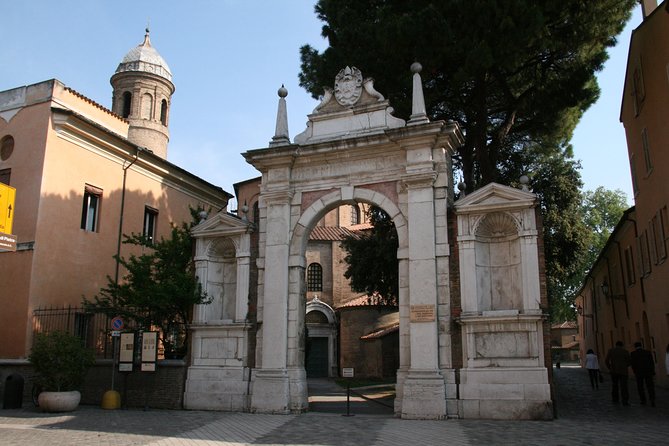
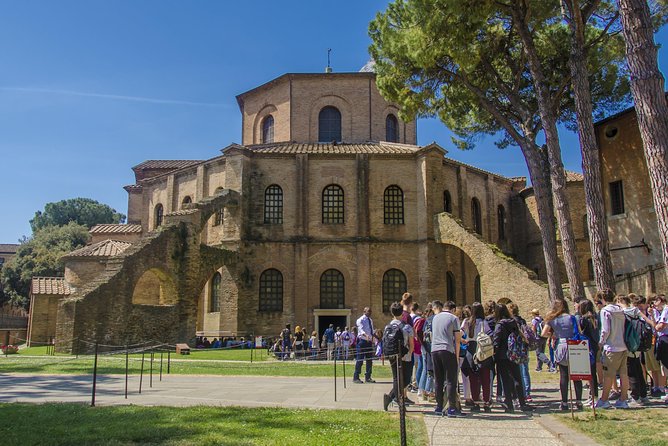
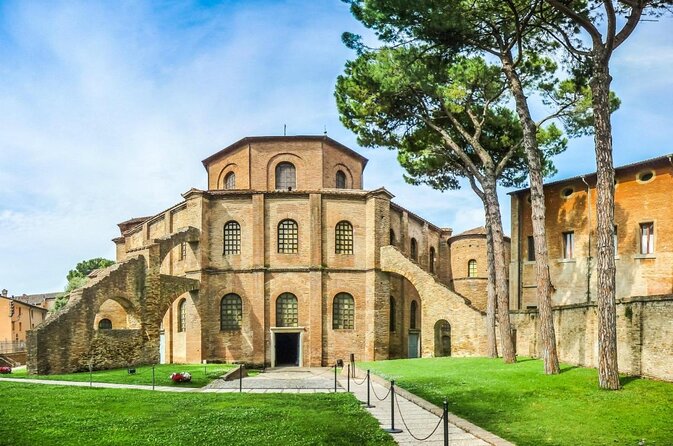
San Vitale is the largest and most visually commanding stop on the listed route. It is an important monument of early Christian art in Italy, with an octagonal plan and a large dome above the central space.
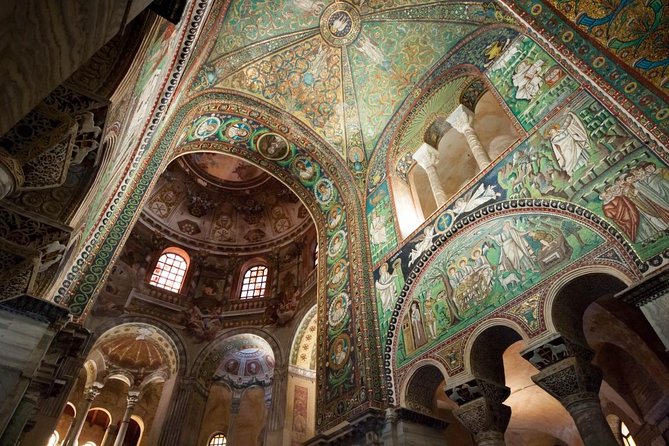
The interior pulls your eyes upward and toward the apse. The mosaics here are more than decoration. They present a carefully ordered world of religion, authority, and ceremony.
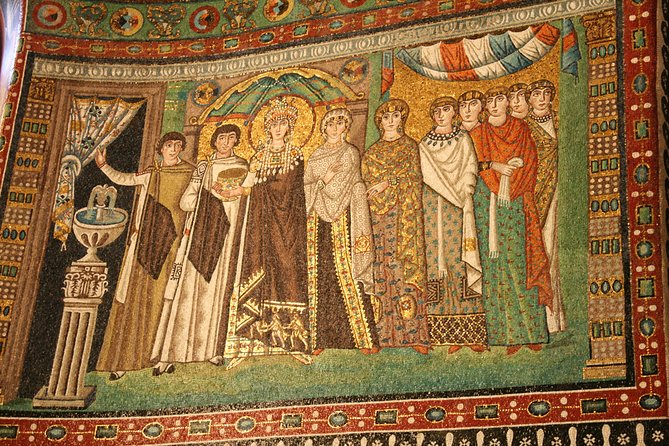
The most famous images show the Byzantine emperor Justinian and Empress Theodora with their attendants. Their processions communicate status and devotion at the same time. The guide can explain how the imperial couple’s placement and clothing relate to the wider religious and political message of the basilica.
I would allow yourself a quiet moment here before listening to every detail. The gold surfaces and formal figures can be overwhelming. Then look closer at the faces, robes, objects, and repeated patterns. A strong guide such as Francesca or Marco can turn those details into a readable story about the society that made them.
The scheduled visit lasts about 30 minutes, the longest of the three listed stops. That is appropriate. San Vitale needs time because the dome, apse, architecture, and imperial panels compete for your attention.
One practical issue is noise. Churches require a quiet tone, and a larger group may not fit neatly around every point of interest. A radio receiver can help, but you should stay alert for instructions and keep close enough to see where the guide is pointing.
Still Italy, but a slower afternoon:
- Vatican: Museums & Sistine Chapel Entrance Ticket
★ 4.5 · 144,003 reviews - Vatican Museums & Sistine Chapel Tour with Optional Basilica
★ 4.3 · 67,413 reviews - Milan: Cathedral and Duomo’s Terraces Entrance Ticket
★ 4.6 · 61,054 reviews - Venice: Doge’s Palace Reserved Entry Ticket
★ 4.6 · 42,716 reviews
Battistero Neoniano and the Baptism of Christ
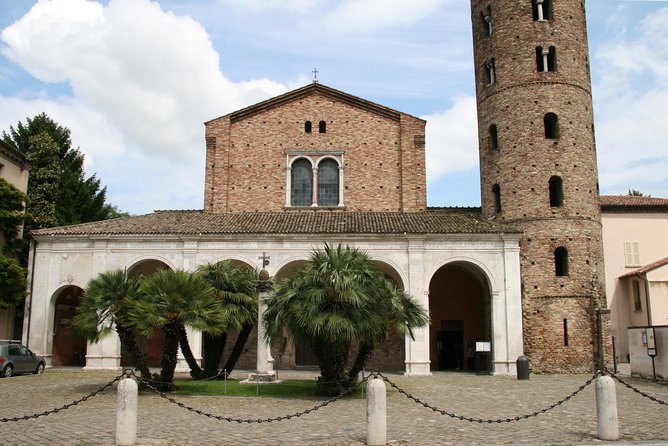
The Battistero Neoniano, also called the Baptistero degli Ortodossi, is one of Ravenna’s oldest monuments. Its brick exterior is plain, while the interior uses marble, stucco, and mosaics influenced by Hellenistic and Roman traditions.
The dome is the main attraction. At its center, Christ is shown receiving baptism, surrounded by the twelve Apostles. The procession moves around a bright blue field of tesserae, the small pieces used to form the mosaic.
This stop helps you see how Ravenna’s artists used a circular ceiling to organize a religious scene. The design leads your eye around the dome, while the blue background gives the figures a clear setting.
The building also retains a Renaissance baptismal font shaped to match the octagonal plan. An ambo from the fifth century remains inside as well. These details make the baptistery more than a single famous ceiling. You are seeing a building with layers from different periods.
The visit is planned for about 10 minutes, with admission included. It can feel short, especially if you want to study the Apostles or ask questions. The guide’s commentary helps you focus quickly on the features that are easiest to miss.
Some departures include five mosaic sites
The core itinerary lists Galla Placidia, San Vitale, and the Neonian Baptistery. Several descriptions of the experience also refer to a route covering five mosaic sites, so the exact number of stops may vary by departure or operating plan.
That is worth checking when you book. If you are promised five sites, you may get a broader introduction to Ravenna’s mosaic heritage than the three principal stops listed here. If your schedule is tight, do not assume the tour will end at exactly the two-hour mark.
The attraction of a wider route is clear. Ravenna’s art makes more sense when you can compare different buildings, periods, and styles. The drawback is that every added stop can put pressure on the schedule, especially when timed entry or church access creates a queue.
The guides make the art easier to read
The strongest feature of this experience is the quality of the guiding. Elisabetta is praised for giving generous time and clear context. Chiara is noted for combining a good sense of humor with a large amount of information while keeping the group on schedule.
Marco is described as both highly informed and well organized, particularly when the group had to reach timed entries. Francesca is praised for explaining art, architecture, society, and politics in a lively way. Serena is noted for presenting both Ravenna’s story and its mosaics with energy.
Those details matter because this material can become dry in less capable hands. The best guides do not simply list dates. They explain how rulers, religious decisions, and artistic choices shaped what you see.
The emphasis can lean toward symbolism. That is useful, but if you are especially interested in construction methods or architectural development, you may want to ask direct questions. One difficult outing also involved a guide whose voice and accent were hard to understand, even with the audio device. That appears to be an occasional risk rather than the usual experience, but it is fair to keep in mind.
Radio headsets, group size, and hearing the commentary
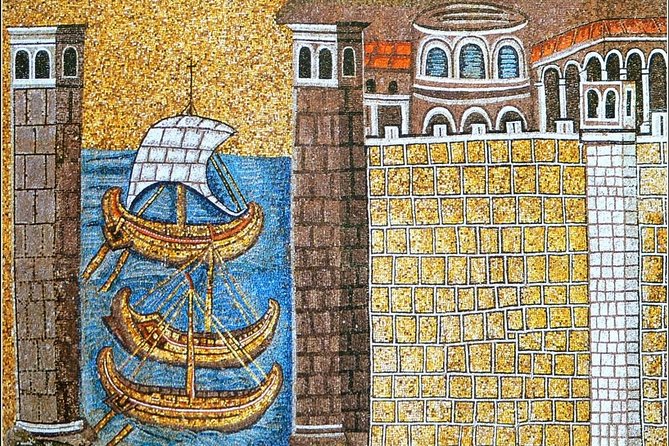
A radio device and earpiece may be supplied when the group is large. This setup can be a major help inside a crowded monument. You can step a short distance away to see a mosaic and still follow the explanation.
The system is not foolproof. One poor experience involved equipment that did not work well, and another person found the guide difficult to hear even with the device. If the sound is unclear, tell the guide promptly rather than waiting until the next church.
A group of 20 to 28 people is manageable outdoors but can feel crowded in small religious buildings. The best approach is to stay aware of the guide’s location, keep the earpiece properly positioned, and move forward when asked.
The large group also affects how much time you have at the front of a mosaic. If you want silence and solitude, a private visit at your own pace may suit you better. If you want a social, efficient introduction with a guide, the group format offers good value.
How much walking and time to allow
The stated duration is approximately two to three hours. In practice, I would protect at least three hours, and possibly more if the day is busy or the group is delayed.
One outing continued toward four hours, partly because cold weather and extended timing made the experience tiring. That is important if you are visiting Ravenna as a day trip from Bologna or connecting with a train.
The walking itself is not presented as strenuous, but there is plenty of it. You move through Ravenna’s streets between monuments and spend time standing inside churches and the baptistery.
Wear comfortable shoes. Dress for the season, and take cold weather seriously because the interiors may feel chilly. A warm layer can make the difference between enjoying the guide’s explanation and wanting the tour to end early.
Is $33.86 good value?
At $33.86 per person, the tour is reasonably priced for a guided visit that includes entrance to the listed monuments. Buying several tickets and navigating each site on your own would take time, and you would still need to build the historical connections yourself.
The value is highest if you are new to Ravenna. A guide helps you identify the important scenes, understand the religious symbolism, and connect the monuments with emperors, bishops, Dante, and the city’s changing rulers.
The price is less compelling if you already know the churches well or prefer to linger for as long as you like. A group visit imposes a schedule, and the exact finish time can vary.
Booking about 30 days ahead is common. That suggests you should not leave it until the last minute if the tour is central to your plans. Free cancellation is available up to 24 hours before the start time for a full refund. Changes or cancellations made inside that window are not accepted for a refund, and the experience may be canceled if its minimum number of participants is not reached.
Who will get the most from this tour?
I would choose this experience if you want a clear introduction to Ravenna’s major mosaics without spending hours planning each monument.
It suits:
- First-time visitors to Ravenna
- People making a day trip and wanting an efficient route
- Anyone interested in Christian art, Byzantine influence, or imperial history
- Visitors who enjoy asking a guide questions
- People who want monument admission arranged in advance
- Travelers who prefer a walking tour to an audio guide used alone
You may want another approach if you need a very quiet visit, have limited standing tolerance, or want to study each mosaic at length. The group size, radio equipment, and variable duration can also be drawbacks for visitors with a strict schedule.
Should you book the Ravenna mosaic tour?
Yes, I would book it for a first visit, especially at $33.86 with admission included. The mosaics are the reason to come to Ravenna, but the guide helps you understand the power, faith, and artistic choices behind them.
Book with three hours protected, wear warm layers in cool weather, and go to the Tourist Information Office at Piazza San Francesco 7 for check-in. If you care about hearing every word, stand where you can see the guide and report audio problems at once.
The best reason to choose this tour is not simply that it visits beautiful buildings. It gives you a way to read them. That turns a series of glittering walls into a connected story about Ravenna and the people who shaped it.
FAQ
How much does the guided Ravenna mosaic tour cost?
The listed price is $33.86 per person.
How long does the tour last?
The tour is scheduled to last approximately two to three hours. You should allow extra time because one departure ran closer to four hours.
Which language is the tour offered in?
The tour is offered in English.
Is admission included?
Yes. Admission is included for the listed visits to the Mausoleo di Galla Placidia, Basilica di San Vitale, and Battistero Neoniano.
Where does the tour begin?
It begins at Piazza San Francesco 7 in Ravenna, at the Tourist Information Office. You should enter the office and check in before the tour starts.
Where does the tour end?
The activity ends at a different location from the starting point. The exact end location is provided in the booking details.
How large can the group be?
The maximum group size is 28 people.
Are audio devices available?
A radio device and earpiece may be used when the group is large. They help participants hear the guide while standing a short distance away, though sound quality can vary.
Can I cancel for a full refund?
Yes. You can cancel at least 24 hours before the experience start time for a full refund. Cancellations or changes made less than 24 hours before the start time are not accepted for a refund.
What happens if the tour does not meet its minimum number of participants?
If the experience is canceled because the minimum number is not reached, you will be offered a different date or experience, or you can receive a full refund.
Recently added around Italy
- Florence Uffizi Gallery monolingual Small Group Tour★ 4.0 · 621 reviews
- Florence Private Walking tour with Skip-the-line to Accademia★ 4.5 · 236 reviews
- Uffizi Gallery Entrance Ticket with Priority Access★ 3.5 · 1,029 reviews
- Florence Skip-the-Line Duomo Tour with Guide & Brunelleschi Dome★ 5.0 · 1,176 reviews
- Skip-the-Line Accademia Guided Visit: David Secrets and Beyond★ 4.0 · 525 reviews
- Priority Entrance : Florence Accademia Gallery Timely Tickets★ 4.0 · 603 reviews
- Private Tour in Siena, San Gimignano and Chianti Day Trip from Florence★ 5.0 · 405 reviews
- Accademia Gallery Entrance Ticket with Priority Access★ 4.0 · 1,088 reviews
Guided, compared.
Colosseum, Roman Forum & Palatine Guided Tour
Read our review →
Vatican Museums, Sistine Chapel & St Peter’s Basilica Guided Tour
Read our review →
Colosseum, Palatine Hill and Roman Forum Guided Tour
Read our review →
Guided Tour of Colosseum, Roman Forum & Palatine Hill
Read our review →
Colosseum & Forum with Audio Guide App -Optional Arena
Read our review →
Colosseum, Roman Forum and Palatine Hill Guided Tour
Read our review →
Naples Underground Entry Ticket and Guided Tour
Read our review →