
Reviewed · HISTORICAL TOURS
Genoa: Historic Guided Tour of Christopher Columbus’ House
Columbus begins with a workshop, not a voyage. I like the way this $12 guided visit connects the explorer’s family home with the Cloister of Sant’Andrea and nearby Porta Soprana, giving you more than a quick look at four walls. I also like the small group limit of six, which makes it easier to hear the guide and ask questions.
The main drawback is the short advertised length. The visit is listed as 20 minutes, while the house portion is also described as 15 to 20 minutes and the full experience may take around 30 minutes or longer. That is useful for a busy Genoa schedule, but it is not a full museum visit or a long walking tour.
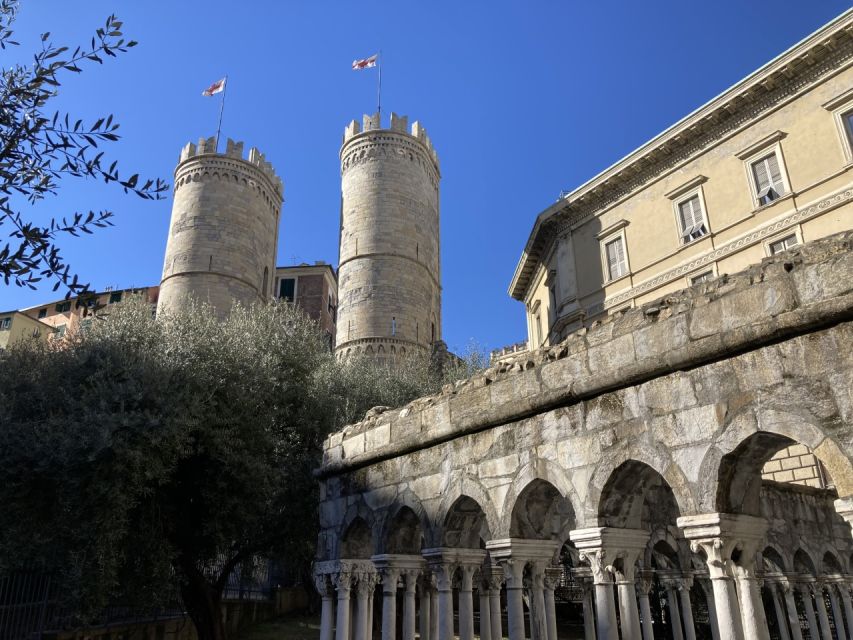
- A medieval setting: Casa di Colombo sits just outside Genoa’s old walls, near Porta Soprana and the medieval center.
- A working family home: The ground floor was used as a workshop, with wooden beams and an attic separating it from the private rooms above.
- More than the house: The guide also covers the rebuilt Cloister of Sant’Andrea and points out features around Porta Soprana.
- Small and personal: Groups are limited to six, and several guides have been praised for adjusting the pace and answering questions.
- English or Italian: Live guiding is available in both languages.
- Easy to fit into a day: At $12 per person, this is a modest-cost stop before exploring more of Genoa on foot.
In This Review
- Why Columbus’ Genoese Home Is Worth Your Time
- Inside Casa di Colombo: A Small House With a Working Past
- Sant’Andrea Cloister and Porta Soprana Add Needed Context
- A Short Tour That Makes Sense in a Busy Genoa Day
- Why the Small Group Matters
- What the $12 Price Really Buys
- Accessibility and Timing Considerations
- Who Will Get the Most From This Visit
- My Verdict on the Christopher Columbus House Tour
- FAQ
- How long does the tour last?
- What does the tour include?
- Is the tour offered in English?
- How large is the group?
- Where should I meet the guide?
- Is the ticket valid on another date?
- Can I cancel for a refund?
- Is the tour suitable for wheelchair users?
Why Columbus’ Genoese Home Is Worth Your Time
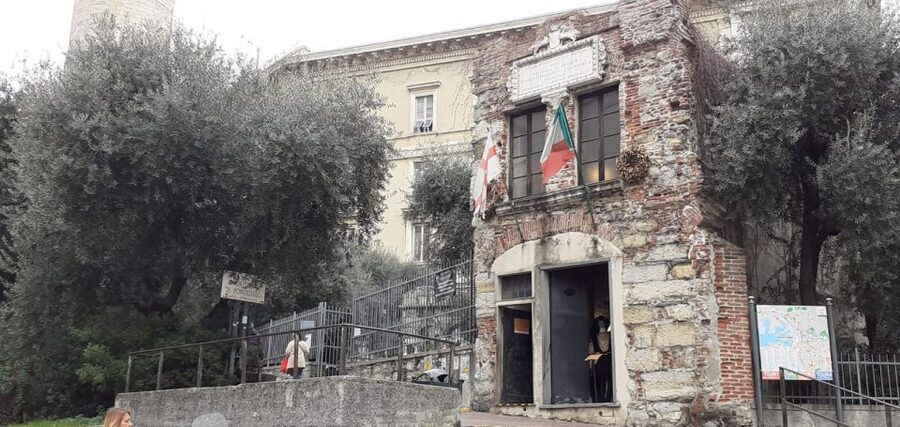
Casa di Colombo is not presented as a grand palace. That is part of its appeal. According to archival documents, Domenico Colombo, Christopher Columbus’ father, moved into the house in 1455, when Christopher was four years old. The building therefore offers a small, physical link to the explorer’s early years in Genoa.
You are not being asked to imagine an entire life from a large collection of personal objects. Instead, the visit focuses on the structure itself and the way the building was used. The ground floor served as a workshop, while the upper floor contained the family’s private rooms. An attic with wooden beams separated the two levels.
That layout gives the guide something concrete to explain. You can look at the house and picture the practical division between work and home. The building is more useful as a lesson in family life and urban architecture than as a room-by-room display about Columbus’ later voyages.
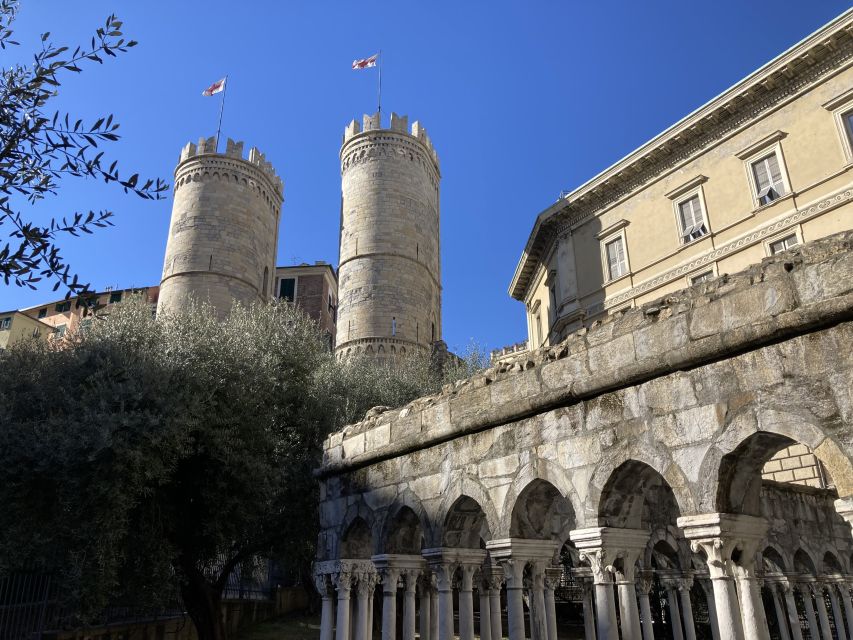
The tour also places the house in a larger setting. Casa di Colombo is close to Porta Soprana, just outside the ancient medieval walls. The surrounding area is considered the medieval heart of Genoa, so a short visit here helps connect the building to the city around it.
Inside Casa di Colombo: A Small House With a Working Past
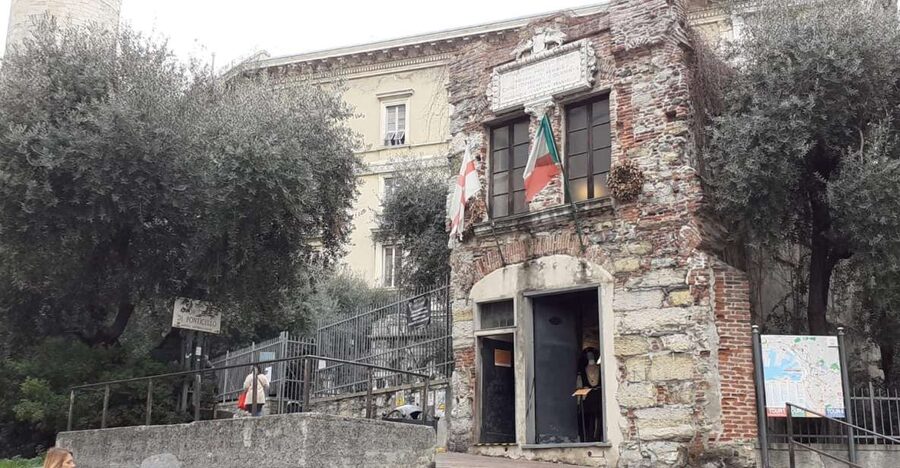
The house visit is the central part of the experience. The guide explains its structure, its rebuilding, and the role of its former occupants. Several guides have also discussed how historical information is interpreted, rather than simply repeating a neat story without question.
That point matters in a small historic building. You may find that the guide spends as much time explaining what is known about the house as describing Christopher Columbus himself. Andrea, Luisa, Georgia, and other guides have received praise for their clear explanations, careful research, and ability to connect the property with Genoa’s wider past.
The workshop on the ground floor is one of the most useful details. It keeps the visit grounded in everyday work. Columbus’ family did not live in a detached monument built for later fame. The house had a practical purpose, with work happening below and private rooms above.
The wooden-beamed attic adds another piece to the picture. It divided the workshop level from the living space, showing how a compact medieval home could serve several purposes. You will not need a long visit to understand this arrangement, but the guide’s explanation makes the building easier to read.
The house has also been rebuilt, and that is an important part of the tour. A guide can explain the structure and the rebuilding instead of allowing you to assume that every stone and beam survived unchanged from Columbus’ childhood. That careful approach was one of the most praised parts of the experience.
More History Tours in Genoa:
- Genoa: 2-Hour Guided Walking Tour of the Historical Center
★ 4.2 · 605 reviews - Venice: St. Mark Basilica Ticket, Audioguide+History Gallery
★ 3.9 · 4,780 reviews - Venice’s Best: Basilica, Doge’s Palace, Gondola & History Gallery
★ 4.5 · 2,478 reviews
Sant’Andrea Cloister and Porta Soprana Add Needed Context
The tour does not end at the front door. The guide takes you to the Cloister of Sant’Andrea, rebuilt in the area behind the house and Porta Soprana. This extra stop helps make the $12 price feel worthwhile, since you are getting a brief look at several connected historic features rather than only entering the house.
A cloister can be easy to pass without noticing much. Its details may not be obvious if you are walking through the area alone. The guide points out features you might otherwise miss and explains how the cloister fits with the surrounding medieval quarter.
Porta Soprana is another useful part of the setting. The house sits just outside the ancient medieval walls, so the gate gives you a clearer sense of the old city’s edge. The visit does not treat Casa di Colombo as an isolated address. It shows how the home, the gate, the cloister, and the surrounding streets belong to the same historic pocket of Genoa.
The scope can vary slightly. The formal house tour is short, but some visits have included the cloister, the Barbarossa Wall, and additional explanations of the area. One visit lasted nearly an hour, while another was described as around 30 minutes. You should book this for the house and nearby medieval setting, then treat any extra time as a welcome bonus.
A Short Tour That Makes Sense in a Busy Genoa Day
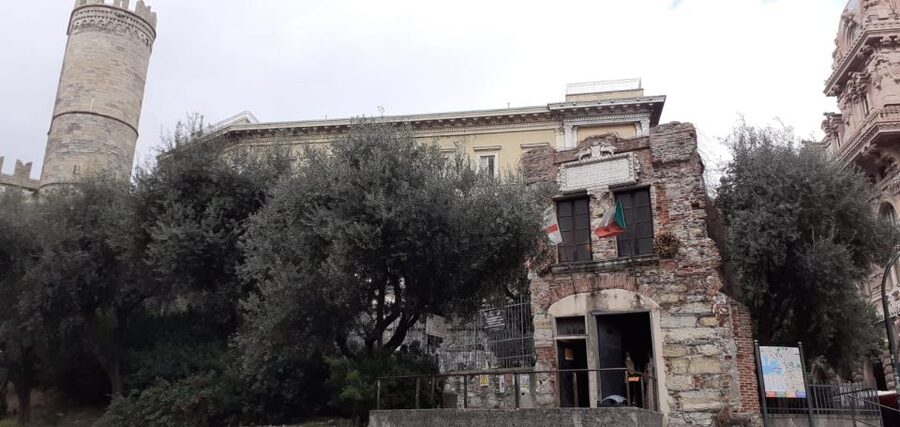
The advertised duration is 20 minutes, so this experience works best as a focused stop rather than the main event of your day. You can place it near other sightseeing in central Genoa, especially if you want a quick introduction before walking through the old quarter.
The short length also keeps the subject manageable. A long lecture on Columbus could become tiring, especially in a compact historic house. Here, the guide has to concentrate on the home, its structure, the family connection, and the nearby medieval buildings.
I would still leave some flexibility around the booking time. The scheduled visit may take longer than the minimum stated duration, particularly if the group asks questions or the guide adds context in the cloister. The small group makes that more likely because conversation is easier than in a large tour.
This is a good choice for families, couples, history fans, and anyone who wants a small cultural stop between larger Genoa sights. It also suits you if you prefer a guide who explains a place rather than handing you a ticket and sending you inside alone.
It is less suitable if you want an extensive Columbus museum, a detailed account of his entire career, or a long city walk. The experience is tightly focused on his early home and the immediate medieval area.
Why the Small Group Matters
The group is limited to six participants. That is a real advantage in a small house, where a large crowd could make it difficult to hear or see the guide’s points.
You can expect a more direct exchange than on a large city tour. Questions are easier to ask, and the guide can spend more time on the details that interest your group. A family of three, for example, may receive a particularly personal visit if no other participants join.
The guides have been praised for several different strengths. Luisa has been described as thorough and well informed. Georgia spent extra time explaining the house and nearby structures. Another guide was an archaeologist, which added a useful focus on the building and the evidence behind its interpretation.
That range is encouraging, but the quality of the experience depends partly on the individual guide and the language you select. The available languages are Italian and English. If you care about specific historical details, use the small group to ask questions rather than simply listening passively.
A practical point: meet the guide inside the venue. Do not wait outside or in a nearby area. This instruction is easy to miss, so arrive with enough time to find Casa di Colombo and enter before the scheduled start.
A few more Genoa bookings to compare
- Genoa: Aquarium of Genoa Entry Ticket
★ 4.5 · 10,075 reviews - Milan: Branca Tower Entrance Ticket
★ 4.1 · 2,045 reviews - Genoa: Hop-on Hop-off Tour Ticket
★ 4.0 · 1,524 reviews - Genoa: Aquarium of Genoa with Lunch
★ 4.3 · 1,449 reviews
What the $12 Price Really Buys
At $12 per person, this is an inexpensive guided visit in a central historic area. The value comes less from the size of the site and more from the interpretation. Without a guide, you would see the house and nearby buildings, but you might miss why the workshop, attic, private rooms, cloister, and medieval walls matter together.
The ticket includes entrance and a guided visit of Casa Colombo, the Cloister of Sant’Andrea, and Porta Soprana in Italian or English. The experience also skips the ticket line, which can save a little time when your day is planned around several short stops.
You are paying for a compact explanation, not a full-day attraction. If you judge the price by the number of rooms, it may seem less impressive. If you judge it as a short guided introduction to one of Genoa’s oldest areas, it makes better sense.
The flexible booking terms add some practical value. You can cancel up to 24 hours before the visit for a full refund, and you can reserve now while paying later. The ticket is valid only on the date booked, so you should not treat it as an open admission pass that can be used whenever you reach the area.
Accessibility and Timing Considerations
The experience is not suitable for wheelchair users or people with mobility impairments. The supplied information does not give a detailed description of steps, surfaces, or internal access, so you should contact the provider before booking if movement through the historic buildings may be difficult.
The short length can be convenient, but do not cut the timing too close. The meeting point is inside the venue, and the guide may continue into the cloister or nearby structures. A little extra time helps you arrive at the correct place without rushing.
Because the ticket is tied to the booked date, check your Genoa plans before reserving. A delayed train caused one visitor to miss the assigned time, and the guide kindly accommodated a later visit, but that should be seen as goodwill rather than a guarantee.
The cancellation window is 24 hours in advance for a full refund. That gives you a reasonable way to protect your plans if your schedule changes, while the reserve-now, pay-later option can help when you are still arranging a wider Italy trip.
Who Will Get the Most From This Visit
I would recommend Casa di Colombo to you if you enjoy places where architecture carries much of the story. The house is small, but the workshop floor, wooden-beamed attic, upper rooms, rebuilding, and medieval setting give the guide several useful threads to connect.
It also suits you if Columbus is only one part of your interest. The guide covers Italian history, archaeology, Genoa, and the surrounding structures, so the visit can work as a compact introduction to the city rather than a single-subject stop.
Families may appreciate the brief format. Twenty to 30 minutes is easier to manage than a long museum tour, and a small group gives children a better chance of hearing the explanation. Couples and solo visitors can also fit it between walks, meals, and larger attractions.
You may want to skip it if you expect original furnishings, a large collection, or a full biography of Columbus. The focus is the home and its immediate setting. The experience gives you a useful piece of Genoa, but it does not try to tell every part of the explorer’s life.
My Verdict on the Christopher Columbus House Tour
Book this tour if you want a short, low-cost introduction to Genoa’s medieval center and prefer having a guide explain what you are seeing. The combination of Casa di Colombo, the Cloister of Sant’Andrea, and Porta Soprana offers better value than a house visit alone.
I especially like the small group format and the attention to the building’s structure. Guides have been praised for their enthusiasm, archaeological knowledge, careful use of historical evidence, and willingness to spend extra time when questions arise.
Just plan around the uncertain duration. Reserve at least a little more time than the advertised 20 minutes, meet inside the house, and do not expect a large museum. For $12, this is a sensible add-on to a Genoa day, particularly for anyone who wants to understand the medieval setting behind one of the city’s best-known names.
FAQ
How long does the tour last?
The advertised duration is 20 minutes. The house portion is described as 15 to 20 minutes, while some visits have lasted about 30 minutes or longer when the cloister and nearby sites received extra explanation.
What does the tour include?
The experience includes entrance and an escorted tour of Casa di Colombo, the Cloister of Sant’Andrea, and Porta Soprana. The guide discusses the house, its structure, and the surrounding medieval area.
Is the tour offered in English?
Yes. Live guiding is available in English and Italian.
How large is the group?
The group is limited to six participants, making it a small-group experience.
Where should I meet the guide?
Meet the guide inside Casa di Colombo. Do not wait outside the venue or in a nearby area.
Is the ticket valid on another date?
No. The ticket is valid only on the date booked.
Can I cancel for a refund?
Yes. You can cancel up to 24 hours in advance for a full refund.
Is the tour suitable for wheelchair users?
No. The experience is listed as unsuitable for wheelchair users and people with mobility impairments.
Recently added around Genoa
- Genoa: Impossible Museum Entry Ticket★ 4.2 · 226 reviews
- Guided Tour of Rolli Palaces UNESCO Site, Genoa★ 4.4 · 539 reviews
- Genoa: Aquarium, Galata Museum and Submarine Entry Tickets★ 4.6 · 190 reviews
- Genova: Segway Tour★ 4.9 · 275 reviews
- Genoa: The City of Children and Young Museum Entry Ticket★ 4.1 · 303 reviews
- Genoa: Half-Day Tour to Portofino★ 4.2 · 1,123 reviews
- Genoa: Food and Wine Tasting Walking Tour★ 4.9 · 215 reviews
- Genoa: Cetacean Watching Cruise with Marine Biologist Guide★ 4.3 · 745 reviews
Historical Tours, compared.
St. Mark Basilica Ticket, Audioguide+History Gallery
Read our review →
Venice’s Best: Basilica, Doge’s Palace, Gondola & History Gallery
Read our review →
Historic Milan Tour with Skip-the-Line Last Supper Ticket
Read our review →

Rome in a Day Tour with Vatican, Colosseum and Historic Center
Read our review →
Rome Food Tour in the Historic Centre with 8+ Food Tastings
Read our review →Browse the lists this tour appears in