
Reviewed · HISTORICAL TOURS
Genoa: 2-Hour Guided Walking Tour of the Historical Center
Genoa reveals itself one alley at a time. This two-hour walk leads you through the Caruggi, the Old Town’s tight medieval lanes, while also introducing the grand Palazzi dei Rolli, San Lorenzo Cathedral, and Via Garibaldi. I like the strong mix of major sights and small urban details, and I like that the price includes entry to two museum collections. The main consideration is the bilingual format, since every explanation is given in both English and Italian.
At $16 per person, this is an unusually useful way to get your bearings in Genoa without spending half a day on a formal excursion. Guides such as Irene, Roberta, Daniel, Barbara, Marina, Anna, and Paola have been praised for clear explanations, good humor, and local tips. You should allow extra time after the walk for the museums, since the guide only introduces them before you continue independently.
In This Review
- Key points at a glance
- Starting on Via Garibaldi, Genoa’s palace street
- Following the Caruggi through the Old Town
- San Matteo Square and the Doria family
- San Lorenzo Cathedral and Genoa’s sacred treasures
- The Doge Palace, Opera House, and civic Genoa
- The Palazzi dei Rolli and the Strada Nuova Museums
- Sant’Agostino Museum and medieval Genoa
- What the bilingual format is really like
- Timing, walking effort, and cruise-day use
- Why $16 is a strong value
- Who should book this walk?
- My verdict: book it for orientation and value
- FAQ
- Where does the tour begin?
- How long does the guided walking tour last?
- What languages are available?
- Is the tour conducted in both English and Italian?
- What sights does the walking route include?
- Are museum tickets included?
- Is the museum visit guided?
- When must I visit the museums?
- How much does the tour cost?
- Can I cancel the booking?
- Can I reserve now and pay later?
Key points at a glance
- The Caruggi reveal Genoa’s character: Narrow lanes, small squares, medieval walls, and unexpected corners make this more than a parade of famous buildings.
- Via Garibaldi delivers the grand architecture: The Strada Nuova and its Palazzi dei Rolli show how Genoa’s powerful families lived and entertained important visitors.
- The tour covers the essential historic core: San Lorenzo Cathedral, the Doge Palace, the Opera House, San Matteo Square, and other central sights fit into the route.
- Museum admission adds real value: Your tour includes access to the Strada Nuova Museums and Sant’Agostino Museum for independent visits on the same day.
- The bilingual format requires patience: English and Italian visitors are served together, so some stops take longer than they would on a single-language walk.
- The pace is made for looking around: The route is not designed to cover huge distances, which leaves room to study buildings and listen to the city’s stories.
Starting on Via Garibaldi, Genoa’s palace street
The tour begins at the Tourist Information Center at Via Garibaldi 12red. That address puts you directly on one of Genoa’s most impressive streets, so the setting is appropriate from the first minute.
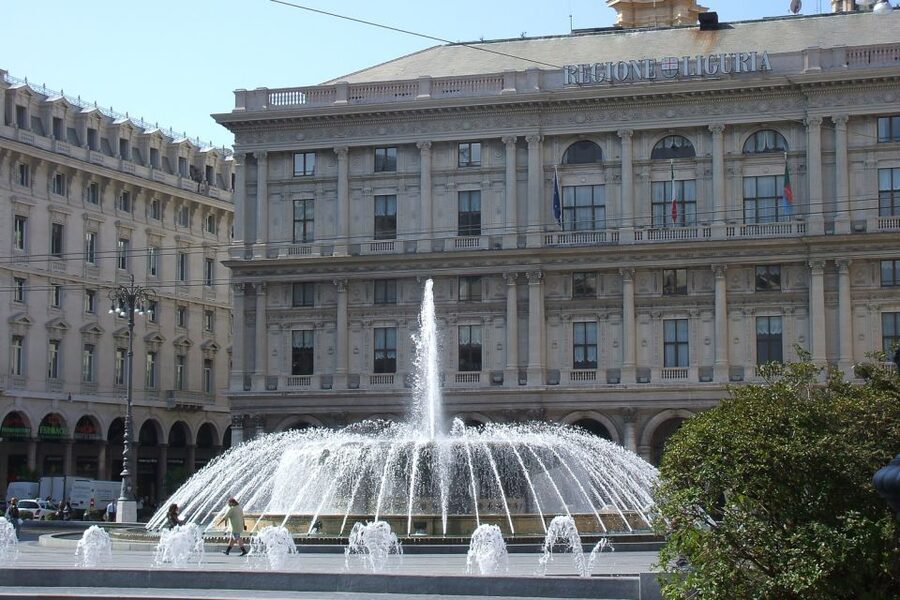
Via Garibaldi is also called Strada Nuova, or New Street, though its grand residences date from the 16th and 17th centuries. The street was created for aristocratic families who wanted elegant homes in a carefully planned setting. Today, its palaces form part of the Palazzi dei Rolli, a UNESCO World Heritage Site.
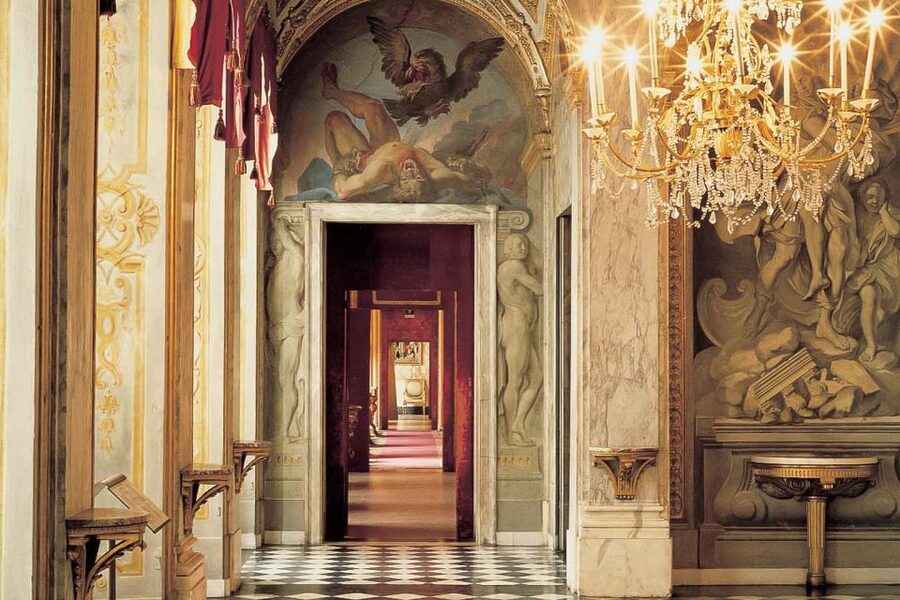
The Rolli system was unusual. Genoa’s leading families placed their homes on official lists, and the republic selected certain residences to host visiting rulers, ambassadors, and other important people. In other words, these were private houses with a public duty. A guide can help you notice the difference between a simple historic building and one designed to impress an entire political class.
The walk gives you a useful outside view of this world. You see the scale of the façades, the ornament, and the way the street was intended to project wealth. The included Strada Nuova Museums then let you explore several of these palaces from inside, making the combination stronger than a walk alone.
More Walking Tours in Genoa:
- Genoa: Food and Wine Tasting Walking Tour
★ 4.9 · 215 reviews - Milan: Guided Walking Tour & Last Supper Visit with Ticket
★ 4.7 · 5,409 reviews - Naples: Street Food Walking Tour with Local Guide
★ 4.8 · 4,256 reviews
Following the Caruggi through the Old Town
The heart of the experience is the Caruggi, Genoa’s network of narrow lanes. This is where the city feels most unlike a standard Italian sightseeing route. The streets twist, squeeze between tall buildings, and open suddenly onto small squares or important churches.
I like this part because it gives you a feel for Genoa’s medieval structure instead of showing only its polished façades. The city’s historic center is described as the widest in Europe, and its dense layout reflects Genoa’s long life as a port and trading power.
You do not cover a huge distance. That is useful here. A fast walk would reduce the Old Town to a blur of stone walls and church doors. The slower pace gives the guide time to explain how the lanes fit together and point out details that are easy to miss when you are navigating alone.
This is also the section where a local guide can make the greatest difference. Several guides have been praised for adding personal suggestions, including places for chocolate, ice cream, coffee, and food. Those tips can be just as helpful as the formal history, especially if Genoa is your first stop in Liguria.
Keep your expectations realistic. The Caruggi are not presented as a museum exhibit with every lane fully explained. You receive an orientation and a set of stories, then you can return later to explore the lanes at your own speed.
San Matteo Square and the Doria family
San Matteo Square is one of the more focused stops on the route. It is associated with the Doria family, one of Genoa’s most influential families, and offers a compact look at the connection between aristocratic power, religion, and urban space.
A square like this is valuable because it lets you read the city politically. Genoa was not simply a collection of merchants and sailors. Powerful families shaped its streets, churches, and public life, and the Doria presence helps explain how authority worked in the republic.
The stop is also a good counterpoint to Via Garibaldi. Strada Nuova presents aristocratic display on a broad, formal street. San Matteo feels more intimate and tied to a particular family network. I would pay close attention here, since the physical scale is easy to overlook if you are thinking only about the next major monument.
San Lorenzo Cathedral and Genoa’s sacred treasures
San Lorenzo Cathedral brings the route into Genoa’s religious center. The cathedral is a Gothic church and houses important religious objects, including relics connected with Saint John the Baptist.
The guide places the cathedral within Genoa’s wider story. The city’s maritime links brought wealth, political influence, and religious treasures from far beyond the Ligurian coast. That context helps you understand why a port city built such imposing churches.
The cathedral is a good example of why a walking tour helps. You can enter a church on your own, but it is harder to know which details matter or how the building connects to Genoa’s medieval power. The explanation gives you a framework before you continue looking.
The tour also includes the Doge Palace, another reminder that Genoa’s historic center was once the seat of a powerful republic. Depending on the exact pace and group, the guide may spend more or less time at each exterior stop. This is an orientation tour rather than a long interior visit to every building.
More History Tours in Genoa:
- Genoa: Historic Guided Tour of Christopher Columbus’ House
★ 4.4 · 186 reviews - Venice: St. Mark Basilica Ticket, Audioguide+History Gallery
★ 3.9 · 4,780 reviews - Venice’s Best: Basilica, Doge’s Palace, Gondola & History Gallery
★ 4.5 · 2,478 reviews - Historic Milan Tour with Skip-the-Line Last Supper Ticket
★ 4.5 · 1,976 reviews
The Doge Palace, Opera House, and civic Genoa
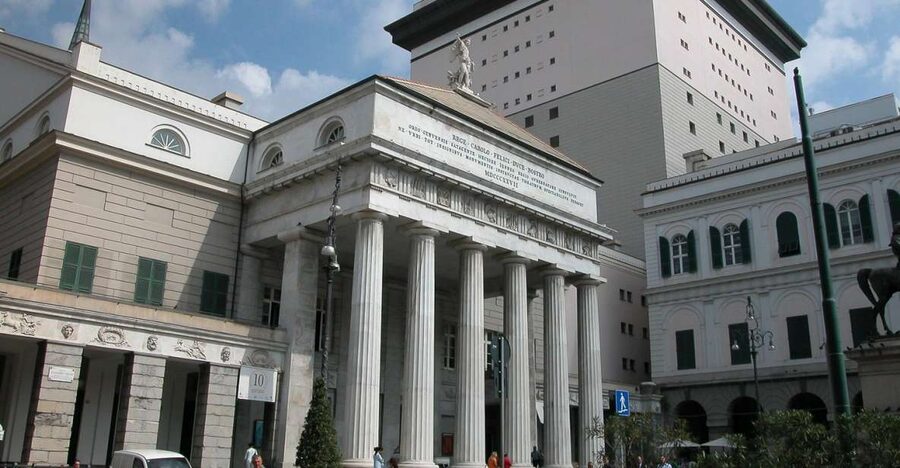
The route links religious, aristocratic, and civic landmarks. The Doge Palace represents government and political authority, while the Opera House points to Genoa’s continuing cultural life.
Seeing these sites together gives you a better sense of the city’s structure. The Old Town is not just an attractive maze. It contains the institutions that once ran the republic, the residences that hosted foreign dignitaries, and the churches that held sacred objects and public meaning.
The guide’s role is to connect those pieces. Past guides have been praised for explaining Genoa as a Roman port, a medieval trading center, and the birthplace of major financial institutions such as Banco di San Giorgio. Stories about Marco Polo’s imprisonment, Columbus, the city gates, and the traces of Genoa’s medieval past have also featured in the tour experience.
Some of these details are brief rather than formal lectures. That suits the two-hour format. You get enough background to recognize what you are seeing, without spending the entire morning in one square.
The Palazzi dei Rolli and the Strada Nuova Museums
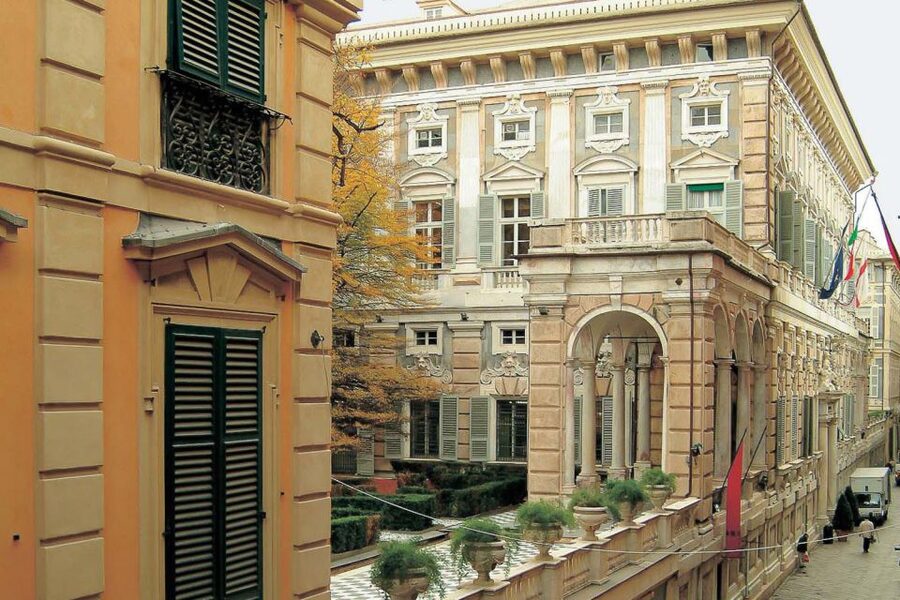
The museum admission is the strongest value feature. At the end of the guided route, the guide introduces the Strada Nuova Museums, then you continue on your own.
The museums occupy Genoa’s principal palace group and contain art from the 15th through 19th centuries. The collections include Italian and foreign artists, with notable representation from Genoese and Flemish schools. This makes the visit a useful follow-up to the outside architecture on Via Garibaldi.
I recommend treating the museum access as part of the day’s plan, not as a minor bonus. The walking tour explains why the palaces mattered. Inside, the paintings, rooms, and decorative details show how the families used that wealth and status.
The independent format has both benefits and limits. You are free to spend time with the works that interest you, but you will not have the guide beside you to explain each room. If you prefer a structured museum tour, this portion may feel less supported. If you like moving at your own pace, it is a welcome change after a group walk.
The museum visit must be completed on the same day as the tour. Plan accordingly, especially if you have a train, cruise departure, or another timed activity.
Sant’Agostino Museum and medieval Genoa
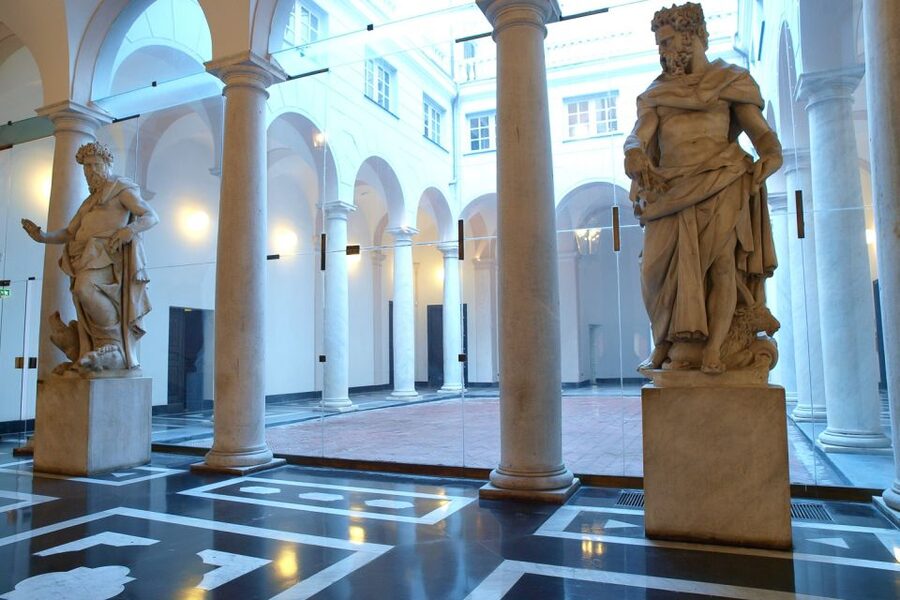
Sant’Agostino Museum adds a different artistic layer. It occupies spaces connected with a triangular cloister and the largest preserved Gothic church in Genoa. Its collection focuses on significant medieval works from the city.
This is a valuable contrast with the Strada Nuova Museums. The palace museums present aristocratic interiors and works spanning several centuries. Sant’Agostino brings you closer to medieval religious art and the architecture of a Gothic church.
The two museums also help balance the tour’s emphasis on streets and exteriors. You first learn to read the city from the outside, then you see the art and spaces that give those buildings their cultural weight.
You should note the sequence: the guide does not conduct a full museum visit with the group. Instead, the guide introduces the museums, and you visit independently. Both museum visits should happen on the same day.
What the bilingual format is really like
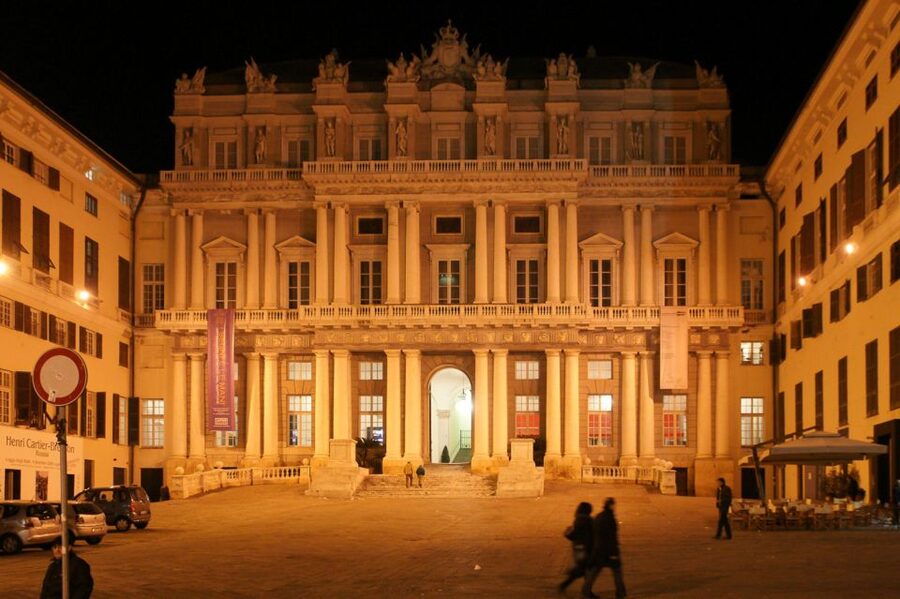
The tour is conducted in English and Italian with one bilingual guide. This arrangement allows people speaking both languages to join the same walk, but it also affects timing.
At each stop, the explanation is given twice. That can make the tour feel slower than a single-language walk, particularly if you understand only one language. Some people appreciate the chance to take photographs during the other-language explanation. Others would rather hear one uninterrupted presentation.
The quality of the experience depends heavily on the guide’s delivery. Past guides have been praised for switching between languages clearly and giving equal attention to both groups. Barbara, Anna, Paola, and others were specifically praised for maintaining enthusiasm and explaining the same information in both languages.
A few practical habits help. Stand close enough to hear, especially in the tight lanes where sound can bounce off the walls. If the guide turns toward a building while speaking, move to a position where you can still hear the explanation. A small group is easier, but group size can vary.
The overall rating is 4.2 from 605 reviews, which suggests a strong response with some room for individual variation. The most consistent praise centers on the guides, the useful overview of Genoa, the comfortable pace, and the value of the museum admission.
Timing, walking effort, and cruise-day use
The scheduled duration is two hours. Several past tours ran a little longer, especially when the guide took time to answer questions or explain the sights in both languages. Do not schedule a train or ship departure immediately after the stated end time.
The walk is described as manageable in pace and distance. One guide adjusted the rhythm for a group’s physical limits, and another kept the pace comfortable on a warm day. Still, Genoa’s Old Town has narrow lanes and an old urban layout, so you should expect continuous walking and frequent stops.
The meeting point is about one kilometer from the port, according to one cruise passenger’s account. That makes the tour a possible choice for a port day, but you should leave enough time to reach the Tourist Information Center and return to your ship. The tour operator has helped delayed participants catch up in the past, but you should not count on that if the schedule is tight.
For a first morning in Genoa, the timing makes sense. You get the central orientation, then you can return to the lanes, museums, cafés, or other sights that caught your attention.
Why $16 is a strong value
At $16, the tour costs little more than a casual meal or a few museum tickets, yet it combines a guide, a two-hour introduction, and admission to the Strada Nuova Museums and Sant’Agostino Museum.
The value is especially good if you plan to visit both museum sites anyway. The guide also saves you the early confusion of trying to understand Genoa’s dense Old Town from a map. You are paying for context, not just movement between landmarks.
The tradeoff is that the museum access is independent. You should not think of the price as a fully guided museum tour. It is better understood as a guided city introduction with museum admission attached.
The flexible booking terms also reduce the risk of committing too early. You can cancel up to 24 hours before the tour for a full refund, and you can reserve now while paying later. Those details matter if your Genoa plans depend on a cruise schedule or changing travel arrangements.
Who should book this walk?
I would choose this tour if you are visiting Genoa for the first time, have only a few hours, or want a clear introduction before exploring independently. It suits people who enjoy architecture, urban history, church art, and local stories.
It is also a good fit for cruise passengers who want a city-focused alternative to a large ship excursion. Several people appreciated the smaller, more personal feel compared with cruise-organized tours, though group size is not guaranteed.
Families can benefit from the moderate pace and central route, but the two-language presentation may test younger children’s patience. The tour is also less suitable if you want long interior visits, a single-language guide, or a highly specialized subject such as Genoese painting.
My verdict: book it for orientation and value
Book this tour if you want Genoa to make sense quickly. The Caruggi, Rolli palaces, San Matteo Square, cathedral, Doge Palace, and Via Garibaldi form a strong introduction, while the two museum admissions give you something substantial to do afterward.
I would skip it only if you already know the Old Town well or prefer to spend two hours inside museums without a group. For most first-time visitors, $16 is excellent value, particularly when you use the included museum access on the same day and leave room for the bilingual format.
FAQ
Where does the tour begin?
It begins at the Tourist Information Center at Via Garibaldi 12red in Genoa.
How long does the guided walking tour last?
The scheduled tour duration is two hours. Some tours may run a little longer depending on the guide, questions, and bilingual explanations.
What languages are available?
The live guide speaks English and Italian.
Is the tour conducted in both English and Italian?
Yes. The tour takes place with a bilingual guide, so explanations are given in both languages.
What sights does the walking route include?
The route includes the Caruggi, the Palazzi dei Rolli, Via Garibaldi, San Matteo Square, San Lorenzo Cathedral, the Doge Palace, and the Opera House.
Are museum tickets included?
Yes. Admission to the Strada Nuova Museums and Sant’Agostino Museum is included.
Is the museum visit guided?
No. At the end of the walking route, the guide introduces the Strada Nuova Museums, and you continue through the museums independently.
When must I visit the museums?
The Strada Nuova Museums and Sant’Agostino Museum should be visited on the same day as the walking tour.
How much does the tour cost?
The listed price is $16 per person.
Can I cancel the booking?
Yes. You can cancel up to 24 hours in advance for a full refund.
Can I reserve now and pay later?
Yes. The reserve-now, pay-later option lets you hold a place without paying at the time of booking.
Recently added around Genoa
- Genoa: Impossible Museum Entry Ticket★ 4.2 · 226 reviews
- Guided Tour of Rolli Palaces UNESCO Site, Genoa★ 4.4 · 539 reviews
- Genoa: Aquarium, Galata Museum and Submarine Entry Tickets★ 4.6 · 190 reviews
- Genova: Segway Tour★ 4.9 · 275 reviews
- Genoa: Historic Guided Tour of Christopher Columbus’ House★ 4.4 · 186 reviews
- Genoa: The City of Children and Young Museum Entry Ticket★ 4.1 · 303 reviews
- Genoa: Half-Day Tour to Portofino★ 4.2 · 1,123 reviews
- Genoa: Food and Wine Tasting Walking Tour★ 4.9 · 215 reviews
Historical Tours, compared.
St. Mark Basilica Ticket, Audioguide+History Gallery
Read our review →
Venice’s Best: Basilica, Doge’s Palace, Gondola & History Gallery
Read our review →
Historic Milan Tour with Skip-the-Line Last Supper Ticket
Read our review →

Rome in a Day Tour with Vatican, Colosseum and Historic Center
Read our review →
Rome Food Tour in the Historic Centre with 8+ Food Tastings
Read our review →Browse the lists this tour appears in