
Reviewed · POMPEII & VESUVIUS TOURS
From Sorrento: Pompeii Ruins All-inclusive Guided Tour
Pompeii still feels startlingly close. This two-hour visit combines Pompeii’s major ruins with return train tickets from Sorrento, making a famous archaeological site fairly easy to reach without arranging transport yourself. I like the clear focus on the Forum, Temple of Jupiter, baths, villas, bakeries, and preserved mosaics. I also like the guides’ warm, lively teaching style, with guides such as Laura, Ciro, Maria, and Giana praised for making the ruins easier to understand.
The main drawback is the transport setup. You collect your tickets at the Tempio Travel office inside Sorrento’s Circumvesuviana station, then ride the train without a guide. The train can be crowded, and once you reach Pompeii, the tour may not begin exactly at the selected time. Heat, uneven paving, and a large group can also make two hours feel plenty long.
In This Review
- Key points to know before booking
- Why this Sorrento to Pompeii trip works
- Starting at Sorrento’s Circumvesuviana station
- Arriving at Pompeii and joining the guide
- The Forum and Temple of Jupiter
- Baths, theaters, villas, and daily routines
- Mosaics, frescoes, and the body casts
- What two hours can realistically cover
- Is the $66.27 price good value?
- Who should book this Pompeii tour?
- Final booking advice
- FAQ
- Where does the tour start?
- Is the train ride guided?
- Is the return train included?
- How long does the experience last?
- What languages are available?
- What should I bring?
- Is this a private tour?
Key points to know before booking
- The train is self-guided: You receive a return ticket in Sorrento, but you take the Circumvesuviana train to Pompeii on your own.
- The tour covers the famous core: Expect the Forum, Temple of Jupiter, public baths, theaters, villas, bakery, termopolia, mosaics, frescoes, and body casts.
- Guides are the star of the experience: English and Italian guides explain daily Roman life with stories, humor, and clear commentary.
- Plan for sun and rough ground: Bring water, a sunhat, and comfortable shoes. There is little shade or seating inside the ruins.
- The advertised time is two hours: Some groups report roughly two to two and a half hours, but Pompeii is far too large to see in full.
- The price is $66.27 per person: That includes entry, a guided visit, and the return train, which is useful if you want a simple first look at Pompeii.
Why this Sorrento to Pompeii trip works
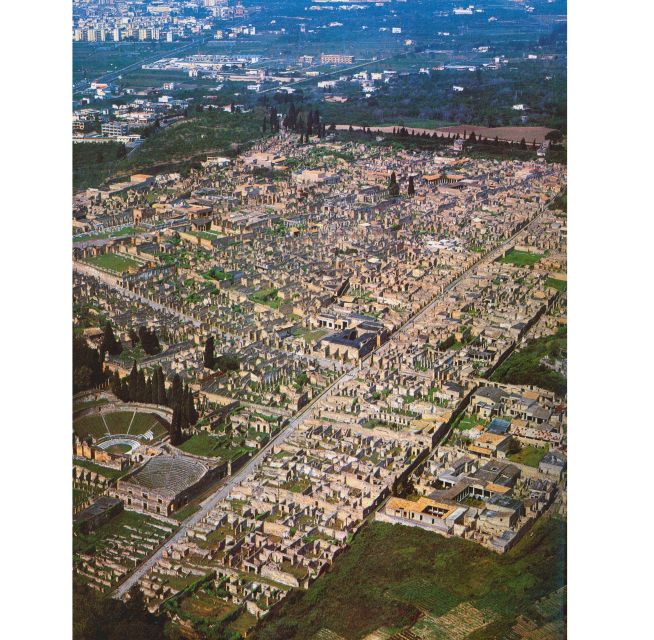
Pompeii is not a single monument. It is a whole buried town, with streets, homes, public buildings, shops, religious sites, and workspaces spread across a large archaeological area. Without a map or a plan, you can spend a lot of time wandering past walls without knowing what mattered.
That is where this tour earns its keep. The guide brings order to the site and points you toward the places that best explain how people lived before Mount Vesuvius erupted in 79 AD. You are not just looking at broken stone. You are shown where people bathed, shopped, baked, prayed, gathered, and ate.
I especially like the everyday angle. The visit is not limited to grand temples and wealthy villas. Cooking utensils in a bakery, small food counters called termopolia, household mosaics, and public baths help turn Pompeii from an impressive ruin into a place where ordinary routines once took place.
The tour also gives you a human connection to the eruption. Body casts of citizens are difficult to look at, but they are an important part of the site. They bring home the sudden terror of the disaster more sharply than a lecture about volcanic ash ever could.
More Pompeii and Vesuvius trips:
- Sorrento: Skip-the-Line Pompeii Express Tour by Train
★ 4.8 · 2,038 reviews - Priority Access Pompeii & Mt. Vesuvius Full day from Sorrento
★ 4.5 · 1,376 reviews - From Sorrento: Pompeii and Vesuvius Guided Tour with Lunch
★ 4.8 · 683 reviews
Starting at Sorrento’s Circumvesuviana station
Your first task is to find the Tempio Travel office inside Sorrento’s Circumvesuviana station and collect your tickets. The office is next to the train station, which keeps the starting point convenient if you are staying in Sorrento and already know where the station is.
Allow time to locate the office and be ready to board at least five minutes before departure. A few people have found the check-in process confusing, including one case where the wrong meeting spot was given or the office was not open when expected. This is not a reason to reject the tour, but it is a reason to arrive early and keep your confirmation details handy.
There can also be a second ticket exchange at the platform or gate. The exact process may feel less tidy than the phrase all-inclusive suggests. You have train transport covered, but you still need to pay attention to the instructions and make sure you are holding the correct ticket before boarding.
The train ride from Sorrento to Pompeii is short, but the train itself is part of the practical tradeoff. It can be crowded, with limited seating and, according to some reports, no air conditioning on the return ride. If you are visiting in the hot months, the train may be less comfortable than a private transfer.
Still, the train option has real value. You avoid arranging a taxi or figuring out a separate rail ticket, and the station meeting point is easy to reach. For a budget-conscious trip, this is a sensible way to connect two major Campania destinations.
Arriving at Pompeii and joining the guide
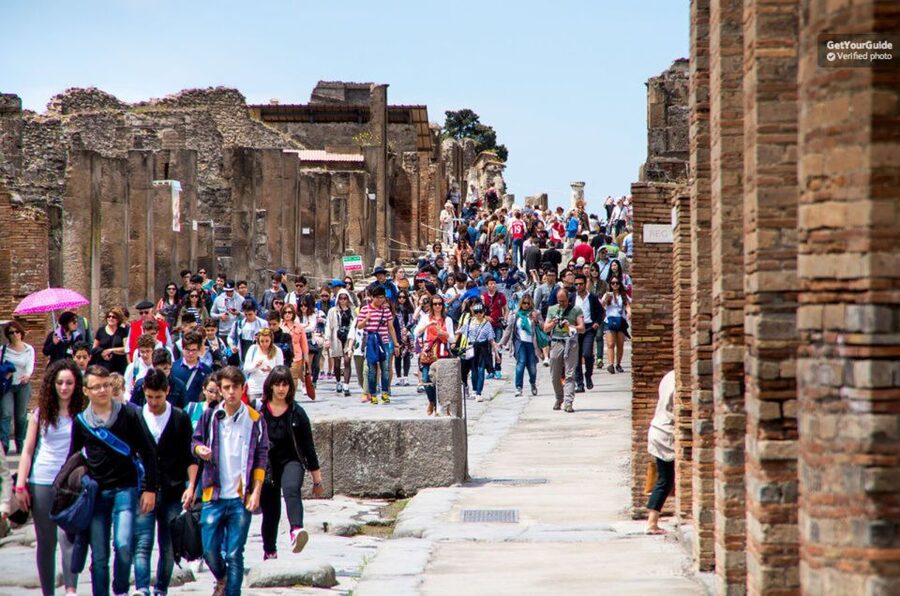
At Pompeii, you take part in the guided portion with a shared group. The group size can reach more than 20 people, and this matters because Pompeii’s streets are uneven and the site can be busy. The best groups use audio equipment, and several people appreciated having earphones that made the guide easier to hear.
The timing at Pompeii may be flexible. Some groups have waited about 20 minutes, while another waited closer to 40 minutes before setting off. The chosen starting time therefore seems to be more of a planning guide than a promise of the exact moment you will begin walking.
Use that pause sensibly. Fill your water bottle, adjust your hat, and make sure your shoes are comfortable. Once the tour begins, there is little reason to rush, but there may also be few places to sit or escape the sun.
The guides generally receive the strongest praise. Laura is described as adding fresh details even for someone who had already visited Pompeii several times. Ciro is praised for being kind, funny, and careful about keeping the group together. Maria, Giana, and other English-speaking guides are also noted for clear explanations, patience, energy, and a pleasant speaking style.
That range of comments tells you what to expect: the guide is not simply leading you from one wall to the next. The better guides use stories and humor to make the site easier to follow. They also answer questions, keep a relaxed pace, and suggest additional places to see after the formal tour ends.
One caution is worth keeping in mind. A large group can make it hard to hear, especially when the guide is speaking outdoors near other groups. Earphones are a real advantage, but they may not be available in every situation. If you have a question, ask it promptly rather than waiting until the group has moved several streets away.
The Forum and Temple of Jupiter
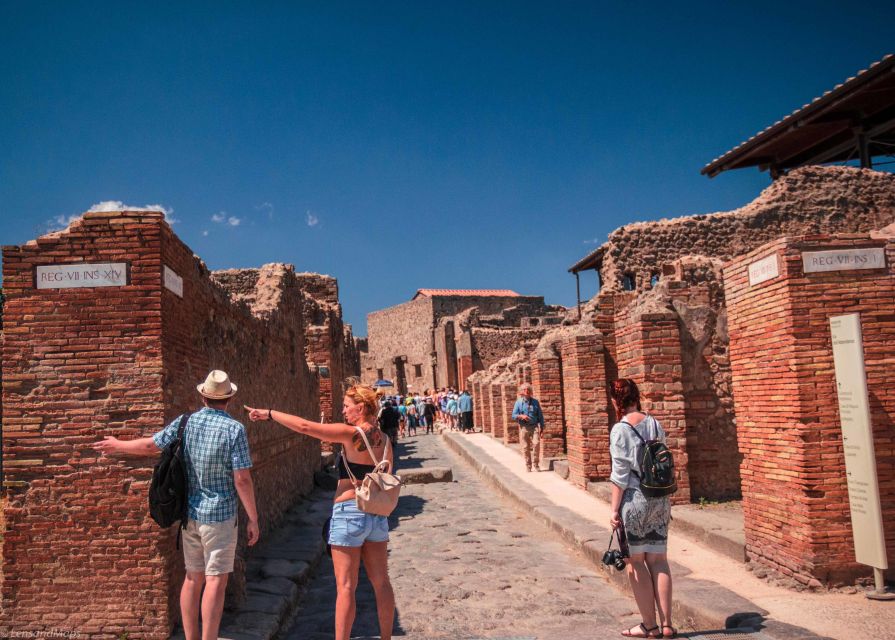
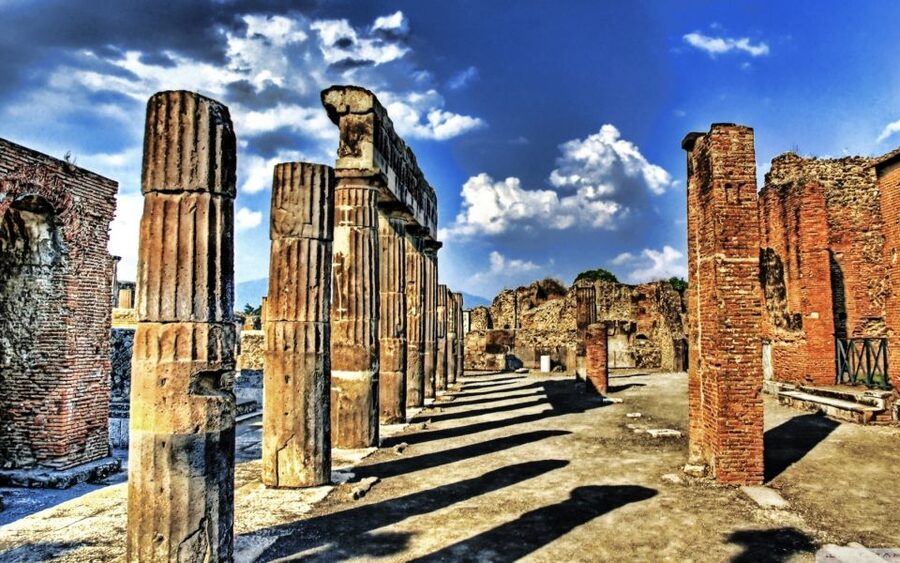
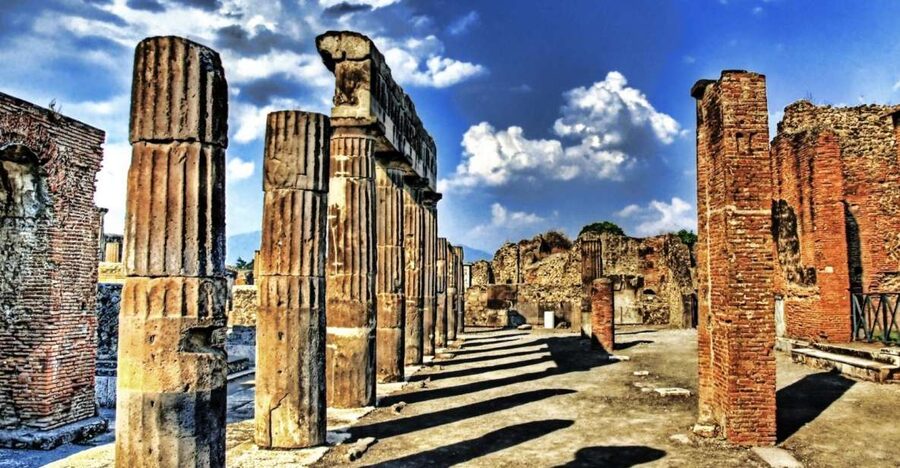
The Forum is the natural center of a first visit to Pompeii. It gives you a sense of the town’s public life and helps explain how religious, political, and commercial activity came together in one open space.
The Temple of Jupiter adds a strong visual focus. From here, the guide can connect the city’s religious life with its public buildings and civic spaces. You will not simply see columns and foundations. You will hear how the Roman town was organized and why this part of Pompeii mattered.
This is one of the most useful parts of a short tour because the Forum provides orientation. Pompeii can otherwise feel like a maze of similar-looking streets. Once you understand the central public area, the other stops make more sense.
Do not expect to study every building in detail. Two hours is enough for an overview, not a complete survey. The guide chooses a selection of major sights, so you may need to return on your own if you want a slower look at the Forum or less famous corners.
A few more Sorrento bookings to compare
- Sorrento: Exclusive Capri Boat Tour and Optional Blue Grotto
★ 4.8 · 3,170 reviews - Sorrento Farm and Food Experience including Olive Oil, Limoncello, Wine tasting
★ 5.0 · 2,524 reviews - Capri Blue Grotto Small-Group Boat Day Tour From Sorrento
★ 4.5 · 2,511 reviews - From Sorrento/Nerano: Amalfi and Positano Boat Tour
★ 4.6 · 2,440 reviews
Baths, theaters, villas, and daily routines

The public baths show an important side of Roman life. They were not merely places to wash. They were social spaces, and the remains help you picture how public facilities served the wider town.
The theaters offer another change of scale. After seeing homes and shops, you get a look at public entertainment and community gatherings. The exact route can vary, but the tour is designed to include the main types of buildings that explain Pompeii as a functioning city.
Villas bring you closer to the lives of wealthier residents. Their decoration, room layouts, mosaics, and frescoes show how much attention Roman households gave to appearance and status. The preserved artwork is one of Pompeii’s great rewards, even when only portions of a room remain.
The bakery is a particularly good stop for anyone who wants practical detail. Cooking tools and work equipment make the ancient town feel less distant. You begin to think about flour, ovens, meals, and the people who worked in these spaces rather than only about emperors and volcanic eruptions.
The termopolia are just as useful. These small food-serving counters reveal how people bought prepared food in the city. They are the kind of detail that a guide can explain in a minute, but that you might pass without noticing if you were walking alone with only a general map.
Mosaics, frescoes, and the body casts
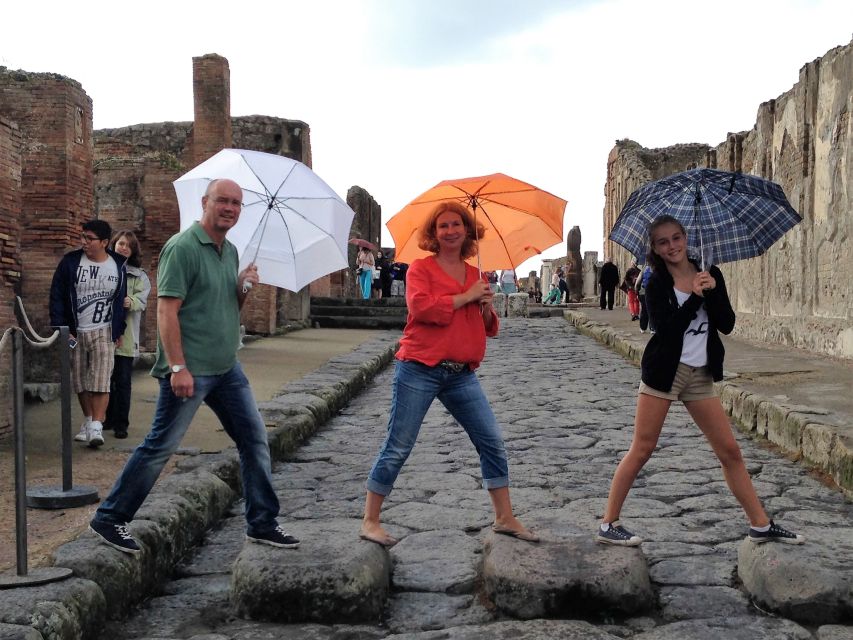
Pompeii’s mosaics and frescoes are among the most memorable parts of the route. Their survival is remarkable, but the guide’s explanation gives the decoration a purpose. You can learn how these images fitted into homes and public settings, and what they tell you about Roman taste and daily life.
Look closely when the guide pauses at a decorated room. The appeal is not just that the colors survived. It is that the artwork remains attached to a real building, beside a real street, near the rooms and businesses that made up the town.
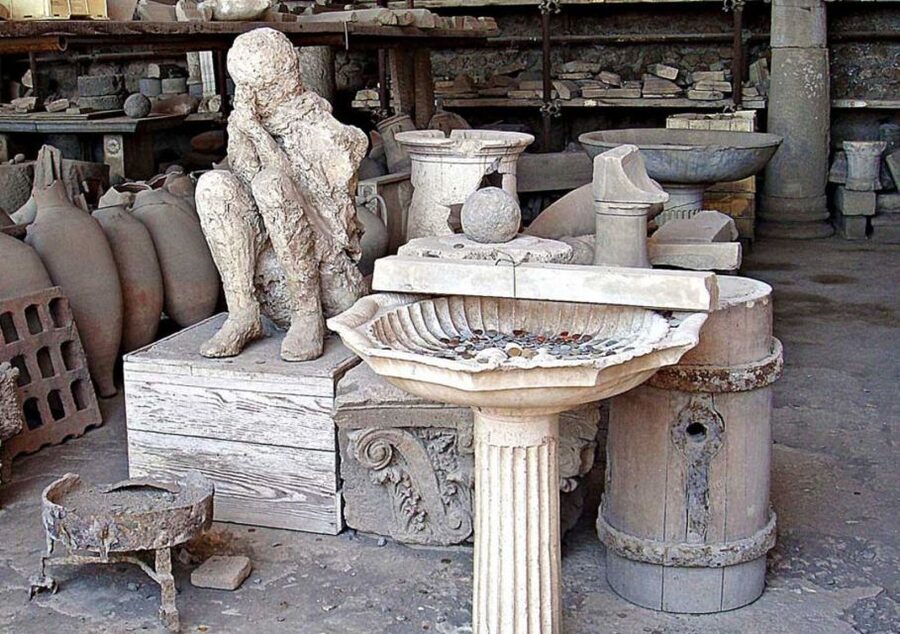
The body casts are the most emotional stop. They show the human cost of the eruption and make the events of 79 AD feel immediate. This can be upsetting, particularly for children, so families should decide in advance how much detail they want to discuss.
The tour handles these sights within a wider explanation of Pompeii rather than turning the whole visit into a disaster story. That balance matters. You learn about the eruption, but you also spend time on the city that existed before it.
What two hours can realistically cover
Pompeii is huge. A two-hour guided route can introduce you to the main areas, but it cannot show you every villa, street, theater, and exhibition space. Think of this tour as a strong first pass.
Several guides leave you with suggestions for what to see after the group tour ends. That is useful because you can continue at your own pace if you still have energy. You might find that the guided route gives you the context needed to explore independently without feeling lost.
The heat is the biggest limit. Reports repeatedly point to intense sun, little shade, few places to sit, and tiring uneven ground. Some people found two hours exactly right for the conditions. Others wished they had more time because there was still much to see.
I would treat the two-hour length as a benefit if you are combining Pompeii with other Campania plans, including Mount Vesuvius or time in Sorrento. It is less suitable if Pompeii is your main reason for visiting the area and you want a full-day archaeological visit.
Pace yourself. Wear sturdy, comfortable shoes, carry water, and bring a hat. An umbrella can provide extra shade, but it may be awkward in a crowded group. The practical goal is to stay comfortable enough to listen and look around instead of focusing only on finding the next patch of shade.
Is the $66.27 price good value?
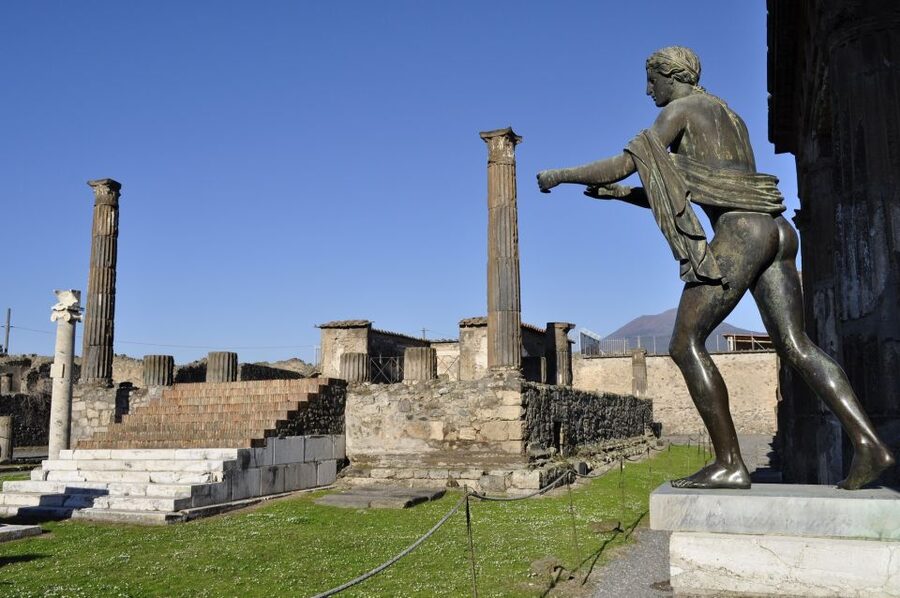
At $66.27 per person, the price covers the Pompeii entrance ticket, the guided tour, and the return train from Sorrento. That makes it a reasonable package for someone who wants the basic arrangements handled in one booking.
The value comes mainly from the guide. Pompeii’s size and layout can make a self-guided visit confusing, especially if this is your first time. A good guide saves you from spending your limited time guessing which ruins matter and gives meaning to details you might otherwise miss.
The price may feel high if you are comfortable taking the train, buying your own entrance ticket, and using a map. One person specifically felt the cost could have been lower. You are paying for convenience and interpretation, not private transport or a private guide.
The shared format keeps the cost below a private tour, but it also means less flexibility. You do not choose every stop, and a big group may slow the pace or make questions harder. If you want a personal route or detailed archaeological discussion, another type of tour may suit you better.
For a first visit from Sorrento, I think the package has fair value, especially if you prefer not to handle the train and entry details yourself. Just do not mistake it for an exclusive or full-day experience.
Who should book this Pompeii tour?
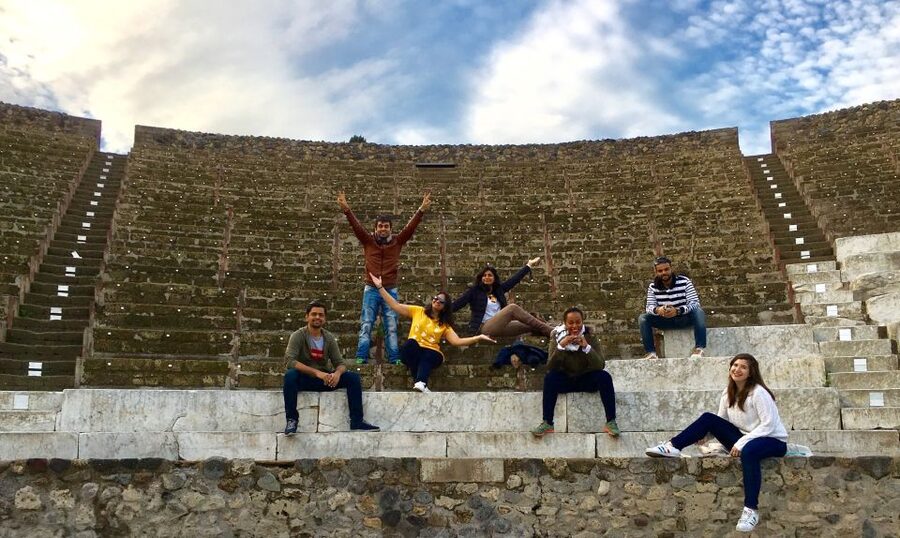
I would recommend it to first-time visitors staying in Sorrento who want an organized introduction to Pompeii without hiring a car. It also suits people who prefer stories and explanations to walking through the ruins alone.
Families with older children may like the mix of temples, shops, food counters, artwork, and dramatic volcanic events. The short route is easier to manage than a full day in the sun, though parents should prepare children for the body casts and uneven paths.
This tour also works well for a tight itinerary. You get a clear introduction, then return to Sorrento by train rather than giving up an entire day. If the guide leaves you curious, you can plan a longer Pompeii visit another time.
I would hesitate if you dislike crowded public transport, need a fixed minute-by-minute schedule, or want to explore every part of the site. The train may be packed, the Pompeii start can be delayed, and the group may be larger than expected.
Final booking advice
Book this tour if you want the main Pompeii sights, a lively guide, and return train tickets from Sorrento in one reasonably priced package. The strongest part is the interpretation, especially when a guide such as Laura or Ciro turns ordinary walls, counters, and tools into a picture of Roman life.
Skip it in favor of a longer or private visit if you already know Pompeii well or want plenty of time for side streets and lesser-seen buildings. For most first-time visitors, though, this is a practical introduction, as long as you arrive early, expect to take the train independently, and prepare for serious sun.
FAQ
Where does the tour start?
You collect your tickets at the Tempio Travel office in Sorrento Circumvesuviana Station. You should be ready to board the train at least five minutes before departure.
Is the train ride guided?
No. You take the train from Sorrento to Pompeii independently using the provided ticket. The guided portion takes place at the archaeological site.
Is the return train included?
Yes. The package includes a return train ticket between Sorrento and Pompeii.
How long does the experience last?
The advertised duration is two hours. Some tour groups have reported a guided visit lasting roughly two to two and a half hours, but the exact timing can vary.
What languages are available?
Live guides are available in English and Italian.
What should I bring?
Bring a passport or ID card, comfortable shoes, water, and a sunhat in summer. The ground is uneven, and there may be little shade or seating.
Is this a private tour?
No. This is a shared guided tour. Group sizes can be larger than 20 people, and earphones may be provided to help you hear the guide.
Recently added around Sorrento
- The Three Tenors in Sorrento: Opera Arias, Naples and Songs★ 4.8 · 327 reviews
- Sorrento: Lemon Garden Tour with Marmalade Tasting★ 4.6 · 405 reviews
- Sorrento: Sightseeing Cruise with Limoncello Tasting★ 4.0 · 224 reviews
- From Sorrento: Amalfi Coast Full-Day Trip by Boat★ 4.8 · 367 reviews
- From Sorrento: Capri Island Day Trip with Boat Cruise★ 4.7 · 469 reviews
- SORRENTO: Pizza School Mastering Neapolitan Delights★ 4.9 · 201 reviews
- Sorrento: Guided Walking Tour & Limoncello Tasting★ 5.0 · 472 reviews
- Sorrento: Capri and Blue Grotto Boat Cruise with Drinks★ 4.7 · 265 reviews
Pompeii & Vesuvius Tours, compared.
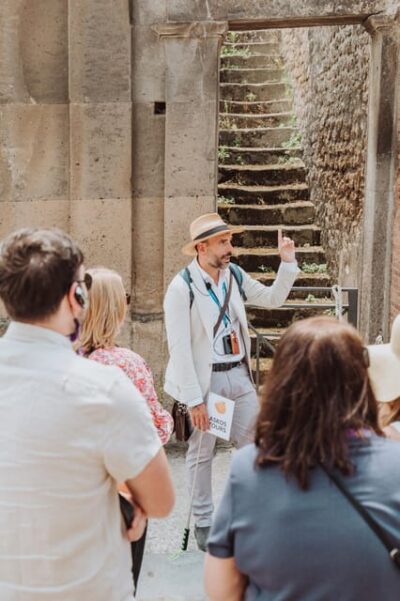
Entry Ticket and Guided Tour with an Archaeologist
Read our review →


Pompeii Small Group Tour with an Archaeologist
Read our review →
Pompeii, Amalfi Coast and Positano Day Trip from Rome
Read our review →Browse the lists this tour appears in