
Reviewed · COOKING CLASSES
Fettuccine and Tiramisu Masterclass in the Heart of Rome
Rome tastes better when you make the meal. This 2.5-hour cooking class pairs fresh egg pasta with tiramisu at a historic restaurant on Via Giuseppe Zanardelli, right in central Rome. An English-speaking chef guides you through the work, then cooks your fettuccine while you sit down to eat with wine, coffee, or limoncello.
I like the hands-on format, especially the chance to knead, roll, shape, and cut pasta from only flour and eggs. I also like that the class includes the meal, a drink, water, and a finish of espresso or limoncello, so you are not paying for a lesson and then hunting for lunch. The main consideration is that you do not make the sauce, and the class has a maximum of 14 people, so it is social rather than private.
This is a strong choice for families, couples, and first-time cooks. You need no pasta-making background. Chefs Leo, Furio, and Carlotta have each received warm praise for clear instruction, humor, and patient help, which matters when your dough begins looking less like pasta and more like a small weather event.
In This Review
- Key points to know before booking
- A central Rome setting with food at the center
- Tiramisu first, with mascarpone and cocoa
- Making fettuccine from flour and eggs
- Three sauces, three different Roman flavors
- Sitting down to eat what you made
- What the instructors add to the experience
- How the $67.75 price measures up
- Who should book this class
- Should you book the Fettuccine and Tiramisu Masterclass?
- FAQ
- Where does the cooking class start?
- Where does the experience end?
- How long does the class last?
- Is the class offered in English?
- How many people can join the class?
- What pasta will I make?
- Do I make the pasta sauce?
- Which sauces can I choose?
- What drinks are included?
- Is cancellation free?
Key points to know before booking

- Fresh pasta starts with flour and eggs: You knead, roll, shape, and cut the dough into fettuccine by hand.
- Tiramisu comes first: You whip eggs and mascarpone, then layer the cream with biscuits and cocoa.
- Three Roman-style sauces are available: Pick Amatriciana, Cacio e Pepe, or Pomodoro e Basilico.
- The chef cooks your pasta: You make the noodles, but the kitchen handles cooking and sauce preparation.
- The meal includes a proper Italian finish: Expect wine or a soft drink, water, and either limoncello or hot coffee.
- Small but social group: The maximum is 14 people, and the activity runs in English.
A central Rome setting with food at the center
The class begins at Via Giuseppe Zanardelli, 14, in postal code 00186, Rome. That puts you in the historic center, near public transportation and within the part of town where a cooking lesson fits naturally into a day of walking.
The location matters because this is not a remote culinary school requiring a separate trip outside the city. You can build it into a sightseeing day, though you should allow time to find the meeting point and arrive ready to work. The activity ends back where it begins.
The setting is a restaurant, not just a demonstration room. That gives the lesson a useful rhythm: you prepare food, watch the chef finish the technical parts, and then eat at the same place. I prefer this arrangement to classes that send you away with a plate of food but no proper meal.
The maximum group size is 14. That is small enough for a chef to offer help around the table, but large enough that you should expect a shared class rather than one-on-one coaching. It also creates one of the nice social features of the experience. You eat with people you met during the lesson, which can be a welcome break from Rome’s crowds and packed sights.
More Cooking Classes in Rome
- 3 in 1 Cooking Class near Navona: Fettuccine, Ravioli & Tiramisu
★ 5.0 · 7,376 reviews - Rome: Pasta & Tiramisu Class with Fine Wine by the Vatican
★ 4.9 · 4,852 reviews - Rome: Pasta Making Class with Wine, Limoncello, and Dessert
★ 4.9 · 3,177 reviews
Tiramisu first, with mascarpone and cocoa
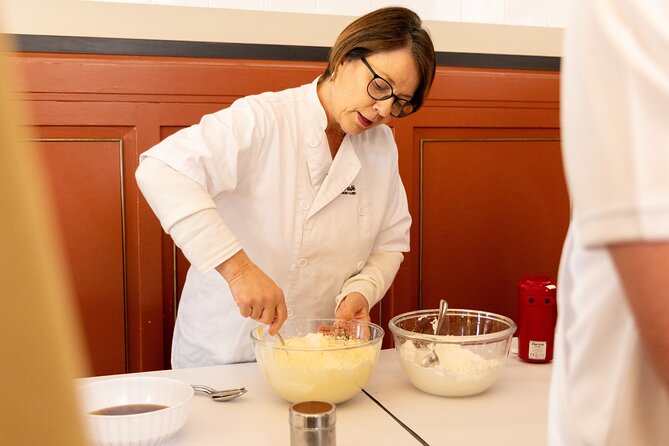
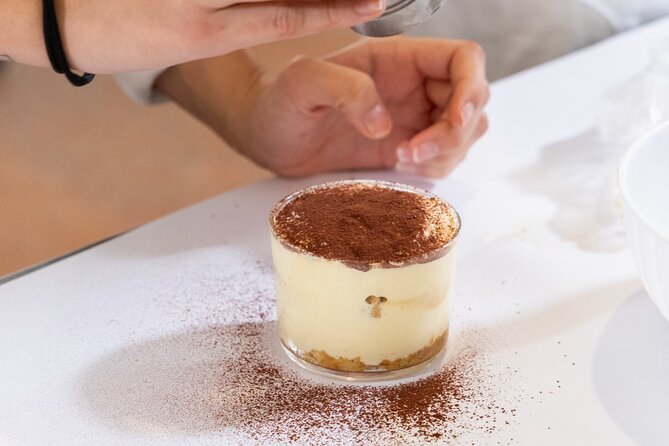
The class begins with tiramisu. You whip eggs and mascarpone into a smooth cream, then layer it with biscuits and cocoa. This is a smart opening task because it gives you a sweet project before the more physical pasta work begins.
Tiramisu looks simple, but the texture depends on mixing the cream properly and building the layers with care. You are not simply watching a chef place dessert on a plate. You make your own portion from the basic components, then set it aside until it is ready to eat.
The order also has a practical advantage. Tiramisu benefits from resting before it reaches the table, while pasta is best cooked close to serving. By preparing dessert first, the class can move to the noodles and still give you a finished tiramisu at the end.
The recipe uses familiar ingredients, so this is one of the easiest parts to repeat at home. You leave with a clear idea of the basic structure: mascarpone cream, biscuits, and cocoa. The class does not promise a full pastry course, but it gives you a useful Roman food memory that can be recreated without specialist equipment.
Making fettuccine from flour and eggs
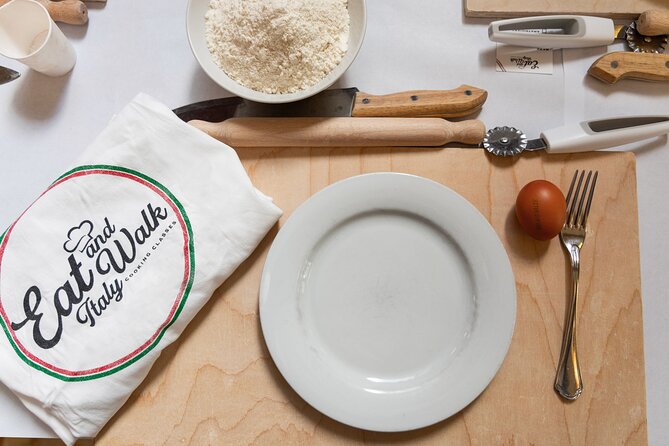
Next comes the main event. You work with flour and eggs, kneading the dough by hand before rolling and shaping it. This is where the class earns its keep. Fresh pasta is not hard to understand, but the dough has a feel that a written recipe cannot fully explain.
You will see how the dough changes as you knead it. The process can be messy, especially for children or anyone who has never worked with pasta by hand, but that is part of the fun. The chef guides you through the stages and helps keep the work moving.
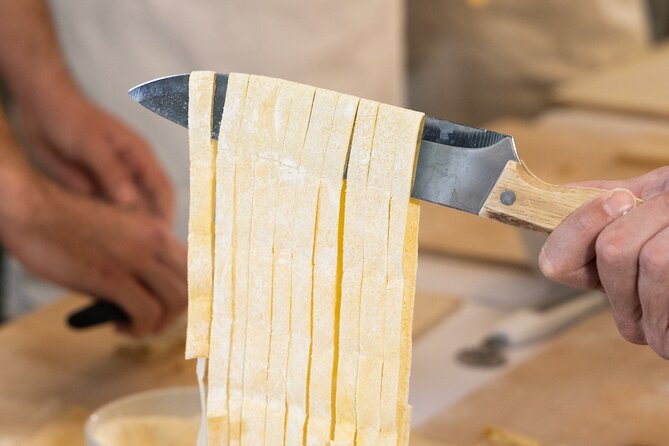
After rolling the dough, you cut it into fettuccine. The class also introduces other traditional pasta shapes, giving you a wider sense of Italian pasta-making instead of limiting the lesson to one noodle. The formal meal centers on fettuccine, so that is the shape you should expect to eat.
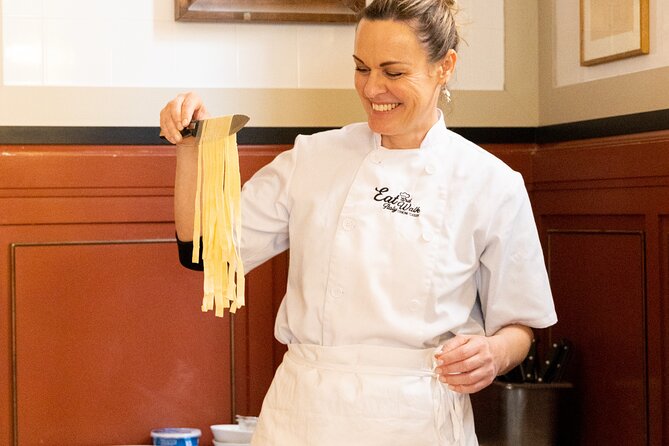
The best part is that everyone can succeed. You do not need prior cooking experience, and the instructor’s job is not to judge your first attempt. Chef Furio, for example, is praised for being funny and helpful throughout the process. Chef Leo is also described as clear and attentive, particularly with larger groups. Those details suggest a relaxed teaching style, not a stern technical workshop.
Still, keep your expectations realistic. You are learning the basic process in about two and a half hours, not training as a professional pasta maker. You will gain a practical method and a memorable activity, but you may need several attempts at home before your noodles look perfectly uniform.
Three sauces, three different Roman flavors
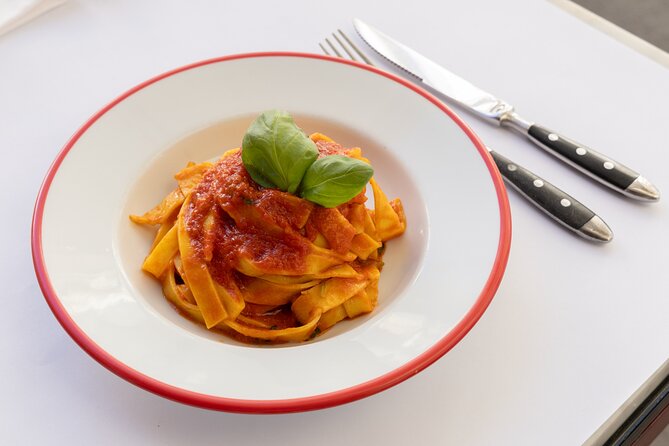
Once the pasta is cut, you choose how it will be served. The options are Amatriciana, Cacio e Pepe, or Pomodoro e Basilico.
Amatriciana gives you a tomato-based sauce with a more savory, full flavor. Cacio e Pepe is the simplest-looking choice, built around cheese and pepper, but its creamy texture can be tricky to produce correctly. Pomodoro e Basilico is the straightforward tomato and basil option, a good pick if you want clean, familiar flavors.
The kitchen prepares the sauces and cooks the fettuccine for you. That is both a benefit and a limitation. You avoid standing over a hot pot while the rest of the class finishes, and the chef can serve the noodles at their best. On the other hand, you will not learn how to make the sauce yourself.
This distinction matters if your main goal is to take home a complete cooking system. You will learn the pasta and tiramisu, but not the full preparation of Amatriciana, Cacio e Pepe, or tomato and basil sauce. If you already know how to make a simple sauce, that may not bother you. If you want a full pasta course from dough through sauce, ask yourself if the hands-on noodles are enough.
One useful tip is to choose your sauce carefully. The red sauces, Amatriciana or Pomodoro e Basilico, are a good match if you want the cheese and pepper flavors of Cacio e Pepe to feel distinct on another occasion. The class offers a choice, so use it to pick a flavor you genuinely enjoy rather than automatically choosing the most famous name.
Still Rome, but a slower afternoon:
- Vatican: Museums & Sistine Chapel Entrance Ticket
★ 4.5 · 144,003 reviews - Vatican Museums & Sistine Chapel Tour with Optional Basilica
★ 4.3 · 67,413 reviews - Colosseum, Roman Forum & Palatine Guided Tour
★ 4.7 · 63,148 reviews - Vatican Museums, Sistine Chapel & St Peter’s Basilica Guided Tour
★ 4.5 · 39,149 reviews
Sitting down to eat what you made
After the kitchen cooks your fettuccine, you sit down to eat it with your selected sauce. This shared meal is more than a reward for finishing the dough. It gives you a chance to see what fresh pasta tastes like when it is cooked and sauced promptly.
The meal includes your fettuccine, your freshly prepared tiramisu, one glass of red or white wine, or another non-alcoholic beverage, plus water. You then finish with either a shot of limoncello or hot espresso coffee.
That beverage package adds useful value. At $67.75 per person, you are paying for instruction, ingredients, a restaurant meal, and drinks. A standard meal in central Rome can cost a fair amount before you add an activity, so the combined format makes the price easier to justify.
You should not expect unlimited food or drinks. Extra beverages and additional food are not included. The menu is focused rather than large: one pasta course and dessert. If you have a very large appetite, this may feel like a satisfying lunch or dinner rather than a full food tour.
The meal also gives the class a friendly finish. You are not rushed straight out after the final demonstration. You can eat, compare pasta shapes, and talk with the people at your table. For couples, this creates an easy shared activity. For families, it gives children a clear payoff after the work of kneading and cutting.
What the instructors add to the experience
The chef matters greatly in a hands-on class. A poor instructor can turn flour and eggs into frustration. Here, the strongest praise centers on the chefs’ friendly, funny, and patient approach.
Chef Leo is noted for teaching a large group while keeping the experience smooth and accommodating. Chef Furio is praised for helping people with no experience and making the process enjoyable. Chef Carlotta is described as a major reason a couple loved the activity, particularly because the class offered a welcome change from Rome’s crowds and noise.
These names are useful if you have a choice of class date or instructor, though the available chef may vary. The key point is the teaching style. The class appears designed for ordinary people, not skilled cooks who want advanced technique.
That makes it especially suitable if you are worried about being the only person at the table who has never made pasta. The chef will guide the process, and the shared format means you are likely to see other people making their own imperfect but edible noodles too.
How the $67.75 price measures up
The price is $67.75 per person. That is not the cheapest way to eat pasta in Rome, but it is not simply a restaurant meal. You receive a guided activity, ingredients, a main course, dessert, water, wine or a soft drink, and limoncello or coffee.
I see the value in the combination. A cooking class with no food included would feel incomplete, while a meal with no practical instruction would not offer the same memory. Here, the lesson and meal are joined together.
The price is easiest to justify if you value participation. You are paying to make the pasta, not only to watch someone else do it. It also works well for a special couple’s activity or a family outing where the shared memory matters as much as the food.
The value is weaker for people who want a long culinary workshop. The class lasts about 2 hours and 30 minutes, and the sauce is prepared for you. You will not leave with training in several sauces or a broad survey of Italian cooking.
Booking well ahead is sensible. This experience is booked an average of 41 days in advance, which suggests that popular dates may fill before your trip. Free cancellation is available if you cancel at least 24 hours before the start time. Changes or cancellations inside that window are not accepted for a refund.
Who should book this class
I would recommend it to:
- First-time pasta makers who want clear, guided instruction
- Families looking for a hands-on Rome activity
- Couples who want a meal with more character than a standard restaurant reservation
- Visitors who enjoy meeting people around a shared table
- Anyone who wants to learn a pasta method that can be repeated at home
It may be less suitable for you if you want a private class, advanced culinary training, or a lesson focused equally on sauces. The group can reach 14 people, and the class follows a set menu.
It is also worth considering your timing. The experience takes roughly two and a half hours, so it needs a real block in your Rome schedule. Do not squeeze it between two timed museum entries. Arrive at Via Giuseppe Zanardelli ready to spend the afternoon or evening with food.
Should you book the Fettuccine and Tiramisu Masterclass?
Book it if you want to do something in Rome instead of only looking at things. The class gives you a practical skill, a generous meal, and a relaxed social setting in one package. The strongest reasons to choose it are the patient chefs, the successful results even for beginners, and the pleasure of eating pasta you helped shape.
Skip it if you want a private kitchen lesson or a full sauce-making course. You will make the fettuccine and tiramisu, but the chefs handle the sauce and pasta cooking.
For most couples, families, and first-time cooks, I think the balance is right. Choose your sauce with care, save room for the tiramisu, and book early if your Rome dates are fixed.
FAQ
Where does the cooking class start?
The class starts at Via Giuseppe Zanardelli, 14, 00186 Roma RM, Italy.
Where does the experience end?
The activity ends back at the meeting point on Via Giuseppe Zanardelli.
How long does the class last?
The experience lasts approximately 2 hours and 30 minutes.
Is the class offered in English?
Yes. The chef guides the class in English.
How many people can join the class?
The activity has a maximum of 14 travelers.
What pasta will I make?
You will make fresh egg pasta and cut it into fettuccine. The chef may also introduce other traditional pasta shapes.
Do I make the pasta sauce?
No. You choose a sauce, and the chefs prepare it for your fettuccine.
Which sauces can I choose?
You can choose Amatriciana, Cacio e Pepe, or Pomodoro e Basilico, also described as tomato and basil.
What drinks are included?
The experience includes one glass of red or white wine, or another non-alcoholic beverage, along with water. You can also choose limoncello or hot coffee.
Is cancellation free?
Yes. You can cancel at least 24 hours before the start time for a full refund. Cancellations and changes made less than 24 hours before the experience are not accepted for a refund.
Recently added around Rome
- Rome: Pantheon, Trevi Fountain & Roman Squares Guided Tour★ 4.7 · 386 reviews
- Vatican: St. Peter’s Basilica with Audio Guide and Options★ 3.4 · 269 reviews
- Vatican: Pope Francis Tomb and Papal Basilicas Tour★ 4.7 · 340 reviews
- Rome: Vatican Museums Skip-the-line Entry Ticket and Tour★ 4.2 · 400 reviews
- Rome: Vatican Museums & Sistine Chapel Ticket + Tour Options★ 4.7 · 344 reviews
- Vatican: Museums, Raphael & Sistine Chapel + Basilica Option★ 4.7 · 350 reviews
- Vatican Museums & Sistine Chapel Guided Tour★ 4.3 · 832 reviews
- Vatican Museums & Sistine Chapel Entry Ticket★ 4.4 · 245 reviews
Cooking Classes, compared.
3 in 1 Cooking Class near Navona: Fettuccine, Ravioli & Tiramisu
Read our review →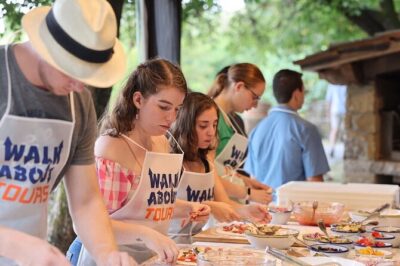
Florence Pizza or Pasta Class with Gelato Making at a Tuscan Farm
Read our review →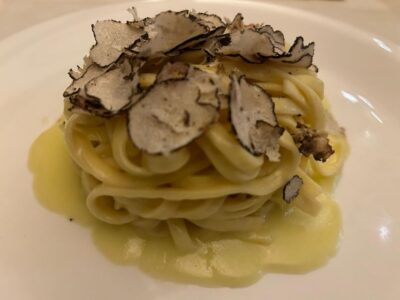
Pasta & Tiramisu Cooking Class with Unlimited Wine
Read our review →
Pizza-Making Workshop with Drink and Appetizer
Read our review →
Pasta & Tiramisu Class with Fine Wine by the Vatican
Read our review →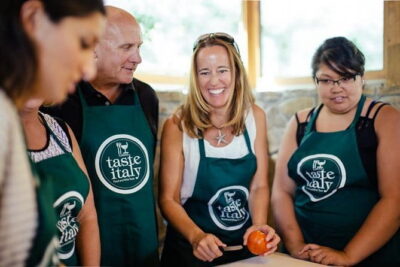
Cooking Class and Lunch at a Tuscan Farmhouse with Local Market Tour from Florence
Read our review →Browse the lists this tour appears in