Reviewed · GUIDED
Domus Aurea Guided Tour: The Golden House of Nero
Nero’s palace is hiding beneath Rome. The Domus Aurea Guided Tour takes you into the emperor’s buried pleasure complex for about two hours, where painted walls, vaulted rooms, and ongoing restoration reveal a side of ancient Rome that most visitors miss. I love the archaeological setting and the way the virtual reality presentation helps you picture a palace now hidden underground.
I also like the short format. At about $56.72 per person, you get admission, reservations, an English-speaking archaeologist guide, and the virtual reality experience without giving up your whole day. The main caution is that the quality of the English and the value of the tour-company representative can vary, and a few people have dealt with confusing meeting instructions or changed start times.
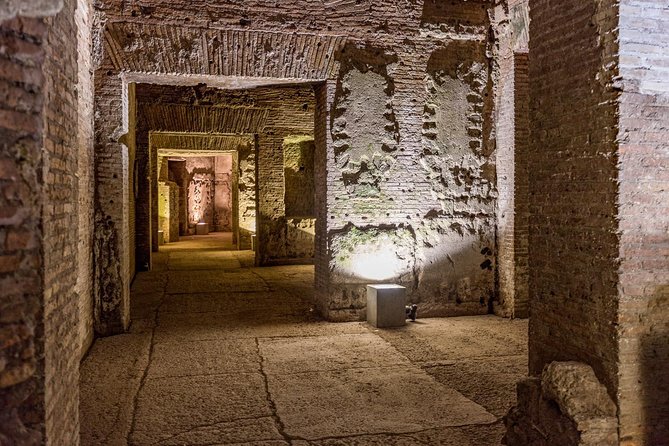
The Domus Aurea is not a polished palace museum. It is a working archaeological site with stairs, uneven ground, cool air, and unfinished areas. That roughness is part of its appeal, but you should arrive with comfortable shoes, a light jacket, water, and the exact government-issued photo ID used when booking.
In This Review
- Key points to know before you book
- Why the Golden House is worth your Rome time
- Meeting at Oppio Caffè and getting inside
- Inside the Domus Aurea: what the two-hour visit feels like
- The virtual reality reconstruction brings back the scale
- How the guides affect the experience
- Is $56.72 a fair price?
- Who will enjoy this most?
- Practical advice for a smoother visit
- Should you book the Domus Aurea Guided Tour?
- FAQ
- How long does the Domus Aurea Guided Tour last?
- What is included in the ticket price?
- Where does the tour begin and end?
- Do I need to bring identification?
- Is the Domus Aurea suitable for people with mobility concerns?
- Can I cancel for a full refund?
Key points to know before you book
- A buried palace, not a typical Roman monument: You walk through underground rooms from Nero’s vast Domus Aurea, with restoration and excavation still underway.
- The virtual reality finale matters: The headset reconstruction shows the scale, color, and extravagance that are hard to imagine from the surviving ruins.
- An archaeologist leads the important part: The site guide conducts the interior visit, while the tour-company representative generally handles check-in and transfers you to the entrance.
- Plan for cold, uneven conditions: Even in summer, the interior can feel chilly, and the route includes steps, staircases, and rough surfaces.
- Small enough to stay manageable: The maximum group size is 22 people, though the actual experience can feel more personal when the group is smaller.
- Book ahead for limited entry: This experience is commonly reserved well in advance, with an average booking lead time of about 62 days.
Why the Golden House is worth your Rome time
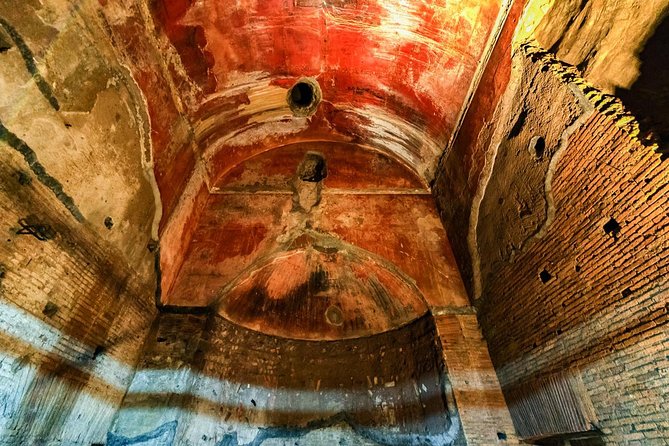
Rome gives you plenty of famous monuments, but the Domus Aurea offers something different. You are not simply looking at a finished building. You are entering a vast imperial project that was later buried, altered, and slowly brought back into view.
Nero ruled from AD 54 to 68, and his reputation has been shaped by stories of cruelty, extravagance, and the fire of Rome. The palace gives you a more useful way to understand him. It shows how an emperor used architecture, spectacle, art, and space to project power.
The name Domus Aurea means Golden House. That name reflects the decoration and luxury associated with the complex, though the site is more than a collection of rooms covered in gold. Its scale is the real shock. The surviving underground chambers hint at an enormous pleasure and entertainment complex rather than a simple private residence.
One especially useful historical point is that the Domus Aurea was not merely Nero’s home. It functioned as a massive daytime entertainment space. The tour helps connect Nero’s building program with Rome’s political culture, imperial image, and links with Egypt.
I like visiting a place where the gaps in the evidence are visible. You can see what survives, what has been reconstructed, and what is still being studied. That makes the visit feel active rather than frozen in the past.
A few more Rome bookings to compare
- Vatican: Museums & Sistine Chapel Entrance Ticket
★ 4.5 · 144,003 reviews - Vatican Museums & Sistine Chapel Tour with Optional Basilica
★ 4.3 · 67,413 reviews - Colosseum, Roman Forum & Palatine Guided Tour
★ 4.7 · 63,148 reviews
Meeting at Oppio Caffè and getting inside
The stated meeting point is Oppio Caffè at Via delle Terme di Tito 72, near the Oppian Hill gardens. In practice, look carefully around the garden or park entrance across from the café. One party had trouble finding the representative there, partly because the sign was small and not easy to spot.
Arrive at least 15 minutes early. That is especially important here because the group must be checked in and guided to the archaeological entrance. If you cannot find anyone around ten minutes before the scheduled start, use the phone number supplied with your booking.
The opening part is usually handled by the tour-company representative. The representative checks names, confirms admission, and leads the group to the Domus Aurea. Some representatives have been warm and helpful. Others have offered little beyond escorting the group, and one reported problem involved a representative who was late and hard to identify.
That distinction matters. The most rewarding part of the visit is generally led by the Domus Aurea’s own site guide or archaeologist. The outside representative may add useful background, but you are paying mainly for reserved entry, organization, and access to the guided visit.
Be ready to show a government-issued photo ID. The full names of everyone entering must match the names provided during booking. If the name on the reservation does not match the ID, admission can be refused. This is not the place to use nicknames or shortened first names.
Inside the Domus Aurea: what the two-hour visit feels like
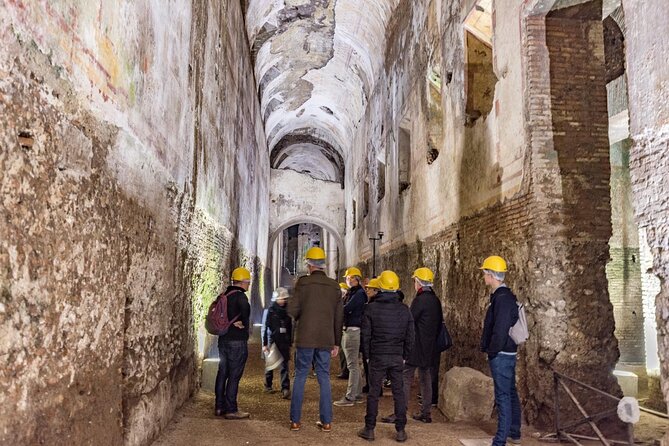
Once inside, expect a walking tour rather than a formal museum circuit. The route uses steps and staircases and crosses uneven archaeological surfaces. Comfortable shoes are essential, and a bottle of water is sensible.
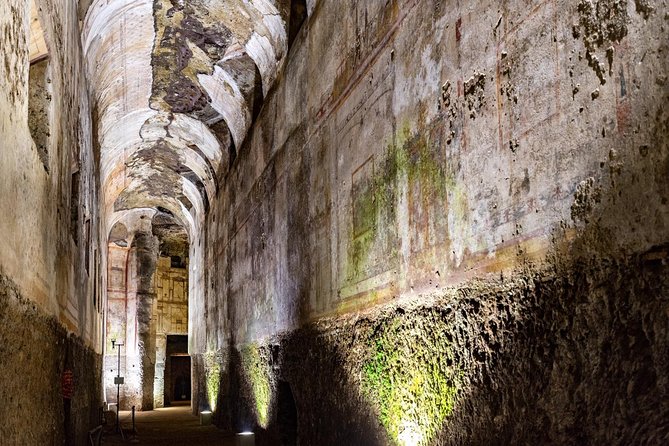
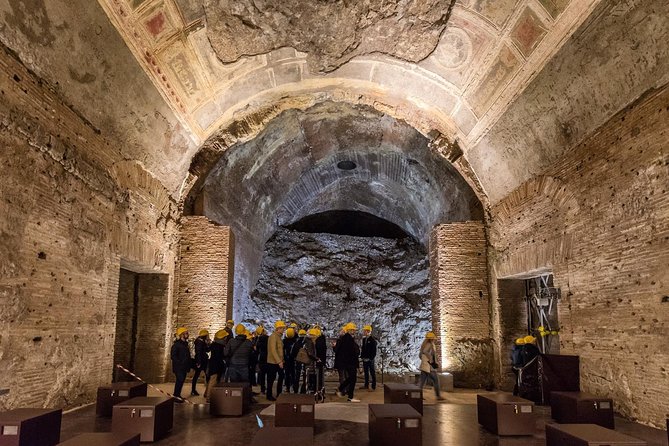
The interior can be cold even when Rome is hot. A light sweater or jacket takes little room in your bag and could make the difference between enjoying the final rooms and wishing the tour would end. You may find the contrast striking: outside, Rome can feel sunny and crowded; inside, the palace is dark, cool, and quiet.
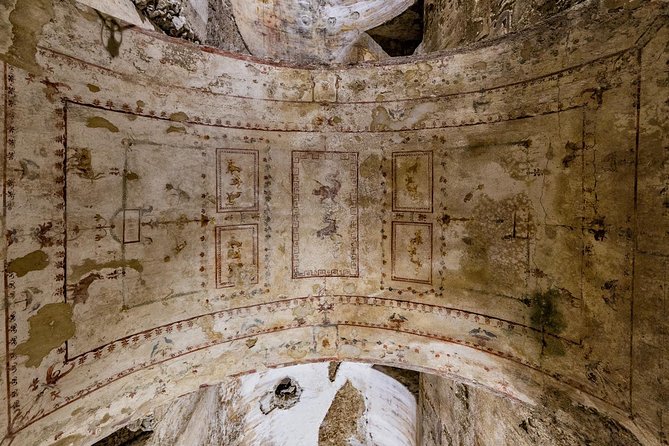
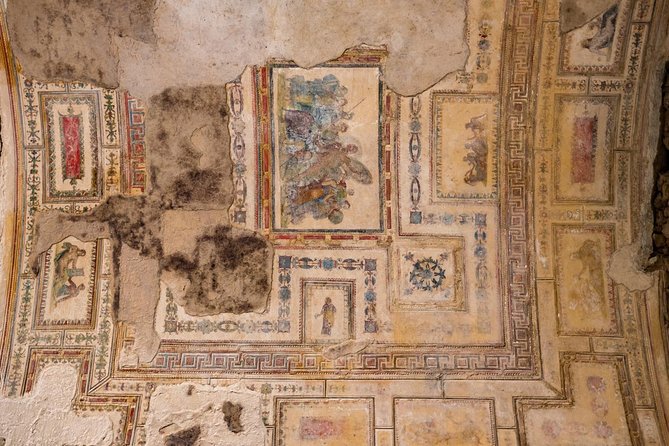
The rooms are valuable because decoration remains visible on walls, ceilings, and, in places, floors. The surviving artwork gives you a sense of the palace’s finish, even though time, burial, and restoration have removed much of the original grandeur.
The archaeological guide explains what you are seeing and places Nero’s building program in context. Some guides, including Sara and Valentina, have received particularly warm praise for clear, engaging presentations. Zenda has also been described as friendly and passionate while handling the start of the visit. Other assigned guides have been praised for their expertise but were harder to understand because of a strong accent or limited English.
That inconsistency is worth keeping in mind. A good guide can turn a dark sequence of ruins into a story about politics, art, engineering, and imperial excess. A less clear presentation may leave you with attractive fragments but an uncertain sense of how the rooms fit together.
There has also been a complaint about a tour that felt loosely structured, with some points left vague. Since the interior tour is conducted by site personnel, the exact style may depend on the assigned guide and the day’s conditions. Go in expecting strong access to the site, but not necessarily the same polished delivery every time.
The virtual reality reconstruction brings back the scale
The virtual reality experience is the most praised feature of this tour, and I understand why. Underground ruins can be difficult to read. A low wall or decorated fragment does not automatically tell you how tall the room was, how bright it looked, or how much space the original complex occupied.
The headset reconstruction supplies that missing picture. It helps you see the palace and surrounding area as a grand imperial setting rather than a collection of dark chambers. Screens and visual renderings along the route also show how some rooms may have appeared in their original form.
This is not just a flashy add-on. It gives the surviving archaeology a frame of reference. After seeing the reconstruction, the preserved decoration makes more sense, and the scale of Nero’s project becomes easier to grasp.
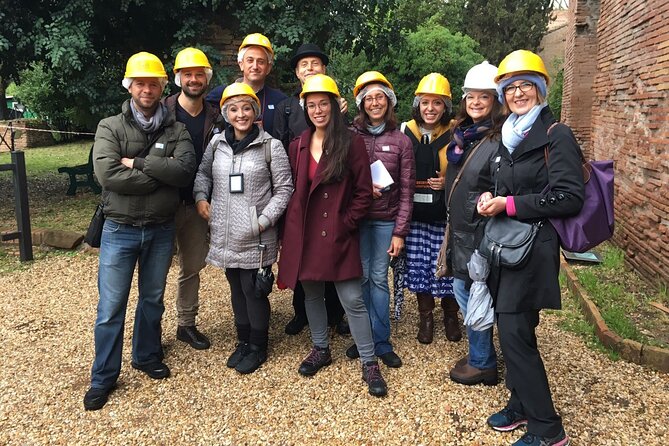
Families may find this part especially useful. An 8-year-old was reported to have enjoyed the virtual reality, while a one-year-old was accommodated with a stroller during the visit. Conditions can vary, but the experience has worked for families with young children. The tour does not require hard hats according to one detailed account, though you should still follow any instructions given on the day.
One important warning: a booking record reported that the virtual reality experience was not provided, alongside a late start and a guide who did not speak the requested language. That appears to be an exception rather than the usual pattern, since the virtual presentation is repeatedly described as a highlight, but it is still a reason to confirm any last-minute changes.
Still Rome, but a slower afternoon:
- Vatican Museums, Sistine Chapel & St Peter’s Basilica Guided Tour
★ 4.5 · 39,149 reviews - Rome: Colosseum, Palatine Hill and Roman Forum Guided Tour
★ 4.8 · 32,814 reviews - Rome: Guided Tour of Colosseum, Roman Forum & Palatine Hill
★ 4.7 · 27,897 reviews - Rome: Colosseum & Forum with Audio Guide App -Optional Arena
★ 4.2 · 24,770 reviews
How the guides affect the experience
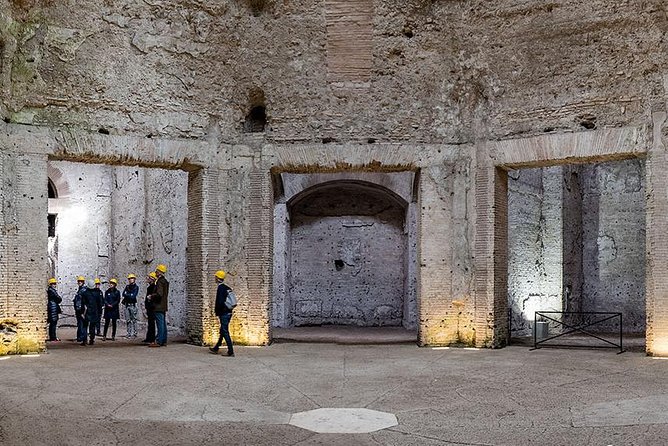
The strongest part of the visit is the interpretation inside the site. An archaeologist or site specialist can explain restoration choices, point out details you might walk past, and separate evidence from the popular myths about Nero.
I especially value the way the best presentations connect the palace to Rome and Egypt. That wider view makes the art and design more understandable. Nero’s world was not isolated from the eastern Mediterranean, and the tour can help you see those connections.
Names attached to positive experiences include Sara, Valentina, Stu, Zenda, and several unnamed site guides. Stu was praised for giving historical context that helped make sense of other Roman sights visited afterward. Valentina handled an admission problem calmly and kept the visit moving. Sara was described as highly familiar with the building’s details and nuances.
The company representative and the site guide are often different people. That can confuse you if you expect one guide to lead the entire experience. Usually, the representative gets you checked in and to the entrance, the Domus Aurea staff member conducts the interior tour, and the representative may reconnect with the group afterward.
Do not judge the whole experience by the opening briefing alone. The quality of the archaeological guide is more important. At the same time, if the representative is late or difficult to find, contact the supplied support number instead of wandering around the park entrance.
Is $56.72 a fair price?
At $56.72 per person, this is not a bargain basement Rome activity. The fee includes admission, reservation charges, taxes, an English-speaking archaeologist guide, and the virtual reality presentation. You are also paying for access to a site with controlled entry and limited capacity.
I think the value is strongest if you care about ancient history, archaeology, architecture, or unusual Roman experiences. The Domus Aurea is less familiar than the Colosseum, and the small-group format can make the visit feel more focused than a large city tour.
The value is less clear if you only want a guide to walk you from a café to the entrance. Some people felt the outside representative added very little and would have preferred an official site tour without an intermediary. That is a fair criticism, especially when the interior guide is the person doing most of the teaching.
Still, the reserved access and virtual reality element make this more than a simple entry ticket. If the Domus Aurea is high on your list, paying for a scheduled English visit may be worthwhile. If you are comparing options carefully, check what the official site offers on your dates and decide how much you value the booking support and added presentation.
The two-hour length helps the price feel more manageable. You can visit in the morning and continue to another Roman sight, or use it as a cooler break during a hot day. Just remember that the route is short in clock time, not necessarily easy underfoot.
Who will enjoy this most?
I would choose this tour for a return visit to Rome, especially if you have already seen the headline monuments. It gives you a different look at the city and rewards curiosity more than box-ticking.
It also suits anyone who likes places still being excavated and restored. You can see that the Domus Aurea is not finished, and that uncertainty adds interest. The building is still being understood, conserved, and presented to the public.
History-focused families can enjoy it too, particularly because the virtual reality presentation offers a visual break from technical explanation. Very young children may be accommodated, but you should consider the steps, cool rooms, and uneven surfaces before booking.
I would be more cautious if you have mobility concerns. Most people can participate, but this is a walking visit with stairs and rough ground. Tell the provider about mobility needs during booking so they can discuss the best way to accommodate you.
The English-language issue also deserves attention. Most positive experiences describe guides who spoke English well, but accented or unclear delivery has caused frustration. If precise spoken explanation is central to your enjoyment, contact the provider before booking and confirm the language arrangement.
Practical advice for a smoother visit
Use the café and garden entrance as two reference points when meeting the group. Look for a clearly marked representative and do not assume the person will be wearing an obvious company uniform.
Bring the exact ID used for the reservation. Check every participant’s name before submitting the booking, since all full names are required for the tickets.
Wear shoes that handle steps and uneven surfaces. Pack a light jacket, even for a July visit, and carry water. The site is indoors and archaeological, not a warm, polished gallery.
Keep some flexibility in your schedule. Tour times have occasionally shifted, including changes from morning times to later afternoon departures, while the original booking information did not always update clearly. Confirm the final time by message or phone before the day of the tour.
The group limit is 22 people. That is not a private tour, but it is still far more manageable than a large coach group. Stay close during the walk from the meeting point to the entrance, since the representative may be moving the group quickly to meet the admission slot.
Free cancellation is available up to 24 hours before the start time. Changes or cancellations made inside that window are not accepted for a refund. The activity also requires a minimum number of participants, and if that minimum is not met, you should be offered another date or a full refund.
Should you book the Domus Aurea Guided Tour?
Yes, if you want an unusual Roman site, appreciate archaeology in progress, and like visual tools that make ancient spaces easier to understand. The preserved decoration, the scale of Nero’s project, and the virtual reality reconstruction create a memorable two-hour visit.
I would not book it blindly. Confirm the meeting point, final start time, participant names, ID rules, and English-language arrangements. Also understand that the company representative may simply organize the handoff, while the Domus Aurea staff guide provides the main tour.
For a first-time Rome visit, fit it in if you have room beyond the Colosseum, Forum, and Pantheon. For a return visit, I think it is an especially good choice. The Golden House is strange, chilly, partly hidden, and still changing. That is exactly why it feels like a real discovery rather than another finished monument.
FAQ
How long does the Domus Aurea Guided Tour last?
The tour lasts approximately two hours, including the guided visit inside the Domus Aurea and the virtual reality experience.
What is included in the ticket price?
The price includes admission, taxes and fees, reservation charges, an English-speaking archaeologist guide, exclusive access to the Domus Aurea, and the virtual reality experience.
Where does the tour begin and end?
The listed meeting point is Oppio Caffè, Via delle Terme di Tito 72, Rome. The tour ends at Viale della Domus Aurea.
Do I need to bring identification?
Yes. Bring a government-issued photo ID, and make sure each participant’s full name matches the name provided during booking.
Is the Domus Aurea suitable for people with mobility concerns?
The tour includes walking, steps, staircases, and uneven surfaces. Tell the provider about mobility concerns during the booking process so they can discuss possible accommodations.
Can I cancel for a full refund?
You can cancel at least 24 hours before the local start time for a full refund. Cancellations or changes made less than 24 hours before the tour are not accepted for a refund.
Recently added around Rome
- Rome: Pantheon, Trevi Fountain & Roman Squares Guided Tour★ 4.7 · 386 reviews
- Vatican: Pope Francis Tomb and Papal Basilicas Tour★ 4.7 · 340 reviews
- Vatican: St. Peter’s Basilica with Audio Guide and Options★ 3.4 · 269 reviews
- Rome: Vatican Museums Skip-the-line Entry Ticket and Tour★ 4.2 · 400 reviews
- Rome: Vatican Museums & Sistine Chapel Ticket + Tour Options★ 4.7 · 344 reviews
- Vatican: Museums, Raphael & Sistine Chapel + Basilica Option★ 4.7 · 350 reviews
- Vatican Museums & Sistine Chapel Guided Tour★ 4.3 · 832 reviews
- Vatican Museums & Sistine Chapel Entry Ticket★ 4.4 · 245 reviews
Guided, compared.
Colosseum, Roman Forum & Palatine Guided Tour
Read our review →
Vatican Museums, Sistine Chapel & St Peter’s Basilica Guided Tour
Read our review →
Colosseum, Palatine Hill and Roman Forum Guided Tour
Read our review →
Guided Tour of Colosseum, Roman Forum & Palatine Hill
Read our review →
Colosseum & Forum with Audio Guide App -Optional Arena
Read our review →
Colosseum, Roman Forum and Palatine Hill Guided Tour
Read our review →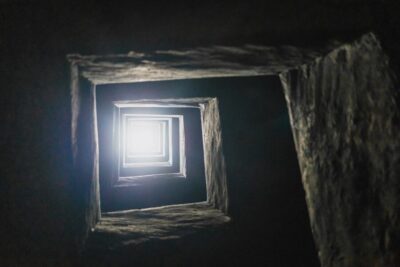
Naples Underground Entry Ticket and Guided Tour
Read our review →