
Reviewed · COOKING CLASSES
Cooking Class in Rome: Make Fettucine & Tiramisù with Chef Paolo
Rome tastes better when you cook it. This two-hour class turns flour and eggs into hand-made fettuccine, then finishes with tiramisù made by the whole group. I especially like the simple, hands-on pasta lesson and the chance to sit down afterward with your own meal, wine, and limoncello. One drawback: you do not prepare the sauces yourself, and the class location can be tricky to spot from the street.
The format is friendly and social, with a maximum of 20 people and instruction in English. It suits families, couples, solo visitors, and anyone who wants a break from museums. Just know that the food is designed for beginners, not serious home cooks looking for advanced sauce work or restaurant-level technique.
In This Review
- Key points before you book
- What happens during the two-hour class
- Turning flour and eggs into fettuccine
- Making tiramisù as one group
- The meal, wine, coffee, and limoncello
- What makes the central Rome setting useful
- Is $116.14 a fair price?
- Families, couples, and solo visitors
- The teaching style and the real drawbacks
- Practical details to know before arrival
- Who should book this Rome pasta class?
- Should you book it?
- FAQ
- Where does the cooking class meet?
- How long does the class last?
- Is the class taught in English?
- What will I make?
- Which pasta sauces can I choose?
- Are food and drinks included?
- Can children take part?
- How many people can join the class?
- Can I cancel for a refund?
Key points before you book
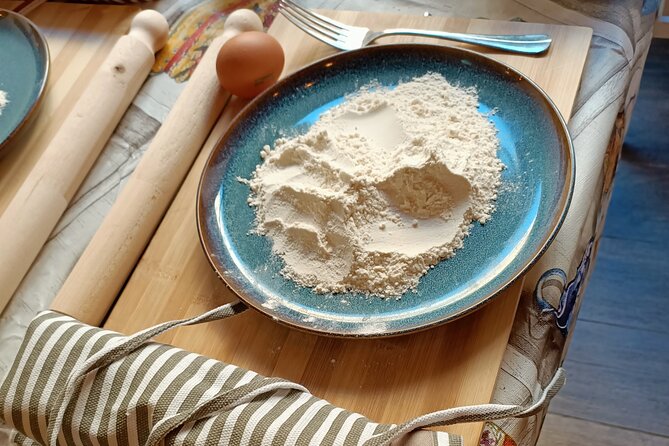
- You make pasta by hand: Learn the basic egg-and-flour method, knead the dough, and shape it into fettuccine.
- Tiramisù is prepared together: The dessert is a shared group activity rather than an individual recipe station.
- You choose your pasta sauce: Options are amatriciana, cacio e pepe, or tomato with basil, but the sauces are not part of the cooking lesson.
- The meal follows the class: Sit down to eat the pasta and tiramisù with bottled water, a soft drink or wine, and a final coffee or limoncello.
- It works well for children: Kids age 7 and older can take part, while younger children must stay with a parent during the class.
- Allow time to find the door: The meeting point is V. della Croce, 34, near central Rome, but the lack of a clear sign has caused some people to walk past it.
What happens during the two-hour class
This is a compact cooking lesson, not a full-day culinary school. In about two hours, you move from raw ingredients to a sit-down meal, with the emphasis on participation and fun rather than technical perfection.
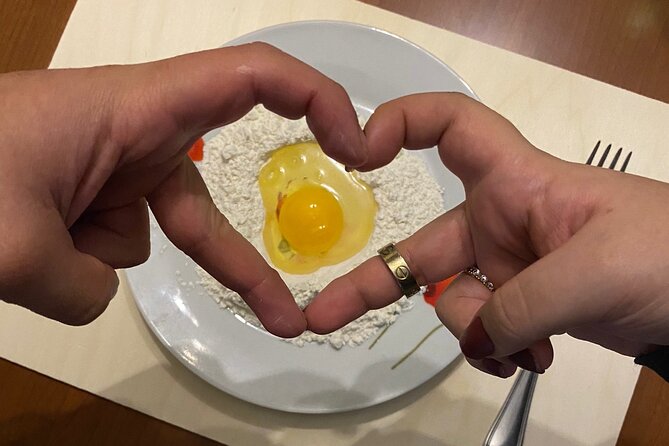
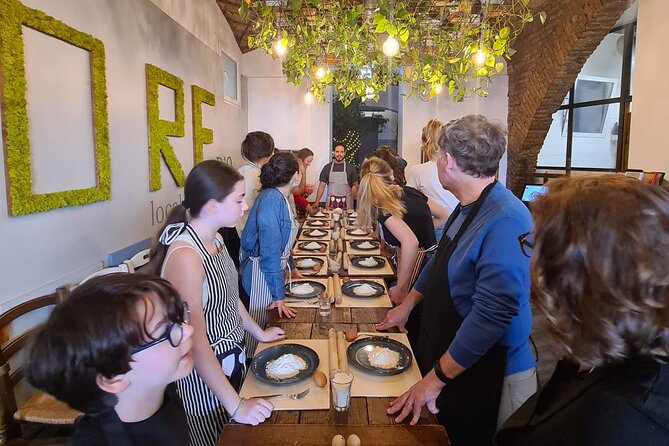
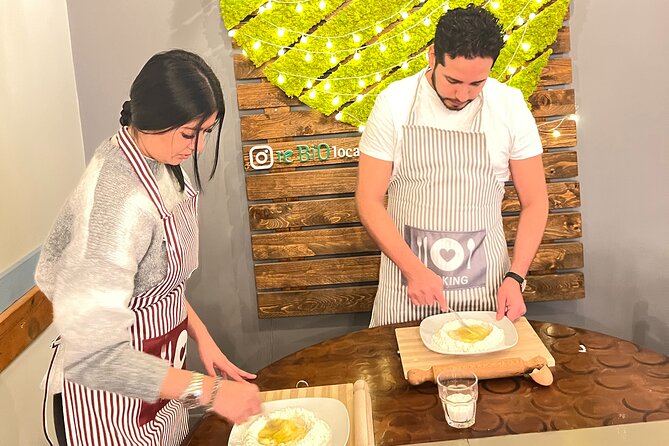
The class begins with the foundation of fresh pasta: eggs and flour. You work the dough with your hands, which makes the lesson more useful than simply watching a chef prepare everything. You feel how the mixture changes as it comes together, and you get a practical sense of why pasta dough needs steady work.
The basic method is old, direct, and easy to repeat at home. That is the real strength of the class. You are not relying on a complicated machine or a long ingredient list. With flour, eggs, a rolling method, and some patience, you can make a version of the dish again after returning home.
The chef leads the process step by step, with help available around the table. Several sessions have been praised for instructors who moved from person to person, remembered names, offered tips, and helped anyone who fell behind. Chef Paolo receives particularly warm praise, while other sessions have featured instructors and assistants named Lucas, Irene, Ricardo, and Roberto.
Because the group can include as many as 20 people, the amount of personal help may depend on the size and pace of your particular class. The teaching style is generally described as friendly and entertaining, though one account found the instructor impatient and too sarcastic with nervous cooks. If you are shy in the kitchen, remember that this is a practical lesson, not a performance. Mistakes are part of making pasta.
More Cooking Classes in Rome
- 3 in 1 Cooking Class near Navona: Fettuccine, Ravioli & Tiramisu
★ 5.0 · 7,376 reviews - Rome: Pasta & Tiramisu Class with Fine Wine by the Vatican
★ 4.9 · 4,852 reviews - Rome: Pasta Making Class with Wine, Limoncello, and Dessert
★ 4.9 · 3,177 reviews
Turning flour and eggs into fettuccine
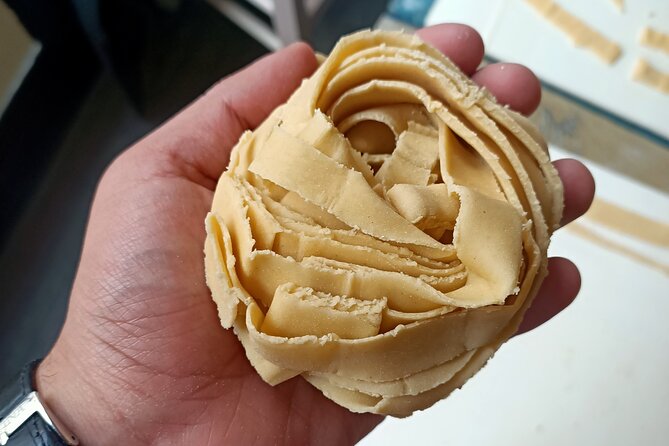
The pasta portion is the heart of the evening. You learn how to turn a small set of ingredients into dough, work it by hand, and shape the finished pasta. The physical effort is part of the charm. Fresh pasta looks easy on television, but kneading and shaping it gives you a better respect for the work behind a bowl of noodles.
The class focuses on fettuccine, so do not expect a survey of every pasta shape in Italy. You do, however, get a useful introduction to the basic dough and a technique you can adapt later. The lesson also includes an explanation of the dish and its place in Italian cooking, along with the different ways pasta can be served.
One point is important: the pasta is cooked together. Your portion is not boiled in a private pot while you wait. The finished noodles are divided according to the sauce selected by each person or group. That arrangement keeps the class moving and makes sense for a group meal, but it may disappoint you if you want to cook your exact batch from start to finish.
You choose among three classic options:
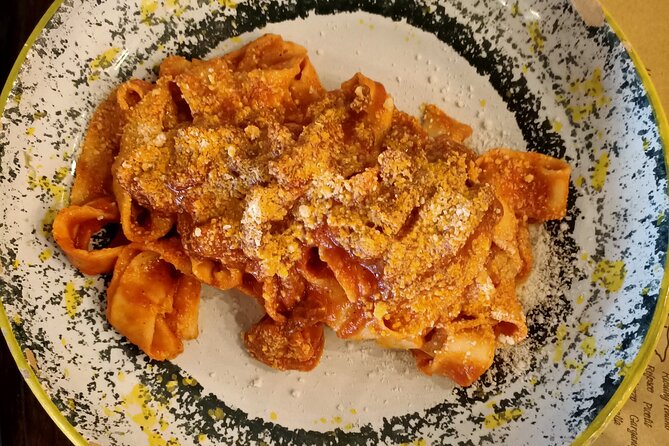
- Amatriciana
- Cacio e pepe
- Tomato with basil
The sauces are not included in the hands-on preparation. The chef handles that part, so this is a pasta-making class rather than a complete lesson in Roman sauce technique. One person found the finished sauce under-seasoned, while most accounts describe the pasta meal as tasty and satisfying. Your expectations matter here. Beginners will likely appreciate the simple format. Experienced cooks may want a more detailed lesson on emulsifying cacio e pepe or balancing amatriciana.
Making tiramisù as one group
The dessert course is tiramisù, and everyone prepares it together. You get to take part in mixing and assembling the dessert, then eat it after the pasta. Families tend to enjoy this section because children can help with the whisking and combining of ingredients.
Tiramisù is not difficult to assemble, so the class does not treat it as a demanding pastry lesson. Its value is social. You work on a familiar Italian dessert with the rest of the group, then see the finished result appear at the table.
The group format also means you do not each make a separate dessert to take away. If you are looking for a private, detailed lesson in several tiramisù variations, this will feel basic. If you want a relaxed activity that ends with a sweet course you helped prepare, it fits well.
Several accounts praise the dessert as a highlight, calling it simple to make and surprisingly good. The combination of fresh pasta, tiramisù, and drinks gives the evening a complete shape. You are not leaving with a recipe demonstration and an empty stomach.
The meal, wine, coffee, and limoncello
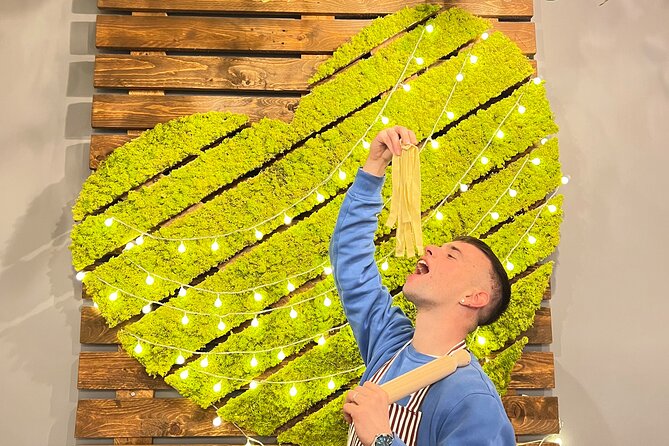
After the cooking, you sit down and eat what the group has prepared. The meal starts with your pasta and ends with the shared tiramisù. Bottled water is included, and you can choose a glass of red or white wine, or take a soft drink instead.
The class also includes a final choice between coffee and limoncello, according to the tour information. Some descriptions refer to a shot of limoncello or espresso, so confirm the exact serving choice when you arrive if that detail matters to you.
This sit-down meal is more important than it might first appear. Cooking classes can feel rushed when the food is packed into containers or eaten standing up. Here, you get time to talk with the rest of the group and enjoy the result. Families have used the meal as a shared evening activity, while couples have enjoyed chatting around the table while waiting for the pasta.
The social side is one of the strongest reasons to book. You may arrive as a solo visitor or as part of a family, then spend the evening making food with people from several places. The setting gives you conversation without requiring a separate social event.
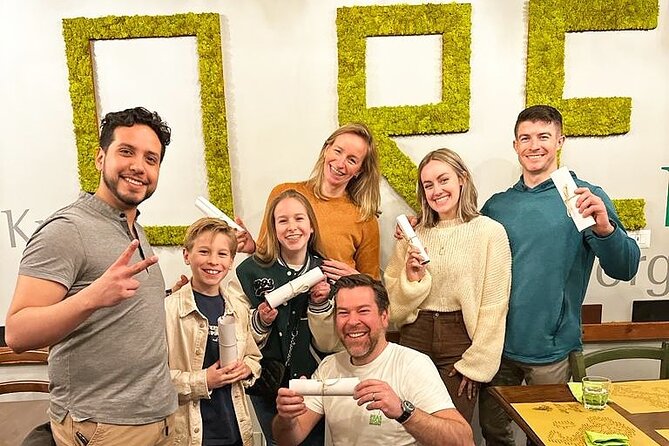
A certificate is also included. It is a lighthearted souvenir rather than a professional qualification, but it can be a fun reminder of the evening. Some sessions have also provided recipes afterward, which makes the class more useful once you are back home.
Still Rome, but a slower afternoon:
- Vatican: Museums & Sistine Chapel Entrance Ticket
★ 4.5 · 144,003 reviews - Vatican Museums & Sistine Chapel Tour with Optional Basilica
★ 4.3 · 67,413 reviews - Colosseum, Roman Forum & Palatine Guided Tour
★ 4.7 · 63,148 reviews - Vatican Museums, Sistine Chapel & St Peter’s Basilica Guided Tour
★ 4.5 · 39,149 reviews
What makes the central Rome setting useful
The meeting point is V. della Croce, 34, 00187 Rome, in the center of the city. The activity begins and ends at the same location, so you do not need to arrange a second pickup point after dinner.
The central address is convenient if you are already sightseeing in Rome. It is near public transportation, and the class can fit neatly into a day built around central sights. Still, do not assume you will spot the entrance immediately. A few people walked past the building several times because there was no obvious cooking-class sign.
I would arrive early and use the full street address rather than relying only on the restaurant name. Keep your booking confirmation available on your phone. One solo visitor became lost, could not get timely help, and eventually left before finding the class. That story is a reminder that central Rome can still be confusing, especially after dark or when you are navigating alone.
The venue is a restaurant, not a separate cooking school. That explains why the final meal works smoothly, but it also means the atmosphere may feel more like a restaurant activity than a quiet professional kitchen.
Is $116.14 a fair price?
At $116.14 per person, this is not a cheap meal. You are paying for instruction, ingredients, equipment, the pasta and dessert, bottled water, a drink, the sit-down service, and a small certificate.
The value is strongest if you want three things in one package: a beginner cooking lesson, a social evening, and dinner in central Rome. A normal restaurant meal may cost less, but it will not give you the practical skill of making pasta by hand. A private cooking lesson would likely offer more individual attention, but this group format costs less than a private session and creates more of a shared evening.
The price is less compelling for advanced cooks. Since the sauces are prepared by the chef and the tiramisù is made collectively, you are not receiving a detailed course in every element of the meal. If your main goal is to master cacio e pepe, amatriciana, or pastry technique, you may want a more specialized class.
The fact that people book this around 24 days ahead suggests that popular dates can fill early. If you have a fixed Rome schedule, booking ahead is sensible. The activity is offered in English, which removes a major source of stress for visitors who want clear kitchen instructions.
Families, couples, and solo visitors
This is one of the better Rome activities for families who need a change from churches, galleries, and ancient ruins. Children ages 10 to 13 have been described as enjoying the process, and families with children ages 12 and 15 found the class comfortable for everyone. Kids age 7 and older can participate, while younger children must take part with a parent.
The class is also a good match for couples. You get a shared task, a meal, wine, and dessert without needing to plan a separate restaurant reservation. It has enough structure to keep the evening moving, but not so much that you feel trapped in a formal lesson.
Solo visitors can enjoy it too, especially if they like meeting people through food. The main caution is arrival. Because the entrance can be difficult to identify, solo visitors should give themselves extra time and make sure they know the restaurant location before setting out.
The maximum group size is 20. That is large enough for a lively room, but it may limit one-on-one instruction. Smaller groups have received especially warm praise for personal attention. If you have learning difficulties, are very nervous in the kitchen, or need extra time, tell the instructor early and ask for help directly.
The teaching style and the real drawbacks
Most of the praise focuses on the staff. Instructors are often described as funny, welcoming, patient, and willing to help at each workstation. One family had a travel problem involving delayed luggage, and the restaurant staff allowed the group to step in and out while still helping everyone take part. The team even prepared tiramisù for the absent couple so they could share dessert later.
That kind of flexibility is valuable in a live class. Travel rarely goes exactly as planned, and a warm response can rescue an otherwise difficult evening.
Still, the teaching style may vary. One session was described as overly sharp, with sarcasm aimed at a participant who was having trouble following along. That is not the general picture, but it is worth noting. A lively Italian teaching style can be funny and energetic for one person and stressful for another.
The food quality also has a range of opinions. Most people enjoy the finished pasta and tiramisù, but one experienced cook found the meal only reasonable and the sauce bland. This is best treated as a beginner class with a satisfying meal, not as a guaranteed fine-dining dinner.
Practical details to know before arrival
Your confirmation should arrive at the time of booking. The class accepts mobile tickets, and service animals are allowed. Public transportation is nearby.
The activity requires a minimum number of participants. If that minimum is not reached and the class is canceled, you will be offered another date or experience, or receive a full refund.
You can cancel for a full refund up to 24 hours before the start time. Cancellations or changes made inside that 24-hour window are not refunded or accepted. The cutoff uses Rome local time, so check the clock carefully if you are changing plans from another time zone.
Wear something you can work in comfortably. The provided equipment covers what you need for the course, but pasta making involves flour, dough, and hands-on work. The class is short enough to fit into a busy sightseeing day, yet long enough to include cooking, eating, and conversation.
Who should book this Rome pasta class?
I would book this if you want a friendly, beginner-level activity with a meal built in. It is especially well suited to families, couples, and solo visitors who enjoy learning by doing.
You should also book it if you want a practical souvenir. A Roman food memory is nice, but knowing how to mix and shape fresh pasta gives you something you can use at home.
I would hesitate if you are an advanced cook, want private instruction, or expect to learn the sauces in detail. The class teaches pasta and tiramisù, while the sauces are selected and prepared as part of the group meal.
Should you book it?
Book it if you want an easygoing evening that combines fresh pasta, tiramisù, and a shared table. The staff, family-friendly format, English instruction, and chance to eat the food you make give it strong appeal.
Before booking, accept three limits: the group may be as large as 20, the sauces are not a hands-on lesson, and the entrance can be hard to find. Arrive early, keep the address ready, and treat the class as a fun introduction to Italian cooking rather than an advanced culinary course. For most first-time pasta makers, that is exactly what makes it worthwhile.
FAQ
Where does the cooking class meet?
The class starts and ends at V. della Croce, 34, 00187 Rome, Italy.
How long does the class last?
The activity lasts approximately two hours.
Is the class taught in English?
Yes. The class is offered in English.
What will I make?
You will make fettuccine and tiramisù. The pasta is prepared by the group and divided according to the chosen sauce.
Which pasta sauces can I choose?
You can choose amatriciana, cacio e pepe, or tomato with basil. The sauces themselves are not included as part of the cooking lesson.
Are food and drinks included?
Yes. The meal includes the pasta and tiramisù prepared during the class, bottled water, and a choice of red wine, white wine, or a soft drink. A final coffee or limoncello is also included according to the tour details.
Can children take part?
Yes. Children age 7 and older can participate. Children under the minimum age must follow the class together with a parent.
How many people can join the class?
The class has a maximum of 20 participants.
Can I cancel for a refund?
You can cancel up to 24 hours before the start time for a full refund. Cancellations or changes made less than 24 hours before the start time are not accepted or refunded.
Recently added around Rome
- Rome: Pantheon, Trevi Fountain & Roman Squares Guided Tour★ 4.7 · 386 reviews
- Vatican: Pope Francis Tomb and Papal Basilicas Tour★ 4.7 · 340 reviews
- Vatican: St. Peter’s Basilica with Audio Guide and Options★ 3.4 · 269 reviews
- Rome: Vatican Museums Skip-the-line Entry Ticket and Tour★ 4.2 · 400 reviews
- Rome: Vatican Museums & Sistine Chapel Ticket + Tour Options★ 4.7 · 344 reviews
- Vatican: Museums, Raphael & Sistine Chapel + Basilica Option★ 4.7 · 350 reviews
- Vatican Museums & Sistine Chapel Guided Tour★ 4.3 · 832 reviews
- Vatican Museums & Sistine Chapel Entry Ticket★ 4.4 · 245 reviews
Cooking Classes, compared.
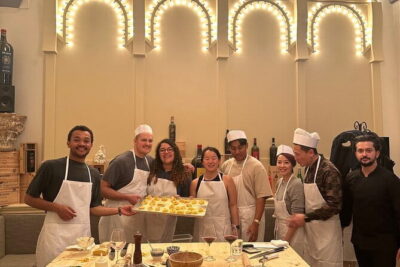
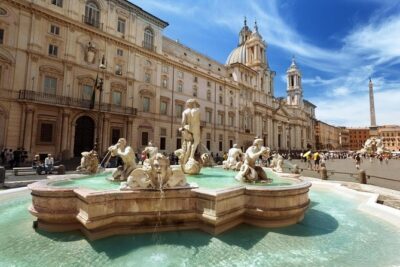
3 in 1 Cooking Class near Navona: Fettuccine, Ravioli & Tiramisu
Read our review →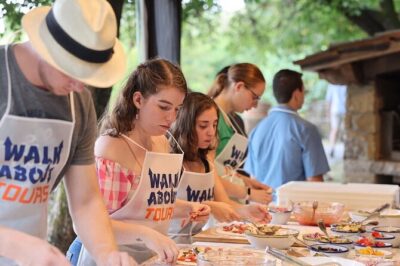
Florence Pizza or Pasta Class with Gelato Making at a Tuscan Farm
Read our review →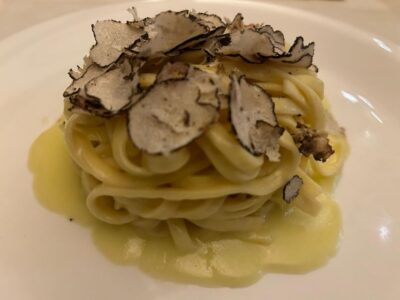
Pasta & Tiramisu Cooking Class with Unlimited Wine
Read our review →
Pizza-Making Workshop with Drink and Appetizer
Read our review →
Pasta & Tiramisu Class with Fine Wine by the Vatican
Read our review →
Cooking Class and Lunch at a Tuscan Farmhouse with Local Market Tour from Florence
Read our review →Browse the lists this tour appears in