
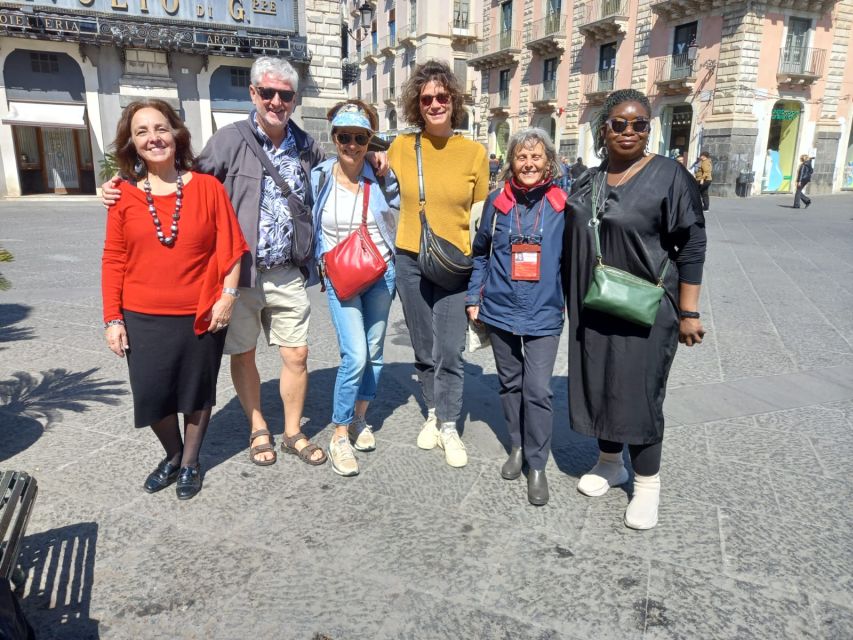
Reviewed · CITY TOURS
Catania: Heart of the City Guided Walking Tour
Catania makes more sense on foot. This two-hour walk links the city’s grandest squares with its fish market, churches, medieval castle, and lava-dark streets, while a local guide explains how earthquakes, Mount Etna, faith, food, and daily life shaped the city. I especially like the compact route, which gives you a useful first look without wearing you out, and the practical restaurant and nightlife advice shared along the way. The main consideration is that most sights are explained from outside, so you should treat this as an introduction rather than a complete monument tour.
The tour costs $23 per person, a fair price for a licensed English-speaking guide and two hours of local context. Guides such as Esther, Maria Luisa, Tiziana, Matteo, and Gordon have been praised for their clear storytelling, humor, and warmth. The tour normally needs at least four people to run, and it can be cancelled the day before if that minimum is not reached.
In This Review
- Quick points before you book
- Why this short walk works so well in Catania
- Meeting the guide at Piazza Duomo
- Catania Cathedral and the city’s religious center
- Through the Catania fish market
- Ursino Castle and the earthquake that remade Catania
- Via Crociferi and Catania’s Baroque face
- Piazza Università and your next steps
- The guides make the difference
- Pace, weather, and comfort
- What the $23 price really buys you
- Who should book this Catania walk?
- Should you book the Heart of the City tour?
- FAQ
- How long is the Catania walking tour?
- What sights are included on the route?
- Where does the tour start?
- Where does the tour finish?
- Is the tour conducted in English?
- Are entrance tickets included?
- Is the walking tour wheelchair accessible?
- Can I cancel the booking?
Quick points before you book
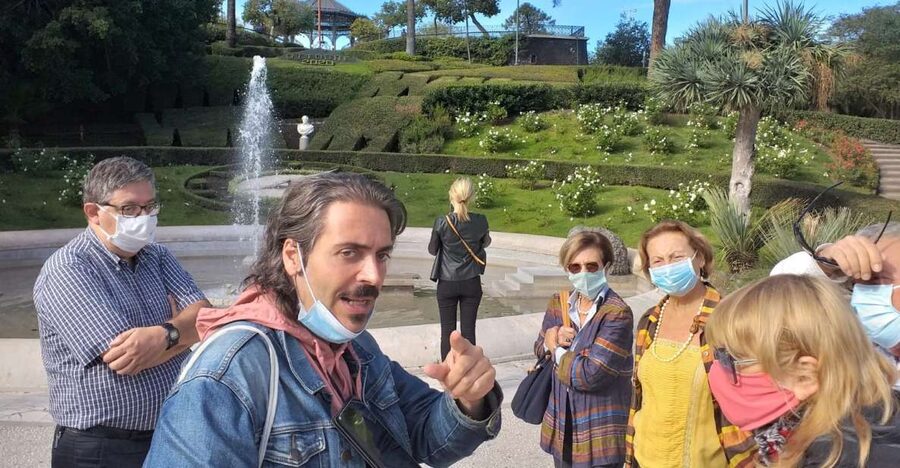
- Start beside Piazza Duomo: Meet at the Infopoint Turistico GS Guiding Sicily on Via Erasmo Merletta, near the western corner of the city hall.
- See Catania’s essential center: The route covers the cathedral, fish market, Ursino Castle, Via Crociferi, and Piazza Università.
- Hear the city explained through Etna: Guides connect Catania’s buildings and traditions with the volcano and the 1693 earthquake.
- Useful on day one: The walk helps you decide which churches, museums, restaurants, and cafés deserve more of your time.
- Easy pace and accessible route: It lasts two hours and is listed as wheelchair accessible, though the fish market is a lively urban area.
- No attraction tickets are included: The guide explains the main monuments, but you pay separately if you return later to visit places that charge admission.
Why this short walk works so well in Catania
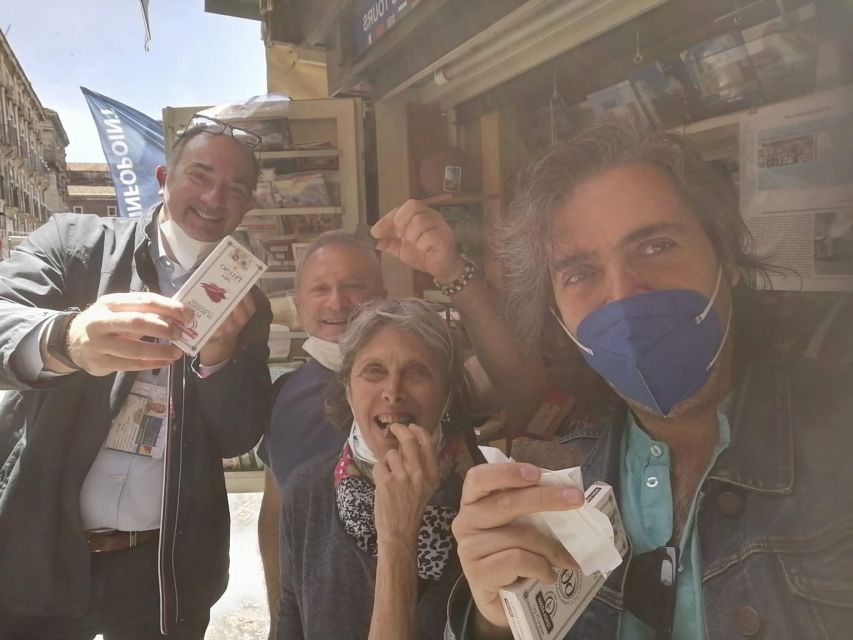
Catania can seem rough around the edges when you first arrive. Its black volcanic stone, busy streets, weathered façades, and grand Baroque buildings do not always explain themselves. A guide helps you see that the city is not simply untidy or unfinished. It has been repeatedly damaged, rebuilt, adapted, and lived in.
That context is the main value here. In two hours, you get a framework for the city rather than a pile of disconnected dates. The best guides bring in legends, local customs, religious stories, architecture, Mount Etna, and modern life. Esther, Maria Luisa, and Tiziana were especially praised for making the past feel personal and easy to follow.
I would book this near the start of a Catania stay. Several guides give suggestions for food, drinks, shopping, safety, and places to visit later. That advice can save you from spending the rest of your trip only around the obvious square.
The route is also manageable. One review specifically praised the fact that the main sights are close together and that you do not walk an extreme distance. In hot weather, guides have made a point of stopping in shady places. In rain, the walk can still go ahead, although particularly bad weather may lead to cancellation.
More Walking Tours in Catania:
- Catania: City Highlights Walking Tour
★ 4.7 · 666 reviews - Catania: Street Food Guided Walking Tour
★ 4.9 · 326 reviews - Catania: Guided Street Food Walking Tour
★ 4.7 · 300 reviews
Meeting the guide at Piazza Duomo
The meeting point is easy to place once you know what to look for. Go to the tourist information point on Via Merletta, at the corner with Piazza Duomo and near the western corner of Palazzo degli Elefanti, Catania’s city hall.
Look for a blue flag inside a large flower pot and a panel with the blue Guidingsicily Beauty logo. That detail matters because Piazza Duomo has plenty of movement, signs, buses, pedestrians, and visitors taking photographs. Arriving a little early gives you time to find the correct corner without beginning the tour in a mild panic.
The walk begins near the elephant fountain, one of Catania’s most recognizable symbols. The elephant, carved from dark volcanic stone and topped with an obelisk, gives the guide an immediate way into the city’s identity. From there, you begin looking at Catania not just as a collection of attractive buildings, but as a place shaped by local symbols and repeated rebuilding.
Group size can vary, and the operator confirms the tour only when at least four people are booked. If that number is not reached, the tour may be cancelled the day before. That is worth keeping in mind if your schedule is tight or you are visiting Catania for only a few hours.
Catania Cathedral and the city’s religious center
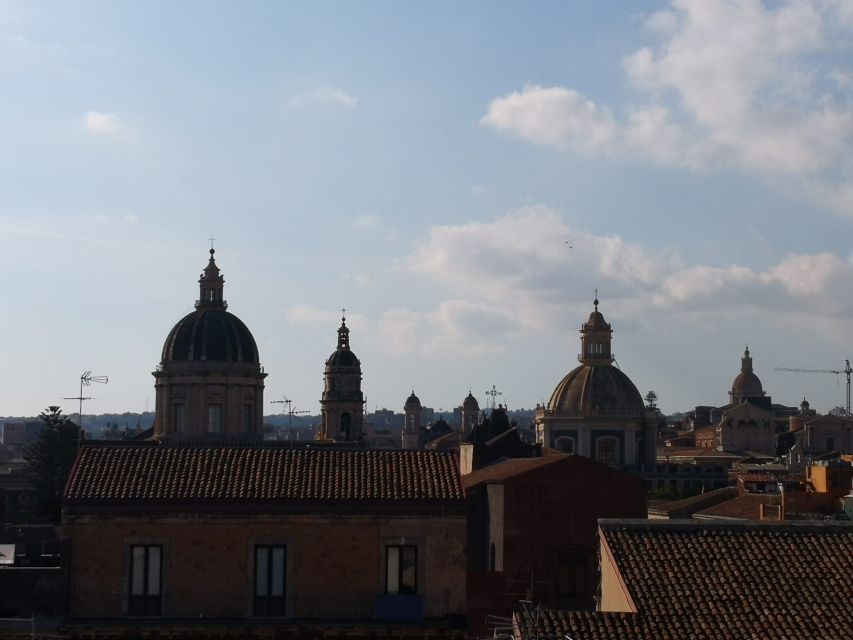
The cathedral receives about 30 minutes, making it the longest single stop on the first part of the walk. You can expect an explanation of the building, its role as the seat of the Archbishops of Catania, and the religious traditions connected with the city.
The cathedral is not just a place for a quick photograph. It helps explain how Catania’s public life has long been organized around churches, processions, patron saints, and grand civic spaces. Guides also use this part of the walk to tell stories about Saint Agatha and the city’s relationship with disaster and devotion.
One particularly moving account came from a visitor who appreciated the guide’s telling of Saint Agatha’s fate. That gives you a sense of the tour’s tone at its best. It is not only architectural commentary. It also brings in stories that still matter to local identity.
The information provided for the tour says there are no entrance fees to pay as part of the walk, since the main monuments are explained rather than visited as full museum stops. The description also mentions taking a look inside the cathedral, but you should not expect the kind of detailed interior visit that comes with a dedicated cathedral tour. Ask the guide what is open and included on your date.
Through the Catania fish market
The fish market takes about 15 minutes, but it may be the most immediately local part of the route. Here, the tone shifts from formal squares and church façades to food, trade, noise, and ordinary city life.
The guide points out the market area, local places to eat, and nearby nightlife. You get a better sense of how the center functions beyond its monuments. The market also gives the tour a useful balance: after hearing about bishops, earthquakes, and Baroque buildings, you see a place where Catania’s daily routines continue in a very direct way.
Several people singled out this stop as a favorite. That makes sense. A market is often easier to remember than another church façade, and the guide’s food recommendations can be useful that same evening. The route is not a food tour, so food and drinks are not included. Think of this as an orientation to where you might return, not a tasting experience.
The market can also be the least quiet part of the walk. Stay close to the guide, especially if the group is large, and keep an eye on your belongings in any crowded urban setting. The tour information says the route is wheelchair accessible, but market surfaces and crowd levels can affect how comfortable the passage feels at a particular time.
A few more Catania bookings to compare
- Catania: Mount Etna Morning or Sunset Day Trip with Tasting
★ 4.8 · 4,028 reviews - Mount Etna: Guided Volcano Summit Hiking Tour with Cable Car
★ 4.7 · 3,784 reviews - Catania: Sunset Jeep Tour of Mount Etna and Lava Flow Caves
★ 4.8 · 2,113 reviews - Mount Etna: Trek to 3000m with cable car and jeep
★ 4.7 · 1,978 reviews
Ursino Castle and the earthquake that remade Catania
The stop at Ursino Castle lasts about 15 minutes and takes place outside the castle. Its importance comes from survival. Ursino is described as the only medieval monument in Catania to survive the terrible earthquake of 1693, which destroyed much of the city.
That single fact gives you a clear way to understand Catania’s appearance. Much of the center was rebuilt after the earthquake, helping create the grand Baroque style associated with the city. The castle offers a visual contrast: a medieval fortress in a city whose central streets were largely remade.
I like this stop because it connects the physical city to the guide’s larger story. You do not simply hear that an earthquake occurred. You can look at an older structure and then compare it with the later churches, palaces, and squares along the route.
Do not book this experience expecting a castle admission or a long examination of the interior. The guide explains the monument from the route, and you can decide later if you want to return for a separate visit. For a first walk, that is a sensible use of time.
Via Crociferi and Catania’s Baroque face
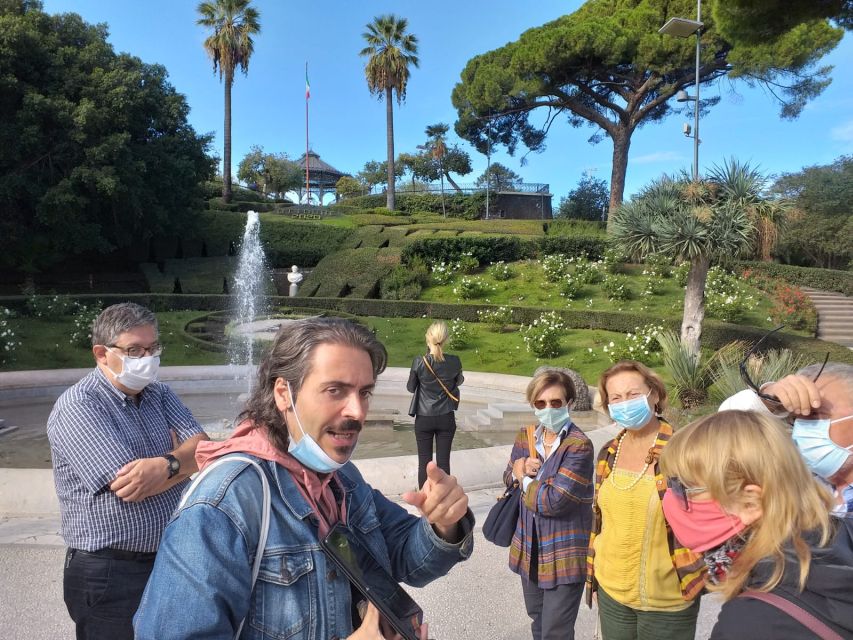
Via Crociferi receives about 30 minutes and is one of the tour’s most visually rewarding sections. The street is known for its monasteries, churches, and palaces, packed into a relatively short stretch.
This is where a guide adds real value. On your own, you can admire the stonework and take photographs, but it is easy to miss the connections between the buildings. A local explanation helps you notice how religious institutions, noble residences, rebuilding after disaster, and public design fit together.
The route is not only about polished façades. Catania’s volcanic stone gives the city a darker, more dramatic look than many Italian historic centers. Against that stone, pale Baroque decoration becomes especially striking. The effect can feel theatrical, but the guide keeps bringing you back to the people and events behind the buildings.
Guides have also pointed out places that are easy to miss when you are walking alone. One person described seeing monasteries and sites they would never have guessed were there. That is a good reason to keep this tour on your first-day list rather than treating it as a final activity after you have already covered the center.
Piazza Università and your next steps
The tour ends in Piazza Università, with about 30 minutes devoted to the square and its setting. The finish is practical because the piazza is only a short walk from Piazza Duomo, so you are not stranded at the edge of town.
This square also gives the guide a good final stage for explaining Catania’s civic character. After the market, castle, churches, and cathedral, you can look back at how the city’s major pieces fit together. The walk ends with orientation, not a hard stop.
Use this final portion to ask about the rest of your visit. Guides have offered advice on restaurants, cafés, nightlife, shopping, visitor attractions, and safety. One guide, Maria Luisa, was praised for helping someone plan a six-day stay, while another guide’s recommendations for food were described as especially useful.
One small weakness is that not every group gets the same amount of open question time. A person who wanted more chances to ask questions felt that could have been better. If you have a specific concern, ask it early or make a note of your questions before the walk begins.
The guides make the difference
The experience depends heavily on the person leading your group. The strongest praise goes to guides who combine facts with a sense of place rather than reciting dates.
Esther is repeatedly described as warm, funny, and full of information about Catania, Sicily, Mount Etna, architecture, and local customs. Maria Luisa is praised for her passion, clear pacing, and personal feel for the city. Tiziana has been noted for bringing a distinct Sicilian character to the walk, while Matteo received praise for linking history, architecture, and culture in a clear way.
Gordon was described as enthusiastic and entertaining. Emanuella also received strong praise for her command of the city. The range of names suggests that the operator uses several guides, so you cannot assume you will have one particular person. Still, the repeated pattern is encouraging: the guide’s personality is a central part of the experience.
Radio equipment may be used so you can hear the guide. That is useful in a larger group, though one person with poor hearing was unable to use the audio setup and needed to stay close. The guide responded kindly and made sure the explanation remained accessible. If hearing is difficult for you, tell the guide at the beginning and position yourself near them.
Pace, weather, and comfort
Two hours is a good length for this route. It gives you enough time to hear a connected story without turning the walk into an all-day commitment. The stops are close enough together that the physical effort is modest, and the focus is more on listening and looking than covering huge distances.
Catania’s weather deserves planning. The tour operates in rain or shine unless conditions become particularly bad. In summer heat, bring water, wear a hat, and use comfortable shoes. Guides have adjusted the route or paused in shaded areas during heatwaves, but you should still plan for sun.
Rain does not automatically ruin the experience. A review described the walk as excellent despite wet weather. Even so, the outdoor nature of the route means a light rain jacket is more useful than an umbrella that keeps bumping into the people around you.
The tour is listed as wheelchair accessible. Since it moves through city streets, squares, and the fish market, conditions may vary along the way. Contact the operator ahead of time if you need detailed information about surfaces, access, or assistance.
What the $23 price really buys you
At $23, this is not the cheapest way to spend two hours, but it is strong value if you use the walk as a city orientation. You receive a licensed local guide, a carefully connected route, historical background, and advice that can shape the rest of your stay.
The price is less attractive if you want interior access to several monuments, a food tasting, or a private tour. None of those are included. The tour is designed to explain the center and help you choose where to return.
I would compare the cost with the price of making several wrong turns, missing the market, or eating in a place chosen only because it is beside the cathedral. For a first visit, the guide’s local suggestions may be worth as much as the history lesson.
Who should book this Catania walk?
This is a good fit for first-time visitors, short-stay visitors, cruise passengers with limited time, and anyone who wants a clear introduction before exploring alone. It also suits people who enjoy stories about local life, religion, architecture, and natural disasters rather than only taking photographs.
Families and older visitors may appreciate the two-hour length and manageable route. It is also useful for solo visitors who want an easy introduction to the center without arranging a private guide.
You might skip it if you have already spent several days exploring Catania with a guide, or if you want detailed access to the cathedral and castle interiors. In that case, use the $23 for a specific museum or monument visit instead.
Should you book the Heart of the City tour?
Book it if you want your first hours in Catania to have a clear shape. The cathedral, market, castle, Via Crociferi, and Piazza Università give you a solid sweep of the center, while local advice helps you plan the rest of your stay.
Book it early, bring water, and keep the next part of your day flexible. You may leave with a short list of churches, cafés, restaurants, and streets you want to revisit. Just remember that the tour is an outdoor introduction, not a ticketed museum visit, and that the minimum group requirement can affect confirmation.
FAQ
How long is the Catania walking tour?
The tour lasts two hours.
What sights are included on the route?
The route includes Piazza Duomo, Catania Cathedral, the Catania fish market, Ursino Castle, Via Crociferi, and Piazza Università.
Where does the tour start?
It starts at the Infopoint Turistico GS Guiding Sicily on Via Erasmo Merletta, at the corner with Piazza Duomo near Palazzo degli Elefanti.
Where does the tour finish?
The tour finishes in Piazza Università, a short walk from Piazza Duomo.
Is the tour conducted in English?
Yes. The listed tour language is English. Italian and French options are available through separate bookings.
Are entrance tickets included?
No entrance fees are included. The main monuments are explained during the walk, generally from outside, so you can decide which sites to visit independently afterward.
Is the walking tour wheelchair accessible?
Yes, the activity is listed as wheelchair accessible. Since the route uses public streets and includes the fish market, ask the operator for detailed access information if needed.
Can I cancel the booking?
You can cancel up to 24 hours in advance for a full refund. The booking also offers a reserve-now, pay-later option.
Recently added around Catania
- Tour Etna & Wine Tasting★ 5.0 · 317 reviews
- Etna, Wine and Alcantara Tour – From Taormina★ 5.0 · 464 reviews
- Syracuse, Ortigia and Noto walking tour from Catania★ 5.0 · 273 reviews
- The Godfather Movie Tour★ 5.0 · 275 reviews
- Etna and Alcantara Gorges Excursion★ 4.5 · 256 reviews
- The Original Catania Street Food and Market Tour by Streaty★ 5.0 · 345 reviews
- Mt Etna and Wine tasting tour from Catania★ 5.0 · 282 reviews
- Etna Tour in 4×4★ 5.0 · 583 reviews
City Tours, compared.
City Sightseeing Hop-on Hop-off Bus with Audioguide
Read our review →
City Sightseeing Hop-On Hop-Off Bus with Audio Guide
Read our review →
City Sightseeing Rome Hop-On Hop-Off Bus Tour
Read our review →

Fettuccine Pasta Cooking Class in Rome’s City Center
Read our review →
Vatican City: Vatican Museums & Sistine Chapel Entry Ticket
Read our review →

City Sightseeing Florence Hop-On Hop-Off Bus Tour
Read our review →Browse the lists this tour appears in