
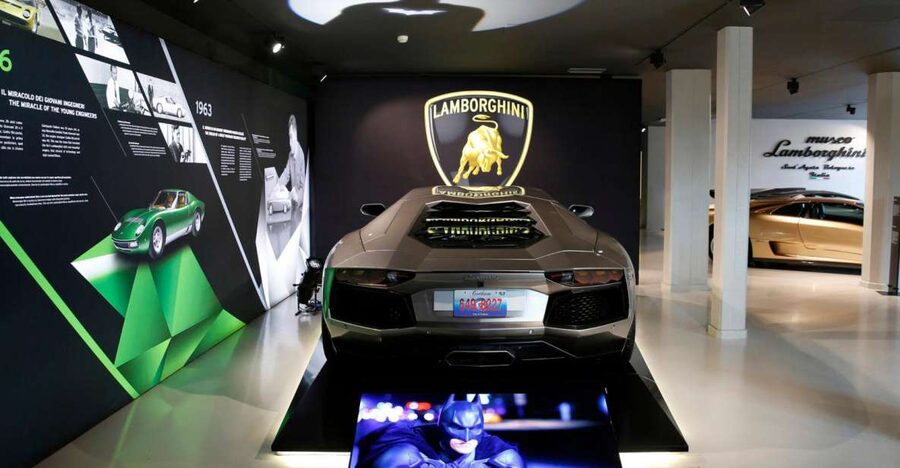
Reviewed · FERRARI & LAMBORGHINI EXPERIENCES
Bologna: Lamborghini Museum Entrance Ticket
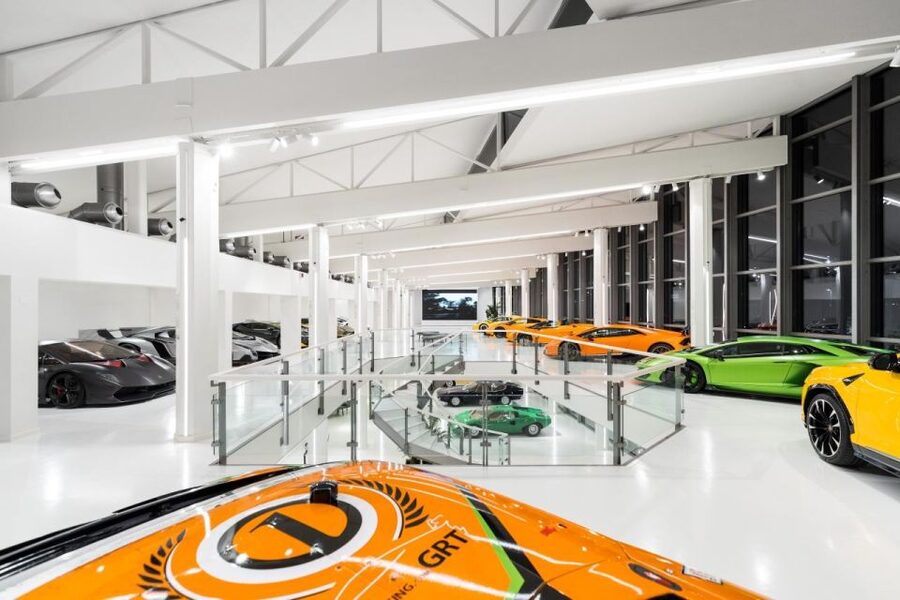
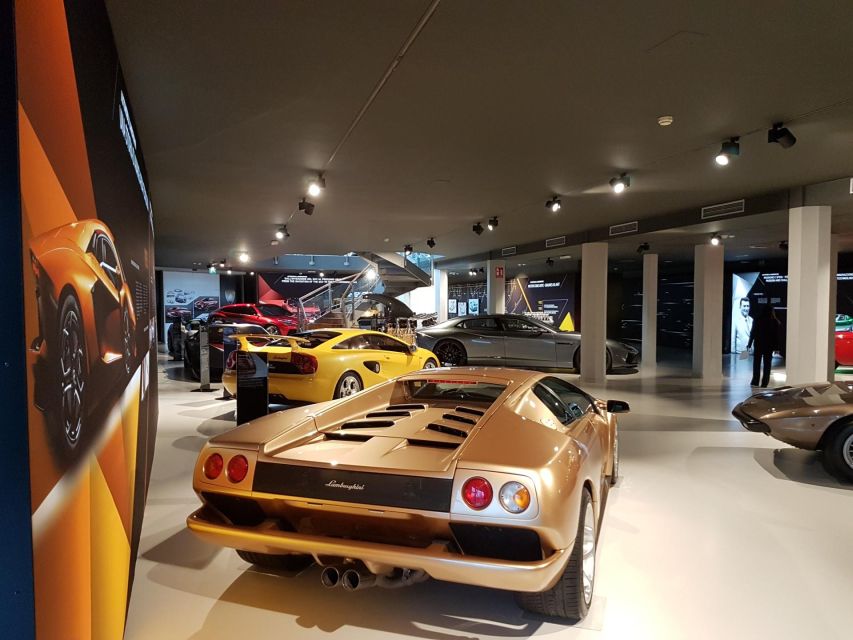
Dream cars need a proper shrine. This museum gives you one, with Lamborghini’s first visionary designs, famous classics, and modern hybrid supercars gathered under one roof. I love the chance to see a Miura and Countach alongside newer machines such as the Huracán Performante and Aventador SVJ. I also like that the ticket costs about $20 per person, making it a reasonable stop for car fans in Emilia-Romagna.
The main drawback is scale. This is a museum visit rather than a full factory experience, and one recent assessment found enough to fill about an hour, but not a huge number of cars. If you want production-floor access, remember that the Lamborghini factory tour is not included.
In This Review
- Key points to know before you go
- From Ferruccio Lamborghini to a global supercar name
- The Miura and Countach are the emotional center
- Modern Lamborghini models raise the visual drama
- The Sian and Countach LPI 800-4 point toward the future
- How much time should you allow?
- What the ticket includes, and what it does not
- The display could use more interpretation
- Is it suitable for children and wheelchair users?
- Booking flexibility helps with a busy Italy itinerary
- Who will get the most from this museum?
- Should you book the Lamborghini Museum ticket?
- FAQ
- How much does the Lamborghini Museum ticket cost?
- How long is the ticket valid?
- What does the ticket include?
- Is the Lamborghini factory tour included?
- Can I cancel the booking?
- Can I reserve now and pay later?
- Are children allowed to visit alone?
Key points to know before you go
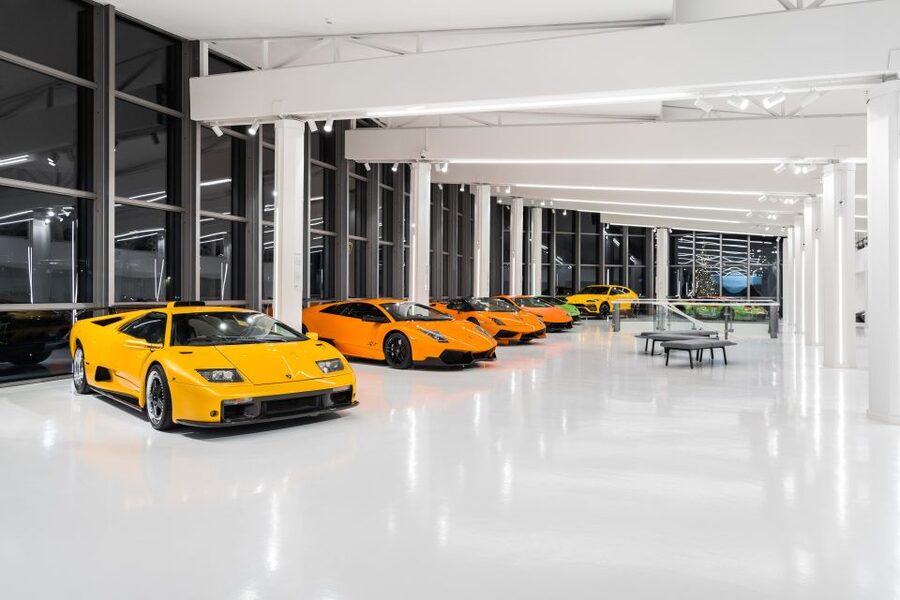
- See six decades of Lamborghini design: The collection moves from Ferruccio Lamborghini’s earliest visions to today’s hybrid models.
- Look for the Miura and Countach: These two icons give the museum much of its emotional pull.
- Modern highlights include rare one-offs: The Centenario, Sesto Elemento, and Veneno are among the most unusual cars on display.
- Plan for about an hour: The visit can be a focused stop, not an all-day museum outing.
- The $20 ticket covers museum entry only: Factory access requires a separate arrangement.
- Children aged 6 to 18 need an adult family member: Unaccompanied minors are not allowed.
From Ferruccio Lamborghini to a global supercar name
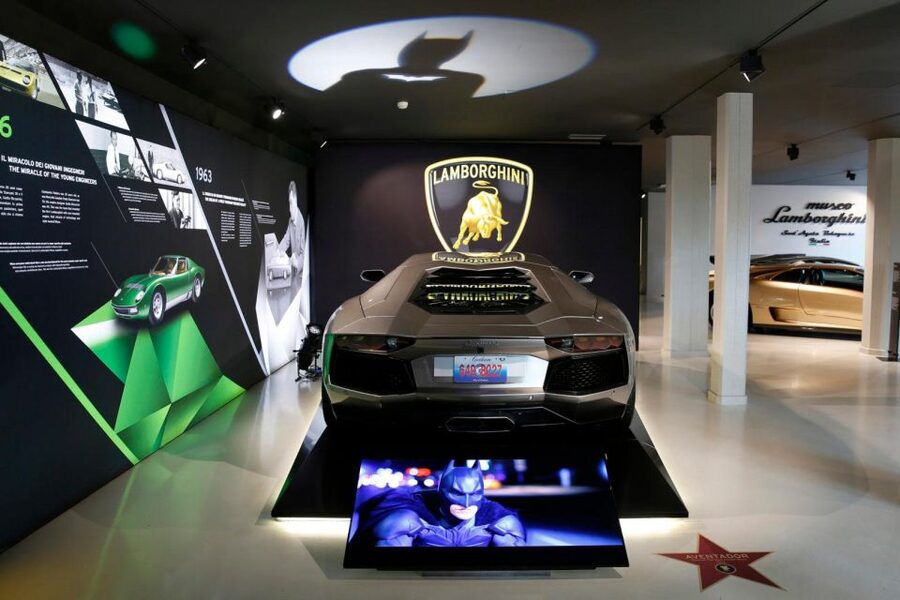
The museum is built around the story of Lamborghini Ferruccio, the founder whose first ideas changed the sports-car world. That backstory matters because the cars are easier to understand when you know they came from a bold attempt to challenge established makers.
You can trace the company’s progress from its first creations to the machines now carrying hybrid technology. The collection is not simply a line of expensive cars. It shows how Lamborghini kept changing its shape, its engineering, and its idea of what a road-going supercar could be.
I find this especially useful if your interest goes beyond horsepower and price tags. You can look at the cars as steps in a larger design story. Early models established the brand’s direction, classic cars made it famous, and recent models show where that direction is heading.
The display also makes a good introduction for anyone who knows Lamborghini mainly through modern poster cars. The museum connects the familiar badge to Ferruccio’s work and to the company’s long run of technical experiments.
More Ferrari and Lamborghini drives:
- Bologna/Maranello: Lamborghini & Ferrari Museum Entry Ticket
★ 4.5 · 221 reviews - Ferrari Lamborghini Pagani Factories and Museums – Tour from Bologna
★ 5.0 · 171 reviews - Maranello: Ferrari Museum Entrance Ticket
★ 4.6 · 1,505 reviews
The Miura and Countach are the emotional center
The Miura is likely to be the car that stops you first. It has the kind of importance that reaches far beyond its place in the collection, and seeing one in person helps explain why this model remains such a powerful name in Lamborghini history.
A boyhood dream of seeing a Miura can make the entire visit worthwhile. That reaction is understandable. The Miura is not just another classic Lamborghini among many. It represents the company’s early confidence and the point at which its cars became objects of desire for a much wider audience.
The Countach gives the museum a second major landmark. Its sharp, dramatic shape helped define what many people think a Lamborghini should look like. Put the Miura and Countach in the same visit, and you get a useful contrast between flowing early lines and the more aggressive style that followed.
I would give these two models your best attention rather than rushing straight to the newer cars. Modern supercars have enormous visual impact, but the classics explain why the brand earned its reputation in the first place.
Modern Lamborghini models raise the visual drama
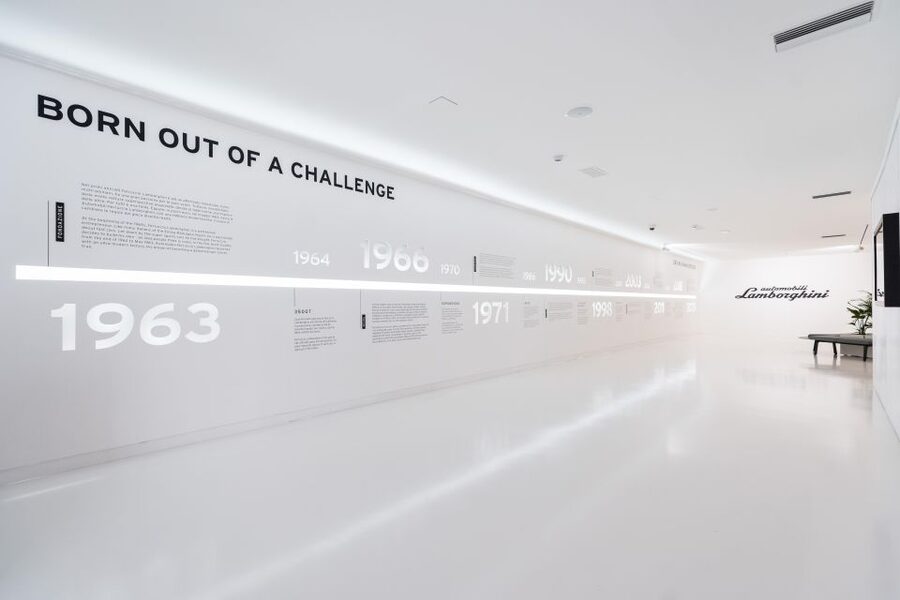
After the early cars, the museum moves toward more recent performance models. The Huracán Performante and Aventador SVJ represent the company’s modern supercar range, with designs that look more technical and forceful than the earlier classics.
The point is not only to admire their shapes. These cars show how Lamborghini took its established visual language into a new period. You can compare the smooth proportions of the Miura with the sharper surfaces and more complex forms of current-era machines.
The collection also includes a group of rare one-off models. The Centenario, Sesto Elemento, and Veneno are especially important for anyone interested in Lamborghini’s most exclusive work. They show what happens when the company treats a road car as a limited design and engineering statement rather than a model intended for broad production.
I like this part of the museum because it adds variety to the visit. If the classics appeal to you for their cultural importance, these cars appeal for their rarity and extreme styling. They also make clear that Lamborghini has never been content to repeat one formula for too long.
The Sian and Countach LPI 800-4 point toward the future
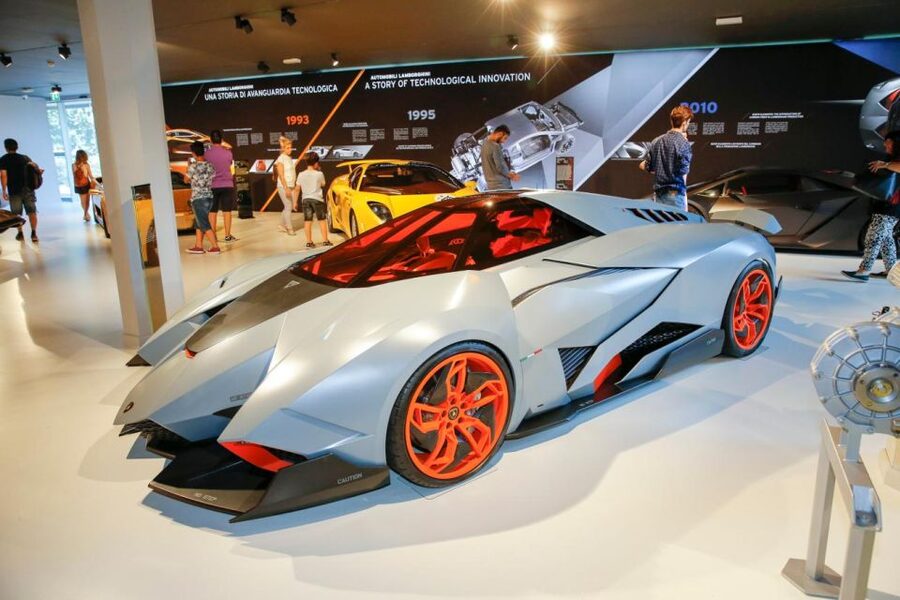
The newest section brings hybrid technology into the story. The Sian and Countach LPI 800-4 are presented as the first Lamborghinis with hybrid technology, linking the company’s famous design tradition to its next stage.
That connection gives the final part of the museum more purpose. You are not only looking backward at classic machinery. You are also seeing how a manufacturer known for large engines and dramatic performance is responding to modern technical demands.
For you, the value here depends on what interests you most. If you mainly want a collection of old Italian cars, the hybrid models may feel less central. If you want to understand how Lamborghini is trying to carry its identity forward, they are essential.
The Countach LPI 800-4 is also a clever bridge between eras. Its name recalls one of the company’s most famous classics, while its technology belongs to the modern period. That makes it a useful final chapter in the museum’s timeline.
More Museum Tours in Bologna:
- Vatican: Museums & Sistine Chapel Entrance Ticket
★ 4.5 · 144,003 reviews - Vatican Museums & Sistine Chapel Tour with Optional Basilica
★ 4.3 · 67,413 reviews - Vatican Museums, Sistine Chapel & St Peter’s Basilica Guided Tour
★ 4.5 · 39,149 reviews - Florence: Skip-The-Line Uffizi Gallery Timed Entry Ticket
★ 4.5 · 27,832 reviews
How much time should you allow?
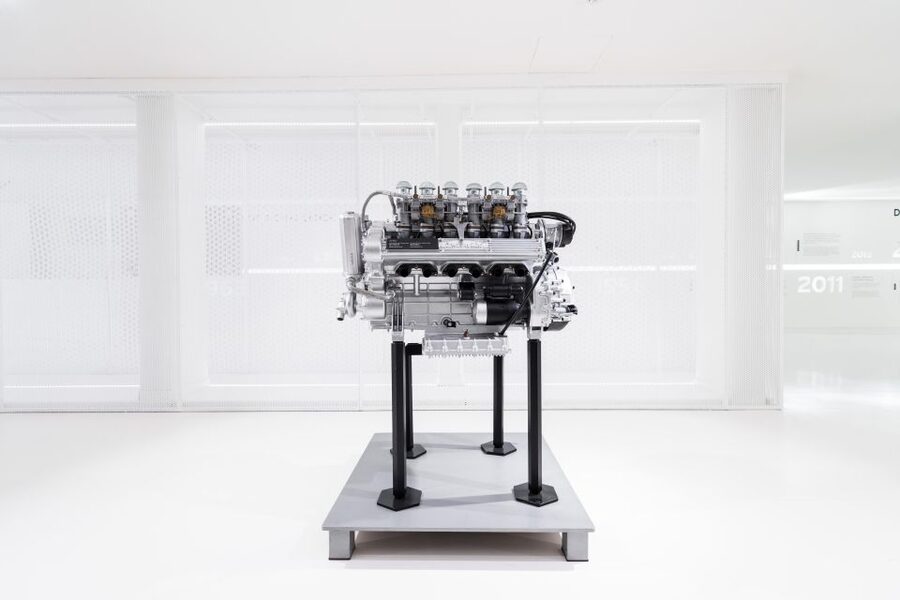
A practical visit lasts about an hour, based on the amount of cars and the pace of the display. You can spend longer if you study each model closely, but you should not expect a full-day attraction with endless galleries.
That shorter length can be a strength. A one-hour museum stop fits neatly into a day focused on Bologna or the wider Emilia-Romagna motor region. You can give the cars your full attention without tiring of the subject.
It can also be a weakness if you arrive expecting a huge showroom. One assessment specifically wished the display were larger and had more cars. I would set your expectations correctly: this is a concentrated collection of important Lamborghini models, not a massive warehouse packed from wall to wall.
Give yourself enough time to compare the generations. Start with the founder’s story and early creations, then move through the Miura and Countach, modern supercars, limited models, and hybrid cars. That order helps the collection feel like a story instead of a row of unrelated vehicles.
What the ticket includes, and what it does not
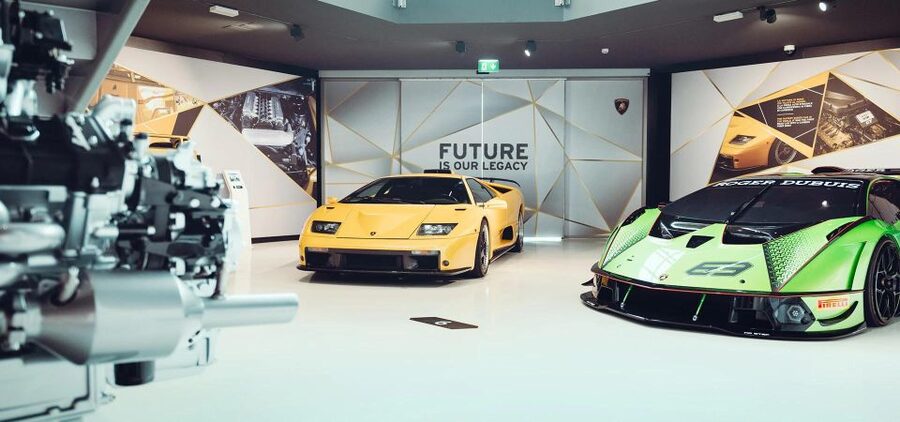
The ticket includes entrance to the Lamborghini Cars Museum. At approximately $20, I consider it good value for a dedicated fan, a family with older children, or anyone who wants one focused motor attraction rather than a long guided program.
The price is also easier to justify because the museum brings together several of the brand’s best-known periods. Seeing a Miura, Countach, Aventador SVJ, Veneno, and hybrid Lamborghini in one place gives you a broad look at the company without buying separate admission for each model.
Still, value depends on your expectations. If you are only mildly interested in cars, the visit may feel short for the price. If you are making a special pilgrimage for Lamborghini, the ticket gives you direct access to a collection that includes some of the brand’s most famous and unusual creations.
The factory tour is separate. This distinction is important. A museum ticket lets you see the cars and learn about Lamborghini’s development, but it does not promise a look at manufacturing areas or the production process.
The display could use more interpretation
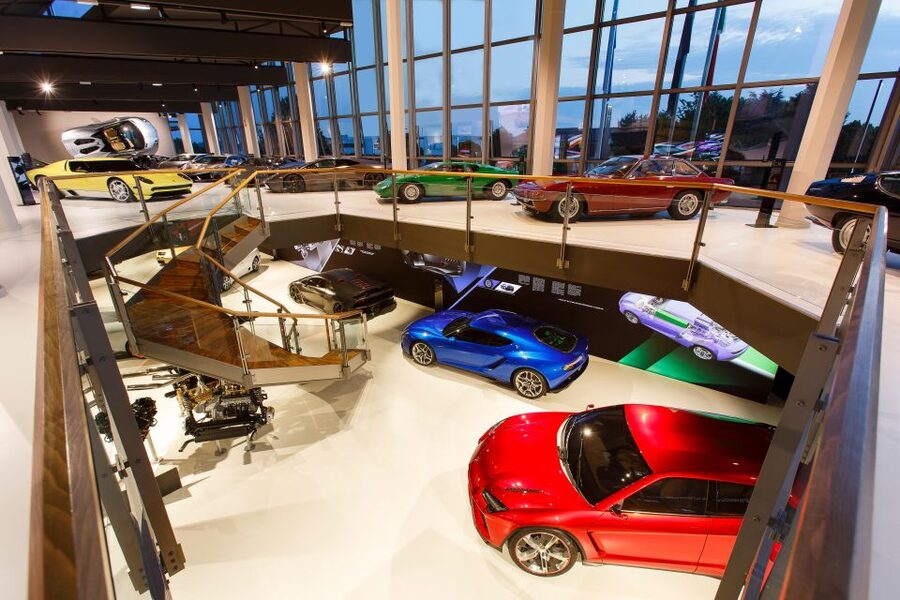
The cars do much of the talking, but the museum’s supporting material may not satisfy every visitor. One useful suggestion is for more videos on the projector and a fuller biography of Ferruccio Lamborghini.
I agree with the value of that kind of extra information. The cars are striking, but a few more films, photographs, or detailed explanations would help you understand the decisions behind them. That would be especially helpful for first-time visitors who know the names but not the people and ideas attached to them.
If interpretation is important to you, plan to read carefully and give yourself time with the available material. Do not treat the museum as only a photo stop. The founder’s life and work are one of the stated parts of the experience, and they give the collection more meaning.
At the same time, the limited size keeps the visit easy to manage. You will not need to fight your way through a giant complex or spend hours searching for the main cars. The trade-off is simple: less quantity, but a more compact look at major models.
Is it suitable for children and wheelchair users?
The museum is wheelchair accessible, which makes it easier to include in a mixed-age group or a day with different mobility needs. The ticket information does not describe specific routes or facilities, so you may still want to confirm any personal access requirements before booking.
Children aged 6 to 18 must be accompanied by an adult family member. Unaccompanied minors are not allowed. That rule is clear and worth checking if older children might visit without parents or another adult relative.
For children who already love cars, the Miura, Countach, and modern supercars should provide plenty to look at during a visit of about an hour. For children with little interest in cars, the short format may be helpful, since it does not demand a long stretch of attention.
I would also treat the museum as a good family add-on rather than the only reason to plan an entire day. The collection is focused, and its strongest appeal is directed at people who enjoy design, engineering, automotive history, or Lamborghini’s place in popular culture.
Booking flexibility helps with a busy Italy itinerary
The ticket is valid for one day, with available starting times shown when you check dates. That makes it easier to fit the museum around other plans in Bologna and Emilia-Romagna.
You can reserve now and pay later, so you do not have to pay at the moment of booking. Free cancellation is available up to 24 hours in advance for a full refund. Those terms are useful if your route is still shifting or if you are coordinating several stops.
Check the available time before you commit to a particular day. The ticket information does not provide a fixed visit length beyond its one-day validity, so the time shown at booking matters for planning.
The experience is provided by Arcadia Tour Operator e DMC. The ticket itself is straightforward: it is admission to the museum, not a guided factory program or a combined motor tour.
Who will get the most from this museum?
I would recommend it most strongly to:
- Lamborghini fans who want to see the Miura and Countach
- Car enthusiasts interested in the move from classic designs to hybrid technology
- Families with children aged 6 to 18 who will attend with an adult family member
- Visitors looking for a focused, roughly one-hour attraction
- Anyone who wants to see rare models such as the Centenario, Sesto Elemento, and Veneno
I would be more cautious if you expect a huge showroom, many hours of exhibits, or a factory-floor experience. The collection has enough to keep you busy for about an hour, but it is not presented as an enormous car complex.
The museum is also less suitable if you want a fully guided history lesson. The available information may leave you wishing for more video content and a fuller account of Ferruccio’s life. You will get the main arc of the company’s development, but not necessarily every technical detail.
Should you book the Lamborghini Museum ticket?
Book it if the Miura, Countach, or modern Lamborghini supercars are on your must-see list. For about $20, you get a focused look at six decades of design, including classic models, rare one-offs, and the Sian and Countach LPI 800-4 with hybrid technology.
Skip it if you want a long museum visit or assume the price includes the factory tour. The collection is compact, and its value comes from the quality and importance of the cars rather than sheer quantity.
My practical advice is to treat it as a high-interest one-hour stop. Go in with realistic expectations, spend time comparing the old and new designs, and remember that the factory requires a separate tour. For a Lamborghini enthusiast, that is a fair price for a memorable encounter with some of Italy’s most famous sports cars.
FAQ
How much does the Lamborghini Museum ticket cost?
The ticket costs approximately $20 per person.
How long is the ticket valid?
The ticket is valid for one day. Check availability for the starting times offered on your chosen date.
What does the ticket include?
It includes entrance to the Lamborghini Cars Museum.
Is the Lamborghini factory tour included?
No. The factory tour is not included with the museum entrance ticket.
Can I cancel the booking?
Yes. You can cancel up to 24 hours in advance for a full refund.
Can I reserve now and pay later?
Yes. The reserve now and pay later option lets you book without paying immediately.
Are children allowed to visit alone?
No. Unaccompanied minors are not allowed. Children aged 6 to 18 must be accompanied by an adult family member.
Recently added around Bologna
- Stay Hungry Stay Bologna★ 4.0 · 170 reviews
- Cesarine: Small group Pasta and Tiramisu class in Bologna★ 5.0 · 172 reviews
- Bologna Private Highlights & Hidden Gems Tour with a Local★ 5.0 · 359 reviews
- Bologna gastronomic experience with a local★ 5.0 · 626 reviews
- Ferrari Lamborghini Pagani Factories and Museums – Tour from Bologna★ 5.0 · 171 reviews
- Bologna on the plate, Cooking Class with Alessia★ 5.0 · 260 reviews
- Bologna Private Food Tour with 6 or 10 Tastings★ 4.5 · 344 reviews
- Bologna: Full meal Food Tour with Local Delights by Do Eat Better★ 5.0 · 541 reviews
Ferrari & Lamborghini Experiences, compared.

Maranello and Modena: Ferrari Museums Combo Tickets
Read our review →
Maranello: Ferrari Museum and Fiorano Track Combo Eco Tour
Read our review →

Maranello: Ferrari Museum Entry Ticket and Simulator
Read our review →
Bologna/Maranello: Lamborghini & Ferrari Museum Entry Ticket
Read our review →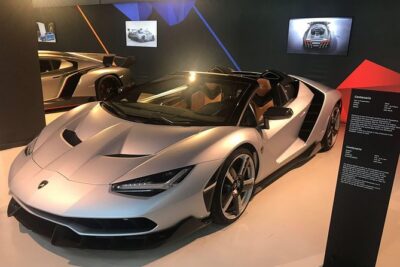
Ferrari Lamborghini Pagani Factories and Museums – Tour from Bologna
Read our review →Browse the lists this tour appears in