
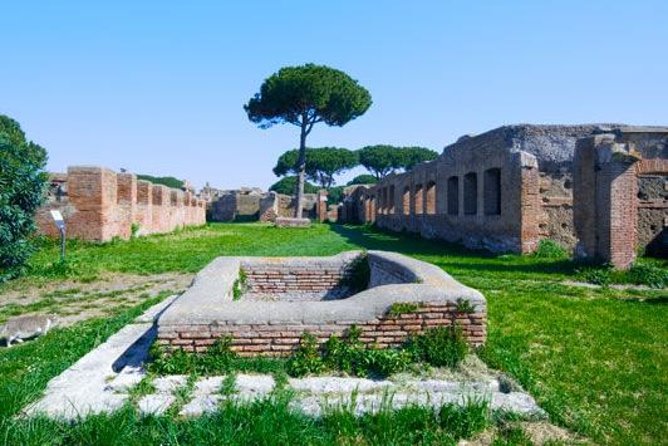
Reviewed · TRAIN EXPERIENCES
Ancient Ostia Antica Semi-Private Day Trip from Rome by Train with Guide
Ancient Rome is bigger than its famous center. This half-day Ostia Antica tour takes you by train from Rome to a remarkably preserved port city, where streets, baths, shops, apartments, mosaics, and an amphitheater make Roman daily life easier to picture. I like the simple rail journey and the way a guide gives structure to a very large archaeological site. The main drawback is that four hours goes quickly, especially if you want to explore beyond the guided route.
The tour costs about $59.26 per person, including the round-trip train and entry ticket. That is fair value for a small group capped at 12 people, particularly if you do not want to work out the transport or choose your own highlights. Guide quality can vary, however. Alberto, Barbara, Cat, Laura, Rob, and others receive warm praise for clear storytelling and care with the group, while a few visitors found their guide dull, rushed, or inattentive to mobility needs.
In This Review
- Key points to know before booking
- Why Ostia Antica makes a smart Rome side trip
- Meeting near Piramide and taking the train
- Walking the Decumanus Maximus
- Baths of Neptune and Roman public life
- The amphitheater and the feel of a real town
- What the guide adds, and where the tour can vary
- How much can you see in four hours?
- Price, group size, and overall value
- Practical advice for a smoother visit
- Who should book this Ostia Antica tour?
- Should you book it?
- FAQ
- How long does the Ancient Ostia Antica tour last?
- Where does the tour begin?
- Are train tickets included?
- Is the Ostia Antica entrance ticket included?
- How large is the group?
- What should I bring for a visitor under 18?
- Can I cancel for a full refund?
Key points to know before booking
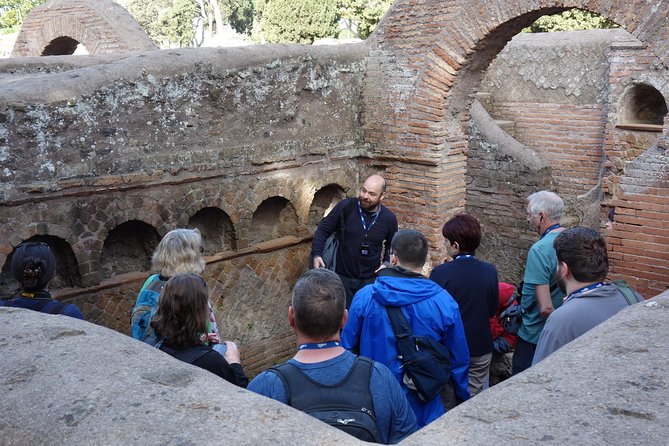
- Ostia was a full Roman port city, not a small collection of ruins, with a main street, public baths, temples, taverns, apartments, and commercial buildings.
- The train ride is part of the convenience, with your guide meeting you near Piramide and providing the return tickets.
- The 2.5-hour walk focuses on major sights, including Decumanus Maximus, the Baths of Neptune, the Forum of the Corporations, and the amphitheater.
- The group has a maximum of 12 people, giving you more room to ask questions than on a large coach excursion.
- The site requires steady walking, with uneven ground and stairs, so good physical fitness and sensible shoes matter.
- Arrive early at Piazza Ostiense 11, and check your tour messages for any last-minute meeting instructions.
Why Ostia Antica makes a smart Rome side trip
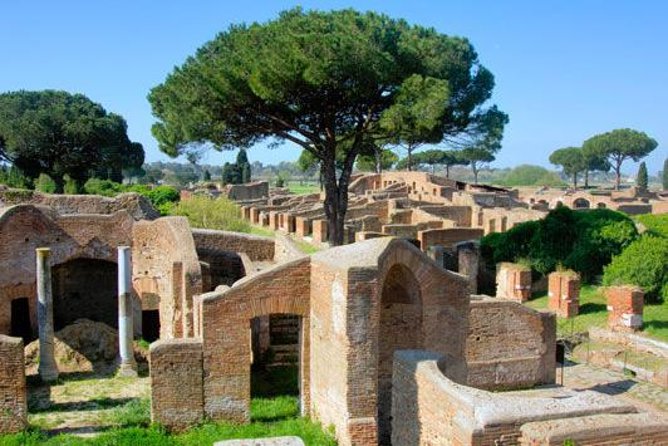
Rome can make ancient history feel crowded and abstract. Ostia Antica gives you something more concrete: an entire town laid out in front of you. Instead of seeing only grand monuments built for emperors, you walk past ordinary shops, homes, baths, temples, and work spaces.
The settlement dates as far back as the fourth century BC and eventually served as the port city of ancient Rome. It was home to more than 100,000 people at its height, according to the information provided for the tour. That scale matters. You are not just looking at one isolated ruin. You are walking through the framework of a city.
Ostia is often compared with Pompeii, but that comparison can mislead you. It is not a miniature Pompeii. The site is large, and the appeal is different. Pompeii is famous for its sudden destruction and preserved domestic details. Ostia offers a broad look at urban life near Rome, with long streets and public spaces that help you understand how a Roman town worked.
I especially like this choice for a visitor who has no time for Pompeii. You get a substantial ancient site without committing to a full-day journey far south of Rome. Several people used the tour as a calmer alternative to Rome’s busiest attractions, and that makes sense. The archaeological park can feel far more open and peaceful than the Colosseum area.
A few more Rome bookings to compare
- Rome to Pompeii Guided Tour with Wine & Lunch by High Speed Train
★ 5.0 · 1,379 reviews - From Rome: Ostia Antica Guided Half-Day Trip by Train
★ 4.8 · 486 reviews - Rome: Pompeii Tour with Wine and Lunch by High Speed Train
★ 4.8 · 485 reviews
Meeting near Piramide and taking the train
The tour begins at Piazza Ostiense 11, near the Piramide metro station. You meet the English-speaking guide there, receive the train ticket, and travel together toward Ostia Antica. Hotel pickup and drop-off are not included, so you need to reach the meeting point on your own.
This shared rail journey is one of the tour’s practical strengths. You do not have to locate the correct station, work out the ticket, or wonder where to get off. Your guide handles the basic transport details while you watch Rome give way to the outskirts.
The train is not a luxury transfer. It is ordinary public transportation, and that is part of the experience. You get a glimpse of the city beyond the postcard center, then arrive close to one of Italy’s major archaeological sites without paying for a private vehicle.
Allow a little breathing room before the start. The meeting instructions are important, and one past visitor advised arriving about 20 minutes early after receiving a morning message. The advertised duration is about four hours, but the operator notes that outside factors can occasionally make the tour run a little longer. Do not schedule a tight lunch or timed attraction immediately afterward.
Walking the Decumanus Maximus
Once inside the archaeological park, the guided walk lasts about 2.5 hours. The site is large enough to overwhelm you if you try to understand everything at once, so the guide’s main job is selection and explanation.
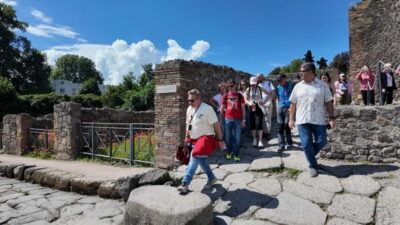
The walk follows the Decumanus Maximus, the principal road through ancient Ostia. This is where the ruins begin to feel like a town rather than a pile of stones. You pass along ancient paving and see statues lining parts of the route, with buildings opening off the street.
A good guide helps you read the remains. A row of rooms can become a shop. A larger structure can suggest an apartment block or a public building. The best commentary connects the physical remains with daily routines, showing you where people worked, bathed, worshiped, ate, and lived.
This is also where the small group helps. With no more than 12 people, you can usually hear the guide without standing in a huge crowd. The group size leaves some room for questions, and strong guides such as Alberto and Barbara were praised for keeping explanations clear without burying people in facts.
Baths of Neptune and Roman public life
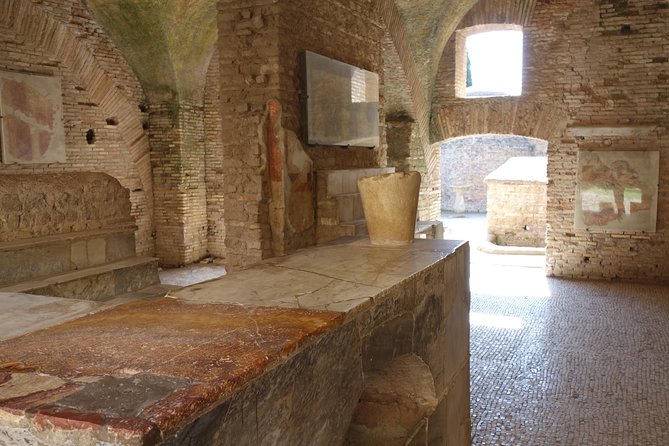
The Baths of Neptune are one of the tour’s headline sights. Their most memorable feature is the mosaic showing the sea god Neptune behind a four-horse chariot. It gives you a direct look at Roman decoration and public culture, not just building foundations.
The baths also help explain how public life worked. A bathing complex was more than a place to wash. It was a social setting, and its scale shows the money and organization required to serve a large population. Your guide can give meaning to the rooms and mosaics in a way that a quick solo walk might not.
The park contains other public buildings as well, including the Forum of the Corporations and the Collegiate Temple. The Forum of the Corporations is tied to Ostia’s role as a port and commercial center, making it especially useful for understanding why this town mattered to Rome.
You should expect to stop often for explanations, photographs, and short pauses. On a hot day, that rhythm becomes important. Guides including Rob and Alfredo were praised for finding shade and helping the group manage the heat. Still, bring water and prepare for sun. The site is open and the walking portion is substantial.
Still Rome, but a slower afternoon:
- Vatican: Museums & Sistine Chapel Entrance Ticket
★ 4.5 · 144,003 reviews - Vatican Museums & Sistine Chapel Tour with Optional Basilica
★ 4.3 · 67,413 reviews - Colosseum, Roman Forum & Palatine Guided Tour
★ 4.7 · 63,148 reviews - Vatican Museums, Sistine Chapel & St Peter’s Basilica Guided Tour
★ 4.5 · 39,149 reviews
The amphitheater and the feel of a real town
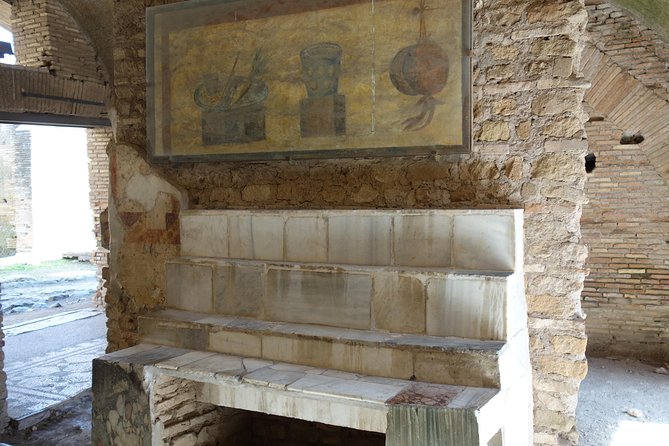
The amphitheater dates to 12 BC and was built to hold about 3,500 spectators. You can take a seat inside, which makes the building easier to imagine than an amphitheater viewed only from behind a barrier.
The scale is intimate compared with Rome’s largest arenas, but that is part of its charm. From the seating, you can look over the performance space and consider how entertainment fit into the life of a provincial port town.
The smaller ruins may be even more revealing. Shops and living quarters line the ancient streets, giving you clues about the people who made Ostia function. Taverns, apartments, and public facilities turn the visit toward ordinary life. This is where Ostia can feel more personal than Rome’s imperial monuments.
I would choose this tour if you want to understand how Romans lived, rather than hear only about emperors, gods, and gladiators. The best guides make that shift clear. Alberto was praised for explaining Roman daily life in a way that worked for different ages, including a child who might otherwise lose interest in an archaeological site.
What the guide adds, and where the tour can vary
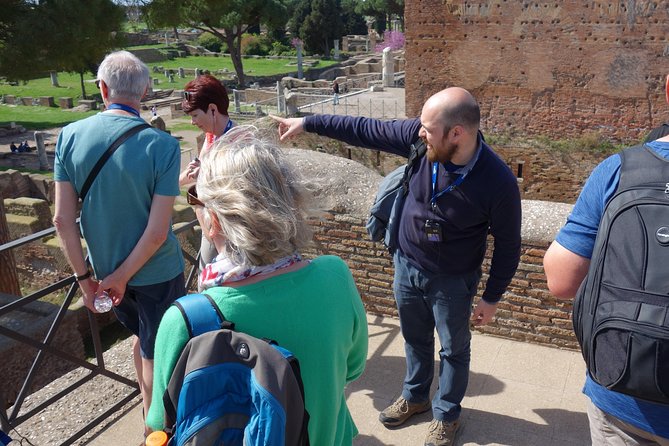
A guide is useful here because Ostia is extensive and the remains are not always self-explanatory. A good explanation can tell you why a mosaic matters, what a building may have been used for, and how the port’s function shaped the town.
The strongest guide comments repeatedly praise clear pacing, warmth, humor, and a strong grasp of ancient life. Alberto is singled out several times for his explanations, time management, group care, and ability to keep the tone light without wasting time. Cat, Laura, Barbara, Rob, and Alfredo also received praise for making the walk accessible and well paced. Eduardo was especially praised for vivid storytelling that made small details feel meaningful.
That said, the experience is not perfectly consistent. A few people found their guide uninspiring and felt an audio guide would have offered more energy. One complaint described a guide who walked too quickly and failed to accommodate a person using a cane. This matters because the site’s uneven ground and stairs already make pace important.
You cannot select a particular guide with certainty, although some people specifically wished for Alberto, Laura, or Cat. If mobility is a concern, contact the operator before booking and explain what pace or assistance you need. The stated requirement is moderate physical fitness, and the tour is not presented as an accessible route.
How much can you see in four hours?
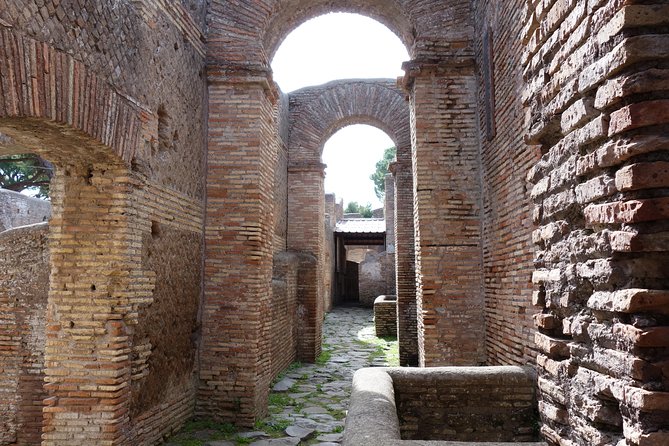
The experience lasts about four hours from the Rome meeting point and includes the train ride in both directions. About 2.5 hours are spent walking through Ostia Antica. That leaves enough time for the main route, but not for a detailed look at every building.
This fixed length is a good fit if you want a focused introduction. It also works well for families and teenagers, since the walk has a clear end rather than becoming an all-day archaeological marathon. One family found the pace right for two teens, while still wishing there had been more time to explore.
At the end of the guided portion, you may have the option to remain at the grounds and continue looking around, including the museum, according to the experience details and visitor accounts. Confirm the exact arrangement with your guide on the day, since the group returns by train together as part of the planned tour.
If you are an archaeology enthusiast, four hours may feel short. The site is large, and you could easily want extra time for side streets, additional buildings, or the museum. The tour is best understood as a guided orientation to the major sights, not an exhaustive study visit.
Price, group size, and overall value
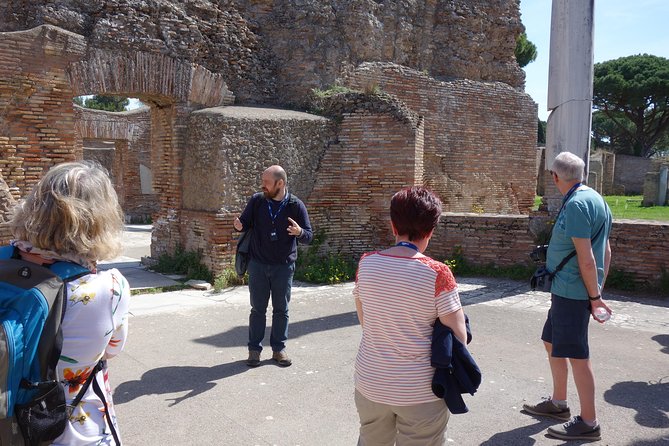
At $59.26 per person, the price includes the English-speaking guide, entrance to Ostia Antica, and train tickets to and from Rome. There are no separate admission or rail costs to calculate, which makes the total easier to judge.
The real value is convenience. You could visit by train independently, but then you would need to arrange the route, buy admission, and decide how to interpret a very broad site. If you are comfortable doing that, an audio guide may suit you better, especially if you prefer moving at your own speed.
For many visitors, the maximum group size of 12 justifies the extra cost over going alone. You get organized transport and a human explanation without being placed in a large coach crowd. The value is strongest when your guide is one of the engaging storytellers praised for this experience.
The tour is booked, on average, well ahead of time, around 64 days in advance. That suggests you should not leave it until the last minute if your Rome dates are fixed. Free cancellation is available up to 24 hours before the start time. A weather cancellation or failure to meet the minimum group size should result in a different date or a full refund, according to the stated terms.
Practical advice for a smoother visit
Wear shoes suited to uneven archaeological paths. The route includes stairs and irregular ground, and you will be on your feet for much of the 2.5-hour visit.
Carry water, especially during hot weather. A guide may point out places to refill bottles, but you should not depend on finding a shop at the exact moment you need one. Shade can help, though the site is not described as fully sheltered.
Keep your schedule flexible after the tour. The normal duration is four hours, but train delays, site conditions, or other outside factors can extend it slightly.
If you are visiting with a child under 18, bring an ID card. The entrance staff may request it. Families should also explain the length of the walk in advance, since the ruins are fascinating but not an easy stroll through a compact museum.
The train trip can also be combined with a longer outing if your schedule allows. One visitor continued farther toward the coast for a few hours at the beach after the tour, but that is an optional personal extension, not part of the organized experience. Make sure you understand where and when the group returns before setting off separately.
Who should book this Ostia Antica tour?
I would recommend it to first-time Rome visitors who want a break from the crowded center, anyone interested in Roman urban life, and families looking for an ancient site that feels different from the Colosseum. It is also a smart substitute for Pompeii when you have only half a day.
You should think twice if you dislike group tours, need a fully accessible route, or want to spend hours examining every corner. The guided format keeps you moving, and the four-hour schedule cannot cover the entire park in detail.
Should you book it?
Book this tour if you want the easiest way to reach Ostia Antica and prefer a guide to explain the ruins as you walk. The included rail tickets, admission, and small group make the price reasonable, while the best guides add real value through stories about homes, commerce, baths, and ordinary Roman life.
Skip it and go independently if you prefer an audio guide, a slower pace, or a longer visit. For everyone else, Ostia Antica is one of the most rewarding half-day escapes from Rome, especially when your guide is as lively and attentive as Alberto, Laura, Cat, Barbara, or Rob.
FAQ
How long does the Ancient Ostia Antica tour last?
The experience lasts approximately four hours, including the train journey from Rome and the return trip. The walking tour inside Ostia Antica lasts about 2.5 hours.
Where does the tour begin?
The meeting point is Piazza Ostiense 11, 00154 Rome, near the Piramide metro station. Hotel pickup and drop-off are not included.
Are train tickets included?
Yes. The English-speaking guide provides tickets for the train journey to Ostia Antica and the return trip to Rome.
Is the Ostia Antica entrance ticket included?
Yes. Admission to the archaeological site is included in the tour price.
How large is the group?
The tour is semi-private and has a maximum of 12 travelers.
What should I bring for a visitor under 18?
Children under 18 may be asked to show an ID card at the site entrance, so bring the child’s ID on the tour.
Can I cancel for a full refund?
Yes. You can cancel at least 24 hours before the experience starts for a full refund. Changes or cancellations made less than 24 hours before the start time are not accepted for a refund.
Recently added around Rome
- Rome: Pantheon, Trevi Fountain & Roman Squares Guided Tour★ 4.7 · 386 reviews
- Vatican: Pope Francis Tomb and Papal Basilicas Tour★ 4.7 · 340 reviews
- Vatican: St. Peter’s Basilica with Audio Guide and Options★ 3.4 · 269 reviews
- Rome: Vatican Museums & Sistine Chapel Ticket + Tour Options★ 4.7 · 344 reviews
- Rome: Vatican Museums Skip-the-line Entry Ticket and Tour★ 4.2 · 400 reviews
- Vatican: Museums, Raphael & Sistine Chapel + Basilica Option★ 4.7 · 350 reviews
- Vatican Museums & Sistine Chapel Guided Tour★ 4.3 · 832 reviews
- Vatican Museums & Sistine Chapel Entry Ticket★ 4.4 · 245 reviews
Train Experiences, compared.
Bernina Red Train, Swiss Alps & St Moritz From Milan
Read our review →
Swiss Alps Bernina Red Train and St.Moritz Tour from Milan
Read our review →
Rome to Pompeii Guided Tour with Wine & Lunch by High Speed Train
Read our review →
Small-Group Lake Como & Lugano by Swiss Train + Boat Cruise
Read our review →
Guided tour of Pompeii skip-the-line and round-trip train
Read our review →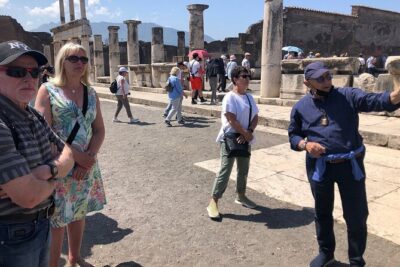
Pompeii Express Guided Tour by Train from Sorrento
Read our review →Browse the lists this tour appears in