
Reviewed · HISTORICAL TOURS
Alberobello: History Walking Tour
Alberobello looks like a storybook village. This guided walk makes sense of its cone-roofed trulli, leading you through Rione Monti and Aia Piccola before taking you inside a real trullo. I like the clear route and the chance to see how these unusual stone homes are built. I also like that guides such as Francesco, Mario, Sylvia, and Floriana have been praised for making the past easy to follow. The main drawback is simple: you walk outdoors for up to two hours, and the meeting point can change with the option you book.
The $40 price is fair if you want more than photographs of whitewashed houses. You get a licensed guide, local stories, and entry into a traditional home, with some guides also adding local food tastings or introductions to residents. The tour requires at least two participants, so solo plans need a little care.
In This Review
- Key points to know before you book
- Why Alberobello’s trulli deserve a guided walk
- Starting above the rooftops at the Belvedere terrace
- Rione Monti and the classic Alberobello view
- Aia Piccola and a more residential feel
- Inside a traditional trullo
- San Antonio Church and the final stretch
- What the guides add to the experience
- Is $40 a fair price?
- Who will enjoy this Alberobello tour most?
- Practical advice before you go
- Should you book the Alberobello History Walking Tour?
- FAQ
- How long does the Alberobello walking tour last?
- What areas of Alberobello does the tour visit?
- Can I enter a traditional trullo?
- What languages are available?
- Are children charged for the tour?
- Does the tour include transportation?
Key points to know before you book
- Begin at the Belvedere terrace: You get an immediate view over Alberobello and a useful introduction before entering the narrow lanes.
- See both sides of town: Rione Monti has the famous concentration of trulli, while Aia Piccola gives you a different feel for the settlement.
- Enter a traditional trullo: This is the tour’s most useful feature because you can inspect the home from the inside, not just admire its roof.
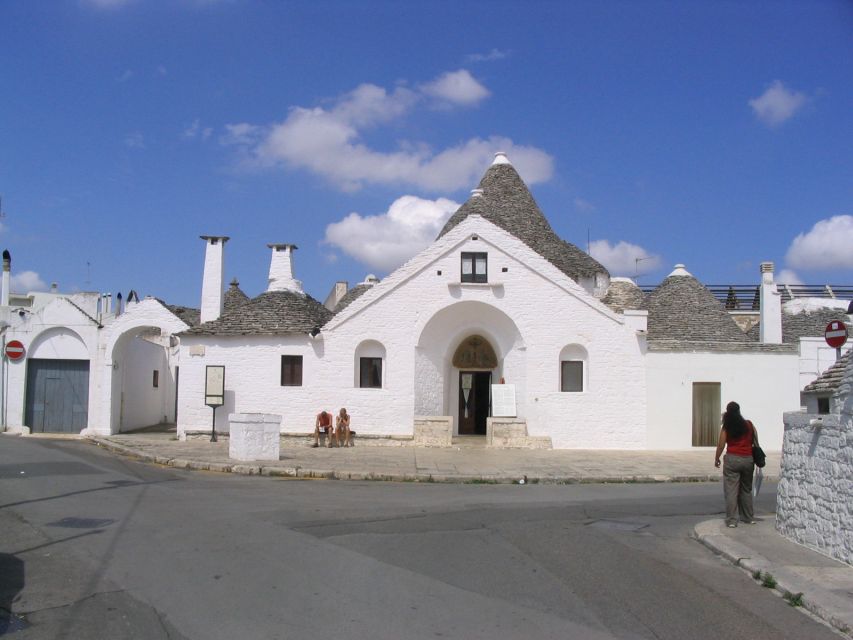
- Reach the trullo-shaped Church of San Antonio: The church gives the walk a memorable finish and shows how the local building style extends beyond houses.
- Guides add the human side: Francesco, Mario, Alessandro, Sylvia, Roberta, and others have been praised for clear explanations, humor, patience, and local tips.
- Plan for a small-group feel: A private group is available, and the minimum to run the tour is two people.
Why Alberobello’s trulli deserve a guided walk
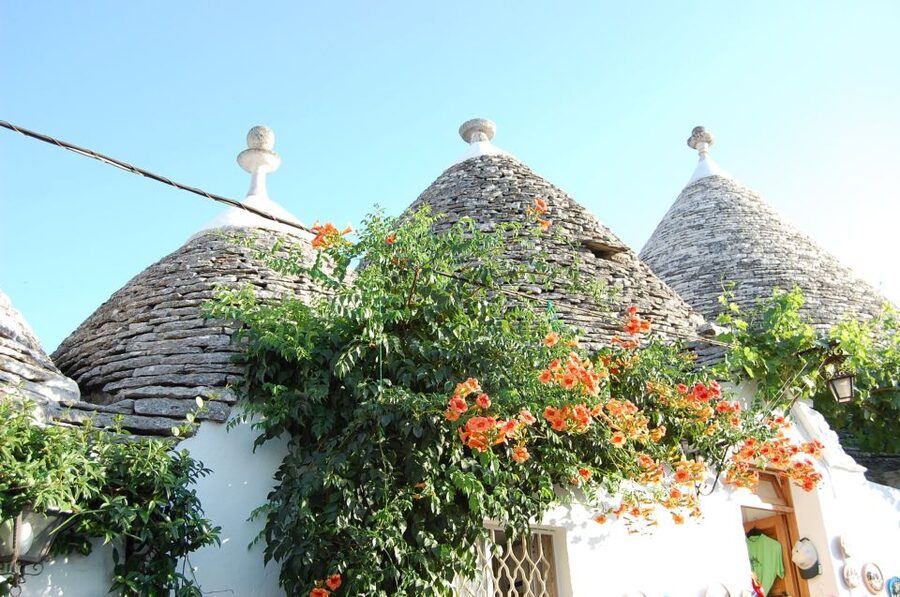
Alberobello is famous for its trulli, the small stone houses topped with conical roofs. You can stroll through the town on your own and take plenty of pictures, but the unusual shape alone does not explain why the buildings look this way or how they were made.
That is where a guide earns the fee. The walk connects the architecture to the people who built and lived in these homes. Roberta, for example, has explained why local builders used rocks without cement and how the construction works. That kind of detail changes the view from pretty buildings to a place shaped by practical choices.
You also get help reading the town itself. Some trulli are homes, some have been adapted for local businesses, and some are connected to cultural displays. Without context, the lanes can blur together. With a good guide, you begin to notice how the buildings fit together and why the districts feel different.
The tour lasts about 1.5 to 2 hours. That is long enough for a proper introduction without taking up your whole day in Apulia. It also leaves time afterward for lunch, shopping, or a second walk through the streets that caught your eye.
More Walking Tours in Bari
- Bari: Guided Walking Tour
★ 4.7 · 744 reviews - Bari: Pasta Experience Walking Tour
★ 4.7 · 660 reviews - Bari Walking City Tour
★ 4.5 · 511 reviews
Starting above the rooftops at the Belvedere terrace
The opening view from the Belvedere terrace is a smart way to begin. Instead of dropping you straight into a maze of lanes, the guide first gives you a broad look at Alberobello and points out the areas you will visit.
This opening is useful because the town’s layout can be confusing at street level. From above, you can see the concentration of conical roofs and get a sense of how the two main districts relate to one another. Your guide also introduces the story of Alberobello as a UNESCO World Heritage Site.
Expect this stop to be more than a quick photo pause. It gives the rest of the tour a framework. When you later walk among the trulli, you will know where you are and what the guide is asking you to notice.
The terrace is also a good place to settle into the pace of the tour. You can ask early questions, check the guide’s language, and get a feel for whether you prefer a more historical explanation or a more casual local conversation. The available languages are English, French, Spanish, and Italian.
Rione Monti and the classic Alberobello view
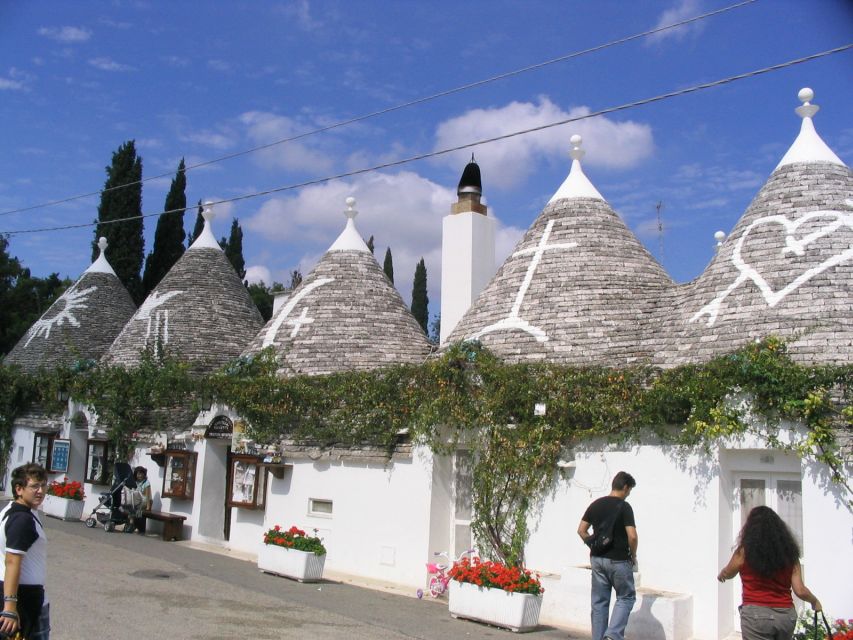
Rione Monti is the district most people picture when they think of Alberobello. Here, you walk through lanes lined with the familiar cone-roofed houses, often stopping to study details that are easy to miss from a distance.
The district is visually striking, but it can also feel like the most visitor-focused part of the walk. That is not a reason to skip it. It simply means the guide matters here. A good explanation keeps the area from becoming a parade of identical white walls and gives you a better sense of how the trulli are composed.
You will move through small alleys and see the architecture from several angles. The shape of the roofs, the stonework, and the way the homes are arranged all make more sense when someone explains what you are looking at.
This is also where the pace may slow for photographs and questions. Guides have been praised for accommodating late arrivals and answering questions carefully. That patience can be valuable in a place where everyone wants to stop at once.
If you want quiet streets and a purely local atmosphere, Rione Monti may not fully deliver. It is the most recognizable part of Alberobello, and its popularity is part of the experience. The tour helps you enjoy the spectacle without mistaking it for the whole town.
Aia Piccola and a more residential feel
Aia Piccola offers a useful counterpoint to Rione Monti. The two districts belong in the same tour because they show different sides of Alberobello’s trulli tradition.
Here, the guide can help you look past the famous roofline and think about the settlement as a place where people lived. That change in focus is important. You are not only walking through a collection of unusual buildings. You are seeing a district shaped by homes, lanes, and daily life.
The exact emphasis can vary by guide, but the tour is designed to include both areas. That makes the route more worthwhile than a short circuit around the busiest streets.
Alessandro, Francesco, and other guides have received praise for bringing visitors into contact with local residents or explaining details inside historical homes. Those moments are especially valuable in Aia Piccola because they make the architecture feel connected to real people rather than presented as a museum display.
You should still expect uneven footing and frequent stops. This is a walking tour through old lanes, not a coach outing. Comfortable shoes will make the experience easier, even though the supplied details do not specify a formal dress or footwear requirement.
Still Bari, but a slower afternoon:
- Polignano a Mare: Speedboat Cruise to Caves with Aperitif
★ 4.8 · 3,382 reviews - Polignano a Mare: Cave Boat Tour with Aperitif
★ 4.7 · 1,891 reviews - Polignano a Mare: Boat Trip, Swim & Cave with Aperitif
★ 4.8 · 1,300 reviews - Bari’s Ultimate Street Food Tour – Small Group by Do Eat Better
★ 5.0 · 1,187 reviews
Inside a traditional trullo
The interior visit is the part I would weigh most heavily when deciding if the tour is worth $40. From outside, the trulli are memorable. Inside, you can understand their proportions and construction in a way photographs cannot provide.
You will visit a local home and see how a trullo is composed. The guide explains the structure while you look at the rooms and stonework at close range. That turns an abstract architecture lesson into something you can see with your own eyes.
The review comments point to another benefit: some guides have arranged visits inside historical houses and explained small details throughout the building. Francesco was praised for making visitors feel at home, while Alessandro was praised for combining information with visits that added a human touch.
Do not assume every departure includes exactly the same personal interaction or tasting. The advertised core experience is a visit to a local home, while some individual guides have also included local product tastings. If tasting is important to you, confirm what is included when you book.
The interior may be compact. That is part of the point, but it can feel close if you prefer spacious historic buildings. The visit also depends on the selected tour option and the local arrangements on that day.
San Antonio Church and the final stretch
The walk continues through the trulli lanes toward the Church of San Antonio, a church built in the shape of a trullo. It is an amusing and memorable stop because it extends the local building style into religious architecture.
The church gives the route a natural landmark and a clear ending point before the tour returns to the meeting place. Your guide can connect the church’s form with the houses you have already seen, helping the architecture feel like a shared local language rather than a one-off design trick.
This is not a tour built around grand interiors or a long list of monuments. Its strength is the connection between streets, homes, and building methods. If you want a formal art-history itinerary, this may feel modest. If you want to understand why Alberobello looks the way it does, the stop fits well.
The activity ends back at the meeting point. Since the starting point can vary by the option booked, check the confirmation carefully and allow time to find the correct place before the walk begins.
What the guides add to the experience
The guides are the biggest variable in a walking tour, and the praise here is unusually consistent. Francesco has been singled out for excellent English, warmth, and detailed explanations. Dominicio has been praised as a strong storyteller who kept the past engaging rather than dry.
Mario appears to bring humor to the route, while Sylvia has been praised for warmth and strong knowledge of Alberobello. Floriana has been described as pleasant, informative, and good-humored. These comments suggest that the operator has several guides who can adjust the tone to the group.
Roberta’s explanation of building with rocks without cement is the sort of practical detail that makes the tour memorable. Alessandro has been praised for kindness, intelligence, flexibility, and connections with local residents.
You should not expect every guide to tell the same stories in the same way. That is normal, and it can be a strength. One guide may focus on construction, another on local life, and another on food or family stories.
The available languages are English, French, Spanish, and Italian. If you need a particular language, select it carefully while checking availability.
Is $40 a fair price?
At $40 per person, this is not the cheapest way to walk around Alberobello. You can see the outside of the trulli without paying for a guide. The value comes from what you would otherwise miss: the building explanation, the route through both districts, the visit inside a traditional home, and the chance to ask questions as you go.
For a 1.5 to 2-hour tour, the rate is reasonable if you care about context. It is especially fair for first-time visitors who want an efficient introduction before exploring on their own.
The price looks better when you consider the licensed guide and the possibility of a private group. A private option can make the walk more personal, though the available format and price may vary by booking choice.
Children under 18 are free, which can make the tour a good family option. The minimum group size is two participants, so do not assume a single-person booking will run. Transfers are not included, so you must arrange your own way to the meeting point.
The flexible cancellation policy also lowers the risk: you can cancel up to 24 hours ahead for a full refund, and the reserve-now, pay-later option lets you hold a place without paying at once.
Who will enjoy this Alberobello tour most?
I would recommend this walk to first-time visitors, architecture fans, families, and anyone who wants a local explanation rather than a self-guided photo stop. It also suits you if you are short on time and want the two main districts covered in one outing.
The tour is a good fit for people who enjoy small details. You will get more from it if you want to know how the stone homes work, why they were built in this form, and how local residents use them today.
Families may appreciate the free admission for children under 18, though young children should be ready for a walking route through narrow lanes. The guide-led format can keep older children interested because the buildings are unusual and the interior visit gives them something concrete to inspect.
You may want to skip it if you dislike organized walks, already have a strong understanding of Alberobello, or prefer to wander without a set route. You may also find the price hard to justify if you only want photographs and do not care about the background.
Practical advice before you go
Check the exact meeting point because it may change with the option you choose. The tour returns to that meeting point, and transfers are not provided.
Allow the full 1.5 to 2 hours rather than planning another activity too tightly afterward. Some groups stop often for questions, photographs, and explanations, and that slower pace is part of the value.
Choose your language carefully from English, French, Spanish, or Italian. If you want a more personal outing, check whether a private group is available for your date.
Wear shoes suited to walking on old lanes. The route is not a vehicle tour, and you will spend the time moving between districts, buildings, alleys, and the church.
If you are interested in food, ask whether local product tasting is part of your selected departure. Some guides have included it, but it is not listed as a guaranteed inclusion for every booking.
Should you book the Alberobello History Walking Tour?
Book it if you want Alberobello to make sense, not just look attractive. The best parts are the visit inside a traditional trullo, the comparison between Rione Monti and Aia Piccola, and the guides’ ability to explain local building methods in plain language.
I would be less certain if your schedule allows only a quick photograph stop or if you prefer exploring alone. For most first visits, though, $40 buys a useful introduction, a licensed guide, and access to details you would likely miss from the street.
Choose a private group if personal attention matters to you, and check the meeting point, language, and tasting details before paying. With those points settled, this is a sensible way to spend two hours in one of Apulia’s most unusual towns.
FAQ
How long does the Alberobello walking tour last?
The tour lasts approximately 1.5 to 2 hours. Starting times depend on availability.
What areas of Alberobello does the tour visit?
The route includes the Rione Monti and Aia Piccola districts. It also passes through small alleys and reaches the trullo-shaped Church of San Antonio.
Can I enter a traditional trullo?
Yes. The tour includes a visit to a local home where you can see how a traditional trullo is composed.
What languages are available?
The live guide is available in English, French, Spanish, and Italian.
Are children charged for the tour?
Children under 18 are free.
Does the tour include transportation?
No. Transfers are not included. The tour begins and ends at the meeting point, which may vary according to the option booked.
More History Tours in Bari
- Venice: St. Mark Basilica Ticket, Audioguide+History Gallery
★ 3.9 · 4,780 reviews - Venice’s Best: Basilica, Doge’s Palace, Gondola & History Gallery
★ 4.5 · 2,478 reviews - Historic Milan Tour with Skip-the-Line Last Supper Ticket
★ 4.5 · 1,976 reviews - Venice: City Center Historical Guided Walking Tour
★ 4.2 · 1,873 reviews
Recently added around Bari
- Bari Vecchia Group Tour in Italian★ 5.0 · 241 reviews
- Boat tour of the Polignano a Mare caves with aperitif★ 4.5 · 595 reviews
- UNESCO’s Alberobello and Matera from Bari★ 4.5 · 271 reviews
- Alberobello and Matera Bus Tour, from Bari★ 4.5 · 250 reviews
- Bari Street Food Bike Tour★ 5.0 · 174 reviews
- The Original Street Food Walking Tour in Bari★ 4.5 · 226 reviews
- Boat trip to the Polignano a Mare caves★ 5.0 · 395 reviews
- Full Day Tour by Car and Walking among the Apulian Beauties★ 4.5 · 182 reviews
Historical Tours, compared.

St. Mark Basilica Ticket, Audioguide+History Gallery
Read our review →
Venice’s Best: Basilica, Doge’s Palace, Gondola & History Gallery
Read our review →
Historic Milan Tour with Skip-the-Line Last Supper Ticket
Read our review →

Rome in a Day Tour with Vatican, Colosseum and Historic Center
Read our review →
Rome Food Tour in the Historic Centre with 8+ Food Tastings
Read our review →Browse the lists this tour appears in