

Reviewed · 2-HOUR EXPERIENCES
Alberobello: 2-Hour Guided Trulli Tour
Alberobello looks almost too strange to be real. This two-hour walk makes sense of its whitewashed trulli, cone-shaped stone roofs, and winding lanes while adding the local stories that photographs cannot provide. I especially like the Santa Lucia terrace viewpoint and the visit to Rione Aia Piccola, the town’s most authentic trulli district. The main drawback is that the tour involves hills, stairs, and uneven streets, so it is not suited to wheelchair users or anyone with serious mobility limits.
I also like the personal touch many guides bring to the walk. Milena, who has family ties to Alberobello and has lived in a trullo, has offered visitors unusual insight into local life, while Guido has been praised for his clear explanations, good humor, and clever activities for children. At $47 per person, the tour is fair value if you want context, good photo stops, and a local guide rather than simply wandering through the souvenir streets.
In This Review
- Key points at a glance
- Why a guide helps in Alberobello
- Starting at Trullo Sovrano
- The Basilica of Saints Cosmas and Damian
- Santa Lucia terrace and the best photo stop
- Rione Aia Piccola, the old village at its best
- Rione Monti and the commercial finish
- What the guides add to the experience
- Is $47 good value for two hours?
- Timing, comfort, and practical limits
- Who should book this Alberobello walk?
- Should you book it?
- FAQ
- Where does the Alberobello trulli tour meet?
- How long does the tour last?
- What languages are available?
- Is admission to Trullo Sovrano included?
- Is the tour suitable for wheelchair users?
- What should I bring?
- Can I cancel the booking?
Key points at a glance
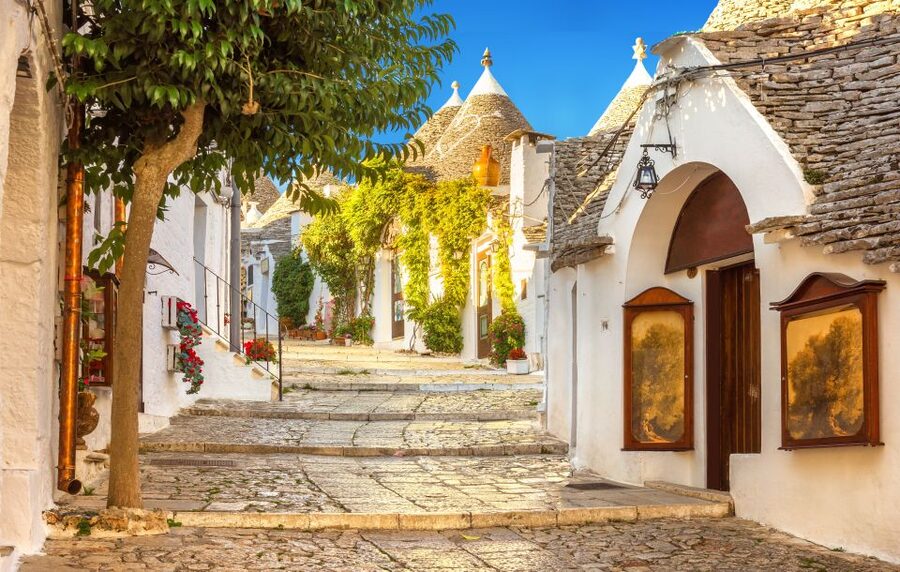
- Start beside Trullo Sovrano: The meeting point gives you an immediate introduction to Alberobello’s unusual stone architecture.
- Santa Lucia delivers the best overview: From the terrace, you can see the clustered white trulli and their gray conical roofs from above.
- Aia Piccola feels more authentic: This quieter district offers a better sense of the old village than the shop-lined streets alone.
- Local guides add the value: Guides such as Milena, Guido, Eustachio, and Ksenia have been praised for stories, humor, patience, and strong local insight.
- The pace suits a short visit: In two hours, you cover the major sights without giving up an entire morning or afternoon.
- Expect a real walking tour: Comfortable shoes matter, and the route includes slopes, steps, and uneven surfaces.
Why a guide helps in Alberobello

The trulli are the reason most people come to Alberobello, but their odd shape can become a quick photo stop if you do not know what you are seeing. A guide helps you notice the building methods, roof symbols, legends, and social history behind the white stone walls.
The town’s trulli are made with dry-stacked limestone, traditionally built without mortar. That simple fact explains much of their appearance, including the thick walls, small interiors, and conical roofs. Your guide can also explain the different ideas about why this building style developed and how Alberobello changed as tourism grew.
That extra context matters because Alberobello is not an open-air film set. People lived in these homes, adapted them over time, and still connect local identity with them. Several guides have used illustrations, family stories, and old myths to make the architecture easier to understand.
The strongest guides also connect the buildings to everyday life. Milena has shared details about families who lived in trulli for generations. Guido has answered questions about local food and restaurants, and one guide even gave children a quiz with small prizes during the walk. Those touches can make the experience work well for families, not just architecture fans.
A few more Bari bookings to compare
- Polignano a Mare: Speedboat Cruise to Caves with Aperitif
★ 4.8 · 3,382 reviews - Polignano a Mare: Cave Boat Tour with Aperitif
★ 4.7 · 1,891 reviews - Polignano a Mare: Boat Trip, Swim & Cave with Aperitif
★ 4.8 · 1,300 reviews
Starting at Trullo Sovrano
You meet in front of Trullo Sovrano, an easy landmark and a sensible place to begin. This is one of Alberobello’s most impressive examples of traditional construction, so it gives you a clear visual introduction before the group moves into the older districts.
The tour includes a guided visit to the site, but admission to Trullo Sovrano is optional and not included in the $47 price. Check the current arrangements before you go if entering the building is important to you. Even if you focus on the exterior, the stop gives your guide a useful setting for explaining how a trullo is built and how its rooms are arranged.
Do not expect a museum-heavy opening. The value here is the explanation that connects the building in front of you with the many smaller homes you will see later. You begin with a reference point, then learn how to read the rest of Alberobello.
The meeting instructions deserve attention. The normal meeting point is in front of Trullo Sovrano in Piazza Sacramento, but the local operator may instead direct you to Via Indipendenza, in front of the Terra Mossa restaurant. Contact the operator one day before the tour so you do not waste time looking for the group.
The Basilica of Saints Cosmas and Damian
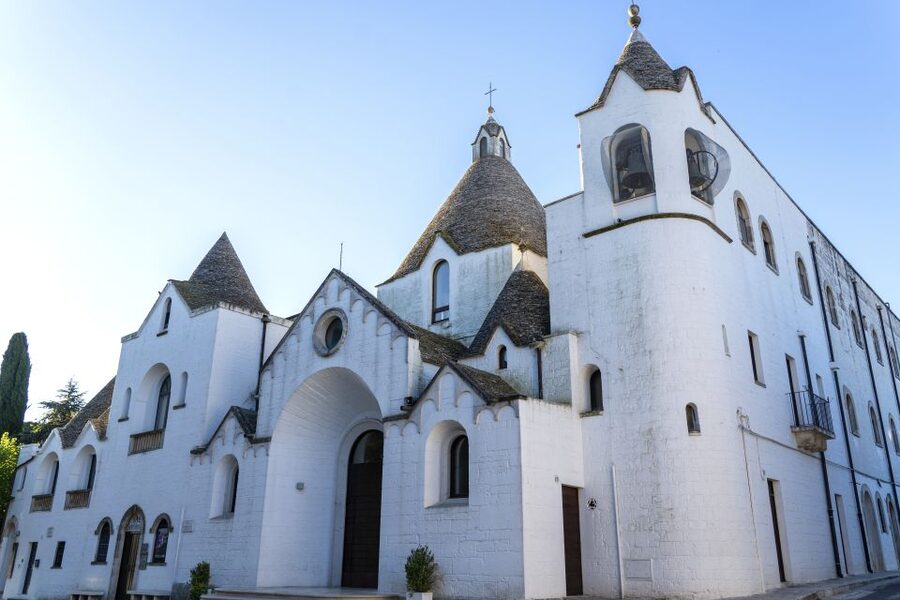
The next major stop is the Basilica of Saints Cosmas and Damian, Alberobello’s principal religious landmark. Its architecture provides a change of pace after the tightly packed trulli, and the guide explains the church’s long connection with the town.
This stop is more than a quick look at a church façade. You hear about the legends surrounding the sanctuary and gain a sense of how faith shaped local life. The contrast is useful: Alberobello is not only a collection of unusual homes, but also a lived-in town with religious traditions and community landmarks.
The precise time spent here can vary because the route may change for operational reasons or bad weather. The quality and number of visits are intended to remain the same, but the order or exact path may shift. Keep that in mind if you are planning a tightly timed lunch or train connection immediately afterward.
Santa Lucia terrace and the best photo stop
The terrace of Santa Lucia is one of the clearest reasons to take a guided walk rather than explore only at street level. From here, you look across the packed rooftops of Alberobello, with rows of white walls and pointed gray roofs spreading below.
At street level, the trulli can feel like a maze. From the terrace, their pattern becomes clear. You see how the districts fit together, how dense the old town is, and why Alberobello is instantly recognizable in photographs.
Your guide can also help you find better angles and explain what you are looking at. Guido has been singled out for taking visitors to strong viewpoints and even helping with photographs. Build a few minutes into this stop, because this is where you will likely want to pause rather than simply snap one picture and move on.
The terrace is also a practical orientation point. After seeing the town from above, you will understand the route through the lanes more easily. If you are visiting in summer, an afternoon departure may be more comfortable. One visitor specifically found the afternoon cooler and less crowded than earlier in the day.
Still Bari, but a slower afternoon:
- Bari’s Ultimate Street Food Tour – Small Group by Do Eat Better
★ 5.0 · 1,187 reviews - Polignano a Mare boat tour emotions, caves, diving and appetizers
★ 5.0 · 1,022 reviews - Bari: Guided Walking Tour
★ 4.7 · 744 reviews - Tour di Alberobello e Matera in bus privato da Bari
★ 4.8 · 701 reviews
Rione Aia Piccola, the old village at its best
Rione Aia Piccola is the heart of the tour for anyone looking for a less commercial side of Alberobello. It is the district that best preserves the feel of an old village, with trulli arranged along narrow lanes rather than presented mainly as shops and photo backdrops.
This is where the tour earns its price. You can look at the buildings as architecture, but you also begin to understand how people moved through them and used them. The guide points out details that are easy to miss when you are walking alone, including the way the homes connect to one another and how the district differs from the more commercial Rione Monti.
The area is not polished in the same way as a purpose-built attraction. That is part of its appeal, but it also means uneven paving, tight passages, and slopes. Wear shoes with a good grip. The tour is not suitable for wheelchair users, people with mobility impairments, or pregnant women, according to the activity restrictions.
A traditional trullo dwelling is included in the experience. Seeing the inside helps correct the impression that these homes are simply charming little cones. The interiors show how limited space had to be used carefully and give you a better feel for the practical side of trullo life.
Rione Monti and the commercial finish
The tour wraps up beside Rione Monti, Alberobello’s largest trulli district. Compared with Aia Piccola, this area feels more visitor-oriented, with souvenir shops and local craft stores filling many of the small buildings.
That commercial side is not a flaw, but it is a different experience. You can browse gifts and local crafts, and the location is convenient if you want to continue exploring on your own. I appreciate that the tour visits Aia Piccola first, before ending near the shops. You get the quieter historic district before the more commercial streets.
Guides often use the final part of the walk to offer practical advice about restaurants and shopping. Guido has recommended places to eat, including a local barbecue and steak restaurant described as affordable and genuinely local. You should treat such suggestions as useful starting points, then choose based on your own plans and appetite.
The drop-off points are Piazza Sacramento and Largo Martellotta. That gives you a choice of returning near the starting area or continuing into the main visitor zone. Since this is a walking tour, you do not spend time waiting for transport between sights.
What the guides add to the experience
The guide is the main variable in any short walking tour, and the available feedback points strongly toward a warm, personal style. Milena has been praised for her local roots, patience, and use of notes and illustrations. Guido is often described as lively, organized, and good at adjusting to questions and children.
Other guides, including Eustachio, Ksenia, Fabio, Ingo, and Maria, have also been praised for humor, clear explanations, language skills, and help with practical needs. That variety suggests the experience is built around several local guides rather than one fixed personality.
The best part is not simply learning dates and names. It is hearing how Alberobello feels to people connected to the town. A guide who grew up locally, or whose family lived in trulli, can explain how tourism affected the old neighborhoods and how local families relate to these homes today.
The tour is offered in Italian and English. In the low season, it may become bilingual if there are fewer participants. That can mean a little less time in each language, so visitors who want a fully English walk may prefer a busier departure or should ask about the language arrangement before booking.
Private and small-group options are available. A smaller group is useful here because the lanes can be narrow and because it is easier to hear the guide’s explanations. It also gives you more freedom to ask about construction, local customs, or restaurants.
Is $47 good value for two hours?
At $47 per person, this is not the cheapest way to see Alberobello. You can walk through the town without paying for a guide, and much of the visual appeal is easy to find on your own.
The price becomes easier to justify if you value local interpretation and a planned route. In two hours, you visit Trullo Sovrano, the Basilica of Saints Cosmas and Damian, the Santa Lucia terrace, Aia Piccola, a typical trullo interior, and the edge of Rione Monti. You also avoid spending your first hour figuring out which lanes and viewpoints matter most.
The optional admission to Trullo Sovrano is an extra cost, as are food and drinks. That keeps the base price clear, but you should budget for the entrance if you want the full visit inside the building.
I would call the tour good value for a first visit, especially if Alberobello is part of a larger Apulia trip and you have limited time. If you already know the town well, or prefer exploring at your own pace, the price may be harder to defend.
Timing, comfort, and practical limits
The tour lasts two hours, which is long enough to cover the main sights but short enough to fit before dinner, a train, or another Apulia stop. The pace is generally described as comfortable, but this is still a proper walking route with hills, stairs, and uneven paving.
Bring comfortable shoes. Large bags and luggage are not allowed, so leave bulky items at your accommodation or use an appropriate storage option before meeting the guide. Video recording is also not permitted, though you can take photographs at the viewpoints.
Summer heat can make the stone streets feel tiring. An afternoon departure may offer cooler conditions and fewer people, based on one useful timing tip, but availability depends on the schedule. In winter, the low season can mean a quieter walk, though the tour may be bilingual.
Weather can affect the path. The route may change because of wind, rain, or other operating needs, but the planned number and quality of visits should remain unchanged. Guides have even brought umbrellas for groups during wet weather, though you should still dress for the forecast.
The free cancellation policy allows a full refund if you cancel at least 24 hours ahead. You can also reserve now and pay later, which helps if your Apulia plans are still taking shape.
Who should book this Alberobello walk?
I would choose this tour if you are visiting Alberobello for the first time, want the story behind the trulli, or prefer a local person to lead you through the confusing parts of town. It is also a good fit for families, since guides have kept children involved with quizzes and scavenger-hunt-style activities.
It suits photographers who want the Santa Lucia view and help finding strong angles. It also works well for anyone who wants restaurant suggestions at the end of a sightseeing day.
I would be more cautious if you dislike walking on slopes or need step-free access. The route is not suitable for wheelchair users, people with mobility impairments, or pregnant women. You should also consider a private or small-group option if you want more personal attention or have detailed questions about architecture.
Should you book it?
Book this Alberobello trulli tour if you want more than a quick collection of pretty photographs. The strongest reasons are the Santa Lucia panorama, the interior of a typical trullo, and the time spent in Aia Piccola, where the town feels more like a historic neighborhood than a shopping district.
The guide can make or break a short tour, and the repeated praise for Milena, Guido, Eustachio, Ksenia, and others is encouraging. I would contact the operator before the tour, confirm the meeting point and language, wear sturdy shoes, and consider an afternoon departure in hot weather.
For a first visit, $47 is a reasonable price for two focused hours and useful local context. If you only want to stroll and shop, save the money. If you want Alberobello to make sense, this is a smart introduction.
FAQ
Where does the Alberobello trulli tour meet?
The usual meeting point is in front of Trullo Sovrano in Piazza Sacramento. Contact the local operator one day before the tour because the meeting point may instead be Via Indipendenza, in front of the Terra Mossa restaurant.
How long does the tour last?
The guided walking tour lasts two hours. Starting times vary, so check availability when booking.
What languages are available?
The tour is offered in Italian and English. During the low season, it may be bilingual because there may be fewer participants.
Is admission to Trullo Sovrano included?
No. Admission to Trullo Sovrano is optional and is not included in the tour price.
Is the tour suitable for wheelchair users?
No. The activity is not suitable for wheelchair users or people with mobility impairments. It is also listed as unsuitable for pregnant women.
What should I bring?
Bring comfortable shoes for hills, stairs, narrow lanes, and uneven streets. Large bags and luggage are not allowed, and video recording is prohibited.
Can I cancel the booking?
Yes. You can cancel up to 24 hours in advance for a full refund. The reserve-now, pay-later option is also available.
Recently added around Bari
- Bari Vecchia Group Tour in Italian★ 5.0 · 241 reviews
- Boat tour of the Polignano a Mare caves with aperitif★ 4.5 · 595 reviews
- UNESCO’s Alberobello and Matera from Bari★ 4.5 · 271 reviews
- The Original Street Food Walking Tour in Bari★ 4.5 · 226 reviews
- Alberobello and Matera Bus Tour, from Bari★ 4.5 · 250 reviews
- Bari Street Food Bike Tour★ 5.0 · 174 reviews
- Boat trip to the Polignano a Mare caves★ 5.0 · 395 reviews
- Full Day Tour by Car and Walking among the Apulian Beauties★ 4.5 · 182 reviews
2-Hour Experiences, compared.

2-Hour Guided Walking Tour of the Historical Center
Read our review →
Lake Como: 2h Shared Boat Tour with Wine Tasting
Read our review →
Browse the lists this tour appears in