
Reviewed · WALKING TOURS
Venice: Walking tour, Doge Palace, & St. Mark’s Basilica
Venice reveals itself one alley at a time. This tour combines guided visits to Doge’s Palace and St. Mark’s Basilica with a walk through St. Mark’s Square, S. Maria Formosa, the Mercerie, and several less obvious corners of central Venice. I especially like the historical context inside both grand buildings, and the chance to see Marco Polo’s house, Teatro Malibran, and the Campo of SS. Giovanni e Paolo along the way.
The biggest practical benefit is skip-the-line entry through a separate entrance, although security checks can still create a wait. The main drawback is the group size, which can reach 35 people, so audio equipment and staying close to the guide matter.
In This Review
- Key points at a glance
- Why this tour works well in Venice
- Starting at Doge’s Palace
- Crossing the Bridge of Sighs
- Inside St. Mark’s Basilica
- Walking beyond St. Mark’s Square
- Marco Polo, Teatro Malibran, and the Mercerie
- Guide quality and group size
- Meeting point and timing
- What the $142.74 price means
- Who should book it
- Final verdict: book it for context and convenience
- FAQ
- Where does the tour start?
- Where does the tour end?
- How long does the tour last?
- What is included in the price?
- Does the tour include skip-the-line entry?
- Which languages are available?
- How large can the group be?
- Does the tour visit Doge’s Palace?
- Does the tour enter St. Mark’s Basilica?
- Can I cancel for a refund?
Key points at a glance
- Two essential interiors in one outing: Enter Doge’s Palace and St. Mark’s Basilica with a guide rather than seeing their art and architecture without context.
- A wider walk through Venice: The route includes S. Maria Formosa, SS. Giovanni e Paolo, Marco Polo’s house, Teatro Malibran, and the Mercerie.
- Useful line-saving access: Separate entrances help, but security checks can still slow the group.
- Strong guide feedback: Guides including Felipe, Diana, and Nadia have been praised for clear English, humor, local insight, and good group management.
- A substantial half-day: The published duration is 4 to 8 hours, with some outings taking about 3.5 to 4 hours.
- Best for first-time visitors: You get a broad introduction to Venice’s politics, art, churches, squares, and narrow streets in one organized experience.
Why this tour works well in Venice
Venice can be confusing at first. The city has no normal street grid, and the most famous sights sit among small lanes, canals, shops, and crowded squares. You can certainly walk around on your own, but it is easy to miss the meaning behind what you are seeing.
This experience gives you a useful first layer of understanding. You visit the two grandest sights around St. Mark’s Square, then walk through nearby districts where Venice feels less like a postcard and more like a living city. I like that balance. The palace and basilica supply the major sights, while the walking route gives you smaller details and a sense of how the city fits together.
The guide leads in English or Spanish. From November through March, the tour may be bilingual, so you should expect commentary in two languages during those months. That may lengthen explanations or make the delivery feel less direct, but it also keeps the tour available outside the busiest season.
The overall rating is 4.5 from 884 ratings, and the strongest praise centers on the guides. Several guides have been singled out by name, including Felipe, Diana, and Nadia. The recurring strengths are clear English, a good sense of humor, strong knowledge of Venetian art and architecture, and the ability to keep a mixed-age group together.
More Walking Tours in Venice
- Venice Walking Tour and Gondola Ride
★ 3.5 · 3,630 reviews - Venice: Rialto Bridge & Offbeat Unusual Venice Walking Tour
★ 4.2 · 3,538 reviews - Private 3 hrs Venice Tour: St Mark’s, Walking tour & Boat tour
★ 4.0 · 3,372 reviews
Starting at Doge’s Palace
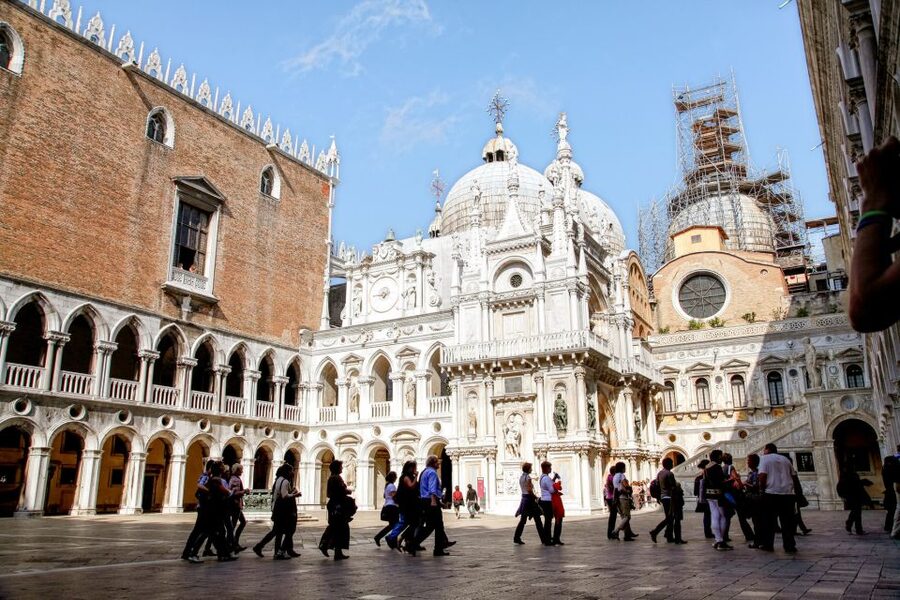
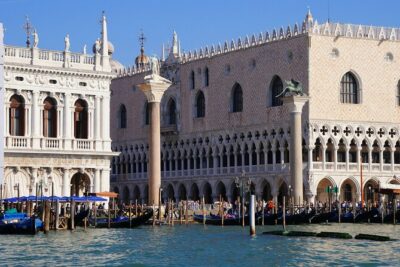
The tour begins at Doge’s Palace, the huge Gothic building beside St. Mark’s Basilica. For centuries, it was the center of Venetian government and the home of the duke, or doge, and his council.
This is not simply a royal residence. The palace shows how Venice governed itself as a maritime republic for about a thousand years. Your guide explains how political decisions were made and how power moved through the doge, the council, and other institutions. That background helps you read the building as more than a collection of grand rooms.
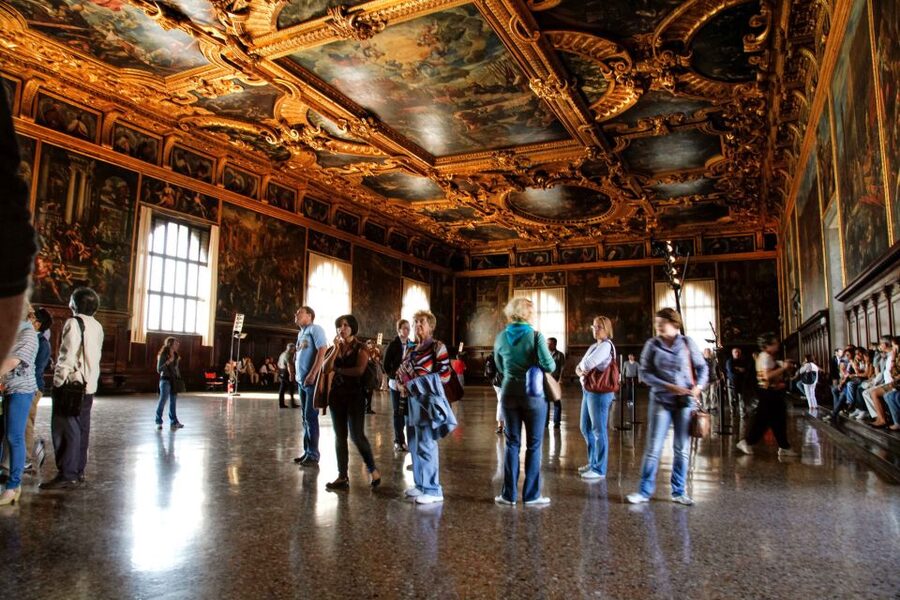
Inside, you can expect elaborate decoration, major works of art, and rooms built to impress visitors and officials. The scale matters. Venice was a small city built on islands, yet its leaders wanted the palace to project wealth, order, and authority.
A guide adds real value here because the rooms can blur together when you walk through them alone. A good explanation gives each chamber a purpose and points out how art and architecture supported the republic’s image.
Crossing the Bridge of Sighs
One of the most memorable sections is the Bridge of Sighs. The enclosed stone bridge connected the courtrooms of Doge’s Palace with the prison complex.
The name suggests the sound of prisoners sighing as they caught their last view of Venice through the small windows. The tour uses the bridge to connect the palace’s public grandeur with the harsh legal system behind it. That contrast is one reason the palace feels more interesting than a standard art museum.
The itinerary also highlights a prison cell associated with Giacomo Casanova. Casanova escaped from Doge’s Palace in 1756, and his story adds a very human thread to the political and judicial setting.
There is one point to clarify before you book. Access to every prison section is not always experienced in the same way. One account expected the lower cells but did not see them, and the upper dome of St. Mark’s was also not part of that visit. The palace and basilica interiors remain the main focus, but you should not assume that every room or upper level is included.
Inside St. Mark’s Basilica
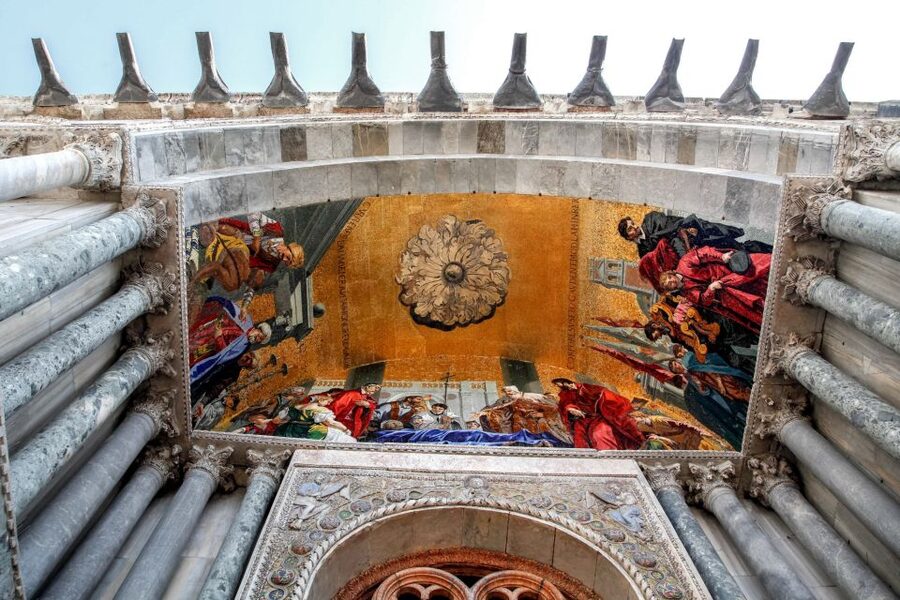
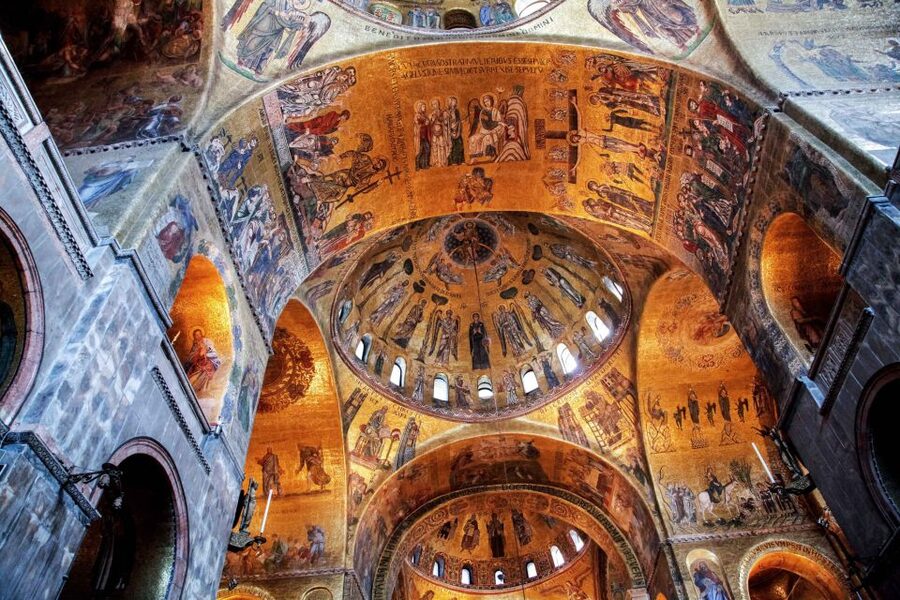
After the palace, the tour continues into St. Mark’s Basilica. This church is famous for its Byzantine design and for the extraordinary amount of gold mosaic covering its interior.
The effect changes with the light. Golden scenes cover the domes and upper walls, while patterned marble inlays spread across the floor. Your guide explains the Biblical subjects and symbols so that the mosaics become easier to read. Without that help, you may simply see a wall of gold, beautiful but hard to understand.
St. Mark’s is unusual in Italy because of its strong Byzantine character. Venice looked east across the Adriatic and maintained close connections with the Byzantine world. That influence appears in the basilica’s domes, mosaics, materials, and decorative style.
The Pala d’Oro, or golden high altar, is another major highlight. It is decorated with thousands of gems and precious stones. Your guide can help you notice details that are easy to overlook in the busy interior.
The basilica can be much more crowded than Doge’s Palace. One outing entered a quiet palace but found the church very busy. That difference is common sense for planning: the skip-the-line entrance saves time, but it cannot remove the people already inside.
Security checks can still cause delays. Even with separate entrance access, you may have to wait while bags and visitors are checked. One account described a long delay before reaching the dome area because security moved slowly. Build a little patience into your day.
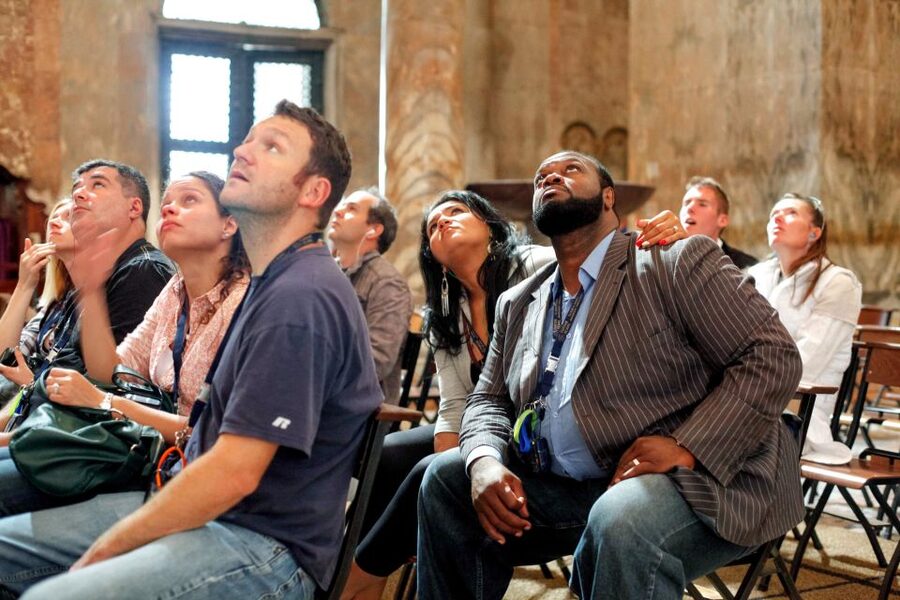
The guided visit also has a practical advantage. During one tour, staff turned on the lights so the group could see the mosaics and paintings more clearly. That is a small detail, but it shows how a guide can help you see more than you might during a quick independent visit.
Still Venice, but a slower afternoon:
- Venice: Doge’s Palace Reserved Entry Ticket
★ 4.6 · 42,716 reviews - Venice: Grand Canal Gondola Ride with App Commentary
★ 4.1 · 18,908 reviews - Boat Trip: Glimpse of Murano, Torcello & Burano Islands
★ 4.3 · 15,699 reviews - Venice: Grand Canal by Gondola with Live Commentary
★ 4.1 · 13,681 reviews
Walking beyond St. Mark’s Square
The walking portion gives the tour its wider character. You do not simply enter two buildings and leave. You also explore the lanes, campos, churches, and commercial streets around San Marco.
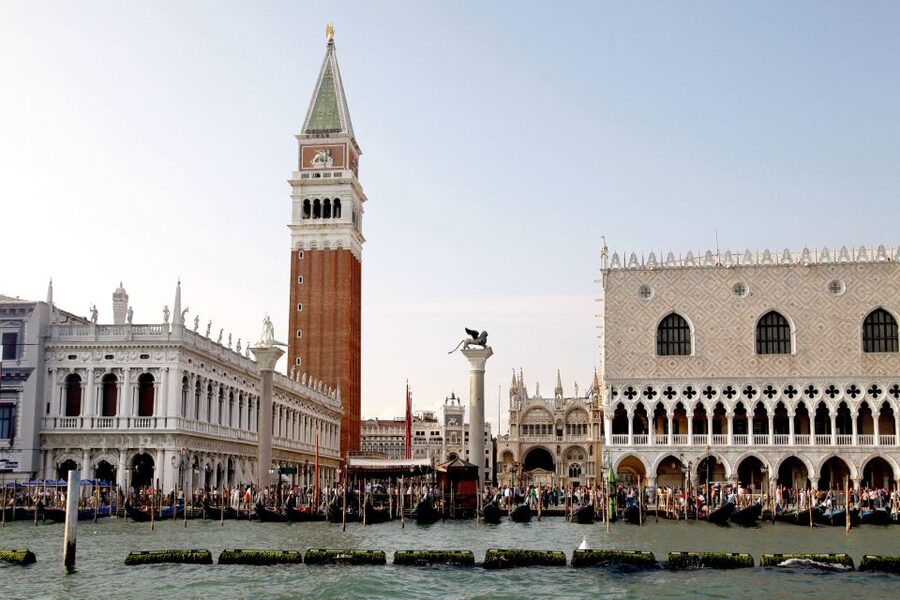
You begin with St. Mark’s Square, Venice’s grand public stage. The square gathers the basilica, Doge’s Palace, arcades, cafés, and the tall Campanile. Your guide explains how the space worked as a center of religious ceremony, political display, and daily life.
The route then reaches S. Maria Formosa and its lively Campo. In Venice, a campo is a square, often shaped by the buildings around it and used as a neighborhood meeting place. S. Maria Formosa offers a different mood from the formal sweep of St. Mark’s Square.
The Church and Campo of SS. Giovanni e Paolo are another important stop. The church is often called the Pantheon of Venice because many prominent Venetian figures are buried there. The nearby Scuola and monuments to military commanders connect the area to Venice’s charitable institutions and military past.
This part of the tour is valuable because it gives you a better sense of Venice beyond its two headline monuments. You see how churches, civic buildings, and public squares sit close together in a city where every available patch of solid ground matters.
Marco Polo, Teatro Malibran, and the Mercerie
The route also passes Marco Polo’s house and Teatro Malibran, where older and newer layers of Venetian life meet.
Marco Polo’s connection to Venice points toward the city’s long trading tradition and its links with distant markets. The theater adds a cultural note, showing that Venice was not only a place of government, religion, and commerce, but also of music and performance.
The walk through the Mercerie brings you into Venice’s main shopping district. These streets connect St. Mark’s Square with the Rialto area and have long served as a commercial route.
Today, the Mercerie can be busy and shop-filled. It is not the quietest part of the walk, but it helps explain how Venice’s central districts function. You get both the historic setting and the modern retail traffic that now fills it.
The route covers a good amount of ground. A guide can keep you from getting lost in the maze, but you should wear comfortable shoes and bring water. One outing was described as cold but worthwhile, while another took place in 28°C weather and felt long enough at about four hours. Conditions matter, and Venice offers little shade in some open areas.
Guide quality and group size
The strongest part of this experience is the guide. The best guides do more than recite dates. They explain why Venetian buildings look the way they do, connect a prison story to the political system, and point out small details in streets and squares.
Diana has been praised for combining deep subject knowledge with humor and friendliness. Felipe was noted for answering questions and explaining small city details that are easy to miss. Nadia was praised for fluent English, strong organization, and the quality of the audio equipment.
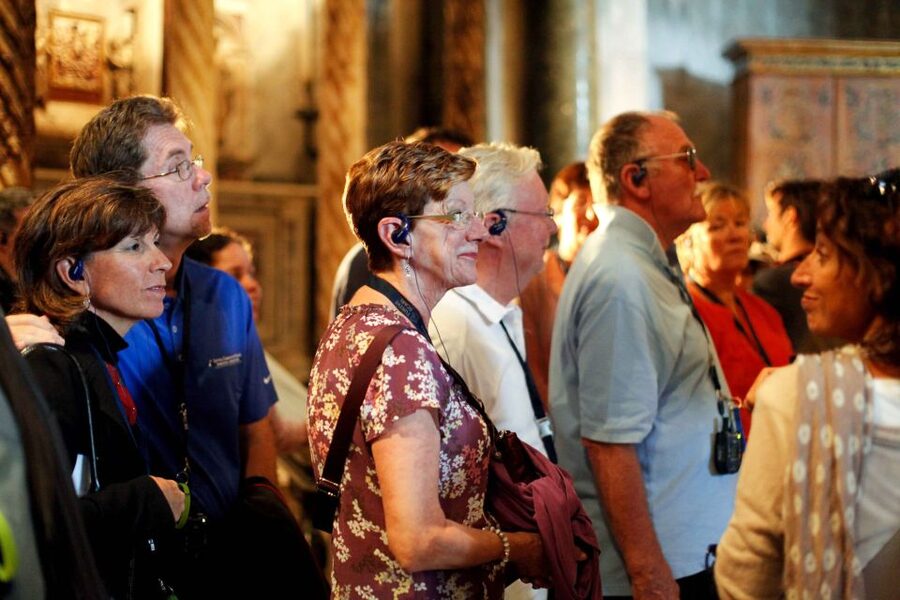
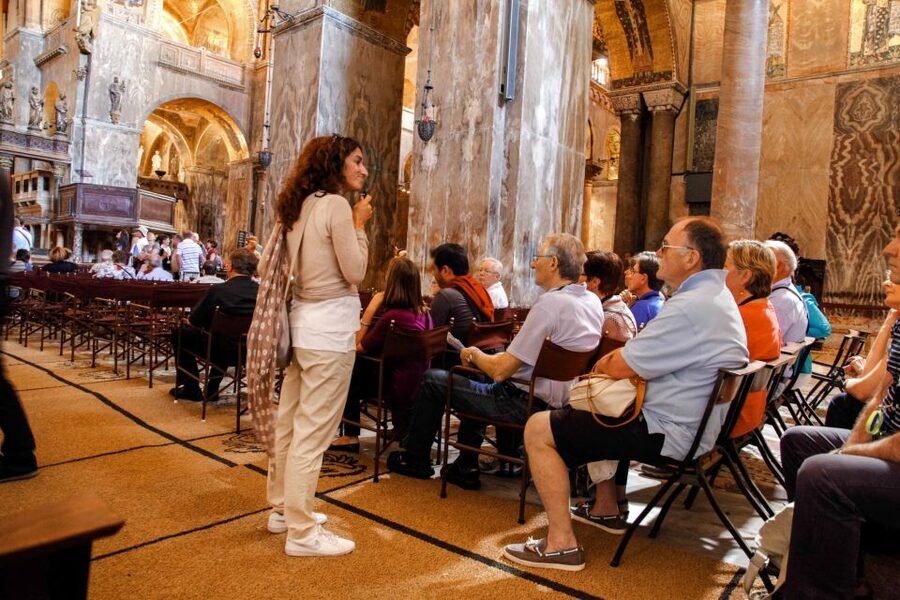
The tour can include up to 35 people. That is not a small private walk, and you should expect a group atmosphere rather than a personal conversation with the guide. Still, several outings handled larger groups well, with the guide keeping everyone together and maintaining a steady pace.
The audio equipment is important. One account found the sound less clear in parts of the palace, especially around corners and in larger rooms, with a group of about 20. Stay close, check that your receiver is working, and tell the guide quickly if you cannot hear.
A group of 35 can also make narrow lanes and busy church entrances harder to manage. The advantage is cost and organization. The tradeoff is less flexibility and less time to stop whenever you like.
Meeting point and timing
The meeting point is inside a shop with a Meeting Point sign in front of the church. The tour ends back at the same meeting point.
Arrive early and confirm the exact shop before the start time. One person found the location confusing because the yellow sign was not visible until shortly before the tour and the address number on the stone entrance was incomplete. This is the kind of small problem that can create needless stress in Venice, where nearby lanes can look alike.
The advertised duration is 4 to 8 hours, with starting times dependent on availability. In practice, some outings have taken roughly 3.5 to 4 hours, while the full time can vary with crowd levels, security, the walking pace, and the day’s schedule.
Treat this as a major half-day activity. You may still have time for another plan, but avoid booking a tight museum entry or train immediately afterward. The route has three distinct parts: the palace, the basilica, and the city walk.
What the $142.74 price means
At $142.74 per person, this is not a budget stroll. The price includes the guide, entry to Doge’s Palace, entry to St. Mark’s Basilica, the walking tour, and separate entrance access for the two main sights.
The value depends on how much structure you want. If you already know Venetian history, prefer moving alone, and are comfortable managing lines and reservations, you may find the cost high. If Venice is new to you, the combination is easier to justify because the guide links the sights and removes much of the planning work.
Skip-the-line access is useful, especially at St. Mark’s Basilica. It does not guarantee instant entry because of security checks, but avoiding the regular entrance queue can still save substantial time. The guide also helps you make sense of interiors that can otherwise feel visually overwhelming.
The price is easier to defend if you view this as a central Venice orientation rather than two separate admissions. You see the major monuments, learn the political and religious story behind them, and cover a useful section of the city on foot.
Free cancellation up to 24 hours before the start and the option to reserve now and pay later add flexibility. Those terms are helpful if your Venice schedule may change, but they do not change the basic question: do you want a guided half-day or independent sightseeing?
Who should book it
I would choose this tour for a first visit to Venice, especially if you want the major sights explained in plain language. It also suits families, since one guide was praised for keeping a seven-year-old interested.
It is a good match for people who enjoy history, art, architecture, and walking. The route covers a lot, but the pace has generally been described as manageable. Bring water, wear practical shoes, and prepare for changing temperatures and crowded interiors.
You may prefer another option if you want a private guide, a very small group, extensive time for photographs, or access to every prison area and upper basilica level. Those details are not guaranteed here.
Final verdict: book it for context and convenience
I recommend this tour if you want Venice’s two most important sights explained properly and would like a guided walk through the surrounding streets. The guides are the main reason it works, with repeated praise for clear English, humor, local insight, and strong organization.
Book it knowing that skip-the-line does not mean skip-security, the group can reach 35 people, and the meeting point deserves an early check. At $142.74, it is a serious purchase, but the palace, basilica, walking route, and line-saving access make it fair value for a first-time visitor who wants one well-organized introduction to central Venice.
FAQ
Where does the tour start?
It starts inside a shop with a Meeting Point sign in front of the church.
Where does the tour end?
The activity ends back at the meeting point.
How long does the tour last?
The stated duration is 4 to 8 hours, with starting times depending on availability. Some outings have taken around 3.5 to 4 hours.
What is included in the price?
The price includes a tour guide, entry to Doge’s Palace, entry to St. Mark’s Basilica, and the walking tour.
Does the tour include skip-the-line entry?
Yes. The tour uses a separate entrance for Doge’s Palace and St. Mark’s Basilica. Security checks may still require you to wait.
Which languages are available?
The tour is offered in English and Spanish. From November through March, it may be bilingual.
How large can the group be?
Groups can include up to 35 people.
Does the tour visit Doge’s Palace?
Yes. The tour explores the palace, including its political rooms, art, Bridge of Sighs, and a prison cell associated with Giacomo Casanova.
Does the tour enter St. Mark’s Basilica?
Yes. You see the interior, including its golden mosaics, marble floor inlays, Biblical artwork, and Pala d’Oro.
Can I cancel for a refund?
You can cancel up to 24 hours in advance for a full refund. You can also reserve the tour and pay later.
Recently added around Venice
- Venice: St. Mark’s Basilica Tour with Doge’s Palace Option★ 4.2 · 178 reviews
- Venice: Lords of the Night Prison’s Palace Cells & Tortures★ 4.0 · 1,067 reviews
- St Mark’s Basilica and Doge’s Palace Priority Entry Ticket★ 4.2 · 885 reviews
- Venice: Hard Rock Cafe with Set Menu for Lunch or Dinner★ 4.4 · 1,102 reviews
- Venice: Doge’s Palace and St. Mark’s Basilica Guided Tour★ 4.6 · 458 reviews
- Punta Sabbioni: Murano, Burano & Torcello Guided Boat Tour★ 4.3 · 236 reviews
- Murano: Glass Blowing Demonstration with Optional Drinks★ 4.5 · 294 reviews
- Murano: Glass Blowing Demonstration and Artistic Glass Gift★ 4.6 · 507 reviews
Walking Tours, compared.
Guided Walking Tour & Last Supper Visit with Ticket
Read our review →

Rialto Bridge & Offbeat Unusual Venice Walking Tour
Read our review →
Private 3 hrs Venice Tour: St Mark’s, Walking tour & Boat tour
Read our review →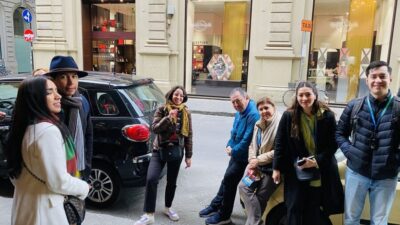

Skip the line: Uffizi and Accademia Small Group Walking Tour
Read our review →Browse the lists this tour appears in