
Reviewed · HISTORICAL TOURS
Venice: Traveling Opera in a Historic Palace on Grand Canal
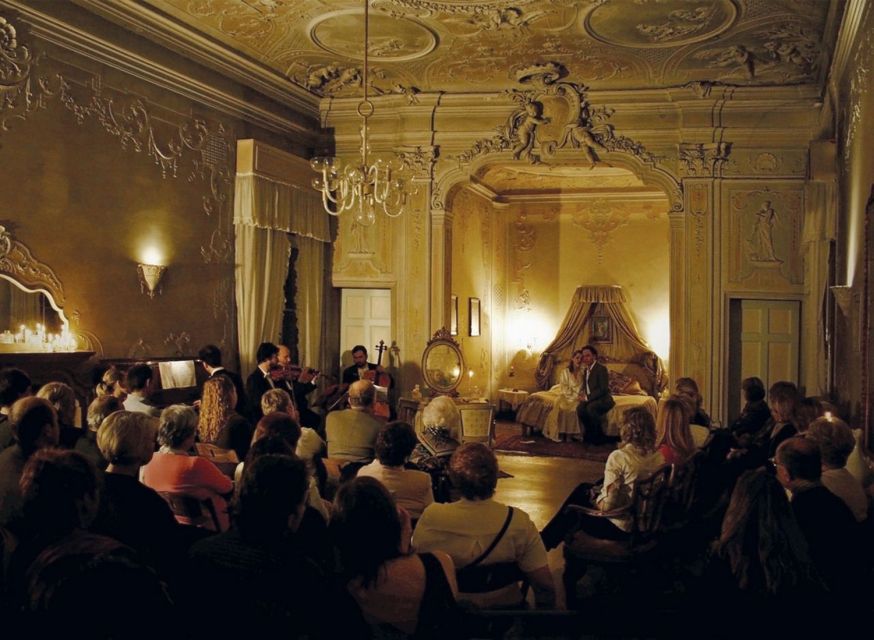
Opera can feel wonderfully close here. Instead of watching from a distant seat, you follow the action through three rooms of Palazzo Barbarigo Minotto, a Venetian Gothic palace on the Grand Canal. Each act uses a new room, so the scenery changes because you move through the building itself.
I like the small audience setting, which puts the singers only a few feet away and makes every expression easy to catch. I also like the way a compact piano and string ensemble creates the sound of a much larger production. The main consideration is comfort: you climb about 30 steps, there is no elevator, and the chairs can feel firm during a two-hour performance.
This is a smart choice for opera newcomers as well as regular listeners. The singing is in Italian, and you can buy an English or French translation at the front desk. Arrive early, since seats are not assigned and admission may not be allowed after the curtain rises.
In This Review
- Key points to know before booking
- Why this Venetian opera feels different
- Entering Palazzo Barbarigo Minotto on the Grand Canal
- Act One: opera begins at arm’s length
- Act Two: a new room, a new point of view
- Act Three: the palace becomes part of the story
- How the music and acting work for first-timers
- Seating, stairs, and timing that matter
- What the experience is worth
- Who should book this opera evening
- Helpful alternatives and planning choices
- Should you book Palazzo Barbarigo Minotto?
- FAQ
- How long does the opera performance last?
- How early should I arrive?
- Are seats assigned in advance?
- Is the opera sung in English?
- Is there an elevator to the performance rooms?
- What languages are available from the host or greeter?
Key points to know before booking
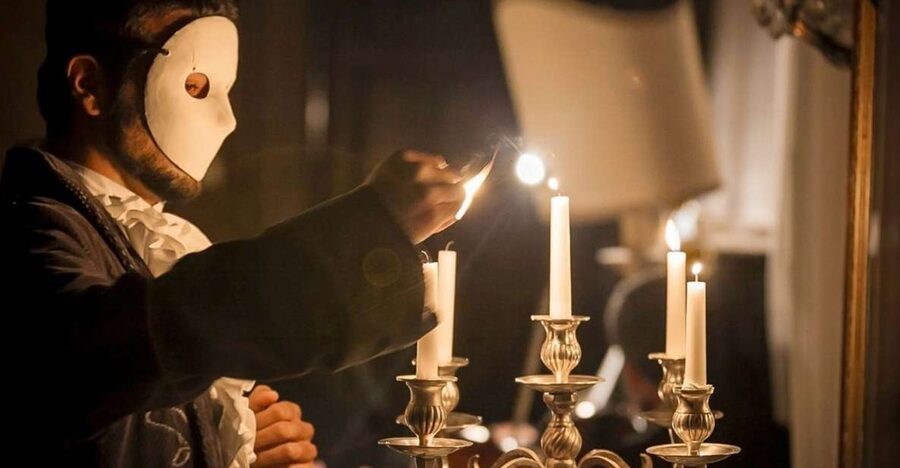
- Three rooms replace a conventional stage: You move through the palazzo as the opera changes acts, making the building part of the performance.
- The singers perform at very close range: There is no orchestra pit or distant stage separating you from the cast.
- Palazzo Barbarigo Minotto is part of the appeal: Expect decorated rooms, Tiepolo paintings, stuccoes, and Grand Canal views.
- A small ensemble supplies the music: Piano, violin, and cello can create a surprisingly full sound inside the palace rooms.
- The evening lasts about two hours: Doors open 30 minutes before the start, and late admission is not guaranteed.
- It suits first-time opera listeners: Strong acting, costumes, and clear stage business help you follow the story even without Italian.
Why this Venetian opera feels different
Traditional opera usually asks you to sit still and look forward. This production turns that arrangement inside out. The audience moves from room to room, with each act taking place in a different part of the palace.
That simple idea changes your relationship with the music. You are not looking at a painted backdrop from across a theater. You are standing or sitting inside rooms with old plasterwork, paintings, and canal-facing windows while the singers use the space around you.
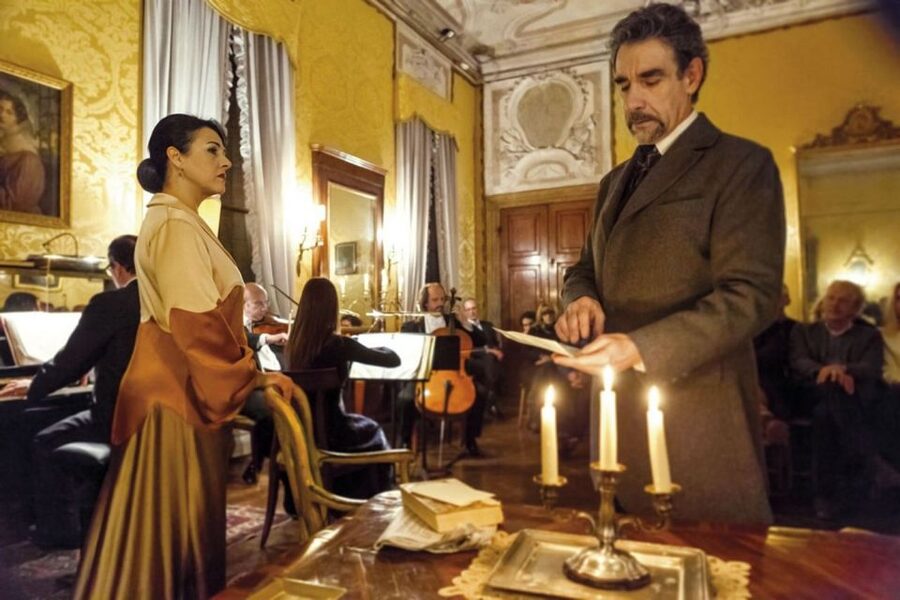
The cast also works at close range. You may see the smallest gesture, the quick exchange of a glance, or the physical effort behind a powerful vocal passage. That intimacy can be thrilling, but it also means you are part of the room rather than an anonymous face in a large auditorium.
The format is often called traveling opera because the audience travels, not because the production moves between cities during your evening. You remain inside Palazzo Barbarigo Minotto while the performance shifts from one room to the next.
More History Tours in Venice
- Venice: St. Mark Basilica Ticket, Audioguide+History Gallery
★ 3.9 · 4,780 reviews - Venice’s Best: Basilica, Doge’s Palace, Gondola & History Gallery
★ 4.5 · 2,478 reviews - Venice: City Center Historical Guided Walking Tour
★ 4.2 · 1,873 reviews
Entering Palazzo Barbarigo Minotto on the Grand Canal
The palace is in Venice’s San Marco area, near the Grand Canal, at approximately 45.43187, 12.33238. The entrance can be easy to miss, especially after dark or when you are hurrying through Venice’s maze of narrow streets. I would allow extra time rather than trusting yourself to find the door at the last minute.
Once inside, the building gives the evening its first sense of occasion. The rooms are decorated with paintings associated with Tiepolo and ornamental stuccoes. These details matter because the setting is not a generic concert room dressed up for the night. You are seeing opera in a genuine Venetian palazzo, with architecture that carries its own atmosphere.
Doors open 30 minutes before the performance. Use that window well. It gives you time to find the entrance, check in, climb the stairs, and choose a seat without rushing.
There are roughly 30 steps to reach the performance rooms, and no elevator is available. That is a real planning point for anyone with limited mobility. Food is not permitted inside the venue, so finish snacks before arriving.
Every attendee receives a Musica a Palazzo membership card. It is part of the venue’s presentation, but the real reward is the building itself, especially if you enjoy historic interiors as much as the performance.
Act One: opera begins at arm’s length
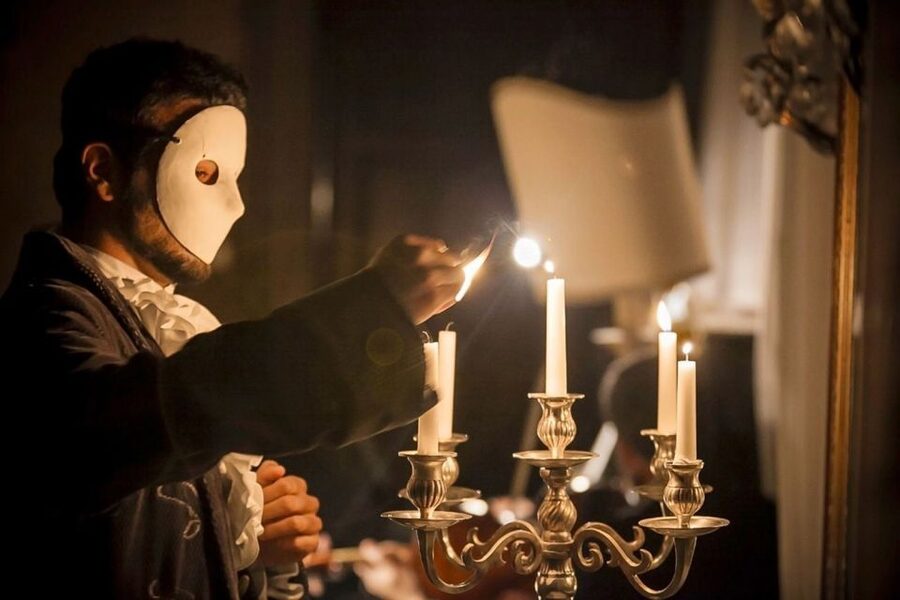
The first act introduces the characters, musical themes, and the unusual distance between performers and audience. In a conventional opera house, you might need binoculars to read a singer’s expression. Here, you can follow the acting directly.
The productions use professional lyrical voices, and the cast members are also expected to act. That combination is important for newcomers. A first opera can be hard to follow if the performers simply sing from fixed positions, but the close staging gives you visual clues about relationships and conflict.
Depending on the scheduled production, you may see a familiar work such as La Traviata, Rigoletto, or The Barber of Seville. The specific opera matters, so check the title when booking. The format remains similar, but the mood changes with the story. The Barber of Seville brings comic timing and lively stage business, while La Traviata depends more heavily on emotional tension.
The audience may be arranged around the performers rather than in straight rows. There is no pre-assigned seating, so arriving early improves your chance of choosing a useful view. You will not control every sightline, but the room changes between acts, giving you more than one position during the evening.
Act Two: a new room, a new point of view
The move between rooms is not a break in the experience. It functions like a stage change, except you walk to the next setting. The change adds a little movement to a two-hour evening and keeps you alert.
The second room often makes especially good use of the palace’s architecture. A doorway, a canal-facing window, or a decorative wall can become part of the dramatic frame. Instead of scenery being brought in and removed, the building supplies the visual character.
The audience’s closeness also changes how comedy works. In The Barber of Seville, physical gestures and timing can land like intimate theater rather than distant grand opera. In a serious piece, the same closeness makes emotional scenes feel more direct.
Some performances include prosecco or champagne around the interval or after the first act. This has been a welcome touch during certain productions, but it should not be treated as the main reason to book. Confirm what is included with your particular option.
You may also change seats or have a different viewing position as the evening progresses. That helps with sightlines, though it does not make every chair comfortable. Several people have found the seats firm, so the move between rooms is useful in more ways than one.
Still Venice, but a slower afternoon:
- Venice: Doge’s Palace Reserved Entry Ticket
★ 4.6 · 42,716 reviews - Venice: Grand Canal Gondola Ride with App Commentary
★ 4.1 · 18,908 reviews - Boat Trip: Glimpse of Murano, Torcello & Burano Islands
★ 4.3 · 15,699 reviews - Venice: Grand Canal by Gondola with Live Commentary
★ 4.1 · 13,681 reviews
Act Three: the palace becomes part of the story
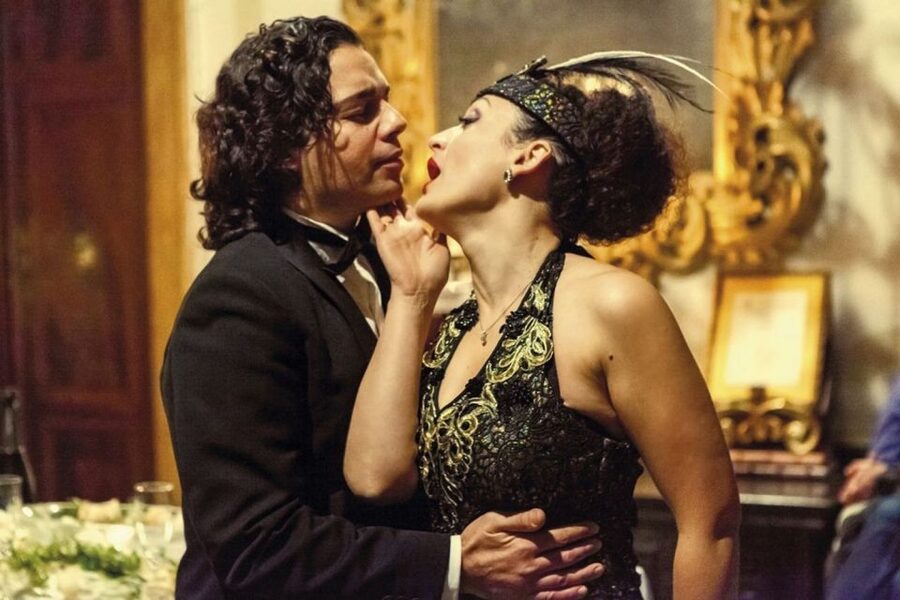
By the final act, the format has done its job. You are familiar with the performers, the musicians, and the rooms, so the last change of setting feels like part of the story rather than a novelty.
The final space can offer some of the evening’s best visual moments. Windows looking onto the Grand Canal give you a reminder that this is Venice, not a theater designed to imitate Venice. The palace’s old decoration also works well with operas set in earlier periods.
This is where the small ensemble earns its keep. The music is supplied by a limited group, typically piano, violin, and cello, rather than a full orchestra. That obviously cannot reproduce every color or force of a large opera house, but it creates a clear, immediate sound suited to the rooms.
The musicians have to support the singers without overpowering them. In this setting, you can watch their coordination at close range, and the piano often carries a remarkable amount of the score. The intimate scale reveals the craft of the arrangement rather than pretending you are hearing a full symphony orchestra.
For some people, that is the evening’s charm. For others, the lack of a large orchestra may be the main compromise. If your priority is monumental sound, a grand opera house or major concert hall may suit you better.
How the music and acting work for first-timers
You do not need an opera background to enjoy this experience. The staging provides a strong visual guide, and the singers act as well as sing. Several productions use costumes and wigs suited to the period, which makes character and setting easier to understand.
Italian opera is still sung in Italian. If you do not understand the language, purchase an English or French translation at the front desk. I strongly recommend this for anyone unfamiliar with the story. Knowing the basic plot before the curtain helps, too.
The translation is especially useful in a work such as La Traviata, where emotional shifts and social relationships matter as much as the individual arias. With the story in hand, you can pay attention to vocal color and acting instead of wondering who is speaking to whom.
The close staging is friendly to curious beginners, but it is not passive entertainment. You need to watch the singers and follow the movement. If you prefer a quiet concert where you simply sit and listen, the room-to-room design may feel like extra activity.
For children, the shorter format and changing rooms can help hold attention. The evening is still a serious performance, so very young children may find two hours difficult, but the visual action gives families more to follow than a static recital.
Seating, stairs, and timing that matter
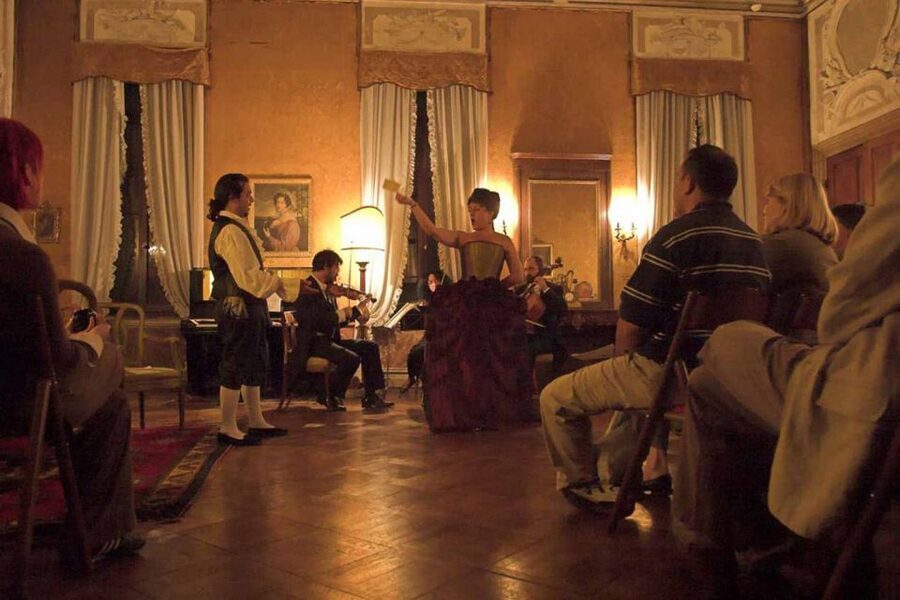
The practical details are simple but important:
- Doors open 30 minutes before showtime.
- Seats are chosen on arrival, not assigned in advance.
- Late entry is not guaranteed after the curtain starts.
- You climb about 30 steps, with no elevator.
- Food is not allowed inside.
- The performance lasts about two hours.
- Host or greeter assistance is available in English, French, and Italian.
I would aim to arrive at least 30 minutes early, especially if you are unfamiliar with the palace entrance. Early arrival helps with both navigation and seating. It also gives you a calmer look at the rooms before the performance begins.
Dress code is not mandatory. Comfortable clothing is fine, but the occasion calls for something neater than beachwear. Men are advised to wear long trousers and closed shoes; a jacket and tie are not required.
The lack of assigned seats can be a plus or a nuisance. You have a little choice, but your preferred spot is not guaranteed if you arrive late. Because the cast works throughout the room, no single seat can provide the perfect view of every moment.
What the experience is worth
No ticket price is provided here, so I cannot give you a fair euro comparison. The better question is what you are paying for. This is not simply a two-hour opera ticket. You are also paying for access to an elegant historic palace, close-range staging, a rotating room layout, costumes, acting, and a small live ensemble.
That package can be good value if you want a special evening in Venice and are willing to accept a smaller production. You get a more personal encounter than a large theater can provide, and the palace setting would be difficult to reproduce elsewhere.
The value is less clear if you mainly want a full orchestra, formal theater seating, or a long program of opera excerpts. This production favors atmosphere, contact, and storytelling over scale.
I would also compare it with other music options in Venice. The city offers classical concerts in churches, Vivaldi programs, tenor concerts, and opera performances in other historic venues. Those may provide larger ensembles or more conventional seating. Palazzo Barbarigo Minotto is the better pick when the room itself and the closeness to the singers are central to your plans.
Who should book this opera evening
I would recommend it most strongly to:
- First-time opera listeners who want help following the story
- Couples looking for a memorable evening in Venice
- Music fans who enjoy small ensembles and close performance
- People who value historic interiors as much as the main event
- Visitors who find standard theater staging too formal or distant
- Families with older children who can manage the stairs and two-hour length
I would think twice if you have difficulty climbing stairs, need guaranteed seating, or dislike firm chairs. I would also choose another concert if your main goal is the power and scale of a full opera orchestra.
The experience is intimate, not lavish in the conventional sense. Its strength comes from seeing the singers up close, moving through a real Venetian palace, and watching the story adjust to each room.
Helpful alternatives and planning choices
If you want opera but prefer a more standard concert arrangement, a performance at the Casanova Prisons near St. Mark’s Square may feel more familiar. Venice also offers Three Tenors programs and classical concerts featuring Vivaldi, including The Four Seasons.
Those alternatives are useful comparisons because they answer different wishes. A Vivaldi concert is ideal if you mainly want instrumental music. A tenor concert gives you familiar vocal highlights without following a complete staged plot. The Palazzo Barbarigo Minotto production is for you if you want theater, singing, movement, and architecture in one evening.
Check the opera title before committing. The works presented can include La Traviata, Rigoletto, and The Barber of Seville, and each offers a different balance of tragedy, comedy, and romance.
Should you book Palazzo Barbarigo Minotto?
Book it if you want a close, unusual opera experience rather than a grand theater production. The singers perform within touching distance, the musicians create a strong sound with a small group, and the move through three rooms gives the evening a clear sense of discovery.
Give yourself time to find the entrance, arrive early for seating, and plan for the stairs. Buy the translation if Italian is unfamiliar. If you can accept the firm chairs and modest ensemble, this can be one of the most memorable cultural evenings in Venice.
FAQ
How long does the opera performance last?
The show lasts approximately two hours.
How early should I arrive?
Doors open 30 minutes before the performance begins. Arriving during this window gives you time to find the palazzo, climb the stairs, and choose a seat.
Are seats assigned in advance?
No. The tour does not include pre-assigned seats. You choose your seat when you arrive.
Is the opera sung in English?
No. The singing is in Italian. English or French translations are available for purchase at the front desk.
Is there an elevator to the performance rooms?
No. You must climb about 30 steps to reach the rooms where the performance takes place.
What languages are available from the host or greeter?
Host or greeter assistance is available in English, French, and Italian.
Recently added around Venice
- Venice: Private Tour with a Local Guide★ 4.6 · 718 reviews
- Venice Walking Tour and Gondola Ride Combo★ 4.4 · 266 reviews
- Venice: Walking Tour and Shared Gondola Ride★ 4.1 · 466 reviews
- Venice: The Footsteps of Commissario Brunetti Walking Tour★ 4.9 · 445 reviews
- Venice: Vivaldi Four Seasons Concert at Vivaldi Church★ 4.8 · 287 reviews
- Venice: Walking Guided Tour of the City Must-See Sites★ 4.7 · 1,095 reviews
- Venice: The Three Tenors Concert Ticket★ 4.8 · 1,183 reviews
- Venice: Lagoon Catamaran Cruise with Music and Drinks★ 4.7 · 419 reviews
Historical Tours, compared.
St. Mark Basilica Ticket, Audioguide+History Gallery
Read our review →
Venice’s Best: Basilica, Doge’s Palace, Gondola & History Gallery
Read our review →
Historic Milan Tour with Skip-the-Line Last Supper Ticket
Read our review →

Rome in a Day Tour with Vatican, Colosseum and Historic Center
Read our review →
Rome Food Tour in the Historic Centre with 8+ Food Tastings
Read our review →Browse the lists this tour appears in