
Reviewed · HISTORICAL TOURS
Venice: Natural History Museum Entry Ticket
A dinosaur museum in Venice? Yes, really. The Natural History Museum offers a welcome change from churches and grand paintings, with fossils, animal specimens, plants, ethnographic displays, and a striking setting beside the Grand Canal. At $11 per person, it is one of Venice’s more affordable indoor attractions.
I especially like the 7-meter Ouranosaurus skeleton and the enormous Sarchosuchus imperator skull, which give the paleontology rooms real impact. I also like the calm courtyards, Grand Canal views, and family-friendly layout. The main drawback is that some signs may not be available in English, so you may need a translation app or an optional audio guide to get the most from the displays.
In This Review
- Key points to know before you go
- Arriving beside the Grand Canal
- Inside a 13th-century palazzo
- The fossil rooms and the museum’s big stars
- Whales, wildlife, and old-fashioned taxidermy
- The cabinet of curiosities and the wider collection
- How much time should you allow?
- Language, layout, and practical comfort
- Is the $11 ticket good value?
- Who should book the Natural History Museum?
- Should you book this ticket?
- FAQ
- Where is Venice’s Natural History Museum?
- How much does admission cost?
- How long is the ticket valid?
- Is the museum open every day?
- What are the museum’s opening hours?
- Is the museum wheelchair accessible?
- Who can enter for free?
Key points to know before you go
- A dinosaur collection with serious scale: See the 7-meter Ouranosaurus nigeriensis and the skull of the African Sarchosuchus imperator.
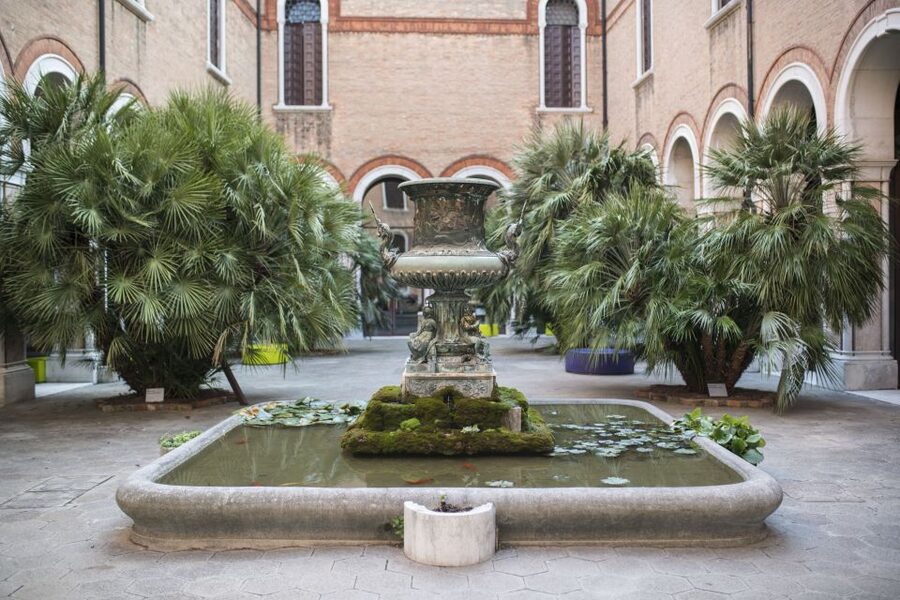
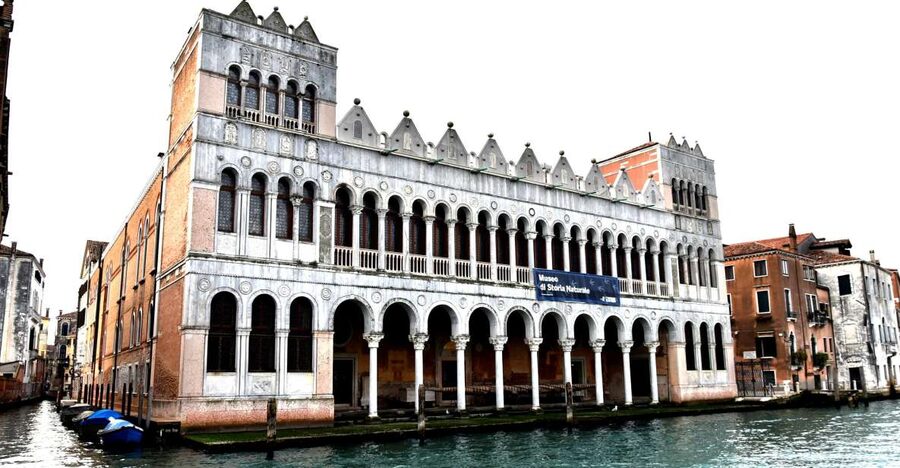
- A 13th-century Grand Canal setting: The museum occupies a beautiful historic palazzo, with architectural details, a garden, and an internal courtyard.
- Excellent value at $11: You can spend roughly 40 minutes to several hours here, depending on how closely you study the rooms.
- A good break from Venice’s crowds: The museum offers a quieter indoor stop, especially useful on rainy or very hot days.
- Old-school displays alongside modern exhibits: Expect taxidermy and traditional cases, as well as interactive and more contemporary fossil displays.
- Useful for families and curious adults: Children may enjoy the dinosaurs and touchable objects, while adults can spend time with fossils, whale displays, and the cabinet of curiosities.
Arriving beside the Grand Canal
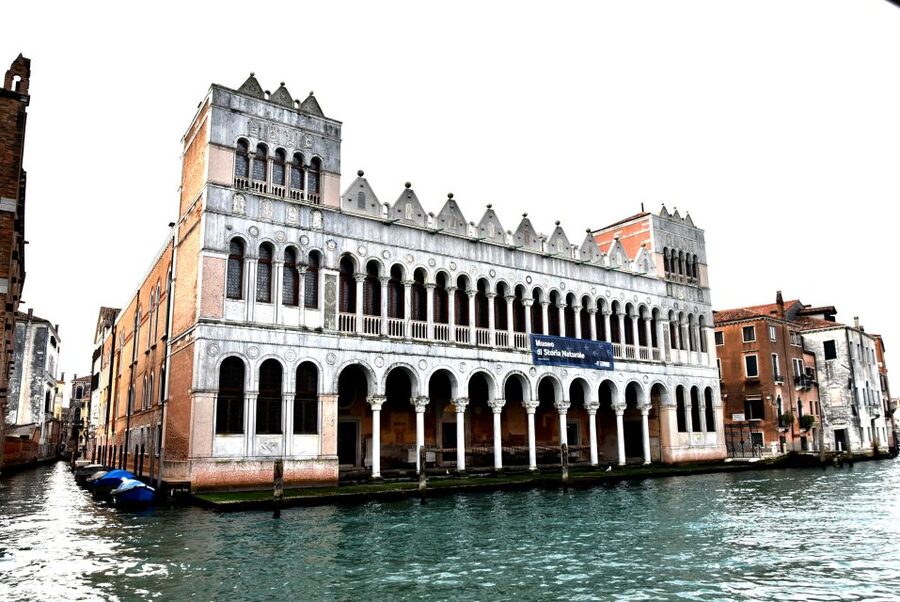
The Natural History Museum is easy to spot on the edge of Venice’s Grand Canal. You go to the main entrance and show your ticket when you arrive. There is no hotel pickup, transport service, or guide included, so this is a simple self-guided visit that fits neatly into a day of exploring the city.
The setting is part of the pleasure. Venice is full of remarkable buildings, but this museum gives you a reason to look closely at one that many people might otherwise pass without entering. Take a moment outside to notice the palazzo architecture before going in. The building feels more atmospheric than a modern museum, and the historic rooms give the natural specimens a distinctive backdrop.
That historic setting also means the experience is not arranged like a huge, polished science center. You move through rooms with different styles and moods. Some sections feel modern and clearly organized, while others retain the traditional character of an older natural history collection.
More History Tours in Venice
- Venice: St. Mark Basilica Ticket, Audioguide+History Gallery
★ 3.9 · 4,780 reviews - Venice’s Best: Basilica, Doge’s Palace, Gondola & History Gallery
★ 4.5 · 2,478 reviews - Venice: City Center Historical Guided Walking Tour
★ 4.2 · 1,873 reviews
Inside a 13th-century palazzo
The building may be the first surprise. You are not simply walking into a box filled with display cases. The museum combines a centuries-old Venetian structure with a collection of around 2 million historical objects, including zoological specimens, fossils, plants, and ethnographic material.
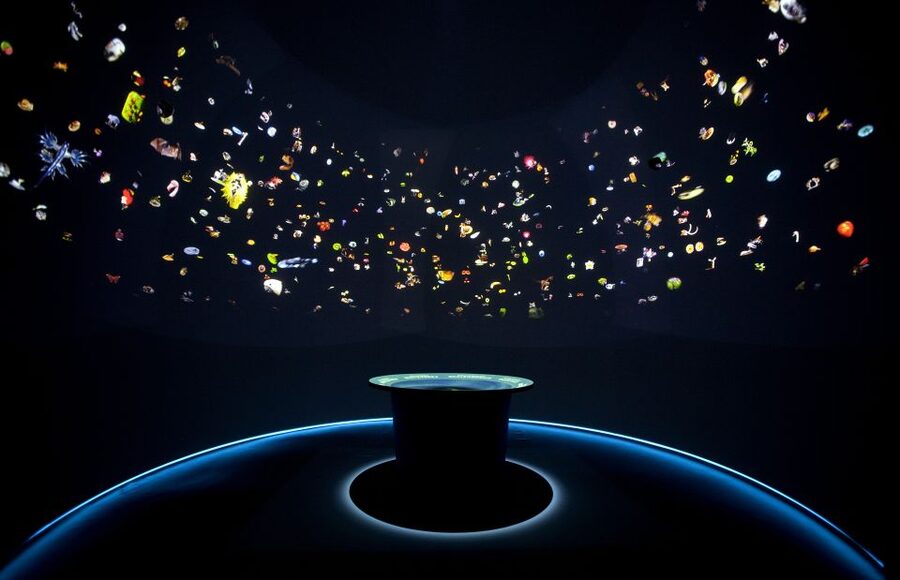
Some rooms are decorated around their subject, with music and displays arranged to create a particular atmosphere. There are also objects that you can touch, which can help younger children stay interested. The internal courtyard and garden offer a peaceful pause, and some areas provide views toward the Grand Canal.
I would not rush through the entrance rooms. The architecture, room layouts, and older display cases are part of the museum’s character. If you enjoy historic interiors, you may find as much pleasure in the building as in individual specimens.
The museum is also a useful contrast to Venice’s better-known art collections. You are not looking at another sequence of religious paintings or aristocratic portraits. Instead, the subject is the natural world and the long story of life on Earth.
The fossil rooms and the museum’s big stars
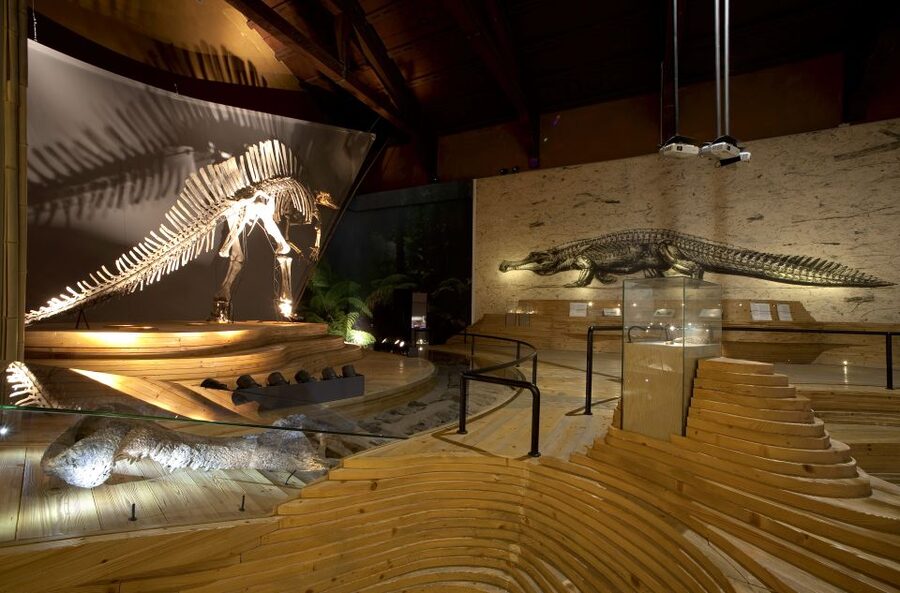
The paleontology section is the main reason I would recommend this ticket. The dinosaur and ancient-fossil displays are presented in a more modern style than some of the older rooms, making this part easier to follow and especially appealing to children and teenagers.
The Ouranosaurus nigeriensis is the showpiece. At more than 7 meters long, its skeleton gives you a strong sense of the animal’s size. This is not a small fossil tucked into a corner. It is the kind of exhibit that makes you stop, look upward, and think about the scale of prehistoric life.
The skull of the Sarchosuchus imperator provides another memorable moment. This prehistoric crocodile was discovered in Africa, and its skull shows why ancient crocodilians can seem almost more dramatic than the dinosaurs beside them. The shape and size make the display easy to appreciate even if you are not normally interested in paleontology.
You will also find other dinosaur fossils and remains from ancient life. The museum’s fossil section works well because it combines visual impact with a broader story about changing life forms. It is less about seeing one famous skeleton and more about following the passage of time through bones, fossils, and remnants.
If your children want to hurry straight to the dinosaurs, that is understandable. Still, I would try to give yourself time for the displays around them. The museum places prehistoric objects within a story about the Earth and the evolution of life, rather than treating them as isolated curiosities.
Whales, wildlife, and old-fashioned taxidermy
After the fossils, the museum shifts toward the natural world as we know it. You will see zoological specimens and taxidermy in the traditional style of a European natural history museum. That gives the collection a sense of age, but it will not suit everyone.
Some children may find the taxidermy animals frightening, particularly in rooms with large or lifelike specimens. Adults should be aware that the museum is not only dinosaurs and interactive displays. It also includes older collections that may feel more serious, static, or dated.
One especially effective display addresses the dangers facing whales. A whale skeleton helps you understand the animal’s enormous size, while the surrounding subject matter adds a modern conservation message. This section gives the museum more weight than a simple collection of curiosities. You are asked to think about how humans affect the natural world, not just admire unusual objects.
The trophy room may feel uncomfortable if you are sensitive to hunting displays. That is worth knowing before you arrive, especially with younger children. I appreciate that the museum includes its traditional material, but some of these rooms may be ready for a more current presentation.
The best approach is to move at your own pace. You can spend time with the subjects that interest you and pass more quickly through rooms that do not. There is no need to treat the museum as a fixed route.
More Museum Tours in Venice
- Venice: Leonardo Da Vinci Museum Entrance Ticket
★ 4.5 · 3,560 reviews - Venice: Vivaldi’s Four Seasons Concert & Music Museum Visit
★ 4.8 · 2,065 reviews - Charming Gondola Ride on the Grand Canal & Gondola Gallery™
★ 4.0 · 1,313 reviews - Venice: Bell Tower & St Mark’s Square History Gallery Ticket
★ 4.3 · 910 reviews
The cabinet of curiosities and the wider collection
The museum’s cabinet of curiosities section adds another layer to the visit. These collections reflect an older way of trying to understand the world by gathering unusual animals, plants, fossils, objects, and specimens in one place.
For you, this section can make the museum feel distinctly Venetian. It is not just a modern dinosaur attraction imported into the city. The museum also shows how people in earlier periods collected, classified, and displayed the natural world.
The wider collection includes ethnographic objects as well as natural specimens. The displays are broad, so you should not expect every room to have the same level of detail or the same visual impact. Some sections will appeal strongly to you, while others may work mainly as background to the museum’s larger story.
That variety is both a strength and a weakness. It gives the visit unusual breadth, but it can also make the museum feel uneven. One room may have modern presentation and strong interpretation, while the next relies on older cases and short labels.
How much time should you allow?
The ticket is valid for one day, but most people will not need an entire day inside the museum. A quick visit can take around 40 to 60 minutes, especially if you focus on the dinosaurs, fossils, and main highlights.
I would allow two hours if you want to read labels, explore the traditional collections, pause in the courtyard, and take your time with the architecture. Families may stay longer if children are enjoying the touchable objects and interactive displays.
The museum works well as a flexible stop because you set the pace. You can visit before lunch, use it as a rainy afternoon activity, or step inside during the hottest part of the day. It is also a useful place to escape the most crowded parts of Venice for a while.
Check the official Civic Museums of Venice website before setting out. Opening hours can change. The museum is closed on Mondays. Until May 31, it is open from 9 a.m. to 5 p.m., with last admission at 4 p.m. From June 1, it is open from 10 a.m. to 6 p.m., with last admission at 5 p.m.
Language, layout, and practical comfort
This is a self-guided museum, so you should not expect a personal guide to explain the exhibits. Some information may not be in English, which can limit the experience if you want detailed background on every specimen.
A translation app can help. If available during your visit, ask about the English voice guide, which has been offered for about $10. That extra cost changes the value calculation, so you may prefer to use your phone for selected labels rather than add a guide to an $11 ticket.
The layout is generally easy to follow, and you can skip rooms that do not interest you. Lockers are available for backpacks, and there are toilets and a small shop. The shop is particularly useful for children, with items connected to the museum’s subjects.
The museum is wheelchair accessible. Since this is a historic palazzo, you may still want to confirm current access details with the official museum before visiting if you have specific mobility needs.
Is the $11 ticket good value?
Yes, especially if you are looking for an affordable activity with some variety. At $11, the ticket costs much less than many major Venice attractions, and you get more than a single highlight. The building, fossils, zoological displays, historic collections, garden, and canal setting all contribute to the visit.
The value is strongest for families. A child who is bored by paintings may pay attention to a huge dinosaur skeleton or a prehistoric crocodile skull. Teenagers can enjoy the fossil displays, while adults may prefer the architecture, conservation material, and cabinet of curiosities.
It is also good value on a rainy day or during intense summer heat. You can spend an hour or two indoors without committing to a long guided tour or an expensive full-day activity.
The ticket is less compelling if you only want a polished, modern science museum. Parts of the collection are traditional, and the taxidermy or trophy room may not appeal to you. The lack of consistent English interpretation is another reason to temper expectations.
Venetian citizens and residents, children under five, and disabled people receive free admission. If you qualify, check the current requirements before buying a ticket.
Who should book the Natural History Museum?
I would choose this museum for families, dinosaur fans, science-minded adults, and anyone who wants a break from Venice’s main sights. It is also a strong choice if you have already seen several churches and art museums and want something with a different subject.
The museum suits you best if you enjoy choosing your own route. You can spend five minutes with a display or linger over an entire room. It is not a guided attraction with a fixed sequence, and that freedom makes it easy to fit around the rest of your day.
I would be more cautious if your time in Venice is extremely limited and you have never visited the city’s major art and architectural sights. The museum is worthwhile, but it may not outrank St. Mark’s Basilica, the Doge’s Palace, or a first walk beside the Grand Canal for a first-time visitor.
Should you book this ticket?
Book it if you want a calm, inexpensive, family-friendly museum with genuine fossils, a striking palazzo setting, and an easy self-guided format. The Ouranosaurus, Sarchosuchus skull, whale skeleton, garden, and Grand Canal views give the visit plenty of substance for the price.
Skip it if you dislike taxidermy, need extensive English explanations, or have only a few hours to see Venice for the first time. For most families and curious adults, though, this is a smart addition to a Venice itinerary, especially on a wet or hot day.
Remember that the activity is non-refundable, so check the opening day and hours before purchasing. On certain dates between April 18 and July 27, 2025, Venice also requires many people to pay a separate city Access Fee. Check the official cda.ve.it website for dates, exemptions, and payment instructions.
FAQ
Where is Venice’s Natural History Museum?
The museum is located on the Grand Canal in Venice. Enter through the main entrance and show your ticket when you arrive.
How much does admission cost?
The listed admission price is $11 per person.
How long is the ticket valid?
The ticket is valid for one day.
Is the museum open every day?
No. The museum is closed on Mondays. Check the official Civic Museums of Venice website for current opening hours before visiting.
What are the museum’s opening hours?
Until May 31, the museum is open from 9 a.m. to 5 p.m., with last admission at 4 p.m. From June 1, it is open from 10 a.m. to 6 p.m., with last admission at 5 p.m.
Is the museum wheelchair accessible?
Yes, the activity information states that the museum is wheelchair accessible.
Who can enter for free?
Venetian citizens and residents, children under five, and disabled people receive free admission. Check current conditions before your visit.
Recently added around Venice
- Venice Walking Tour and Gondola Ride Combo★ 4.4 · 266 reviews
- Venice: Walking Tour and Shared Gondola Ride★ 4.1 · 466 reviews
- Venice: Private Tour with a Local Guide★ 4.6 · 718 reviews
- Venice: Walking Guided Tour of the City Must-See Sites★ 4.7 · 1,095 reviews
- Venice: The Footsteps of Commissario Brunetti Walking Tour★ 4.9 · 445 reviews
- Venice: Vivaldi Four Seasons Concert at Vivaldi Church★ 4.8 · 287 reviews
- Venice: The Three Tenors Concert Ticket★ 4.8 · 1,183 reviews
- Venice: Lagoon Catamaran Cruise with Music and Drinks★ 4.7 · 419 reviews
Historical Tours, compared.

St. Mark Basilica Ticket, Audioguide+History Gallery
Read our review →
Venice’s Best: Basilica, Doge’s Palace, Gondola & History Gallery
Read our review →
Historic Milan Tour with Skip-the-Line Last Supper Ticket
Read our review →

Rome in a Day Tour with Vatican, Colosseum and Historic Center
Read our review →
Rome Food Tour in the Historic Centre with 8+ Food Tastings
Read our review →Browse the lists this tour appears in