Reviewed · ROME TOURS
The Original Roman Crypts and Catacombs Tour with Transfers
Rome has a wonderfully strange side. This tour takes you beneath churches and into ancient burial tunnels, pairing the Capuchin Crypt with the large Domitilla Catacombs and the underground chambers below San Martino ai Monti. I like the mix of famous and lesser-known sights, and I like having an air-conditioned coach between stops instead of dealing with Rome’s traffic and outlying catacomb sites on your own. The main drawback is that the first stop relies on an audio guide, while the group format can make the schedule feel tight.
I also like the historical range. In about three and a half hours, you move from ancient Roman burial practices to early Christian worship and the 18th-century Capuchin monks who arranged thousands of bones into elaborate designs. The narrow underground passages are not suitable for anyone with claustrophobia, and you should expect walking, stairs, an uphill section, and cool conditions below ground.
In This Review
- Key points at a glance
- Why Rome’s underground sights are worth your afternoon
- Meeting at Piazza Barberini
- The Capuchin Crypt: Rome’s most macabre chapel
- Riding out to the Domitilla Catacombs
- Walking through the Domitilla Catacombs
- San Martino ai Monti, a layered Roman church
- The evening option and what changes
- Guides, group size, and the pace
- Is $66.51 a fair price?
- Practical advice before you book
- Who should book this Roman crypts tour?
- Should you book it?
- FAQ
- How long does the daytime tour last?
- Where does the tour begin?
- Where does the daytime tour end?
- Is transportation included?
- Is the tour suitable for someone with claustrophobia?
- What happens if I choose the After Hours option?
Key points at a glance
- Nearly 4,000 Capuchin bones form the Bone Chapel: The crypt is arranged with bones from Capuchin friars in floor-to-ceiling patterns, making it one of Rome’s most unusual religious sights.
- Domitilla is one of Rome’s largest catacomb sites: You walk through soft volcanic rock tunnels with an expert guide and see early Christian symbols, burial spaces, and frescoes.
- The coach saves time and energy: Transfers connect central Rome with the catacombs, which are outside the main historic center.
- San Martino ai Monti adds a quieter final stop: The basilica reveals Baroque frescoes, early Christian mosaics, ancient Roman ruins, and an underground worship site.
- A group of up to 25 keeps the tour manageable, but not intimate: Some visitors found the group too large for detailed explanations inside the crypts.
- Dress for church entry and cool underground spaces: Knees and shoulders must be covered, photos are not allowed inside the venues, and warm clothing is useful.
Why Rome’s underground sights are worth your afternoon
Most first-time visits to Rome focus on the Colosseum, Vatican Museums, and Trevi Fountain. Those sights deserve their place, but this tour gives you a different view of the city. Rome was not built in a single layer. Churches sit above older churches, ancient burial grounds lie beyond the modern streets, and religious customs changed across many centuries.
That is the real value here. You are not simply checking off three strange attractions. You are following a loose story about death, burial, persecution, worship, and memory.
The tour costs about $66.51 per person, with entrance tickets and transport included. That is fair if you want to see all three places without arranging separate tickets or figuring out how to reach the Domitilla Catacombs. The price is less attractive if you mainly want a long, detailed visit at one site. This is a compact group tour, not a slow archaeological seminar.
The tour is offered in English, with a Spanish option depending on the selected departure. The group can include up to 25 people. That size is workable, though you will need to stay close to your guide and pay attention to meeting times.
A few more Rome bookings to compare
- Vatican: Museums & Sistine Chapel Entrance Ticket
★ 4.5 · 144,003 reviews - Vatican Museums & Sistine Chapel Tour with Optional Basilica
★ 4.3 · 67,413 reviews - Colosseum, Roman Forum & Palatine Guided Tour
★ 4.7 · 63,148 reviews
Meeting at Piazza Barberini
The meeting point is Fontana del Tritone at Piazza Barberini. This is a central and easy-to-reach part of Rome, close to public transportation. The tour begins with a short walk from the fountain toward the Capuchin Crypt.
Arrive early. One complaint about the experience involved waiting in poor weather before the group got moving, while another involved confusion at the first meeting point inside the crypt museum. Those problems may not happen on your departure, but the lesson is simple: keep your guide in sight, listen carefully to the return time, and do not wander off inside the first attraction.
The tour is built around fixed admission times and transport connections. That means you cannot treat the stops as independent visits. If you arrive late at a meeting point, the group may need to continue without you.
The Capuchin Crypt: Rome’s most macabre chapel
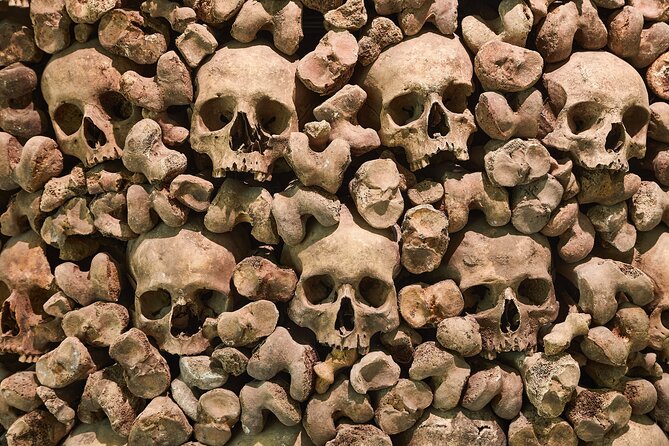
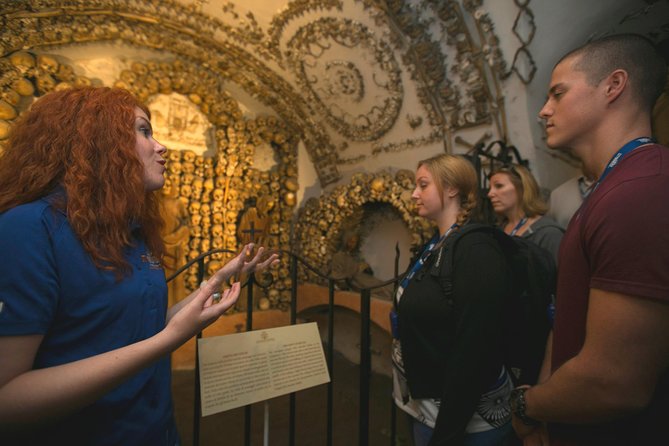
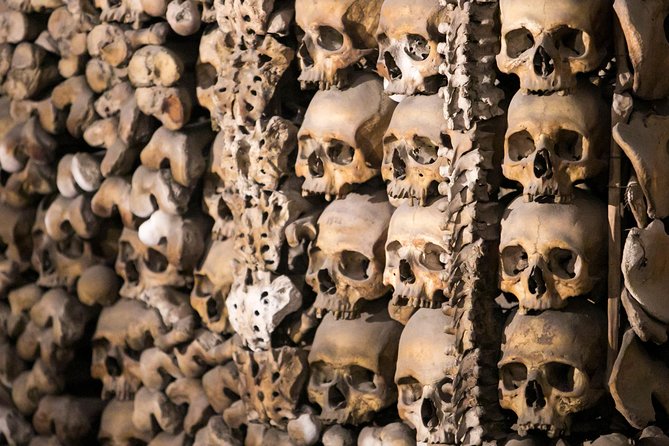
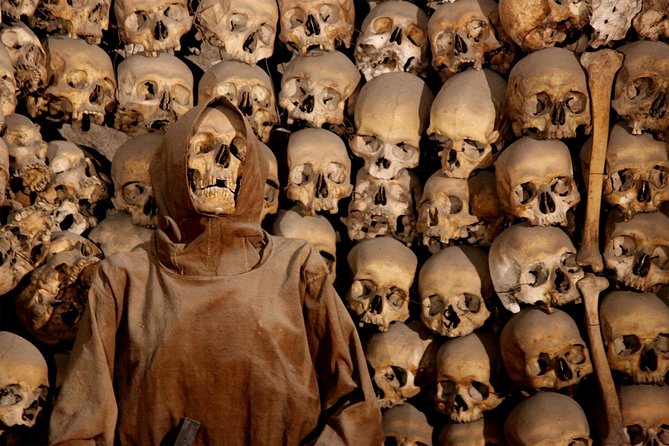
The first stop is the Museum and Crypt of Capuchin Friars, a short walk from Piazza Barberini. The crypt is famous for its use of the bones of nearly 4,000 Capuchin monks. Their remains are arranged in intricate patterns across walls and ceilings, creating the eerie setting often called the Bone Chapel.
The sight is unsettling, but it is not presented as a haunted attraction. The displays reflect a religious idea about mortality and the temporary nature of earthly life. The bones are part of the message. You are meant to confront death, not simply admire an odd decoration.
You receive an audio guide for this part of the visit. That detail matters. The tour guide helps organize the group and provides context around the visit, but the explanations inside the crypt itself come through the venue’s audio system. If you expect your live guide to walk beside you and explain each room, you may find this portion less personal than expected.
You have roughly 45 minutes here. That can be enough for a focused visit, but busy conditions may make the timing feel short. The crypt has a lot to take in, and you may want to pause rather than rush through every room. Keep track of the meeting time, though. The group cannot wait indefinitely.
Photography is not allowed inside the venue. That is sensible for a quiet religious space, but it also means you should prepare to experience this stop without taking pictures. Wear clothing that covers your knees and shoulders, since a dress code applies at some locations on the tour.
Riding out to the Domitilla Catacombs
After the Capuchin Crypt, you board a private air-conditioned coach for the catacombs. This is one of the strongest practical features of the experience. The Domitilla Catacombs are outside the center of Rome, and reaching them independently can take more planning than first-time visitors expect.
The ride also gives your feet a break. The full tour includes walking through underground corridors, moving between sites, and dealing with uneven or sloping areas. Several guides have been praised for explaining Rome during the transfers, so the coach is not simply dead time.
Still, Rome traffic can affect the schedule. The tour is designed to run on time, but traffic and site operations may cause delays. One departure reportedly began later than expected, leaving people waiting before the coach was ready. It is wise not to schedule a timed museum entry or restaurant reservation immediately after the tour.
Still Rome, but a slower afternoon:
- Vatican Museums, Sistine Chapel & St Peter’s Basilica Guided Tour
★ 4.5 · 39,149 reviews - Rome: Colosseum, Palatine Hill and Roman Forum Guided Tour
★ 4.8 · 32,814 reviews - Rome: Guided Tour of Colosseum, Roman Forum & Palatine Hill
★ 4.7 · 27,897 reviews - Rome: Colosseum & Forum with Audio Guide App -Optional Arena
★ 4.2 · 24,770 reviews
Walking through the Domitilla Catacombs
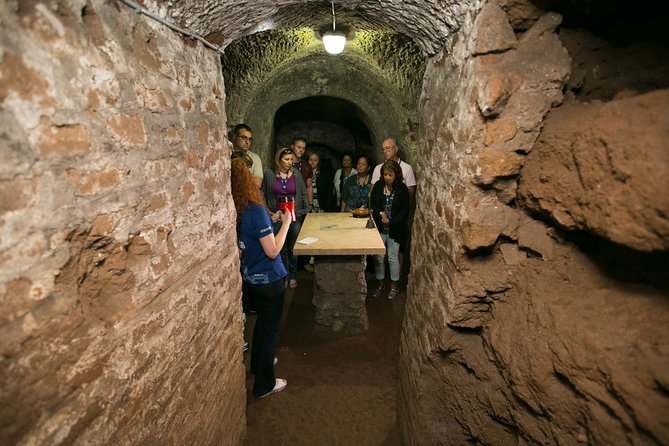
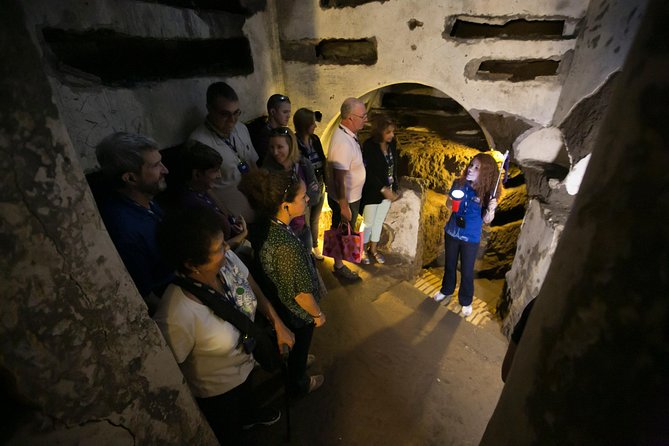
The Domitilla Catacombs are the heart of the experience for many people. This large underground network is linked with early Christian burial and worship in ancient Rome. You descend into corridors cut through soft volcanic rock, then follow the guide through the tunnel system.
The spaces are not grand in the way Rome’s churches are grand. Their power comes from the opposite quality. The passages are tight, the light is limited, and the burial places are built into the rock. You get a sense of how underground areas could serve both as places of burial and as sites for Christian worship during periods of persecution.
Your guide points out frescoes, early Christian symbols, iconography, and burial spaces. This is where a live guide adds real value. Without explanation, many markings and chambers might look like rough walls or indistinct shapes. With context, the catacombs become a record of belief and daily religious practice.
The visit lasts about an hour. That is long enough to see the main areas without turning the tour into an exhausting underground trek, but you should not expect to roam freely. You follow a set route and remain with the group.
The physical demands are modest for most people who can walk comfortably, but the tour requires a moderate fitness level. You may encounter stairs, narrow passages, and an uphill walk connected with the coach. Comfortable shoes are a must. A jacket or sweater is also useful, since underground sites can feel cool even on a warm Roman afternoon.
If you suffer from claustrophobia, skip this tour. The warning is not a minor formality. The corridors are enclosed, and the experience depends on spending time below ground.
San Martino ai Monti, a layered Roman church
The final daytime stop is Basilica dei Santi Silvestro e Martino ai Monti, usually called San Martino ai Monti. It sits in Rome’s historic center but receives less attention than the city’s major basilicas.
The church was founded in the fourth century and sits above older Roman remains. Inside, you see Baroque frescoes and early Christian mosaics. Below the church are ancient structures and the remains of a titulus, an early Christian place of worship associated with a local community.
This stop gives the tour a calmer finish. The Capuchin Crypt is deliberately macabre, and the catacombs are enclosed and rough. San Martino ai Monti shows how Rome repeatedly built new religious spaces over old foundations. You see layers of worship rather than one isolated monument.
The basilica visit lasts about 30 minutes. That is enough to understand the site and admire the major features, but not enough for an unhurried study of every painting or ruin. If the church is the part that interests you most, you may wish you had more time.
There is also an important Sunday limitation. Church visits are not guaranteed on Sundays because of liturgical activities. If San Martino ai Monti is your main reason for booking, choose another day when possible.
The daytime tour ends at the basilica on Viale del Monte Oppio. That location is useful for continuing toward the Colosseum area or other central sights, though the tour does not include hotel pickup or drop-off.
The evening option and what changes
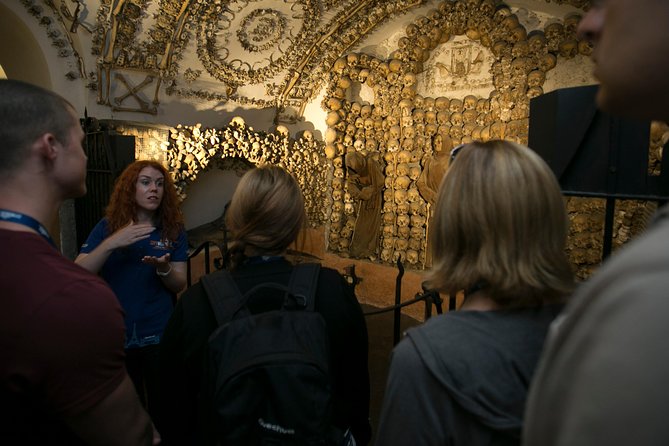
An After Hours option begins at 5 p.m. and lasts about two and a half hours. It is designed for people who prefer to see the crypts and catacombs later in the day, when the daytime crowds may be lighter.
The evening version does not include the San Martino ai Monti church visit. It also ends at Piazza della Repubblica rather than at the basilica. Read the option details carefully before booking, since you are choosing a different route and length, not simply a later departure.
The shorter evening schedule may suit you if you want a compact underground experience or have daytime plans at the Colosseum or Vatican. The daytime version is the better choice if you want the additional church and ancient ruins.
Guides, group size, and the pace
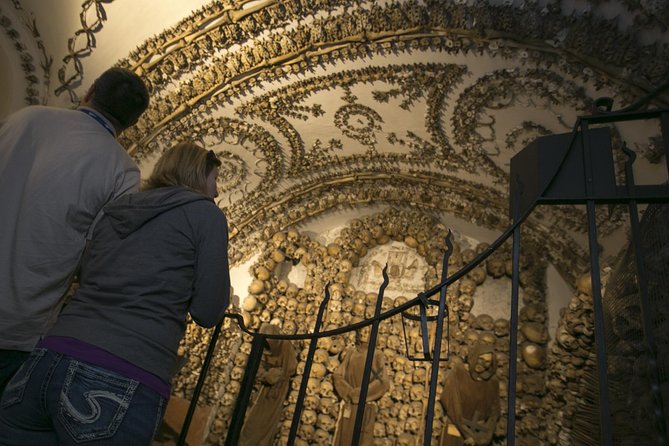
The strongest part of this tour is usually the guiding between and around the major stops. Guides named in the feedback include Alan, Andrea, Ally, Paula, Frederica, Maria, Katarina, Emiliano Berni, and Heather. Specific praise centers on clear explanations, humor, patience with questions, and enthusiasm for Rome.
Andrea and Alan were especially praised for making the history easy to follow and answering questions. Emiliano Berni was noted for his energy, while Heather kept the group engaged. These comments point to an experience that depends heavily on the individual guide assigned to your departure.
The guide situation is different at each site. The Capuchin Crypt uses an audio guide. The Domitilla Catacombs have their own site guide or historian-led explanation, while your main tour guide handles the wider schedule and other portions. At San Martino ai Monti, your tour guide explains the church and underground remains.
A maximum of 25 people is not enormous, but it is still a group. One person found the group too large for detailed explanations inside the crypt and catacombs. Stay near the front if you want to hear every word, especially in echoing underground rooms.
The pace is generally well organized, with the coach providing rest between the walking sections. But this is not a lazy stroll. You need to be ready when the group moves, and you should return to agreed meeting points promptly.
Is $66.51 a fair price?
At around $66.51, the cost is reasonable for a half-day tour that includes three admissions, a guide, and private coach transfers. The transport is particularly useful because the catacombs are not in the center, and getting there independently may involve public transportation, walking, and separate ticket arrangements.
You are also paying for coordination. The company handles the sequence of sites, reservations, and movement between them. That can be worth more than the ticket prices alone when your Rome schedule is short.
The weaker value comes if you dislike group tours or prefer to spend as long as you wish in a museum. The Capuchin Crypt visit is partly self-guided, and the timetable may feel compressed at busy times. If the Catacombs of Rome are your only priority, a tour dedicated to one catacomb site might give you more time and a slower pace.
For most people, the value is strongest when you want variety. You see bone displays, early Christian burial tunnels, and a layered basilica in one organized outing.
Practical advice before you book
Wear comfortable shoes with good support. The tour includes walking to the first stop, underground corridors, stairs or uneven areas, and an uphill section connected with boarding the coach.
Bring a warm layer. The underground sites can feel chilly, and one guide specifically advised dressing warmly.
Cover your knees and shoulders. This is required for entry at some of the religious sites. Also remember that photos are not permitted inside the venues.
Do not book if enclosed spaces make you anxious. The catacombs are narrow by nature, and leaving the route may not be simple once the group is underground.
Give yourself extra time after the tour. Traffic, queues, or site changes can affect the schedule. The operator notes that some visits may be shortened slightly during periods of high demand.
The cancellation rule is strict. You receive a full refund only if you cancel at least 24 hours before the start time. Cancellations or changes within 24 hours are not refunded. If you are booking during the low season and your plans are uncertain, wait until you are confident you can attend.
Who should book this Roman crypts tour?
Book it if you want to see Rome’s unusual underground side without arranging transport yourself. It suits history fans, repeat visitors who have already seen the main monuments, and families with older children or teenagers who enjoy unusual stories and ancient places.
It also works well for anyone who likes a strong guide. The best departures turn the catacombs from a series of dark corridors into a clear story about burial, persecution, and Christian worship.
Think twice if you have limited mobility, dislike enclosed spaces, need a slow pace, or want extensive free time at each stop. Young children may also find the subject matter and underground setting difficult. Sunday departures carry the added risk that the church visit may not take place.
Should you book it?
I would book this tour if the idea of a bone-decorated crypt and early Christian catacombs appeals to you. The three stops complement one another, and the coach transfer makes the outlying Domitilla Catacombs much easier to reach.
Choose the daytime version for the fullest route, including San Martino ai Monti. Pick the After Hours option if you prefer a shorter evening visit and do not need the church. Arrive early, dress warmly and respectfully, keep close to your guide, and allow for a little schedule wiggle room.
For the price, this is a strong way to see a side of Rome that many visitors miss. Just know what you are signing up for: a brisk group tour through dark, narrow, historically important spaces, not a leisurely museum afternoon.
FAQ
How long does the daytime tour last?
The daytime tour lasts approximately three hours and 30 minutes.
Where does the tour begin?
The tour begins at Fontana del Tritone in Piazza Barberini, Rome.
Where does the daytime tour end?
The daytime tour ends at Basilica dei Santi Silvestro e Martino ai Monti on Viale del Monte Oppio.
Is transportation included?
Yes. Transfers between the locations are provided in a private air-conditioned coach. Hotel pickup and drop-off are not included.
Is the tour suitable for someone with claustrophobia?
No. The tour is not suitable for people who suffer from claustrophobia because the catacombs include narrow underground passages.
What happens if I choose the After Hours option?
The After Hours option begins at 5 p.m., lasts about two and a half hours, does not include the San Martino ai Monti church visit, and ends at Piazza della Repubblica.
Recently added around Rome
- Palatine Hill and Roman Forum Tour with Fast-Track Entrance★ 4.2 · 417 reviews
- Tivoli: Villa D’Este & Villa Adriana Pass & App Audioguide★ 4.4 · 364 reviews
- From Rome: Villa D’Este & Villa Adriana Day Trip with Lunch★ 4.4 · 289 reviews
- Vatican Museums & Sistine Chapel Skip-the-Line Guided Tour★ 4.6 · 254 reviews
- Rome: The Three Tenors at St. Paul’s Church Concert Ticket★ 4.7 · 699 reviews
- Tivoli: Villa D’Este Entry Ticket and App Audio Guide★ 4.3 · 191 reviews
- Rome: Capitoline Museums and Centrale Montemartini Tickets★ 4.4 · 328 reviews
- Rome: St. Peter’s Basilica and Papal Tombs Guided Tour★ 4.6 · 477 reviews
Rome Tours, compared.
Vatican Museums & Sistine Chapel Tour with Optional Basilica
Read our review →
Colosseum, Roman Forum & Palatine Guided Tour
Read our review →
Vatican Museums, Sistine Chapel & St Peter’s Basilica Guided Tour
Read our review →
Colosseum, Palatine Hill and Roman Forum Guided Tour
Read our review →
Guided Tour of Colosseum, Roman Forum & Palatine Hill
Read our review →
Colosseum & Forum with Audio Guide App -Optional Arena
Read our review →