
Reviewed · WORKSHOPS
Taormina: Arancino Making Class with Drinks
Come hungry, leave with rice balls. This 1.5-hour cooking class at Porta Messina Restaurant gives you a hands-on introduction to Sicilian arancino, from shaping the rice to adding the filling and crisp coating. I like the airy patio setting, and I like that you eat the food you make with wine and soft drinks rather than watching a chef do all the work. The main drawback is the price: at $94 per person, it is not a cheap snack stop, especially if you are not interested in a full meal of arancini.
The class also earns points for its friendly instructors. Paolo, Margherita, Luca, Francesca, and other chefs are praised for clear teaching, humor, patience, and good English. You can usually expect generous portions, and several participants had enough arancini to take some away. Still, this is a short lesson in a restaurant kitchen, not a broad Sicilian cooking course.
In This Review
- Key points to know before booking
- Meeting at Porta Messina in central Taormina
- Why arancino matters in Sicilian food culture
- Shaping the rice and preparing the filling
- Coating and cooking the arancini
- Eating what you make with wine and soft drinks
- The apron and certificate are useful souvenirs
- Dietary needs and food allergies
- Is $94 a fair price in Taormina?
- Who will enjoy this class most?
- Booking, cancellation, and language details
- Should you book the Taormina arancino class?
- FAQ
- Where does the arancino class meet?
- How long does the class last?
- What languages are spoken during the class?
- What does the class teach?
- Is a meal included?
- Are drinks included?
- Can dietary requirements be accommodated?
- What else do I receive?
- What should I wear?
Key points to know before booking
- You meet beside Porta Messina Arch: The restaurant is easy to find at one of Taormina’s main entrances.
- You make the whole dish: Instruction covers the rice, fillings, shape, outer coating, and final cooking.
- The food becomes your meal: Your arancini are served at the table with water, wine, and soft drinks.
- Dietary needs can be accommodated: Gluten-free, lactose-free, vegetarian, vegan, nut-free, kosher, and other needs have been handled, but you should give clear details in advance.
- The setting is part of the appeal: The class takes place in an airy restaurant patio rather than a plain classroom.
- You receive useful extras: An apron, coffee break, certificate, and sometimes additional treats such as cannoli or limoncello are part of the experience or have been offered during classes.
Meeting at Porta Messina in central Taormina
Your class begins at Pizzeria Porta Messina, beside the Porta Messina Arch. That location matters in Taormina, where finding a particular restaurant can be harder than it looks among narrow lanes, stairways, and busy pedestrian streets. Use the arch as your landmark and allow enough time to arrive without rushing.
You are not being sent out of town or asked to arrange transport. The meeting point is right in the historic center, making this an easy activity to add between sightseeing stops. It also works well near the start or end of a day in Taormina, although you should remember that the class itself includes a substantial amount of food.
The restaurant setting gives the activity a more social feel than a formal culinary school. You sit or work in an airy patio, meet other people, and then settle in for drinks and your meal. Some classes have been small, including sessions with only one other couple or even one participant. Group size can vary, so do not book solely expecting a private lesson.
The instructors teach in Italian and English. English-language instruction has been praised for being easy to follow, with Margherita and Luca receiving particular credit for clear explanations. Paolo is often described as funny and warm, while Francesca is praised for making children feel involved. The chef assigned to your class may differ, but the teaching style appears to be a major part of the experience.
A few more Taormina bookings to compare
- Mount Etna: Summit Crater Trek with Cable Car
★ 4.8 · 1,875 reviews - Taormina: Ancient Theater Skip-the-Line Ticket & Audio Guide
★ 4.5 · 1,701 reviews - Seaview Cooking Class & Taormina local flavors with Chef Mimmo
★ 5.0 · 665 reviews
Why arancino matters in Sicilian food culture
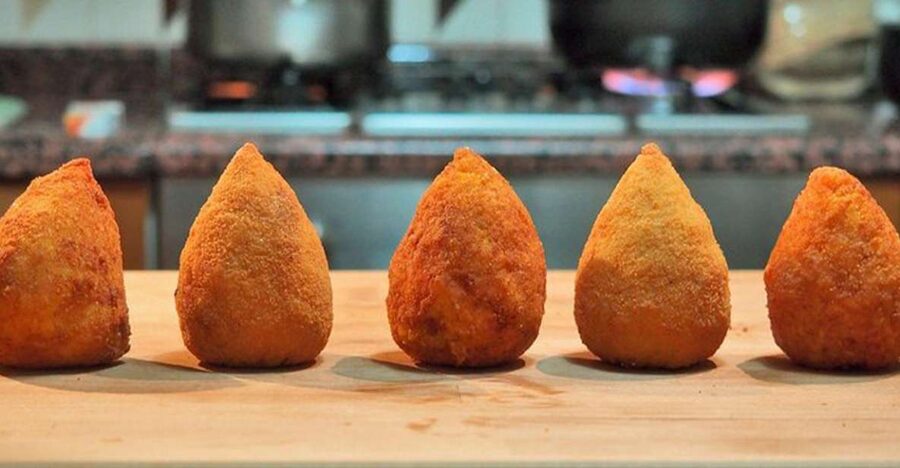
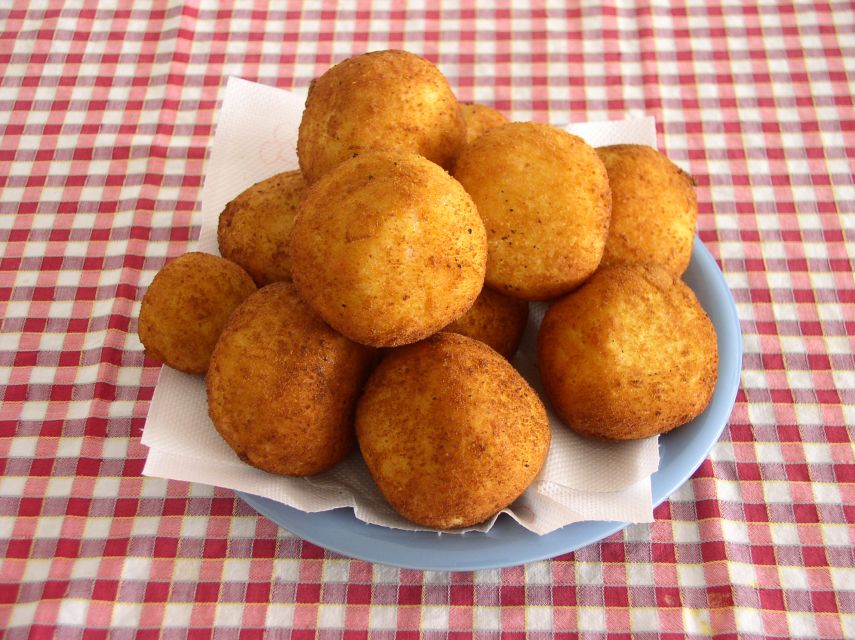
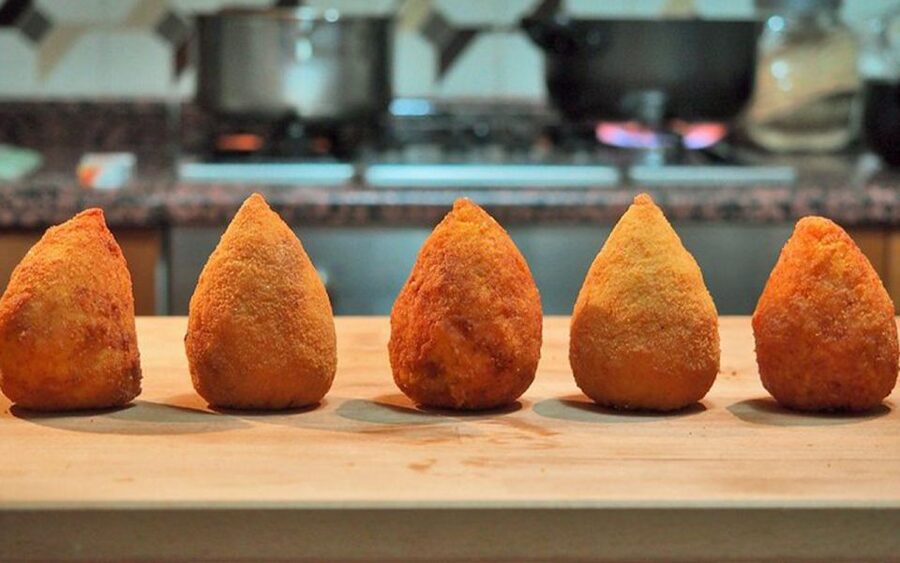
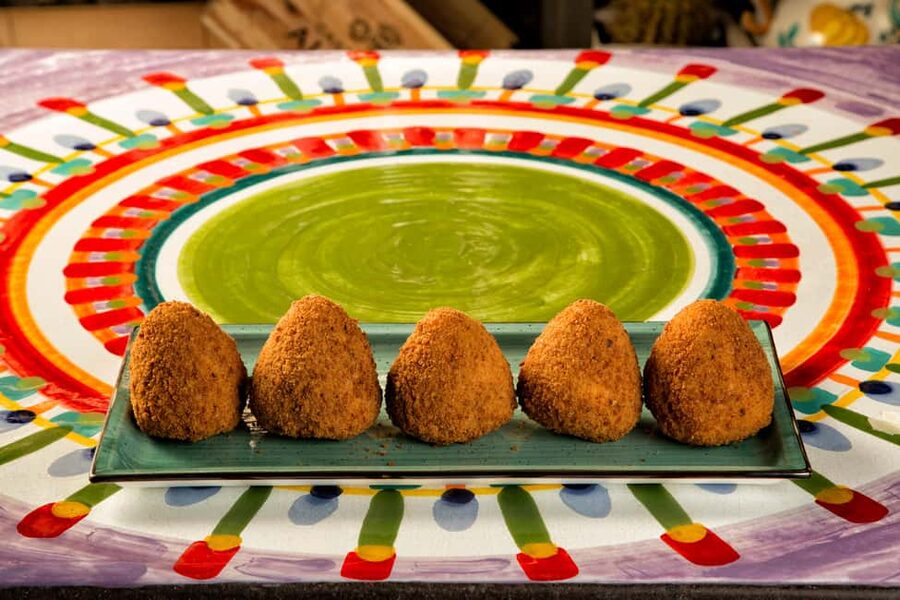
Arancino is more than a fried rice ball. It is one of Sicily’s best-known street foods, and it shows how much flavor can be packed into a simple, practical dish. Cooked rice forms the base, a savory filling goes inside, and a crisp coating protects the soft center during frying.
You may also hear the famous local argument about the name. In much of eastern Sicily, including the Taormina area, the singular form is commonly arancino. In other parts of Sicily, people say arancina, often for a round version. The distinction is serious enough to become part of the fun, especially if your instructor explains the local tradition.
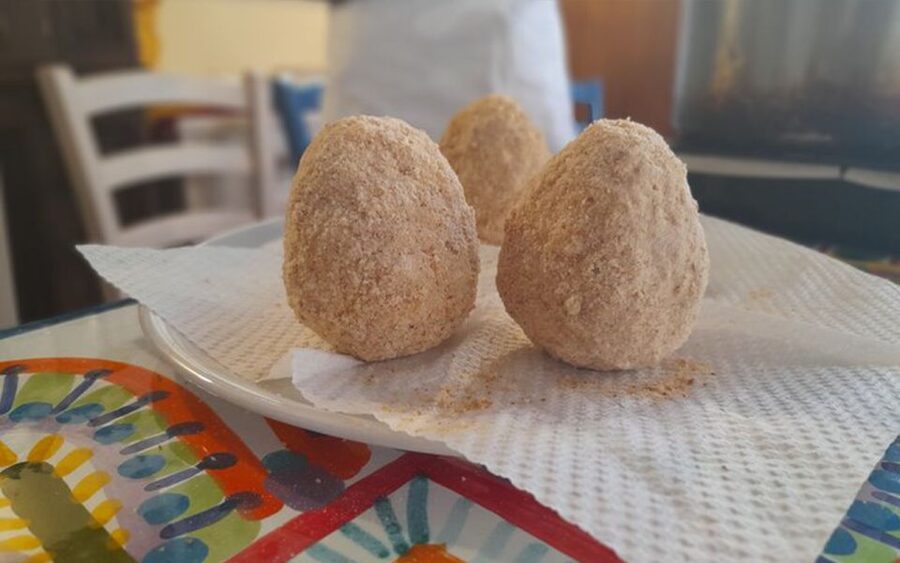
This class gives you a small but useful view of Sicilian cooking. You learn that the shape is not decoration. It helps hold the filling inside and gives the finished food its familiar form. The rice, filling, coating, and cooking temperature all need to work together. A rushed or poorly sealed arancino can fall apart, while a good one has a crisp outside and a soft, flavorful center.
The class is also a good choice if you want to understand food you have seen in bakeries, bars, and street-food counters around Sicily. Instead of simply ordering one, you learn how several parts come together.
Shaping the rice and preparing the filling
The class starts with the basic techniques. You learn how to handle the rice and shape it so that it can hold a filling. This is the most hands-on part, and it is where the apron earns its place.
The instructors show you how to form the rice, make space for the filling, and close the ball or cone without leaving weak spots. The shape can take practice. One participant who attended alone made more than 10 arancini, while others made five or more each. That tells you two things: you will likely get plenty of practice, and you may produce far more food than you can eat in one sitting.
Filling choices can vary. The activity describes instruction in preparing the filling, and individual sessions have allowed participants to choose among different options. Do not assume the same menu at every class, but you can expect the filling to be part of the practical lesson rather than a pre-made mystery center.
Some people come with cooking experience, while others describe themselves as non-cooks. The class is designed to work for both. The teaching is broken into manageable stages, and the chefs demonstrate before you try the technique yourself.
This is not a speed contest. If your first arancino looks a little lopsided, that is part of the lesson. The useful skill is learning how to seal the rice and keep the filling where it belongs.
Coating and cooking the arancini
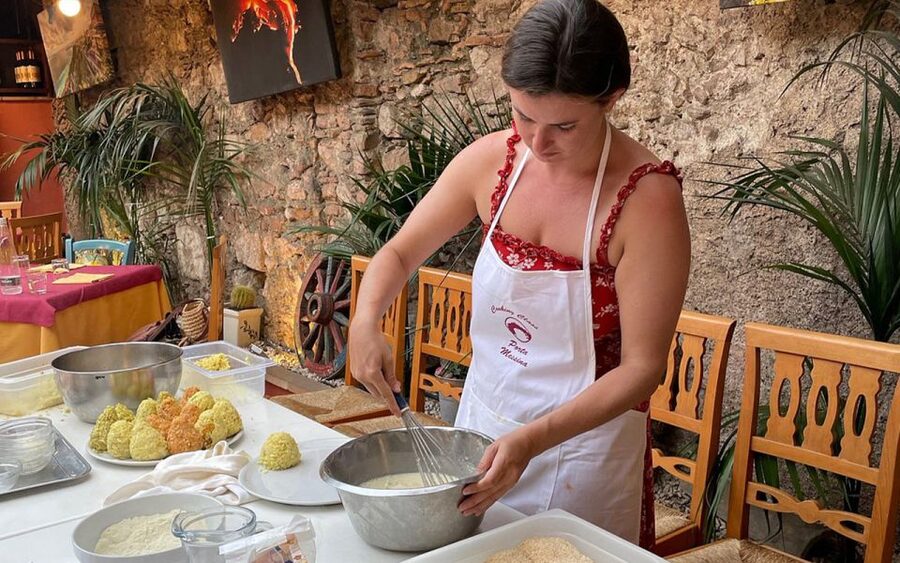
After shaping and filling, you prepare the outside coating. This creates the crisp shell that separates an arancino from a soft rice croquette. You then finish the cooking process and see how the prepared pieces become the dish you will eat.
The final cooking stage is valuable because it connects the preparation work to the result. You can see why the coating matters and why a properly formed piece holds together. One participant found the arancini slightly dry, with the practical observation that adding more water to the mixture could have helped. That is a useful reminder that cooking results may depend on small adjustments, not just on following a fixed sequence.
The class is not a technical pastry or restaurant training session. You are learning a traditional home-style preparation in a restaurant environment. If you already make rice croquettes regularly, you may find the lesson familiar in places. Still, the Sicilian approach to the rice and coating can differ from family recipes elsewhere.
A particularly useful touch is the recipe follow-up reported by one participant, who received the recipe by email afterward. That is not listed as a formal inclusion, so you should not count on it in every case. If you want to repeat the dish at home, take notes during the class and ask the instructor about the recipe before you leave.
Still Taormina, but a slower afternoon:
- Taormina: Opera Performance in the Nazarena Theater
★ 4.7 · 651 reviews - Taormina: Boat Tour with Aperitif on Isola Bella
★ 4.2 · 647 reviews - From Taormina: Savoca and Forza d’Agrò The Godfather Tour
★ 4.7 · 616 reviews - COOKING CLASS in Taormina at Chef Massimo HOUSE!!
★ 5.0 · 543 reviews
Eating what you make with wine and soft drinks
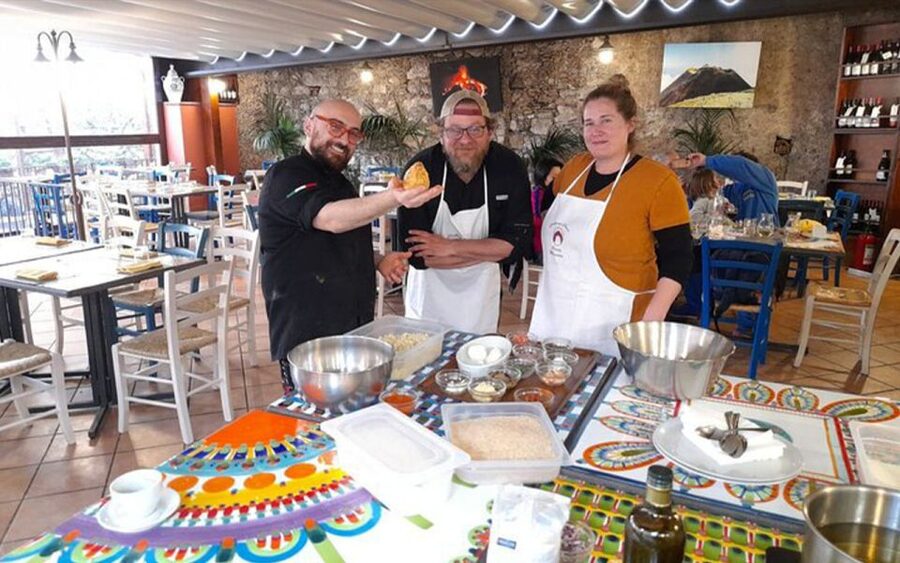
The strongest value in this experience is that the cooking becomes a meal. You do not make one sample arancino and then pay extra for lunch. The food you prepare is served at the table, with water, wine, and soft drinks included.
Portions sound generous. Some people had enough left over for a small family, and others were able to take extra arancini away. The exact amount depends on the class and how many you make, but you should plan for a filling meal rather than a light tasting.
Wine is part of the social side of the class. Red and white wine have been served, and the wine has received warm praise. Extra alcoholic drinks are not included, so anything beyond the listed beverages costs more. If you do not drink alcohol, soft drinks and water are included.
Some sessions have included pleasant additions such as cannoli and limoncello. These extras have been described as surprises, not as the core promise of the activity. The listed inclusions are the coffee break, apron, water, wine, soft drinks, your arancini meal, and certificate.
The relaxed meal can also extend the experience beyond the official 1.5 hours. People have stayed afterward for another drink and conversation. That is not a guaranteed part of the schedule, but the restaurant setting makes it possible when time and table space allow.
The apron and certificate are useful souvenirs
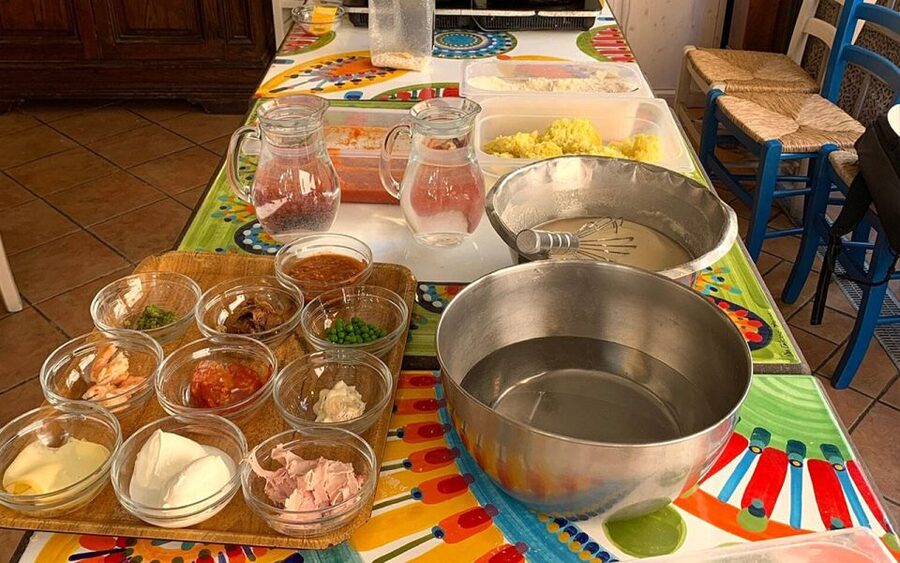
The apron is a practical inclusion. You wear it during the class and can keep it afterward, giving you a simple reminder of the activity that is more useful than a paper ticket.
At the end, you receive a certificate. It is a lighthearted souvenir rather than a professional cooking qualification, but it adds a pleasant finish. If you are traveling with children, the certificate can make the activity feel like a real achievement. One chef was specifically praised for working well with children aged five and six, and another parent said the class helped make the cooking approachable for the whole family.
The certificate also suits couples and groups who want a shared memory rather than another museum visit. You leave with something tangible, plus the ability to try the recipe again.
Dietary needs and food allergies
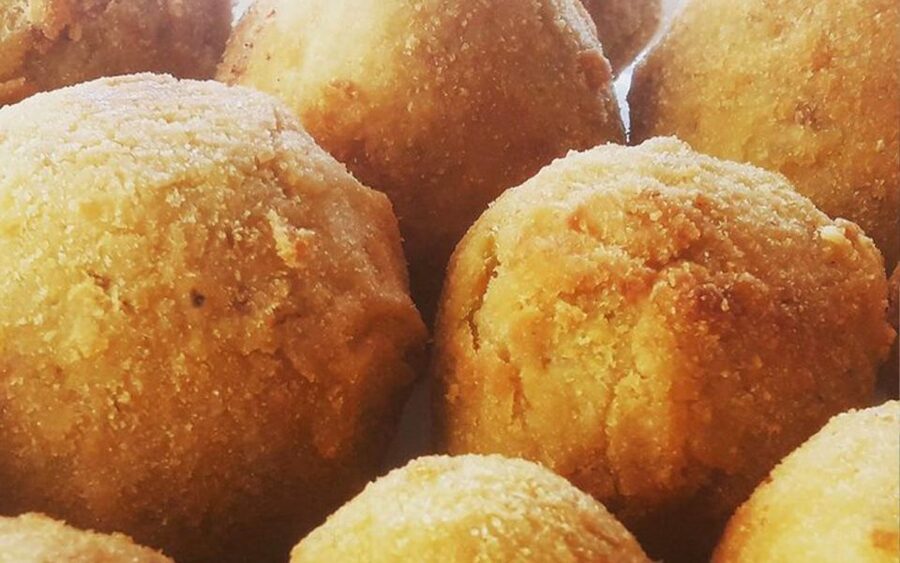
The activity states that it can accommodate gluten-free, lactose-intolerant, vegetarian, vegan, and other dietary requirements. Specific sessions have also handled nut allergies, coeliac needs, no-cheese requests, and kosher food separation.
That record is encouraging, but you should still communicate your needs clearly before the class. Food allergies require more than a simple preference. Tell the provider exactly what must be avoided and ask how ingredients and preparation areas will be separated.
The class takes place in a restaurant, so cross-contact may be a concern for highly sensitive allergies. The staff have taken extra precautions for some participants, but no cooking activity should be treated as automatically risk-free. If your requirements are strict, confirm the arrangements before booking and again when you arrive.
Is $94 a fair price in Taormina?
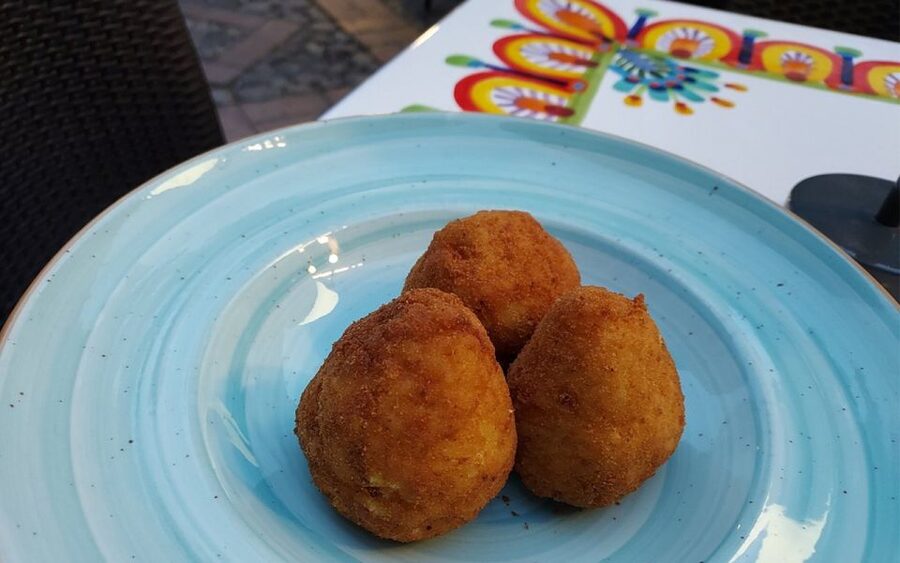
At $94 per person, this is a premium food activity. You are paying more than the cost of buying an arancino from a bakery or street-food counter. The question is whether you want a snack or a shared experience.
For the price, you receive instruction, hands-on preparation, an apron, a full meal made from your own work, wine and soft drinks, a coffee break, and a certificate. Generous portions may also leave you with food to take away. When you add the restaurant setting and the social time, the package can offer fair value for a visitor who wants an organized activity with lunch included.
I would be less likely to recommend it to someone who simply wants to taste arancino. You can do that for much less money. I would be more comfortable recommending it to a couple, family, or food-focused group that values a guided activity and does not mind spending part of the day at the table.
The class is only 1.5 hours, so the price is not justified by length alone. Its value comes from the combination of participation, food, drinks, and instruction. The generous portions help, but you should not book this expecting a full-day culinary program or a wide survey of Sicilian cuisine.
Who will enjoy this class most?
I would choose this class for:
- Couples looking for a relaxed activity in central Taormina
- Families with children who enjoy making food with their hands
- First-time cooks who want clear, friendly instruction
- People interested in Sicilian street food and local food customs
- Visitors with enough appetite for a rice-based meal
- Anyone who prefers social activities to another sightseeing tour
It is especially good for people who like meeting others over food. Several classes brought together people from different countries, and the shared cooking format helped conversations begin naturally.
You may want to skip it if you dislike group activities, have little interest in fried rice dishes, or want advanced instruction in several Sicilian recipes. The focus is narrow by design: you learn arancino from start to finish.
Wear comfortable clothes and shoes. You will be handling food and working through several preparation stages, so this is not the moment for your least washable outfit or uncomfortable footwear.
Booking, cancellation, and language details
The activity is offered in Italian and English, and the meeting point is beside Porta Messina Arch at Pizzeria Porta Messina. The advertised duration is 1.5 hours, with starting times dependent on availability.
You can cancel up to 24 hours before the activity for a full refund. A reserve-now, pay-later option is also available, which helps if your Taormina plans are still shifting.
The class includes skip-the-ticket-line entry, although this is a cooking activity rather than a major monument visit. Extra alcoholic drinks are not included. Dietary requirements should be raised before the class, even though several kinds of special arrangements are supported.
Should you book the Taormina arancino class?
Book it if you want to make a famous Sicilian food, eat a generous meal, and spend time with a friendly chef in a central Taormina restaurant. The strongest reasons are the hands-on format, the patient instructors, the included drinks, and the chance to carry extra arancini away.
I would hesitate only because of the $94 cost and the short 1.5-hour schedule. If your budget is tight, buy an arancino and spend the money elsewhere. If you want a memorable food activity, particularly as a couple or family, this class offers more than a quick bite and has a strong record of warm, personal teaching.
FAQ
Where does the arancino class meet?
It meets at Pizzeria Porta Messina, beside the Porta Messina Arch in Taormina.
How long does the class last?
The scheduled duration is 1.5 hours.
What languages are spoken during the class?
Instruction is available in Italian and English.
What does the class teach?
You learn how to shape the rice, prepare the filling, create the crispy coating, and complete the final cooking of Sicilian arancini.
Is a meal included?
Yes. The meal consists of the arancini you make during the class.
Are drinks included?
Water, wine, and soft drinks are included. Extra alcoholic drinks are not included.
Can dietary requirements be accommodated?
The activity is available for gluten-free, lactose-intolerant, vegetarian, vegan, and other food requirements. Nut allergies, coeliac needs, no-cheese requests, and kosher food separation have also been accommodated. You should communicate your needs clearly before the class.
What else do I receive?
The inclusions are a coffee break, apron, meal, drinks, and a certificate. Some classes have also included treats such as cannoli and limoncello, but these should not be assumed as guaranteed extras.
What should I wear?
Comfortable clothes and shoes are recommended.
Recently added around Taormina
- Taormina: White Lotus Tour★ 4.8 · 481 reviews
- Taormina: Sunset Boat Tour with Dolphin Watching & Aperitif★ 5.0 · 454 reviews
- Naxos: Taormina Boat Tour with Snorkeling and Prosecco★ 4.9 · 185 reviews
- Taormina: Boat Tour with Aperitif on Isola Bella★ 4.2 · 647 reviews
- Taormina: Sicilian Cooking Class & Market Tour★ 4.9 · 212 reviews
- Giardini Naxos: Semi-Submarine Tour to Isola Bella★ 4.3 · 280 reviews
- Taormina: Cannolo Cooking Class with Completion Certificate★ 4.9 · 212 reviews
- Sunset tour in search of dolphins with aperitif★ 4.9 · 449 reviews
Workshops, compared.

3 in 1 Cooking Class near Navona: Fettuccine, Ravioli & Tiramisu
Read our review →
Florence Pizza or Pasta Class with Gelato Making at a Tuscan Farm
Read our review →
Pasta & Tiramisu Cooking Class with Unlimited Wine
Read our review →
Pizza-Making Workshop with Drink and Appetizer
Read our review →
Pasta & Tiramisu Class with Fine Wine by the Vatican
Read our review →
Cooking Class and Lunch at a Tuscan Farmhouse with Local Market Tour from Florence
Read our review →Browse the lists this tour appears in