
Reviewed · VATICAN & SISTINE CHAPEL TOURS
Rome: Vatican Night Tour
Rome after sunset tells a different story. This walking tour links the Spanish Steps, Castel Sant’Angelo, and Vatican City in one evening, with a local guide filling the gaps between famous monuments. I like the route’s variety, and I like the chance to finish in St. Peter’s Square when the daytime crowds have thinned.
The low advertised price makes this an easy add-on, especially if you want a broad introduction to central Rome. The tradeoff is simple: it is an outdoor walking tour, not a Vatican Museums visit, and the pace may feel brisk for anyone who dislikes long walks.
In This Review
- Key points to know before you book
- A Rome introduction that ends beneath St. Peter’s dome
- Starting at the Spanish Steps after dark
- Via dei Condotti and Rome’s polished side
- Castel Sant’Angelo beside the river
- The Mausoleum of Augustus and a quieter ancient site
- The Ara Pacis and Augustus’s message of peace
- Reaching Vatican City without entering the museums
- St. Peter’s Square is a fitting finish
- The guides make the biggest difference
- What the $4.59 price really means
- Walking, weather, and group size
- Who should book this evening walk?
- Should you book the Vatican Night Tour?
- FAQ
- Where does the Vatican Night Tour start?
- Where does the tour end?
- Does the tour enter the Vatican Museums?
- How long does the tour last?
- Is the tour conducted in English?
- Is tipping included in the price?
- Can I cancel for a refund?
Key points to know before you book
- The route covers about 1.5 to 2 hours on foot, beginning at the Spanish Steps and ending at St. Peter’s Square.
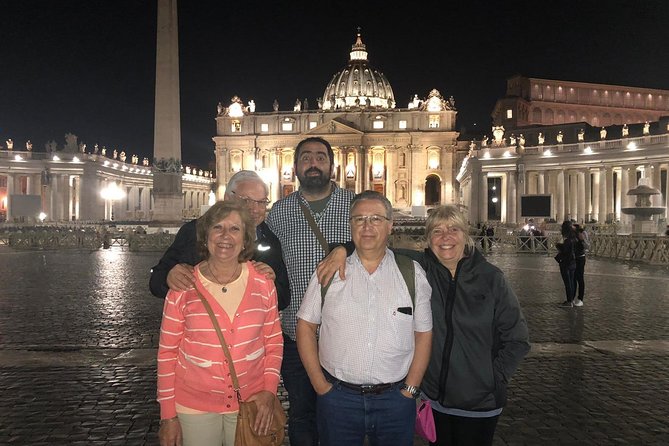
- The Vatican Museums are not included. At night, you see Vatican City and St. Peter’s Square from outside.
- It uses a pay-what-you-wish format, so the listed $4.59 price is only the booking cost, not necessarily the full amount you will choose to pay.
- The evening light is the main attraction, especially around Castel Sant’Angelo, the river, and St. Peter’s Basilica.
- Guides are the heart of the experience. Names praised in feedback include Yusef, Yusuf, Yousoff, Ainara, Caitlin, Maria, Mary, and Anna.
- The group can reach 30 people, so identifying your guide at Piazza di Spagna matters.
A Rome introduction that ends beneath St. Peter’s dome
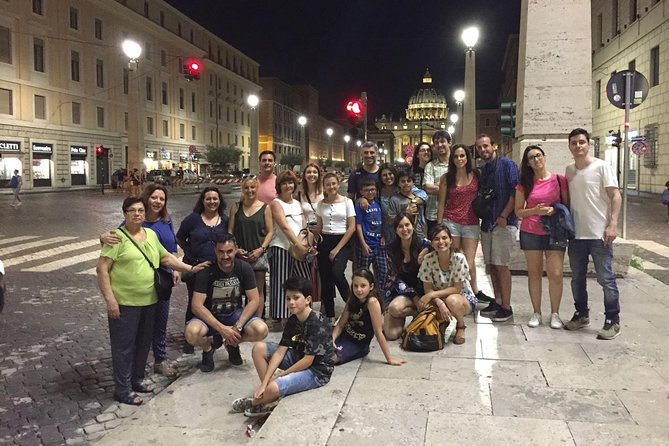
This is best understood as an evening orientation walk, not a museum tour. You move through several central districts while your guide explains monuments, architecture, politics, religion, and the long story of Rome.
The route is especially useful during a hot season. Several people found the evening temperature much easier than daytime sightseeing, and Rome’s illuminated buildings give familiar sights a fresh look. You get photographs, context, and a useful sense of how the Spanish Steps, riverfront, ancient monuments, and Vatican fit together.
The tour begins at 7:15 pm on top of the Spanish Steps, beside the obelisk. It is offered in English and includes a local guide. Food, drinks, and tips are not included.
The exact length is listed as roughly 90 minutes to two hours. The planned stops add up to about 105 minutes, so allow two hours rather than trying to squeeze another fixed appointment immediately afterward.
More Vatican and Sistine Chapel tickets:
- Vatican: Museums & Sistine Chapel Entrance Ticket
★ 4.5 · 144,003 reviews - Vatican Museums & Sistine Chapel Tour with Optional Basilica
★ 4.3 · 67,413 reviews - Vatican Museums, Sistine Chapel & St Peter’s Basilica Guided Tour
★ 4.5 · 39,149 reviews
Starting at the Spanish Steps after dark
Meeting at the Spanish Steps gives the evening a strong beginning. You start beside the obelisk at the top, with the broad staircase dropping toward Piazza di Spagna.
Your guide uses this first stop to set the scene for Rome. The Spanish Steps are one of the city’s most recognizable meeting places, and the elevation gives you an immediate view down toward the square and surrounding streets. At night, the stonework and nearby buildings take on a softer appearance than they have under the sharp Roman sun.
The practical issue is finding the guide. One person lost roughly 30 minutes because the guide was difficult to identify. Since the group may include up to 30 people, look for the operator’s instructions before leaving your hotel and arrive early enough to scan the area. The tour provider has also noted that its chat function is not instant. If you cannot locate the guide, calling or sending a WhatsApp message is more useful than waiting for a chat reply.
Via dei Condotti and Rome’s polished side
From the Spanish Steps, the walk passes along Via dei Condotti, Rome’s famous shopping street. This is the glamorous side of the city, lined with major international brands and grand façades.
The stop is brief, about 15 minutes, but it adds contrast to the route. Rome is not only churches, ruins, and imperial monuments. It is also a modern capital with luxury shops, busy storefronts, and streets designed for lingering.
Do not expect a shopping break. The value here is the transition from the Spanish Steps to the older monuments farther along the route. Your guide may point out architectural details and explain how this part of Rome functions today. If shopping is your main interest, you will need separate time during daylight hours.
Castel Sant’Angelo beside the river
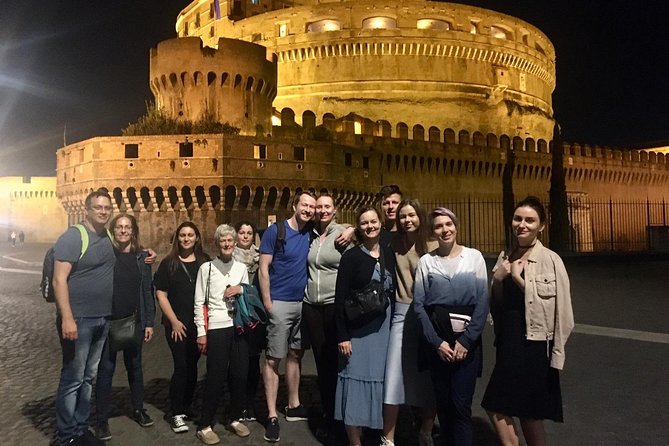
Castel Sant’Angelo is one of the evening’s strongest stops. The cylindrical fortress began as the mausoleum of Emperor Hadrian and later served as a papal fortress and refuge. The supplied tour information specifically promises tales about the castle, so this is a place where storytelling can make the building come alive.
At night, Castel Sant’Angelo has a dramatic presence. Its heavy shape, river setting, and connection to the Vatican make it more than another photo stop. It helps explain the physical link between Rome’s ancient rulers, medieval power, and the papacy.
You do not enter the castle on this tour. The stop is for viewing and explanation from the outside. That keeps the route moving, but it also means you should not book this experience if your main goal is to explore the castle’s interior rooms or ramparts.
A few more Rome bookings to compare
- Colosseum, Roman Forum & Palatine Guided Tour
★ 4.7 · 63,148 reviews - Rome: Colosseum, Palatine Hill and Roman Forum Guided Tour
★ 4.8 · 32,814 reviews - Rome: Guided Tour of Colosseum, Roman Forum & Palatine Hill
★ 4.7 · 27,897 reviews - Rome: Colosseum & Forum with Audio Guide App -Optional Arena
★ 4.2 · 24,770 reviews
The Mausoleum of Augustus and a quieter ancient site
The route continues to the Mausoleum of Augustus, the burial monument of Augustus, Rome’s first emperor. This stop brings an older and less immediately familiar piece of Rome into the evening.
The mausoleum is a useful reminder that Rome’s famous sights are not limited to the Colosseum and Pantheon. Augustus shaped the Roman Empire, and his enormous tomb reflects the scale and confidence of his rule. The guide’s explanation is important here because the site may not be as self-explanatory as the Spanish Steps or St. Peter’s Basilica.
The visit is again exterior and brief, around 15 minutes. The tour gives you context and a chance to see the monument, but it does not provide a full archaeological visit. If you want extensive time at each site, a private walk or a focused museum visit would suit you better.
The Ara Pacis and Augustus’s message of peace
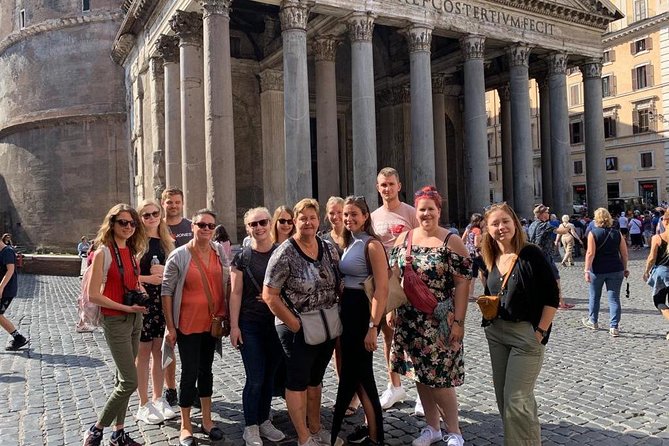
Next comes the Museo dell’Ara Pacis, home to the Ara Pacis, or Altar of Peace. The altar is more than 2,000 years old and linked to the age of Augustus.
This is one of the more thoughtful stops because it connects Roman art and political messaging. The monument presents peace as a public achievement, while also reminding you that Roman emperors used architecture and sculpture to shape how people viewed their rule.
The museum itself is not part of the tour. You pass the building and hear about the altar from outside. That distinction matters. You will gain a useful introduction, but you will not examine the reliefs at close range or spend time inside the museum.
I like this stop because it breaks up the route with a monument that many first-time visitors might otherwise miss. It also gives the guide a chance to move beyond simple dates and names into the ideas behind Roman public buildings.
Reaching Vatican City without entering the museums
The final section leads toward Vatican City. This is where the tour’s title can create confusion, so keep expectations clear: you do not enter the Vatican Museums.
The museums are closed at night, and the experience ends outdoors in Vatican City. You see the surrounding area and continue into St. Peter’s Square, but there is no museum ticket, gallery visit, or guided tour inside the Vatican Museums.
That limitation is not necessarily a flaw. If you have already toured the museums, an outdoor evening visit can be a pleasant change of pace. If you have not visited them, this walk can help you understand where they are and how they relate to St. Peter’s Basilica, but you will still need a separate daytime booking.
The route’s strength is the transition into the Vatican after seeing Rome’s secular, imperial, and commercial sides. The city’s history feels less like a collection of separate attractions and more like a long conversation between emperors, popes, artists, merchants, and modern residents.
St. Peter’s Square is a fitting finish
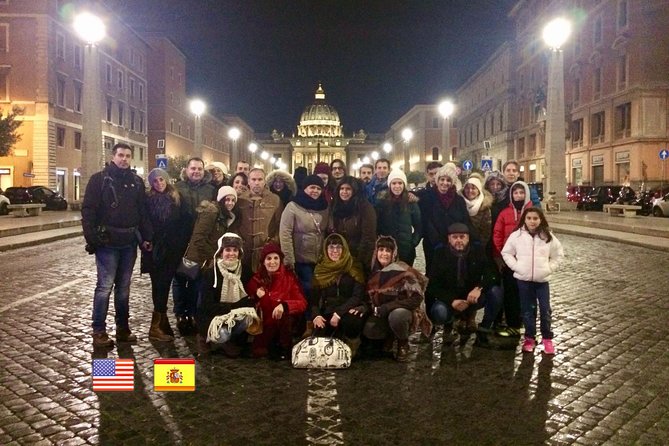
The tour ends inside St. Peter’s Square. This is the emotional high point of the walk, especially when the colonnades and façade are illuminated.
The square is designed for scale. Bernini’s sweeping colonnade embraces the space, while the obelisk and basilica anchor the center and far end. At night, you have a better chance of appreciating the proportions without the same daytime intensity, although the square can still be active.
You do not enter St. Peter’s Basilica on this experience. The final stop is the square itself, with the basilica viewed from outside.
This ending also works well for dinner plans or a later walk through the Vatican area. The tour provider does not include food or drinks, so plan your meal separately. One guide, Youssef, was praised for giving restaurant suggestions, and another helped a participant find a taxi after leaving early. Those small touches can be useful, but they depend on the individual guide rather than being a guaranteed part of the tour.
The guides make the biggest difference
The strongest praise centers on the guides. Yusef, also spelled Yusuf, Yousoff, or Youssef in the supplied comments, received repeated approval for clear explanations, patience, friendliness, and useful local suggestions. Several people found his storytelling engaging and appreciated that he answered questions instead of simply reciting facts.
Caitlin was praised for a carefully planned route and strong preparation. Ainara received particularly warm comments for explaining architecture and cultural details in depth without rushing. Maria was described as enjoyable and informative, while Mary and Anna were also praised for making the walk fun and interesting.
This range of comments points to an important reality: your guide shapes the evening. The route is fixed, but the tone can vary. Some people enjoyed a relaxed, conversational experience. One person felt the guide moved too quickly, so do not assume every departure will have the same pace or amount of detail.
The best approach is to ask questions early. If you want more architecture, more Roman political history, or more Vatican context, tell your guide. This is a group tour, but several guides appear willing to respond to individual interests.
What the $4.59 price really means
At $4.59 per person, the listed price is unusually low for a guided walk through central Rome. It can be excellent value if you treat the payment as a starting point and then tip according to the quality of the experience.
The tour is built around a pay-what-you-wish concept. Tips are not included, and they are an expected part of this format. The final cost is therefore in your hands, but you should budget for a tip rather than assuming the booking price covers the guide’s work.
That model has two benefits. You can join without committing to the cost of a traditional paid tour, and the guide has a reason to make the evening useful and engaging. The drawback is that the low headline price can make the experience sound more complete than it is. You are paying for a guided outdoor walk, not admission to the Vatican Museums, Castel Sant’Angelo, the Ara Pacis Museum, or St. Peter’s Basilica.
For a first evening in Rome, I consider the value good if you want orientation, stories, and night views. It is less useful if you already know the route well or want detailed interior visits.
Walking, weather, and group size
You need to be comfortable walking for up to two hours. The route links several sites across central Rome, and the experience is not designed as a short stroll between two nearby attractions.
Wear comfortable shoes and dress for the forecast. The tour operates in all weather conditions, so rain or heat can affect your enjoyment. Evening departures are helpful during a heatwave, but you should still carry water and prepare for changing conditions.
The maximum group size is 30. That is not enormous for a city walk, but it can make street crossings, hearing the guide, and identifying the meeting point more difficult. Arriving early is the simplest fix.
The tour is near public transportation, service animals are allowed, and most people can participate. The supplied information does not promise step-free access or a route designed for limited mobility, so contact the provider before booking if that is important for you.
Who should book this evening walk?
I would choose this tour if you want a quick introduction to Rome’s central sights and prefer seeing the city after sunset. It suits first-time visitors, families who can manage a long walk, and anyone looking for a lower-cost evening activity.
It is also a smart choice after a hot day of sightseeing. The cooler timing and illuminated monuments can make the walk feel easier and more atmospheric than a midday route.
You should look elsewhere if your priority is entering the Vatican Museums, touring St. Peter’s Basilica, or spending a long time at each monument. You should also think twice if you dislike group walks, need a slow pace, or want guaranteed consistency between guides.
Book at least a little ahead if possible. This experience is often reserved about 44 days before the date, which suggests popular evening departures can fill early. You receive confirmation at booking, and free cancellation is available up to 24 hours before the start time. Cancellations within 24 hours are not refunded, and the tour may be canceled if its minimum group size is not reached.
Should you book the Vatican Night Tour?
Book it if you want Rome’s major outdoor sights tied together by a guide, with a memorable finish at St. Peter’s Square. The route offers more than a Vatican photo stop: you see the Spanish Steps, Via dei Condotti, Castel Sant’Angelo, Augustus’s mausoleum, and the Ara Pacis along the way.
Go in knowing exactly what you are buying. This is a pay-what-you-wish walking tour, not a Vatican Museums admission ticket. Arrive early at the Spanish Steps, confirm how to identify the guide, wear good shoes, and leave room in your budget for a tip.
With those expectations, it is a practical and affordable way to see Rome lit up at night, especially when you are lucky enough to have a guide such as Yusef, Caitlin, Ainara, Maria, Mary, or Anna leading the walk.
FAQ
Where does the Vatican Night Tour start?
It starts at Piazza di Spagna, on top of the Spanish Steps next to the obelisk, at 7:15 pm.
Where does the tour end?
The walk ends in St. Peter’s Square at Piazza San Pietro, inside Vatican City.
Does the tour enter the Vatican Museums?
No. The Vatican Museums are closed at night, and this experience does not include entry. The tour visits Vatican City and St. Peter’s Square from outside.
How long does the tour last?
The tour lasts approximately 1 hour 30 minutes to 2 hours. The planned stops are generally about 15 minutes each.
Is the tour conducted in English?
Yes. The experience is offered in English.
Is tipping included in the price?
No. Tips are not included. The tour follows a pay-what-you-wish format, so you decide what to pay at the end.
Can I cancel for a refund?
Yes, you can cancel up to 24 hours before the start time for a full refund. Cancellations or changes made less than 24 hours before the start time are not refunded or accepted.
Recently added around Rome
- Rome: Pantheon, Trevi Fountain & Roman Squares Guided Tour★ 4.7 · 386 reviews
- Vatican: St. Peter’s Basilica with Audio Guide and Options★ 3.4 · 269 reviews
- Vatican: Pope Francis Tomb and Papal Basilicas Tour★ 4.7 · 340 reviews
- Rome: Vatican Museums Skip-the-line Entry Ticket and Tour★ 4.2 · 400 reviews
- Rome: Vatican Museums & Sistine Chapel Ticket + Tour Options★ 4.7 · 344 reviews
- Vatican: Museums, Raphael & Sistine Chapel + Basilica Option★ 4.7 · 350 reviews
- Vatican Museums & Sistine Chapel Guided Tour★ 4.3 · 832 reviews
- Vatican Museums & Sistine Chapel Entry Ticket★ 4.4 · 245 reviews
Vatican & Sistine Chapel Tours, compared.
Vatican Museums & Sistine Chapel Tour with Optional Basilica
Read our review →
Vatican Museums, Sistine Chapel & St Peter’s Basilica Guided Tour
Read our review →
Vatican Museums, Sistine Chapel & Basilica Tour
Read our review →
Vatican Museums & Sistine Chapel Skip-the-Line Entry Ticket
Read our review →Vatican Museums, Sistine Chapel & Basilica Tour
Read our review →
Skip-the-Line Group Tour of the Vatican, Sistine Chapel & St. Peter’s Basilica
Read our review →
Vatican Museums & Sistine Chapel Guided Tour
Read our review →Browse the lists this tour appears in