
Reviewed · VATICAN & SISTINE CHAPEL TOURS
Rome: Vatican Museums Skip-the-Line Ticket
Rome keeps its biggest treasures indoors. This self-guided Vatican Museums visit gives you skip-the-line entry and the freedom to set your own pace, which I like far more than being hurried from room to room. I also like the choice of an audio guide, especially in the Raphael Rooms and Gallery of Maps, where a little context helps the art speak clearly. The main drawback is that skip-the-line does not always mean walk straight in, particularly during peak season.
The Vatican Museums are huge, impressive, and tiring in the best possible way. You can see Michelangelo’s Sistine Chapel ceiling, Raphael’s frescoes, ancient objects, church treasures, and modern art in one visit. Just remember that this is a ticket, not a guided tour, and admission to St. Peter’s Basilica is not included.
In This Review
- Key points to know before booking
- Why the Vatican Museums need a plan
- Getting inside with a skip-the-line ticket
- The first galleries and the Vatican collection
- The Gallery of Maps and Renaissance Rome
- Raphael’s Rooms and the Renaissance message
- Michelangelo inside the Sistine Chapel
- Modern art and the Cabinet of Masks
- How long should you allow?
- Price, value, and what is not included
- Clothing, access, and practical comfort
- Who should book this Vatican ticket?
- Should you book it?
- FAQ
- How long does the Vatican Museums visit last?
- Does the ticket include skip-the-line entry?
- Is a tour guide included?
- Is the audio guide available in different languages?
- Does the ticket include St. Peter’s Basilica?
- When will I receive my official ticket?
- What identification should I bring?
- What clothing is not allowed?
Key points to know before booking
- Skip the regular ticket queue: You use the ticket holders’ entrance instead of the normal line, which can take about two hours.
- The Sistine Chapel is the grand finale: Michelangelo’s Creation of Adam and The Last Judgment are included when the chapel is open.
- You control the pace: A self-guided visit can last two to three hours, but one visitor took about four and a half hours at a moderate pace.
- Audio guide access varies: Choose the audio guide option if you want explanations in your selected language.
- Peak season still brings waits: Even the ticket holders’ line can take up to an hour or more during busy periods.
- The ticket arrives digitally: Official tickets are generally sent by WhatsApp or email one day before the visit, sometimes on the same day.
Why the Vatican Museums need a plan
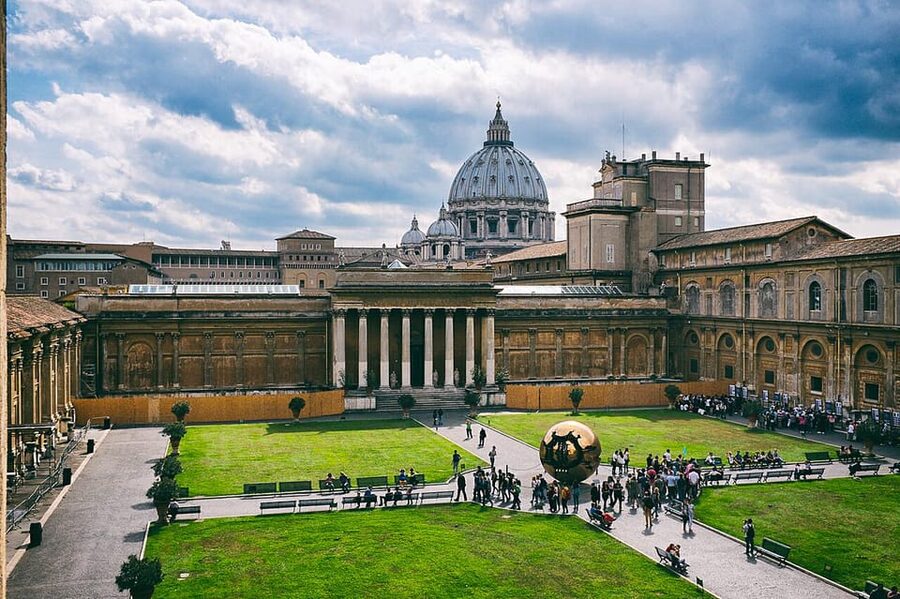
The Vatican Museums are not one simple gallery. They are a long chain of rooms, corridors, courtyards, chapels, and collections gathered by the Catholic Church over many centuries.
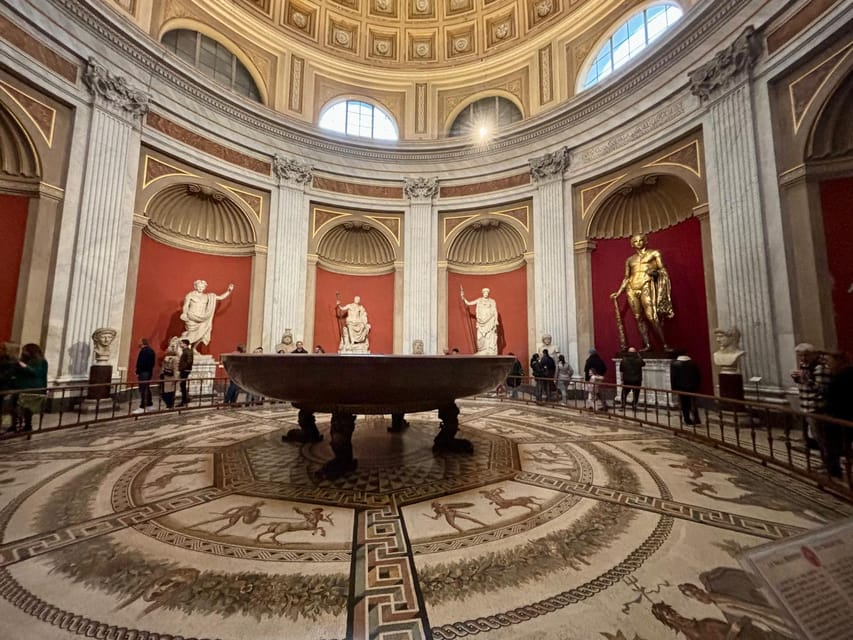
That scale is the first thing you need to understand. You are not dropping in for a quick look at one famous painting. You are moving through ancient sculpture, Renaissance rooms, decorated halls, maps, religious objects, and modern works before reaching the Sistine Chapel.
The listed visit time is two to three hours, which is enough for a brisk first visit. I would treat that as the minimum useful time, not a strict limit. If you stop often, listen to an audio guide, take photographs where permitted, or pause for a coffee, you may need longer.
A self-guided ticket suits you if you dislike being rushed. You can spend extra time on one room and move quickly through another. That matters here because the Vatican’s collection is too large for every visitor to enjoy in the same way.
More Museum Tours in Rome
- Vatican: Museums & Sistine Chapel Entrance Ticket
★ 4.5 · 144,003 reviews - Vatican Museums & Sistine Chapel Tour with Optional Basilica
★ 4.3 · 67,413 reviews - Vatican Museums, Sistine Chapel & St Peter’s Basilica Guided Tour
★ 4.5 · 39,149 reviews
Getting inside with a skip-the-line ticket
You do not meet a guide at a designated gathering point. This is a self-guided entry, so you go directly to the Vatican Museums entrance and find the line for ticket holders.
That arrangement is simple, but it puts more responsibility on you. You need to arrive at least 20 to 30 minutes before your booked time, locate the correct entrance, and have your digital ticket ready. Security screening is mandatory, followed by ticket checks in the entrance corridors.
The normal on-site line can take at least two hours, especially in the busiest months. The skip-the-line ticket avoids that regular queue, but it is not a magic pass. Even ticket holders may face a significant wait during peak periods. One visitor still waited about an hour, while others entered very quickly.
That mixed experience is worth keeping in mind when judging the price. You are paying mainly for time saved and advance access, not for a guaranteed instant entrance.
The official ticket is usually sent one day before your visit by WhatsApp or email. It can occasionally arrive on the same day, and delivery may be delayed by up to 30 minutes. Each ticket carries the full name entered during booking, and that name cannot be changed, so check your details carefully.
Bring your passport or identity card. Students aged 18 to 25 need a valid student card. Children under seven enter free, although identification is required for children.
The first galleries and the Vatican collection
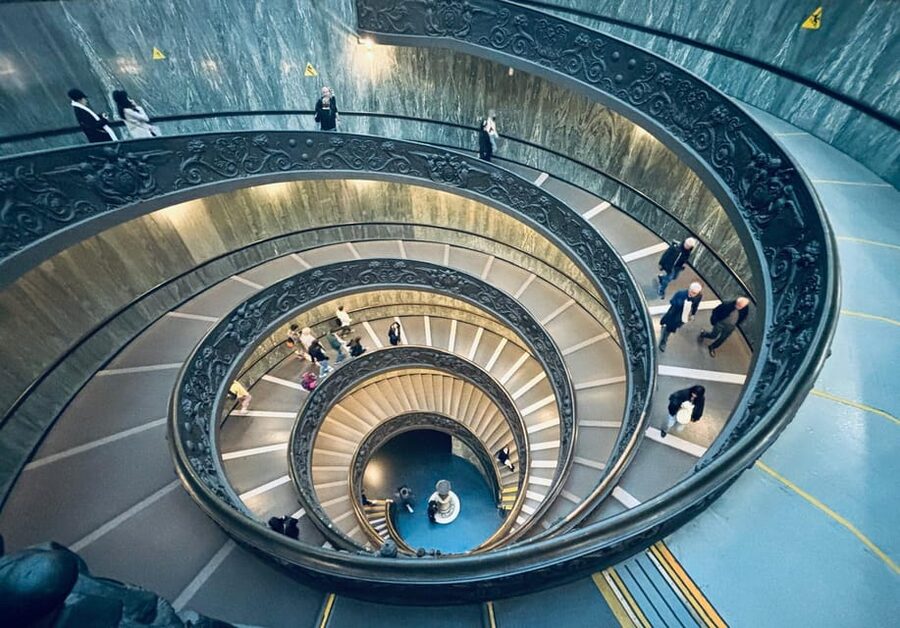
Once inside, I suggest resisting the urge to race toward the Sistine Chapel. The early galleries help you understand the scale of what the Church collected and preserved.
You may encounter ancient objects from periods before Christianity, along with sculpture, decorative pieces, and religious art from later centuries. One visitor particularly enjoyed a newly added area near the start of the museum. Since exhibition areas can change, you should expect the exact route and displays to shift.
This part of the museum is valuable because it shows that the Vatican is not only a Renaissance art stop. It connects ancient civilizations, Christian worship, papal collecting, and later artistic movements. You can see how the Church used art not simply as decoration, but as a way to teach, persuade, remember, and display power.
If you select the audio guide, use it selectively. You do not need an explanation for every room. I would listen to the sections that interest you most, then move on when your attention starts to fade. That approach makes the visit feel less like an assignment.
The audio guide option is especially useful if you are visiting without a guide and want help identifying major works. It is also available in the language chosen at booking, according to the experience details.
The Gallery of Maps and Renaissance Rome
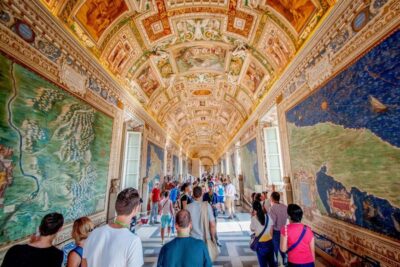
The Gallery of Maps is one of the Vatican’s most memorable corridors. Its long wall paintings show maps of Italian regions, framed by elaborate decoration and a strong sense of national identity.
The gallery is not just a pretty passageway. It reflects how geography, faith, and political ideas could be presented together. The display’s message of Italian unity gives you another way to understand the period, beyond the better-known names of Michelangelo and Raphael.
Look upward and along the walls rather than simply walking through. The ceiling and surrounding decoration reward slow attention. This is one of the places where an audio guide can add value, since the visual detail is easy to admire without immediately understanding its purpose.
The drawback is crowding. A long gallery naturally encourages people to stop in the same places, and the route can feel compressed during busy hours. If you have room to pause, step aside and let the flow move around you.
More Vatican and Sistine Chapel tickets:
- Rome: Vatican Museums, Sistine Chapel & Basilica Tour
★ 4.3 · 13,872 reviews - Vatican Museums & Sistine Chapel Skip-the-Line Entry Ticket
★ 4.4 · 13,838 reviews - Rome: Vatican Museums, Sistine Chapel & Basilica Tour
★ 4.7 · 13,217 reviews - Skip-the-Line Group Tour of the Vatican, Sistine Chapel & St. Peter’s Basilica
★ 4.5 · 12,779 reviews
Raphael’s Rooms and the Renaissance message
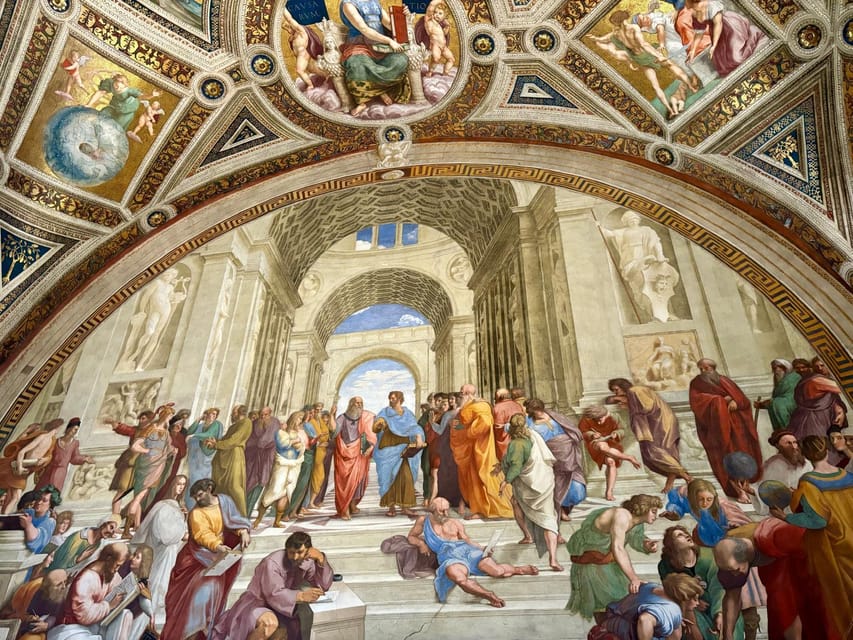
Raphael’s Rooms are among the essential stops. These rooms contain frescoes tied to the Renaissance, a period when artists, scholars, and church leaders reshaped the visual language of Europe.
You will see how the decoration works as a complete environment rather than as isolated framed pictures. The walls and ceilings carry religious, philosophical, and political ideas. The experience is stronger when you take a moment to read the scenes as stories instead of searching only for a famous name.
An audio guide can help here, but you can also enjoy the rooms without one. The frescoes are large, theatrical, and full of action. If you are visiting with children or someone who does not normally spend hours in museums, these rooms offer plenty to look at without requiring expert knowledge.
The museum’s sheer size can work against these highlights. By the time you reach Raphael, you may already feel overloaded. I would rather see fewer rooms carefully than hurry through everything with tired feet and a phone full of photographs you will never sort.
Michelangelo inside the Sistine Chapel
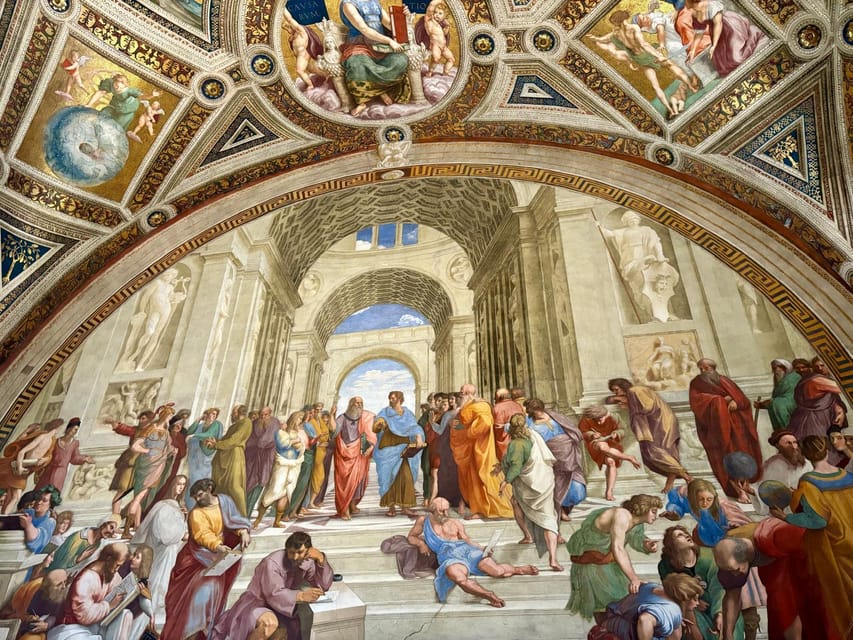
The Sistine Chapel is the emotional center of this visit. Michelangelo’s ceiling includes the famous Creation of Adam, while The Last Judgment covers the altar wall with a powerful vision of salvation, punishment, and the end of time.
You enter after passing through the museum’s earlier galleries, so the chapel feels like a destination at the end of a long visual journey. The art is famous for good reason, but its fame can create a problem: you may arrive expecting one image and miss the whole room.
Look around slowly. The ceiling is not one painting but a sequence of scenes, figures, and architectural illusions. The Last Judgment has a different mood, darker and more forceful than the ceiling scenes above.
Silence and chapel rules apply, and visitor movement can be controlled. You should follow staff instructions and avoid treating the room like an ordinary photo stop. The experience is more rewarding when you give yourself a few quiet minutes to look rather than trying to record every inch.
A major date warning applies. The supplied information states that the Sistine Chapel was scheduled to close to the public from Monday, April 28, 2025, for Conclave requirements. Chapel access can also change because of major religious or institutional events, and exhibition areas may close without a refund. Check the current booking details before you pay.
Modern art and the Cabinet of Masks
The Vatican is not frozen in the Renaissance. The Collection of Modern and Contemporary Art gives the visit a different tone and shows that the Church has continued to engage with later artists.
I like having this contrast in the route. After so many historic religious works, modern pieces can make you rethink what the Vatican considers meaningful art. You may not respond to every work, but the collection prevents the museum from becoming a single-period art lesson.
The Cabinet of Masks offers another change of mood. Its name alone hints at theatrical objects and decorative detail, and it helps break up the long succession of frescoed rooms and formal galleries.
These areas may receive less attention than the Sistine Chapel, but they are useful pauses. If you have already seen the headline masterpieces, slow down here and choose what genuinely interests you. The self-guided format lets you do that without worrying about a group waiting at the next doorway.
How long should you allow?
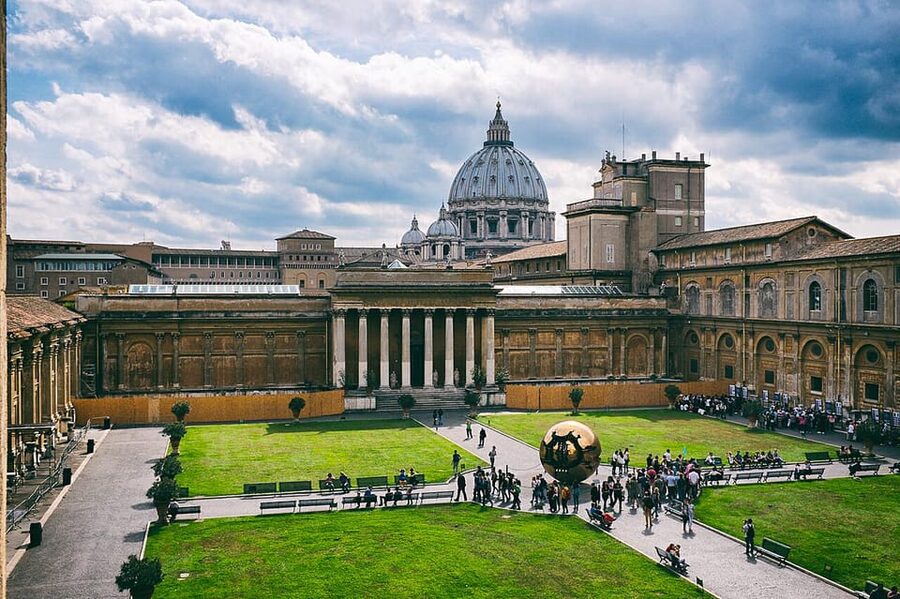
The official duration is two to three hours. That is realistic for a focused visit, especially if you know which rooms matter most to you.
I would allow extra time if you plan to use the audio guide fully. One visitor described taking about four and a half hours while walking at a moderate pace, listening only to the sections that seemed interesting, taking photographs, and stopping for a toilet break or coffee.
You can also eat or take a break at the museum bistro, according to the experience details. That makes a longer visit easier, although you should not expect to see everything in one afternoon.
My practical approach would be:
- Use the first part of the route to get your bearings.
- Give priority to Raphael’s Rooms, the Gallery of Maps, and the Sistine Chapel.
- Add ancient collections, modern art, and the Cabinet of Masks according to your energy.
- Keep a little time for security, waiting, and finding your way through the corridors.
The Vatican can reward an all-day visit, but the two to three hour format is a sensible first look if your Rome schedule is tight.
Price, value, and what is not included
The listed price is $44.41 per person. That is a premium over waiting for an ordinary ticket, but the price buys convenience at one of Rome’s most difficult attractions for spontaneous entry.
The value depends on your schedule. If you have only one morning in Rome, losing two hours in a queue can cost more than the ticket premium. If you are visiting in a quiet period and can enter easily with a cheaper option, the calculation changes.
You are not paying for a guide. You are paying for entry, queue reduction, and, if selected, an audio guide. There is no priority access to St. Peter’s Basilica, and the Vatican Museums ticket does not automatically take you into the basilica.
Private guides may be available for an extra charge to arrange fast-track access from the Sistine Chapel to the basilica. That is a separate service, not part of this ticket.
Because the activity is non-refundable, I would not book until your date, names, and entry time are settled. The full-name rule is important, and unexpected closures do not bring a refund under the stated conditions.
Clothing, access, and practical comfort
Dress modestly. Shorts, short skirts, and sleeveless shirts are not allowed. Choose clothing that covers your shoulders and knees so you are not turned away or forced to find a last-minute solution.
Wear comfortable shoes. Even a brisk visit involves long corridors, standing, security checks, and plenty of time on your feet.
The supplied information marks the activity as not suitable for wheelchair users. At the same time, one visitor described using a wheelchair inside the museum and finding elevators and helpful guards. Those two points do not fully agree, so I would contact the provider before booking if access is essential. Reaching the Vatican by wheelchair was also described as difficult, with a car service suggested as an easier option.
The booking is listed as a small group limited to six participants, but the actual museum visit is self-guided rather than a guided group walk. That means you are not tied to a guide’s route or pace.
Who should book this Vatican ticket?
I would choose this experience if you want to see the major Vatican highlights independently, dislike standing in long ticket queues, or prefer to stop for as long as you like at Raphael, Michelangelo, or the maps.
It also suits repeat visitors. One person used the self-guided format after finding a previous guided visit too rushed. That is a fair reason to return: the Vatican has enough art for several visits, and a second look at your own speed can be more rewarding than trying to cover every room once.
Families and mixed-interest groups may also benefit. One person can focus on Renaissance art, another can spend time with ancient objects or modern works, and nobody has to follow a fixed commentary.
I would think twice if you need guaranteed immediate entry, a personal guide, direct access to St. Peter’s Basilica, or flexible cancellation. Peak-season delays are possible, tickets arrive close to the visit date, and the non-refundable terms leave little room for changed plans.
Should you book it?
Book this Vatican Museums ticket if saving time and setting your own pace matter more to you than having a guide. The strongest parts are the skip-the-line access, the optional audio guide, and the chance to linger over Michelangelo’s Sistine Chapel, Raphael’s Rooms, and the Gallery of Maps.
Before booking, check that the Sistine Chapel is open on your date, enter every visitor’s name correctly, dress for the Vatican’s rules, and arrive early. If you accept the possibility of a ticket-holder delay and understand that St. Peter’s Basilica is separate, this is a practical way to handle one of Rome’s biggest museum visits.
FAQ
How long does the Vatican Museums visit last?
The stated duration is two to three hours. You may need longer if you use the audio guide, stop for coffee, take photographs, or want to see more of the collection.
Does the ticket include skip-the-line entry?
Yes. The ticket allows you to use the ticket holders’ line instead of the normal ticket queue. During peak season, even this line may involve a significant wait.
Is a tour guide included?
No. This is a self-guided visit with no guide or meeting point. An audio guide is included only if you select that option.
Is the audio guide available in different languages?
Yes. The audio guide can be available in your selected language when you choose the audio guide option.
Does the ticket include St. Peter’s Basilica?
No. Priority access to St. Peter’s Basilica is not included. Private guides may offer fast-track access from the Sistine Chapel to the basilica for an additional charge.
When will I receive my official ticket?
The ticket is usually sent by WhatsApp or email one day before the visit. It may sometimes arrive on the same day, and delivery can occasionally be delayed by up to 30 minutes.
What identification should I bring?
Bring a passport or identity card. Students aged 18 to 25 must bring a valid student card, and children need identification as well.
What clothing is not allowed?
Shorts, short skirts, and sleeveless shirts are not allowed. Dress in clothing that covers your shoulders and knees.
Recently added around Rome
- Palatine Hill and Roman Forum Tour with Fast-Track Entrance★ 4.2 · 417 reviews
- Tivoli: Villa D’Este & Villa Adriana Pass & App Audioguide★ 4.4 · 364 reviews
- From Rome: Villa D’Este & Villa Adriana Day Trip with Lunch★ 4.4 · 289 reviews
- Vatican Museums & Sistine Chapel Skip-the-Line Guided Tour★ 4.6 · 254 reviews
- Rome: The Three Tenors at St. Paul’s Church Concert Ticket★ 4.7 · 699 reviews
- Tivoli: Villa D’Este Entry Ticket and App Audio Guide★ 4.3 · 191 reviews
- Rome: Capitoline Museums and Centrale Montemartini Tickets★ 4.4 · 328 reviews
- Rome: St. Peter’s Basilica and Papal Tombs Guided Tour★ 4.6 · 477 reviews
Vatican & Sistine Chapel Tours, compared.
Vatican Museums & Sistine Chapel Tour with Optional Basilica
Read our review →
Vatican Museums, Sistine Chapel & St Peter’s Basilica Guided Tour
Read our review →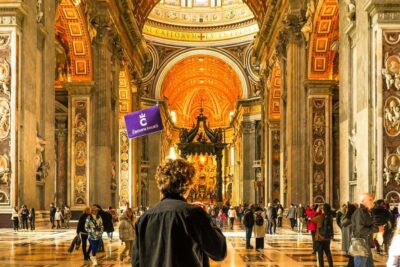
Vatican Museums, Sistine Chapel & Basilica Tour
Read our review →
Vatican Museums & Sistine Chapel Skip-the-Line Entry Ticket
Read our review →Vatican Museums, Sistine Chapel & Basilica Tour
Read our review →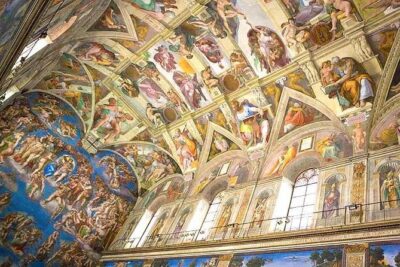
Skip-the-Line Group Tour of the Vatican, Sistine Chapel & St. Peter’s Basilica
Read our review →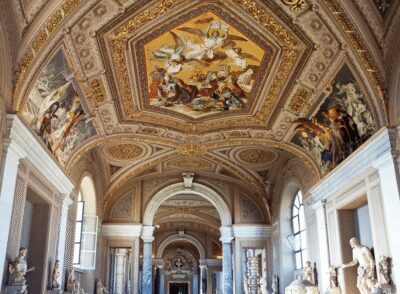
Vatican Museums & Sistine Chapel Guided Tour
Read our review →Browse the lists this tour appears in