
Reviewed · VATICAN & SISTINE CHAPEL TOURS
Rome: Vatican Pass plus Top Attractions and Transport
Rome rewards a well-planned attack. This pass combines Vatican access, two Rome attractions, public transport, and a 72-hour open bus ticket, giving you a useful framework for three busy days. I especially like the chance to use the Roma Pass for expensive sights such as the Colosseum or Borghese Gallery, and I like having both a city transit card and a printed map in hand.
The Vatican Museums and Sistine Chapel are the strongest reason to consider it, particularly if a reserved entry time saves you from the worst queue. The hop-on hop-off bus can also help you get your bearings or give tired legs a break. The catch is important: this is not a magic skip-every-line card. Reservations remain essential, pickup can be confusing, and some buses run less often than advertised.
In This Review
- Six things to know before buying the Rome pass
- What the 72-hour Rome and Vatican pass actually includes
- Picking up the cards near the Vatican
- Vatican Museums and the Sistine Chapel
- St. Peter’s Basilica and St. John Lateran
- Choosing your two free Rome attractions
- Ancient Rome: Forum, Palatine Hill, and Carcer Tullianum
- Galleria Borghese and Castel Sant’Angelo
- Museums beyond the main sights
- Using the open bus and public transport
- How to plan three days without wasting the pass
- Who should buy this pass?
- FAQ
- How long are the OMNIA Vatican Card and Roma Pass valid?
- Which attractions can I enter for free with the Roma Pass?
- Do I need reservations?
- Is the hop-on hop-off bus included?
- Do children receive the same benefits?
- Is the Vatican audio guide included?
- Should you book it?
Six things to know before buying the Rome pass
- Two cards work together: You receive the OMNIA Vatican Card and Roma Pass, both valid for 72 hours from first use.
- Two Rome attractions are included: Choose carefully from major sights such as the Colosseum and Roman Forum, Capitoline Museums, Castel Sant’Angelo, Borghese Gallery, or Museum of Rome.
- Vatican reservations are still required: The Vatican Museums, Sistine Chapel, and St. Peter’s Basilica require advance arrangements.
- The bus is useful but limited: It offers a broad city circuit, but stops, operating hours, and intervals may not suit every sightseeing plan.
- Public transport is included: The travel card covers unlimited Rome bus and metro use during its validity period, while children’s arrangements differ by age.
- The pass only pays off with planning: At $179.24 per person, you need to use the included benefits rather than simply carry the card around Rome.
What the 72-hour Rome and Vatican pass actually includes
This product is best understood as a package of two city cards, not one guided tour. You redeem your voucher at a designated collection point, receive the OMNIA Vatican Card and Roma Pass, then activate them with first use. Both cards last for 72 hours.
The OMNIA card focuses on Vatican City and related sightseeing benefits. It includes entry arrangements for St. Peter’s Basilica and the Vatican Museums, along with a hop-on hop-off Rome bus ticket. The Roma Pass provides free general admission to two selected attractions, then discounted admission at more than 30 additional museums, monuments, and sights.
You also receive unlimited public transport on Rome buses and metro trains, plus a guidebook and map. That combination sounds simple, but you need to keep the two cards straight. The Vatican card and Roma Pass do different jobs, and the redemption instructions have caused confusion for some customers.
At $179.24, the price is high enough that casual use will not give you good value. I would calculate the normal price of the two attractions you most want, add Vatican admission, transport, and any bus ticket you would otherwise buy, then compare the total. If your plan includes only the Vatican and one modestly priced museum, buying separate tickets may cost less.
More Vatican and Sistine Chapel tickets:
- Skip the Line: Vatican & Sistine Chapel Ticket with Audio Guide
★ 4.0 · 3,271 reviews - Skip-the-Line Ticket with Host – Vatican Museums & Sistine Chapel
★ 5.0 · 1,267 reviews - Skip The Line ticket to the Vatican Museums & the Sistine Chapel
★ 3.0 · 1,160 reviews
Picking up the cards near the Vatican
The first practical hurdle is collection. The pass begins as a voucher, which must be exchanged for the actual cards at a redemption center. The supplied information gives opening hours of 9:00 a.m. to 6:00 p.m., Monday through Sunday, but locations can change, so you should check your voucher carefully before setting out.
This matters because a difficult pickup can consume the best part of your first day. One reported problem involved an office that had closed, leaving only two collection points. Another customer spent a long time searching for the office and lost sightseeing time.
The Vatican area is a sensible place to collect the cards if you are starting with the Vatican Museums or St. Peter’s Basilica. It is less convenient if your hotel and first planned sight are near the Colosseum, Spanish Steps, or Termini. Do not assume you can walk straight from your arrival train to an attraction and activate the card there.
Save every voucher, QR code, confirmation message, and reservation instruction on your phone. Printed information is also useful because the app and website have not always been easy to follow. The supplied guidebook and map can help once you have them, but they do not remove the need to understand the process before you arrive.
Vatican Museums and the Sistine Chapel
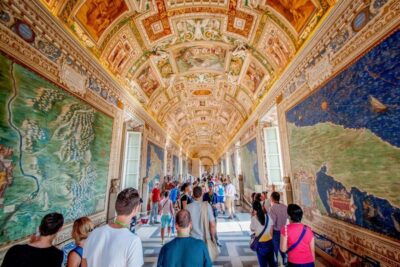
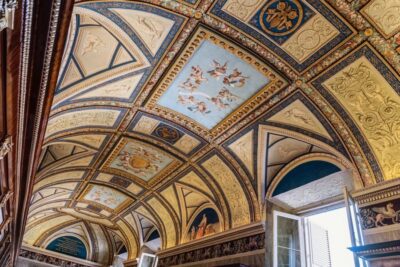
The Vatican portion is the strongest part of the package. The Vatican Museums can occupy three hours or more, and the Sistine Chapel is usually treated as the grand climax of the visit. You pass through rooms filled with paintings, sculpture, religious art, and papal collections before reaching Michelangelo’s famous ceiling and Last Judgment.
The pass advertises fast-track access, which can save serious time during busy periods. But do not read that as a promise that you can stroll past every queue. You must reserve a time for the Vatican Museums and Sistine Chapel, and a missed or unavailable slot can undermine the whole purchase.
The audio guide is another point to watch. The Vatican admission does not include an audio guide according to the supplied details. If you want one, plan for a separate cost or use your own guide material.
Dress properly for the Vatican. Shoulders and knees must be covered, and one customer had to buy trousers after arriving in unsuitable clothing. That is an avoidable expense and an easy way to lose time.
Allow more than a quick look. The museums are large, and crowds can make it hard to pause in the most famous rooms. I would schedule the Vatican as one major half-day activity, not squeeze it between several other timed reservations.
St. Peter’s Basilica and St. John Lateran
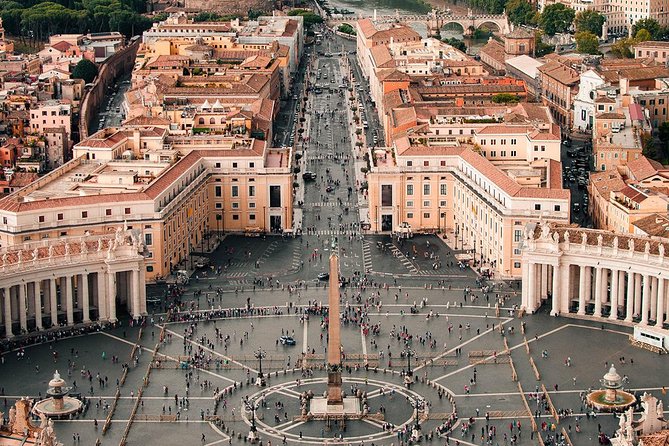
St. Peter’s Basilica is included through the OMNIA card, but its access should not be treated as an absolute priority entrance. The supplied information specifically warns that it may not provide priority treatment, and some customers still faced a queue.
The basilica itself is free to enter under normal conditions, so the value here comes from the pass arrangements and possible queue reduction, not from the basic church admission. You still need to follow the reservation instructions on your voucher.
The Basilica of San Giovanni in Laterano, or St. John Lateran, offers a quieter and historically important counterpoint to St. Peter’s. Built in 324 AD, it is the oldest and most important church in Rome in the Catholic hierarchy, despite being less famous internationally.
Inside, look for the Cosmatesque floor and interior details, the Baroque facade, the twelve large Apostle sculptures, and the fourteenth-century Gothic baldacchino. The adjacent Cloister provides a calm pause, while the Scala Sancta, or Holy Steps, adds another layer of religious significance.
Allow about two hours if you want to see the church and related sights without rushing. OMNIA card holders can redeem a complimentary audio guide valued at €10. This is one of the clearer small benefits in the package.
A few more Vatican City bookings to compare
- Vatican, Sistine Chapel & St. Peter’s Skip-the-Line Tour
★ 4.1 · 1,070 reviews - Vatican Museums & Sistine Chapel Guided Tour
★ 4.5 · 763 reviews - Rome: Guided Tour of St. Peter’s Basilica, Grottoes & Square
★ 4.4 · 732 reviews - Rome: Skip-the-Line Vatican Museums and Sistine Chapel Tour
★ 4.3 · 719 reviews
Choosing your two free Rome attractions
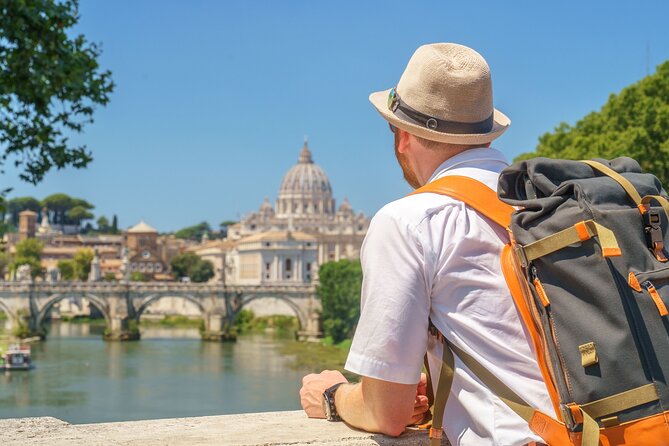
The Roma Pass gives you general admission to two selected attractions. This is where good planning can make the difference between value and disappointment.
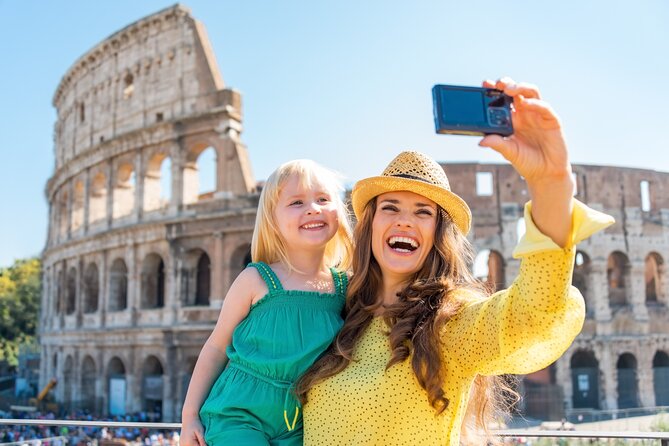
The most obvious choice is the Colosseum, Roman Forum, and Palatine Hill combination. These usually work as one connected archaeological visit, but you must reserve a time. The Colosseum is popular enough that available slots can disappear well ahead of your arrival. If you fail to reserve, you may face a long wait or need to buy a separate ticket.
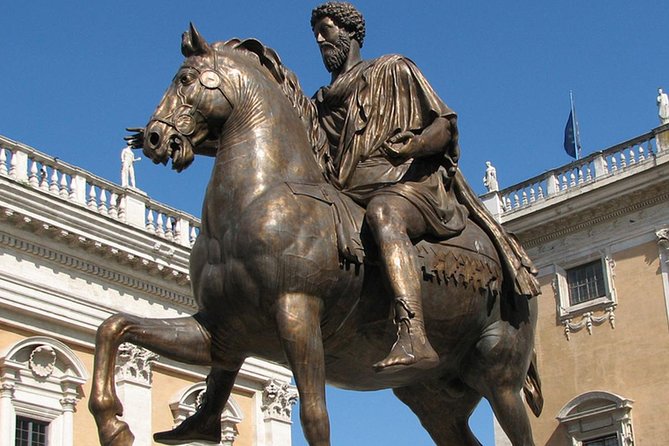
The Capitoline Museums are another strong choice. Set around Michelangelo’s Piazza del Campidoglio, the museums hold ancient Roman sculpture, archaeology, and paintings. Look for the Capitoline She-wolf, Hall of Tapestries, Chapel, courtyard, and the view across the Roman Forum from the hilltop setting.
Castel Sant’Angelo makes a good second choice for anyone interested in Roman emperors, papal power, and military architecture. The ancient mausoleum and fortress sits beside the Tiber, and the Hall of Urns contains the ashes of Emperor Hadrian. Check the exact pass conditions before arrival, since some customers reported an extra charge despite holding the Roma Pass.
The Borghese Gallery is arguably the best art-focused use of a free admission slot. It displays major sculpture and painting in an intimate setting, but reservations are mandatory. Booking at least 10 days ahead is strongly advised, and you can reserve using the name of the Roma Pass holder before you physically receive the card.
The Museum of Rome at Palazzo Braschi is another possible free attraction. Its collection covers Roman life from the Middle Ages to the mid-twentieth century, with paintings, furniture, ceramics, mosaics, costumes, fabrics, and carriages. It is less of a headline sight than the Colosseum, but a good choice if you want city history rather than ancient ruins.
Ancient Rome: Forum, Palatine Hill, and Carcer Tullianum
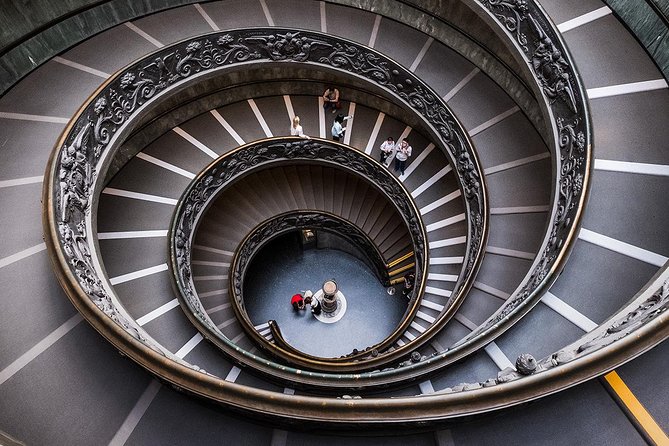
The Roman Forum was once the center of civic, commercial, and political life. Today, you walk among broken columns, temples, churches, and paved streets, with the scale of ancient Rome revealed more by the setting than by intact buildings.
Palatine Hill rises beside the Forum and is linked to Rome’s foundation stories and imperial palaces. The site requires patience. Ruins are spread over uneven ground, and the meaning of each fragment is easier to grasp with a map or guide.
The itinerary allows about two hours for both the Forum and Palatine Hill, but you should check your reservation details carefully because entry procedures can vary. The pass does not remove the need to book.
Carcer Tullianum, also known as the Mamertine Prison, is a smaller but highly atmospheric ancient monument. It was an important Roman-era prison, and its confined spaces offer a sharp contrast to the wide-open Forum. This attraction also requires a reservation, so do not add it casually between two timed visits.
Galleria Borghese and Castel Sant’Angelo
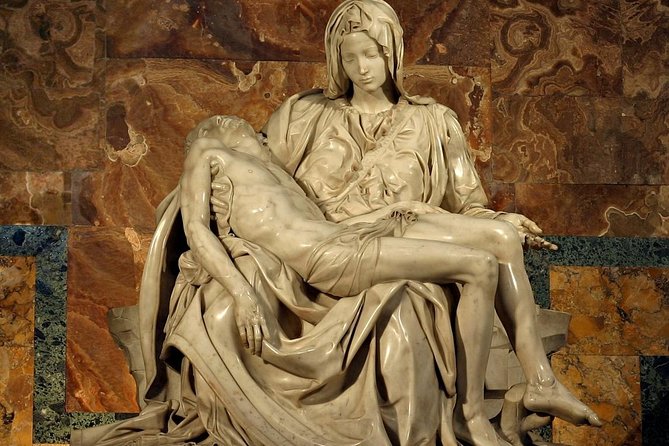
The Borghese Gallery deserves special attention because it is one of the few Rome sights where a reservation is not merely helpful, but mandatory. The recommended 10-day lead time is practical advice. If your dates are fixed, reserve before your trip rather than waiting to collect the card.
A two-hour visit suits the gallery’s scale. The attraction rewards close attention to sculpture and painting, but a full day of spontaneous arrival is not realistic here. If no appointment remains, the Roma Pass benefit has little value.
Castel Sant’Angelo offers a different experience. Hadrian’s mausoleum became a fortress and later a papal refuge, making it a useful place to connect imperial Rome with the city’s later religious and military past. Its position near the Tiber also gives you a change of scenery after the Vatican.
Again, check the reservation and payment instructions. The pass promises access benefits, but the practical arrangements can involve more steps than the headline description suggests.
Museums beyond the main sights
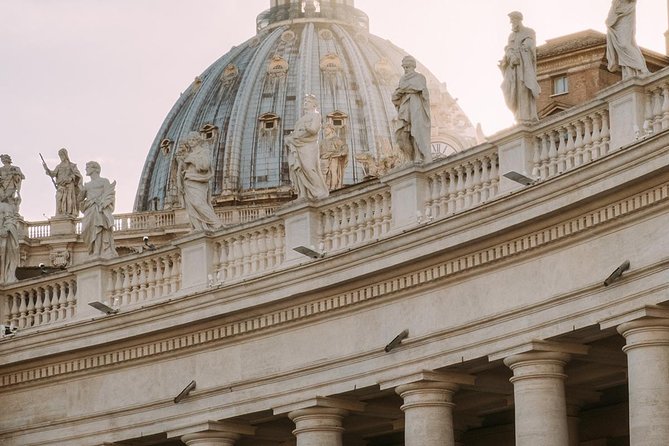
The package lists a long range of discounted museums. These include the Museum of Roman Civilization, the National Etruscan Museum at Villa Giulia, Pietro Canonica Museum, National Museum of Palazzo Venezia, Centrale Montemartini, and the Museum of the Roman Republic and Garibaldian Memory.
You can also find discounts at the National Museum of Oriental Art, the National Gallery of Modern and Contemporary Art, the Napoleon Museum, Ostia Antica Archaeological Park, and the Appian Way. These are useful additions for a second or repeat visit, but discounted admission is not the same as free admission.
Ostia Antica is especially important to price carefully because it lies outside central Rome and takes planning to reach. The Appian Way also rewards a dedicated outing rather than a quick stop between central attractions.
The long list can make the pass look more valuable than it is. I would choose museums because you genuinely want to see them, not because a discount makes them feel free. Rome has enough major sights to fill three days without chasing every eligible entrance.
Using the open bus and public transport
The three-day open bus is most useful on your first day, when you want a broad view of Rome without navigating every street. It connects areas near headline sights such as the Colosseum and St. Peter’s Basilica, and the elevated seats can help you get your bearings.
It is also a practical option if walking is difficult. One strong experience came from using the bus to make sightseeing easier for a family member with mobility issues.
The weaknesses are real. Bus intervals have been reported as irregular, sometimes closer to 45 minutes than the expected 20. Some stops are difficult to identify, routes do not cover every sight, and operating hours may begin late or finish early. Audio commentary can also contain long silent gaps.
I would not use the bus for a tightly timed Vatican, Colosseum, or Borghese appointment. Traffic and an absent bus can leave you late. Use the metro or a regular city bus when time matters. The included travel card gives you unlimited Rome public transport, and several customers found it more useful than the sightseeing loop.
Remember that children’s passes do not include the travel card. Travel is free for children under 10, and most Rome museums are free for children under 18, so family pricing needs special care.
How to plan three days without wasting the pass
Activate the cards when you are ready to begin serious sightseeing, not automatically at pickup if the timing allows. Once first used, the 72-hour clock starts.
Reserve the Vatican Museums, Sistine Chapel, St. Peter’s Basilica, Colosseum, Carcer Tullianum, Castel Sant’Angelo, and Borghese Gallery as early as possible. Put timed attractions on separate parts of the day, leaving room for queues and transport delays.
A sensible pattern might be:
- Day one: collect the cards, visit the Vatican Museums and Sistine Chapel, then see St. Peter’s Basilica if your reservation allows.
- Day two: use one free Roma Pass choice for the Colosseum, Forum, and Palatine Hill, then take public transport to St. John Lateran.
- Day three: use the second free attraction at the Borghese Gallery, Capitoline Museums, Castel Sant’Angelo, or Museum of Rome, depending on reservations.
You can swap the bus into the first morning or afternoon for orientation. Just do not build the entire schedule around its published frequency.
Who should buy this pass?
I would consider it for a first visit with three full days, especially if you want the Vatican, Colosseum, and one more costly attraction. It suits people who appreciate having transport, a map, and several admission options bundled together.
It is less attractive if you prefer walking, plan to visit mostly free churches and outdoor sites, or want only one major museum. Rome’s regular buses and metro can be cheaper, and several headline attractions require enough advance work that the pass does not simplify everything.
The best value comes from two expensive, reserved attractions plus the Vatican and frequent public transport use. The weakest value comes from buying it for convenience, then discovering that your preferred sights are sold out or that the bus does not fit your schedule.
FAQ
How long are the OMNIA Vatican Card and Roma Pass valid?
Both cards are valid for 72 hours from the time you first use them.
Which attractions can I enter for free with the Roma Pass?
You can choose two attractions for general admission. Options listed include the Colosseum, Roman Forum and Palatine Hill, Capitoline Museums, Borghese Gallery, Castel Sant’Angelo, and Museum of Rome.
Do I need reservations?
Yes. Reservations are required for the Sistine Chapel and Vatican Museums, Colosseum, St. Peter’s Basilica, Carcer Tullianum, Borghese Gallery, and Castel Sant’Angelo.
Is the hop-on hop-off bus included?
Yes. The OMNIA card includes a three-day Rome hop-on hop-off sightseeing bus ticket.
Do children receive the same benefits?
No. Child passes for ages 6 to 17 do not include the Roma Pass or travel card. Most Rome museums are free for children under 18, and public transport is free for children under 10.
Is the Vatican audio guide included?
No. The Vatican Museums admission does not include an audio guide. At St. John Lateran, OMNIA card holders can redeem a complimentary audio guide valued at €10.
Should you book it?
Book this pass if you will reserve early, use both free Roma Pass admissions, visit the Vatican, and rely on public transport during three active days. Treat the open bus as a bonus and orientation tool, not as your main way to reach timed attractions.
Skip it if you want a relaxed Rome visit with lots of free churches, piazzas, and wandering. At $179.24 per person, the pass demands a firm plan. Used carefully, it can save time and simplify a packed itinerary. Used casually, it can become an expensive collection of promises, reservations, and unused discounts.
Recently added around Vatican City
- Vatican Museums and Sistine Chapel Tickets★ 3.5 · 258 reviews
- Vatican Museums and Sistine Chapel Skip-the-Line Entry Ticket★ 4.5 · 189 reviews
- Vatican Museums and Sistine Chapel Skip-The-Line Ticket★ 4.0 · 256 reviews
- Skip The Line ticket to the Vatican Museums & the Sistine Chapel★ 3.0 · 1,160 reviews
- Vatican Museums and Sistine Chapel Skip The Line Ticket★ 4.0 · 312 reviews
- Vatican Museum, Sistine Chapel and St Peter’s Guided Tour★ 4.5 · 306 reviews
- Skip-the-Line Ticket with Host – Vatican Museums & Sistine Chapel★ 5.0 · 1,267 reviews
- Sistine Chapel and Vatican Museum Skip The Line Ticket★ 4.0 · 405 reviews
Vatican & Sistine Chapel Tours, compared.
Vatican Museums & Sistine Chapel Tour with Optional Basilica
Read our review →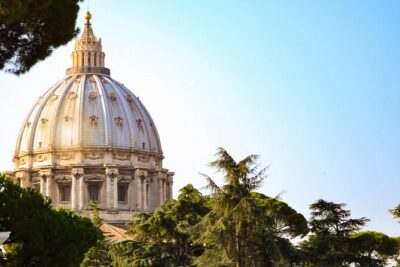
Vatican Museums, Sistine Chapel & St Peter’s Basilica Guided Tour
Read our review →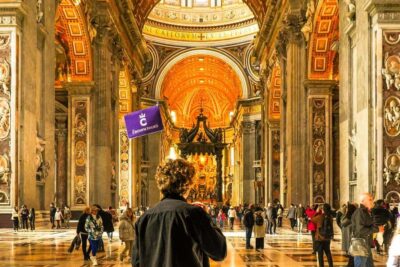
Vatican Museums, Sistine Chapel & Basilica Tour
Read our review →
Vatican Museums & Sistine Chapel Skip-the-Line Entry Ticket
Read our review →Vatican Museums, Sistine Chapel & Basilica Tour
Read our review →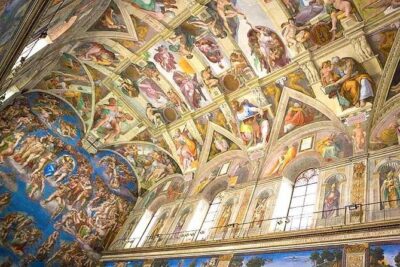
Skip-the-Line Group Tour of the Vatican, Sistine Chapel & St. Peter’s Basilica
Read our review →
Vatican Museums & Sistine Chapel Guided Tour
Read our review →Browse the lists this tour appears in