Reviewed · ROME TOURS
Rome Underground: Catacombs Tour, Aqueducts and Appian Way
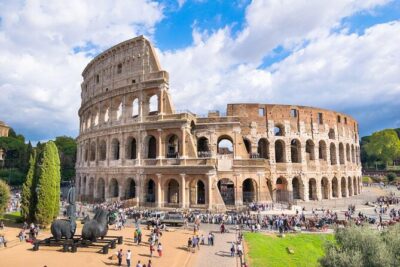
Ancient Rome extends far beyond the Colosseum. I like the way this tour combines the Appian Way and aqueducts with an underground visit to the catacombs, giving you three very different views of Roman life. I also like the small group limit of 18 and the air-conditioned minibus, which saves time and energy. The main drawback is simple: if you have only two or three days in Rome, the Colosseum, Forum, and Vatican may deserve priority.
This is a good choice for a longer Rome visit, especially if Roman engineering, burial customs, and early Christianity interest you. Guides such as Antonella, Francesca, Sylvia, Annamaria, and Andre have been praised for lively explanations, though the amount of detail can vary by guide. Bring water, wear sturdy shoes, and read the meeting-point directions carefully because Piramide Metro station can be confused with the nearby pyramid.
In This Review
- Key points to know before booking
- Why this tour belongs on a longer Rome itinerary
- Starting near Piramide and getting beyond the city center
- Walking the ancient stones of the Appian Way
- Meeting Cecilia Metella beside the Roman road
- Looking up at the aqueducts in the Appian Archaeological Park
- Going underground at San Sebastiano or Domitilla
- The guides shape the experience
- What the $65.30 price really buys
- Walking, weather, and practical comfort
- Who should book this Rome outing?
- FAQ
- How long does the Rome Underground tour last?
- Where does the tour start and finish?
- Which catacombs will I visit?
- Is transportation included?
- How many people can join the tour?
- Is the tour suitable for someone with claustrophobia?
- What happens if bad weather cancels the tour?
Key points to know before booking
- The Appian Way gives you ancient Rome underfoot: You walk on a section of one of the Roman world’s oldest major roads, with tombs and ruins nearby.
- The aqueduct stop is more spacious than the catacombs: The Parco degli Acquedotti offers open views and a chance to understand how Roman water systems worked.
- The catacombs visit lasts about 80 minutes: You visit San Sebastiano or Domitilla, depending on the day, often as the final group admitted.
- The minibus makes three outlying sights practical: Private air-conditioned transportation links places that are awkward to combine by public transport.
- The tour runs about three hours and 15 minutes: It is a substantial afternoon, but the pace is manageable for most people who can walk moderately.
- The price is $65.30 per person: That is fair for transport, guiding, and catacomb admission, particularly if you want these sites in one outing.
Why this tour belongs on a longer Rome itinerary
Rome rewards repeated visits. The first trip often belongs to the Colosseum, Roman Forum, Pantheon, and Vatican Museums. Once those essentials are covered, this tour takes you beyond the city center to places that show how Rome functioned, expanded, and buried its dead.
I see the tour as an efficient way to connect three sites that do not naturally fit into a casual day of sightseeing. The Appian Way is south of central Rome, the aqueduct park is farther out, and the catacombs are underground along the same broad corridor. Without a vehicle, you could spend much of your day arranging transfers.
The experience is offered in English and is capped at 18 people. That is not a private tour, but it is small enough for questions and easier group movement than a large coach excursion. Several guides, including Antonella, Francesca, Sylvia, and Annamaria, have been praised for keeping a group engaged over the full three-hour period.
Still, this is not a greatest-hits tour of Rome. The sites are quieter and less visually grand than the Colosseum or St. Peter’s Basilica. I would book it on day four or later, or sooner if ancient roads, aqueducts, and Christian archaeology are your main interests.
A few more Rome bookings to compare
- Vatican: Museums & Sistine Chapel Entrance Ticket
★ 4.5 · 144,003 reviews - Vatican Museums & Sistine Chapel Tour with Optional Basilica
★ 4.3 · 67,413 reviews - Colosseum, Roman Forum & Palatine Guided Tour
★ 4.7 · 63,148 reviews
Starting near Piramide and getting beyond the city center
The meeting point is at Piramide Metro station, at 00154 Rome. You board a small, air-conditioned minibus there, and the tour ends back at the same meeting point after the final transfer.
Give yourself extra time to identify the exact spot. The word Piramide can send you toward the actual pyramid monument instead of the Metro station, and the pickup is across from the station rather than at a normal city bus stop. A guide holding a small sign should be visible, but the area can still be confusing if you arrive at the last minute.
The transport is an important part of the value. You are not simply paying for a walking tour. You are paying to move between three separate areas without sorting out local connections, and you get a cool, clean vehicle in hot weather. One guide described the ride as a comfortable way to link the stops, while another noted that the audio headsets were clear and easy to use.
The group may include up to 18 people. That size still requires you to stay near the guide, especially on the Appian Way, but it allows the guide to speak with individuals and answer questions. The quality of the commentary matters here because the ruins are not always self-explanatory.
Walking the ancient stones of the Appian Way
Your first substantial stop is the Via Appia Antica, one of Rome’s oldest roads. The scheduled visit lasts about 25 minutes, so expect a focused look rather than a long country walk.
The appeal is physical. You are not only looking at a museum display about Roman roads. You are walking on surviving paving stones used by Roman soldiers, merchants, and other people moving in and out of the city. Ancient tombs and fragments of ruins line parts of the route, helping you picture the road as a working entrance to Rome rather than a modern archaeological park.
The stones are uneven. Sandals may be uncomfortable, and sturdy walking shoes are the sensible choice. One particularly useful piece of advice is to expect a fair amount of walking even though the minibus handles the longer transfers.
The short time here is both a strength and a limitation. You get a clear introduction without tiring out the group early in the tour, but you will not explore every visible ruin along the road. I would pay close attention to the guide’s explanation of how the road supported military movement and trade, since the setting alone can look like a stretch of old paving among scattered remains.
Meeting Cecilia Metella beside the Roman road
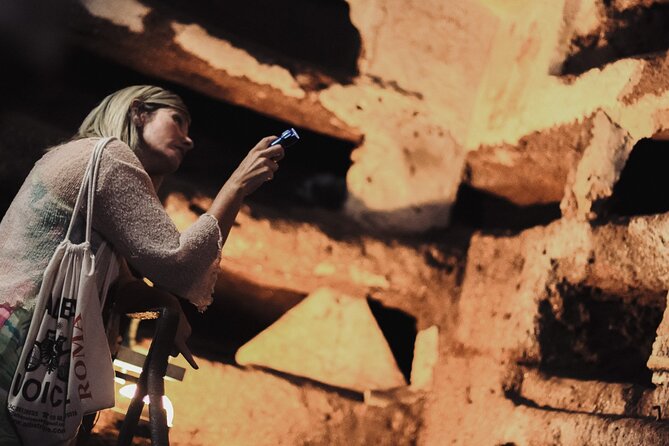
The next stop is the Mausoleum of Cecilia Metella, with about 25 minutes allocated. This large circular tomb dates to the first century BCE and is one of the most recognizable monuments along this part of the Appian Way.
Its size tells you something about Roman social power. This was not an anonymous burial marker. It was a statement by a wealthy and influential family, built to be seen by people passing along the road. The guide explains who Cecilia Metella was and how the monument survived through later centuries.
You do not receive a long interior visit here, and admission to the mausoleum itself is not listed as a separate included entry. The stop is mainly about seeing the structure, placing it in the setting of the Appian Way, and understanding how Roman tombs advertised status.
I like this pairing because the road and tomb explain each other. The road brought people past the monument, while the monument turned the road into a public display of family prestige. It is a compact lesson in Roman architecture, funerary customs, and social ambition.
Still Rome, but a slower afternoon:
- Vatican Museums, Sistine Chapel & St Peter’s Basilica Guided Tour
★ 4.5 · 39,149 reviews - Rome: Colosseum, Palatine Hill and Roman Forum Guided Tour
★ 4.8 · 32,814 reviews - Rome: Guided Tour of Colosseum, Roman Forum & Palatine Hill
★ 4.7 · 27,897 reviews - Rome: Colosseum & Forum with Audio Guide App -Optional Arena
★ 4.2 · 24,770 reviews
Looking up at the aqueducts in the Appian Archaeological Park
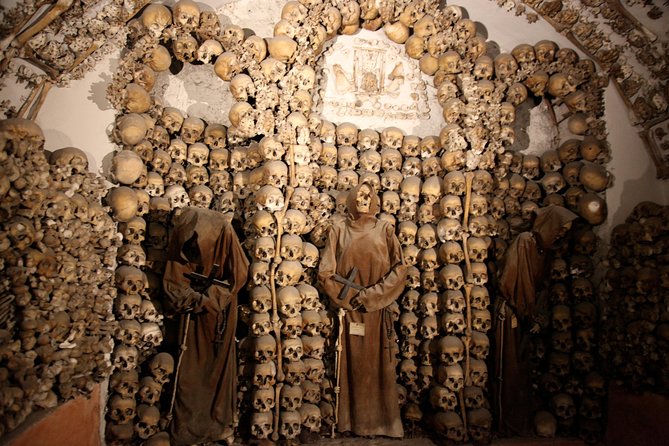
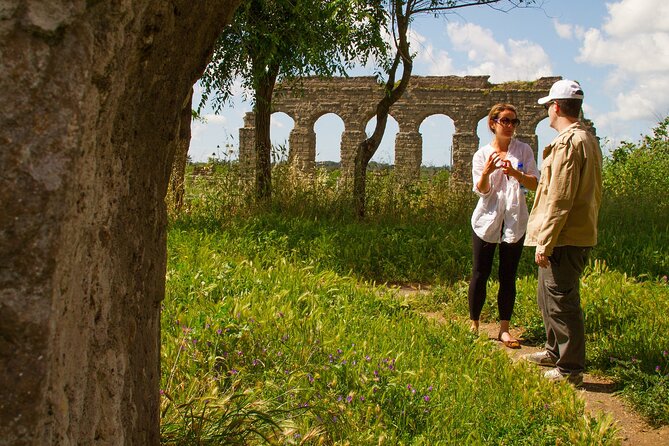
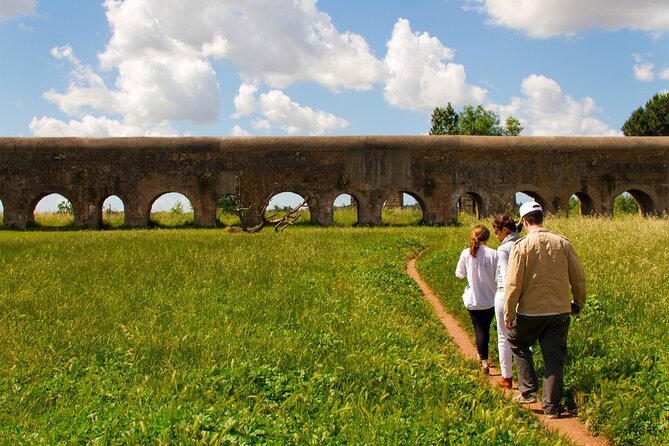
At the Parco degli Acquedotti, you spend about 45 minutes beneath the remains of Rome’s ancient aqueducts. This is the most open part of the outing, and it gives your eyes a welcome break from the tight spaces underground.
The aqueducts show Roman engineering on a huge scale. Their arches carried water toward the city, using carefully planned channels and a steady gradient rather than modern pumps. The guide connects the surviving structure with the practical needs of Rome, helping you understand that the empire’s success depended on infrastructure as much as on armies and monuments.
This stop involves walking, but the route is described as manageable. You may want water because the park is exposed and the pavement can be uneven. In hot weather, the contrast with the cool minibus and later catacombs is useful to keep in mind.
The aqueducts are particularly good for people who enjoy how things work. Several guides have been praised for explaining the construction methods and the skills needed to build the roads and water system. If a guide offers detailed commentary here, stay close and listen. The structures are impressive, but the engineering story is what gives them meaning.
Going underground at San Sebastiano or Domitilla
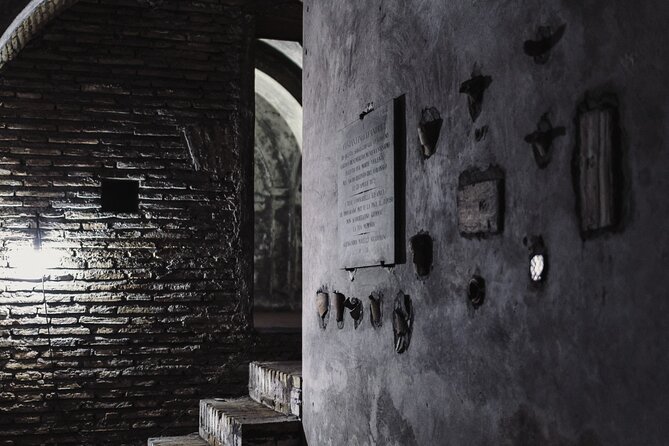
The final major stop lasts about one hour and 20 minutes. Depending on the day, you visit the Catacombs of San Sebastiano or the Catacombs of Domitilla. The exact site is not guaranteed, so choose this tour for the subject rather than for one specific catacomb.
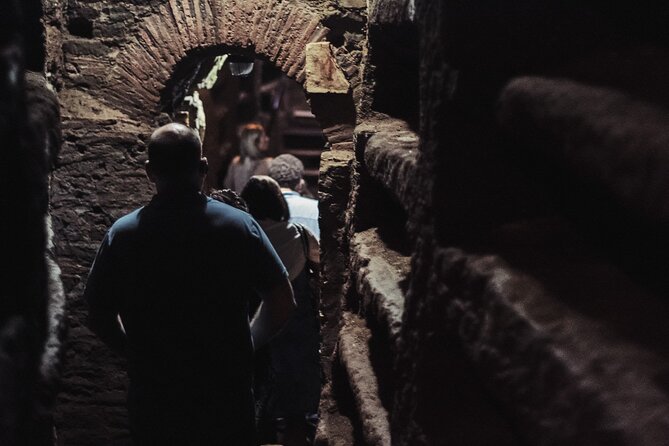
At San Sebastiano, you enter underground passages connected with early Christian burial practices. The tunnels, burial spaces, and traces of ancient decoration offer a different picture of Rome from the marble temples and imperial monuments above ground. You may also hear about the Mythraic religion, a secretive ancient faith that remains partly mysterious to modern scholars.
The catacombs are not presented as a horror attraction. The atmosphere is quiet, cool, and sometimes stuffy, and one visitor who expected to feel claustrophobic found the setting surprisingly calm. Still, the passages are tight in places, so anyone with serious claustrophobia should think carefully before booking.
The bones have been removed from many areas, so do not expect walls covered with skeletons. The interest is in the burial spaces, religious history, underground layout, and the fact that these sites preserved evidence of communities living and worshipping in ancient Rome.
The catacomb visit includes a guide associated with the site, in addition to the tour guide. That second layer of explanation has been one of the strongest parts of the experience. The catacomb guide can focus on the underground site while your main guide handles the broader story of the Appian area.
Being among the last visitors of the day can make the visit feel more peaceful and less crowded. It also gives the final portion of the tour a natural sense of focus. You finish below ground, then return to the minibus for the ride back to Piramide.
The guides shape the experience
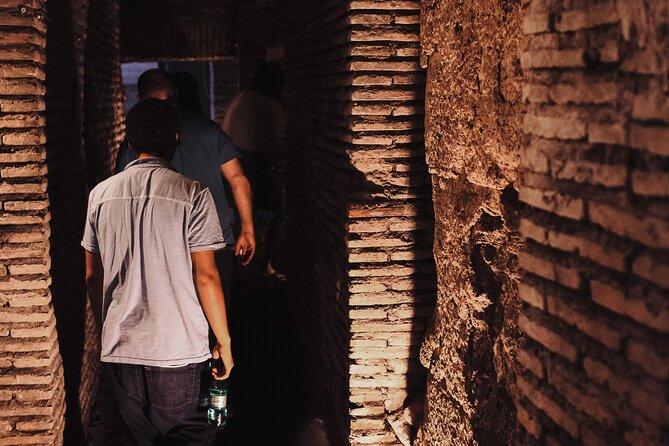
This tour depends heavily on the guide. The Appian Way and aqueducts are open archaeological areas, not tightly scripted indoor attractions. A good explanation turns broken paving stones and distant arches into evidence of Roman planning.
Guides named Antonella, Francesca, Sylvia, Annamaria, Andre, Flavia, Chiara, and Paris have all been praised for clear explanations, enthusiasm, humor, or patient answers. Antonella was noted for keeping a group of about 15 people interested for three hours. Francesca was praised for combining humor with historical detail, while Sylvia was described as especially helpful for a family visiting at the end of December.
The tone can vary. One account described the main guide’s explanation as more of an overview, with the catacomb guide providing the most detailed information. If you want a scholarly lecture at every stop, the experience may feel uneven. If you want a well-organized introduction with room for questions, it should suit you well.
Headsets are available and have been described as clear and easy to use. That matters when you are standing outdoors near a group or walking several steps away to see a feature. Stay within listening range, since the guide may continue explaining while the group moves.
What the $65.30 price really buys
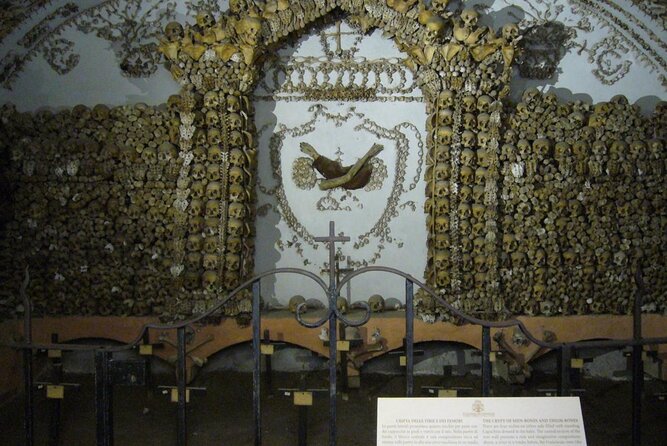
At $65.30 per person, the cost is reasonable for a three-hour-and-15-minute outing that includes an English-speaking guide, minibus transport, a guided walk, and entry to San Sebastiano or Domitilla.
The value is strongest if you want all three sites. The catacomb admission and private transportation would be the difficult parts to arrange independently, especially if you are unfamiliar with Rome. You also avoid losing time to multiple transfers between outlying locations.
The value is weaker if you have limited time in Rome or mainly want famous monuments. The Appian Way stop is short, the Cecilia Metella visit is focused, and the sites do not carry the immediate visual impact of the Colosseum. For a two-day visit, I would put this behind the Colosseum and Forum, Vatican City, and Rome’s central churches.
For a five- or six-day stay, the calculation changes. This tour fills an afternoon with places that show a quieter side of Rome and gives you a break from packed central sights. It is also a practical option on a very hot day, since the minibus is air-conditioned and the catacombs are cool underground.
Walking, weather, and practical comfort
You should be able to walk at a moderate pace without difficulty. The total walking is not described as extreme, but you will cross uneven ancient paving and walk through the aqueduct park. Good shoes matter more than fashionable shoes here.
Bring a bottle of water. The aqueduct park can feel hot, while the catacombs may be chilly yet stuffy. Light layers are useful, and sturdy footwear is better than thin sandals.
The tour requires good weather. If poor weather causes cancellation, you are offered another date or a full refund. You can cancel for a full refund up to 24 hours before the start time, but changes or cancellations inside that window are not accepted.
Hotel pickup and drop-off are not included. You need to reach Piramide Metro station yourself and return there at the end. Since the meeting point is not in the historic center, check your route before leaving and allow time to find the correct side of the station.
Who should book this Rome outing?
I would recommend it to you if you have already seen Rome’s major central monuments, or if your main interests are Roman roads, engineering, tombs, early Christianity, and lesser-known archaeological sites.
It also suits families and first-time visitors who want a guided introduction beyond the center. Several guides have been praised for making the information fun rather than dry, and the minibus reduces the strain of reaching three separate locations.
I would hesitate if you dislike underground spaces, have strong claustrophobia, or want to spend every minute inside famous museums and imperial ruins. The catacombs may be fascinating to you, but they can also be the least appealing part of the outing if burial sites are not your interest.
Book it if you want context and variety more than grand spectacle. Skip it, at least for now, if Rome is a short stop and you have not yet visited the Colosseum, Forum, or Vatican.
FAQ
How long does the Rome Underground tour last?
The tour lasts approximately three hours and 15 minutes, including transfers between the sites and the return to the Piramide meeting point.
Where does the tour start and finish?
It starts at Piramide Metro station in Rome and ends back at the same meeting point. Hotel pickup and drop-off are not included.
Which catacombs will I visit?
You will visit the Catacombs of San Sebastiano or the Catacombs of Domitilla, depending on the day.
Is transportation included?
Yes. Transportation between the sites is provided by an air-conditioned minibus.
How many people can join the tour?
The maximum group size is 18 people.
Is the tour suitable for someone with claustrophobia?
The catacombs have tight underground passages, so people with claustrophobia may want to choose another experience.
What happens if bad weather cancels the tour?
If poor weather causes cancellation, you will be offered a different date or a full refund. You may also cancel for a full refund up to 24 hours before the scheduled start time.
Recently added around Rome
- Rome: Pantheon, Trevi Fountain & Roman Squares Guided Tour★ 4.7 · 386 reviews
- Vatican: Pope Francis Tomb and Papal Basilicas Tour★ 4.7 · 340 reviews
- Vatican: St. Peter’s Basilica with Audio Guide and Options★ 3.4 · 269 reviews
- Rome: Vatican Museums & Sistine Chapel Ticket + Tour Options★ 4.7 · 344 reviews
- Rome: Vatican Museums Skip-the-line Entry Ticket and Tour★ 4.2 · 400 reviews
- Vatican: Museums, Raphael & Sistine Chapel + Basilica Option★ 4.7 · 350 reviews
- Vatican Museums & Sistine Chapel Guided Tour★ 4.3 · 832 reviews
- Vatican Museums & Sistine Chapel Entry Ticket★ 4.4 · 245 reviews
Rome Tours, compared.


Vatican Museums & Sistine Chapel Tour with Optional Basilica
Read our review →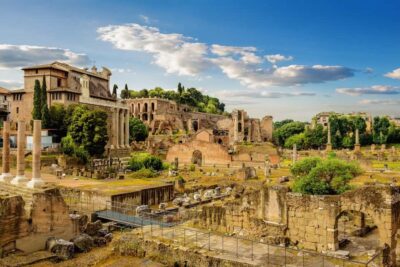
Colosseum, Roman Forum & Palatine Guided Tour
Read our review →
Vatican Museums, Sistine Chapel & St Peter’s Basilica Guided Tour
Read our review →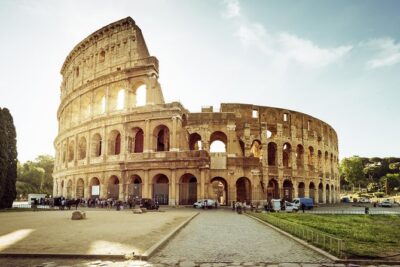
Colosseum, Palatine Hill and Roman Forum Guided Tour
Read our review →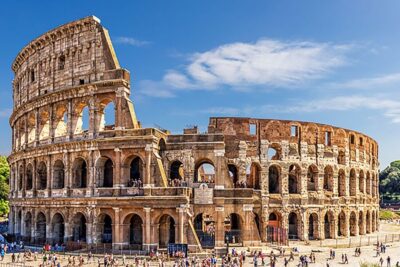
Guided Tour of Colosseum, Roman Forum & Palatine Hill
Read our review →
Colosseum & Forum with Audio Guide App -Optional Arena
Read our review →