Reviewed · ROME TOURS
Rome: Tour of St. Clement’s Basilica Underground Temples
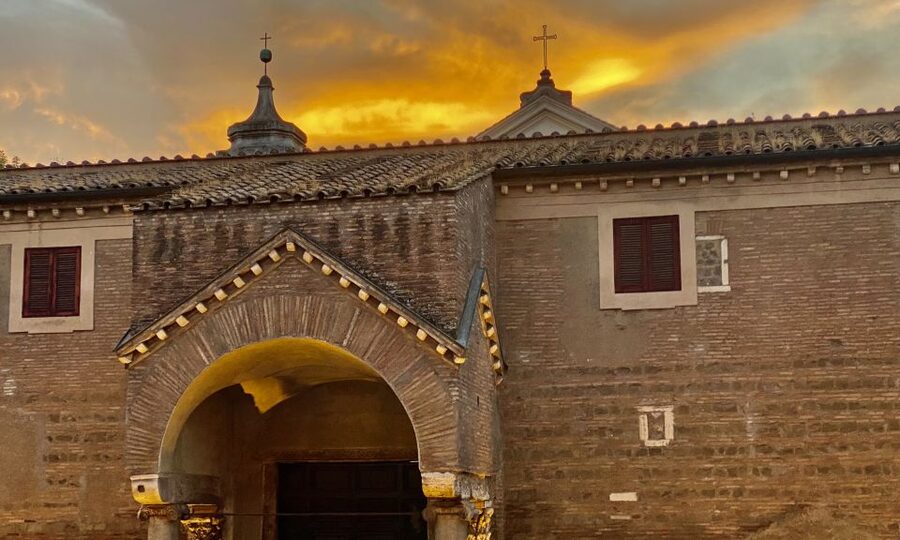
Rome keeps its best stories underground. This one-hour tour beneath San Clemente takes you through a 12th-century basilica, a 4th-century Christian church, and a preserved Mithraic temple far below street level. I love the way the site lets you see Rome’s past stacked one layer over another, and I like that a live guide explains details you would almost certainly miss alone. The main drawback is practical: narrow underground spaces, stairs, and dark passages make this a poor choice for wheelchair users or anyone uneasy in enclosed places.
The optional 45-minute visit to Santo Stefano Rotondo adds a second church and some powerful martyrdom frescoes. I would choose it if you have an interest in early Christianity and Roman art, but you should know that the scenes are graphic and the extra visit may occasionally be unavailable because of a liturgical celebration or special event.
In This Review
- Key points to know before you book
- Why San Clemente feels like Rome in miniature
- Inside the 12th-century basilica
- Fourteen meters down to the early Christian church
- The Mithraic temple and the underground river
- Adding Santo Stefano Rotondo after San Clemente
- What the guides add to the experience
- Is $70 a fair price?
- Practical advice for a smoother visit
- Who should book this tour?
- Final verdict: book it for the layers
- FAQ
- How long does the San Clemente tour last?
- How far underground does the tour go?
- Is Santo Stefano Rotondo included in the price?
- How do I get from San Clemente to Santo Stefano Rotondo?
- Is the tour accessible for wheelchair users?
- Is this tour suitable for people with claustrophobia?
- Can children visit Santo Stefano Rotondo?
- Which languages are available?
Key points to know before you book
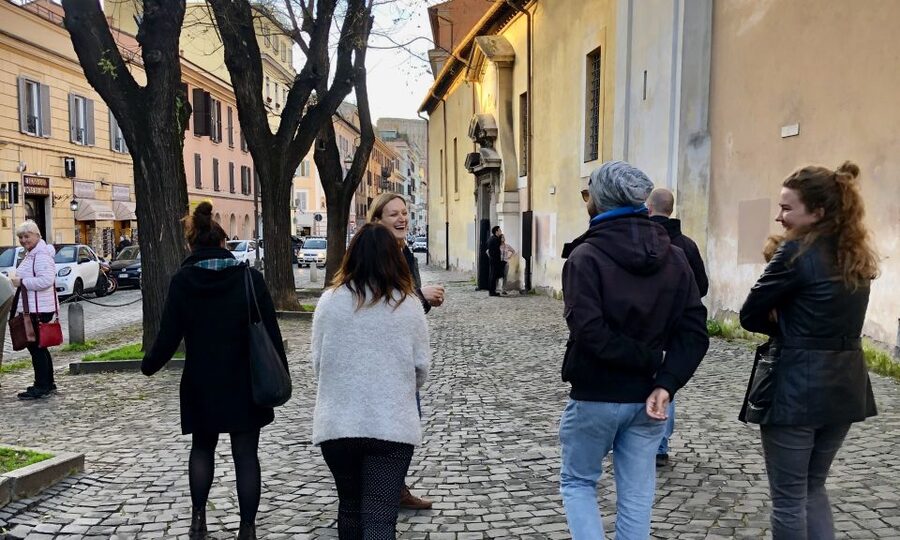
- Fourteen meters below modern Rome: San Clemente reveals several periods of the city beneath one working basilica.
- A rare Mithraic temple: You see one of Rome’s best-preserved shrines to Mithras, along with an underground river.
- The guide makes the difference: Guides such as Francesca, Lorenzo, Paul, Tom, and Anestis have been praised for clear explanations, humor, and strong command of Roman history.
- A modest church with major art: The golden apse mosaic and early Christian frescoes reward careful looking.
- Optional Santo Stefano extension: Add 45 minutes and a 15-minute walk to see a round church covered with unsettling martyrdom scenes.
- Not an easy-access outing: Stairs, underground passages, dress rules, and a no-photography policy all shape the experience.
Why San Clemente feels like Rome in miniature
Many Roman sites show you one famous monument. San Clemente shows you a city built, abandoned, altered, and built again. The present basilica dates to the 12th century, but the real drama begins below its floor.
As you move downward, the centuries change around you. The bright church above gives way to an older Christian place of worship, then to remains connected with Roman domestic and pagan life. The result is less like walking through a single museum and more like turning pages in a stone book.
That layered quality is the chief reason I recommend this visit. You are not simply looking at ruins behind glass. You are standing in the same physical spot while the purpose of the space changes from one age to another. A guide can make those changes clear, helping you understand why later buildings were placed directly above earlier ones.
San Clemente is also a useful counterpoint to Rome’s biggest churches. After the grand scale of St. Peter’s or St. Paul’s, this basilica feels more intimate. One visitor described it as a more modest church that offered unusually good insight into Roman and church history, and that is exactly the appeal. The setting does not overwhelm you. It gives you room to pay attention.
A few more Rome bookings to compare
- Vatican: Museums & Sistine Chapel Entrance Ticket
★ 4.5 · 144,003 reviews - Vatican Museums & Sistine Chapel Tour with Optional Basilica
★ 4.3 · 67,413 reviews - Colosseum, Roman Forum & Palatine Guided Tour
★ 4.7 · 63,148 reviews
Inside the 12th-century basilica
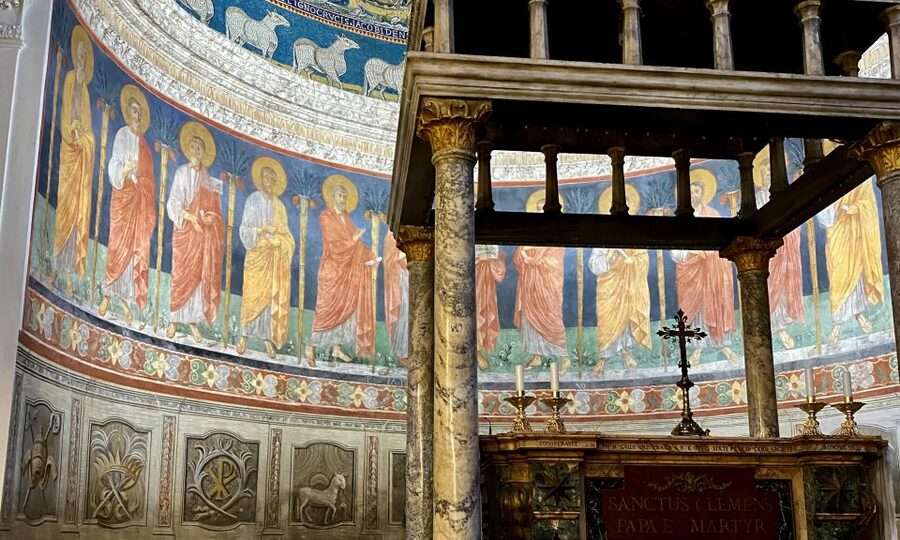
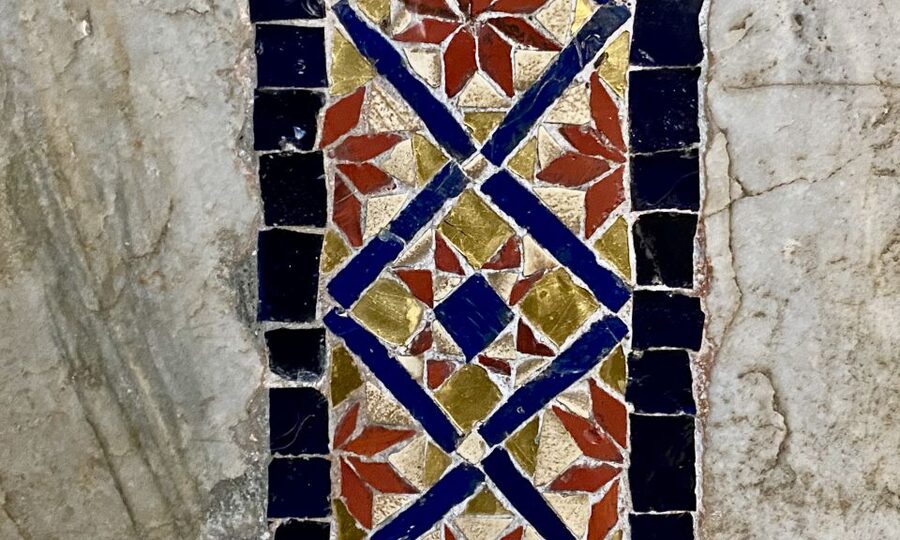
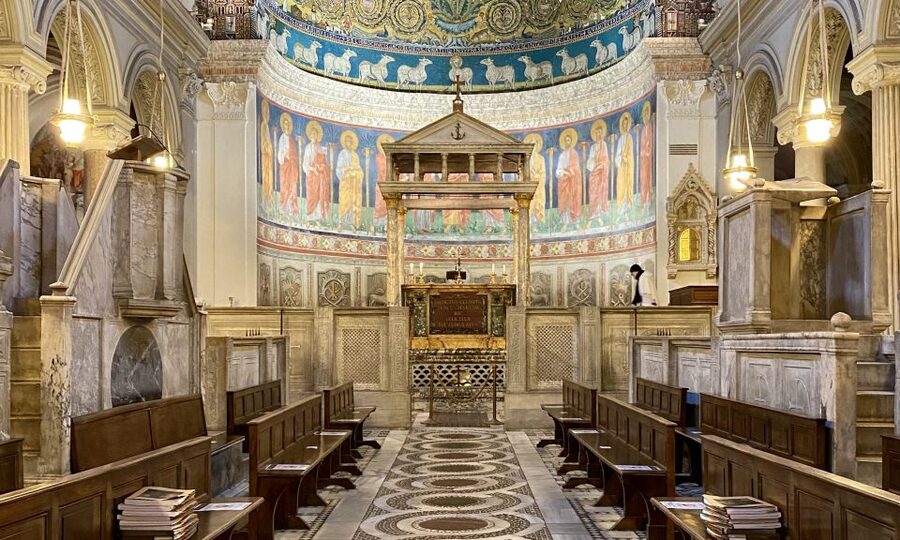
The tour begins in the upper church, where your guide introduces the basilica before taking you below. Do not rush this first part. The golden mosaic in the apse is one of the visit’s most important sights, and the guide explains its spiritual meaning and symbolism.
The mosaic’s gold catches the eye first, but the real reward comes from learning how its images relate to Christian belief. A short explanation can turn an attractive decoration into a visual statement about faith, salvation, and the role of the church.
This opening also gives you a useful point of comparison. The upper basilica is a medieval Christian building, while the rooms below belong to earlier periods and different religious traditions. Seeing the current church first helps you understand the physical and religious changes that follow.
The basilica is still a place of worship, so silence and suitable clothing matter. Shorts, short skirts, sleeveless shirts, food, and drinks are not allowed. Photography and video recording inside are also prohibited. Plan your visit around looking rather than collecting pictures.
Fourteen meters down to the early Christian church
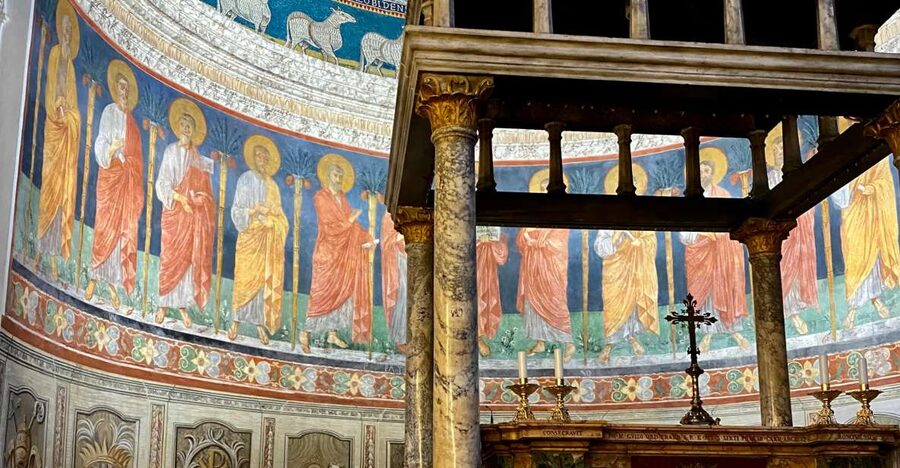
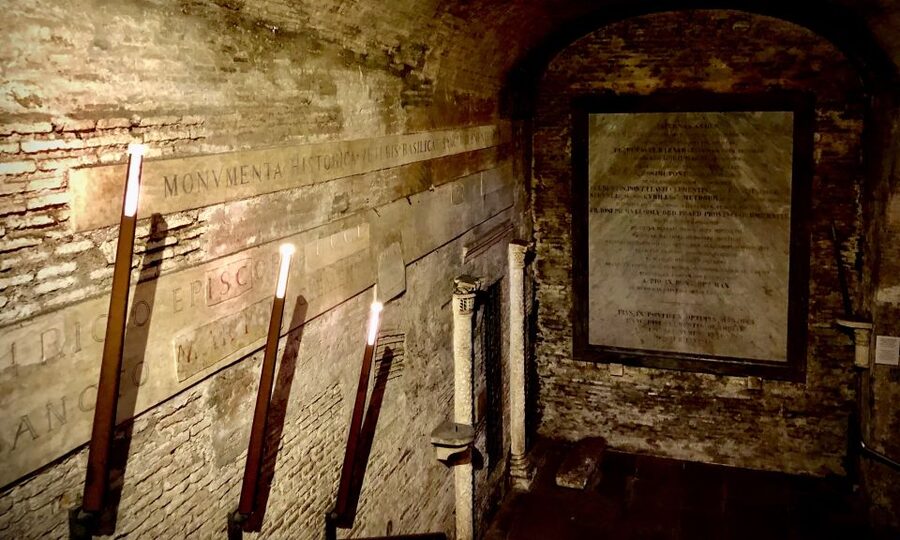
The descent is the heart of the tour. You go about 14 meters below the present basilica to reach a 4th-century underground church, built directly above the home associated with St. Clement, the third pope of Rome.
This level brings you close to the earliest Christian centuries in the city. The frescoes show early Christians, including scenes of martyrdom and persecution. They are important not only as religious art, but also as evidence of how Christian stories were preserved and presented in a period when the faith was still finding its public voice.
The artwork is not as polished or grand as the masterpieces found in Rome’s most famous museums. That is part of its value. These paintings feel tied to a community and a place of worship rather than to a later age of formal artistic display.
Your guide will help you read the scenes and place them in their setting. This is where the tour format earns its price. Without an explanation, you might notice faded figures and fragments of color but miss the connection between the images, the building, and the treatment of early Christians.
Several people who had the tour with guides such as Francesca, Daniel, Sam, and Paul found the explanations especially useful. Paul was described as an archaeologist and professor based in Rome, while other guides were praised for warmth, humor, and a pace that was easy to follow. Guide assignments vary, so you should not book expecting a particular person, but the repeated praise for clear and engaging teaching is encouraging.
The Mithraic temple and the underground river
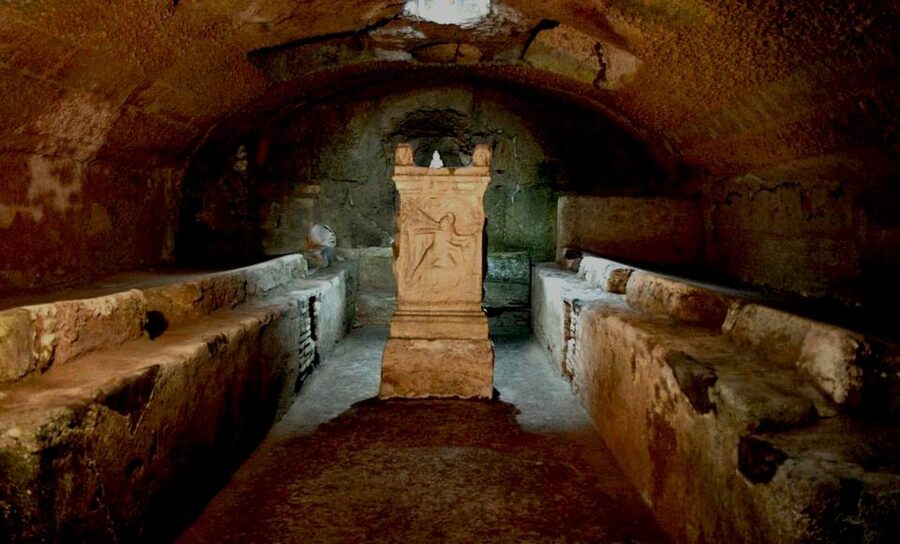
The final descent takes you to one of Rome’s best-preserved Mithraic temples. Mithraism was a pagan cult that existed before Christianity became the dominant religion of the Roman Empire. Its private rituals and specialized symbolism can feel unfamiliar, which makes a guide particularly valuable here.
You learn about the beliefs and ceremonies connected with the cult, as well as the way religious groups operated in ancient Rome. This is not just a stop for people interested in temples. It helps explain that Rome was once home to many competing religious practices, long before Christian churches shaped the city’s public identity.
The temple is tucked into a dark underground setting, and the atmosphere adds to its effect. Nearby waters from an underground river bring an extra sense of mystery. You may hear the water before fully understanding what you are seeing, and the combination of stone, shadow, and flowing water makes this section feel very different from the upper church.
I would not describe the experience as frightening, but it can feel enclosed. If you dislike low light, tight passages, or the sensation of being below ground, this is the part to consider carefully. The tour is not suitable for people with claustrophobia, and the basilica’s architecture means it is not accessible to wheelchair users.
Still Rome, but a slower afternoon:
- Vatican Museums, Sistine Chapel & St Peter’s Basilica Guided Tour
★ 4.5 · 39,149 reviews - Rome: Colosseum, Palatine Hill and Roman Forum Guided Tour
★ 4.8 · 32,814 reviews - Rome: Guided Tour of Colosseum, Roman Forum & Palatine Hill
★ 4.7 · 27,897 reviews - Rome: Colosseum & Forum with Audio Guide App -Optional Arena
★ 4.2 · 24,770 reviews
Adding Santo Stefano Rotondo after San Clemente
The optional extension takes about 45 minutes and includes a 15-minute walk to nearby Santo Stefano Rotondo. Depending on the schedule, the order can change, so you may begin at Santo Stefano and finish at San Clemente instead.
Santo Stefano Rotondo is notable for its circular design. Its shape already gives the visit a different feeling from San Clemente, but the major attraction is the cycle of frescoes showing Christian martyrdom.
These paintings are direct and often graphic. They were designed to present suffering in vivid detail, so this is not a gentle art stop for young children or anyone who prefers religious imagery without violence. For adults interested in early Christian storytelling, though, the frescoes offer a strong continuation of the San Clemente visit.
I see the extension as worthwhile when you have enough time and a particular interest in Christian art, martyr stories, and the development of church architecture. If your schedule is tight, the underground levels at San Clemente are the essential part. The extra church adds context, but it does not replace the main attraction.
The Santo Stefano portion may be unavailable during special events or liturgical celebrations. If that happens, the itinerary can be adjusted, and the overall duration remains unchanged when parts of a church are closed. The experience may also be affected by the weather or the liturgical calendar.
What the guides add to the experience
This is not a tour where you simply need someone to point toward a doorway. San Clemente is full of details that require explanation: changing floor levels, religious symbols, the purpose of the Mithraic temple, the meaning of early frescoes, and the connection between later buildings and older structures.
The strongest praise has gone to guides who combine serious subject knowledge with a relaxed manner. Francesca is described as enthusiastic, friendly, and easy to talk with. Lorenzo has been praised for excellent English, humor, and his ability to welcome questions. Paul received especially high marks for his archaeological and academic background.
That does not mean every guide will have the same career history. It does mean the experience depends heavily on the person leading it. A good guide keeps the history understandable rather than turning the hour into a lecture. The best guides also give you a sense of how ordinary Romans lived, worshipped, and adapted older spaces.
Headsets are included, which matters if the group is more than a few people or if you are moving between rooms. You can hear the guide without crowding around or missing half the explanation.
A private group is available if you prefer a more personal pace. For many visitors, the standard guided option should be enough, especially because the tour lasts only one hour at San Clemente. The private format may make more sense if your group has many questions or wants to focus on archaeology and religious history.
Is $70 a fair price?
At $70 per person, this is not a bargain-priced church visit. You are paying for entrance to San Clemente, a live guide, headsets, and the interpretation that ties the layers together. The Santo Stefano tour is included only if you select that option during booking, so check the exact version before paying.
I think the price is reasonable for people who care about Roman archaeology or early Christianity. The entrance fee alone does not explain the cost, but the site is difficult to understand without help. You are buying access plus a structured explanation of what you are seeing.
Value depends on how you spend your time in Rome. If you want famous views and major monuments, $70 might be better used elsewhere. If you have already seen the Colosseum and the Vatican, or if you want a quieter site with more archaeological detail, San Clemente gives you something genuinely different.
The tour lasts one to two hours, depending on whether you choose Santo Stefano. That makes it easy to fit into a day near the Colosseum and the Celian Hill, though the exact starting point can vary by booking option. There is no hotel pickup, drop-off, food, or drink included.
Practical advice for a smoother visit
Wear comfortable shoes. You will be walking and using stairs, and the underground sections are not designed for easy mobility.
Dress for a church visit, not a beach afternoon. Shorts, short skirts, and sleeveless shirts are not permitted. Leave food, drinks, sharp objects, weapons, alcohol, and drugs behind. Pets are also not allowed.
Keep your phone in your pocket inside. Photography and video recording are prohibited, so prepare to remember the details without taking pictures. That restriction may disappoint you, especially with the mosaic and frescoes, but it also encourages a slower look.
Give yourself a little flexibility around the start time. The meeting point may differ according to the option you choose, and church events can change the order or availability of the stops. The booking terms allow cancellation up to 24 hours in advance for a full refund, and you can reserve now and pay later.
Tours are offered in English, Italian, Spanish, French, German, and Portuguese. If you have a strong language preference, check the available departure before choosing a time.
Who should book this tour?
I would recommend San Clemente to you if you enjoy archaeology, religious art, ancient Roman belief systems, or places where the past remains physically visible. It is also a smart choice if you have seen Rome’s headline sights and want a smaller, more focused experience.
The optional Santo Stefano visit suits you if early Christian martyrdom art interests you and you are comfortable with graphic scenes. It gives the tour a stronger art and church-history focus, but the underground levels at San Clemente are the main reason to book.
I would skip it if you need step-free access, dislike enclosed spaces, or want to take photographs inside. Families should think carefully before selecting the Santo Stefano extension because of the graphic frescoes.
Final verdict: book it for the layers
San Clemente is one of Rome’s most rewarding lesser-known historical stops. The golden mosaic, early Christian frescoes, Mithraic temple, and underground river create a compact journey through several religious eras.
Book the one-hour San Clemente tour if you want the essential experience. Add Santo Stefano Rotondo when you have the time, an interest in martyrdom art, and the patience for a second church. At $70, it is best viewed as a guide-led archaeology experience rather than a simple entrance ticket, and for the right audience, that extra explanation is exactly what makes the visit worthwhile.
FAQ
How long does the San Clemente tour last?
The guided visit to Basilica di San Clemente lasts one hour. If you select the Santo Stefano Rotondo extension, the total experience lasts about one to two hours, including the 45-minute guided visit there.
How far underground does the tour go?
The tour descends approximately 14 meters below the present Basilica di San Clemente.
Is Santo Stefano Rotondo included in the price?
It is included only if you specifically select the extended option during booking. The standard San Clemente tour does not include the guided visit to Santo Stefano Rotondo.
How do I get from San Clemente to Santo Stefano Rotondo?
The itinerary includes a 15-minute walk between the two churches when the extension is selected.
Is the tour accessible for wheelchair users?
No. The architectural structure of San Clemente and its underground areas means the tour is not accessible to wheelchair users.
Is this tour suitable for people with claustrophobia?
No. The underground spaces and enclosed passages may not be suitable for people with claustrophobia.
Can children visit Santo Stefano Rotondo?
The frescoes at Santo Stefano Rotondo show graphic scenes of martyrdom and may not be appropriate for children.
Which languages are available?
The live tour is available in English, Italian, Spanish, French, German, and Portuguese. A private group option is also available.
Recently added around Rome
- Palatine Hill and Roman Forum Tour with Fast-Track Entrance★ 4.2 · 417 reviews
- Tivoli: Villa D’Este & Villa Adriana Pass & App Audioguide★ 4.4 · 364 reviews
- From Rome: Villa D’Este & Villa Adriana Day Trip with Lunch★ 4.4 · 289 reviews
- Vatican Museums & Sistine Chapel Skip-the-Line Guided Tour★ 4.6 · 254 reviews
- Rome: The Three Tenors at St. Paul’s Church Concert Ticket★ 4.7 · 699 reviews
- Tivoli: Villa D’Este Entry Ticket and App Audio Guide★ 4.3 · 191 reviews
- Rome: Capitoline Museums and Centrale Montemartini Tickets★ 4.4 · 328 reviews
- Rome: St. Peter’s Basilica and Papal Tombs Guided Tour★ 4.6 · 477 reviews
Rome Tours, compared.
Vatican Museums & Sistine Chapel Tour with Optional Basilica
Read our review →
Colosseum, Roman Forum & Palatine Guided Tour
Read our review →
Vatican Museums, Sistine Chapel & St Peter’s Basilica Guided Tour
Read our review →
Colosseum, Palatine Hill and Roman Forum Guided Tour
Read our review →
Guided Tour of Colosseum, Roman Forum & Palatine Hill
Read our review →
Colosseum & Forum with Audio Guide App -Optional Arena
Read our review →