Reviewed · ROME TOURS
Rome: Small Group Rome’s Dark Side – Ghosts & Legends Tour
Rome has a wicked after-hours side. This two-hour walk turns beautiful piazzas, churches, bridges, and alleys into a stage for executions, poison, betrayal, and ghost stories. I like the sharp storytelling and the fact that the guides focus on real people and strange events rather than costumes or cheap jump scares. I also like the small group limit of 15, which makes it easier to hear the guide on busy Roman streets. The main consideration is tone: this is playful, grim, and sometimes cheeky, so it will not suit anyone seeking a solemn history walk.
The route begins at Giordano Bruno’s statue in Campo de’ Fiori and finishes near Castel Sant’Angelo. Along the way, you hear about controversial philosophers, dangerous noblewomen, alleged poisoners, and a famous magician whose luck eventually ran out. A brief bar stop gives you time for a drink and a bathroom break, but food and drinks are not included.
In This Review
- Key things to know before booking
- What this Rome ghost tour actually feels like
- Meeting Giordano Bruno in Campo de’ Fiori
- Campo de’ Fiori and the prettier side of punishment
- Farnese Palace and Rome’s polished scandals
- Ponte Sisto and the city’s haunted crossings
- The bar stop: a practical pause in the darkness
- Via Giulia and Rome’s less obvious stories
- Castel Sant’Angelo and the final stories
- Why the guides make or break the evening
- Is $23 a fair price for two hours?
- Walking conditions, weather, and accessibility
- Who will enjoy this tour most?
- Useful planning advice for your Rome evening
- Should you book Rome’s Dark Side?
- FAQ
- How long is the Rome’s Dark Side tour?
- How much does the tour cost?
- Where does the tour begin?
- Where does the tour finish?
- Is transportation included?
- Is the tour available in English?
- Does the tour visit crypts or underground sites?
Key things to know before booking
- The stories matter more than the scares: Expect history, folklore, scandal, and dark humor instead of actors, costumes, or ghost-hunting equipment.
- The route links famous sights with grim episodes: Campo de’ Fiori, Farnese Palace, Ponte Sisto, Via Giulia, and Castel Sant’Angelo all take on a different mood after sunset.
- The group stays small: With a maximum of 15 people, you should be able to stay close to the guide and follow the stories without being swallowed by a large crowd.
- The walking is manageable but uneven: You spend about two hours outdoors on Roman cobblestones, so comfortable shoes are essential.
- The guides are the heart of the experience: Ben, Arielle, Ivana, Ariel, Alethea, Mari, and others have earned praise for humor, clear delivery, and strong command of the material.
- It costs $23 per person: That is a fair price for two hours of guided walking, especially if you want something different from Rome’s standard ancient monuments tour.
What this Rome ghost tour actually feels like
This is not a haunted-house attraction transplanted onto Roman streets. You will not be chased by actors, asked to use a ghost app, or led underground with a flashlight. The mood comes from the city itself, the darkness, the old stone, and stories that are unsettling because they are tied to real people and places.
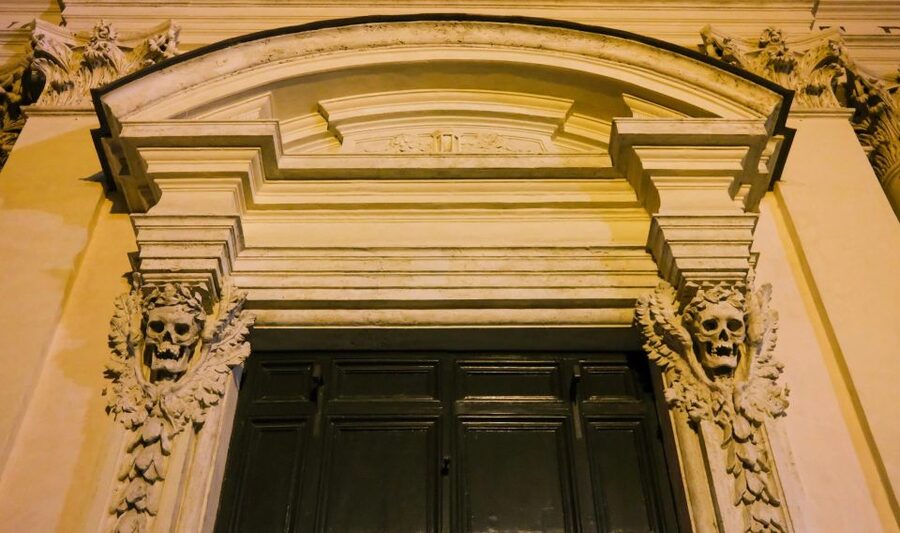
The guide’s job is to connect the setting with the tale. A handsome palace becomes the backdrop for political intrigue. A bridge becomes a place tied to violence and punishment. A church becomes less about quiet devotion and more about scandal, strange deaths, and unsettling decoration.
That approach gives the walk more substance than a standard supernatural tour. If you like Horrible Histories more than horror films, you are likely to enjoy the balance. One particularly useful distinction comes through in the way the experience is presented: the stories are dark, but the delivery is often funny. The humor keeps the evening moving and prevents two hours of grim facts from becoming heavy.
The guides are not presented as actors in capes. That is good news if you want history with a little bite. Ben has been praised for keeping facts accurate while making the evening relaxed and entertaining. Ivana is known for animated storytelling and bringing historical characters to life. Arielle and Ariel have also been singled out for warmth, humor, and strong pacing.
Guide quality can vary from one departure to another, as it does on any walking tour. Here, though, the repeated praise for different guides suggests that the company places real weight on presentation, not just on handing out a memorized script.
A few more Rome bookings to compare
- Vatican: Museums & Sistine Chapel Entrance Ticket
★ 4.5 · 144,003 reviews - Vatican Museums & Sistine Chapel Tour with Optional Basilica
★ 4.3 · 67,413 reviews - Colosseum, Roman Forum & Palatine Guided Tour
★ 4.7 · 63,148 reviews
Meeting Giordano Bruno in Campo de’ Fiori
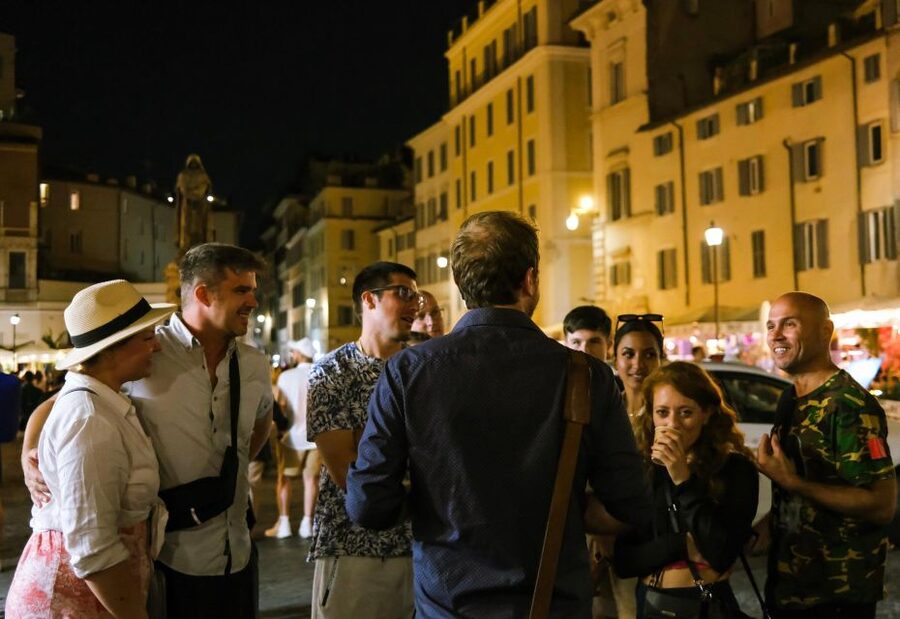
The meeting point is easy to identify. Look for the tall, hooded statue of Giordano Bruno in the center of Campo de’ Fiori, along with a sign reading Rome’s Dark Side, Ghosts and Legends. Arrive about 10 minutes early, since the guide cannot guarantee waiting for late arrivals.
Campo de’ Fiori is an effective starting point. By day, it is one of Rome’s familiar public squares. At night, the statue and surrounding buildings create a much darker frame for the opening stories. Bruno himself is central to the mood, since his fate reflects one of the tour’s main themes: Rome’s beauty often sits directly beside cruelty and punishment.
This first stop helps set expectations. You are not simply going to hear about imaginary spirits. You are also going to hear about real executions, religious conflict, ambitious people, and reputations that became stranger over time.
Because Campo de’ Fiori can be lively, the guide’s position matters. The small group should help, but stay close and avoid drifting behind while photos or conversations distract you.
Campo de’ Fiori and the prettier side of punishment
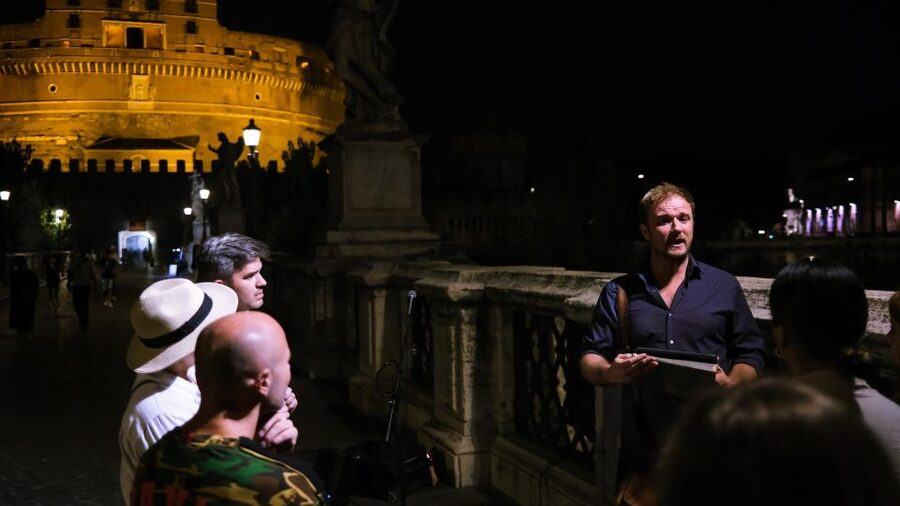
The walk begins with the darker past of Campo de’ Fiori and then moves toward Farnese Palace. This section is less about a single scare and more about showing how public spaces once carried very different meanings.
Rome’s grand squares were not only places for markets, ceremonies, and people-watching. They could also be settings for public punishment and spectacle. Hearing those details while standing among restaurants and evening foot traffic creates the contrast that makes the tour work.
I like this part because it changes the way you see a familiar place. The guide is not asking you to ignore the postcard Rome. Instead, you learn to notice what the postcard leaves out.
The tone can be blunt. Tales of executions, murder, and bad behavior are delivered with a smirk rather than a lecture. That will appeal to adults who enjoy irreverent storytelling, but families with very young children may want to consider the subject matter before booking.
Farnese Palace and Rome’s polished scandals
Farnese Palace brings the group into one of Rome’s grander architectural settings. The tour uses the beauty of the building as a contrast to the people and actions connected with power.
Expect stories about status, betrayal, and the ways influential people protected themselves. The point is not to provide a full architectural tour of the palace. This is a short stop within a larger night walk, so the focus remains on scandal and atmosphere.
That limited focus is worth remembering. If you want detailed art, architecture, or political history, book a specialist tour elsewhere. If you want the episode that turns a beautiful façade into a place full of suspicious motives, this section should be more satisfying.
The guide’s storytelling style is especially important here. A dry list of names would lose the group. The strongest guides use timing, facial expression, and humor to make the characters memorable without turning the evening into theater.
Still Rome, but a slower afternoon:
- Vatican Museums, Sistine Chapel & St Peter’s Basilica Guided Tour
★ 4.5 · 39,149 reviews - Rome: Colosseum, Palatine Hill and Roman Forum Guided Tour
★ 4.8 · 32,814 reviews - Rome: Guided Tour of Colosseum, Roman Forum & Palatine Hill
★ 4.7 · 27,897 reviews - Rome: Colosseum & Forum with Audio Guide App -Optional Arena
★ 4.2 · 24,770 reviews
Ponte Sisto and the city’s haunted crossings
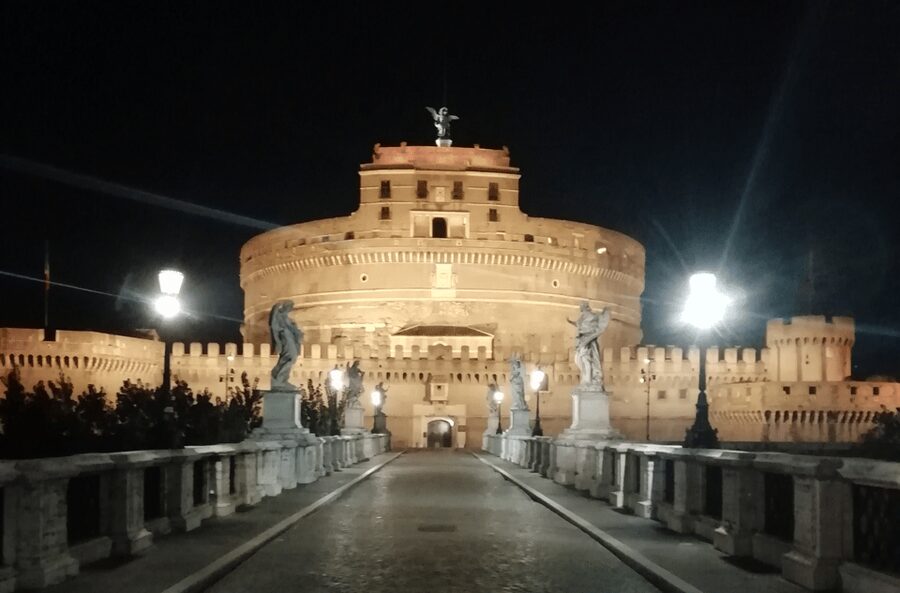
From Farnese Palace, the route continues toward Ponte Sisto. Bridges naturally suit ghost stories. They are places of movement, escape, confrontation, and, in old cities, danger.
Here the setting opens up a little, giving the group a change from tight lanes and crowded squares. The bridge also offers a natural pause in the rhythm of the walk. You are still listening, but you are not packed into a narrow street.
The experience includes haunted bridges and tales connected with violence and death. The guide may frame these stories as legends, local beliefs, or episodes with a historical basis. Do not expect every ghost tale to come with proof. The pleasure is in hearing how Rome built stories around places that already carried fear and memory.
This is also a good moment to watch your footing and your group position. Evening traffic, uneven pavement, and the temptation to stop for photographs can separate you from the guide. Comfortable shoes and a little attention make the walk easier.
The bar stop: a practical pause in the darkness
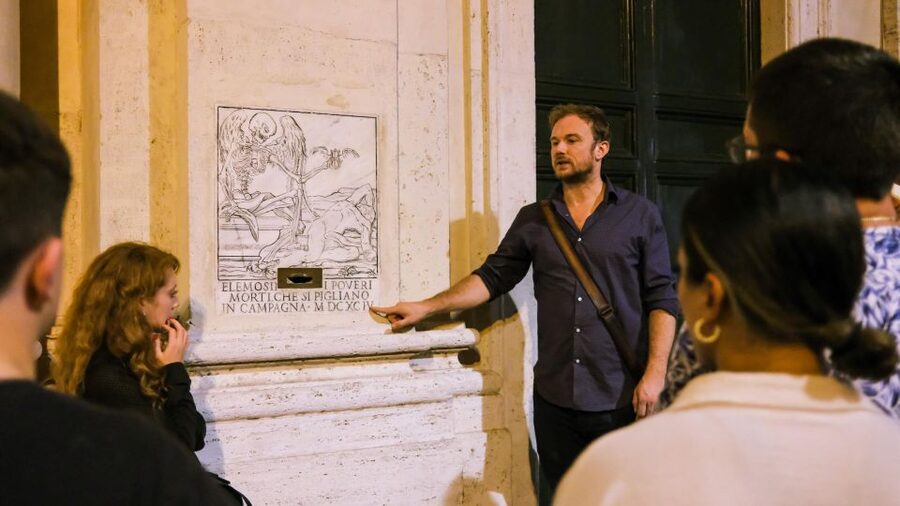
A short stop at a local bar is built into the route. You can buy a drink or something to eat, and there is time for the bathroom.
This break is more useful than it sounds. Two hours of walking and standing can feel long, especially after a full day of Roman sightseeing. One person nearly skipped the tour after becoming tired from walking all day, then found the pace manageable and the scheduled pause helpful. That is a good sign for anyone who worries that a night walk will feel like one more exhausting activity.
Food and drinks are not included, so budget a little extra if you want something. The stop is not presented as a meal or a major tasting experience. Treat it as a chance to refresh yourself and chat with the group before the final stretch.
Via Giulia and Rome’s less obvious stories
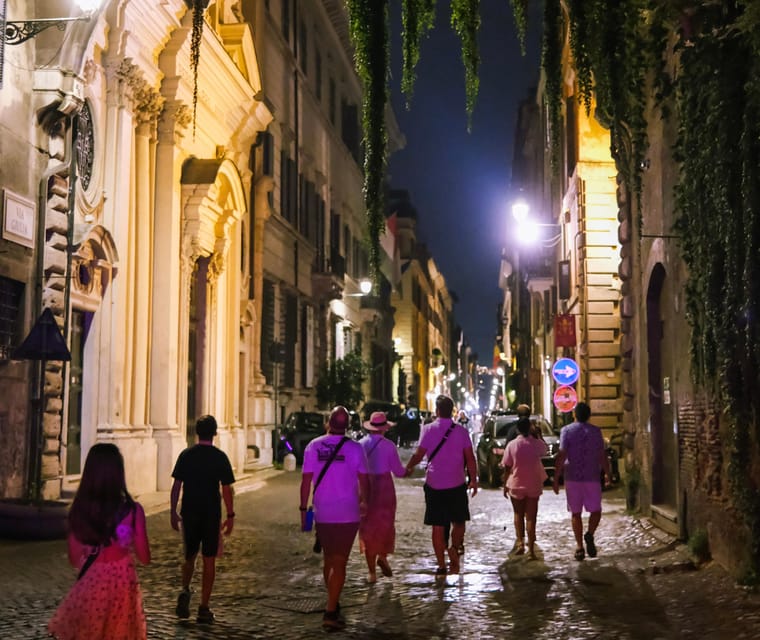
Via Giulia brings the group into a quieter, more atmospheric part of the route. This is where the walk feels less like a circuit of headline sights and more like a search through Rome’s side streets.
The tour uses these alleys to introduce people and events you may not encounter in a standard city tour. That includes a noblewoman who survived shifting political fortunes, a possible poisoner with an alarming list of clients, and a magician who gained fame across Europe before his story took a darker turn.
The value here is variety. The evening is not only about dead people returning as ghosts. It is also about living people who lied, plotted, manipulated, or simply behaved terribly while surrounded by beautiful buildings.
The group then spends about 20 minutes at a lesser-known stop before continuing toward Castel Sant’Angelo. The exact character of this stop is not specified in advance, which may appeal to you if you like a little surprise. Do not expect a major monument visit or indoor admission. The route remains above ground.
Castel Sant’Angelo and the final stories
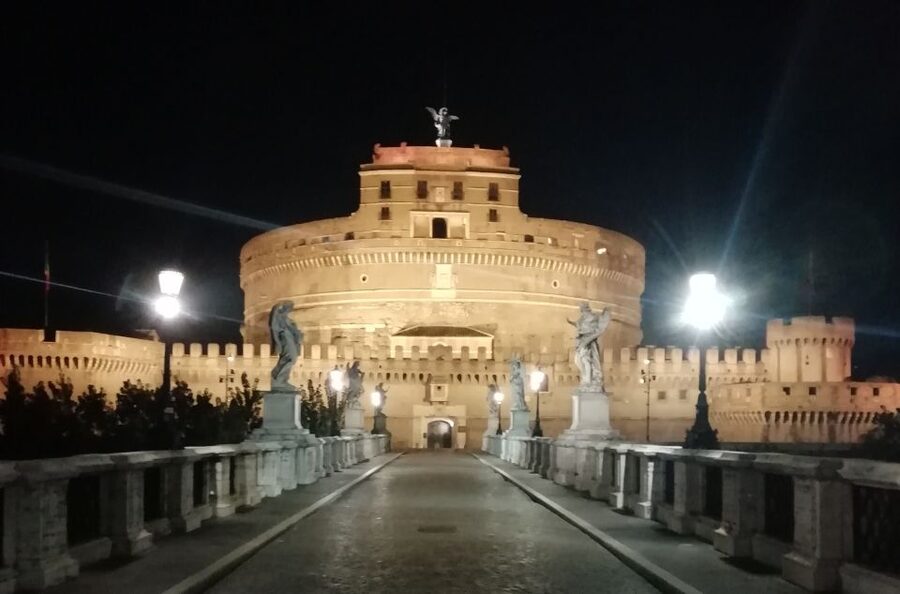
The final section leads toward Castel Sant’Angelo and ends at either St. Angelo Bridge or Castel Sant’Angelo. This is a strong place to finish because the fortress and bridge already carry a heavy, dramatic presence after dark.
The guide continues with stories tied to executions, prisoners, church power, and the legends attached to the area. You will not go inside Castel Sant’Angelo, and no crypts or underground sites are included. The attraction is the exterior setting and the stories linked to it.
Finishing here also gives you a practical choice. You can end at St. Angelo Bridge or near the castle, depending on the specific drop-off arrangement. From there, you are responsible for your own transport. The tour does not provide a ride back to your hotel or to the starting point.
The walk begins and ends in different parts of central Rome, so check your plans before booking. This is easy to fit into an evening if you are already exploring Campo de’ Fiori and the river area, but less convenient if you need to return quickly to a distant neighborhood.
Why the guides make or break the evening
The strongest theme in the feedback is not a particular ghost story. It is the guide.
Ben is repeatedly praised for humor, historical accuracy, and an easy way with a group. Ivana is described as animated, funny, and able to make individuals from the past feel vivid. Arielle and Ariel are also praised for warmth, energy, and clear explanations. Alethea and Mari receive similar credit for combining humor with strong historical detail.
That matters because this format depends on voice and timing. A guide who rushes through names and dates could make the same route feel ordinary. A guide who pauses at the right moment and explains the human motive behind the legend can make a familiar street feel new.
The language options are English and Italian. One useful detail for mixed-language families is that a guide was able to make the stories clear for parents who did not speak English well. Still, if someone in your group has limited English, confirm the tour language when booking.
You should also expect interaction. Guides have been praised for making everyone feel included, answering questions, and keeping conversation moving. This is not a silent audio walk. If you enjoy asking questions or reacting to a story, you will get more from it.
Is $23 a fair price for two hours?
At $23 per person, this is a good-value evening activity in central Rome. You are paying for a live guide, a two-hour route, several location-based stories, and a small group capped at 15 people.
The value is strongest if you want more than a standard sightseeing circuit. You are not paying museum admission, and the tour does not include food or drinks. But you also avoid the cost and time of a longer formal attraction visit.
The modest price makes it easy to add this to a Rome itinerary without building the whole day around it. It also works well as a first-night activity. Several people found that the tour helped them see the city differently for the rest of their stay, and one person specifically wished they had booked it at the start of the trip.
At the same time, do not book it expecting a full history course. Two hours allows for a lively selection of stories, not a complete account of Rome’s darker past. If you want depth on one person, period, or building, a focused private tour would give you more detail.
Walking conditions, weather, and accessibility
The route takes place rain or shine. Rome’s weather can change quickly, so bring suitable clothing rather than assuming the evening will stay dry. A rainy night may add atmosphere, but it also makes cobblestones more slippery.
Wear comfortable shoes. You walk for two hours over uneven streets, and although the pace is described as leisurely, there will be periods of standing while the guide speaks.
The tour is wheelchair accessible, but the route includes cobblestones and outdoor streets. If you use a wheelchair or have mobility concerns, contact the provider before booking so you can confirm the current route and any practical limits.
There are no underground sites, crypts, or enclosed catacombs. That makes the tour easier for anyone who prefers to remain above ground, but it also means the experience relies entirely on outdoor atmosphere and storytelling.
Who will enjoy this tour most?
I would choose this walk if you:
- Like history told through unusual characters and scandal
- Prefer storytelling to theatrical scares
- Want a relaxed evening activity after visiting museums and monuments
- Enjoy dark humor and do not need every story softened
- Are visiting Rome with teenagers or adults who want something beyond the Colosseum and Vatican
- Appreciate a guide who can mix facts, legends, and jokes
I would think twice if you want a serious academic lecture, a high-intensity scare attraction, or a route focused on entering historic buildings. The tour is also not ideal for anyone who dislikes walking on cobblestones or hearing about executions, murder, poison, and religious persecution.
The small group makes it more personal than a large street-crowd tour, but it does not turn the experience into a private conversation. If you want complete control over the pace and subject matter, the private group option may be worth considering.
Useful planning advice for your Rome evening
Arrive early at Giordano Bruno’s statue. The guide will be holding a sign for Rome’s Dark Side, Ghosts and Legends, and late arrivals may miss the opening story if the group moves on.
Keep your phone charged enough to contact the provider if you are delayed. You can call or use WhatsApp, but the guide cannot be expected to search every nearby street for a missing person.
Plan your evening around the finish, not only the start. Since the route ends near Castel Sant’Angelo and does not include transport, know how you will continue afterward. You may want to reserve dinner for after the tour, especially since the bar stop is brief and purchases are separate.
The cancellation policy is flexible: you can cancel up to 24 hours ahead for a full refund, and you can reserve now while paying later. That is useful when your Rome schedule is still shifting.
Should you book Rome’s Dark Side?
Yes, if you want Rome with the polished surface removed. For $23, you get a lively two-hour walk, a small group, a convenient central route, and stories that reach beyond the usual emperors, artists, and architects.
The best reason to book is the guide-led delivery. Ben, Ivana, Arielle, Ariel, Alethea, and Mari have each been praised for making the material funny, clear, and memorable. The route itself is good, but the storyteller determines how much you enjoy it.
Book it early in your stay if you can. The walk may change how you look at Campo de’ Fiori, Via Giulia, Ponte Sisto, and Castel Sant’Angelo for the rest of your visit. Skip it only if dark subjects, irreverent humor, or outdoor walking after dark are not your idea of a good evening.
FAQ
How long is the Rome’s Dark Side tour?
The tour lasts two hours, including the walking route and a short stop at a local bar.
How much does the tour cost?
The listed price is $23 per person.
Where does the tour begin?
It begins in front of the Giordano Bruno statue in the center of Campo de’ Fiori. Look for the guide holding a sign that says Rome’s Dark Side, Ghosts and Legends.
Where does the tour finish?
The tour finishes at two possible drop-off points near St. Angelo Bridge or Castel Sant’Angelo.
Is transportation included?
No. You must arrange your own transport to the meeting point and after the final stop.
Is the tour available in English?
Yes. Live guiding is available in English and Italian.
Does the tour visit crypts or underground sites?
No. The entire experience stays above ground, and no crypts or underground locations are included.
Recently added around Rome
- Palatine Hill and Roman Forum Tour with Fast-Track Entrance★ 4.2 · 417 reviews
- Tivoli: Villa D’Este & Villa Adriana Pass & App Audioguide★ 4.4 · 364 reviews
- From Rome: Villa D’Este & Villa Adriana Day Trip with Lunch★ 4.4 · 289 reviews
- Vatican Museums & Sistine Chapel Skip-the-Line Guided Tour★ 4.6 · 254 reviews
- Rome: The Three Tenors at St. Paul’s Church Concert Ticket★ 4.7 · 699 reviews
- Tivoli: Villa D’Este Entry Ticket and App Audio Guide★ 4.3 · 191 reviews
- Rome: Capitoline Museums and Centrale Montemartini Tickets★ 4.4 · 328 reviews
- Rome: St. Peter’s Basilica and Papal Tombs Guided Tour★ 4.6 · 477 reviews
Rome Tours, compared.
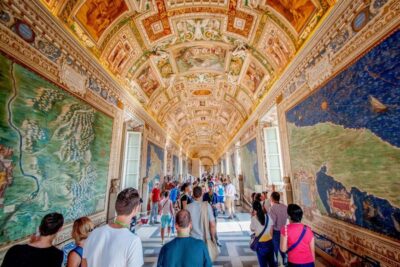
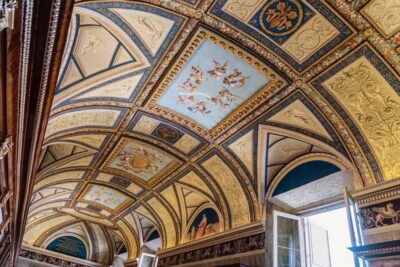
Vatican Museums & Sistine Chapel Tour with Optional Basilica
Read our review →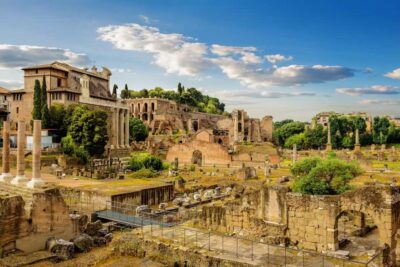
Colosseum, Roman Forum & Palatine Guided Tour
Read our review →
Vatican Museums, Sistine Chapel & St Peter’s Basilica Guided Tour
Read our review →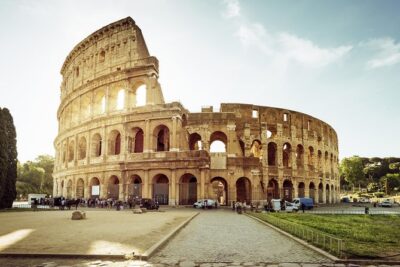
Colosseum, Palatine Hill and Roman Forum Guided Tour
Read our review →
Guided Tour of Colosseum, Roman Forum & Palatine Hill
Read our review →
Colosseum & Forum with Audio Guide App -Optional Arena
Read our review →