
Reviewed · SKIP THE LINE
Rome: Skip-the-Line Borghese Gallery Guided Tour
Art comes alive in marble here. This 135-minute Borghese Gallery tour gives you priority access and a professional guide who connects Bernini’s dramatic sculptures, Caravaggio’s dark paintings, and the Borghese family’s ambitions. I especially like the focused route through the gallery and the way strong guides such as Simona, Susanne, Alexandra, and Alessandra explain both the art and the people behind it. The main drawback is that the visit can feel short if you want quiet time with every painting, and the guided commentary may leave only brief pauses for photos.
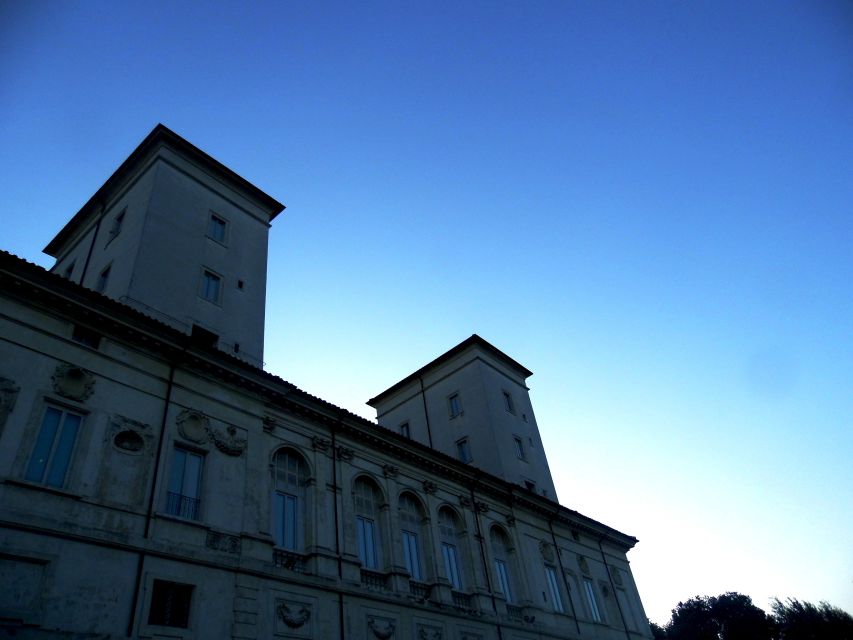
I also like the setting. The gallery sits in Villa Borghese, one of Rome’s most pleasant green spaces, with the Pincio Terrace nearby for broad views toward St. Peter’s Basilica and the city. You should know that the listed activity centers on the gallery, not a separate guided walk through the gardens, so plan extra time if you want to explore outside.
In This Review
- Key points at a glance
- Why the Borghese Gallery deserves your time
- Meeting at Piazzale del Museo Borghese
- The ground-floor sculptures: Bernini’s great performance
- Paintings by Caravaggio, Raphael, and Titian
- What a good guide adds to the visit
- The 135-minute schedule and its limits
- Villa Borghese and the Pincio Terrace
- Is the $100.09 price good value?
- Who should book this Borghese Gallery tour?
- Should you book it?
- FAQ
- How long does the Borghese Gallery tour last?
- Where do I meet the guide?
- Which languages are available?
- Does the tour include priority entry?
- What artworks are included in the visit?
- Are earphones provided?
- Can I bring a backpack into the gallery?
- Is the tour suitable for wheelchairs or pushchairs?
- How far is the nearest metro station?
- Can I cancel the booking?
Key points at a glance
- Bernini’s marble takes center stage: See The Rape of Proserpina and Apollo and Daphne with explanations that help you notice movement, emotion, and astonishing carving.
- Priority entry saves precious Rome time: The pre-booked ticket lets you avoid the regular ticket line, which matters at a museum with tightly managed admission.
- Guides make the collection easier to understand: Strong guides explain artistic details alongside the politics, religion, and family power behind the works.
- Caravaggio and Raphael add painting power: Boy with a Basket of Fruit, David with the Head of Goliath, and Raphael’s Deposition are key stops.
- Villa Borghese adds breathing room: After the museum, you can walk among fountains and trees toward the Pincio Terrace.
- Allow for practical limits: Backpacks go in the wardrobe, the tour is not suitable for wheelchairs or pushchairs, and comfortable shoes are a good idea.
Why the Borghese Gallery deserves your time
Rome has no shortage of famous museums, but the Borghese Gallery offers a more concentrated experience. You are not crossing endless halls to reach one important work. The collection places major sculptures and paintings in ornate rooms, so the art feels close, immediate, and easy to compare.
The museum’s story begins with the Borghese family, one of Rome’s most powerful dynasties. Their patronage helped shape the city’s cultural life and brought together works from different periods. A guide can show you how this collection reflects ambition as much as taste. The family wanted beauty, status, and influence, and the gallery reveals all three.
I find a guided visit especially useful here because many works reward close looking. Bernini’s marble may first appear simply graceful or dramatic. Then you notice the fingertips pressing into flesh, the strands of hair, or the way a figure seems to turn in mid-action. A good guide points out those details before you move on.
The collection also spans Renaissance, Baroque, and Neoclassical art. That range gives you a quick lesson in changing artistic ideals. Raphael offers balance and emotional control. Caravaggio uses sharp light and shadow. Bernini makes stone seem capable of motion. Canova returns to polished restraint and classical beauty.
More Museum Tours in Rome
- Vatican: Museums & Sistine Chapel Entrance Ticket
★ 4.5 · 144,003 reviews - Vatican Museums & Sistine Chapel Tour with Optional Basilica
★ 4.3 · 67,413 reviews - Vatican Museums, Sistine Chapel & St Peter’s Basilica Guided Tour
★ 4.5 · 39,149 reviews
Meeting at Piazzale del Museo Borghese
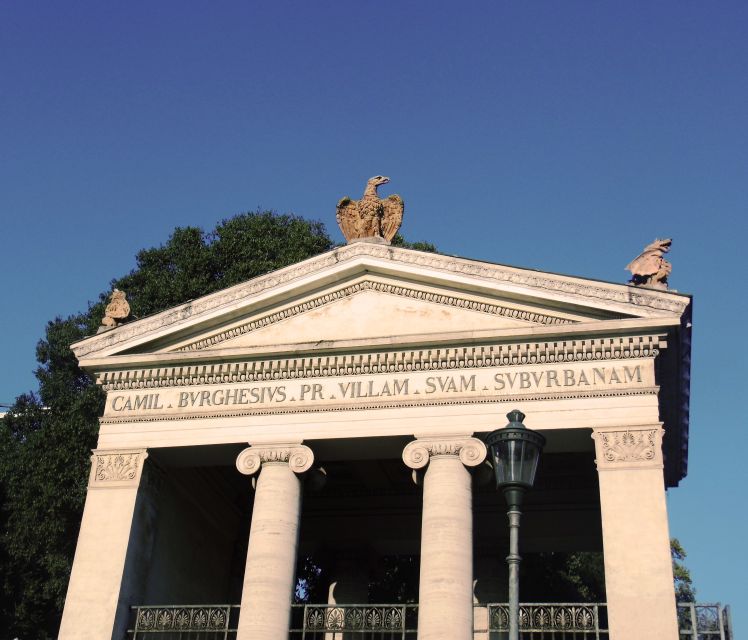
You meet at the entrance of the Borghese Gallery in Piazzale del Museo Borghese. Look for the guide holding a Tourismotion sign. Arrive about 10 minutes early, since a late arrival can create stress before a timed museum visit.
The transport advice matters. Barberini is the closest listed metro station, but it is about a 20-minute walk away. Bus lines 83 and 223 serve the area. Spagna metro station may look tempting on a map, but the instructions specifically advise against using it for this meeting point.
Wear shoes you can walk in. You may spend the tour standing on hard floors, and you will likely want to continue through Villa Borghese afterward. Bring your passport or ID card, as identification is listed among the required items.
The meeting area is at the museum entrance, not a hotel or central city office. Give yourself extra time if you are coming from another part of Rome. The museum’s position inside the gardens makes the final approach pleasant, but it is not the kind of stop where you should rush in from a nearby metro platform.
The ground-floor sculptures: Bernini’s great performance
The tour begins with the ground-floor sculpture rooms, and this is where the Borghese Gallery makes its strongest first impression. The route includes works by Gian Lorenzo Bernini, whose sculptures are central to the museum’s appeal.
The Rape of Proserpina shows Pluto carrying Proserpina away. Its subject is violent and unsettling, but Bernini’s technical control is extraordinary. The guide can help you look at the fingers pressing into Proserpina’s body, a detail that makes the marble seem soft. That is the sort of feature easy to miss if you simply walk around the room.
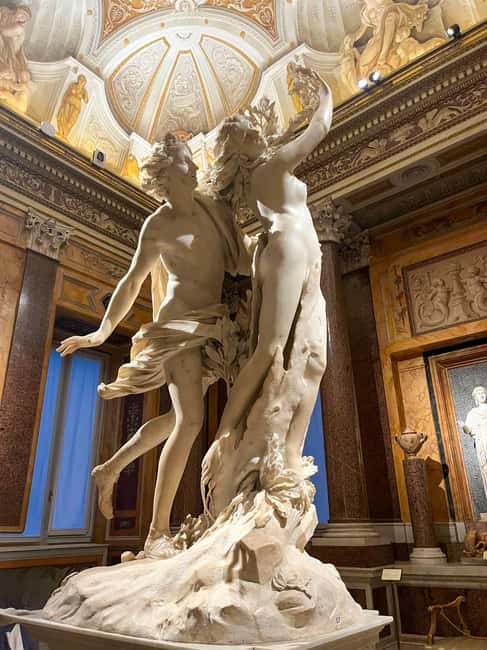
Apollo and Daphne presents another mythological moment. Daphne is changing into a laurel tree as Apollo reaches toward her. The sculpture is full of movement, with branches, hair, limbs, and drapery spreading through space. You can see why several people described the Bernini works as exceptional and wanted more time to hear about the artist.
The guide’s storytelling matters because these are not static figures. They show a story at its most dramatic instant. You are looking at the moment of transformation, pursuit, or loss rather than a calm portrait of the characters.
You will also see Antonio Canova’s Pauline Bonaparte as Venus Victrix. It is very different from Bernini’s theatrical pieces. Canova’s polished neoclassical style presents Pauline Bonaparte with elegance and control, turning a portrait into an image of ideal beauty. The contrast between Canova and Bernini helps you understand how artistic taste shifted across periods.
One practical point: the sculpture rooms can encourage you to keep moving with the group. Your guide may pause to explain a work, then lead you onward. You will have some chances to take pictures and look more closely, but this is not a leisurely solo museum session.
Paintings by Caravaggio, Raphael, and Titian
The paintings provide a quieter counterpoint to the sculptures. Caravaggio’s Boy with a Basket of Fruit and David with the Head of Goliath show why his work remains so gripping. His use of light and shadow directs your eye and gives ordinary physical details unusual force.
Boy with a Basket of Fruit looks simple at first. A basket, fruit, and a young figure do not sound like a grand historical subject. Yet the textures and lighting make the scene feel immediate. A guide can draw your attention to the condition of the fruit and the tension between beauty and decay.
David with the Head of Goliath carries a darker emotional charge. The guide can connect the subject to Caravaggio’s personal and artistic concerns, while also explaining how the light shapes the scene. This is one of the moments when background stories make the painting easier to remember.
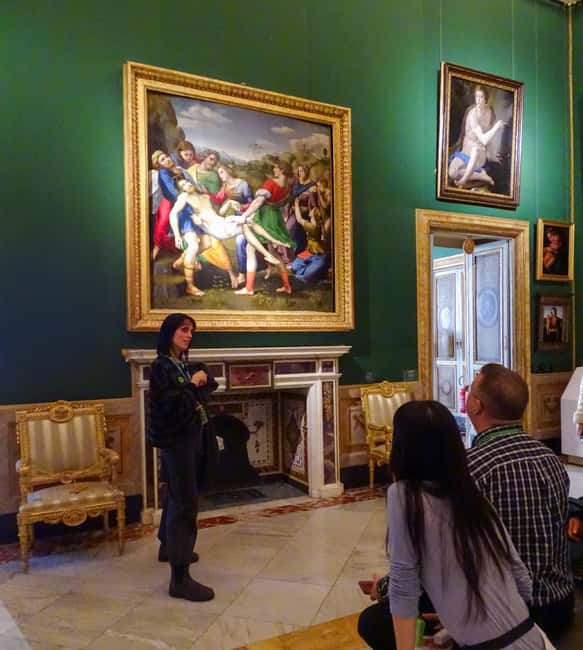
Raphael’s Deposition brings a different mood. Its delicate handling and emotional depth reward a slower look, especially after the force of Bernini and the drama of Caravaggio. The composition shows grief and movement, but with a controlled elegance that reflects Renaissance ideals.
Titian’s Sacred and Profane Love adds another layer. Its allegory and beauty are not as immediately clear as a mythological scene, so an explanation is useful. You may leave with more questions than answers, but that is part of its appeal. The guide can outline the symbolism and give you a framework for looking at the figures, setting, and contrasts.
The gallery’s ceilings and decorative rooms also deserve attention. One strong guide described the artworks while drawing attention to the ceilings, which can easily get ignored when the famous sculptures demand your eyes. Try to look up between stops.
Still Rome, but a slower afternoon:
- Colosseum, Roman Forum & Palatine Guided Tour
★ 4.7 · 63,148 reviews - Rome: Colosseum, Palatine Hill and Roman Forum Guided Tour
★ 4.8 · 32,814 reviews - Rome: Guided Tour of Colosseum, Roman Forum & Palatine Hill
★ 4.7 · 27,897 reviews - Rome: Colosseum & Forum with Audio Guide App -Optional Arena
★ 4.2 · 24,770 reviews
What a good guide adds to the visit
The strongest feature of this tour is the guide’s interpretation. Several highly praised guides are named in the feedback: Simona, Susanne, Alexandra, Alessandra, and Lorena. Their approaches differ, but the common thread is enthusiasm, clear explanation, and a talent for connecting art with its social setting.
Simona was repeatedly praised for speaking clearly and with energy. One particularly useful detail is that she waited 15 minutes for a late-arriving participant, though you should not count on that courtesy. Rome traffic is unpredictable, so arriving early is the wiser plan.
Susanne was praised for explaining small features that a first-time visitor might miss. Alexandra received similar praise for making the art accessible to people who did not consider themselves art experts. Alessandra was described as so engaging that an unexpectedly long visit remained interesting. That kind of enthusiasm can make a major difference in a museum where the objects have centuries of stories behind them.
You should still expect some variation. One person found the guide’s Italian accent difficult at times and felt that background explanations occasionally went on too long. That is a fair caution. A passionate guide can give you useful context, but a detailed talk may reduce your quiet viewing time.
The tour is offered in English or Spanish, and earphones are provided. You can bring your own to avoid using single-use equipment. The headsets should make it easier to follow the guide while standing in a large room, especially if the group spreads out.
The 135-minute schedule and its limits
The advertised duration is 135 minutes, or two hours and 15 minutes. The itinerary describes a guided visit beginning with the ground-floor sculptures, continuing through the Borghese Gallery, and ending back at the original meeting point.
That length is enough for a strong introduction to the collection. You can see the major Bernini works, several important paintings, and selected details in the rooms without trying to cover every object. It is a sensible format for a first visit, particularly if you want an informed route rather than a museum marathon.
It is not enough for every work to receive equal attention. One useful expectation to set is that you will not study each painting at length. If you are an art student, a repeat visitor, or someone who prefers long periods of silent observation, you may wish for more time.
The best approach is to use the tour as a guided framework. Pay close attention to the works your guide explains, then decide whether you want to return to a favorite piece during any available free time. The gallery’s compact scale makes that approach more realistic than it would be in a huge museum.
The description includes a return to the starting point. That simplifies your next move, since you do not have to find a separate exit meeting point or navigate back to the city center with a group.
Villa Borghese and the Pincio Terrace
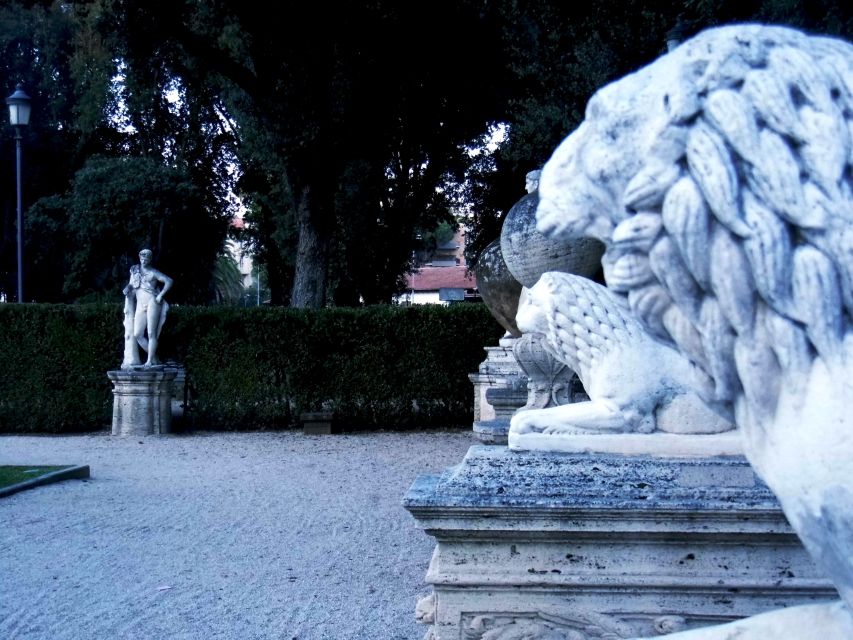
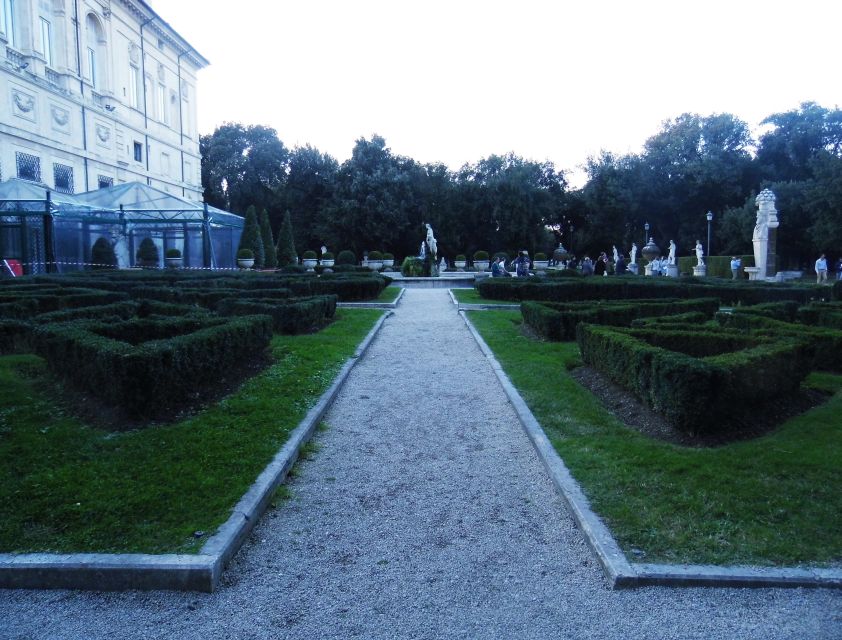
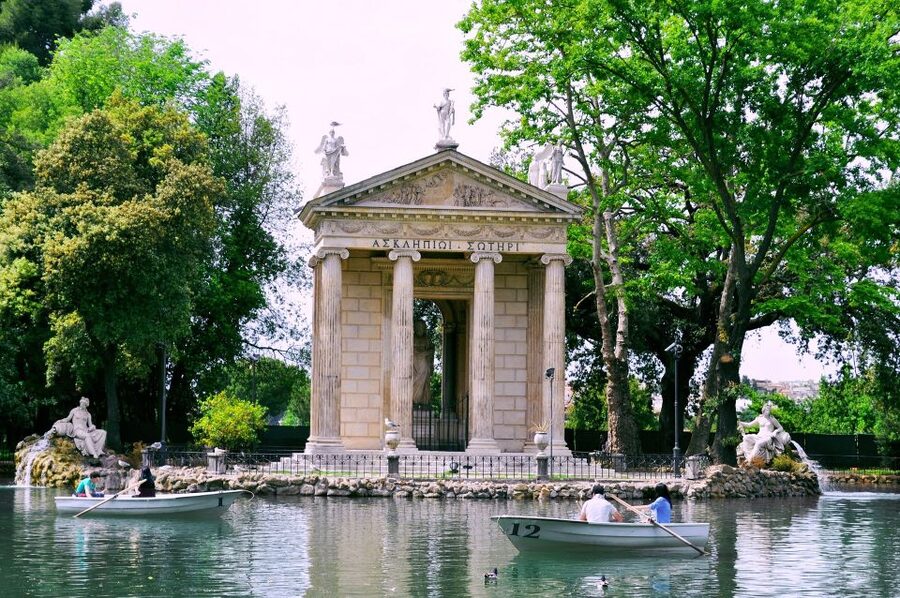
The museum is part of a larger day in Villa Borghese. The gardens offer a welcome change after the formal rooms, with old trees, fountains, and outdoor sculptures. I would not treat the garden walk as a guaranteed guided portion of this activity, but you can easily add your own stroll before or after the museum.
The Pincio Terrace is a particularly useful add-on. From there, you can look across Rome toward landmarks including St. Peter’s Basilica. The view gives you a sense of the city’s scale after spending so much time examining small details in paintings and marble.
You can also walk through the park toward Piazza del Popolo and the Spanish Steps. That suggestion came directly from the experience of participants who found the route pleasant. Check your energy and footwear before committing, since the museum visit itself involves standing and walking.
This is one reason I like the location. You can pair an intense art stop with open space rather than moving straight into another crowded street. Just remember to allow extra time beyond the 135-minute tour.
Is the $100.09 price good value?
At $100.09 per person, this is not a cheap museum entry. The value depends on how much you want from the visit.
You are paying for a pre-booked priority ticket, a live guide, assistance through a helpline, and earphones. The ticket removes the need to handle the regular ticket line yourself, while the guide gives you context that a basic admission ticket cannot provide.
For someone who already knows Bernini, Caravaggio, Raphael, and Canova well, the price may feel high. You might prefer to visit independently and spend your time with a smaller number of works.
For a first visit, I think the cost is easier to justify. The Borghese Gallery is packed with major pieces, and the art is not always self-explanatory. A strong guide can turn a series of beautiful rooms into a connected story about myth, power, faith, family, and artistic change.
The rating of 4.7 from 933 ratings supports the idea that the paid guidance is usually the main benefit. Still, price-sensitive visitors should compare it with the cost of a standard museum ticket when available and decide how much interpretation matters to them.
The reserve-now, pay-later option also helps if your Rome plans are still shifting. You can cancel for a full refund up to 24 hours before the activity, according to the stated terms.
Who should book this Borghese Gallery tour?
I would recommend it to you if:
- You want to see Bernini’s major sculptures with useful explanation.
- You are visiting the Borghese Gallery for the first time.
- You prefer stories and context to reading labels on your own.
- You want a structured visit lasting just over two hours.
- You enjoy Renaissance, Baroque, and Neoclassical art.
- You plan to combine the museum with a walk through Villa Borghese.
It is less suitable if you need step-free access, since the activity is not suitable for wheelchairs or pushchairs. It may also disappoint you if you want to inspect every painting without interruption.
Families with children who enjoy stories may appreciate the myths behind Apollo and Daphne and The Rape of Proserpina. Still, the time spent standing and listening may not suit every child. Backpacks and bags must be left in the wardrobe, so carry only what you need.
Should you book it?
Book this tour if you want the Borghese Gallery to make sense, not simply look beautiful. The sculptures and paintings are worth seeing alone, but the best guides, including Simona, Susanne, Alexandra, Alessandra, and Lorena, add the stories and social context that help the collection stay with you.
I would book it for a first visit, especially if your Rome schedule is tight and you value priority entry. Arrive early, wear comfortable shoes, bring identification, and save time afterward for Villa Borghese and the Pincio Terrace. Skip it only if you prefer complete independence, need accessible facilities, or want a long, quiet session with each artwork.
FAQ
How long does the Borghese Gallery tour last?
The tour lasts 135 minutes, or two hours and 15 minutes. Check availability for the available starting times.
Where do I meet the guide?
Meet the guide at the entrance of the Borghese Gallery in Piazzale del Museo Borghese. The guide will hold a Tourismotion sign.
Which languages are available?
The live tour guide is available in English and Spanish.
Does the tour include priority entry?
Yes. The activity includes pre-booked priority tickets and skip-the-ticket-line access.
What artworks are included in the visit?
The tour can include Bernini’s The Rape of Proserpina and Apollo and Daphne, Canova’s Pauline Bonaparte as Venus Victrix, Caravaggio’s Boy with a Basket of Fruit and David with the Head of Goliath, Raphael’s Deposition, and Titian’s Sacred and Profane Love.
Are earphones provided?
Yes. Single-use earphones are provided during the tour. You may bring your own to reduce waste.
Can I bring a backpack into the gallery?
No. Backpacks and bags must be left in the wardrobe.
Is the tour suitable for wheelchairs or pushchairs?
No. The activity is not suitable for wheelchairs or pushchairs.
How far is the nearest metro station?
Barberini is about 20 minutes on foot from the gallery. Bus lines 83 and 223 are also listed as options. The instructions advise against using Spagna metro station.
Can I cancel the booking?
Yes. You can cancel up to 24 hours in advance for a full refund. The activity also offers reserve-now, pay-later booking.
Recently added around Rome
- Palatine Hill and Roman Forum Tour with Fast-Track Entrance★ 4.2 · 417 reviews
- Tivoli: Villa D’Este & Villa Adriana Pass & App Audioguide★ 4.4 · 364 reviews
- From Rome: Villa D’Este & Villa Adriana Day Trip with Lunch★ 4.4 · 289 reviews
- Vatican Museums & Sistine Chapel Skip-the-Line Guided Tour★ 4.6 · 254 reviews
- Rome: The Three Tenors at St. Paul’s Church Concert Ticket★ 4.7 · 699 reviews
- Tivoli: Villa D’Este Entry Ticket and App Audio Guide★ 4.3 · 191 reviews
- Rome: Capitoline Museums and Centrale Montemartini Tickets★ 4.4 · 328 reviews
- Rome: St. Peter’s Basilica and Papal Tombs Guided Tour★ 4.6 · 477 reviews
Skip the Line, compared.
Skip-The-Line Uffizi Gallery Timed Entry Ticket
Read our review →
Vatican Museums & Sistine Chapel Skip-the-Line Entry Ticket
Read our review →
Skip-the-Line Group Tour of the Vatican, Sistine Chapel & St. Peter’s Basilica
Read our review →
Michelangelo’s David Skip-the-Line Entry Ticket
Read our review →
Vatican Museums & Sistine Chapel Skip-The-Line Ticket
Read our review →
Vatican, Sistine Chapel & St. Peter’s Skip-the-Line Tour
Read our review →
Skip-the-Line Vatican, Sistine Chapel & St. Peter’s | Small Group
Read our review →
Vatican Museums Sistine Chapel Skip-the-Line Ticket
Read our review →Browse the lists this tour appears in