Reviewed · PRIVATE
Rome Private Tour: Highlights and Hidden Gems
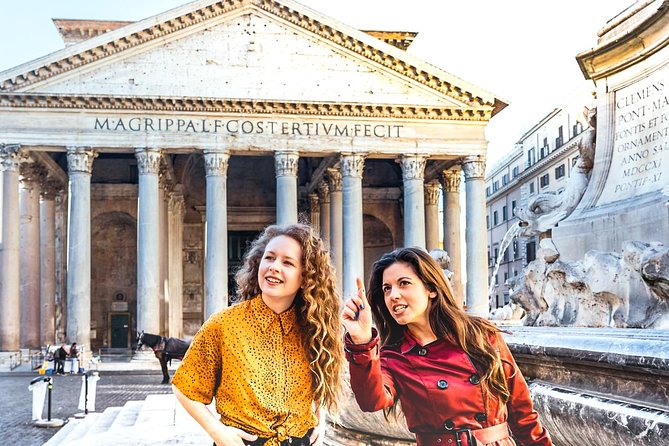
Rome rewards a little wandering. This private three-hour tour mixes famous sights with local streets, food stops, and flexible storytelling, so you get more than a checklist of monuments. I especially like the one-to-one format and the chance to see Trastevere, small lanes, and neighborhood haunts with a local guide. The main catch is price: at $318.19 per person, it is costly for a tour that visits major landmarks from the outside.
I also like that you can choose between walking and Vespa travel. Simone, Stefan, Nico, Eleonora, Paola, and several other guides have earned praise for adjusting the route to suit families, teens, food lovers, and first-time visitors. Still, this experience depends heavily on your assigned guide, and one poorly handled booking involved a long delay and deeply inappropriate comments.
In This Review
- Key points at a glance
- A private start in the heart of Rome
- Walking or Vespa: pick the right Rome experience
- Trastevere shows Rome beyond the monuments
- Isola Tiberina and the city’s layers
- Piazza Navona brings fountains, churches, and people-watching
- The Pantheon is a highlight, with one important limitation
- Campo de’ Fiori adds a working square to the route
- The Spanish Steps are best for orientation
- The Colosseum gives the tour its grand finale
- Guide quality matters more than the route
- Is $318.19 per person a fair price?
- Practical details before you book
- FAQ
- How long does the Rome private tour last?
- Is the tour private?
- Can I choose between walking and Vespa travel?
- Are landmark entrance tickets included?
- What sights can the tour include?
- Is food or a drink included?
- What happens if I cancel?
- Should you book this Rome tour?
Key points at a glance
- A private Rome introduction: Only your group and a local guide take part, with room to ask questions and change the pace.
- Two ways to see the city: Walk through central Rome or cover more ground by Vespa.
- Famous sights plus local streets: The route can include the Pantheon, Piazza Navona, Campo de’ Fiori, the Colosseum, and Trastevere.
- One local refreshment included: Walking tours may pause for a drink or snack, adding a welcome break to the sightseeing.
- Outdoor landmark visits: Entrance tickets are not included, and the major monuments are visited from the outside.
- Best use of the tour: Book it early in your Rome stay to get your bearings and collect restaurant tips.
A private start in the heart of Rome
The walking tour begins at Piazza di Sant’Apollinare, 46, in central Rome. The Vespa option meets on Via in Selci near Cavour Metro Station. Check the exact meeting point carefully before setting out, since one booking was delayed by incorrect meeting instructions.
The private format is the biggest practical advantage. You do not have to wait for a large group, trail behind a flag, or listen to questions that have little to do with your interests. You can tell the guide what you have already seen, what you plan to visit later, and what you want from the next three hours.
That flexibility has made a real difference for families. Paula was praised for keeping children in mind, while another guide adjusted the route for shy teenagers. If your group includes different ages, this matters. A fixed public tour may move too quickly for children and too slowly for adults. Here, the guide can stop for photos, shade, food, or a quick explanation.
The walk finishes somewhere in central Rome rather than returning you to the starting point. That is useful if you want to continue sightseeing or stop for lunch, but it means you should not plan on leaving bags or arranging a ride from the original meeting point.
A few more Rome bookings to compare
- Vatican: Museums & Sistine Chapel Entrance Ticket
★ 4.5 · 144,003 reviews - Vatican Museums & Sistine Chapel Tour with Optional Basilica
★ 4.3 · 67,413 reviews - Colosseum, Roman Forum & Palatine Guided Tour
★ 4.7 · 63,148 reviews
Walking or Vespa: pick the right Rome experience
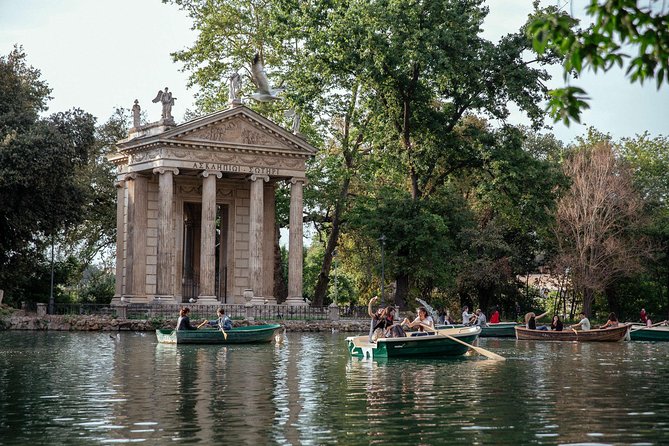
The walking option suits you best if you want to notice Rome at street level. You can pause at fountains, peer into old passages, listen to neighborhood stories, and stop for a drink or snack without worrying about where to park. Walking also makes it easier to have a relaxed conversation with your guide.
Three hours on foot can still feel full. The route may pass through Trastevere, Isola Tiberina, Piazza Navona, the Pantheon, Campo de’ Fiori, the Spanish Steps, and the Colosseum, along with smaller places between them. Since the exact route can change, you should think of the tour as a guided introduction rather than a guaranteed entrance schedule.
The Vespa version covers more ground. That can be a good choice if you want a broad look at Rome’s center and prefer riding to walking. You put on a helmet and get on the scooter, but the supplied information does not explain driving requirements or the precise riding arrangement. Ask those questions before booking if the transport details matter to you.
A Vespa tour may feel more like a city sweep, while the walking tour gives you more time to linger. I would choose walking for food, conversation, and close-up details. I would choose Vespa travel if your priority is seeing a wider spread of central Rome in a short time.
Trastevere shows Rome beyond the monuments
Trastevere is often the most useful early stop. Its name means across the Tiber, and the area is presented as a traditional working-class neighborhood with a bohemian feel, trattorias, craft breweries, and independent shops.
The value here is not simply taking photographs. A guide can help you read the neighborhood as a living part of Rome, not just a pretty collection of old walls. The route may point out places to eat, local gathering spots, and streets you might otherwise pass without noticing.
Several guides have been praised for restaurant and gelato advice. Nico even explained how to use an app to get a taxi, and the restaurants he recommended were reported to be excellent. Simone was also praised for leaving a group at a local restaurant after the tour. Those touches can save you from spending your first evening at a restaurant chosen only because it sits beside a famous monument.
The limitation is time. Trastevere alone rewards a slow afternoon, but this tour has many other stops. You will get an introduction, not a full neighborhood walk.
Isola Tiberina and the city’s layers

Isola Tiberina, the small island in the Tiber, may appear on the route between Trastevere and central Rome. It helps connect the neighborhoods geographically and gives the guide a natural chance to explain how Rome grew around the river.
This is where a private guide can make a difference. You can ask how the island fits into the city, how the river shaped movement, or why certain bridges and streets matter. The experience works best when you treat each stop as a prompt for conversation rather than expecting a formal lecture at every monument.
The tour’s guides have been praised for explaining Rome from its founding through the Second World War. That wide time span gives you a sense of the city’s many eras, from ancient structures to modern daily life. The information is delivered in small portions as you move, which may be easier to absorb than a long indoor presentation.
Still Rome, but a slower afternoon:
- Vatican Museums, Sistine Chapel & St Peter’s Basilica Guided Tour
★ 4.5 · 39,149 reviews - Rome: Colosseum, Palatine Hill and Roman Forum Guided Tour
★ 4.8 · 32,814 reviews - Rome: Guided Tour of Colosseum, Roman Forum & Palatine Hill
★ 4.7 · 27,897 reviews - Rome: Colosseum & Forum with Audio Guide App -Optional Arena
★ 4.2 · 24,770 reviews
Piazza Navona brings fountains, churches, and people-watching
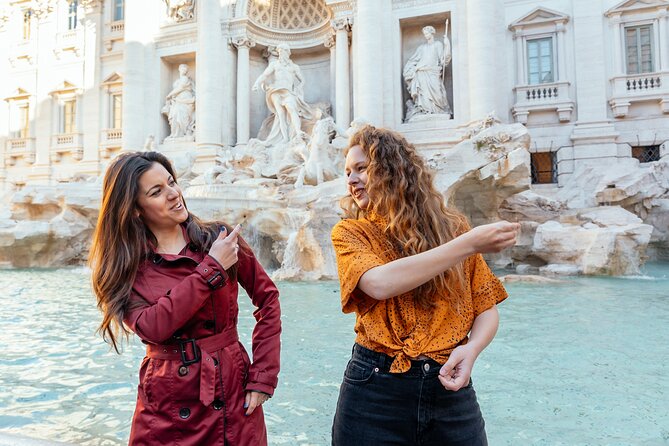
Piazza Navona is one of Rome’s grandest public spaces. Its long, open shape follows the outline of an ancient stadium, while Bernini’s famous fountains provide the visual center. Churches, monuments, cafés, and restaurants fill the edges.
A stop here gives you several things at once: art, architecture, urban life, and a useful point of orientation. The square is lively throughout the day, so your guide can explain what you are seeing while you watch Rome carry on around you.
Do not expect a quiet, close study of every fountain. Piazza Navona is popular and can feel crowded. The private format helps because you can stop where you want and ask questions without losing a group, but the tour still has to keep moving.
The Pantheon is a highlight, with one important limitation

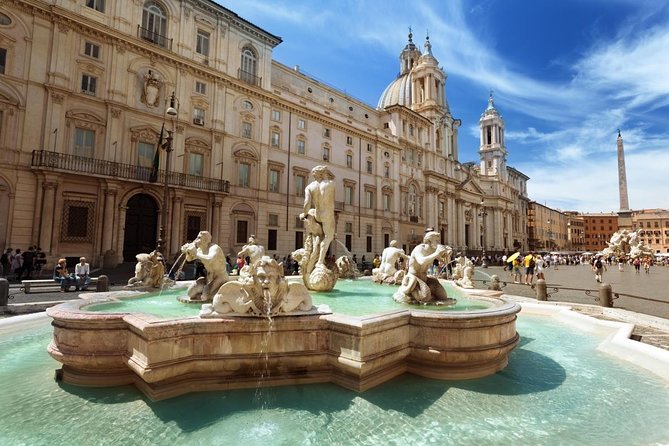
The Pantheon is the tour’s strongest ancient sight. Its enormous concrete dome and central opening remain remarkable, and its preservation helps you picture the building more clearly than many ruined Roman sites.
The description emphasizes seeing the Pantheon as the Romans might have encountered it, with attention to its groundbreaking construction. That makes it a good place for a guide to explain how Roman engineering worked and why the building remains so impressive.
Pay attention to the admission rule. Entrance tickets to landmarks are not included, and the tour visits the major sights from outside. Although the route description refers to the Pantheon as a possible stop, you should not assume that entry is part of the experience. If going inside is essential, confirm the arrangement before booking and budget separately for admission if available.
The same rule applies to the Colosseum and other major monuments. This is a city walk, not an interior sightseeing tour.
Campo de’ Fiori adds a working square to the route
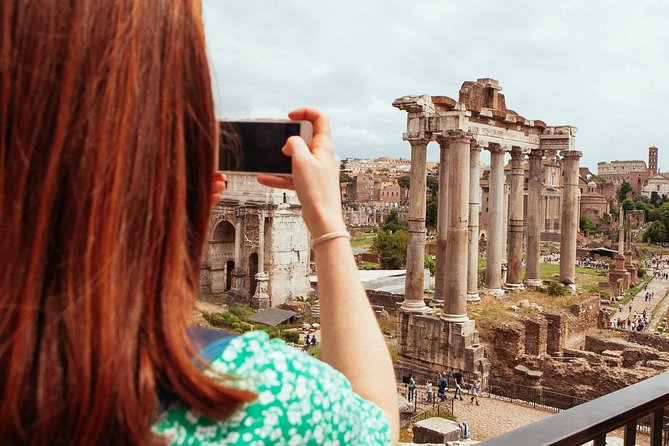
Campo de’ Fiori sits south of Piazza Navona, near Palazzo Farnese and Palazzo della Cancelleria. Its name translates as field of flowers, though its appeal today comes from the mix of market activity, restaurants, shops, and historic surroundings.
The square is a useful contrast to grand ceremonial spaces such as Piazza Navona. You can get a feel for how a Roman piazza functions as part marketplace, part meeting place, and part route through the city.
It is also a good point to ask your guide for food advice. The included local drink or snack may take place along the walking route, and this is the kind of neighborhood setting where a short stop makes sense. The exact refreshment is not specified, so do not book this expecting a full meal or a formal food tasting.
The Spanish Steps are best for orientation
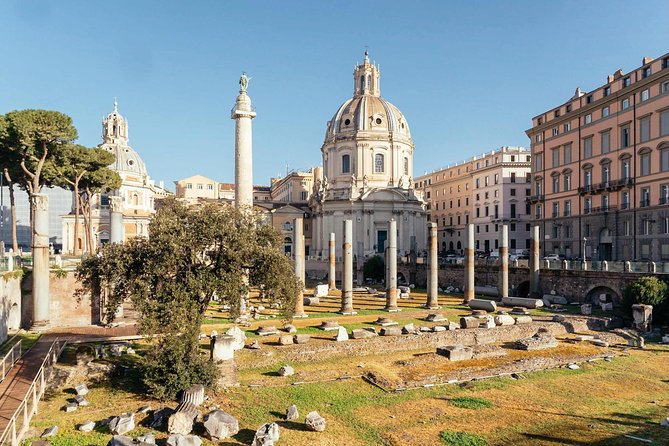
The Spanish Steps climb from Piazza di Spagna to Piazza Trinità dei Monti. They are one of Rome’s most recognizable public stairways, with the church above and the shopping streets below.
The stop is visually memorable, but it is also practical. From this part of town, you can begin to understand how Rome’s central districts connect. A guide can help you link the steps to the Pantheon area, Piazza Navona, and the Colosseum, even if the tour does not provide a full transport lesson.
The steps themselves can be tiring, especially after several hours of walking. If you have mobility concerns, ask the provider about the route before booking. The available information says most people can participate, but it does not provide a detailed accessibility plan.
The Colosseum gives the tour its grand finale
The Colosseum is Rome’s most famous ancient amphitheater and one of the clearest symbols of the city. Seeing it from outside still gives you a strong sense of its size and position beside the Roman Forum.
A guide can point out how the building fits into the wider ancient center and help you make sense of what you will later see inside if you have a separate ticket. This can be especially useful on an orientation tour, since the Colosseum area can feel confusing when you first arrive.
Again, no interior admission is included. If you want to walk through the amphitheater, book a separate timed visit. The private tour should not replace a Colosseum ticket if that is one of your main reasons for coming to Rome.
Covering the Colosseum after Trastevere, the Pantheon, Campo de’ Fiori, and the Spanish Steps may sound ambitious in three hours. The Vespa option can make that range more realistic. On foot, the guide may pass some sights quickly, and the itinerary can change.
Guide quality matters more than the route
The strongest part of this experience is the human element. Simone is repeatedly praised for humor, historical storytelling, restaurant advice, and adapting the route on the spot. Stefan is described as flexible and good at showing places outside the standard sightseeing circuit. Nico received praise for staying attentive during extreme heat and finding shade.
Eleonora was called engaging and fun, while Paola was described as warm and well prepared. Daniele was praised for flexibility, and Valeria for staying with the group until the planned places had been covered despite running late for another appointment.
English is offered, and the guide pool is multilingual. English fluency may vary by guide, as one person found Valeria’s explanations harder to follow at first. Most of the strong feedback points to friendly, lively guides who tailor their approach, but you should understand that the exact personality and style are not guaranteed.
There is also a serious warning. One booking involved a guide who failed to arrive on time, shifting the expected delay several times, followed by comments the customer found offensive and threatening. The provider apologized and asked for booking details to investigate. This appears to be an isolated but important concern, so keep the provider’s app available on tour day and contact support quickly if the guide is missing.
Is $318.19 per person a fair price?
The price is high for three hours, especially because landmark admission is not included. If you only want a list of famous sights, this is not the economical choice. You can walk between several of these places on your own for far less.
The value improves if you are splitting the cost among a private group, want a flexible route, or care about local food advice and neighborhood context. A private guide can save time, prevent wrong turns, and shape the experience around what your group has already seen. For a first visit, that personal orientation may be worth more than a longer group tour with a lower price.
The tour is also carbon neutral and certified as a sustainable experience through its B-Corp status. That does not change the basic price calculation, but it may matter to you when comparing similar private tours.
The booking pattern suggests that people often reserve about 43 days ahead. You can sometimes find availability at short notice, including one booking made the day before, but early planning is wiser if your dates are fixed.
Practical details before you book
You receive confirmation at booking, and the tour is near public transportation. Bring comfortable footwear for the walking option, though the supplied details do not state a required dress code or equipment list.
The included drink or snack is a small benefit, not the main reason to choose the tour. It breaks up the route and gives you a chance to talk with the guide about restaurants, gelato, taxis, and later sightseeing.
Free cancellation is available until 24 hours before the start time. Inside that window, the payment is not refunded and changes are not accepted. The cut-off follows Rome’s local time.
FAQ
How long does the Rome private tour last?
The tour lasts approximately three hours.
Is the tour private?
Yes. Only your group and the local guide participate.
Can I choose between walking and Vespa travel?
Yes. The experience offers a private walking tour and a Vespa tour. The meeting point depends on the option you select.
Are landmark entrance tickets included?
No. Entrance tickets are not included, and the landmarks are visited from the outside.
What sights can the tour include?
Possible stops include Trastevere, Piazza Navona, the Pantheon, Isola Tiberina, Campo de’ Fiori, the Spanish Steps, and the Colosseum. The route can change by transport type and group interests.
Is food or a drink included?
One local drink or snack is included. The experience is not described as a full meal or food-tasting tour.
What happens if I cancel?
You receive a full refund if you cancel at least 24 hours before the start time. Cancellations or changes made within 24 hours are not refunded or accepted.
Should you book this Rome tour?
Book it if you want a friendly private introduction, enjoy asking questions, and care about seeing Rome beyond the main monuments. It is particularly useful during your first day or two, when advice about neighborhoods, restaurants, gelato, taxis, and later sightseeing can shape the rest of your stay.
Choose the walking option for close-up streets, conversation, and a relaxed snack stop. Choose Vespa travel if covering more ground matters most. Skip it if your main goal is entering the Colosseum or Pantheon, since those tickets are not part of the price.
At $318.19 per person, this is a premium orientation tour. Its worth depends on the guide and on how much you value a route built around your interests. For a family, couple, or small group that wants Rome explained in a personal way, it can be an excellent first look. For a strict budget, a self-guided walk followed by separate monument tickets will cost less.
Recently added around Rome
- Rome: Pantheon, Trevi Fountain & Roman Squares Guided Tour★ 4.7 · 386 reviews
- Vatican: Pope Francis Tomb and Papal Basilicas Tour★ 4.7 · 340 reviews
- Vatican: St. Peter’s Basilica with Audio Guide and Options★ 3.4 · 269 reviews
- Rome: Vatican Museums Skip-the-line Entry Ticket and Tour★ 4.2 · 400 reviews
- Rome: Vatican Museums & Sistine Chapel Ticket + Tour Options★ 4.7 · 344 reviews
- Vatican: Museums, Raphael & Sistine Chapel + Basilica Option★ 4.7 · 350 reviews
- Vatican Museums & Sistine Chapel Guided Tour★ 4.3 · 832 reviews
- Vatican Museums & Sistine Chapel Entry Ticket★ 4.4 · 245 reviews
Private, compared.

Como & Bellagio with Private Lake Como Cruise
Read our review →
Murano & Burano Islands Guided Small-Group Tour by Private Boat
Read our review →
Rome by Golf Cart Private Tour: Beyond the Landmarks
Read our review →
Early Morning Vatican, Sistine, St. Peter’s Semi or Private Tour
Read our review →
Private 3 hrs Venice Tour: St Mark’s, Walking tour & Boat tour
Read our review →
Private Gondola Cruise for up to 5 Passengers
Read our review →