
Reviewed · MUSEUMS
Rome: Leonardo da Vinci Exhibition Entrance Ticket
Leonardo’s sketches become real machines here. At Rome’s Mostra di Leonardo da Vinci, you can examine more than 65 full-scale models based on his engineering drawings, touch many of them, and see how his ideas connect to modern transport, architecture, science, and warfare. The exhibition sits below the historic Palazzo della Cancelleria, near Campo de’ Fiori and Piazza Navona.
I like the hands-on design, especially the chance to test mechanisms and build a version of Leonardo’s bridge. I also like the clear range of subjects, from flying machines and military devices to water studies and musical instruments. The main drawback is size: this is a compact exhibition, and some people finish in about 45 minutes. The displays can also feel slightly confusing because the room numbers and audio-guide order do not always match.
In This Review
- Key points at a glance
- Why Leonardo’s machines work better than another painting display
- Four sections built around Air, Water, Fire, and Earth
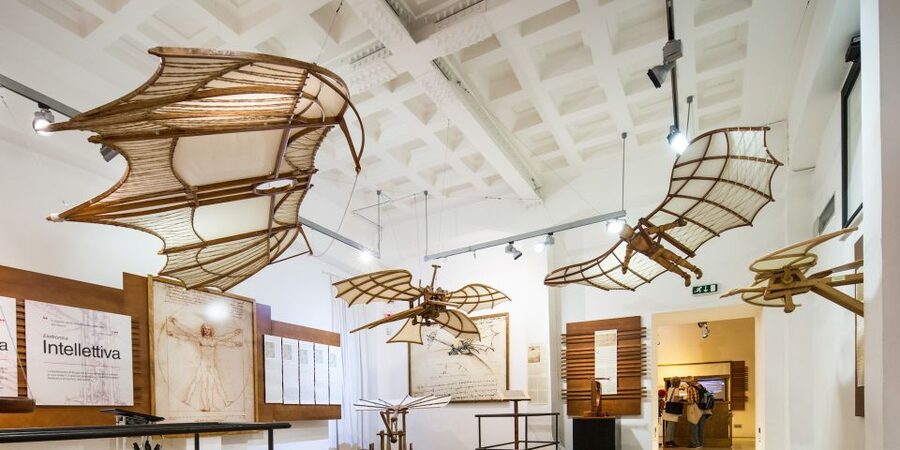
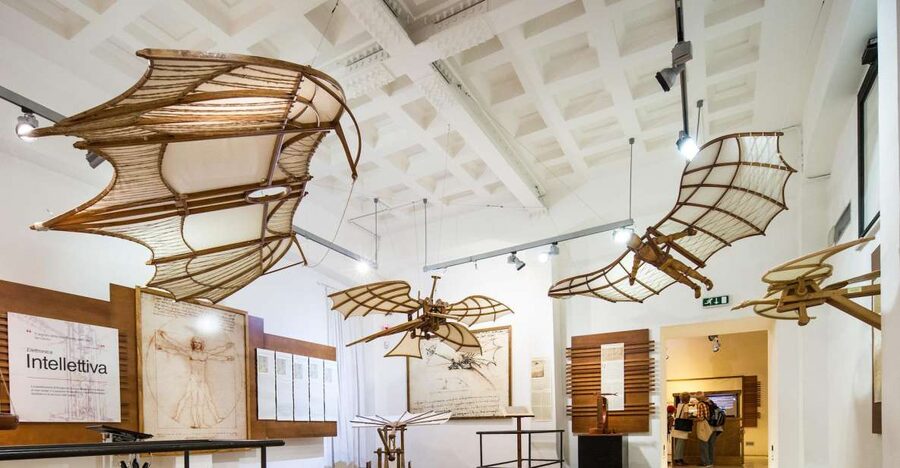
- The full-scale inventions are the main event
- Seven interactive installations make the drawings easier to read
- Nine holograms add theatre, but do not replace the models
- The audio guide is worth considering
- Palazzo della Cancelleria adds an unexpected ancient layer
- How much time should you allow?
- The $10 ticket and overall value
- Who will enjoy this exhibition most?
- Entry details and useful planning advice
- Should you book the Leonardo da Vinci Exhibition?
- FAQ
- Where is the Leonardo da Vinci exhibition in Rome?
- How much does admission cost?
- How long is the ticket valid?
- How long does the exhibition visit take?
- Is a guide included with admission?
- Is the exhibition available in English?
- Can I touch the inventions?
- Is the exhibition suitable for children?
- Is the exhibition wheelchair accessible?
- Can I cancel my booking?
Key points at a glance
- Over 65 full-scale machines: See working-style reproductions based on Leonardo’s drawings, including flying machines, a tank, mechanical devices, scientific instruments, and water studies.
- Touch and test the inventions: Most of the machines are designed for interaction, so you can turn, move, examine, and experiment rather than simply look through glass.
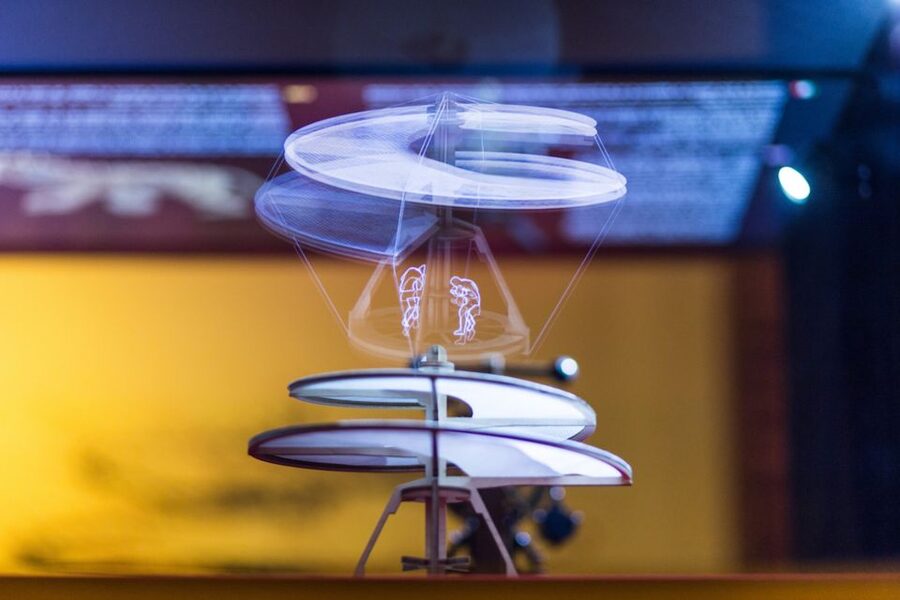
- Nine 3D holograms: Holographic presentations show Leonardo’s paintings and inventions in a more theatrical way.
- Four natural elements: The exhibition organizes Leonardo’s thinking around Water, Air, Fire, and Earth.
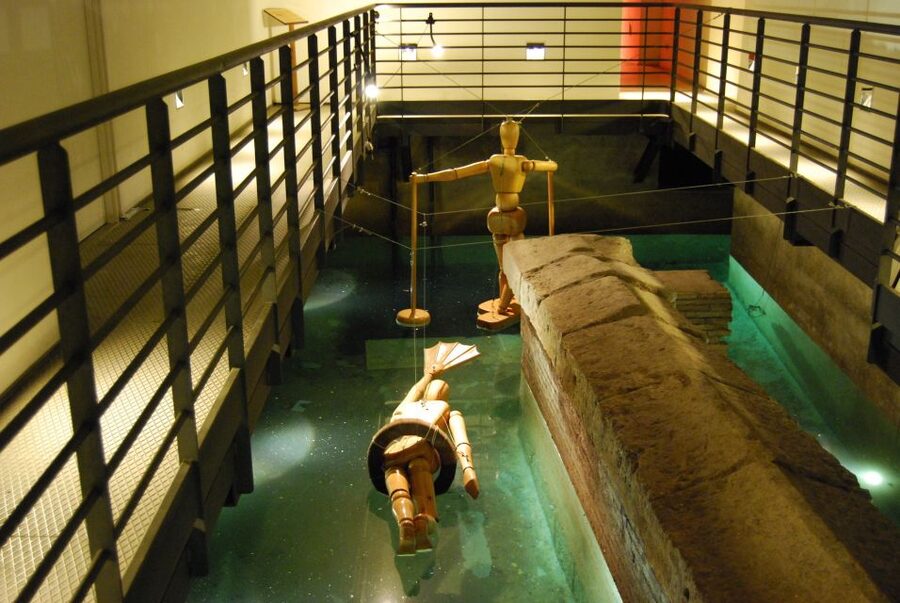
- An ancient tomb underground: The building includes the tomb of architect Auro Irzio, dating from 43 BC and set beside an underground natural pond.
- A cool, central break: The exhibition is indoors and underground, making it a useful stop during Rome’s hot afternoons.
Why Leonardo’s machines work better than another painting display
Rome gives you no shortage of art. You can spend days looking at paintings and sculptures, so an exhibition focused on Leonardo’s engineering offers a welcome change.
This is not mainly a gallery of original Renaissance masterpieces. It is a study of how Leonardo thought. His notebooks contain drawings of gears, bridges, weapons, flying devices, water systems, and tools. Here, full-scale reproductions turn those drawings into objects you can understand with your eyes and hands.
That distinction matters. A sketch can look brilliant but remain hard to read. A wooden bridge or mechanical device shows the idea’s physical logic. You begin to see where force travels, how parts connect, and why Leonardo’s observations were so useful long before modern engineering existed.
I especially like the way the machines bring together several sides of Leonardo’s work. You are not shown only the famous artist behind the Mona Lisa and The Last Supper. You also meet the draughtsman, scientist, architect, sculptor, theorist, and inventor.
More Museum Tours in Rome
- Vatican: Museums & Sistine Chapel Entrance Ticket
★ 4.5 · 144,003 reviews - Vatican Museums & Sistine Chapel Tour with Optional Basilica
★ 4.3 · 67,413 reviews - Vatican Museums, Sistine Chapel & St Peter’s Basilica Guided Tour
★ 4.5 · 39,149 reviews
Four sections built around Air, Water, Fire, and Earth
The exhibition moves through four broad sections named for the natural elements. These themes help give shape to a collection that could otherwise feel like a pile of unrelated inventions.
The Water section presents Leonardo’s studies of movement, currents, and hydraulic ideas. His interest in water was practical and scientific. The displays help you see how close observation of nature fed his mechanical thinking.
The Air section turns toward flight and the problem of human movement through the sky. Leonardo’s flying machines are among the most popular displays, partly because they reveal his habit of studying birds and trying to translate their movement into machinery.
Fire brings attention to military technology and mechanical force. His designs for weapons and defensive devices can look surprisingly modern, though you should remember that the models represent studies and ideas rather than finished machines used in battle.
Earth gathers devices tied to construction, mechanics, measurement, and the physical world. This is where the bridge-building activity makes good sense. You can try assembling your own version of a bridge Leonardo designed, turning a historical drawing into a small practical puzzle.
The sections are not large, and the route is not always perfectly intuitive. Take a moment at the entrance to get your bearings. If you use the audio guide, follow the display numbers carefully, since the spoken sequence may not always match the physical order of the rooms.
The full-scale inventions are the main event
The models are the reason to come. You will see machines connected with aviation, military engineering, transport, architecture, water studies, and general mechanics.
A model of Leonardo’s tank is one of the memorable pieces. It gives physical form to the idea of a heavily protected, circular vehicle powered by people inside. Nearby inventions and instruments show that Leonardo’s imagination was not limited to one field.
The exhibition also includes musical instruments and scientific devices, along with a copy of The Last Supper. The painting reproduction is useful context, but the machines carry the visit. They show how one person could move from artistic composition to mechanical design and scientific observation.
The strongest displays are the ones you can operate. You can touch and play with almost all the machines, although one detailed account noted that a few pieces were in worn condition and that some touch or do-not-touch signs could be clearer.
That is a small but fair warning. This is an interactive exhibition, not a silent museum of precious originals. Some working parts may show signs of heavy use. In exchange, you get a much more active visit, especially if you enjoy asking how things work.
Seven interactive installations make the drawings easier to read
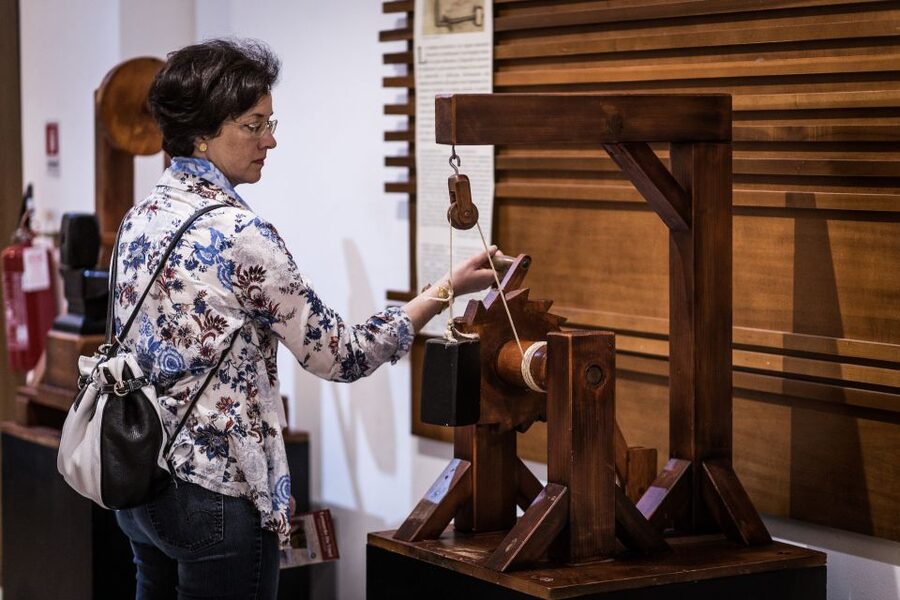
Seven interactive installations connect Leonardo’s drawings with the machines around them. These displays add another layer for anyone who wants more than a quick photo stop.
I find this approach useful because Leonardo’s notebook pages can be dense. His handwriting, diagrams, and repeated studies do not always explain themselves at first glance. The interactive material helps you understand the problem he was trying to solve and the process behind the final design.
Children often get the most from this part of the exhibition. The chance to touch a mechanism, test a model, or build a bridge gives them something to do while adults read the explanations. Several families found the experience engaging for children, including a visit with a 10-year-old.
Still, very young children need close attention. The compact layout includes trip hazards, and the touch instructions are not always obvious. I would treat this as an active museum where adults should stay involved, not as a place where small children can wander freely.
Still Rome, but a slower afternoon:
- Colosseum, Roman Forum & Palatine Guided Tour
★ 4.7 · 63,148 reviews - Rome: Colosseum, Palatine Hill and Roman Forum Guided Tour
★ 4.8 · 32,814 reviews - Rome: Guided Tour of Colosseum, Roman Forum & Palatine Hill
★ 4.7 · 27,897 reviews - Rome: Colosseum & Forum with Audio Guide App -Optional Arena
★ 4.2 · 24,770 reviews
Nine holograms add theatre, but do not replace the models
Nine holograms present Leonardo’s paintings and inventions in 3D. They offer a quick, visual break from the wooden and mechanical reproductions.
The holograms are especially useful for showing movement or giving a sense of Leonardo as a complete Renaissance figure. They make the exhibition feel more modern and help younger visitors stay interested.
I would not make the holograms your main reason for booking. Their value is in support of the physical collection. The machines explain Leonardo’s ideas through shape and motion, while the holograms provide atmosphere and visual context.
Short videos and the holographic presentations can lengthen the visit. If you read the explanations and try the interactive displays, you may spend closer to two hours. If you move quickly, 45 to 60 minutes is a realistic visit.
The audio guide is worth considering
The entrance ticket includes the exhibition, but a guide is not included. An audio guide is available for an additional cost, and the strongest practical advice is to add it if you want more than a basic introduction.
The written information is available in English, and the exhibition is understandable without extra help. Still, the audio guide provides fuller explanations of Leonardo’s work and how some ideas relate to modern transportation and architecture.
The order can be slightly awkward. The audio stops do not always follow the physical order of the rooms, and the numbering may momentarily confuse you. That is a minor nuisance, not a deal breaker. Pause, check the display number, and continue at your own pace.
If you have a strong interest in engineering, science, or Leonardo’s notebooks, the guide adds real value. If you are visiting mainly for a quick family activity, the labels and machines may be enough.
Palazzo della Cancelleria adds an unexpected ancient layer
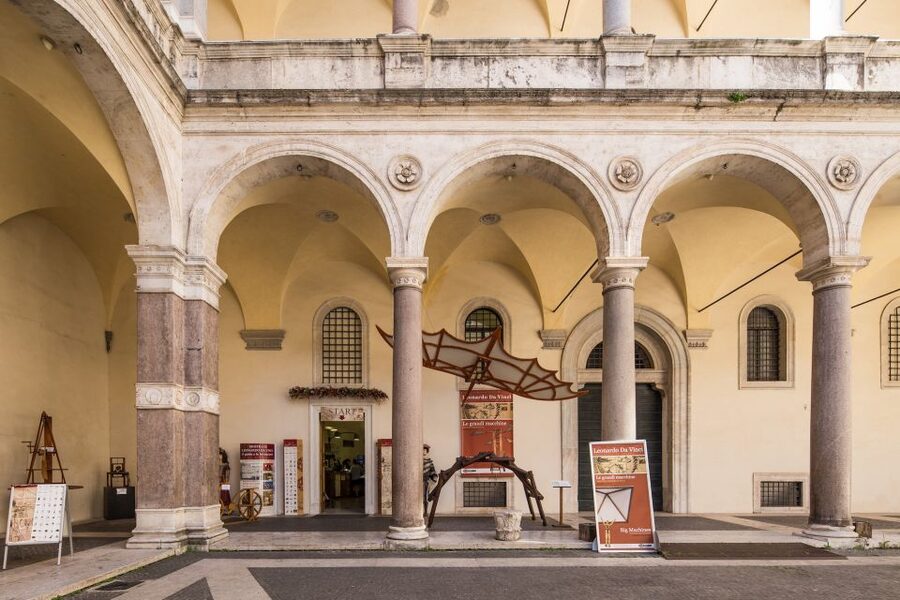
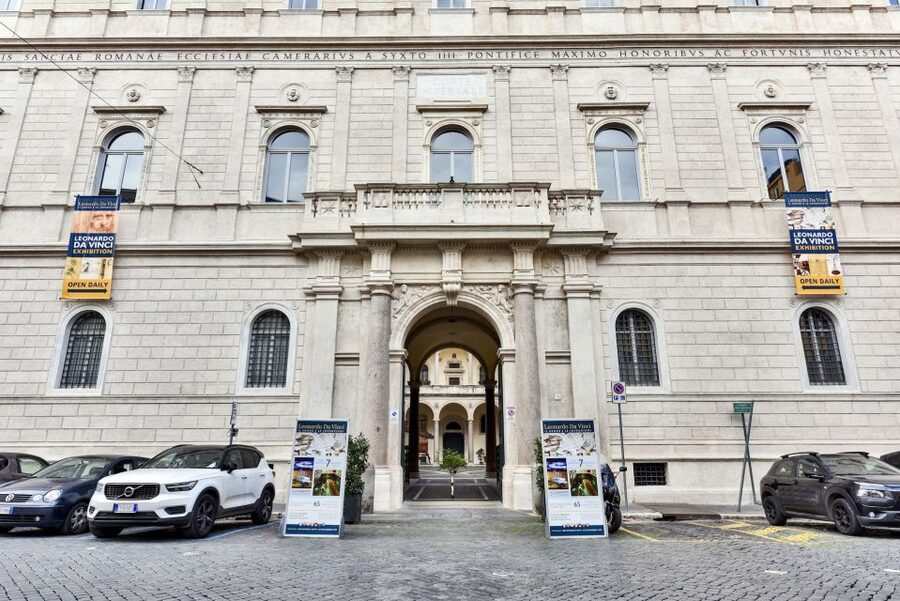
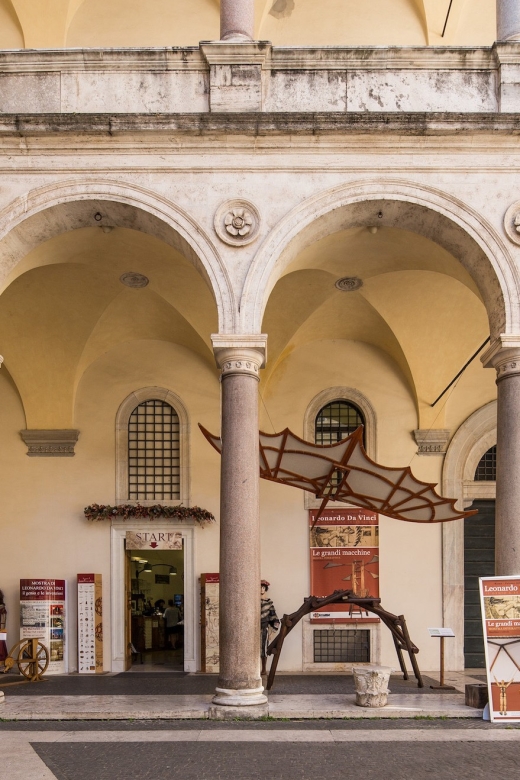
The exhibition is inside Palazzo della Cancelleria at Piazza della Cancelleria 1, close to Campo de’ Fiori and Piazza Navona. The building itself deserves a look, since it is owned by the Vatican and is noted for its architecture.
The upper floor houses the Sacra Rota, the church tribunal involved in dissolving marriages. You are not visiting the exhibition for that function, but it is an unusual fact about the setting.
Below the exhibition, you can also see the tomb of architect Auro Irzio, dated to 43 BC. It is set beside an underground natural pond. This is one of the most distinctive details of the visit because it shifts the focus from Renaissance invention to ancient Rome in a matter of steps.
The underground setting also gives the exhibition a practical advantage. Several people appreciated the cooler interior as a break from Rome’s summer heat. It is a good place to pair with a walk around central Rome, particularly when you need an indoor stop but do not want another huge museum.
How much time should you allow?
The ticket is valid for one day, but the experience itself is not an all-day attraction.
Allow 45 to 60 minutes for a focused visit. That gives you time to see the major machines, read selected panels, and watch some of the visual presentations.
Allow 90 minutes to two hours if you are traveling with children, using the audio guide, reading closely, and trying the interactive mechanisms. The exhibition is small enough to avoid fatigue, but it contains enough individual objects to reward a slower pace.
The compact size is both a strength and a weakness. You can fit it between major sights without sacrificing half a day. On the other hand, anyone expecting a large museum with extensive original artwork may find it limited.
The $10 ticket and overall value
At about $10 per person, this is an affordable Rome attraction. The value is strongest if you use the interactive features instead of simply walking through the rooms.
You are paying for access to more than 65 machines, holographic presentations, interactive installations, and the historic underground setting. That is a fair price for a visit lasting around an hour, and it becomes even better value if you spend longer experimenting with the displays.
The exhibition is also less demanding than Rome’s major archaeological sites. You do not need a full morning, a long guided tour, or a great deal of preparation. It works as a short cultural stop near Piazza Navona and Campo de’ Fiori.
One practical tip is to check the official website for current discounts before buying. The listed price may be the same through different booking channels, but a quick check costs little.
Who will enjoy this exhibition most?
I would recommend it most strongly to:
- Families with school-age children who enjoy hands-on displays
- Adults interested in engineering, inventions, science, or architecture
- Leonardo fans who want to see his drawings turned into physical models
- Visitors looking for an indoor break from Rome’s summer heat
- Anyone with 45 to 90 minutes free near Piazza Navona or Campo de’ Fiori
Art lovers should also find something worthwhile, but you should set your expectations correctly. This is not a major painting collection, and the copy of The Last Supper is not a substitute for seeing an original.
The exhibition gives you a clearer sense of Leonardo’s range. It shows how drawing, observation, mechanics, and art fed one another. That is its lasting strength.
Entry details and useful planning advice
The entrance is at Piazza della Cancelleria 1. It is close to Campo de’ Fiori and Piazza Navona, so you can combine the visit with a walk through central Rome.
Entry is available until one hour before closing. Check the available starting times when booking, since the ticket is valid for one day rather than for an unlimited period across your trip.
The experience is wheelchair accessible. You can also cancel up to 24 hours in advance for a full refund, and a reserve-now, pay-later option is available. A gadget is provided with the ticket, but no guide is included.
The staff are frequently described as friendly and welcoming, which helps at a small attraction where you may need a quick explanation about the route or interactive displays.
Should you book the Leonardo da Vinci Exhibition?
Book it if you want to understand Leonardo through machines, experiments, and ideas, not only famous paintings. The $10 price is reasonable, the location is convenient, and the hands-on displays make it a good choice for families and curious adults.
Skip it if you want original Renaissance masterpieces, a large museum, or a full-day cultural experience. For most people, I would allow an hour, add the audio guide if you enjoy detailed explanations, and visit during the hottest part of the day when the underground rooms offer a cool pause.
FAQ
Where is the Leonardo da Vinci exhibition in Rome?
The exhibition is at Piazza della Cancelleria 1, near Campo de’ Fiori and Piazza Navona.
How much does admission cost?
The listed price is $10 per person.
How long is the ticket valid?
The ticket is valid for one day.
How long does the exhibition visit take?
A quick visit can take about 45 to 60 minutes. If you use the audio guide, read the displays, and try the interactive machines, you might spend up to two hours.
Is a guide included with admission?
No. The entrance ticket includes exhibition admission, but a guide is not included. An audio guide is available for an additional cost.
Is the exhibition available in English?
English explanations are provided, and an audio guide is available as an optional extra.
Can I touch the inventions?
You can touch and play with almost all the machines on display. Some displays may have specific instructions, so follow the signs at each model.
Is the exhibition suitable for children?
Yes. The interactive machines and bridge-building activity can suit children, particularly school-age children. Small children need supervision because the exhibition includes trip hazards and some touch instructions may be unclear.
Is the exhibition wheelchair accessible?
Yes, the exhibition is wheelchair accessible.
Can I cancel my booking?
Yes. You can cancel up to 24 hours in advance for a full refund. A reserve-now, pay-later option is also available.
Recently added around Rome
- Palatine Hill and Roman Forum Tour with Fast-Track Entrance★ 4.2 · 417 reviews
- Tivoli: Villa D’Este & Villa Adriana Pass & App Audioguide★ 4.4 · 364 reviews
- From Rome: Villa D’Este & Villa Adriana Day Trip with Lunch★ 4.4 · 289 reviews
- Vatican Museums & Sistine Chapel Skip-the-Line Guided Tour★ 4.6 · 254 reviews
- Rome: The Three Tenors at St. Paul’s Church Concert Ticket★ 4.7 · 699 reviews
- Tivoli: Villa D’Este Entry Ticket and App Audio Guide★ 4.3 · 191 reviews
- Rome: Capitoline Museums and Centrale Montemartini Tickets★ 4.4 · 328 reviews
- Rome: St. Peter’s Basilica and Papal Tombs Guided Tour★ 4.6 · 477 reviews
Museums, compared.
Vatican Museums & Sistine Chapel Tour with Optional Basilica
Read our review →
Vatican Museums, Sistine Chapel & St Peter’s Basilica Guided Tour
Read our review →
Skip-The-Line Uffizi Gallery Timed Entry Ticket
Read our review →
Vatican Museums, Sistine Chapel & Basilica Tour
Read our review →
Vatican Museums & Sistine Chapel Skip-the-Line Entry Ticket
Read our review →Vatican Museums, Sistine Chapel & Basilica Tour
Read our review →
Vatican Museums & Sistine Chapel Guided Tour
Read our review →Browse the lists this tour appears in